
Skip to Content
  • 오피스

    오피스

    미주
    • Atlanta
    • Austin
    • Bogota
    • Boston
    • Buenos Aires
    • Chicago
    • Dallas
    • Denver
    • Houston
    • Los Angeles
    • Mexico City
    • Minneapolis
    • Monterrey
    • Montreal
    • New York
    • Rio de Janeiro
    • San Francisco
    • Santiago
    • São Paulo
    • Seattle
    • Silicon Valley
    • Toronto
    • Washington, DC
    유럽, 중동, 아프리카
    • Amsterdam
    • Athens
    • Berlin
    • Brussels
    • Copenhagen
    • Doha
    • Dubai
    • Dusseldorf
    • Frankfurt
    • Helsinki
    • Istanbul
    • Johannesburg
    • Kyiv
    • Lisbon
    • London
    • Madrid
    • Milan
    • Munich
    • Oslo
    • Paris
    • Riyadh
    • Rome
    • Stockholm
    • Vienna
    • Warsaw
    • Zurich
    아시아, 호주
    • Bangkok
    • Beijing
    • Bengaluru
    • Brisbane
    • Ho Chi Minh City
    • Hong Kong
    • Jakarta
    • Kuala Lumpur
    • Manila
    • Melbourne
    • Mumbai
    • New Delhi
    • Perth
    • Seoul
    • Shanghai
    • Singapore
    • Sydney
    • Tokyo
    오피스 전체보기
  • 얼럼나이
  • 미디어 센터
  • 구독
  • 연락처
  • Korea | 한국어

    지역 및 언어 선택

    글로벌
    • Global (English)
    미주
    • Brazil (Português)
    • Argentina (Español)
    • Canada (Français)
    • Chile (Español)
    • Colombia (Español)
    유럽, 중동, 아프리카
    • France (Français)
    • DACH Region (Deutsch)
    • Italy (Italiano)
    • Spain (Español)
    • Greece (Elliniká)
    아시아, 호주
    • China (中文版)
    • Korea (한국어)
    • Japan (日本語)
  • Saved items (0)
    Saved items (0)

    You have no saved items.

    관심 있는 내용을 북마크하여 Red 폴더에 저장할 수 있습니다. Red 폴더 에서 저장된 내용을 읽거나 공유해보세요.

    Explore Bain Insights
  • 산업
    메인 메뉴

    산업

    • 우주항공, 방산 및 정부 서비스
    • 농업 관련 산업
    • 화학
    • 인프라, 건설 및 건축 자재
    • 소비재
    • 금융 서비스
    • 헬스케어
    • 산업용 기계 및 장비
    • 미디어 및 엔터테인먼트
    • 금속
    • 광업
    • 석유 및 가스
    • 제지 및 패키징 산업
    • 사모펀드
    • 사회 및 공공 부문
    • 유통
    • 기술
    • 텔레콤
    • 운송
    • 여행·여가
    • 유틸리티 및 재생가능 에너지
  • 컨설팅 서비스
    메인 메뉴

    컨설팅 서비스

    • Customer Experience
    • ESG
    • Innovation
    • M&A
    • 운영
    • 조직
    • 사모펀드
    • 고객 전략 및 마케팅
    • 전략
    • AI, 인사이트 및 솔루션
    • Technology
    • 변화 혁신
  • Digital
  • 인사이트
  • 베인 소개
    메인 메뉴

    베인 소개

    • 업무 소개
    • 베인의 신념
    • 구성원 및 리더십 소개
    • 고객 성과
    • 주요 수상 경력
    • 글로벌 파트너사
    Further: Our global responsibility
    • 다양성과 포용
    • 사회 공헌 활동
    • Sustainability
    • World Economic Forum
    Learn more about Further
  • Careers
    메인 메뉴

    Careers

    • Work with Us
      Careers
      Work with Us
      • Find Your Place
      • Our Work Areas
      • Integrated Teams
      • Students
      • Internships & Programs
      • Recruiting Events
    • Life at Bain
      Careers
      Life at Bain
      • Blog: Inside Bain
      • Career Stories
      • Our People
      • Where We Work
      • Supporting Your Growth
      • Affinity Groups
      • Benefits
    • Impact Stories
    • Hiring Process
      Careers
      Hiring Process
      • What to Expect
      • Interviewing
    FIND JOBS
  • 오피스
    메인 메뉴

    오피스

    • 미주
      오피스
      미주
      • Atlanta
      • Austin
      • Bogota
      • Boston
      • Buenos Aires
      • Chicago
      • Dallas
      • Denver
      • Houston
      • Los Angeles
      • Mexico City
      • Minneapolis
      • Monterrey
      • Montreal
      • New York
      • Rio de Janeiro
      • San Francisco
      • Santiago
      • São Paulo
      • Seattle
      • Silicon Valley
      • Toronto
      • Washington, DC
    • 유럽, 중동, 아프리카
      오피스
      유럽, 중동, 아프리카
      • Amsterdam
      • Athens
      • Berlin
      • Brussels
      • Copenhagen
      • Doha
      • Dubai
      • Dusseldorf
      • Frankfurt
      • Helsinki
      • Istanbul
      • Johannesburg
      • Kyiv
      • Lisbon
      • London
      • Madrid
      • Milan
      • Munich
      • Oslo
      • Paris
      • Riyadh
      • Rome
      • Stockholm
      • Vienna
      • Warsaw
      • Zurich
    • 아시아, 호주
      오피스
      아시아, 호주
      • Bangkok
      • Beijing
      • Bengaluru
      • Brisbane
      • Ho Chi Minh City
      • Hong Kong
      • Jakarta
      • Kuala Lumpur
      • Manila
      • Melbourne
      • Mumbai
      • New Delhi
      • Perth
      • Seoul
      • Shanghai
      • Singapore
      • Sydney
      • Tokyo
    오피스 전체보기
  • 얼럼나이
  • 미디어 센터
  • 구독
  • 연락처
  • Korea | 한국어
    메인 메뉴

    지역 및 언어 선택

    • 글로벌
      지역 및 언어 선택
      글로벌
      • Global (English)
    • 미주
      지역 및 언어 선택
      미주
      • Brazil (Português)
      • Argentina (Español)
      • Canada (Français)
      • Chile (Español)
      • Colombia (Español)
    • 유럽, 중동, 아프리카
      지역 및 언어 선택
      유럽, 중동, 아프리카
      • France (Français)
      • DACH Region (Deutsch)
      • Italy (Italiano)
      • Spain (Español)
      • Greece (Elliniká)
    • 아시아, 호주
      지역 및 언어 선택
      아시아, 호주
      • China (中文版)
      • Korea (한국어)
      • Japan (日本語)
  • Saved items  (0)
    메인 메뉴
    Saved items (0)

    You have no saved items.

    관심 있는 내용을 북마크하여 Red 폴더에 저장할 수 있습니다. Red 폴더 에서 저장된 내용을 읽거나 공유해보세요.

    Explore Bain Insights
  • 산업
    • 산업

      • 우주항공, 방산 및 정부 서비스
      • 농업 관련 산업
      • 화학
      • 인프라, 건설 및 건축 자재
      • 소비재
      • 금융 서비스
      • 헬스케어
      • 산업용 기계 및 장비
      • 미디어 및 엔터테인먼트
      • 금속
      • 광업
      • 석유 및 가스
      • 제지 및 패키징 산업
      • 사모펀드
      • 사회 및 공공 부문
      • 유통
      • 기술
      • 텔레콤
      • 운송
      • 여행·여가
      • 유틸리티 및 재생가능 에너지
  • 컨설팅 서비스
    • 컨설팅 서비스

      • Customer Experience
      • ESG
      • Innovation
      • M&A
      • 운영
      • 조직
      • 사모펀드
      • 고객 전략 및 마케팅
      • 전략
      • AI, 인사이트 및 솔루션
      • Technology
      • 변화 혁신
  • Digital
  • 인사이트
  • 베인 소개
    • 베인 소개

      • 업무 소개
      • 베인의 신념
      • 구성원 및 리더십 소개
      • 고객 성과
      • 주요 수상 경력
      • 글로벌 파트너사
      Further: Our global responsibility
      • 다양성과 포용
      • 사회 공헌 활동
      • Sustainability
      • World Economic Forum
      Learn more about Further
  • Careers
    최근 검색어
      최근 방문 페이지

      Content added to saved items

      Saved items (0)

      Removed from saved items

      Saved items (0)

      M&A Report

      M&A in Healthcare and Life Sciences: Why Companies That Adapt to the New Realities Will Come Out Ahead

      M&A in Healthcare and Life Sciences: Why Companies That Adapt to the New Realities Will Come Out Ahead

      Participation in the M&A market has long been a strong predictor of success in this industry.

      글 Jason Asper, Kai Grass, Allen Granzberg, Sarah Yanes, and Saskia Carlebur

      • First published on 2월 04, 2025
      • 읽기 소요시간
      }

      Report

      M&A in Healthcare and Life Sciences: Why Companies That Adapt to the New Realities Will Come Out Ahead
      en
      한눈에 보기
      • Deal volume in healthcare and life sciences remained low in 2024, with value dropping by 28%.
      • Historically active companies continued buying to double down on high-growth areas, and scope deals continue to be a focus for healthcare and life sciences.
      • Companies making at least one deal a year achieved 12.2% growth in total shareholder returns compared with 0.3% growth for inactive acquirers.
      • Pharma companies are acquiring GLP-1 players while medtech companies are evaluating its long-term implications on their business.

      This article is part of Bain's 2025 M&A Report.

      EXPLORE THE REPORT

      Once the frontrunners of M&A activity, healthcare and life sciences companies largely found themselves on the sidelines in 2024. While many other industries saw an uptick, would-be dealmakers in healthcare and life sciences were disproportionately dissuaded by the tougher regulatory environment, high interest rates, and unfavorable valuations.

      Deal volume remained low (below the 10-year average), and deal value for the first 10 months of 2024 dropped by 28% compared with the same period in 2023. Clearly, the big return to normal hasn’t happened (see Figure 1).

      Figure 1
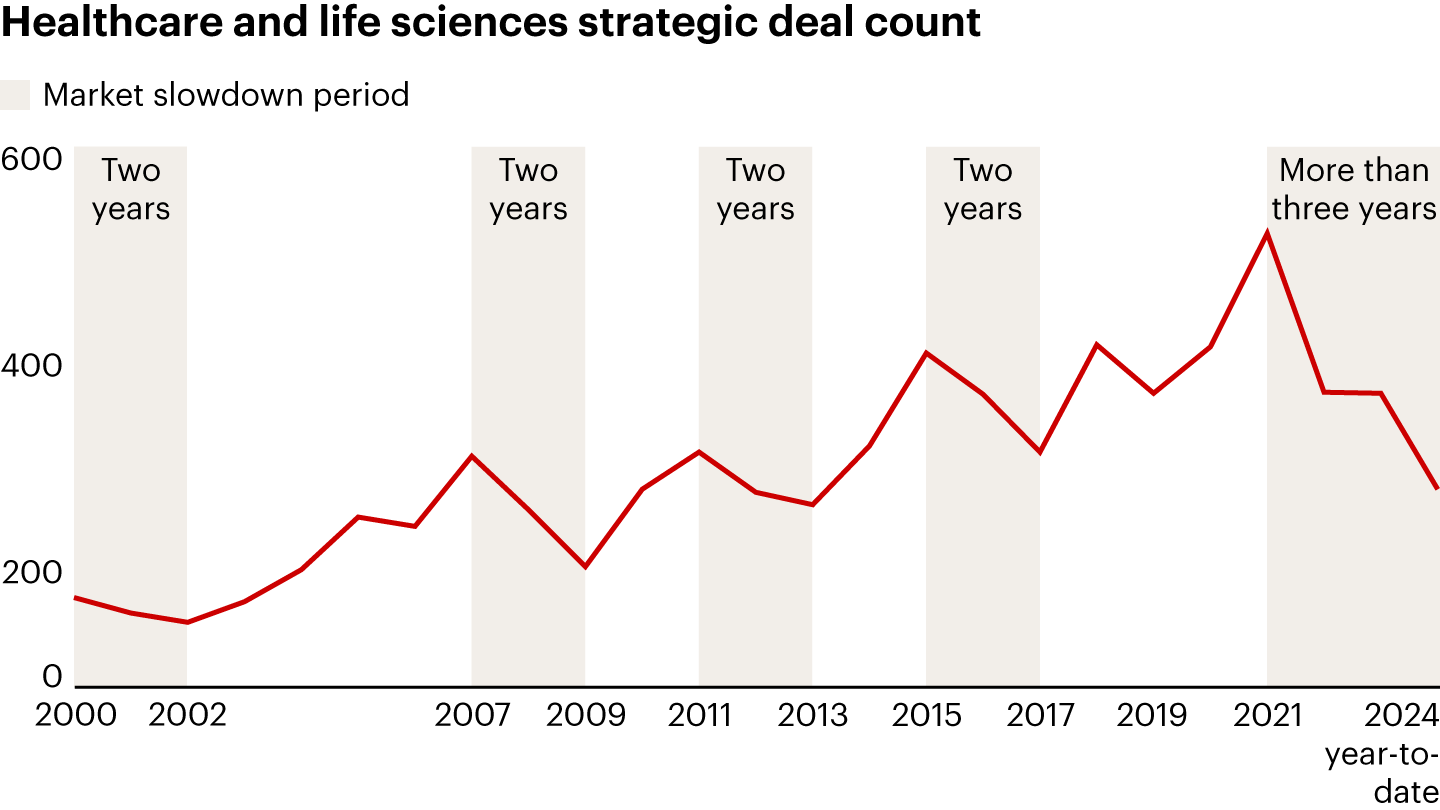
      M&A recovery is taking longer than expected in healthcare and life sciences as dealmaking typically returns during year three after downturns

      참고: 2024 year-to-date as of November 4, 2024; includes deals in which value is greater than $30 million

      출처: Dealogic

      But we know that participation in the M&A market has long been a strong predictor of success in this industry, with the most frequent acquirers—namely, those that make at least one deal a year—achieving 12.2% growth in total shareholder returns (TSRs) over the years 2012–2022 compared with 0.3% growth for companies that didn’t acquire (see Figure 2). This differential is larger than any other industry, highlighting the importance of M&A to TSRs in healthcare. So, staying on the sidelines is not a sustainable long-term strategy.

      Figure 2
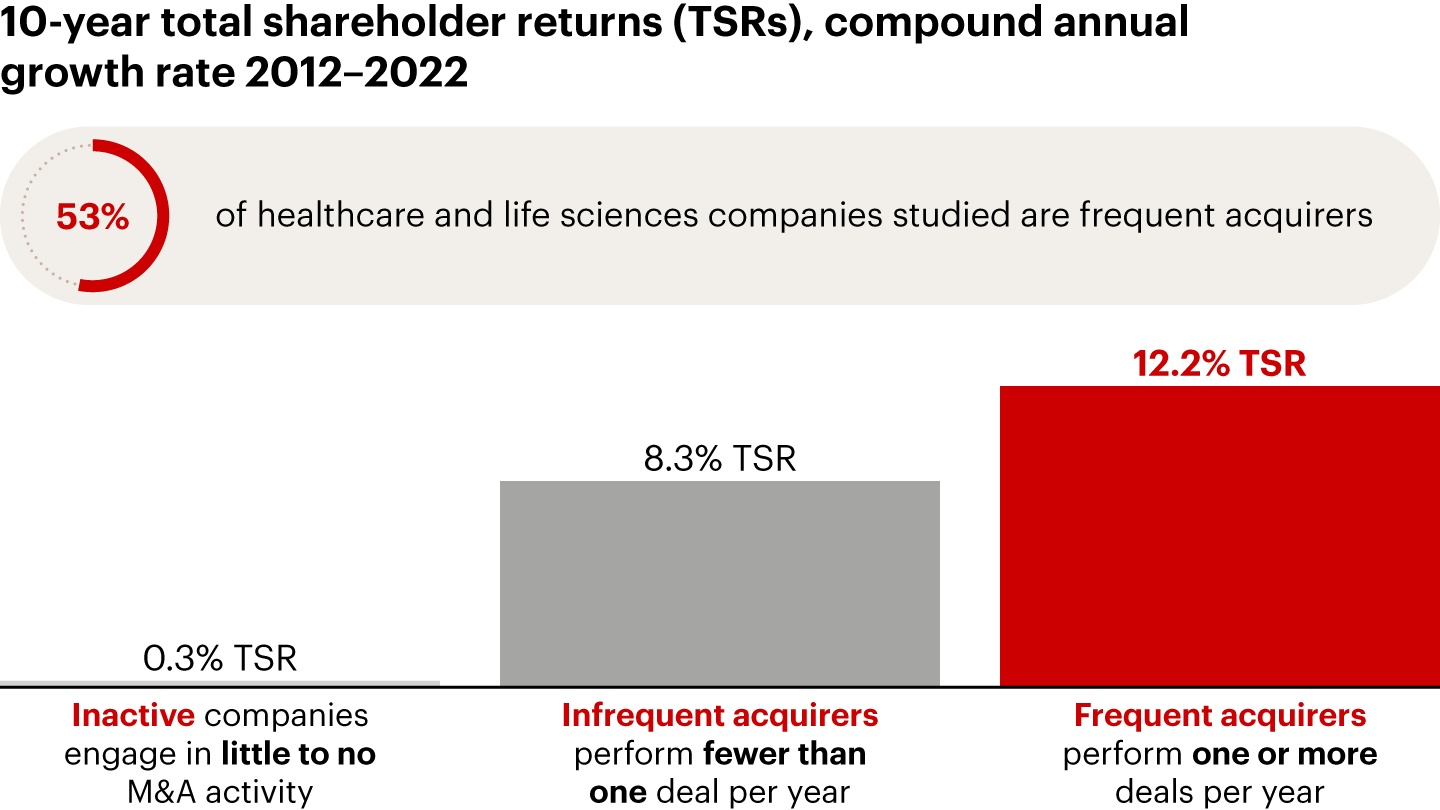
      In healthcare and life sciences, frequent M&A is the most common and rewarding approach
      Sources: Dealogic; SPS by With Intelligence; Bain M&A Value Creation Study 2023 (n=153 companies)

      Given this reality, we saw healthcare companies that have historically been active buck the M&A slowdown trend by pushing ahead amid the market’s new realities. Gilead Sciences, Merck, AbbVie, Stryker, Boston Scientific, and Johnson & Johnson all stayed in the game.

      Johnson & Johnson MedTech recently invested more than $30 billion in acquisitions to double down on cardiovascular. In 2024, it acquired Shockwave Medical and V-Wave on top of its earlier purchases of Abiomed in 2022 and Laminar in 2023. Gilead bought or invested in two biotech companies to bolster its innovation muscle. And Stryker maintained a consistently bold M&A strategy, using capital for targets in a variety of sectors and publicly announcing that M&A will be “the No. 1 use of our cash going forward.”

      As others across the healthcare and life sciences subsectors watch these leaders achieve new revenue streams and gain access to much-needed innovation and technology to speed product development, more are likely to play catch-up.

      Let’s look at the changes signaling a return to M&A.

      AI is a disruptive technology that is no longer optional for healthcare companies

      In pharmaceuticals, the rise of AI in drug discovery and diagnostics is reshaping the sector’s competitive landscape. The smart companies are getting out ahead of the massive change. They view AI-enabled platforms as key assets in M&A deals. Think of BioNTech’s acquisition of InstaDeep in July 2023 to strengthen its position in AI-powered drug discovery, design, and development.

      Despite the need, larger pharma companies are not acquiring but rather opting to partner as the landscape evolves. That was the path taken by Bristol Myers Squibb in its collaboration with Owkin in 2022 and Tempus in 2023. Such arrangements require companies to rethink their strategies to integrate innovations and make choices regarding what capabilities they build, partner for, or acquire.

      In medtech, companies continued to pursue M&A to advance the power of AI into personalized medicine, diagnostics and imaging, surgical robotics, and care delivery. Stryker’s purchase of care.ai is a great example—it accelerates Stryker’s delivery of AI-assisted virtual care workflows and smart room technology.

      Despite the need, larger pharma companies are not acquiring but rather opting to partner as the landscape evolves. 

      Blockbuster GLP-1 treatments bring opportunity and uncertainty

      These breakthrough therapies are defining the future of chronic disease management, particularly diabetes management and weight-loss management. In late 2023, we saw incumbent pharma companies racing to acquire smaller firms in this space to expand their product portfolios. That was the case with Roche’s acquisition of Carmot Therapeutics and AstraZeneca’s licensing agreement with Eccogene. Additional players in GLP-1 will mean more splitting of the pie—and the potential to apply downward pressure on price.

      Diabetes management is one of the largest profit pools in medtech. That’s why many companies are still evaluating the long-term implications of GLP-1s on their business, whether positive or negative, and determining how future M&A strategies could impact their current portfolios. While these therapies will deliver significant growth across subsectors, there is still a lot of uncertainty over whether or not supply will keep up with demand, which indications will get regulatory approval, and what payers will reimburse.

      More investment in specialty and scope deals

      As healthcare companies continue to evaluate their portfolios, more than 80% of the deals have been scope—that’s a higher percentage than any other industry—and we anticipate the activity will continue at the same rate. Companies will keep their M&A focus on the strategic areas in which innovation and the potential for long-term growth align.

      In addition to GLP-1s, pharma’s high-growth areas include immunology and oncology. In broader healthcare services, companies are doubling down on selected specialties by acquiring community oncology practices.

      Medtech continues to see a steady flow of carve-outs as companies enhance their portfolios’ focus and improve their financial positions. For example, Baxter International sold its kidney care unit, Vantive, which was purchased by the Carlyle Group and Atmas Health.

      Companies will keep their M&A focus on the strategic areas in which innovation and the potential for long-term growth align.

      How can healthcare and life sciences companies best use M&A to advance their strategy?

      While the overall healthcare sector remains slow to recover, we feel bullish on 2025. Historically active M&A players will step forward to acquire strategic assets and to capitalize on these key trends. The best will come out on top by building their muscles for scope deals, using generative AI to accelerate the deal process, developing their M&A strategy and diligence processes to consider evolving government regulations, and engaging their integration teams in diligence to help ensure seamless execution.

      Build muscles for scope deals. The healthcare industry emphasis on scope deals requires an advanced M&A capability to validate value drivers. For example, they’ll need more complex synergy models, increased planning to meet regulatory guidelines, and new software and technology to support more sophisticated diligence. The needs are even more pronounced given the uncertainty with GLP-1s and AI. Planning for revenue synergies may be even harder, making it more challenging to forecast the deal thesis.

      Use generative AI to accelerate the deal process. Just as generative AI is shaking up the industry itself, the emerging technology can give acquirers an edge in dealmaking (see “Generative AI in M&A: You’re Not Behind—Yet”). Generative AI enables healthcare and life sciences companies to get smarter more quickly on global trends, disruptive technologies, funding, and innovation. The frontrunners already are using it for faster, more complete screening and to identify assets at earlier stages.

      Develop M&A strategy and diligence processes to consider evolving government regulations. In many areas of healthcare and life sciences, tougher regulations on pricing and changing government policies are a fact of life. This past year, serial acquirers have adjusted to this new reality by building a longer close period into their deal assessment and increasing attention to antitrust considerations early on. The new federal government administration in the US may consider alternative solutions and remedies, but it is too early to tell how that will impact dealmaking, particularly for megamergers. Moreover, it is unclear what impact potential tariffs will have on M&A, particularly for cross-border deals. To be successful, healthcare and life sciences companies must be ready to adapt their strategies, diligence processes, and deal models as new policies and regulations emerge.

      Engage your integration teams in diligence to help ensure seamless execution. Given the continued high valuation for quality assets, the best acquirers are more bullish on cost and revenue synergies. The larger the deal, the more thoughtful they are about how to realize these synergies to make the deal economics work. While the diligence of innovative assets has historically been about the science (in many cases, leaving the asset largely untouched after acquisition), the higher valuations require acquirers to plan for more aggressive operational synergies while retaining the talent and innovative capabilities that are so important in these deals.

      In this rapidly evolving industry, healthcare and life sciences companies that resist entering the M&A game risk falling behind competitors that take a disciplined, bold, and long-term approach to living with the new realities.

      Read the Next Chapter

      M&A in Machinery and Equipment: Learning from the Best

      Read our 2025 M&A Report

      Download the PDF EXPLORE THE REPORT

      Overview

      • Looking Ahead to 2025: Preparing for What Comes Next

      • Looking Back at M&A in 2024: Dealmakers Adapt as the Market Idles

      • Generative AI in M&A: You’re Not Behind—Yet

      • Where the Deals Are: 2024’s Top M&A Markets

      • Ten Takeaways from Our M&A Executive Survey

      Industry Views

      • Aerospace & Defense M&A

      • Automotive & Mobility M&A

      • Building Products & Technology M&A

      • Consumer Products M&A

      • Energy & Natural Resources M&A

      • Financial Services M&A

      • Healthcare & Life Sciences M&A

      • Machinery & Equipment M&A

      • Media & Entertainment M&A

      • Retail M&A

      • Technology M&A

      • Telecommunications M&A

      저자
      • Headshot of Jason Asper
        Jason Asper
        Alumni, Chicago
      • Headshot of Kai Grass
        Kai Grass
        파트너, Dusseldorf
      • Headshot of Allen Granzberg
        Allen Granzberg
        파트너, New York
      • Sarah Yanes
        파트너, New York
      • Headshot of Saskia Carlebur
        Saskia Carlebur
        파트너, San Francisco
      문의하기
      관련 산업
      • 의료 기술
      • 제약
      • 헬스케어
      • 헬스케어 납부자 및 전달체계
      • Healthcare Providers and Services
      관련 컨설팅 서비스
      • M&A
      M&A
      How Companies Got So Good at M&A

      What 20 years in the trenches have taught us about deal success

      자세히 보기
      M&A
      Ten Takeaways from Our M&A Executive Survey

      We asked over 300 practitioners across the globe about their dealmaking efforts in today’s market. Here’s what they said.

      자세히 보기
      헬스케어
      Healthcare Corporate M&A: Rebounding from the Pandemic

      Record-high valuations are forcing acquirers to get creative.

      자세히 보기
      M&A Report
      Media M&A

      AI and other tech tools can boost bidding confidence in this highly competitive environment.

      자세히 보기
      헬스케어
      The Healthcare AI Adoption Index

      A survey of more than 400 healthcare buyers reveals what’s fueling their AI experimentation and pinpoints opportunities for innovation partners.

      자세히 보기
      태그
      • 의료 기술
      • 제약
      • 헬스케어
      • 헬스케어 납부자 및 전달체계
      • Healthcare Providers and Services
      • M&A
      • M&A Report

      프로젝트 사례

      A Medical Imaging Company’s CX Overhaul Boosts Customer Satisfaction and Revenue

      See more related case studies

      Divestiture adds value to parent, subsidiary

      See more related case studies

      M&A A healthcare giant overcomes merger risks for global growth

      See more related case studies

      베인에 궁금하신 점이 있으신가요?

      베인은 주저 없이 변화를 마주할 줄 아는 용감한 리더들과 함께합니다. 그리고, 이들의 담대한 용기는 고객사의 성공으로 이어집니다.

      급변하는 비즈니스 환경에서 살아남기 위한 선도자의 시각. 월간 Bain Insights에서 글로벌 비즈니스의 핵심 이슈를 확인하십시오.

      *개인정보 정책을 읽었으며 그 내용에 동의합니다.

      Privacy Policy를 읽고 동의해주십시오.
      Bain & Company
      문의하기 환경정책 Accessibility 이용약관 개인정보 보호 쿠키 사용 정책 Sitemap Log In

      © 1996-2026 Bain & Company, Inc.

      문의하기

      무엇을 도와드릴까요?

      • 프로젝트 문의
      • 채용 정보
      • 언론
      • 제휴 문의
      • 연사 초청
      오피스 전체보기