

Brief

한눈에 보기
- Grocery retailers face mounting challenges. Without taking serious action, they could suffer a 20% to 40% margin decline by 2025.
- Using advanced data analytics and tools, retailers can better understand shopper behaviors and category dynamics in a way that enables them to create win-win situations with brands based on common goals.
- Bain Advanced Retail Buying gives grocers the opportunity to generate 2 to 5 percentage points of savings in the cost of goods sold (COGS), typically a retailer’s biggest cost item.
It’s no secret that most traditional grocery retailers face tremendous challenges. Consumers are embracing hard discounters, pressuring prices. They are shopping online, requiring grocers to deliver omnichannel options. Addressing these and other mounting challenges means finding funds to invest—but profit margins have been declining for more than a decade. Unless they take serious action, grocery retailers could experience a margin decline of 20% to 40% in value by 2025, according to a Bain & Company analysis.
All of these issues have left grocery retailers searching for new sources of value. There is one area that abounds with overlooked possibilities: the cost of goods sold (COGS), typically a retailer’s biggest cost item.
There are reasons why most retailers find it challenging to achieve sustainable, game-changing results with buying: They usually focus on incremental, year-over-year improvements. Alternatively, they resort to arm-wrestling tactics that may deliver meaningful one-off savings, but do nothing to create long-term value.
However, some grocery retailers are now yielding better results with a far more strategic approach that delivers margin improvements and spurs significant growth. We call it Bain Advanced Retail Buying. Advanced analytics capabilities enable grocers to mine their data on an unprecedented scale and paint a crystal-clear picture of shopper behaviors. The insights they derive from the data allow them more easily to align category and buying strategies and create win-win situations with brands while delighting shoppers. They can reset category strategies in line with growth and profit aspirations, not simply focus on incremental improvements, and set the stage for better collaboration with brands toward the mutual goal of growing a category through joint business planning. This approach requires a tight process and the development of new capabilities to sustain and repeat success.
In our experience, Advanced Retail Buying can unlock 2 to 5 percentage points of COGS reduction for grocers.
Bain Partner Richard Pelz shares three strategies retailers can use to improve their approach on cost of goods sold, typically a their biggest cost item.
Use advanced analytics to better understand shopper, market and category dynamics. In addition to market data from the likes of Nielsen, Kantar or GfK, grocers can use their loyalty card data, and with the growth of online purchases, real-time shopper or competitor insights. Advanced analytics tools enable them to integrate these sources with their financial data in a “data mart” that generates unprecedented transparency and insights on category, shopper and brand dynamics down to the SKU level. This empowers retailers to develop deeper and proprietary insights about how their shoppers actually shop a category. Combined with a clear understanding of which role each category plays for the customer, retailers can define the strategic imperatives for the category and work together with brands to grow sales and profitability. Data sharing between brands and retailers becomes increasingly important in the process.
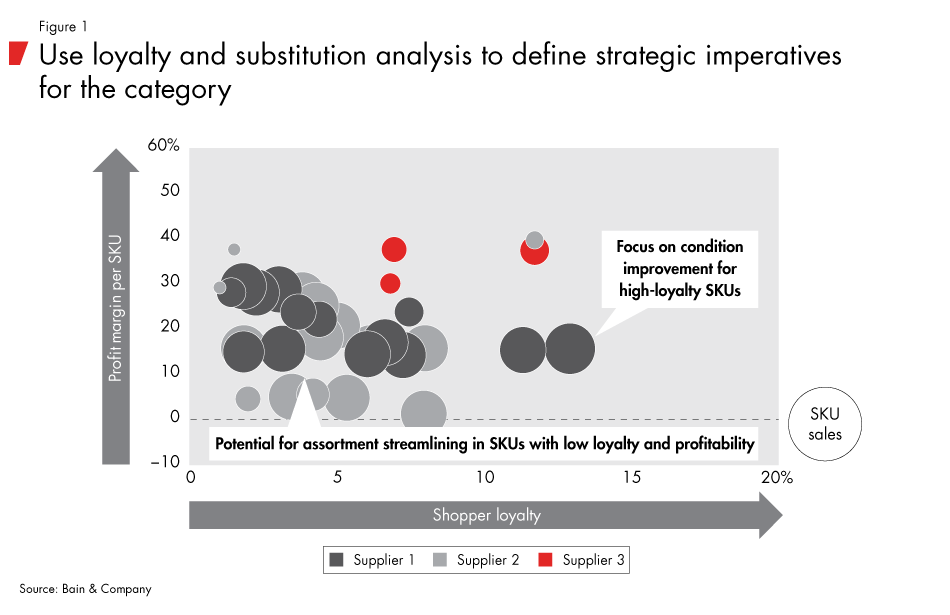
For instance, one retailer used shopper loyalty and substitution analysis based on billions of rows of transaction data to determine the core and noncore SKUs by brand for key categories such as beverages, detergents, toiletries or bread (see Figure 1). This allowed the retailer to focus on improved buying for “hero” SKUs to increase sales and profitability, assess the risk from assortment streamlining and make clear decisions on new SKU listings that would help them to differentiate their offering. The effort helped the retailer achieve more than 5 percentage points of COGS savings.
Figure 1

In another situation, a retailer used perceptual mapping of hygiene products, based on actual purchase behaviors, to identify which product features mattered most to consumers. It learned that shoppers differentiated strongly between branded and private label products for small packs, but not for large packs. With this insight, the retailer developed distinct buying strategies for different products and pack sizes. For branded products, the key objective was to ensure promotional participation and availability in smaller packs. For private label, the focus was on jointly reducing the product costs (e.g., with lower input costs) while improving quality to together spur growth in big pack sizes. This also required the retailer to develop a better understanding of private label input and production costs. Overall, these actions resulted in more than 6% COGS savings in the category.
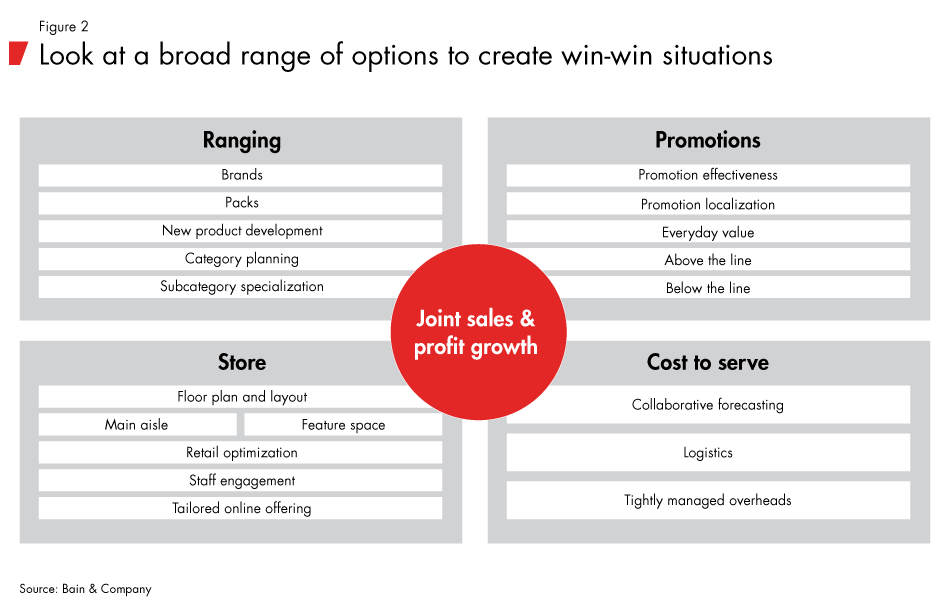
Create win-win situations with brands based on common goals. Once a retailer identifies the contributors to category performance, it can offer growth prospects to brands in return for improved conditions that lead to win-win deals, boosting sales and profitability. The key to creating a win-win is to look at the broad range of actions that offer opportunities for both retailer and brand to mutually benefit. That means considering opportunities across a wide range of areas including product assortment and innovation, increasing the effectiveness of promotional spending, improved in-store execution or lower cost-to-serve along the supply chain (see Figure 2).
Figure 2

A retailer in a developing market saw a growing shopper preference for local brands in detergents. It chose to reset the category and searched for a local brand partner to invest in the rapidly expanding segment. Eventually, the retailer partnered with one of three local brands, agreeing to increase its investments in the brand by about 30%. The move led to double-digit sales growth and significant margin improvements.
In another situation, a retailer in North America wanted to deepen its partnership with a large snack-food brand to boost sales and profitability by increasing the brand exposure in stores, in particular during peak seasons (which accounted for almost 15% of sales). An assessment of SKU-level product profitability identified an opportunity for both the retailer and brand to benefit by increasing the exposure for more profitable brands. By expanding the brand exposure and seasonal promotion share, the retailer was able to commit to greater than 6% sales growth for the brand in an otherwise stagnating category while securing an approximately 3 percentage point improvement in purchasing conditions.
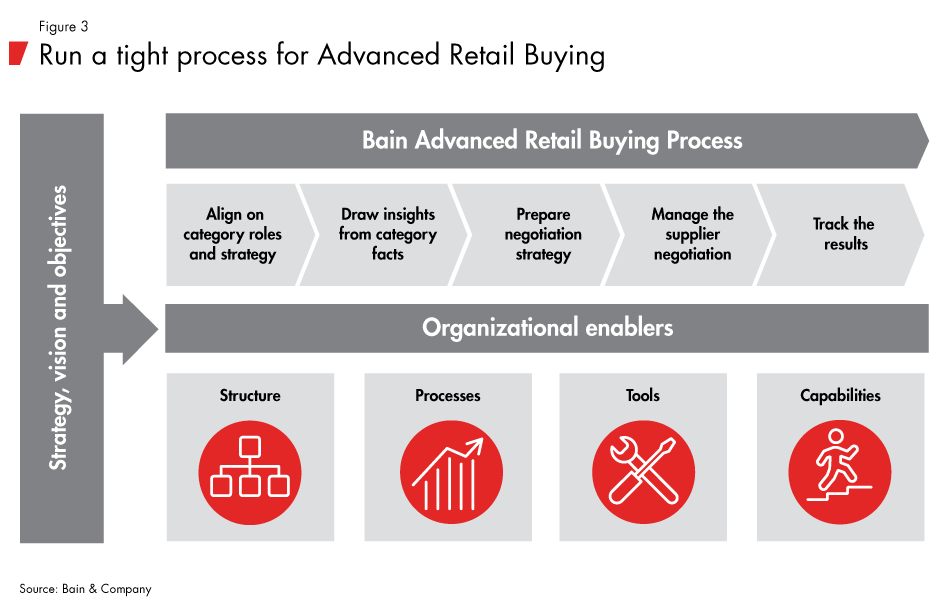
Build capabilities to sustain and repeat success. While many deals may deliver substantial onetime improvements, the objective of Bain Advanced Retail Buying is to sustain and repeat results. From our experience, implementing a customized buyer toolkit, jointly creating first successes and deploying a rigorous process are all key to making changes in buying stick (see Figure 3).
Figure 3

A major obstacle for category management or buying teams in retail is not the lack of data, but the reality that data typically is scattered across different systems (easily more than 10) and often inconsistent. Consequently, buyers are reluctant to use this data if they cannot rely on it. The solution: a customized buyer toolkit, with core category analytics based on unified customer, market, store, financial and supply chain data, readily available on a desktop. Advanced analytics tools such as Alteryx, Tableau and Python can deliver those functionalities, without requiring changes to legacy systems.
In many developing markets, success depends on the maturity of the buying organization. There, retailers typically set up dedicated commercial analytics teams. They work alongside buyers with the common goal of optimizing shopper experience, growth and margins for the category as a whole.
Training the buying teams on the toolkit and using it to achieve the first successes builds credibility within the organization. From our experience, strong teams often lead the programs, taking buying skills from good to great and setting an example for their peers, which builds momentum for change.
Ultimately, it takes top management setting the tone and a disciplined process to maintain a successful Advanced Retail Buying program. That means careful coordination and tight meeting schedules to shorten timelines, as well as a rigorous review of offers and tracking of results to ensure real and timely top- and bottom-line results. And the work doesn’t stop with signing the deal. The best retailers and brands review their results on a quarterly basis, taking action as needed to improve.
It seems like a big endeavor, but Advanced Retail Buying could spell the difference between watching helplessly as retail margins continue on their rapid, downward path—or regaining ground.
James Anderson is a Bain & Company partner based in Sydney. Grégoire Baudry is a partner in Paris, and Richard Pelz is a partner in Munich. Kim Burroughs is a principal based in Chicago.
First published in 6월 2018