

Brief

한눈에 보기
- With their immense audiences and colossal investments in content, Netflix, Amazon and other digital disrupters are accelerating a decadeslong rise in the cost of acquiring and creating great content.
- Companies across the media industry (studios, networks, production companies) cannot hope to compete with these juggernauts unless they fund massive investments in content, along with essential new capabilities in production technology and data analysis. Significant cost transformations are the surest way to free up the necessary capital.
- Cost transformation is never an easy topic and always a challenging task—more so in Hollywood, where generous spending is a time-proven way to woo top talent and acquire the best content. But with an existential threat looming, executives in media companies must find ways to integrate cost transformation into their organizations and the industry culture.
Since the dawn of the blockbuster era, commonly dated to the release of Jaws in 1975, media companies have operated on the principle that creating and launching the next big hit was the No. 1 goal. The rewards from success (box office receipts, international distribution, syndication, home video) were so immense that they more than justified the expense.
This blockbuster mindset fueled enormous creativity, innovation and technological advances in production. Media companies developed strategies for assembling the best talent and providing them with almost anything they wanted. Production and marketing budgets ballooned as studios invested in bigger bets, comforted by the fact that a hugely successful Pirates of the Caribbean franchise would more than cover the occasional John Carter miss.
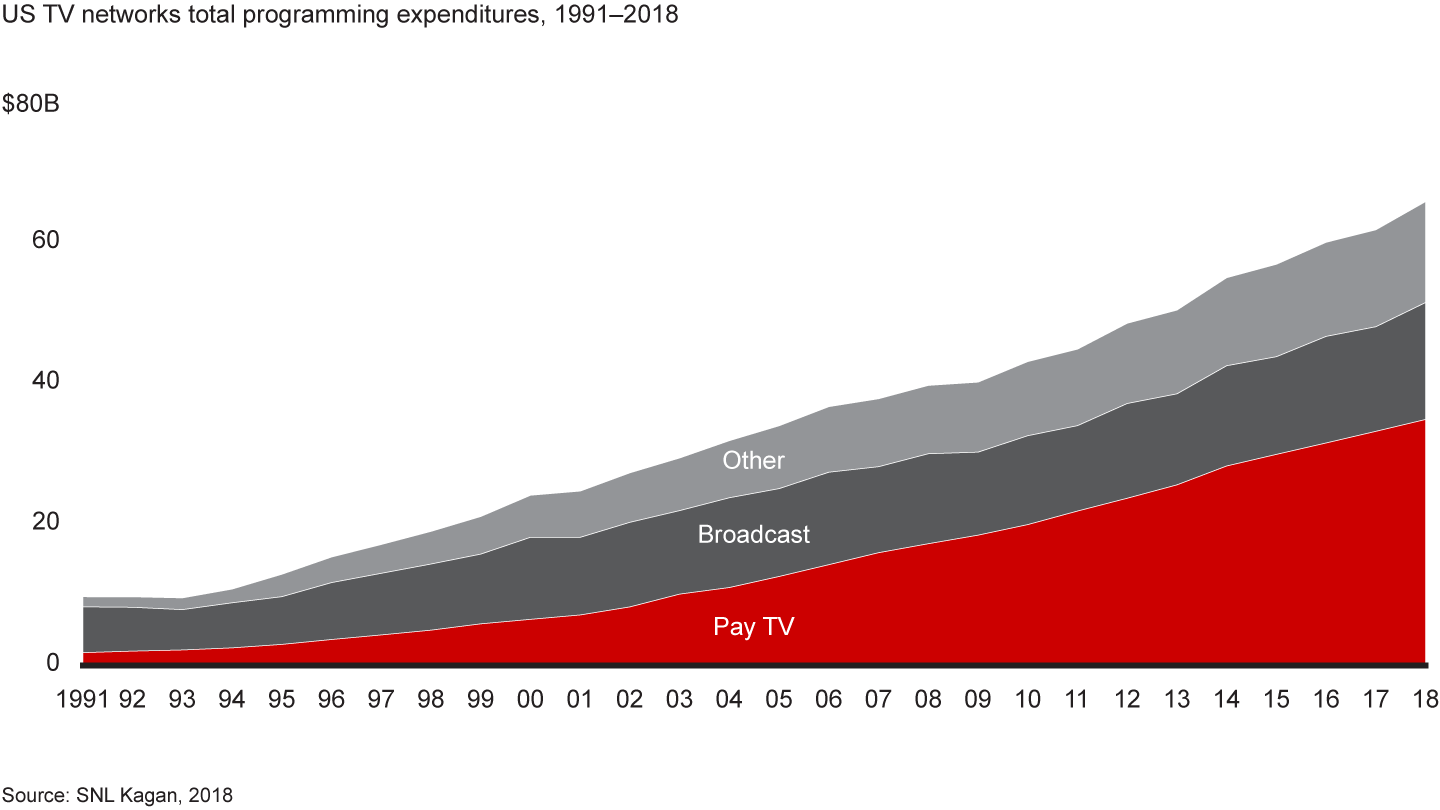
This “go big, or go home” mentality hasn’t been limited to the big screen. The enormous success of television series like Friends and ER, which at their peaks cost more than $10 million per episode, generated outsized rewards for their owners, opening purse strings for hundreds of shows and showrunners as well as the massive web of production services, agents, assistants and even caterers supporting that ecosystem. In the US, an enormous influx of capital from the rise of pay TV, which started plowing billions of dollars into the industry in the 1990s, accelerated this growth even further (see Figure 1). Today, episodes of the final season of HBO’s Game of Thrones cost upward of $15 million each.
Figure 1

New players, new rules
The arrival of a new breed of digital disrupters, led by Netflix and Amazon, accelerated the game dramatically. Viewers have voted overwhelmingly with their eyeballs and wallets for these streaming services, delivering revenue that allows the disrupters to invest in content at levels that could quickly exhaust the coffers of incumbents. Netflix, for example, will reportedly spend $15 billion on content in 2019. And as digital-first services, these companies have funding advantages that traditional media companies cannot match because investors value them differently or, in Amazon’s case, their revenue is closely linked to other businesses.
Executives in traditional media know that the center cannot hold. Something will have to change in order to free up the necessary funds for major studios to compete with this existential threat. It’s hard to overstate the impact that Netflix, Amazon and other streaming services have had on TV. Their outsized investments in content development have changed what were once welcome sources of incremental funding for traditional networks into fierce competitors. What’s more, digital disrupters extend their advantages by using data analytics at a pace and level of granularity that incumbents struggle to match. They analyze viewing behaviors and retention patterns to make big decisions, such as Netflix paying a staggering $100 million to renew its access to Friends in 2019. They use cloud services such as Amazon Web Services to scale rapidly and at unit economics much more competitive than traditional fixed-cost approaches. Taken together, disrupters can offer a more personalized and cost-efficient experience to viewers by knowing and serving them better.

Funding Hollywood’s Future
Traditional media needs to shift how it spends its money to compete in an age of digital disruption.
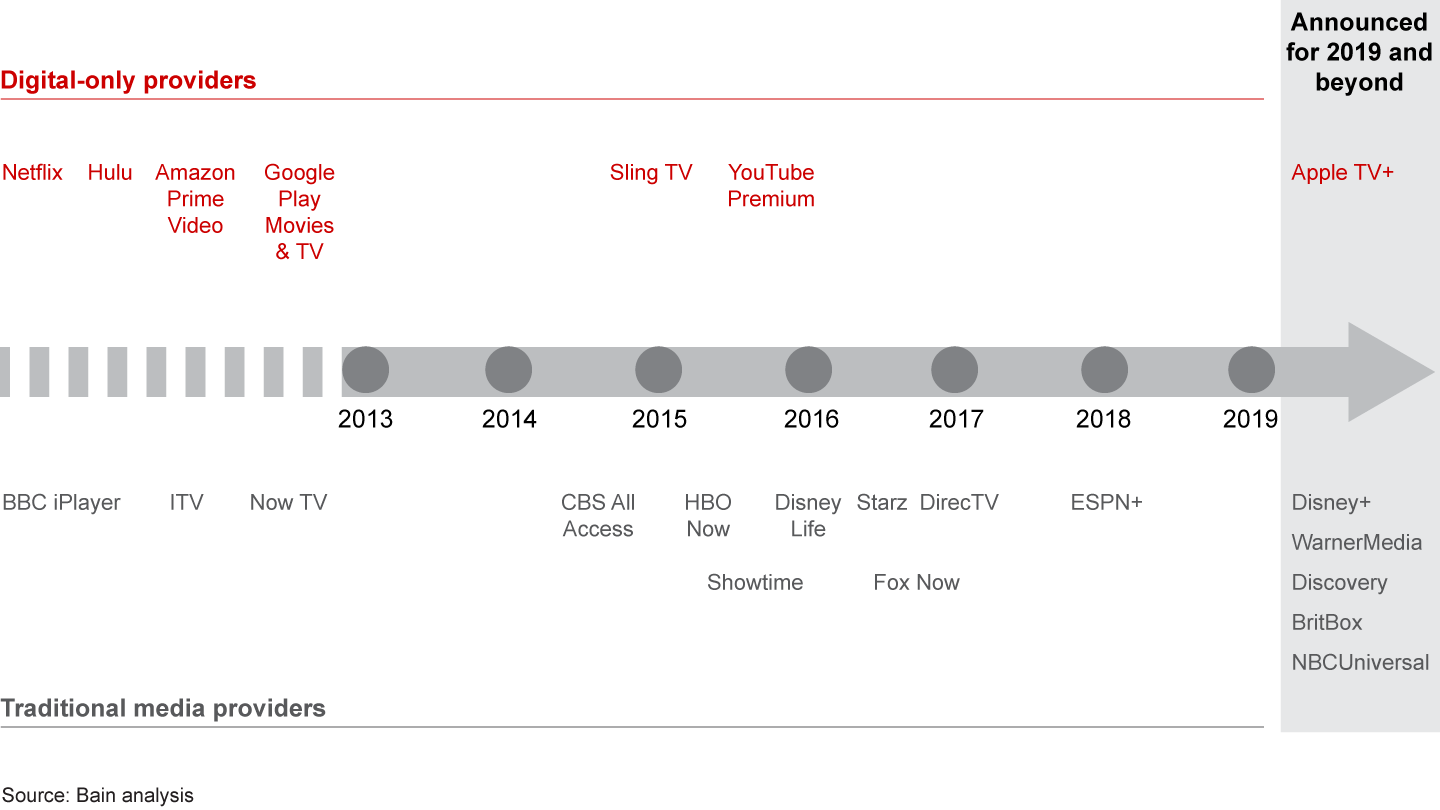
Studios and networks are responding by consolidating to grow bigger and acquire more content (Disney and 21st Century Fox, Discovery and Scripps, and others likely to come) and to secure broader distribution (Comcast and NBCUniversal, AT&T and Time Warner). And after years of offering limited streaming services primarily designed to protect their business models, media companies that were holding out are finally launching full-throated over-the-top services, headlined by offerings from Disney, NBCUniversal and, in the UK, BritBox by ITV and BBC (see Figure 2). Disney's low monthly price and enormous library are certain to ratchet up the pressure on other streaming players, particularly those with undifferentiated content and less favorable economics. Incumbents are also rapidly investing in their own digital and analytic capabilities to close the gap with disrupters—competitive counterattacks that will require scale investments in familiar areas such as content and advertising as well as massive spending in newer areas such as mobile and platform technology, big data to personalize content, and digitized and personalized customer service.
Figure 2

How can media companies compete?
These countermeasures by traditional media companies (consolidation, streaming services, investments in analytics) are welcome, if overdue. But on their own, they won’t be enough to keep them in the game.
Bolder moves are required. Competing with digital disrupters will be extremely costly. To survive, traditional media companies will need to reinvent their operating models: the organizational structure, internal capabilities, and the culture and commitment of the team.
What does cost transformation in media look like? It doesn’t mean everyone has to go straight home after the last Golden Globe winner is announced or that we’re canceling all flights to Cannes.
It does mean that media companies need to work cost transformation into their culture and commit to long-term cost management processes that reinforce the core business with new capabilities and build new commercial avenues. Senior executives will need to make trade-offs on a grand scale so that they can keep funding the present while investing in the future. The entire C-suite needs to support the effort, and the message must be clear: This isn’t about boosting margins; this is about survival.
But the opportunity behind such a transformation is huge. A structured program can redirect funds to align with growth strategy, whether that’s based on M&A, innovation or content acquisition. The next five years promise to be brutally competitive and challenging as media companies innovate and experiment to find new markets or strategic beachheads from which they can grow for another decade or more.
Bain Partner Charlie Kim discusses how traditional media companies can regain their competitive footing in the face of digital media's stronghold.
Where do we need to invest?
So how is this different from what’s been happening? Hasn’t the industry already been stringently managing costs to counter new competitive threats?
Some, but not nearly enough, and not on the scale required. What’s needed now is a more ambitious approach that takes a new tack on expenses and investment. The goal is not just to ensure that lower-value costs stay out of the business but also, more importantly, to ensure that funding flows more freely to the places where it will help companies win in their markets. Four areas are critical.
-
Content is still king. House of Cards was a groundbreaking series for Netflix, raising the bar for streaming content and bringing binge watching to the mainstream. But to land the series, Netflix had to outbid HBO and possibly others for the rights to air it. The show’s developers already had the content, the director and the talent lined up before any network had the chance to partner with them.
The story illustrates how content creators are gaining more control in the industry. It also highlights the fact that finding and delivering great content remains the most important part of the game. And it’s getting more expensive every year. Once, studios and networks could invest lightly in new programming and wait and see where it went. If the show succeeded, they could boost their investment, knowing they would reap the returns for years as hundreds of episodes played in virtual perpetuity in syndication. Streaming services operate under a different model—namely, outbid the competition for the most compelling content to increase subscriptions. Networks and studios pay more and earlier, creating a frothy market and an arms race for the hottest properties.
- Advanced data analytics and consumer insight capabilities. Analytics are nothing new in media, but every year, the ball moves quicker and the stakes get higher. Investing in analytic capabilities is the only way to make informed decisions about content, marketing and distribution. Having real-time visibility into viewership opens new possibilities to deliver better recommendations, more relevant ads and new ways to generate revenue. Deeper insights can also deliver a strategic advantage in terms of selecting the right content and negotiating prices beyond viewership numbers.
- Next-generation technology to enhance production. Technology advancement within the media industry is likely to accelerate over the next three to five years, with innovations spanning traditional video equipment, augmented and virtual reality, live video formats on social media, drone use during production and the rise of connected home experiences. This technology arms race will require greater cost efficiency elsewhere in the budget to free up funds for reinvestment in capital expenses and production budgets.
- Direct-to-consumer models. D2C models are evolving rapidly, and the scramble to break out of a growing pack intensifies the competition. Beyond the investments in user interfaces, customer acquisition and content bundles, incumbents will have to invest in new capabilities, such as digital-first user experiences, customer service capabilities and automation to drive economic efficiency.
Episodic cost-cutting exercises typically reduce costs by only 1% to 2%, but that’s not even table stakes today given the economic advantages enjoyed by disrupters. Executive teams should be aiming higher. An ambitious cost transformation program should reach for double-digit improvements, perhaps as high as 20% or more in specific cost areas.
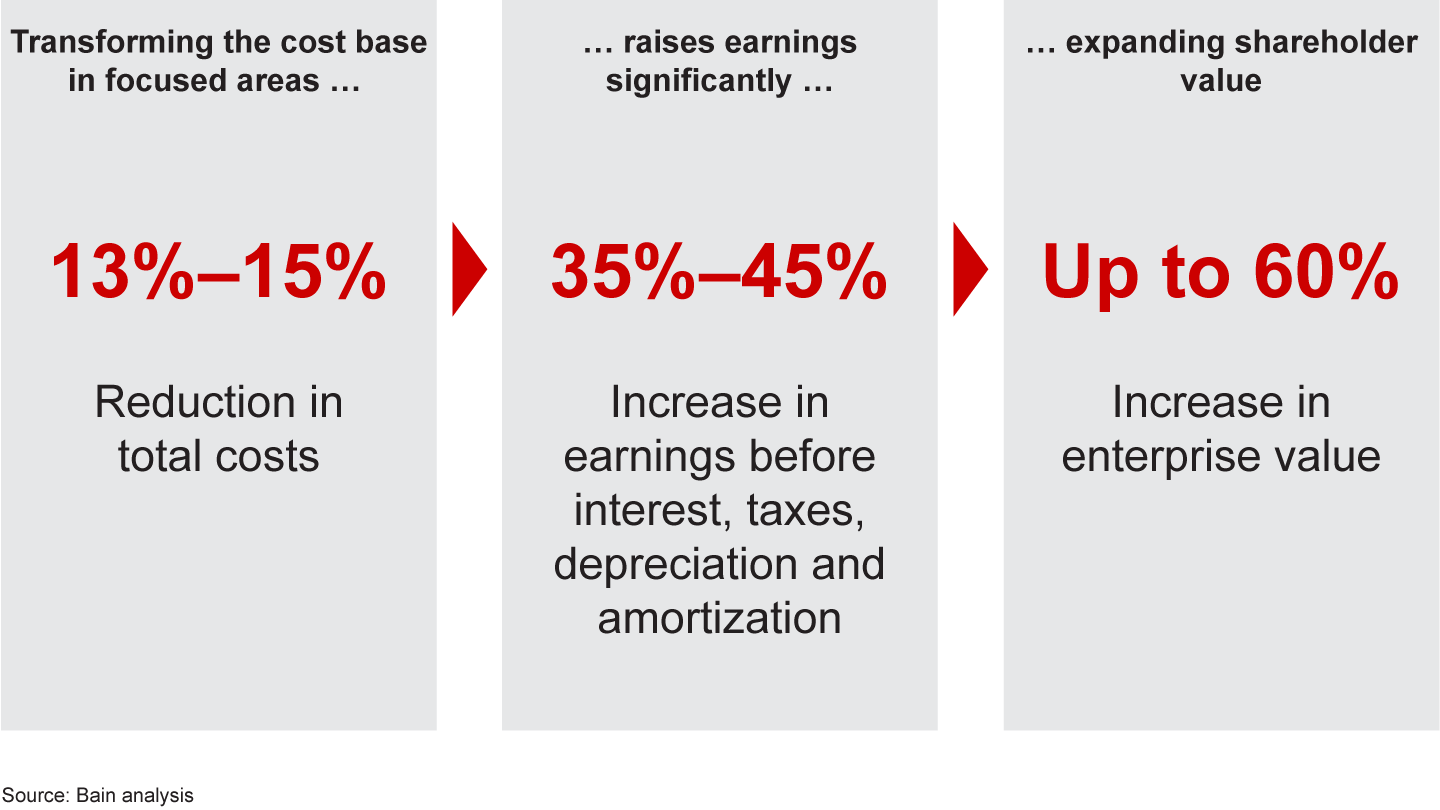
Media companies making this shift have shown achievable opportunities that would add 5 points to 7 points to earnings before interest, taxes, depreciation and amortization in the first year, with as many as 10 points of EBITDA improvement at full potential. Given current margins and multiples, this would increase the enterprise value of these companies by as much as 60%, both through higher earnings and improved multiples (see Figure 3). This rise in enterprise value increases access to debt markets and reduces the cost of capital, boosting capital flexibility.
Figure 3

Change is hard
With this huge pot of gold at the end of the rainbow, why isn’t this happening faster?
First, taking costs out—and keeping them out—is just hard. Bain’s research finds that while almost all companies have some cost program running, three out of four are not hitting their productivity targets, and more than 40% are missing their goals by more than 50%. Failures like these cause investors to recoil, leave executives dispirited and generate cynicism on the studio lot—all of which can lead to spurious budgeting to protect against future cuts.
Second, the tangled web of costs at most media companies has taken years to develop, exacerbated by acquisitions, complex hierarchies and exceptions to accommodate star talent. Cost reduction hasn’t been as big a priority as developing new creative properties and smoothing the integration of people and power in merging companies.
Finally, Hollywood’s historically glamorous culture has proven a time-tested way to draw in the most creative talent. Senior executives can be forgiven for not wanting to risk killing the goose that laid the golden egg—or even putting it on a diet. Significant cost transformation may be necessary, but it’s unlikely to succeed if it cannot work within the industry’s culture.
So how will media companies make the changes necessary to reduce costs so that they can make huge investments in new lines of business?
What’s a media executive to do?
Sustainable change will require media companies to define a clear vision of what they want to be 5 or 10 years from now, not just what they are today. Today’s media environment is dynamic and exciting. How can media executives make sure they are able to deliver to their customers in the future? Four areas of focus should help them think about how to launch and carry out a sustainable cost transformation.
Don’t go small. Incumbents won’t be able to match the financial and operational nimbleness of insurgent competitors unless they truly bend the cost structure of the organization. Trimming 3% to 5% around the edges won’t do it. What’s needed are game-changing approaches such as zero-based redesign or radical simplification. Eliminating duplicative processes and layers of complexity not only reduces costs but also speeds up decisions and reenergizes the organization.
Spending decisions should center around one core question: Does this investment help us serve our customers better and increase our competitive advantages? Orienting around the customer and linking decisions to strategy help prioritize spending on differentiated experiences for customers. Comparing performance to external benchmarks, such as those found in the Bain Media Benchmark Library, can reveal areas with the potential for quick wins.
Approaches should vary across the organization. For example, production costs should receive a delicate scalpel treatment, while simplifying administrative processes might deliver bigger savings. Marketing should balance traditional and digital methods, using test-and-learn elements to improve the effectiveness of tactics and messaging.
Of course, the amount needed for content, data and analytics, and technology is greater than what reducing the number of catering spreads on film shoots can capture. Companies will need to build new capabilities in areas such as emerging technology, customer experience and predictive analytics—and to fund them, executives will need to aim high.
Finance and creative teams should lead together. Given the difficulty of managing costs effectively, top finance talent needs to be involved in the effort. But to make changes big enough to make a difference, the team also needs people who understand content and what it takes to grow the business. Creative teams cannot see this as something that’s being done to them; it needs to be led and owned by the front line. Functional and business experts should support the team, and it’s essential to deploy the right people on the right problems. Companies should embed cost metrics that link to incentives for team and individual performances into operations. Given the urgency of this project, senior executives should treat it with the same seriousness as they would treat the launch of an important new project. New partnerships may be part of the plan to increase cost efficiency; take the best of what’s on the lot and off.
Aggressively drive results, and reinvest visibly. It’s important to bank real savings quickly to capture momentum. But if all you do is cut costs, there will be a crush at the door as talent flees to other studios. Leaders must show that they are reinvesting the savings in programs that generate growth. A strategic and disciplined approach toward investment in content creation and acquisition can help secure buy-in for the larger effort.
Deploying Agile teams to tackle cost savings is one way to show quick results. Under Agile principles, small, cross-functional teams are empowered to make decisions rapidly—days and weeks rather than months—and then bring ideas to market quickly. Agile processes are most effective where there is headroom to experiment and adapt quickly based on feedback. This gives executives confidence to empower these groups, knowing that it’s easy to scrutinize, refine and redeploy resources as they begin to see results—or lack thereof.
Work with the creative culture. Resistance to change isn’t a character flaw; it’s a natural reaction to promote stability. Successful transformation efforts anticipate resistance and use every tool they have to counteract it, including endorsements from the CEO, cascading messaging from the executive team, financial incentives and tracking metrics. These can all be effective, but in a media company, the most important tool is showing that the cost transformation directly supports the organization’s creative and growth goals. Reinvesting savings in the content and capabilities that fulfill the organization’s creative mission are the surest way to win the hearts and minds of the frontline teams.
Tracking important metrics—for example, financial, employee engagement and leadership alignment—will help leadership teams measure progress and intervene when necessary. They should celebrate effective cost behaviors, highlight new investments and foster a cultural shift that encourages employees to act like owners and treat every expense as if it were with their own money.
Messaging is also critical, within and outside the organization. Leaders should find ways to demonstrate that cost transformations are not about extracting unreasonable profits; they are essential moves to invest in the critical areas that will allow studios and networks to compete against digital disrupters. Make the right decisions, and show all of Hollywood (customers, employees, investors and competitors) how you’re preparing for the next frontier.
As business models shift to match customer expectations and capital costs increase, the next few years will be full of turbulence and opportunity for the media industry. Media companies have a short window in which to take action. When done thoughtfully and rapidly, strategic cost transformation can help media companies reshape themselves to meet that future, spur new competitive advantages and invest for the next chapter of growth.
Charlie Kim is a partner with Bain’s Global Media practice, and Jeff Katzin is a Bain partner working with the Global Media and Telecom practices. Both partners are based in New York.
First published in 5월 2019