
Skip to Content
  • 오피스

    오피스

    미주
    • Atlanta
    • Austin
    • Bogota
    • Boston
    • Buenos Aires
    • Chicago
    • Dallas
    • Denver
    • Houston
    • Los Angeles
    • Mexico City
    • Minneapolis
    • Monterrey
    • Montreal
    • New York
    • Rio de Janeiro
    • San Francisco
    • Santiago
    • São Paulo
    • Seattle
    • Silicon Valley
    • Toronto
    • Washington, DC
    유럽, 중동, 아프리카
    • Amsterdam
    • Athens
    • Berlin
    • Brussels
    • Copenhagen
    • Doha
    • Dubai
    • Dusseldorf
    • Frankfurt
    • Helsinki
    • Istanbul
    • Johannesburg
    • Kyiv
    • Lisbon
    • London
    • Madrid
    • Milan
    • Munich
    • Oslo
    • Paris
    • Riyadh
    • Rome
    • Stockholm
    • Vienna
    • Warsaw
    • Zurich
    아시아, 호주
    • Bangkok
    • Beijing
    • Bengaluru
    • Brisbane
    • Ho Chi Minh City
    • Hong Kong
    • Jakarta
    • Kuala Lumpur
    • Manila
    • Melbourne
    • Mumbai
    • New Delhi
    • Perth
    • Seoul
    • Shanghai
    • Singapore
    • Sydney
    • Tokyo
    오피스 전체보기
  • 얼럼나이
  • 미디어 센터
  • 구독
  • 연락처
  • Korea | 한국어

    지역 및 언어 선택

    글로벌
    • Global (English)
    미주
    • Brazil (Português)
    • Argentina (Español)
    • Canada (Français)
    • Chile (Español)
    • Colombia (Español)
    유럽, 중동, 아프리카
    • France (Français)
    • DACH Region (Deutsch)
    • Italy (Italiano)
    • Spain (Español)
    • Greece (Elliniká)
    아시아, 호주
    • China (中文版)
    • Korea (한국어)
    • Japan (日本語)
  • Saved items (0)
    Saved items (0)

    You have no saved items.

    관심 있는 내용을 북마크하여 Red 폴더에 저장할 수 있습니다. Red 폴더 에서 저장된 내용을 읽거나 공유해보세요.

    Explore Bain Insights
  • 산업
    메인 메뉴

    산업

    • 우주항공, 방산 및 정부 서비스
    • 농업 관련 산업
    • 화학
    • 인프라, 건설 및 건축 자재
    • 소비재
    • 금융 서비스
    • 헬스케어
    • 산업용 기계 및 장비
    • 미디어 및 엔터테인먼트
    • 금속
    • 광업
    • 석유 및 가스
    • 제지 및 패키징 산업
    • 사모펀드
    • 사회 및 공공 부문
    • 유통
    • 기술
    • 텔레콤
    • 운송
    • 여행·여가
    • 유틸리티 및 재생가능 에너지
  • 컨설팅 서비스
    메인 메뉴

    컨설팅 서비스

    • Customer Experience
    • ESG
    • Innovation
    • M&A
    • 운영
    • 조직
    • 사모펀드
    • 고객 전략 및 마케팅
    • 전략
    • AI, 인사이트 및 솔루션
    • Technology
    • 변화 혁신
  • Digital
  • 인사이트
  • 베인 소개
    메인 메뉴

    베인 소개

    • 업무 소개
    • 베인의 신념
    • 구성원 및 리더십 소개
    • 고객 성과
    • 주요 수상 경력
    • 글로벌 파트너사
    Further: Our global responsibility
    • 다양성과 포용
    • 사회 공헌 활동
    • Sustainability
    • World Economic Forum
    Learn more about Further
  • Careers
    메인 메뉴

    Careers

    • Work with Us
      Careers
      Work with Us
      • Find Your Place
      • Our Work Areas
      • Integrated Teams
      • Students
      • Internships & Programs
      • Recruiting Events
    • Life at Bain
      Careers
      Life at Bain
      • Blog: Inside Bain
      • Career Stories
      • Our People
      • Where We Work
      • Supporting Your Growth
      • Affinity Groups
      • Benefits
    • Impact Stories
    • Hiring Process
      Careers
      Hiring Process
      • What to Expect
      • Interviewing
    FIND JOBS
  • 오피스
    메인 메뉴

    오피스

    • 미주
      오피스
      미주
      • Atlanta
      • Austin
      • Bogota
      • Boston
      • Buenos Aires
      • Chicago
      • Dallas
      • Denver
      • Houston
      • Los Angeles
      • Mexico City
      • Minneapolis
      • Monterrey
      • Montreal
      • New York
      • Rio de Janeiro
      • San Francisco
      • Santiago
      • São Paulo
      • Seattle
      • Silicon Valley
      • Toronto
      • Washington, DC
    • 유럽, 중동, 아프리카
      오피스
      유럽, 중동, 아프리카
      • Amsterdam
      • Athens
      • Berlin
      • Brussels
      • Copenhagen
      • Doha
      • Dubai
      • Dusseldorf
      • Frankfurt
      • Helsinki
      • Istanbul
      • Johannesburg
      • Kyiv
      • Lisbon
      • London
      • Madrid
      • Milan
      • Munich
      • Oslo
      • Paris
      • Riyadh
      • Rome
      • Stockholm
      • Vienna
      • Warsaw
      • Zurich
    • 아시아, 호주
      오피스
      아시아, 호주
      • Bangkok
      • Beijing
      • Bengaluru
      • Brisbane
      • Ho Chi Minh City
      • Hong Kong
      • Jakarta
      • Kuala Lumpur
      • Manila
      • Melbourne
      • Mumbai
      • New Delhi
      • Perth
      • Seoul
      • Shanghai
      • Singapore
      • Sydney
      • Tokyo
    오피스 전체보기
  • 얼럼나이
  • 미디어 센터
  • 구독
  • 연락처
  • Korea | 한국어
    메인 메뉴

    지역 및 언어 선택

    • 글로벌
      지역 및 언어 선택
      글로벌
      • Global (English)
    • 미주
      지역 및 언어 선택
      미주
      • Brazil (Português)
      • Argentina (Español)
      • Canada (Français)
      • Chile (Español)
      • Colombia (Español)
    • 유럽, 중동, 아프리카
      지역 및 언어 선택
      유럽, 중동, 아프리카
      • France (Français)
      • DACH Region (Deutsch)
      • Italy (Italiano)
      • Spain (Español)
      • Greece (Elliniká)
    • 아시아, 호주
      지역 및 언어 선택
      아시아, 호주
      • China (中文版)
      • Korea (한국어)
      • Japan (日本語)
  • Saved items  (0)
    메인 메뉴
    Saved items (0)

    You have no saved items.

    관심 있는 내용을 북마크하여 Red 폴더에 저장할 수 있습니다. Red 폴더 에서 저장된 내용을 읽거나 공유해보세요.

    Explore Bain Insights
  • 산업
    • 산업

      • 우주항공, 방산 및 정부 서비스
      • 농업 관련 산업
      • 화학
      • 인프라, 건설 및 건축 자재
      • 소비재
      • 금융 서비스
      • 헬스케어
      • 산업용 기계 및 장비
      • 미디어 및 엔터테인먼트
      • 금속
      • 광업
      • 석유 및 가스
      • 제지 및 패키징 산업
      • 사모펀드
      • 사회 및 공공 부문
      • 유통
      • 기술
      • 텔레콤
      • 운송
      • 여행·여가
      • 유틸리티 및 재생가능 에너지
  • 컨설팅 서비스
    • 컨설팅 서비스

      • Customer Experience
      • ESG
      • Innovation
      • M&A
      • 운영
      • 조직
      • 사모펀드
      • 고객 전략 및 마케팅
      • 전략
      • AI, 인사이트 및 솔루션
      • Technology
      • 변화 혁신
  • Digital
  • 인사이트
  • 베인 소개
    • 베인 소개

      • 업무 소개
      • 베인의 신념
      • 구성원 및 리더십 소개
      • 고객 성과
      • 주요 수상 경력
      • 글로벌 파트너사
      Further: Our global responsibility
      • 다양성과 포용
      • 사회 공헌 활동
      • Sustainability
      • World Economic Forum
      Learn more about Further
  • Careers
    최근 검색어
      최근 방문 페이지

      Content added to saved items

      Saved items (0)

      Removed from saved items

      Saved items (0)

      Brief

      Insurance Agent Digital Shake-up

      Insurance Agent Digital Shake-up

      The hybrid virtual-human model, once a distant future goal, has suddenly become the expected standard.

      글 Henrik Naujoks, Andrew Schwedel, Harshveer Singh, and Camille Goossens

      • 읽기 소요시간
      }

      Brief

      Insurance Agent Digital Shake-up
      en
      At a Glance
      • With Covid-19 disruptions forcing consumers to interact digitally with insurance agents, a growing share of consumers Bain surveyed found those interactions to work well. Yet many others reported that their insurer’s digital system is difficult to use, provides poor support, or takes too long.
      • Customer preferences aren’t the only factor for embedding virtual services by agents, as virtual can eliminate unnecessary travel, real estate, and in-person meetings.
      • Most consumers prefer hybrid digital-human services, so insurers that get the hybrid mix right will be better positioned to please current customers and acquire new ones.
      • A set of high-gain questions will help executives design and execute a powerful hybrid advisory model.

      The Covid-19 pandemic and subsequent shutdowns forced many people to adopt digital means of communicating and interacting with their insurance agents. Over the past year, about 40% of consumers globally surveyed by Bain used a virtual channel, such as Zoom video software, at least once to interact with agents through such channel (see Figure 1).

      Figure 1
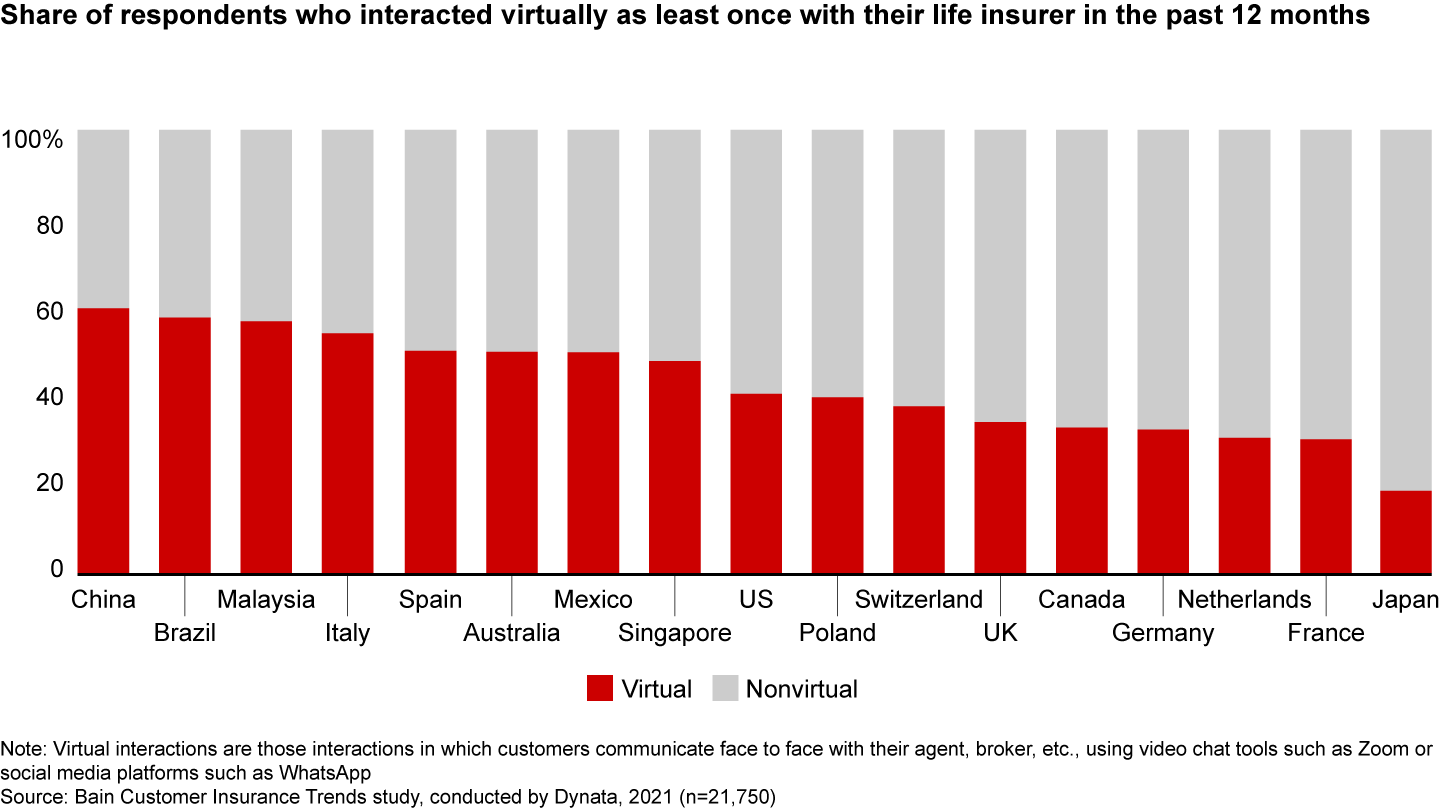
      Virtual is emerging as the new channel of choice for many insurance consumers

      This turned out to be a kick in the pants for insurers. Those who had robust or even just decent digital agency channels won over a broad swath of their customers, while companies with balky, cumbersome virtual channels suffered a decline in their customers’ perception. What once appeared to be a distant goal for insurance agent organizations—seamless virtual interactions with customers—has become a standard expectation among consumers and thus more urgent for insurers to deliver. Developing strong virtual systems that have broader appeal can be tricky, though, especially when it comes to earning people’s trust.

      About the Research

      Data powered by Dynata, a leading global first-party data and insights platform.

      Bain’s survey of 21,750 consumers in 21 countries, conducted by Dynata, found that 42% had a very favorable perceptions of digital interactions with agents, compared with only 18% in 2018. Yet many other respondents became detractors, because their insurer’s digital system is difficult to use, provides poor support, or takes too long (see Figure 2).

      Figure 2
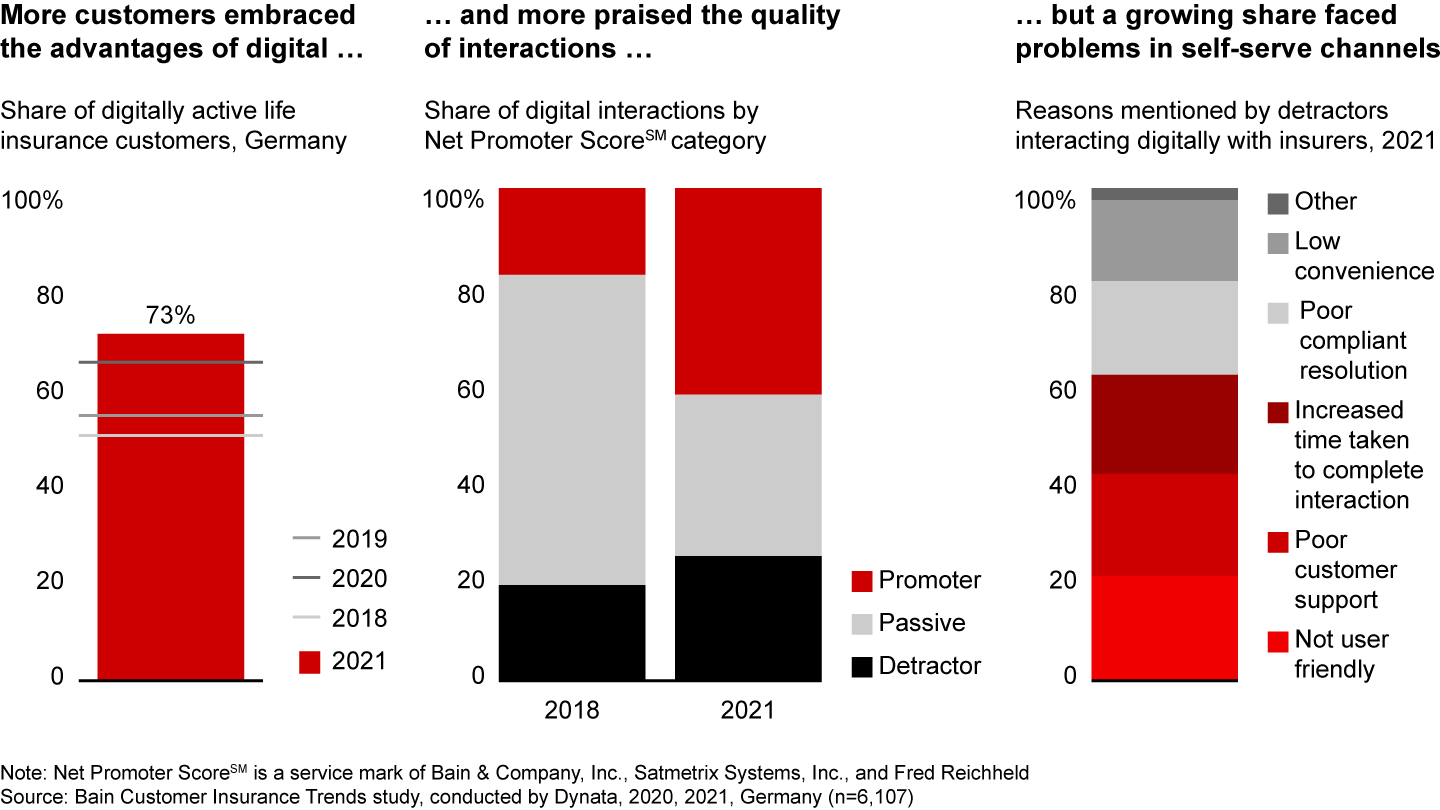
      During the pandemic, more customers have given high marks to digital insurance channels, but others encountered problems

      Virtual interactions and advice clearly have become established practice, complementing other channels in a hybrid distribution model that blends remote and in-person interactions. Globally, 51% of life insurance respondents said they plan to continue using video chat in the future (see Figure 3). This preference applies across all age groups. In the US, for instance, 61% of respondents age 55 and older who used virtual channels for life insurance over the past year plan to continue doing so.

      Figure 3
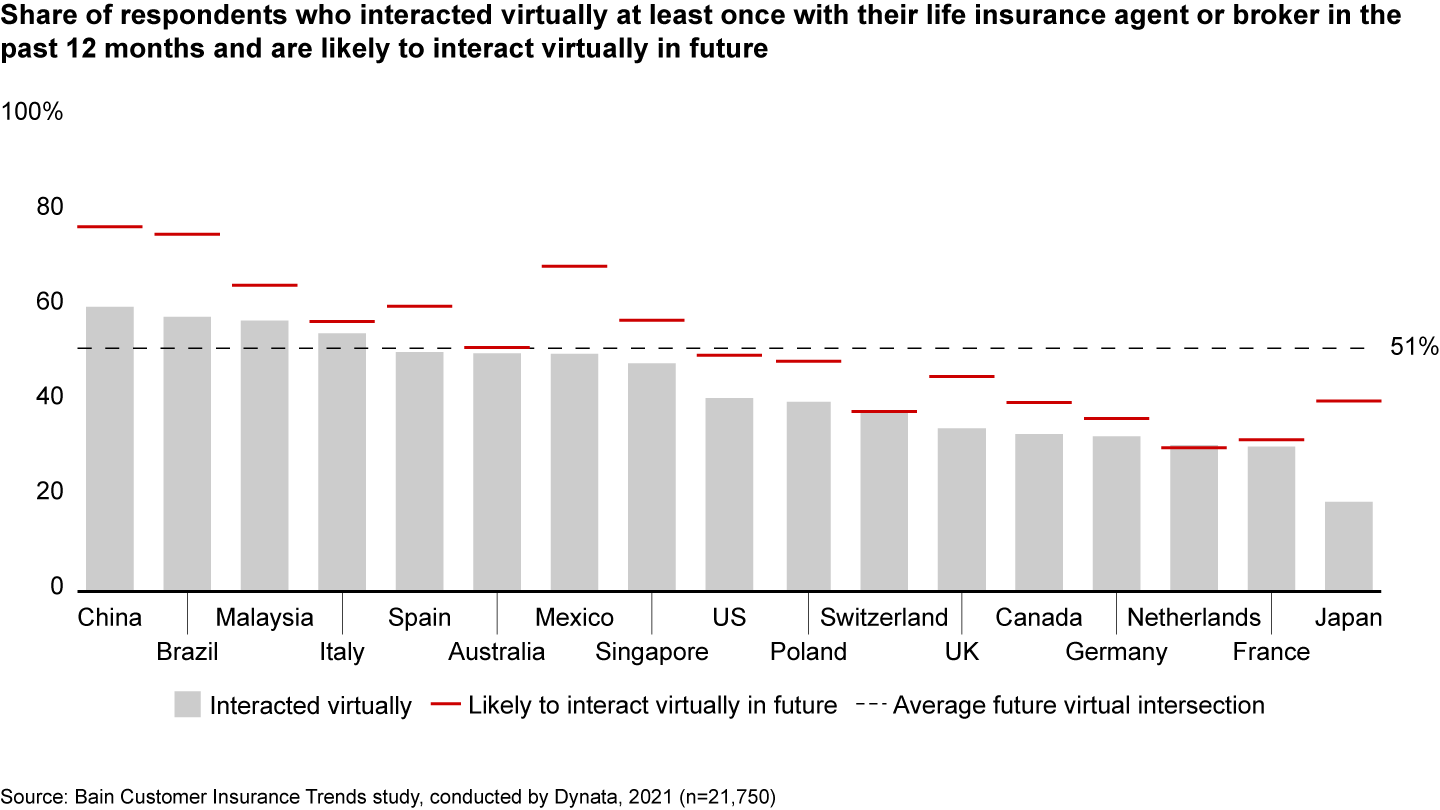
      More customers are willing to interact virtually with their insurers in the future

      Improving the economics

      Customer preferences aren’t the only reason for embedding virtual services by agents. Economics also come into play. Distribution costs for life insurers, for example, typically account for around half of operating expenses. Insurers and agencies that have successfully implemented virtual capabilities report notable gains in efficiency, by eliminating unnecessary travel and in-person meetings, and enabling advisers to spend more time identifying and connecting with prospects. Similarly, there’s more time to invest in active advice and personalized interactions with existing customers, such as automatic alerts on life events like the birth of a child.

      Over the past year, a number of insurers have realized the benefits of virtual channels. In Asia, Prudential created an end-to-end virtual sales submission process, with a virtual recruitment and onboarding process for distributors. This allowed agents to handle more business, as the number of cases per active agent rose 8% in 2020.

      Similarly, AIA saw a 25% increase in the value of new business through its agency channel in the first half of 2021, and a 15% increase in the value of new business per active agent. AIA made strides by digitally enabling the entire agency force, with real-time activity management, performance alerts, integrated policy administration systems, summary dashboards, customer purchase propensity insights, and gamified training to enhance skills.

      Improving the customer’s experience

      Advice through virtual channels can blend the best of easy digital transactions with the more personalized dialogue available when face to face. Across key types of interactions—research, purchase, service, and claims—US survey respondents give their life insurer on average a 20 percentage point higher Net Promoter Score℠ when their interaction involved remote video chats, compared with no such chats (see Figure 4). Ease of access, convenience, and customized support are the main reasons cited by respondents for why they value remote advice.

      Figure 4
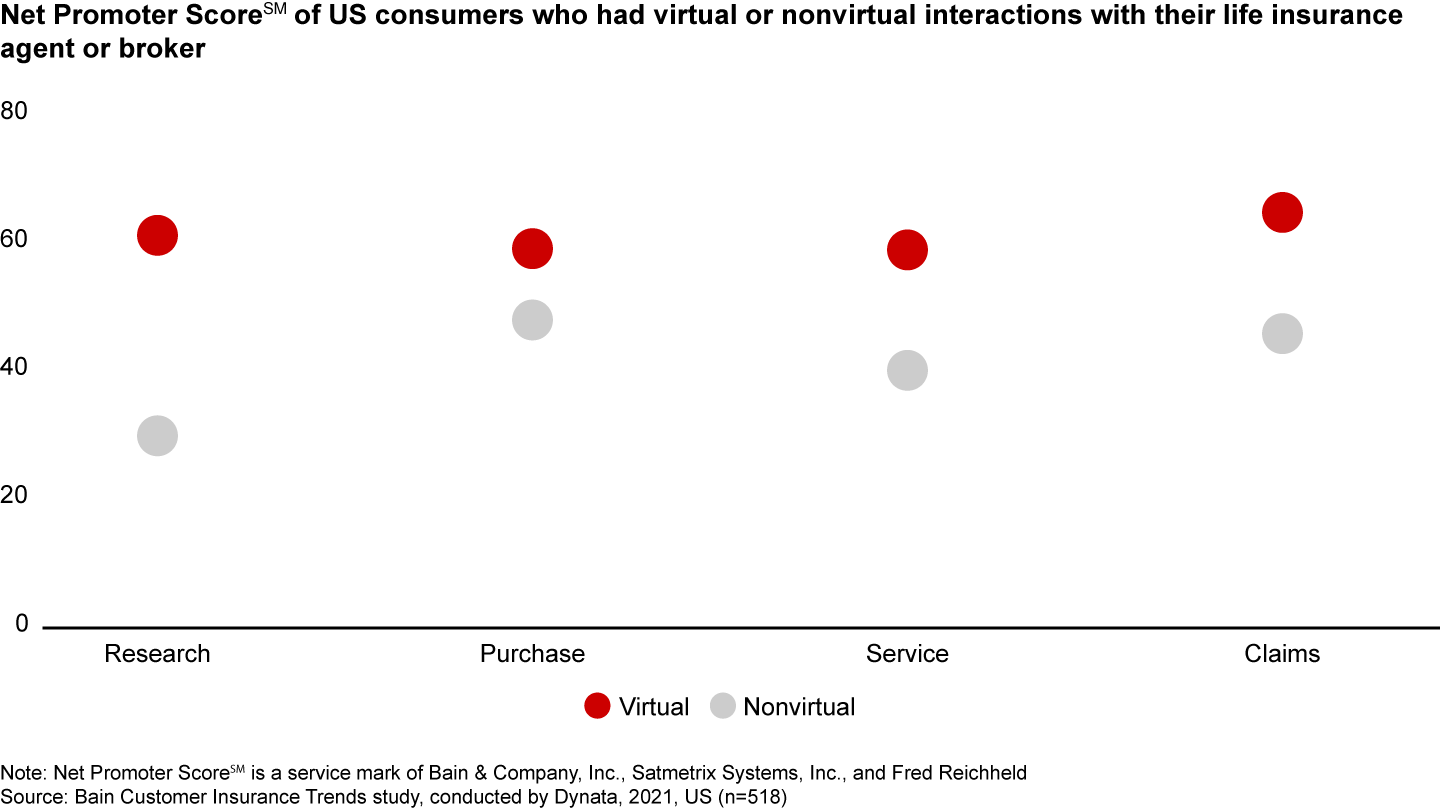
      Across different episodes, virtual channels tend to engage consumers more effectively than other channels

      Gaining consumers’ trust remotely, however, remains a difficult task. Of the respondents in Germany who preferred in-person interactions, 31% highlighted trust as the key reason.

      Yet insurers can bridge the trust gap, if they get the mix of virtual and human channels right. Survey respondents purchasing a life insurance product the first time via hybrid channels gave a 27 percentage point higher Net Promoter Score than new customers who did not have any remote interactions (see Figure 5).

      Figure 5
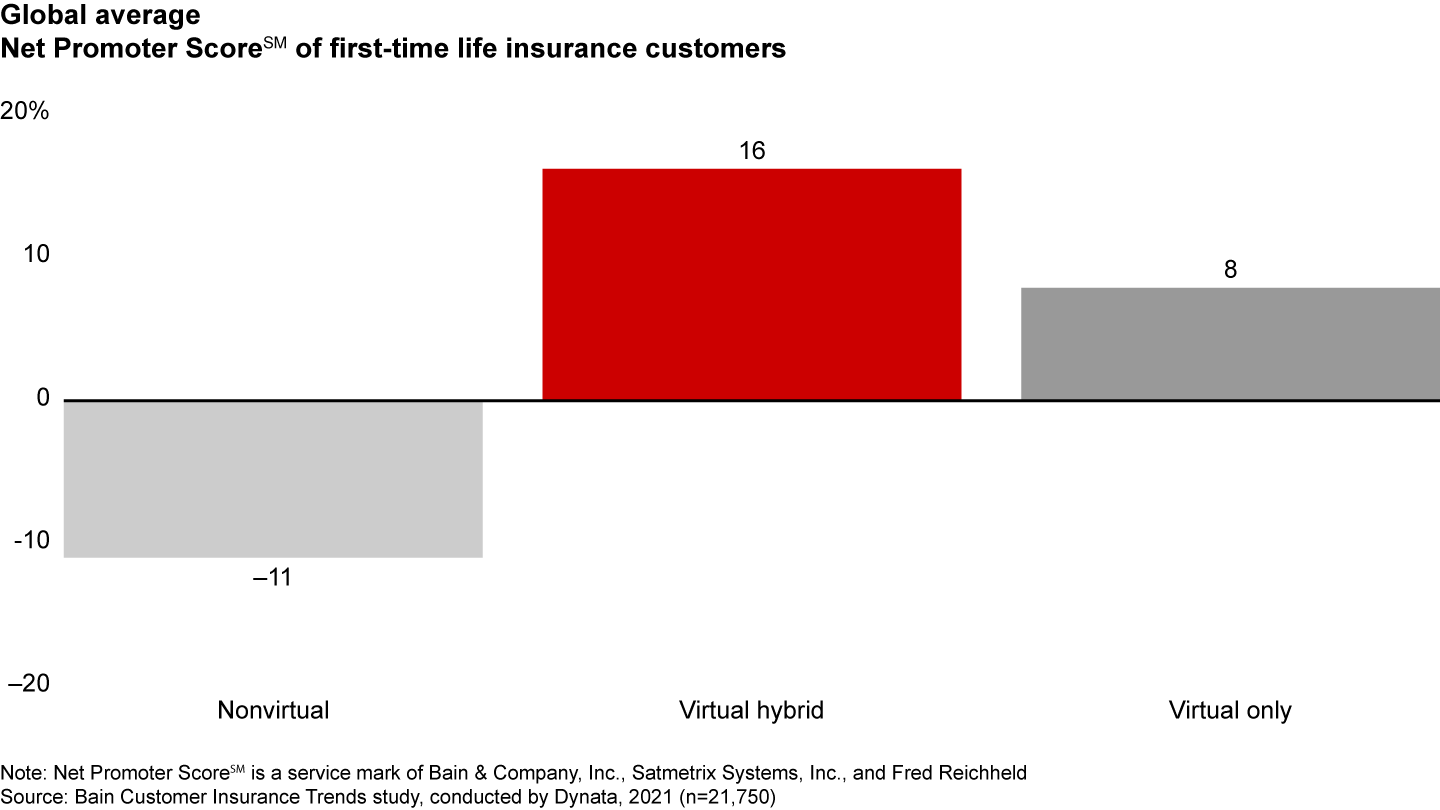
      Consumers prefer hybrid channels to digital only or human only

      Questions to shape the next steps

      To evolve distribution into a powerful hybrid model, insurers, agencies, and brokers entails moving beyond incremental change. Covid-19 forced many advisers to make do with their existing tools to conduct business remotely. For instance, they took tablets that were originally designed for co-browsing in person with customers to show product offerings and used them to conduct video calls. Such improvisation led to a less engaging experience for customers.

      An effective future advisory model will rely more on virtual channels permanently. Despite the great variety of country and product markets, they all have an opportunity to step up productivity and tighten customer relationships through a hybrid model. To develop their model and execute it well, senior executives should address the following considerations.

      • How quickly and how far should we move? Individual markets vary greatly in their digital readiness. Consumers in many Asian countries routinely use mobile digital channels for all kinds of commerce, including insurance. Generally speaking, Asian insurers recognize the need to go very far, very quickly. In Thailand and Singapore, a separate Bain survey found that consumers want more high-quality advice from insurance agents, so insurers will need to figure out how to improve remote advice.

      By contrast, consumers in much of continental Europe have been slower to adopt mobile channels. Bain’s digital benchmarking in France found that insurers put digital tools in the distribution network, but that an average of just 15% of customers use them, vs. 60% for global leaders. The challenge in Europe, then, is to systematically raise awareness among both consumers and agents, instill trust, and provide incentives to shift to virtual channels. Incumbent insurers may also feel pressure from the likes of Alan, a French health insurance mobile app, which recently raised a €185 million funding round at a €1.4 billion valuation, and as of April covered 160,000 people.

      • Will our agents need different skills and competencies? Agents will increasingly focus on providing high-quality advice around the broader proposition, which includes an ecosystem of services provided by partners. Companies will need to equip agents with the right training, tools, metrics, coaching, and incentives to excel in remote advisory. Certain behaviors may need to change as well, such as adopting new tools, learning new capabilities such as data analytics and digital marketing, or establishing emotional connections with customers during video calls.
      • What technology capabilities will we need? Most distribution organizations lack the ability to perform advanced data analytics, which has become more important for virtual and hybrid interactions. For example, an enhanced technology platform with analytics capabilities can alert advisers about high-quality leads, or prompt agents to contact customers for personalized service or before issues arise. And automated real-time scripting can coach advisers on how to best communicate products remotely to customers or tailor offerings.

      There’s an organizational aspect to technology as well. The distribution organization needs to dedicate some of its team to collaborate with “product owners” in the IT group, bringing key behavioral insights to bear on particular customer episodes so that those episodes can be improved with technology.

      • How should we start the transition? Defining a new model for the future must be complemented with practical initiatives for the first steps. Insurers, agencies, and brokers may want to test new advisory formats with a pilot that includes the target operating model and technology platform. The soft start could also involve analysis of the network footprint to derive the best target network setup.

      The past pandemic year put a premium on digital insurance channels. Now that consumers expect more seamless integration of digital and in-person interactions, insurers will be pressed to develop more sophisticated hybrid distribution models. Simply handing out more tablets and software to agents won’t work; it will take a concentrated effort to anticipate consumers’ priorities and deliver an outstanding experience in every aspect of distribution, service, and claims.

      • Acknowledgments

        The authors thank the following colleagues for their contributions to the analysis related to this brief: Pency Tam, Geetika Jawa, Praneeth Iragavarapu, Eshita Gupta, Diksha Shrivastava, and Suman Ghosh.

      저자
      • Headshot of Henrik Naujoks
        Henrik Naujoks
        파트너, Hong Kong
      • Headshot of Andrew Schwedel
        Andrew Schwedel
        파트너, New York
      • Headshot of Harshveer Singh
        Harshveer Singh
        파트너, Singapore
      • Headshot of Camille Goossens
        Camille Goossens
        파트너, Paris
      문의하기
      관련 산업
      • 금융 서비스
      • 보험
      금융 서비스
      Rethinking Transformation: Lawrence Lam on Leading Change at Prudential

      Frankie Leung speaks with Lawrence Lam, CEO of Prudential Hong Kong, about organizational transformation and sustaining change through a people-led approach.

      자세히 보기
      금융 서비스
      Scaled AI Is Transforming the Claims Process

      While most insurers are still dabbling in generative AI, leaders are gaining an advantage in speed, cost, and productivity.

      자세히 보기
      금융 서비스
      AI Won’t Just Cut Costs, It Will Reinvent the Customer Experience

      Beyond efficiency, AI helps create a more personalized experience that delivers a triple play of customer loyalty, employee engagement, and revenue growth.

      자세히 보기
      금융 서비스
      Building the Foundation for Agentic AI

      Capturing the full potential of agents will require modernizing enterprise architecture.

      자세히 보기
      금융 서비스
      Investors Are Losing Confidence in Most Insurers’ Growth Plans

      From opaque life products to unsustainable P&C pricing, insurers must tackle structural issues to win back credibility.

      자세히 보기
      First published in 11월 2021
      태그
      • 금융 서비스
      • 보험

      프로젝트 사례

      전략 From Laggard to Leader: Desjardins Evolves Member Centricity for the Digital Age

      See more related case studies

      정보기술(IT) Cost Transparency Helps Insurer Strengthen Tech Expense Management Capability

      See more related case studies

      고객 전략 및 마케팅 Customer focus helps a P&C insurer grow

      See more related case studies

      베인에 궁금하신 점이 있으신가요?

      베인은 주저 없이 변화를 마주할 줄 아는 용감한 리더들과 함께합니다. 그리고, 이들의 담대한 용기는 고객사의 성공으로 이어집니다.

      급변하는 비즈니스 환경에서 살아남기 위한 선도자의 시각. 월간 Bain Insights에서 글로벌 비즈니스의 핵심 이슈를 확인하십시오.

      *개인정보 정책을 읽었으며 그 내용에 동의합니다.

      Privacy Policy를 읽고 동의해주십시오.
      Bain & Company
      문의하기 환경정책 Accessibility 이용약관 개인정보 보호 쿠키 사용 정책 Sitemap Log In

      © 1996-2026 Bain & Company, Inc.

      문의하기

      무엇을 도와드릴까요?

      • 프로젝트 문의
      • 채용 정보
      • 언론
      • 제휴 문의
      • 연사 초청
      오피스 전체보기