Skip to Content
  • 오피스

    오피스

    미주
    • Atlanta
    • Austin
    • Bogota
    • Boston
    • Buenos Aires
    • Chicago
    • Dallas
    • Denver
    • Houston
    • Los Angeles
    • Mexico City
    • Minneapolis
    • Monterrey
    • Montreal
    • New York
    • Rio de Janeiro
    • San Francisco
    • Santiago
    • São Paulo
    • Seattle
    • Silicon Valley
    • Toronto
    • Washington, DC
    유럽, 중동, 아프리카
    • Amsterdam
    • Athens
    • Berlin
    • Brussels
    • Copenhagen
    • Doha
    • Dubai
    • Dusseldorf
    • Frankfurt
    • Helsinki
    • Istanbul
    • Johannesburg
    • Kyiv
    • Lisbon
    • London
    • Madrid
    • Milan
    • Munich
    • Oslo
    • Paris
    • Riyadh
    • Rome
    • Stockholm
    • Vienna
    • Warsaw
    • Zurich
    아시아, 호주
    • Bangkok
    • Beijing
    • Bengaluru
    • Brisbane
    • Ho Chi Minh City
    • Hong Kong
    • Jakarta
    • Kuala Lumpur
    • Manila
    • Melbourne
    • Mumbai
    • New Delhi
    • Perth
    • Seoul
    • Shanghai
    • Singapore
    • Sydney
    • Tokyo
    오피스 전체보기
  • 얼럼나이
  • 미디어 센터
  • 구독
  • 연락처
  • Korea | 한국어

    지역 및 언어 선택

    글로벌
    • Global (English)
    미주
    • Brazil (Português)
    • Argentina (Español)
    • Canada (Français)
    • Chile (Español)
    • Colombia (Español)
    유럽, 중동, 아프리카
    • France (Français)
    • DACH Region (Deutsch)
    • Italy (Italiano)
    • Spain (Español)
    • Greece (Elliniká)
    아시아, 호주
    • China (中文版)
    • Korea (한국어)
    • Japan (日本語)
  • Saved items (0)
    Saved items (0)

    You have no saved items.

    관심 있는 내용을 북마크하여 Red 폴더에 저장할 수 있습니다. Red 폴더 에서 저장된 내용을 읽거나 공유해보세요.

    Explore Bain Insights
  • 산업
    메인 메뉴

    산업

    • 우주항공, 방산 및 정부 서비스
    • 농업 관련 산업
    • 화학
    • 인프라, 건설 및 건축 자재
    • 소비재
    • 금융 서비스
    • 헬스케어
    • 산업용 기계 및 장비
    • 미디어 및 엔터테인먼트
    • 금속
    • 광업
    • 석유 및 가스
    • 제지 및 패키징 산업
    • 사모펀드
    • 사회 및 공공 부문
    • 유통
    • 기술
    • 텔레콤
    • 운송
    • 여행·여가
    • 유틸리티 및 재생가능 에너지
  • 컨설팅 서비스
    메인 메뉴

    컨설팅 서비스

    • Customer Experience
    • ESG
    • Innovation
    • M&A
    • 운영
    • 조직
    • 사모펀드
    • 고객 전략 및 마케팅
    • 전략
    • AI, 인사이트 및 솔루션
    • Technology
    • 변화 혁신
  • Digital
  • 인사이트
  • 베인 소개
    메인 메뉴

    베인 소개

    • 업무 소개
    • 베인의 신념
    • 구성원 및 리더십 소개
    • 고객 성과
    • 주요 수상 경력
    • 글로벌 파트너사
    Further: Our global responsibility
    • 다양성과 포용
    • 사회 공헌 활동
    • Sustainability
    • World Economic Forum
    Learn more about Further
  • Careers
    메인 메뉴

    Careers

    • Work with Us
      Careers
      Work with Us
      • Find Your Place
      • Our Work Areas
      • Integrated Teams
      • Students
      • Internships & Programs
      • Recruiting Events
    • Life at Bain
      Careers
      Life at Bain
      • Blog: Inside Bain
      • Career Stories
      • Our People
      • Where We Work
      • Supporting Your Growth
      • Affinity Groups
      • Benefits
    • Impact Stories
    • Hiring Process
      Careers
      Hiring Process
      • What to Expect
      • Interviewing
    FIND JOBS
  • 오피스
    메인 메뉴

    오피스

    • 미주
      오피스
      미주
      • Atlanta
      • Austin
      • Bogota
      • Boston
      • Buenos Aires
      • Chicago
      • Dallas
      • Denver
      • Houston
      • Los Angeles
      • Mexico City
      • Minneapolis
      • Monterrey
      • Montreal
      • New York
      • Rio de Janeiro
      • San Francisco
      • Santiago
      • São Paulo
      • Seattle
      • Silicon Valley
      • Toronto
      • Washington, DC
    • 유럽, 중동, 아프리카
      오피스
      유럽, 중동, 아프리카
      • Amsterdam
      • Athens
      • Berlin
      • Brussels
      • Copenhagen
      • Doha
      • Dubai
      • Dusseldorf
      • Frankfurt
      • Helsinki
      • Istanbul
      • Johannesburg
      • Kyiv
      • Lisbon
      • London
      • Madrid
      • Milan
      • Munich
      • Oslo
      • Paris
      • Riyadh
      • Rome
      • Stockholm
      • Vienna
      • Warsaw
      • Zurich
    • 아시아, 호주
      오피스
      아시아, 호주
      • Bangkok
      • Beijing
      • Bengaluru
      • Brisbane
      • Ho Chi Minh City
      • Hong Kong
      • Jakarta
      • Kuala Lumpur
      • Manila
      • Melbourne
      • Mumbai
      • New Delhi
      • Perth
      • Seoul
      • Shanghai
      • Singapore
      • Sydney
      • Tokyo
    오피스 전체보기
  • 얼럼나이
  • 미디어 센터
  • 구독
  • 연락처
  • Korea | 한국어
    메인 메뉴

    지역 및 언어 선택

    • 글로벌
      지역 및 언어 선택
      글로벌
      • Global (English)
    • 미주
      지역 및 언어 선택
      미주
      • Brazil (Português)
      • Argentina (Español)
      • Canada (Français)
      • Chile (Español)
      • Colombia (Español)
    • 유럽, 중동, 아프리카
      지역 및 언어 선택
      유럽, 중동, 아프리카
      • France (Français)
      • DACH Region (Deutsch)
      • Italy (Italiano)
      • Spain (Español)
      • Greece (Elliniká)
    • 아시아, 호주
      지역 및 언어 선택
      아시아, 호주
      • China (中文版)
      • Korea (한국어)
      • Japan (日本語)
  • Saved items  (0)
    메인 메뉴
    Saved items (0)

    You have no saved items.

    관심 있는 내용을 북마크하여 Red 폴더에 저장할 수 있습니다. Red 폴더 에서 저장된 내용을 읽거나 공유해보세요.

    Explore Bain Insights
  • 산업
    • 산업

      • 우주항공, 방산 및 정부 서비스
      • 농업 관련 산업
      • 화학
      • 인프라, 건설 및 건축 자재
      • 소비재
      • 금융 서비스
      • 헬스케어
      • 산업용 기계 및 장비
      • 미디어 및 엔터테인먼트
      • 금속
      • 광업
      • 석유 및 가스
      • 제지 및 패키징 산업
      • 사모펀드
      • 사회 및 공공 부문
      • 유통
      • 기술
      • 텔레콤
      • 운송
      • 여행·여가
      • 유틸리티 및 재생가능 에너지
  • 컨설팅 서비스
    • 컨설팅 서비스

      • Customer Experience
      • ESG
      • Innovation
      • M&A
      • 운영
      • 조직
      • 사모펀드
      • 고객 전략 및 마케팅
      • 전략
      • AI, 인사이트 및 솔루션
      • Technology
      • 변화 혁신
  • Digital
  • 인사이트
  • 베인 소개
    • 베인 소개

      • 업무 소개
      • 베인의 신념
      • 구성원 및 리더십 소개
      • 고객 성과
      • 주요 수상 경력
      • 글로벌 파트너사
      Further: Our global responsibility
      • 다양성과 포용
      • 사회 공헌 활동
      • Sustainability
      • World Economic Forum
      Learn more about Further
  • Careers
    최근 검색어
      최근 방문 페이지

      Content added to saved items

      Saved items (0)

      Removed from saved items

      Saved items (0)

      Technology Report

      Is Consumption-Based Pricing Right for Your Software?

      Is Consumption-Based Pricing Right for Your Software?

      Some of the most successful SaaS companies charge for their software based on its usage, but that model works only when the conditions are right.

      글 Simon Heap and Sukh Brar

      • 읽기 소요시간
      }

      Report

      Is Consumption-Based Pricing Right for Your Software?
      en
      한눈에 보기
      • Charging based on the use of software instead of by subscription is the model fueling some of the fastest-growing and highest-valued SaaS companies, and Bain consumer research points to more growth in the future
      • Companies can determine if this is the right model for them by considering three critical questions: Can we create the right meter? Do our customers want this? Can we develop the capabilities needed?

      This article is part of Bain's 2022 Technology Report.

      Explore the report

      Revenue for software-as-a-service (SaaS) companies has grown 22% a year compounded since 2017, evidence of its popularity with customers tired of underused “shelfware” software licenses and of managing their own infrastructure. Whereas traditional subscription-based SaaS is typically paid in advance based on a predetermined capacity, such as seats licensed, the latest evolution of SaaS uses consumption-based models that calculate the price based on measures of actual use, such as data ingested, messages sent, or hours used. There are many flavors of consumption pricing, ranging from pay-as-you-go to allowances that are burned down and limits that are capped, but all with payment that is ultimately based on usage and aligned with value.

      It has quickly become popular with customers. With consumption pricing, 80% of customers report better alignment with the value they receive, according to Bain & Company research. Nearly half of software companies using it say it has helped them acquire more customers, and two-thirds say it’s helping them increase revenue with existing customers. Indeed, many of today’s most valuable, fastest-growing SaaS companies employ consumption pricing (see Figure 1).

      Figure 1
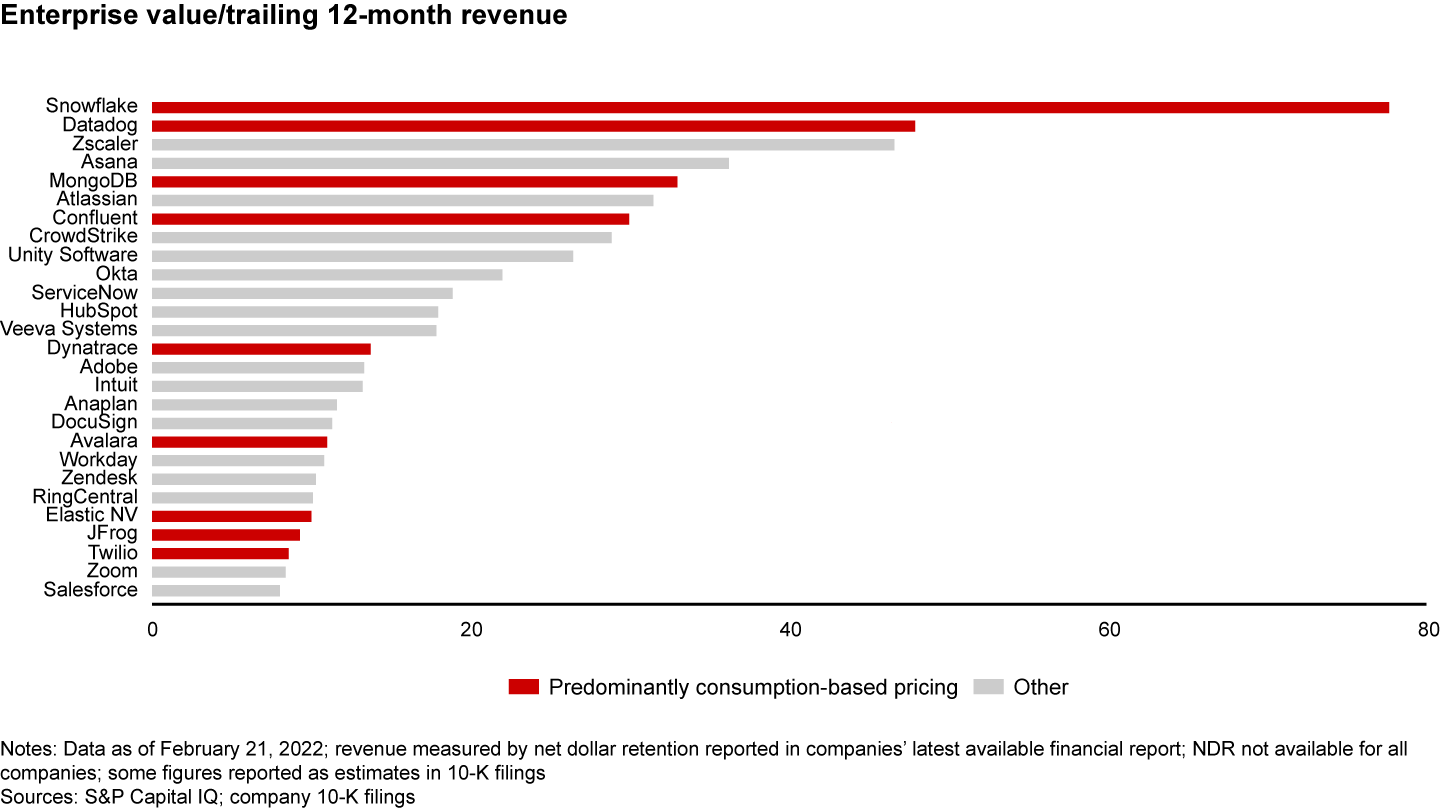
      Consumption-based pricing models are associated with some of the most highly valued software companies

      In 2021, companies with primarily consumption-based models, including Snowflake, JFrog, Elastic NV, Datadog, and Confluent, increased revenue approximately 8 percentage points higher on average than companies that mainly license or sell subscriptions to their software. Among the software companies with the highest valuation multiples, those offering consumption-based pricing on average earned 10 points higher revenue retention from existing customers, as measured by net dollar retention (NDR).

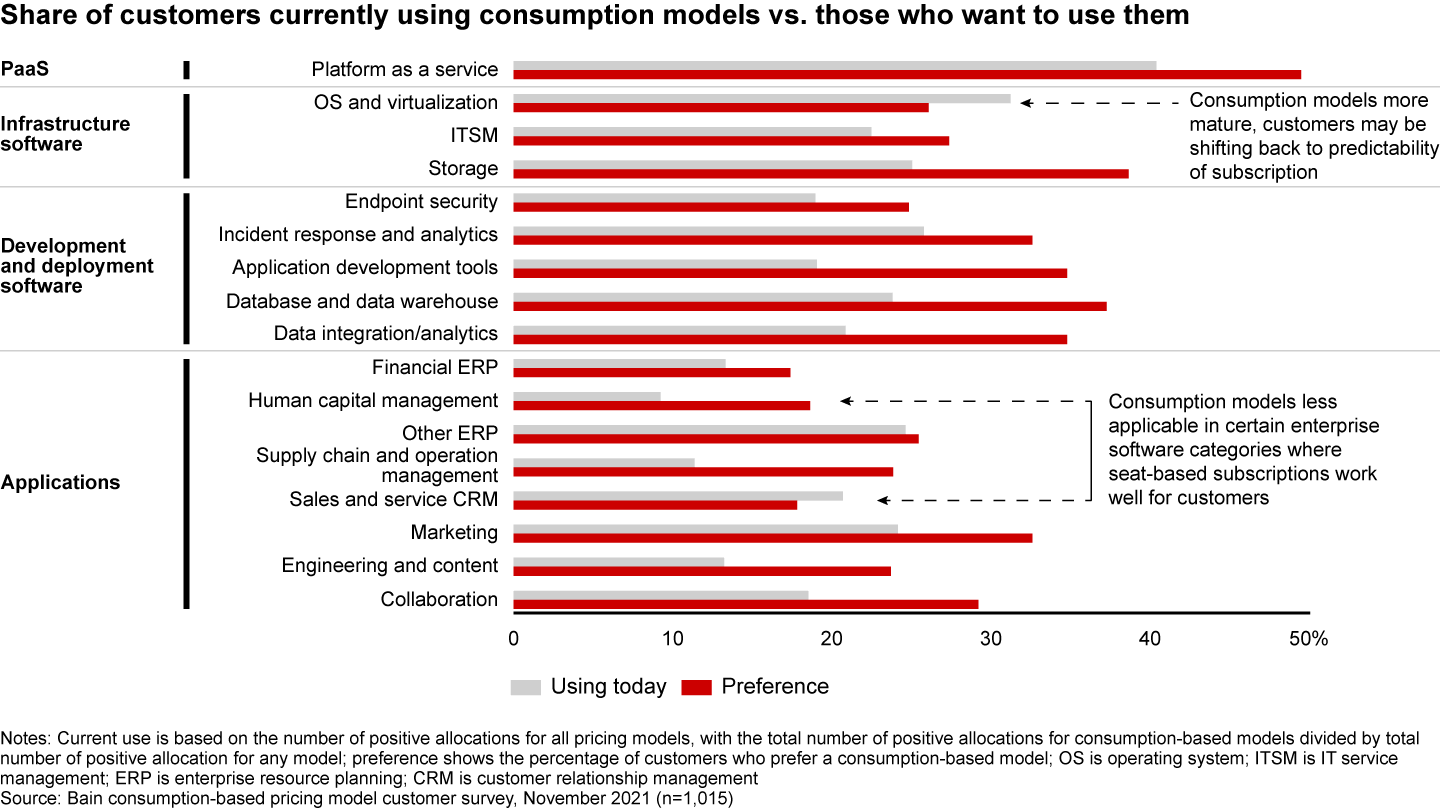
      Our research finds that customers expect to more than double their use of this model in the next one to three years, with most of that growth in the next 12 months. But even with this momentum, consumption-based pricing isn’t suited to every situation (see Figure 2). Three-quarters of software is still sold as a subscription or perpetual license, models that work well when customers know exactly how much they need. Consumption pricing has really taken off with platforms-as-a-service; cloud service providers like Amazon Web Services, Microsoft Azure, and Google Cloud; and infrastructure software and software tools serving developers.

      Figure 2
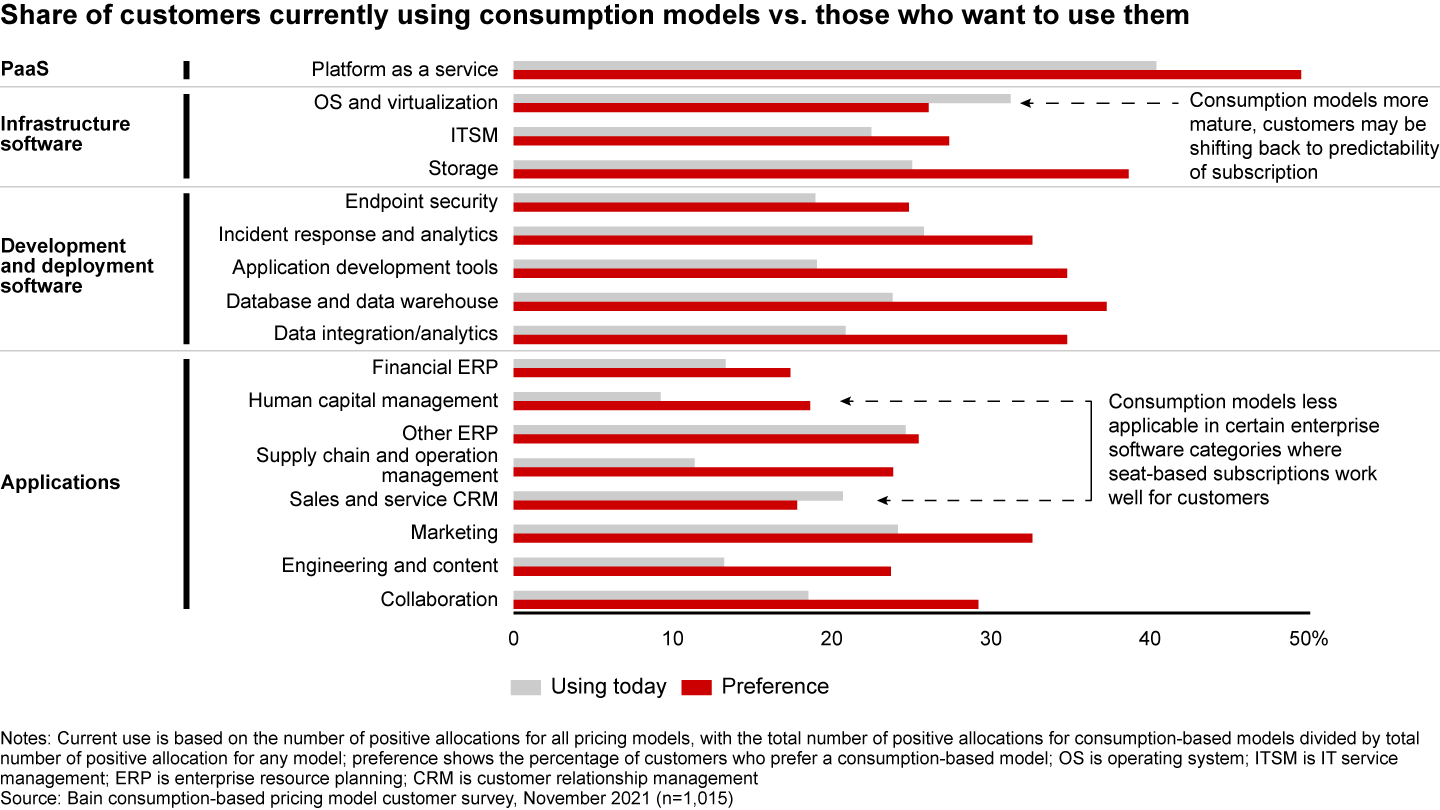
      Customer preference for consumption models outpaces current use for almost all software types

      Choosing the right pricing model

      Consumption models offer potential new growth, but before adopting one, a vendor must think through important strategic, operational, and investment considerations, and realize that this transition can take multiple years. Software companies can begin by asking themselves three guiding questions.

      1. Can we directly tie the value of our offering to a clear, transparent consumption metric that makes sense for both customers and vendors?

      Cloud software company Snowflake offers a usage-based pricing model with two metrics. For data storage, the company charges a certain dollar amount per terabyte per month after compression. For querying data, the metric is a dollar amount per second per warehouse, a flexible figure that enables customers to purchase any size and number of data warehouses. Because these metrics measure the use and value of the product’s two primary functions, they clearly align with the value delivered to customers. Defined and quantitative, they allow for granular tracking, and customers have embraced them. Today, 93% of Snowflake’s revenue is consumption-based.

      A successful meter has several characteristics.

      • Value-based. It aligns with the value customers receive.
      • Flexible. Customers can control how much they use and pay only for that. Snowflake, for example, offers automatic suspension of warehousing charges when no query is running.
      • Scalable. Value moves with consumption instead of being “worth it” only after or before a certain amount of use, and it feels fair to both small and large users.
      • Predictable. Usage can be estimated and used to inform budgeting. This is difficult to achieve. More than 90% of users who prefer subscription models cite a lack of predictability as the main downside of consumption models.
      • Feasible. The meter should be easy to monitor.

      2. Are customers in our industry interested in paying based on consumption, and are competitors offering it?

      In some applications like enterprise software for enterprise resource planning (ERP), human capital management (HCM), and customer relationship management (CRM), subscriptions based on seat count work well, and few customers are interested in changing models. For them, the value of the software lies in each user’s ability to create a unique workspace and workflow for managing customer and prospect pipelines. Start-ups in these categories aren’t using consumption models to disrupt. Operating system and virtualization software customers appreciate how the predictability of subscriptions aligns with corporate budgeting.

      3. Do we have or can we see a path to developing the capabilities to operate the business in a consumption model?

      The selection of the pricing meters and packaged offerings was just the start of a much larger journey for an infrastructure software company that recently shifted to consumption pricing. Each function in the organization has adapted:

      • product development, by engineering telemetry into the product, creating dashboards to inform users of real-time usage, and featuring predictive models for forecasting;
      • sales, by creating “land and expand” sales plays and enablement, and adjusting sales staff incentives to support ongoing consumption instead of Day 1 booking;
      • services, by creating quick-start services that support starting small and then expanding;
      • customer success, by finding ways to support incremental usage;
      • sales operations and finance, by creating a plan to migrate to the new model and a business plan that balances new growth with the short-term drop in revenue expected from current customers who pay less in a consumption model; and
      • systems, by building tools to estimate the cost of using the product and systems that route usage data to billing, customer reporting, financial systems, and sales and customer success dashboards.

      The answers to these three questions will help determine if consumption pricing is right for your company. If it is, there will certainly be work ahead to develop the capabilities and offerings needed to make the transition a success, but it will give your company a shot at growth and valuation rivaling that of some of the best businesses in software.

      Read the Next Chapter

      Product Management: The Key to Unlocking Return on Your Software R&D Investment

      Value Evolution

      • The Rise of Growth Equity Investors

      • A Multicloud World

      • Welcome to Web3

      • The US-China Decoupling

      Competitive Battlegrounds

      • Defending against Disruption

      • The Engine 2 Imperative

      • AI’s Next Frontier

      • The Industrial IoT

      Operational Advantage

      • Beyond the Rule of 40

      • Sales Productivity

      • Consumption-Based Pricing

      • Software R&D Efficiencies

      • The Chip Shortage

      • The Circular Economy

      Read our 2022 Technology Report

      Explore the report Download PDF
      저자
      • Headshot of Simon Heap
        Simon Heap
        어드바이저 파트너, Silicon Valley
      • Sukh Brar
        부파트너, Seattle
      문의하기
      관련 산업
      • 기술
      • Cloud Computing
      • Internet of Things
      • IT Services
      • Semiconductors
      • Software
      Technology Report
      Product Management: The Key to Unlocking Return on Your Software R&D Investment

      Product management is instrumental to boosting returns on software development investments, but few companies do it well.

      자세히 보기
      Technology Report
      Quantum Computing Moves from Theoretical to Inevitable

      Quantum will likely become part of a mosaic, working with classical computing to solve big problems.

      자세히 보기
      CIO Insights
      Despite Tech Layoffs, Competition for Talent Remains Fierce

      Tech workers increasingly value career development opportunities and remote or hybrid work options, while compensation has soared.

      자세히 보기
      Technology Report
      How Can We Meet AI’s Insatiable Demand for Compute Power?

      Technological innovation, new revenue, and public support may be needed to fund and supply enough electricity.

      자세히 보기
      기술
      Using Hardware to Scale the Industrial Internet of Things

      Bain partners discuss the opportunity for hardware vendors to help companies develop their IoT pilots.

      자세히 보기
      First published in 9월 2022
      태그
      • 기술
      • CIO Insights
      • Cloud Computing
      • Internet of Things
      • IT Services
      • Semiconductors
      • Software
      • Technology Report

      프로젝트 사례

      Helping a Midsize ERP Player Compete against the Giants

      See more related case studies

      성과 개선 Aggressively growing an IT service provider with a high-performance culture

      See more related case studies

      고객 전략 및 마케팅 Sales blueprint puts IT Services Co.'s growth back on track

      See more related case studies

      베인에 궁금하신 점이 있으신가요?

      베인은 주저 없이 변화를 마주할 줄 아는 용감한 리더들과 함께합니다. 그리고, 이들의 담대한 용기는 고객사의 성공으로 이어집니다.

      급변하는 비즈니스 환경에서 살아남기 위한 선도자의 시각. 월간 Bain Insights에서 글로벌 비즈니스의 핵심 이슈를 확인하십시오.

      *개인정보 정책을 읽었으며 그 내용에 동의합니다.

      Privacy Policy를 읽고 동의해주십시오.
      Bain & Company
      문의하기 환경정책 Accessibility 이용약관 개인정보 보호 쿠키 사용 정책 Sitemap Log In

      © 1996-2026 Bain & Company, Inc.

      문의하기

      무엇을 도와드릴까요?

      • 프로젝트 문의
      • 채용 정보
      • 언론
      • 제휴 문의
      • 연사 초청
      오피스 전체보기