

Global Machinery & Equipment Report

한눈에 보기
- The best sales organizations keep track of not just what their customers buy, but how much they could be buying, using tools that map the full landscape of opportunities.
- In addition, they align salesforce resources with the most promising sources of growth, using virtual and remote techniques where appropriate to boost individual coverage at strategically important accounts.
- In their compensation and performance management structures, top performers also embed the right metrics into the right oversight and coaching cadence.
This article is part of Bain's Global Machinery & Equipment Report 2022
Leaders of industrial machinery companies increasingly recognize that it’s no longer enough to have the best products and engineering teams. To win, they must strengthen a capability that hasn’t traditionally been one of their calling cards: commercial excellence.
That evolution is needed partly to keep up with investors’ organic growth expectations. Most machinery companies operate in mature industries, so sales teams need to outperform rivals if they are to generate the organic sales gains that in turn support attractive stock market valuations.
There’s also an opportunity to capitalize on shifting customer needs. Customers increasingly want integrated solutions, and many machinery companies are duly packaging industrial hardware, software, and services into tailored offerings. But integrated solutions are more complex to sell than traditional products. A salesforce accustomed to single-product transactions may not yet have mastered the intricacies of all the components that need explanation in an integrated offering.
For these reasons, machinery companies have much to gain from revitalizing their go-to-market strategies by embedding commercial excellence—the design and delivery of commercial best practices enabled by the disciplined execution of a systematic, data-driven view of the market’s full potential.
The good news is that executive teams can take specific, concrete steps to embed commercial excellence into sales strategies, operations, and culture. Leading sector players are already focusing on three things: mapping the full landscape of sales opportunities, aligning resources with the most promising sources of growth, and embedding the right performance metrics into the right oversight and coaching cadence.
Mapping the full landscape of sales opportunities
The best sales organizations keep track of not only how much their customers and prospects buy, but how much they could be buying. One tool for doing this is a MoneyMap℠ that expands on the traditional, top-down snapshot of market share by incorporating bottom-up data on total customer spending across a given category—and what share of that addressable spending is currently used to purchase your products and services (see Figure 1).
Figure 1
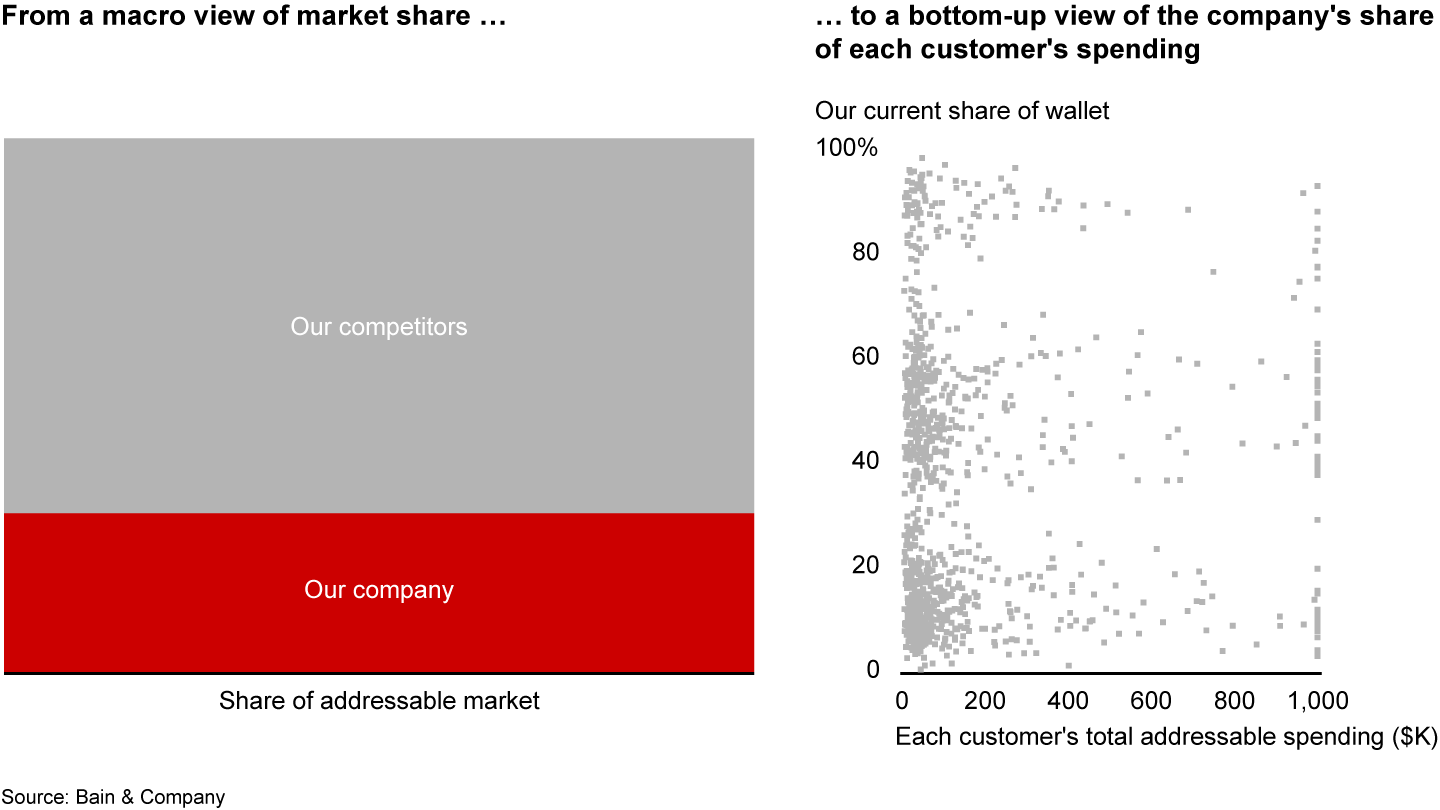

Building up a customer-by-customer, prospect-by-prospect view of the full opportunity and the current share of wallet in this way enables machinery companies to understand precisely where and how sales can be boosted. It also helps executive teams prioritize opportunities.
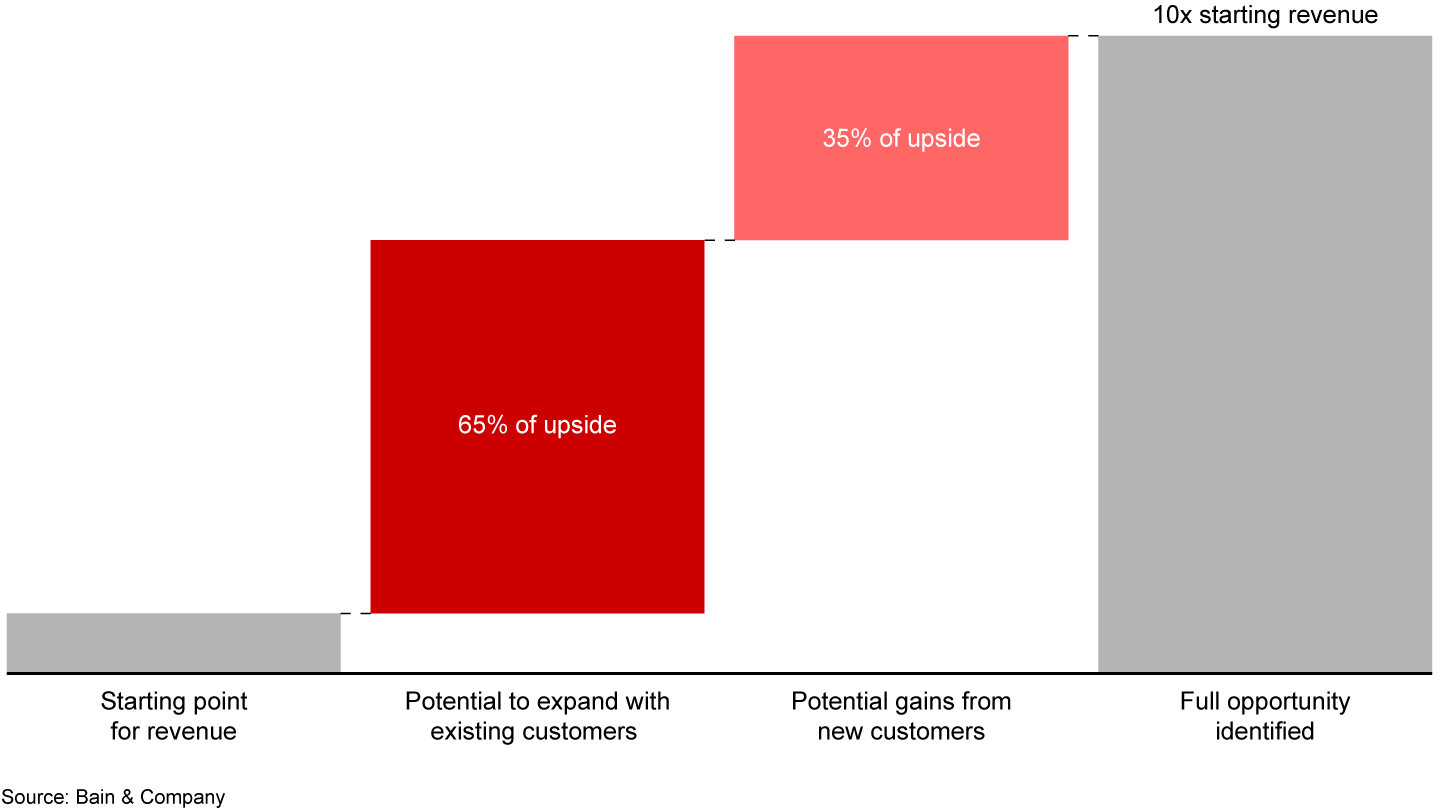
Money mapping often reveals opportunities well beyond what sales leaders had previously supposed. In some cases, more high-value growth opportunities will reside at current customers, rather than new prospects. For instance, one diversified tool and machinery manufacturer discovered that about 65% of the potential upside revealed by mapping lay with existing customers, vs. 35% at new customers (see Figure 2).
Figure 2

When mapping, it’s important to keep in mind variations in buying patterns, factoring in both lumpy capital expenditure and regular spending on repairing and replacing equipment. It’s also vital to accommodate fluctuations across the portfolio of products and services, giving managers a clear understanding of the interplay of recurring service revenues and one-off product purchases, for instance. That nuanced clarity is crucial for the efficient allocation of sales resources. For one thing, it ensures that machinery companies don’t neglect big medium-term sales opportunities at customers or prospects that might be going through a short-term lull in spending.
Aligning resources with the most promising sources of growth
Equipped with a data-driven understanding of what a customer could be buying, a machinery company can prioritize targets based on its current competitive position at that account and the full upside potential. This segmentation then informs a coverage model that aligns sales resources with opportunity value, making the most of the salesforce’s time.
One proven approach to this twin task begins with segmenting customers into those you need to manage, cultivate, and hunt, based on the potential revenue upside they offer (see Figure 3). “Manage” customers tend to be smaller accounts that aren’t likely to grow significantly in value. Many machinery companies will know firsthand how easy it is for sales teams to devote disproportionate time to their needs. “Cultivate” customers are those who already buy from you, yet still have some meaningful room to buy more, even though you are already accounting for a substantial chunk—and often the majority—of their spending in this product or service area. “Hunt” customers are new or sporadic customers that offer big revenue growth potential, in large part because they represent fresh territory for your sales team.
Figure 3
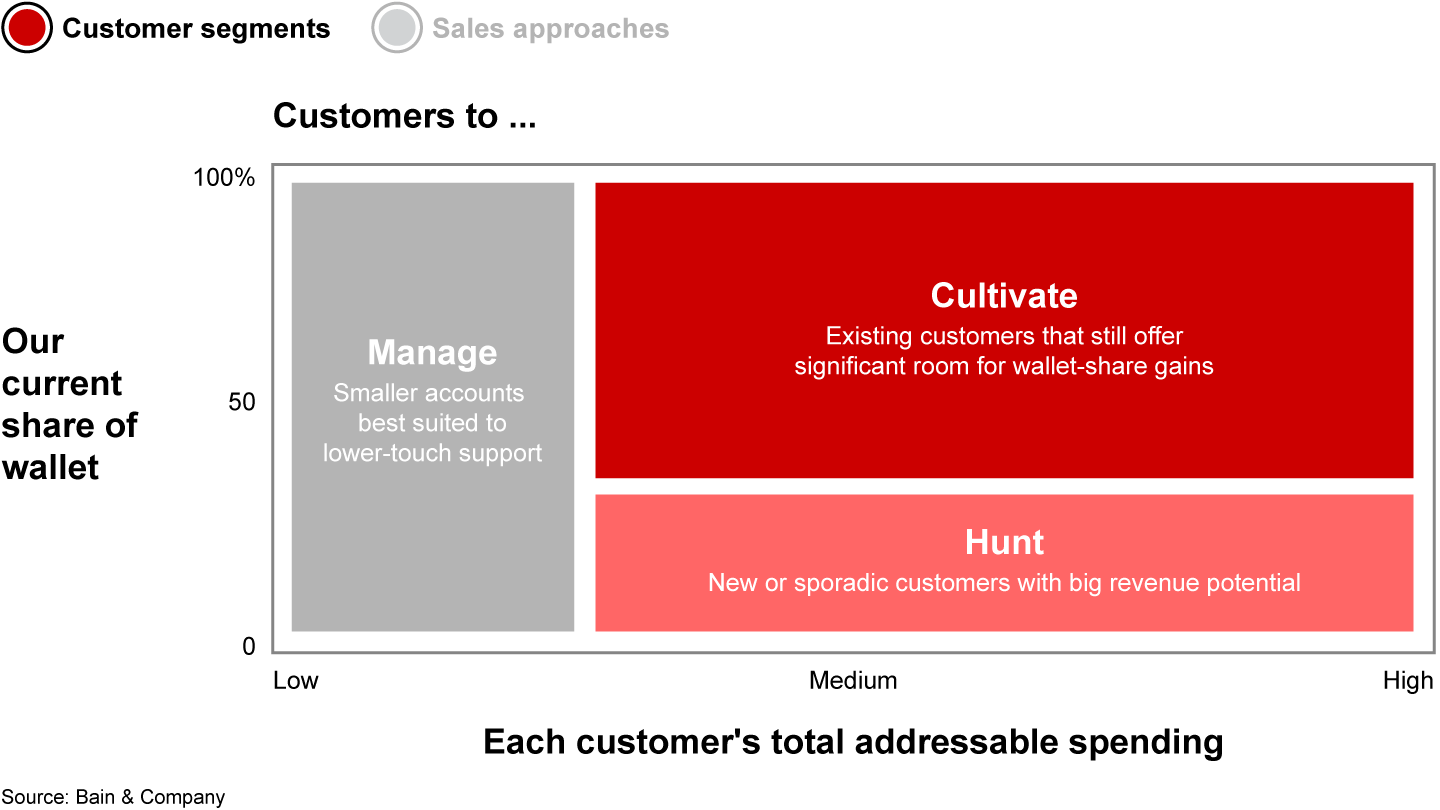

Figure 3
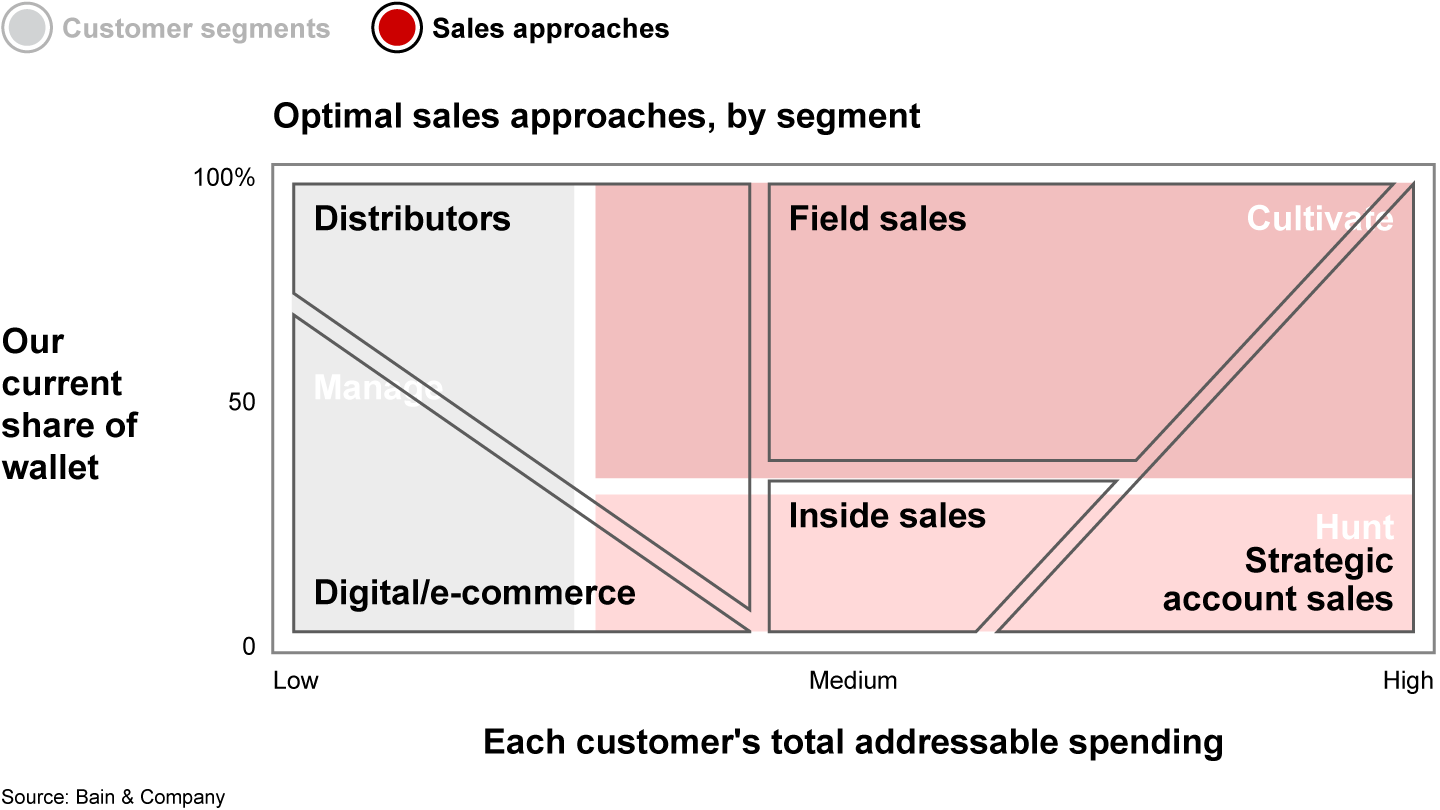

The next step is to rigorously align salesforce resources with the most promising sources of growth identified by the segmentation process. The goal is to maximize the time spent on two things: deepening the most valuable customer relationships and cultivating the prospects that offer the biggest gains. To stay focused on these twin imperatives, reps serving the most promising accounts will need the right tools, systems, and support—otherwise they’ll get diverted from frontline tasks and get sucked into low-impact back-office work.
At lower-priority customers, resourcing will need to match the available opportunity. Even if in-person sales may not be entirely replaced, that adjustment will in many cases entail increasing the use of virtual and remote sales contact, including a greater reliance on self-serve platforms and inside sales techniques. That’s particularly important for “manage” customers that aren’t cost-effective to serve with a more bespoke and face-to-face relationship. Automation can sometimes be increased at lower spending “cultivate” accounts, too, although it’s crucial to emphasize the benefits that digital tools can bring to customer workflows when making such a transition.
The type of transaction can also determine whether it makes sense to switch to a less personalized approach. Less-complex sales in general can be supported by self-serve channels, freeing up field sales teams to focus on higher-value opportunities. Some product-quality issues can also be handled by virtual specialists, releasing face-to-face specialists for tasks that are revenue generating (it’s worth mentioning that virtual specialists are also an economical way to support field sales in complex sales plays).
The rewards for effective channel optimization can be substantial as resources are diverted to serving the most strategically important accounts with outstanding individual coverage. One heavy machinery OEM, for example, found that virtual sales techniques required about half the time of face-to-face selling, by reducing the need for travel and meeting preparation, for instance. The overall effect was to liberate up to 20% of the sales team’s working week—time that could be used to pursue high-value opportunities.
Embedding the right performance metrics into the right oversight and coaching cadence
Executing these strategies depends on the sales professionals on the ground, so it’s essential to motivate them through thoughtful compensation structures and rigorous performance management. The machinery companies that do this best ensure that their compensation plans reward success on companywide, as well as individual, metrics to align sales professionals’ personal interests with business growth. Their carefully chosen metrics and performance targets also reinforce the strategic decisions already taken in the segmentation process, rather than creating perverse incentives to pull in another direction.
In practice, that might mean focusing on measures, such as absolute gross margin growth, that ensure reps are balancing the size and profitability of their accounts. In the case of “manage” accounts, compensation could even be partly tied to the salesperson’s success in keeping most customer contact through virtual or remote channels. What’s crucial is that compensation targets are based on an understanding of full customer potential that money mapping helps to highlight, rather than being principally shaped by historical performance.
Choosing the right metrics is only part of the answer, of course: Management of the sales team and the sales pipeline also needs to be highly disciplined and at the right cadence. On one level, that means timely corrective action when a sales rep’s performance is lagging expectations. Clarity about exactly who manages whom is also particularly important, as are regular meetings between managers and reps structured around a formal agenda and predefined discussion topics. A 2020 Bain/Dynata study of 260 US and UK sales reps found that 60% of reps in top-performing sales organizations have weekly one-on-one meetings with their managers, as opposed to 34% at low performers. These dialogues are most effective when the manager uses them to coach reps on how to advance opportunities as well as to monitor the rep’s progress against goals. That coaching can go well beyond helpful suggestions on account plans in sales reviews; for instance, it can extend to “ride-alongs” in which managers observe reps in selling situations and identify where to improve.
Choosing the right metrics is only part of the answer, of course: Management of the sales team and the sales pipeline also needs to be highly disciplined and at the right cadence.
Beginning a commercial excellence push
The following questions can be a helpful starting point for machinery manufacturers looking to accelerate growth through commercial excellence:
- Which current and prospective customers are spending most or all their money with competitors? What compelling value proposition can you create to win their business?
- Are your sales reps spending their time on the highest-value opportunities? What creative changes to coverage or your route to market could free up sales capacity?
- What would motivate your salesforce to adopt new practices that may differ substantially from the way they’re doing things now? How would you know if they’re using the right strategies with the right customers?
More from the report
Read our Global Machinery & Equipment Report 2022
First published in 5월 2022