

Brief

한눈에 보기
- According to LIMRA consumer research, 42% of US adults identify a coverage need. Closing the gap could expand the industry significantly.
- As a result, Bain & Company and LIMRA surveyed consumers and financial professionals to better understand the “protection gap” and opportunities to close it.
- Before purchasing life insurance, 90% of consumers want to understand it better.
- While 72% of consumers with a self-reported need say they want to speak with a financial professional, only 15% do so.
- Carriers should increase their marketing investments in strategies that drive consumer engagement.
Written in collaboration with
Written in collaboration with

Stagnating growth, declining penetration
Despite expansion across other financial services sectors, individual life insurance has seen essentially zero growth in real terms over the past decade (see Figure 1). Inflation-adjusted sales did see a bump during the COVID-19 pandemic but have since flatlined again.
Figure 1
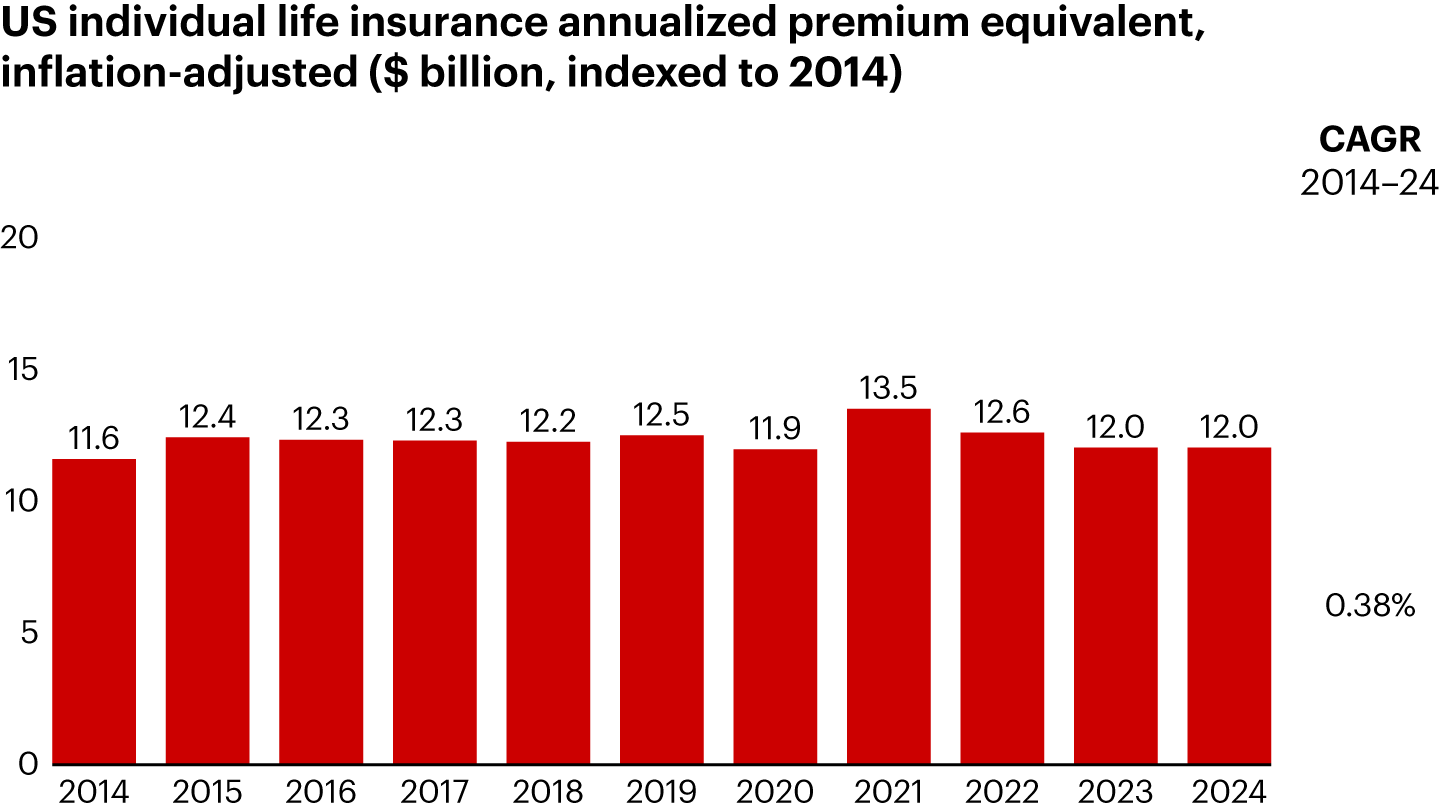
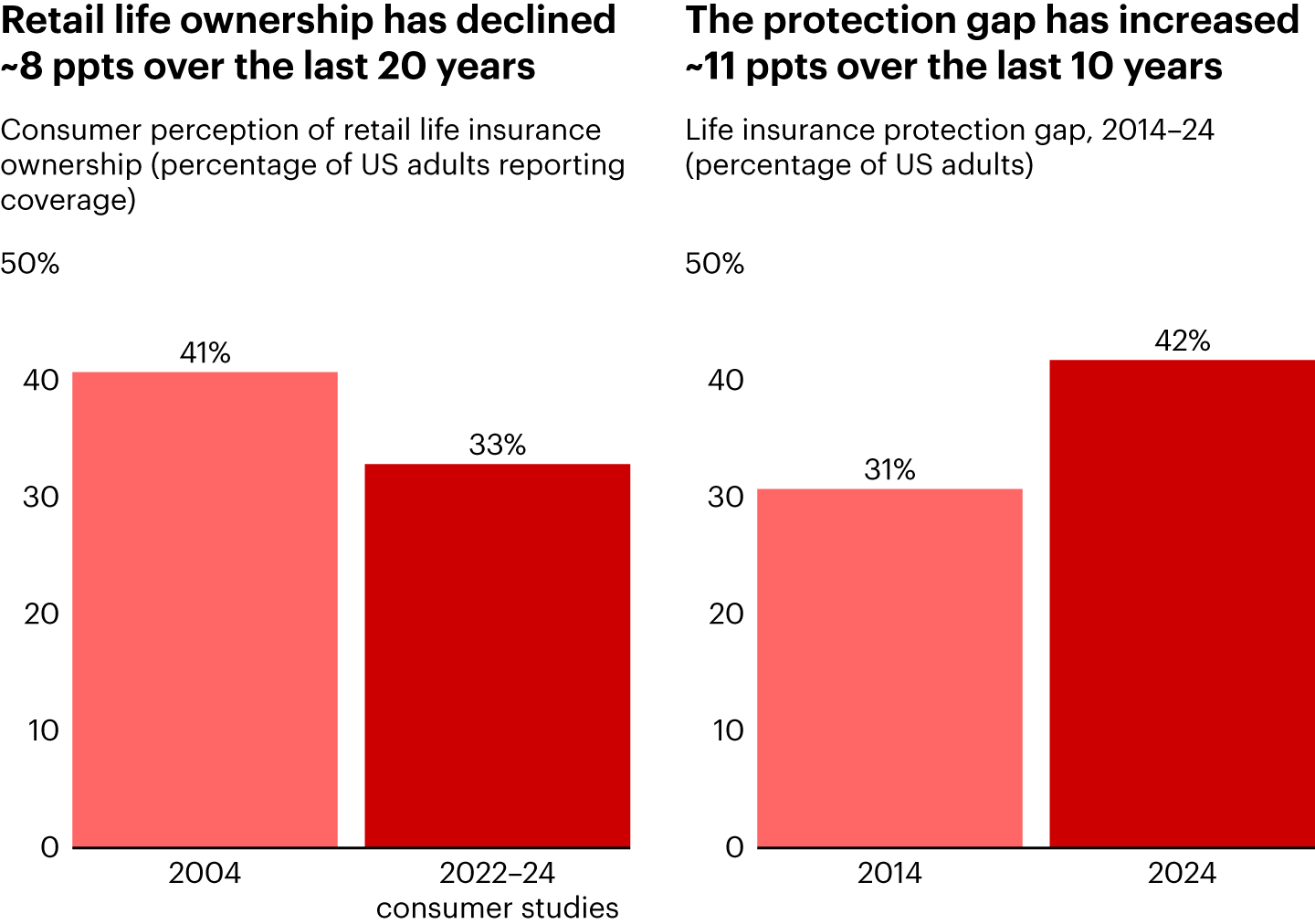
Alongside stagnating growth, individual life insurance has seen declining penetration (see Figure 2). Fewer US consumers have life insurance policies. And yet, while ownership of retail life insurance has declined, consumer self-reported need for protection has increased. The market potential from this latent demand is significant.
Figure 2

The “protection gap”
In 2024, 42% of US adults reported not having enough, or any, life insurance coverage despite recognizing a need for it. This need is significant: Half of consumers within the “protection gap” indicate they are likely to buy coverage. Yet they aren’t buying it. Affordability is a genuine challenge, with more than 66% of this group citing cost or other financial priorities as the main reason for not purchasing life insurance. Inflationary environments exacerbate perceived affordability; however, affordability isn’t the primary issue. In reality, the protection gap spans income bands and ages. More than 80% of individuals within the protection gap have at least $50,000 in household income and one third have at least $150,000 in household income. These consumers have relevant buying needs, such as financial dependents or significant life events, that should make them more inclined to purchase. Helping even modest numbers of people meet this need with coverage aligns the industry’s noble mission with its bottom line: protecting more families would spur industry growth (see Figure 3).
Figure 3
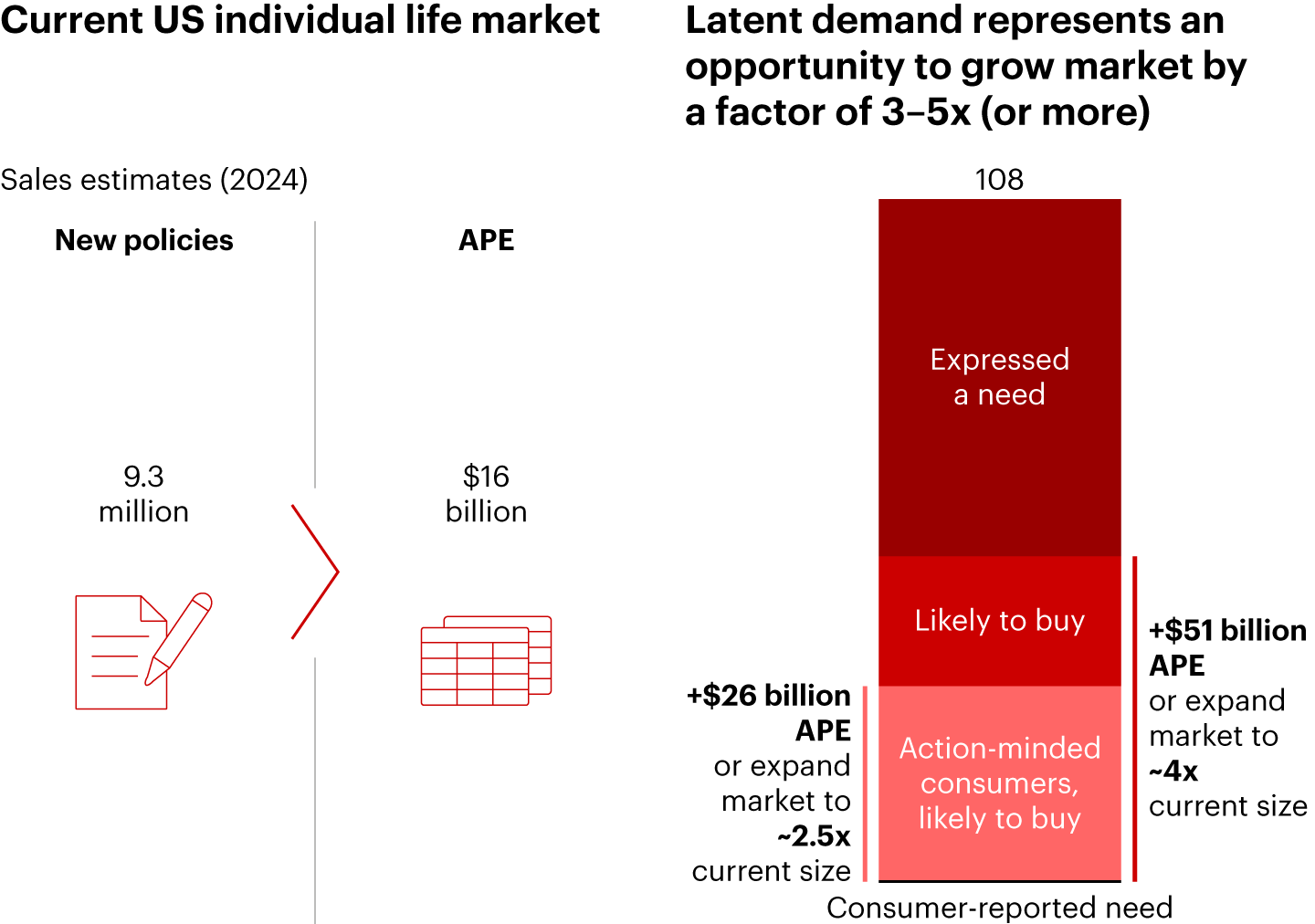

참고: Protection gap includes non-owners who say they need coverage and owners who say they need more coverage; APE = annualized premium equivalent
Sources: LIMRA Insurance Barometer (2024); LIMRA Quarterly Consumer Sentiment Study (2024); LIMRA US Retail Life Insurance Sales Survey and LIMRA estimatesUnderstanding consumer behavior
Consumers self-report a need for life insurance, and many have the income to afford it. So, what’s stopping them from purchasing? In short, insurance carriers are failing to convert consumer interest into action (see Figure 4). During the life insurance discovery process, consumer behavior reveals three key barriers that carriers can address: perceived affordability, lack of accessibility to straightforward information, and difficulty finding a trusted financial professional.
Figure 4
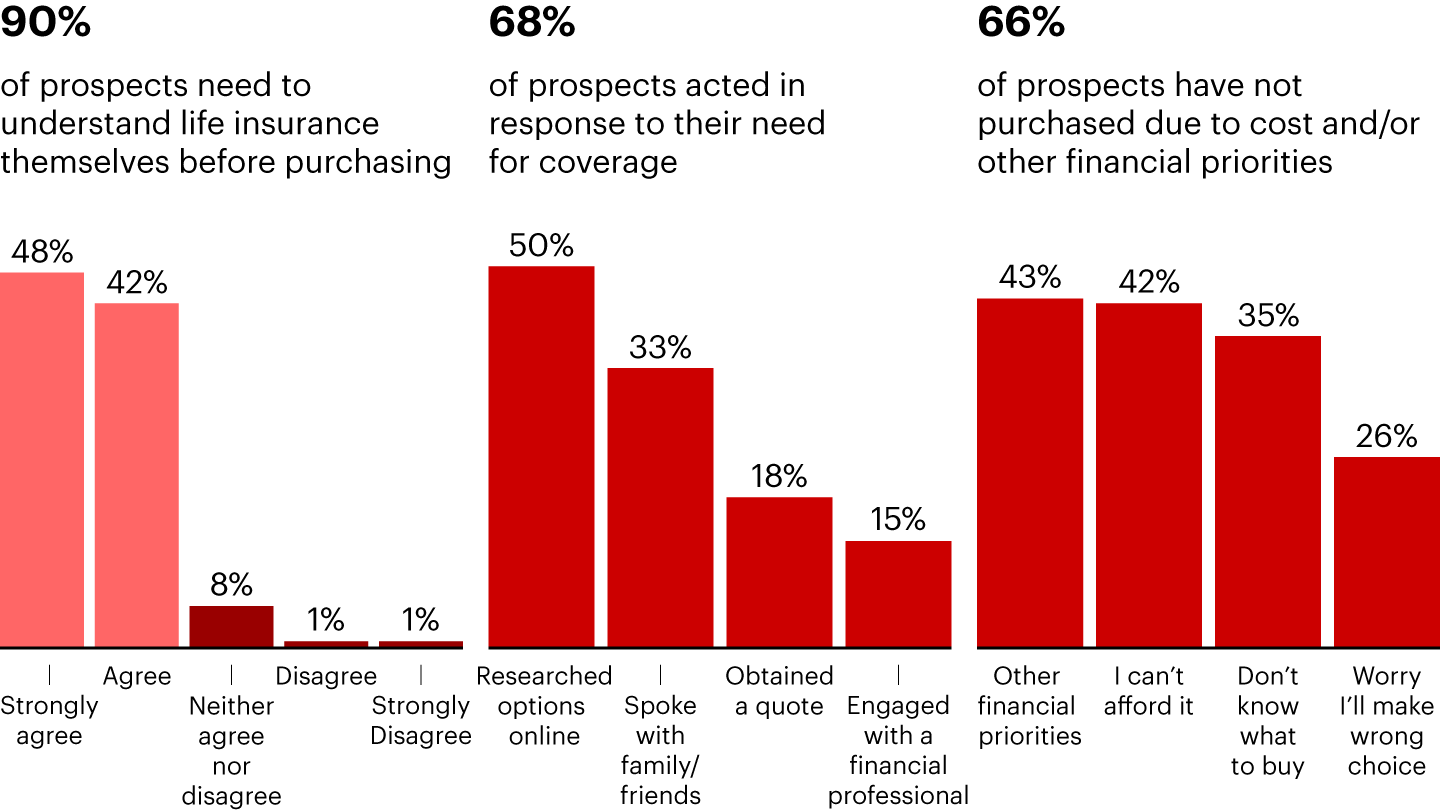

Note: Prospect is a consumer who self-reports they have a need for (more) life insurance
출처: Bain LIMRA Consumer Survey (n=1,887)Consumers want information, and increasingly, the first place they look is online. Nine out of 10 consumers cite a desire to “understand life insurance for themselves” before purchasing it, and they indicate that websites are their primary, trusted sources of self-education. However, navigating carrier websites can be challenging, and the information they provide is often complex and difficult to comprehend, frequently containing complex terms or industry jargon that a layperson may find confusing. Some websites gear content toward financial professionals rather than prospects, and few offer the kind of simple digital navigation tools consumers expect (and need) to understand better the value of individual life insurance, its product features, and cost.
In fact, lack of price transparency may be one of the biggest barriers to purchase and may explain, in part, why so many consumers view life insurance as financially unattainable. The misconceptions around price are staggering: Nearly three-quarters of Americans overestimate the true cost of a basic term life policy, with half of Generation Z and millennials overestimating it by more than three times.
In addition to the cost of coverage, consumers worry about the affordability of professional advice. This apprehension, coupled with the difficulty of finding clear information online, prevents them from seeking help from a qualified financial professional. According to joint Bain/LIMRA research, 72% of prospects strongly desire (agree/strongly agree) to engage a financial professional before purchasing life insurance, yet only 15% meet or correspond with one. This gap has considerable industry repercussions: When matched with clients who seek coverage, financial professionals indicate that they convert most sales.
Aligning marketing and distribution to drive growth
Building a customer journey that makes it easy to find well-matched financial professionals and clear, digestible information (about both product value and cost) will help close the coverage gap. Current carrier marketing and distribution efforts are out of step with consumer needs; aligning the two presents an opportunity to drive growth.
Compared to other financial service providers, life insurance carriers invest significantly less in marketing. When they do invest, most of their spending is directed toward upper-funnel brand awareness campaigns, with minimal investment in middle-funnel engagement, where conversion opportunities are greatest. Strong brand awareness may drive a prospect to a carrier’s website, but they need to have a reason to stay. Approximately 50% of prospects research their coverage options online; however, only 15% engage more deeply with a financial professional. Shifting some marketing spending toward targeted, mid-funnel outreach and consumer education could directly address the barriers consumers face and therefore prevent prospect dropout further down the funnel.
Likewise, improving distribution support could positively impact prospect retention and conversion. Carriers need prospects to engage with financial professionals to drive sales, yet current distribution efforts miss the mark: many consumers are interested in working with a financial professional, yet 67% of adults still don’t have a relationship with one. Financial professionals need carriers’ help to connect with this sizable group of prospects. Both affiliated and independent financial professionals report wanting help with lead generation and prospect education.However, most carriers that use independent distribution—a large share of the market—focus primarily on getting more financial professionals to carry their offerings rather than enabling the ones who already do to be more successful. One concern for carriers using independent distribution is that lead generation may result in sales for competitors. Still, securing even a share of those sales is better than missing out entirely due to a lack of connection.
“We create study groups and networks of younger financial professionals in the first five years of their careers and use these as a forum to learn about their needs. We’re trying to build tools to help get them to a profitable business.”
Four actions to unlock growth and close the coverage gap
When aligned, marketing and distribution can connect consumers with the information and financial professionals they need, creating a clear path to closing the coverage gap (see Figure 5).
Figure 5
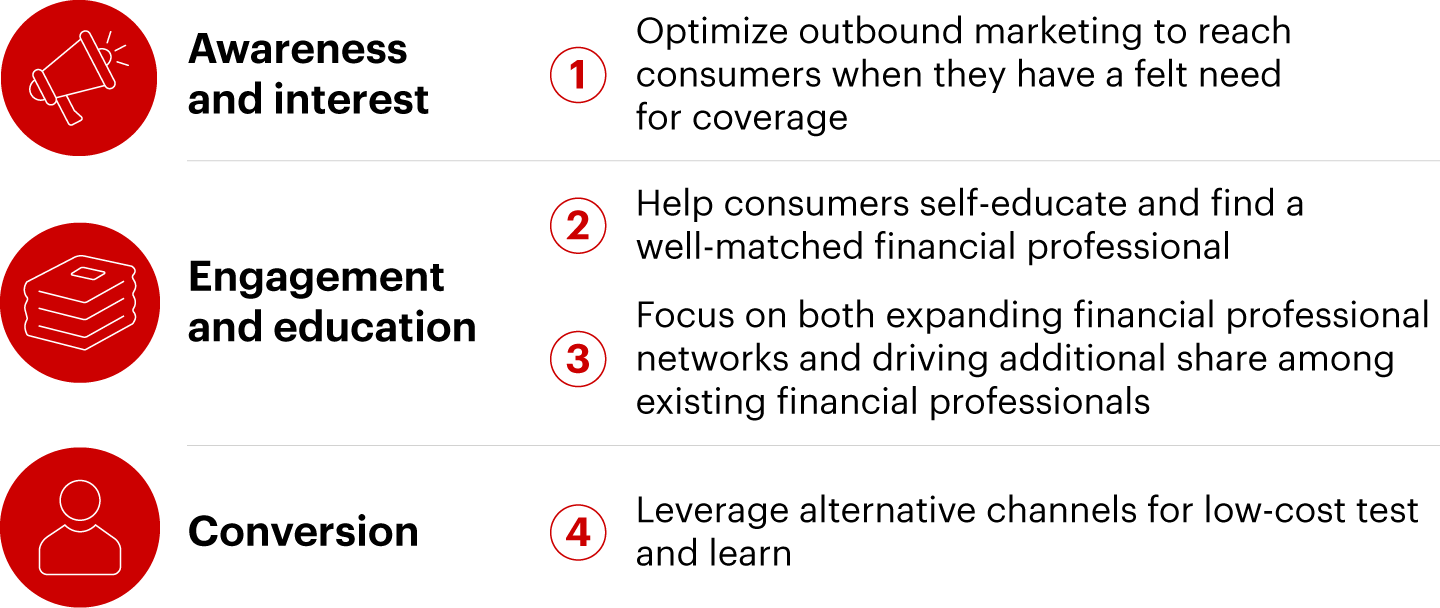

1. Optimize outbound marketing to target key life events
Two in five consumers recognize their need for life insurance after significant life events, such as marriage, having a child, or the death of a loved one. Performance marketing via digital channels, like targeted social media or display ads, offers an opportunity to reach these consumers with precise, cost-effective outreach tailored to their specific moments of need. Additionally, by using A/B testing, insurers can refine their messaging to identify the most effective approaches for different audiences, ultimately increasing engagement and conversion rates.
“Our ability to slice and dice the audience is greatly increasing. We can now easily find that 32-year-old who’s just had their first child and specifically target them with our messaging.”
2. Help consumers self-educate
Ninety percent of consumers want to understand life insurance for themselves before making a purchase, yet many struggle with complex content and unclear pricing. Carriers can simplify the learning journey by making product details clearer, more accessible, and easier to navigate, helping consumers feel informed and confident in their decisions.
Embedding interactive, self-guided online tools like questionnaires can engage consumers and guide them toward relevant product information. Communication around costs should be transparent and relatable. Comparing premiums to everyday expenses can both demystify pricing and increase the perception of affordability.
“Transparent pricing isn’t something the life insurance industry is known for, but it’s what consumers want. We’ve done creative testing on the front end focused on messages like it’s cheaper than you think—for example, five cups of coffee.”
3. Make it easy to find a financial professional …
Four in ten prospects have searched for a financial professional but never engaged with one. The process needs to be easier. Carriers can implement “Find an advisor near me” tools to simplify matching, and they should give prospects choices about how they prefer to engage (e.g., via text message, phone call, or digital calendar to self-schedule appointments) so prospects can connect in the way that feels most comfortable to them. Additionally, publishing client reviews and encouraging financial professionals to participate online in forums and social media platforms may allow carriers to capitalize on consumer reliance on word-of-mouth recommendations.
… and make it easy for financial professionals to find qualified leads
Carriers can support financial professionals with better lead generation and follow-up processes to enhance their efficiency and effectiveness. Carriers distributing primarily via independent financial professionals should have a balanced approach of expanding their financial professional networks and driving additional share of book among existing financial professionals.
“Social media is still a big area of opportunity here; we’re still seeing a need for a lot of education for financial professionals on how they can take advantage of it and create new opportunities.
... We ultimately want to enable the next generation of advisors to reach clients through digital channels while leveraging new digital tools to make managing their business easier.”
4. Experiment with alternate channels for low-cost test and learn
Nearly 80% of prospects indicate a willingness to purchase life insurance directly from a carrier’s website. While the vast majority of sales will likely continue to flow through traditional channels for the foreseeable future, leveraging online direct-to-consumer channels offers carriers a low-cost, low-risk opportunity to experiment and learn. By engaging directly with the smaller segment of consumers who purchase online, carriers can gain valuable insights to enhance marketing and distribution strategies across all channels.
“We do drive some direct-to-consumer business through our website—it is modest in size, but it has enabled us to test and learn, leaning into learning from our marketing and brand investments.”
Close the gap, open a new era of potential growth
More than 100 million consumers remain uninsured or underinsured, highlighting both a critical need and a significant growth opportunity for the life insurance industry. To bridge this growing gap, carriers need to address three key consumer barriers: information accessibility, financial professional accessibility, and perceived affordability. Consumers seek simple, clear information; pricing that makes sense in everyday terms; and an easy way to connect with financial professionals. Meeting these consumer needs requires action from both marketing and distribution, and carriers can realize the most benefit by coordinating that action. With aligned marketing and distribution strategies, carriers can meet consumers where they are. Doing so drives meaningful growth and ensures more families are protected in their moments of need.
About LIMRA
Serving the industry since 1916, LIMRA offers knowledge, insights, connections, and solutions to help more than 700 member organizations navigate change with confidence.
First published in 7월 2025