
Skip to Content
  • 오피스

    오피스

    미주
    • Atlanta
    • Austin
    • Bogota
    • Boston
    • Buenos Aires
    • Chicago
    • Dallas
    • Denver
    • Houston
    • Los Angeles
    • Mexico City
    • Minneapolis
    • Monterrey
    • Montreal
    • New York
    • Rio de Janeiro
    • San Francisco
    • Santiago
    • São Paulo
    • Seattle
    • Silicon Valley
    • Toronto
    • Washington, DC
    유럽, 중동, 아프리카
    • Amsterdam
    • Athens
    • Berlin
    • Brussels
    • Copenhagen
    • Doha
    • Dubai
    • Dusseldorf
    • Frankfurt
    • Helsinki
    • Istanbul
    • Johannesburg
    • Kyiv
    • Lisbon
    • London
    • Madrid
    • Milan
    • Munich
    • Oslo
    • Paris
    • Riyadh
    • Rome
    • Stockholm
    • Vienna
    • Warsaw
    • Zurich
    아시아, 호주
    • Bangkok
    • Beijing
    • Bengaluru
    • Brisbane
    • Ho Chi Minh City
    • Hong Kong
    • Jakarta
    • Kuala Lumpur
    • Manila
    • Melbourne
    • Mumbai
    • New Delhi
    • Perth
    • Seoul
    • Shanghai
    • Singapore
    • Sydney
    • Tokyo
    오피스 전체보기
  • 얼럼나이
  • 미디어 센터
  • 구독
  • 연락처
  • Korea | 한국어

    지역 및 언어 선택

    글로벌
    • Global (English)
    미주
    • Brazil (Português)
    • Argentina (Español)
    • Canada (Français)
    • Chile (Español)
    • Colombia (Español)
    유럽, 중동, 아프리카
    • France (Français)
    • DACH Region (Deutsch)
    • Italy (Italiano)
    • Spain (Español)
    • Greece (Elliniká)
    아시아, 호주
    • China (中文版)
    • Korea (한국어)
    • Japan (日本語)
  • Saved items (0)
    Saved items (0)

    You have no saved items.

    관심 있는 내용을 북마크하여 Red 폴더에 저장할 수 있습니다. Red 폴더 에서 저장된 내용을 읽거나 공유해보세요.

    Explore Bain Insights
  • 산업
    메인 메뉴

    산업

    • 우주항공, 방산 및 정부 서비스
    • 농업 관련 산업
    • 화학
    • 인프라, 건설 및 건축 자재
    • 소비재
    • 금융 서비스
    • 헬스케어
    • 산업용 기계 및 장비
    • 미디어 및 엔터테인먼트
    • 금속
    • 광업
    • 석유 및 가스
    • 제지 및 패키징 산업
    • 사모펀드
    • 사회 및 공공 부문
    • 유통
    • 기술
    • 텔레콤
    • 운송
    • 여행·여가
    • 유틸리티 및 재생가능 에너지
  • 컨설팅 서비스
    메인 메뉴

    컨설팅 서비스

    • Customer Experience
    • ESG
    • Innovation
    • M&A
    • 운영
    • 조직
    • 사모펀드
    • 고객 전략 및 마케팅
    • 전략
    • AI, 인사이트 및 솔루션
    • Technology
    • 변화 혁신
  • Digital
  • 인사이트
  • 베인 소개
    메인 메뉴

    베인 소개

    • 업무 소개
    • 베인의 신념
    • 구성원 및 리더십 소개
    • 고객 성과
    • 주요 수상 경력
    • 글로벌 파트너사
    Further: Our global responsibility
    • 다양성과 포용
    • 사회 공헌 활동
    • Sustainability
    • World Economic Forum
    Learn more about Further
  • Careers
    메인 메뉴

    Careers

    • Work with Us
      Careers
      Work with Us
      • Find Your Place
      • Our Work Areas
      • Integrated Teams
      • Students
      • Internships & Programs
      • Recruiting Events
    • Life at Bain
      Careers
      Life at Bain
      • Blog: Inside Bain
      • Career Stories
      • Our People
      • Where We Work
      • Supporting Your Growth
      • Affinity Groups
      • Benefits
    • Impact Stories
    • Hiring Process
      Careers
      Hiring Process
      • What to Expect
      • Interviewing
    FIND JOBS
  • 오피스
    메인 메뉴

    오피스

    • 미주
      오피스
      미주
      • Atlanta
      • Austin
      • Bogota
      • Boston
      • Buenos Aires
      • Chicago
      • Dallas
      • Denver
      • Houston
      • Los Angeles
      • Mexico City
      • Minneapolis
      • Monterrey
      • Montreal
      • New York
      • Rio de Janeiro
      • San Francisco
      • Santiago
      • São Paulo
      • Seattle
      • Silicon Valley
      • Toronto
      • Washington, DC
    • 유럽, 중동, 아프리카
      오피스
      유럽, 중동, 아프리카
      • Amsterdam
      • Athens
      • Berlin
      • Brussels
      • Copenhagen
      • Doha
      • Dubai
      • Dusseldorf
      • Frankfurt
      • Helsinki
      • Istanbul
      • Johannesburg
      • Kyiv
      • Lisbon
      • London
      • Madrid
      • Milan
      • Munich
      • Oslo
      • Paris
      • Riyadh
      • Rome
      • Stockholm
      • Vienna
      • Warsaw
      • Zurich
    • 아시아, 호주
      오피스
      아시아, 호주
      • Bangkok
      • Beijing
      • Bengaluru
      • Brisbane
      • Ho Chi Minh City
      • Hong Kong
      • Jakarta
      • Kuala Lumpur
      • Manila
      • Melbourne
      • Mumbai
      • New Delhi
      • Perth
      • Seoul
      • Shanghai
      • Singapore
      • Sydney
      • Tokyo
    오피스 전체보기
  • 얼럼나이
  • 미디어 센터
  • 구독
  • 연락처
  • Korea | 한국어
    메인 메뉴

    지역 및 언어 선택

    • 글로벌
      지역 및 언어 선택
      글로벌
      • Global (English)
    • 미주
      지역 및 언어 선택
      미주
      • Brazil (Português)
      • Argentina (Español)
      • Canada (Français)
      • Chile (Español)
      • Colombia (Español)
    • 유럽, 중동, 아프리카
      지역 및 언어 선택
      유럽, 중동, 아프리카
      • France (Français)
      • DACH Region (Deutsch)
      • Italy (Italiano)
      • Spain (Español)
      • Greece (Elliniká)
    • 아시아, 호주
      지역 및 언어 선택
      아시아, 호주
      • China (中文版)
      • Korea (한국어)
      • Japan (日本語)
  • Saved items  (0)
    메인 메뉴
    Saved items (0)

    You have no saved items.

    관심 있는 내용을 북마크하여 Red 폴더에 저장할 수 있습니다. Red 폴더 에서 저장된 내용을 읽거나 공유해보세요.

    Explore Bain Insights
  • 산업
    • 산업

      • 우주항공, 방산 및 정부 서비스
      • 농업 관련 산업
      • 화학
      • 인프라, 건설 및 건축 자재
      • 소비재
      • 금융 서비스
      • 헬스케어
      • 산업용 기계 및 장비
      • 미디어 및 엔터테인먼트
      • 금속
      • 광업
      • 석유 및 가스
      • 제지 및 패키징 산업
      • 사모펀드
      • 사회 및 공공 부문
      • 유통
      • 기술
      • 텔레콤
      • 운송
      • 여행·여가
      • 유틸리티 및 재생가능 에너지
  • 컨설팅 서비스
    • 컨설팅 서비스

      • Customer Experience
      • ESG
      • Innovation
      • M&A
      • 운영
      • 조직
      • 사모펀드
      • 고객 전략 및 마케팅
      • 전략
      • AI, 인사이트 및 솔루션
      • Technology
      • 변화 혁신
  • Digital
  • 인사이트
  • 베인 소개
    • 베인 소개

      • 업무 소개
      • 베인의 신념
      • 구성원 및 리더십 소개
      • 고객 성과
      • 주요 수상 경력
      • 글로벌 파트너사
      Further: Our global responsibility
      • 다양성과 포용
      • 사회 공헌 활동
      • Sustainability
      • World Economic Forum
      Learn more about Further
  • Careers
    최근 검색어
      최근 방문 페이지

      Content added to saved items

      Saved items (0)

      Removed from saved items

      Saved items (0)

      The Visionary CEO’s Guide to Sustainability

      Organizing for Sustainability

      Organizing for Sustainability

      Most companies are way behind on their sustainability goals. Focusing on four things can accelerate progress.

      글 Sarah Elk, Grégoire Schaub, Sanjay Dhiri, and Junya Ishikawa

      • 읽기 소요시간
      }

      Report

      Organizing for Sustainability
      en
      At a Glance
      • In a Bain survey, most executives report having a bold sustainability ambition with clear targets, but almost none feel they are on track to achieve them.
      • Based on more than 300 conversations with executives and our work with scores of companies in transition, organizations that are succeeding at sustainability do four things consistently.

      This article is part of Bain’s 2023 CEO Sustainability Guide

      Explore the report

      Companies have ambitious sustainability targets they are struggling to meet. In our recent global survey of large-company executives, 67% report having a bold sustainability ambition with clear targets across environmental, social, and governance aims, but only 3% feel they are on track to achieve them.

      One consistent reason: Companies have not mobilized the core of their business to realize these sustainability ambitions. Instead, sustainability targets are set without input from the business units tasked with leading change. As a result, the businesses don’t feel they own the problem, leaving promising ideas withering from lack of support and slowing progress overall. A minority of leaders—fewer than 25%—believe sustainability is well integrated into their business today, our research found. It’s not surprising that 36% report being far below their expected level of progress on these issues.

      With the right focus, however, companies can construct the operating model needed to advance a more sustainable future. This starts with embracing a new mindset. Today, many companies treat sustainability only as a constraint, something they have to do. They can’t expect to achieve their ambitions if they don’t see that sustainability is an opportunity to create value as well.

      Based on more than 300 conversations with executives on this topic and our experience working with scores of companies in transition, organizations that are succeeding at sustainability do four things worth emulating.

      1. Break down ambitions into a portfolio of business outcomes

      Companies need to translate their sustainability ambitions into concrete, discrete goals mapped to specific business operations. This involves having challenging conversations and being open to setting multiyear goals, even when the solution or how it will be realized is not yet clear. Testing strategies to achieve these outcomes, and learning from those tests, is the only way to reach your true objective.

      CEO Doug McMillon describes Walmart’s ambition as going “beyond sustainability to become a regenerative company dedicated to placing nature and humanity at the center of our business practices.” To get there, Walmart engages in challenging dialogues about business outcomes, considering the full implications of carbon reduction for refrigeration, for example, or what it means for the transport of goods to stores and in the last mile to customer homes, and what moving toward zero waste will mean for operations. The approach has helped Walmart reduce or avoid more than 750 million metric tons of emissions since 2017.

      Chemicals and materials company Solvay has similarly focused its sustainability ambition on “climate, resources, and better life” and translated that into a roadmap of business outcomes. These include boosting energy efficiency and process electrification, increasing green power supplies across plants, reducing pressure on sites’ biodiversity, lowering water intake, and more. As a former global business unit president, the company’s chief sustainability officer, Pascal Chalvon Demersay, brings a business lens to sustainability. By systematically determining the environmental impact of all products and weaving sustainability goals throughout the organization, Solvay has reduced its direct emissions by 19% and its biodiversity pressure by 28% since 2018.

      2. Seek out opportunities that benefit multiple stakeholders

      It’s important that everyone working on new sustainability opportunities consider their broadest potential value to a variety of stakeholders.

      A plethora of independent rating agencies now track the value companies generate for individual stakeholder groups and the complex relationships among them—data companies can use to design a strategy that delivers mutual benefits for all. (For more on this, see “Building a Data-Based Stakeholder Strategy.”)

      In many situations, improving sustainability will require trade-offs among stakeholders. In the field of climate policy, frameworks and protocols that will help stakeholders share knowledge and analyze those trade-offs are being developed.

      Efforts are most likely to benefit multiple stakeholders when that has been a goal from the start. Walmart’s sustainability team and business leaders regularly brainstorm how its efforts can help multiple stakeholders. When they thought about building electric vehicle infrastructure to reduce emissions in the transport of goods from stores and fulfillment centers to homes, they also considered the value that could bring to consumers, associates, and communities. In April, the retailer, which has storefronts within 10 miles of 90% of Americans, announced it would be building a low-cost EV fast-charging network at locations coast to coast, easing concerns about access to recharging and lowering transportation costs, while creating another opportunity for customers to shop—in this case, while recharging.

      3. Dedicate teams to develop new solutions

      While some sustainability activities can be delegated and cascaded directly to the leaders and teams already running the business, others require a more fundamental change to the business. For these, the traditional task force of people working part-time on a project basis is simply insufficient. Companies accelerating toward their sustainability ambitions dedicate teams to reimagine and then test potential new solutions.

      Importantly, they match the team to the work. Depending on the type of goal, a new, dedicated multidisciplinary team might need to be launched, or it might be given to an existing team (see Figure 1). In either case, the team must be dedicated to the task in order to efficiently develop quality solutions.

      Figure 1
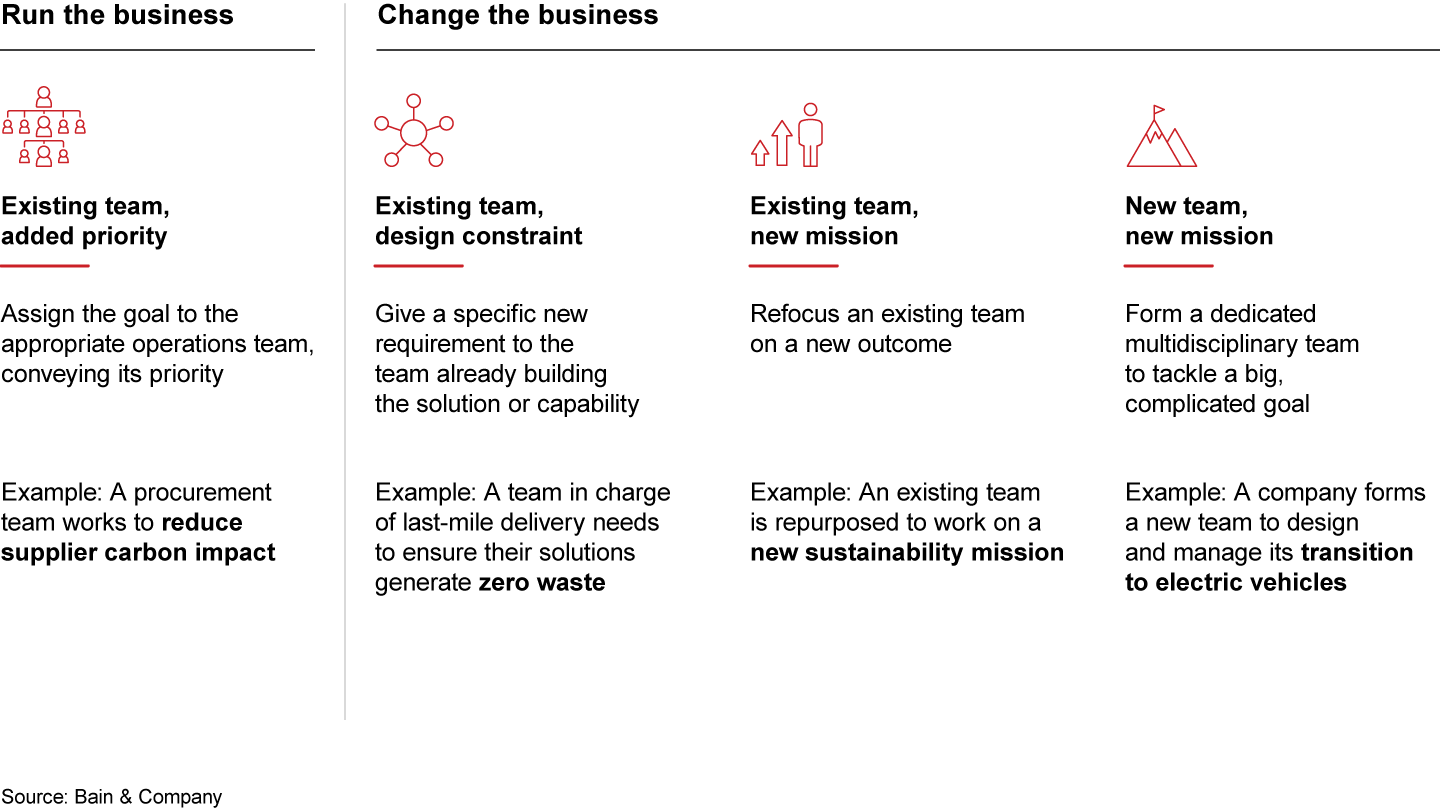
      Match the sustainability goal to the right team

      4. Build a system to accelerate scaling good solutions

      At any given time, Walmart has hundreds of tests running. Feedback loops provide near real-time identification of defects by associates and customers. Solutions that have been scaled and are being optimized are discussed in run-the-business operations meetings, while those in testing are discussed in biweekly transformation meetings. If teams need help between meetings, mechanisms exist to remove roadblocks and get them the resources they need to move as fast as possible. With sustainability outcomes built into the teams, sustainability goals benefit naturally from this well-tuned innovation engine.  

      The ability to scale their best new ideas, whether on sustainability or any other topic, is a hallmark of flexible organizations. This requires:

      • A unit of scaling. This might be a store, a customer segment, a product, or a sales territory. It might be two units, five units, or the entire company.
      • A defined release cycle. How often can customers, employees, suppliers, or other stakeholders expect to receive changes? Three times a year? Four?
      • Feedback loops. When change is repeatable, good communication helps address defects rapidly.
      • Transparent roadmaps. People want to know what might come next.

      Impact

      By adopting these practices, companies ensure that sustainability isn’t something being done on the side but is truly part of the business.

      Solvay’s business leaders see sustainability as a way of mitigating risk and driving lasting value creation, so they build the business case for change on that basis. When they evaluate the business value of any effort, they do so with a carbon price of 100 euros per metric ton incorporated. They also screen for water use, waste valorization, and other ESG adjustments when considering all capital expenditures and M&A decisions. Performance on sustainability impacts 15% of the yearly bonus of all managers. This is all part of a growth strategy made possible by the company’s operating model, which includes four sustainable platforms: renewable materials and biotechnology, batteries, green hydrogen, and thermoplastic composites.

      To understand how well their company is positioned today, CEOs can start by asking their teams a few high-gain questions:

      • Do our middle managers own specific sustainability goals?
      • Have we dedicated certain teams to sustainability innovation, to developing new solutions?
      • Do our employees raise sustainability ideas that could become new sources of value?
      • How could a repeatable model for scaling change accelerate our path to sustainability?

      Read the Next Chapter

      A Talent Strategy for Sustainability: Skills Matter, but Mindset Is Everything

      Read our 2023 CEO Sustainability Guide

      Explore the full report Download PDF
      저자
      • Headshot of Sarah Elk
        Sarah Elk
        Partner, Houston
      • Headshot of Grégoire Schaub
        Grégoire Schaub
        파트너, Brussels
      • Headshot of Sanjay Dhiri
        Sanjay Dhiri
        파트너, London
      • Headshot of Junya Ishikawa
        Junya Ishikawa
        파트너, Tokyo
      문의하기
      관련 산업
      • 기술
      • 산업재 및 서비스
      • 소비재
      • 에너지와 천연자원
      • 유통
      관련 컨설팅 서비스
      • 전략
      • 조직
      • 지속 가능성 및 기업의 사회적 책임
      • Operating Model & Org Design
      CEO's Guide to Sustainability
      The Future Is Circular: How Companies Can Prepare to Grow in a Changing World

      By decoupling economic growth from resource consumption, circular models offer companies their best shot at continued, long-term growth.

      자세히 보기
      CEO's Guide to Sustainability
      From Sustainability Commitments to Impact: Four Pragmatic Questions for Visionary CEOs

      Amid competing priorities, CEOs and consumers still say sustainability matters. By acting now, companies can set the stage for profitable growth.

      자세히 보기
      소비재
      Embracing the “Do-Say” Gap

      Three pragmatic questions that shift sustainability from ambition to action.

      자세히 보기
      지속 가능성 및 기업의 사회적 책임
      Taking a Globally Orchestrated Approach to Digital Disruption

      New technologies such as generative AI, quantum computing, and climate technology require unique but complementary managerial muscles.

      자세히 보기
      CEO's Guide to Sustainability
      The Sustainability Puzzle: What Do Consumers Really Want?

      How businesses can unlock the challenge of helping consumers live sustainably.

      자세히 보기

      Introduction

      • The Questions Every CEO Needs to Ask About Sustainability

      Levers of Change: Technology, Behavior, Policy

      • Selling Sustainability Means Decoding Consumers

      • Does a Purpose Help Brands Grow?

      • Lower Costs, Faster Adoption: Closing the Sustainable Innovation Gap

      • The Future Is Circular: How Companies Can Prepare to Grow in a Changing World

      • Leading with Vision: Harnessing the Climate Policy Response

      Sector Perspectives

      • Building Resilience in Your Business Strategy: Four Imperatives for Leaders

      • The Energy Transition’s Other Big Puzzle: Making the Math Work

      • Can Food and Agriculture Companies Raise Their Game?

      • Fires, Floods, and Loans: How Banks Can Deal with Increasing Climate Risks

      Making It Happen

      • Building a Data-Based Stakeholder Strategy

      • Operations and Supply Chain Decarbonization: Lower Emissions, Higher Performance

      • Making Business Do Better for Everyone

      • Organizing for Sustainability

      • A Talent Strategy for Sustainability: Skills Matter, but Mindset Is Everything

      First published in 11월 2023
      태그
      • 기술
      • 산업재 및 서비스
      • 소비재
      • 에너지와 천연자원
      • 유통
      • 전략
      • 조직
      • 지속 가능성 및 기업의 사회적 책임
      • CEO's Guide to Sustainability
      • Operating Model & Org Design

      프로젝트 사례

      성과 개선 Constructing a best-in-class global procurement organization

      See more related case studies

      운영 Uncovering major savings in procurement

      See more related case studies

      전략 Turning around a real estate giant's financial performance

      See more related case studies

      베인에 궁금하신 점이 있으신가요?

      베인은 주저 없이 변화를 마주할 줄 아는 용감한 리더들과 함께합니다. 그리고, 이들의 담대한 용기는 고객사의 성공으로 이어집니다.

      급변하는 비즈니스 환경에서 살아남기 위한 선도자의 시각. 월간 Bain Insights에서 글로벌 비즈니스의 핵심 이슈를 확인하십시오.

      *개인정보 정책을 읽었으며 그 내용에 동의합니다.

      Privacy Policy를 읽고 동의해주십시오.
      Bain & Company
      문의하기 환경정책 Accessibility 이용약관 개인정보 보호 쿠키 사용 정책 Sitemap Log In

      © 1996-2026 Bain & Company, Inc.

      문의하기

      무엇을 도와드릴까요?

      • 프로젝트 문의
      • 채용 정보
      • 언론
      • 제휴 문의
      • 연사 초청
      오피스 전체보기