Skip to Content
  • 오피스

    오피스

    미주
    • Atlanta
    • Austin
    • Bogota
    • Boston
    • Buenos Aires
    • Chicago
    • Dallas
    • Denver
    • Houston
    • Los Angeles
    • Mexico City
    • Minneapolis
    • Monterrey
    • Montreal
    • New York
    • Rio de Janeiro
    • San Francisco
    • Santiago
    • São Paulo
    • Seattle
    • Silicon Valley
    • Toronto
    • Washington, DC
    유럽, 중동, 아프리카
    • Amsterdam
    • Athens
    • Berlin
    • Brussels
    • Copenhagen
    • Doha
    • Dubai
    • Dusseldorf
    • Frankfurt
    • Helsinki
    • Istanbul
    • Johannesburg
    • Kyiv
    • Lisbon
    • London
    • Madrid
    • Milan
    • Munich
    • Oslo
    • Paris
    • Riyadh
    • Rome
    • Stockholm
    • Vienna
    • Warsaw
    • Zurich
    아시아, 호주
    • Bangkok
    • Beijing
    • Bengaluru
    • Brisbane
    • Ho Chi Minh City
    • Hong Kong
    • Jakarta
    • Kuala Lumpur
    • Manila
    • Melbourne
    • Mumbai
    • New Delhi
    • Perth
    • Seoul
    • Shanghai
    • Singapore
    • Sydney
    • Tokyo
    오피스 전체보기
  • 얼럼나이
  • 미디어 센터
  • 구독
  • 연락처
  • Korea | 한국어

    지역 및 언어 선택

    글로벌
    • Global (English)
    미주
    • Brazil (Português)
    • Argentina (Español)
    • Canada (Français)
    • Chile (Español)
    • Colombia (Español)
    유럽, 중동, 아프리카
    • France (Français)
    • DACH Region (Deutsch)
    • Italy (Italiano)
    • Spain (Español)
    • Greece (Elliniká)
    아시아, 호주
    • China (中文版)
    • Korea (한국어)
    • Japan (日本語)
  • Saved items (0)
    Saved items (0)

    You have no saved items.

    관심 있는 내용을 북마크하여 Red 폴더에 저장할 수 있습니다. Red 폴더 에서 저장된 내용을 읽거나 공유해보세요.

    Explore Bain Insights
  • 산업
    메인 메뉴

    산업

    • 우주항공, 방산 및 정부 서비스
    • 농업 관련 산업
    • 화학
    • 인프라, 건설 및 건축 자재
    • 소비재
    • 금융 서비스
    • 헬스케어
    • 산업용 기계 및 장비
    • 미디어 및 엔터테인먼트
    • 금속
    • 광업
    • 석유 및 가스
    • 제지 및 패키징 산업
    • 사모펀드
    • 사회 및 공공 부문
    • 유통
    • 기술
    • 텔레콤
    • 운송
    • 여행·여가
    • 유틸리티 및 재생가능 에너지
  • 컨설팅 서비스
    메인 메뉴

    컨설팅 서비스

    • Customer Experience
    • ESG
    • Innovation
    • M&A
    • 운영
    • 조직
    • 사모펀드
    • 고객 전략 및 마케팅
    • 전략
    • AI, 인사이트 및 솔루션
    • Technology
    • 변화 혁신
  • Digital
  • 인사이트
  • 베인 소개
    메인 메뉴

    베인 소개

    • 업무 소개
    • 베인의 신념
    • 구성원 및 리더십 소개
    • 고객 성과
    • 주요 수상 경력
    • 글로벌 파트너사
    Further: Our global responsibility
    • 다양성과 포용
    • 사회 공헌 활동
    • Sustainability
    • World Economic Forum
    Learn more about Further
  • Careers
    메인 메뉴

    Careers

    • Work with Us
      Careers
      Work with Us
      • Find Your Place
      • Our Work Areas
      • Integrated Teams
      • Students
      • Internships & Programs
      • Recruiting Events
    • Life at Bain
      Careers
      Life at Bain
      • Blog: Inside Bain
      • Career Stories
      • Our People
      • Where We Work
      • Supporting Your Growth
      • Affinity Groups
      • Benefits
    • Impact Stories
    • Hiring Process
      Careers
      Hiring Process
      • What to Expect
      • Interviewing
    FIND JOBS
  • 오피스
    메인 메뉴

    오피스

    • 미주
      오피스
      미주
      • Atlanta
      • Austin
      • Bogota
      • Boston
      • Buenos Aires
      • Chicago
      • Dallas
      • Denver
      • Houston
      • Los Angeles
      • Mexico City
      • Minneapolis
      • Monterrey
      • Montreal
      • New York
      • Rio de Janeiro
      • San Francisco
      • Santiago
      • São Paulo
      • Seattle
      • Silicon Valley
      • Toronto
      • Washington, DC
    • 유럽, 중동, 아프리카
      오피스
      유럽, 중동, 아프리카
      • Amsterdam
      • Athens
      • Berlin
      • Brussels
      • Copenhagen
      • Doha
      • Dubai
      • Dusseldorf
      • Frankfurt
      • Helsinki
      • Istanbul
      • Johannesburg
      • Kyiv
      • Lisbon
      • London
      • Madrid
      • Milan
      • Munich
      • Oslo
      • Paris
      • Riyadh
      • Rome
      • Stockholm
      • Vienna
      • Warsaw
      • Zurich
    • 아시아, 호주
      오피스
      아시아, 호주
      • Bangkok
      • Beijing
      • Bengaluru
      • Brisbane
      • Ho Chi Minh City
      • Hong Kong
      • Jakarta
      • Kuala Lumpur
      • Manila
      • Melbourne
      • Mumbai
      • New Delhi
      • Perth
      • Seoul
      • Shanghai
      • Singapore
      • Sydney
      • Tokyo
    오피스 전체보기
  • 얼럼나이
  • 미디어 센터
  • 구독
  • 연락처
  • Korea | 한국어
    메인 메뉴

    지역 및 언어 선택

    • 글로벌
      지역 및 언어 선택
      글로벌
      • Global (English)
    • 미주
      지역 및 언어 선택
      미주
      • Brazil (Português)
      • Argentina (Español)
      • Canada (Français)
      • Chile (Español)
      • Colombia (Español)
    • 유럽, 중동, 아프리카
      지역 및 언어 선택
      유럽, 중동, 아프리카
      • France (Français)
      • DACH Region (Deutsch)
      • Italy (Italiano)
      • Spain (Español)
      • Greece (Elliniká)
    • 아시아, 호주
      지역 및 언어 선택
      아시아, 호주
      • China (中文版)
      • Korea (한국어)
      • Japan (日本語)
  • Saved items  (0)
    메인 메뉴
    Saved items (0)

    You have no saved items.

    관심 있는 내용을 북마크하여 Red 폴더에 저장할 수 있습니다. Red 폴더 에서 저장된 내용을 읽거나 공유해보세요.

    Explore Bain Insights
  • 산업
    • 산업

      • 우주항공, 방산 및 정부 서비스
      • 농업 관련 산업
      • 화학
      • 인프라, 건설 및 건축 자재
      • 소비재
      • 금융 서비스
      • 헬스케어
      • 산업용 기계 및 장비
      • 미디어 및 엔터테인먼트
      • 금속
      • 광업
      • 석유 및 가스
      • 제지 및 패키징 산업
      • 사모펀드
      • 사회 및 공공 부문
      • 유통
      • 기술
      • 텔레콤
      • 운송
      • 여행·여가
      • 유틸리티 및 재생가능 에너지
  • 컨설팅 서비스
    • 컨설팅 서비스

      • Customer Experience
      • ESG
      • Innovation
      • M&A
      • 운영
      • 조직
      • 사모펀드
      • 고객 전략 및 마케팅
      • 전략
      • AI, 인사이트 및 솔루션
      • Technology
      • 변화 혁신
  • Digital
  • 인사이트
  • 베인 소개
    • 베인 소개

      • 업무 소개
      • 베인의 신념
      • 구성원 및 리더십 소개
      • 고객 성과
      • 주요 수상 경력
      • 글로벌 파트너사
      Further: Our global responsibility
      • 다양성과 포용
      • 사회 공헌 활동
      • Sustainability
      • World Economic Forum
      Learn more about Further
  • Careers
    최근 검색어
      최근 방문 페이지

      Content added to saved items

      Saved items (0)

      Removed from saved items

      Saved items (0)

      Brief

      Rethinking How Finance Uses Digital Tools

      Rethinking How Finance Uses Digital Tools

      Robotic process automation and machine learning may be hot, but many existing technologies remain vastly underutilized.

      글 Michael Heric

      • 읽기 소요시간
      }

      Brief

      Rethinking How Finance Uses Digital Tools
      en

      Artificial intelligence (AI) in all its forms—robotics, machine learning, natural language processing and generation—is captivating finance departments. No wonder that adoption of robotic process automation (RPA) and machine learning is expected to double over the next two years, according to a new Bain & Company survey, in collaboration with Research Now, of 501 finance executives and professionals in the US, UK and Germany (see Figure 1).

      Figure 1
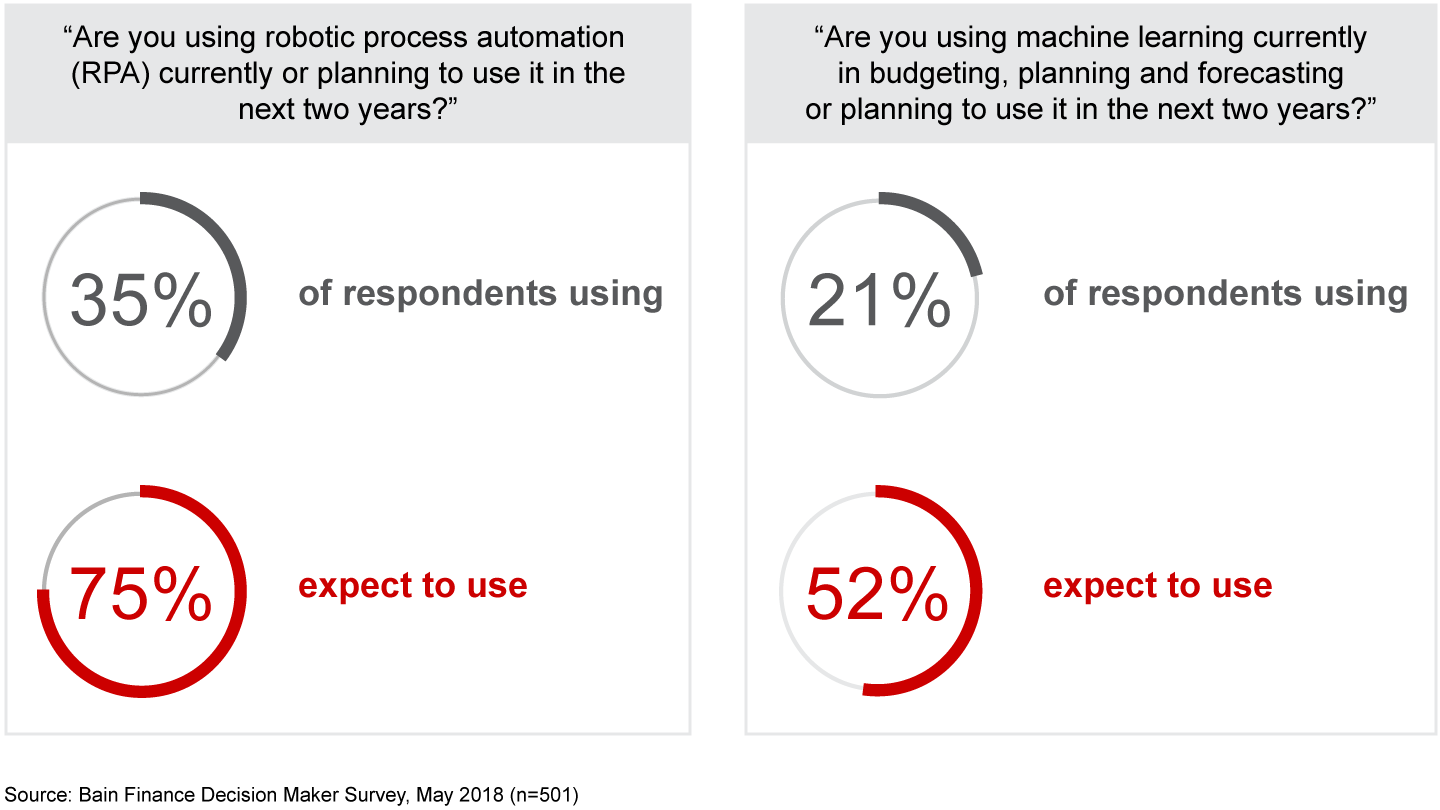
      Companies have lofty expectations for robotic process automation and machine learning
      Companies have lofty expectations for robotic process automation and machine learning
      Companies have lofty expectations for robotic process automation and machine learning

      RPA has gained the most momentum up to this point. For example, FedEx automates tax, payroll, credit card reconciliations, treasury and other finance processes with RPA in its global shared services organization. Fossil Group uses RPA to automate the monthly financial close process. Allianz automatically reconciles cash pool accounts across three systems through robotics. Mastercard uses RPA in daily cash reconciliation for accounts payable and accounts receivable, order-to-collect, settlement cleaning, quality control and card expense management. Some companies have even named their RPA bots as they integrate into the daily rhythm of the finance department.

      Government agencies have joined the trend as well. HM Revenue & Customs in the UK transformed internal tax processing through scanning, robotics and workflow with more than 200 unattended robots and 15,000 attended robots processing more than 10 million transactions through robotics annually.

      Kurt Grichel, a partner with Bain's Corporate Support practice, examines how finance departments can make the most of their digital toolkits to reach full potential. 

      Machine learning and natural language processing and generation are taking both analytics and automation to new levels. In 2016, Citigroup used machine learning to help it pass the US Federal Reserve’s stress test, which it failed earlier. Danone applies the technology in deduction management to improve the efficiency and effectiveness of its order-to-cash process. USAA has invested in natural language generation (NLG) to automate the creation of commentary on product-line performance, acquisition trends and transactions for its product dashboards.

      The rapid adoption of AI in finance continues a decades-long trend of technology transforming finance. Widespread use of optical character recognition (OCR) dates to the 1970s, spreadsheets to the 1980s, and financial planning systems and electronic invoicing to the 1990s. Each of these technologies improved productivity in finance departments. Today, our survey finds, 76% of finance executives agree that digital will fundamentally change finance, and they are investing accordingly, with 23% of finance departments planning to increase IT budgets by more than 10% over each of the next two years.

      But here’s the rub: The accumulation of technologies has created substantial complexity, leaving few finance departments able to wring the full potential value from the technology they own. Lack of digital tools is not the main sticking point. Rather, finance professionals lament unintegrated tools, too many tools and a poor user experience (see Figure 2).

      Figure 2
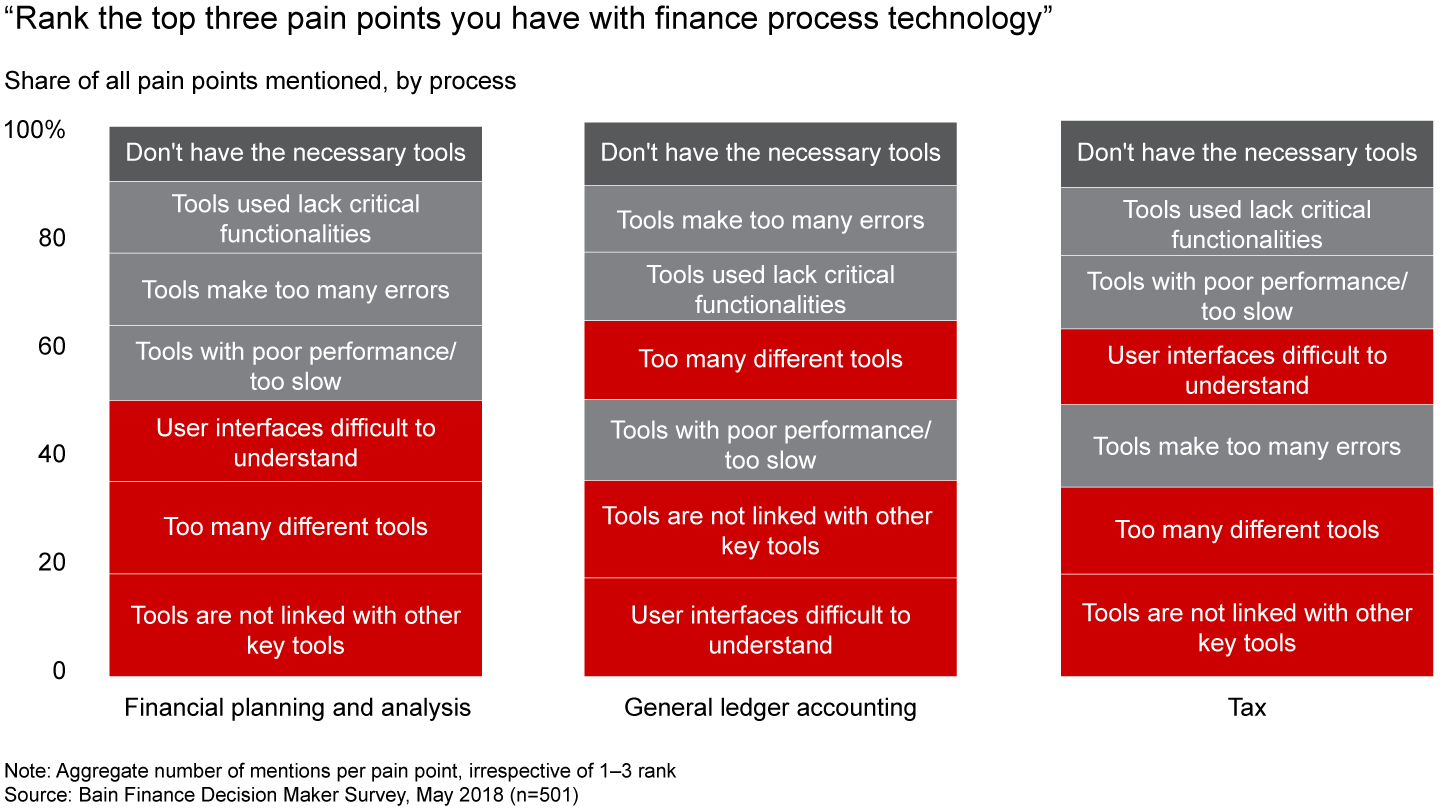
      Lack of digital tools is not the primary problem, but rather unintegrated tools, too many tools and a poor user experience
      Figure 2: Lack of digital tools is not the primary problem, but rather unintegrated tools, too many tools and a poor user experience
      Figure 2: Lack of digital tools is not the primary problem, but rather unintegrated tools, too many tools and a poor user experience

      For example, in accounts payable, fewer than one-third of respondent companies pay more than 60% of supplier invoices electronically, and only 6% process those supplier invoices with no manual intervention (see Figure 3). That’s far from an automated process, despite the long period that electronic invoicing has been available.

      Figure 3
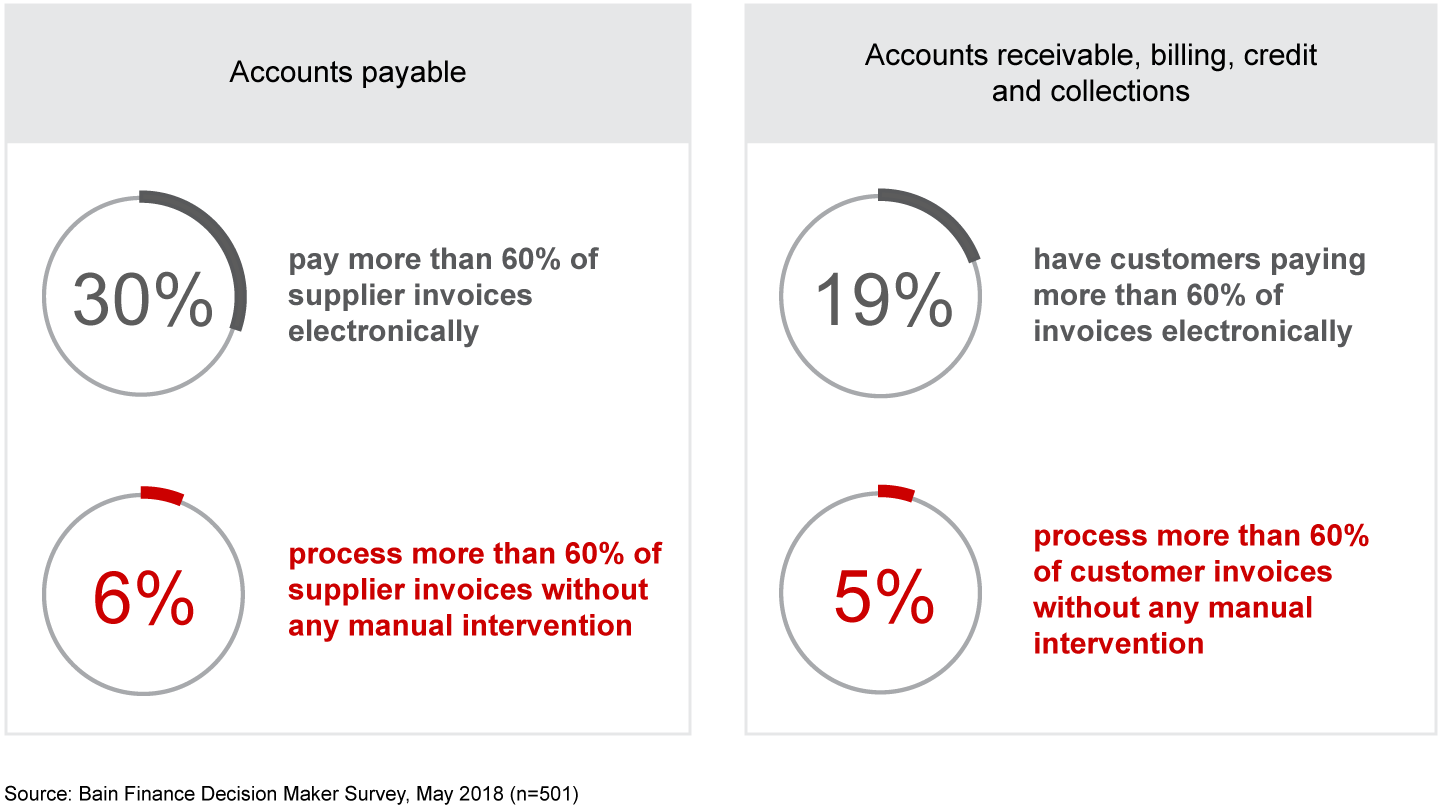
      Even when finance departments have digital tools, many do not exploit the full potential of the technology
      Even when finance departments have digital tools, many do not exploit the full potential of the technology
      Even when finance departments have digital tools, many do not exploit the full potential of the technology

      Based on cost savings already achieved from RPA and machine learning, many companies hope these technologies will help them address the inefficiencies and exceptions that arise from existing technology (see Figure 4). Yet while finance departments are rapidly investing in an array of new technologies, many have still not yet fully adopted more mature technologies:

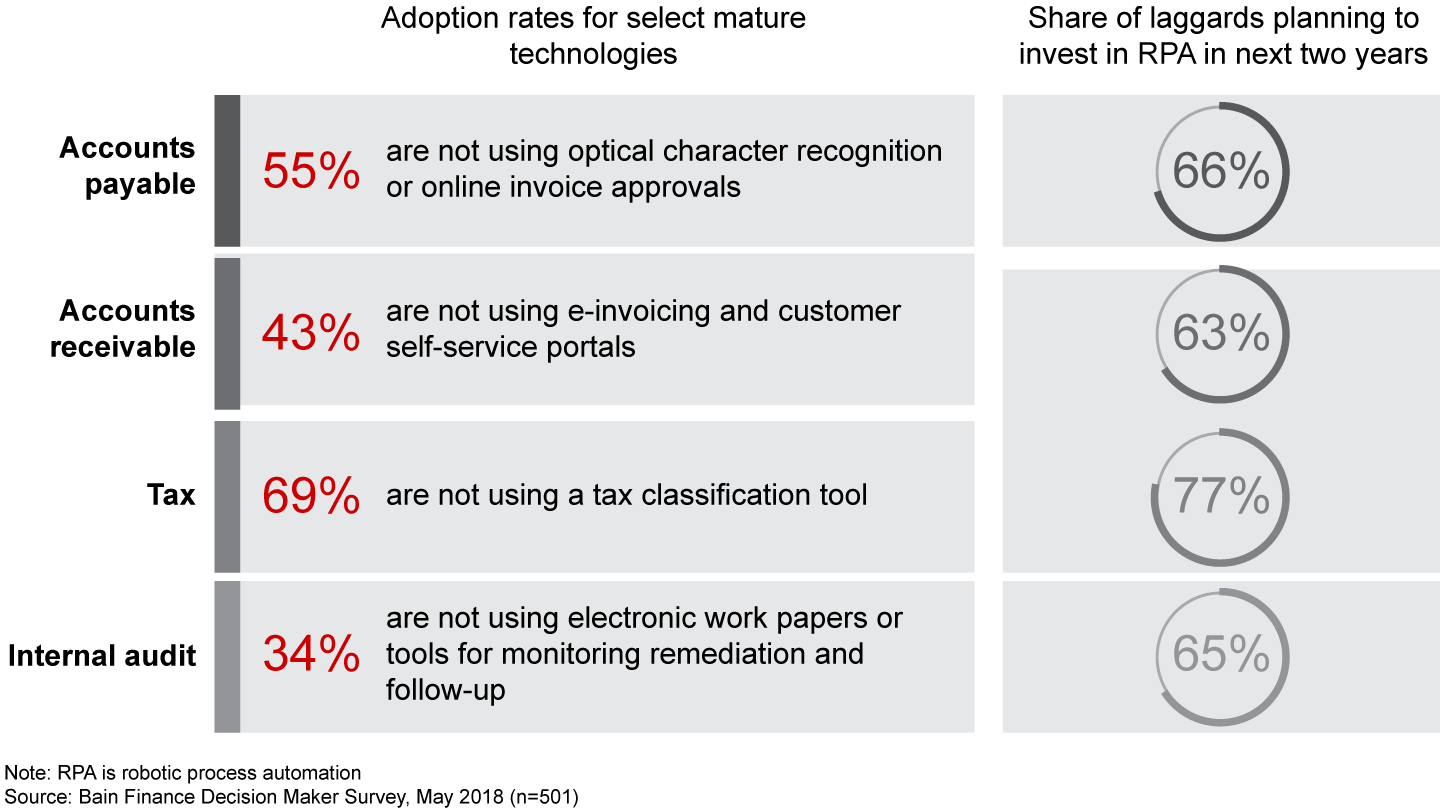
      • In accounts payable, our survey finds that 55% of respondents are not using basic technologies such as OCR tools or online invoice approvals, yet 66% of these laggards plan to invest in RPA.
      • In accounts receivable, 43% are not using basic technologies such as e-invoicing and customer self-service portals, yet 63% of these laggards plan to invest in RPA.
      • In internal audit, 34% are not using basic electronic work papers or tools for monitoring remediation and follow-up, and here again, 65% plan to invest in RPA (see Figure 5)

      The upshot: Too many finance departments may be rushing into hot new technologies without taking parallel steps to capture value from their existing store of technologies. Absent proper integration, companies that adopt more tools risk adding further complexity and unwittingly creating a new set of problems.

      Fortunately, the survey suggests how finance departments can use the full toolkit more effectively, apart from keeping pace with digital trends.

      Figure 4
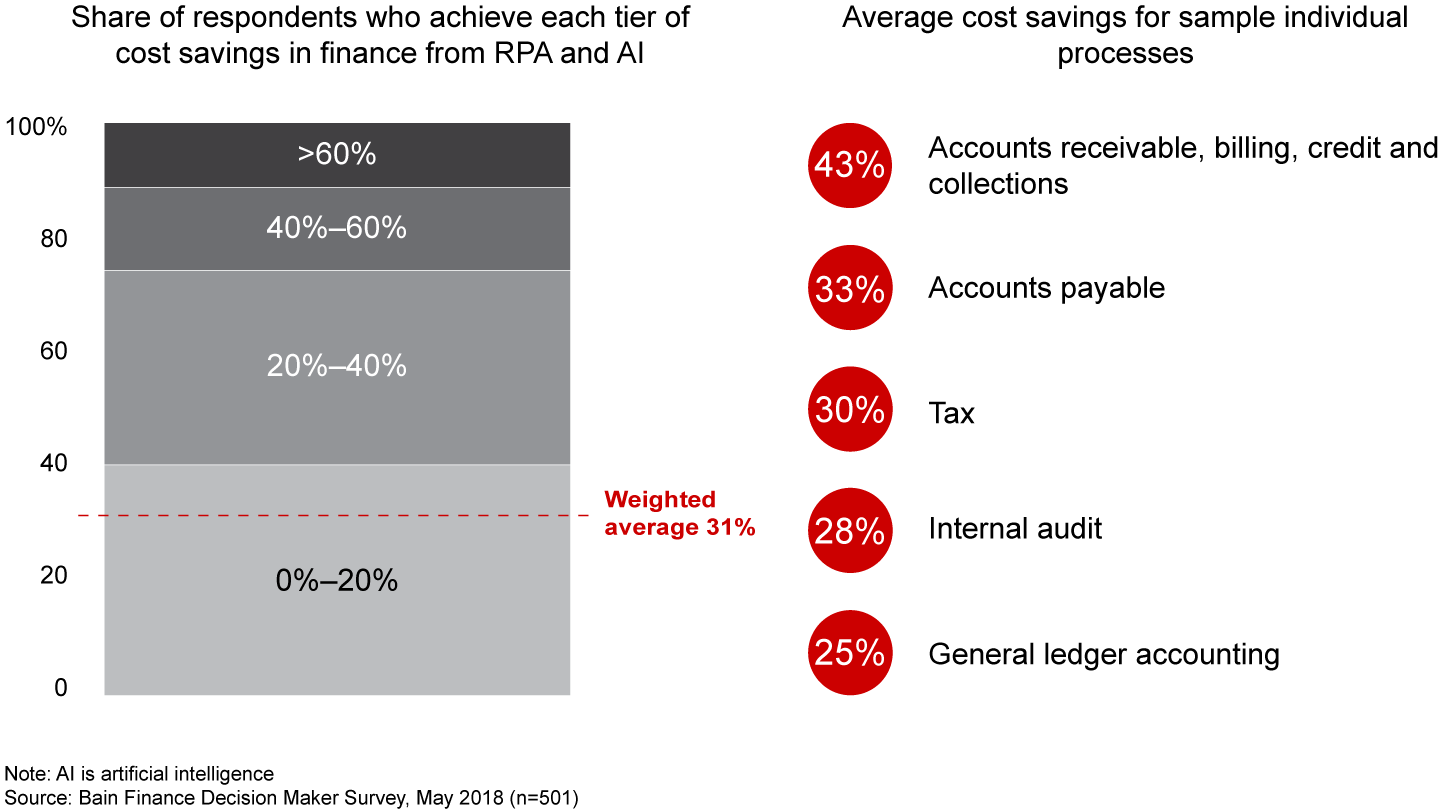
      Robotic process automation has produced compelling cost savings
      Robotic process automation has produced compelling cost savings
      Robotic process automation has produced compelling cost savings
      Figure 5
      Many finance departments lag in adopting mature technologies, even as they invest in new technologies
      Many finance departments lag in adopting mature technologies, even as they invest in new technologies
      Many finance departments lag in adopting mature technologies, even as they invest in new technologies

      Don’t neglect the tried and true. The extent to which many finance departments have overlooked established technologies is startling. Among large companies surveyed, only 53% have a tool to automate journal entry creation and validation for accounting, and only 31% have a tool to automate revenue recognition. Fewer than half use tools in tax document management, and in customer billing, only 37% have a self-service portal.

      While RPA or machine learning might help here, other root causes typically come into play, such as poor data governance or a poor user experience. Companies will want to address these problems in order to generate sustainable improvements in finance processes.

      Look beyond cost. Cost savings is still the top reason cited by respondents overall for adopting digital tools, but speed, freeing up staff time, financial controls and other reasons follow close behind (see Figure 6). In some industries, such as telecommunications, media and technology, and business services, at least one of those reasons is more important than cost savings. And in some finance processes, such as budgeting and forecasting, financial close and accounts receivable, speed has become the top reason for adoption.

      Figure 6
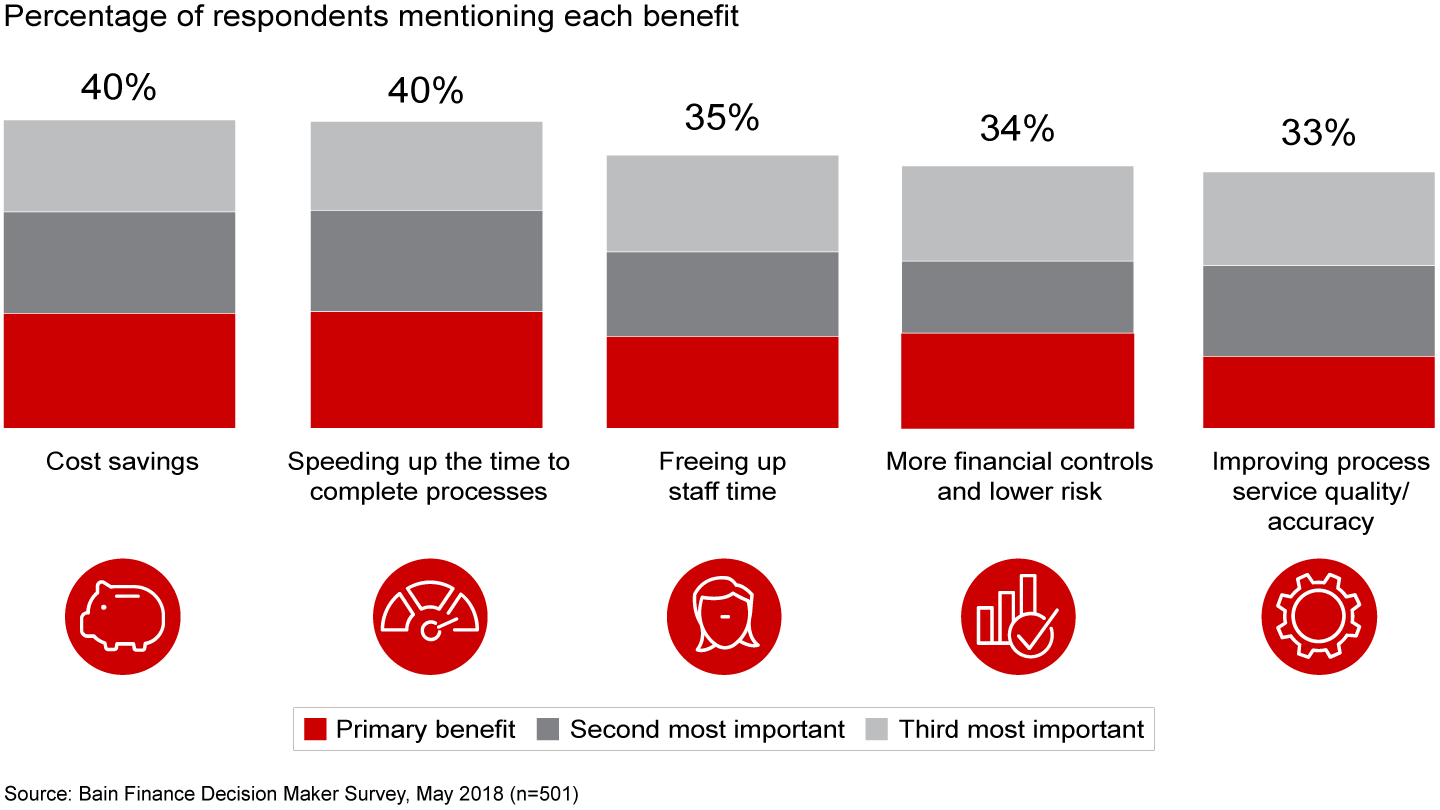
      Beyond cost savings, digital technologies speed up processes and free up staff time
      Beyond cost savings, digital technologies speed up processes and free up staff time
      Beyond cost savings, digital technologies speed up processes and free up staff time

      Microsoft’s Enterprise Partner Group, for instance, uses machine learning in forecasting. With more than 98% accuracy on average worldwide, this forecast method has achieved higher accuracy than the internally developed manual forecast. One consumer goods company uses machine learning to improve demand forecasting that previously was handled by 70 human planners. That technology has improved sales growth, reduced time to market by 30%, increased productivity in planning by up to 80% and reduced inventory levels by 1% to 3%.

      While RPA and machine learning have delivered cost savings, some companies have taken longer than anticipated to design and put in production RPA bots, and the savings achieved sometimes fall short relative to the initial business case. The pattern of cloud computing is instructive here, as the earliest adopters focused more on speed, flexibility and scalability than on cost.

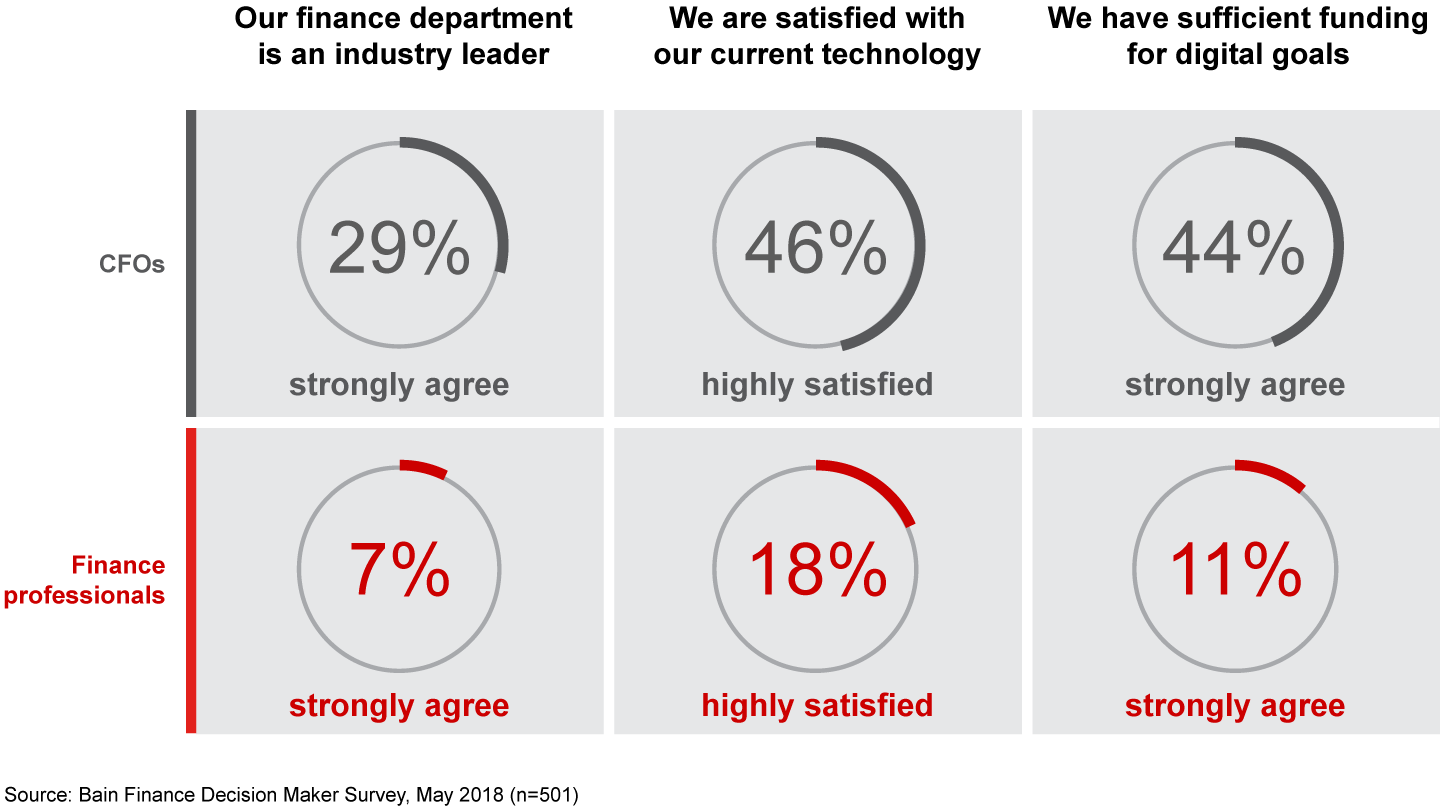
      Define the destination and test and learn. More often than not, finance departments are overconfident about their digital maturity and ability to execute their digital goals (see Figure 7). CFOs, for instance, express more optimism than do finance professionals on the front line about their department’s position in the industry, the quality of technology they use and sufficiency of funding to execute digital goals (see Figure 8).

      Figure 7
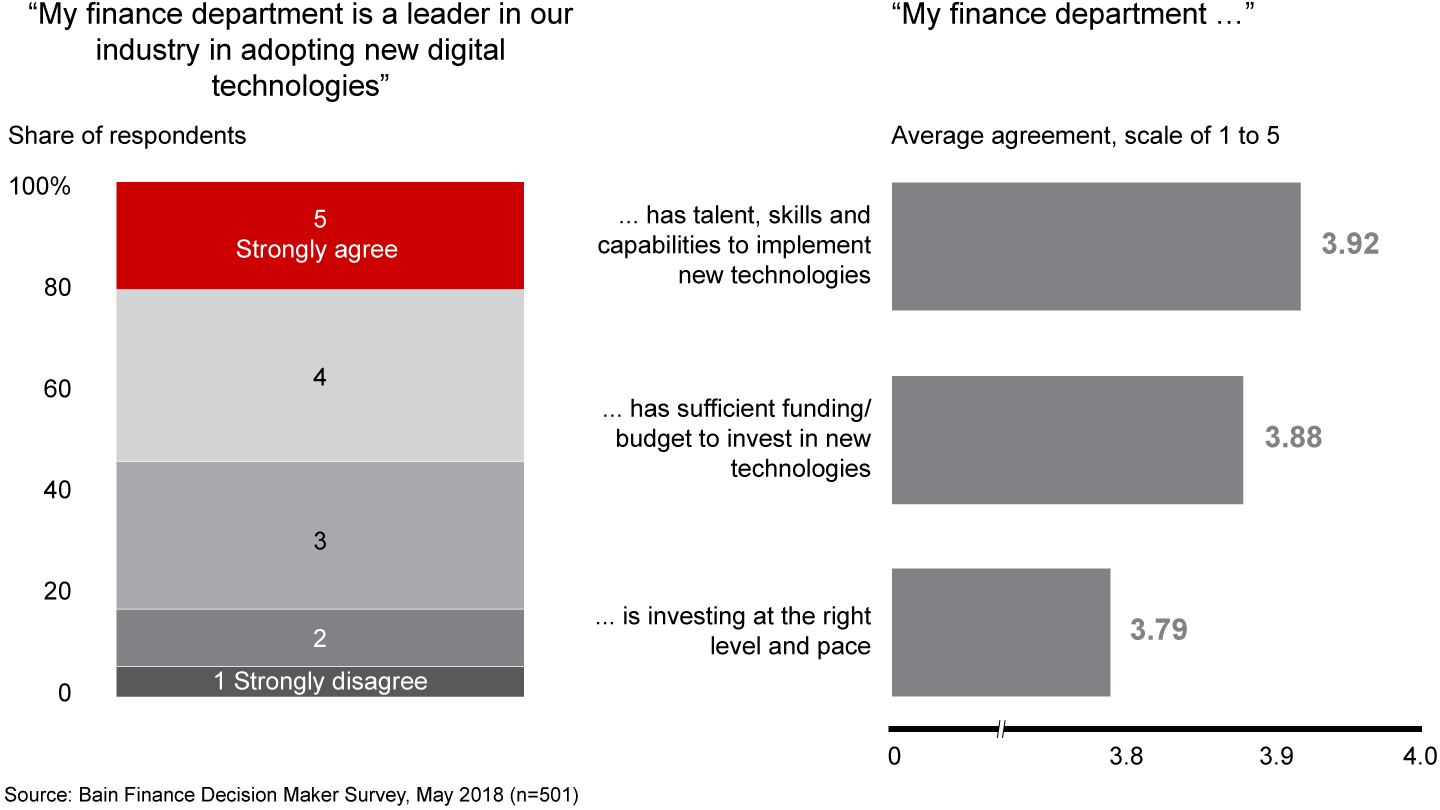
      Finance departments may be too confident about their ability to implement digital goals
      Finance departments may be too confident about their ability to implement digital goals
      Finance departments may be too confident about their ability to implement digital goals
      Figure 8
      Senior executives are more satisfied than the front line with their digital starting point
      Senior executives are more satisfied than the front line with their digital starting point
      Senior executives are more satisfied than the front line with their digital starting point

      In light of fairly widespread overconfidence, senior finance leaders should objectively assess their digital starting point, with input from internal customers and frontline users. This will allow them to create a clear and compelling digital vision and multiyear blueprint, with a portfolio of digital bets.

      Once a company starts to deploy unproven technologies, it should be willing to test and learn, rather than go all in immediately. A test-and-learn approach mitigates the risk of overreliance on one technology that eventually falls short of expectations.

      Take a cloud-first stance. Just five years ago, cloud computing was embraced by only the earliest adopters. Today, 74% of companies use cloud-based, software-as-a-service (SaaS) applications in at least one finance process (see Figure 9). The cloud acts as a forcing function to standardize business processes since SaaS applications cannot be customized to the degree of traditional on-premise applications.

      Figure 9
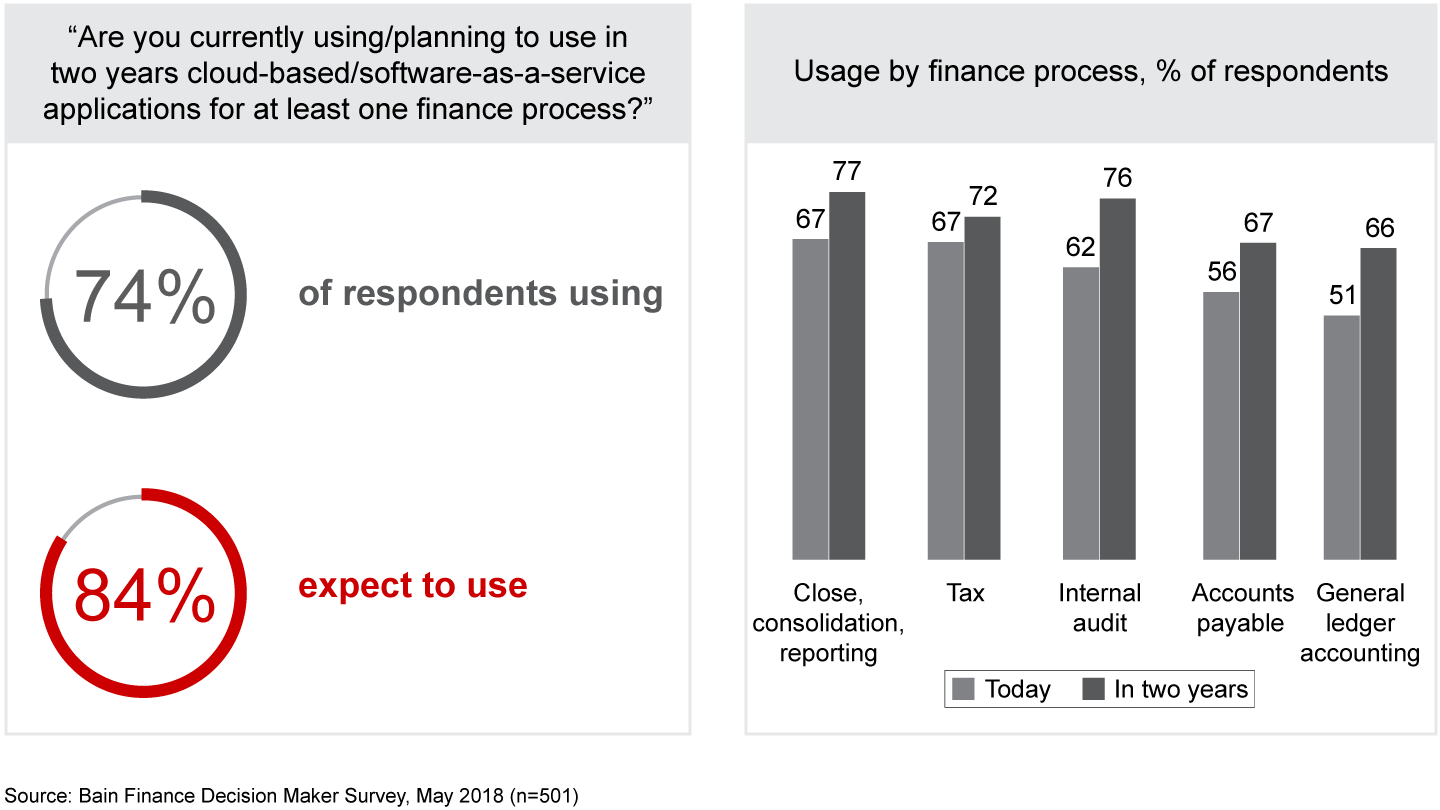
      Cloud computing has come on strong for finance processes
      Cloud computing has come on strong for finance processes
      Cloud computing has come on strong for finance processes

      The notion of deploying the general ledger on the cloud was unthinkable just a few years ago, especially for large multinationals. Today, however, many large enterprises deploy the general ledger on the cloud in some parts of their environment. For example, Qualcomm uses the cloud to support 11 of its smaller country operations in procure-to-pay-to-general-ledger, where a traditional on-premise approach in these smaller countries did not have a sufficient return on investment. By using the cloud, Qualcomm cut costs in half and carried out the initiative much faster.

      Fix and simplify processes, data and systems. RPA and machine learning have a broad range of valuable use cases. RPA can reduce manual exceptions to enable straight-through processing, pull data from multiple systems to create an integrated view, and accelerate the reconciliation of accounts and transactions.

      Often, though, it would be better if companies could retire some of their RPA bots as they simplify and standardize underlying business processes, data and systems. Rather than having a bot pull data from a large number of different customer invoice types, for example, a company at some point will want to move to common invoice formats and away from paper invoices.

      Similarly, machine learning can review large amounts of inbound requests across a range of email inboxes and route requests to the right teams. In billing and collections, machine learning can identify deductions with a high probability of being valid and link backup documents with deductions. However, a machine-learning algorithm works only as well as the quality of the data. Without addressing data governance and quality, algorithms have limited value.

      While artificial intelligence can provide new capabilities that traditional technologies cannot, such as automating the creation of commentary for management reports through NLG, these new technologies do not eliminate the need to address the root causes of inefficiencies. In some cases, such as with machine learning, the technology might not even function unless some of these root causes are addressed.

      Digital tools are essential for finance to raise its value to the business. They have become powerful enough to help finance to identify value opportunities, not just monitor trends in the numbers, and to allow finance to proactively manage risks, not just maintain controls. Successfully making that transition as a true business partner will hinge on more effective use of existing technologies, while testing the latest tools to identify the handful that will make a difference, then integrating them into the larger family.

      Michael Heric is a partner with Bain & Company’s Performance Improvement practice, and leads the firm’s support functions work globally. He is based in New York.

      저자
      • Headshot of Michael Heric
        Michael Heric
        파트너, New York
      문의하기
      관련 컨설팅 서비스
      • Automation
      • Support Functions
      최적의 솔루션 찾기
      • Capability Sourcing
      • Finance Function Advantage
      • Shared Services
      CFO Insights
      How Shared Services Organizations Can Scale Up by Earning Internal Customers’ Love

      How are we doing? When shared services organizations ask that question of their internal customers and act on the feedback, great business outcomes can happen.

      자세히 보기
      CFO Insights
      The 2026 Retail Executive Agenda

      Here are letters to the C-suite to help strengthen strategy, catalyze collaboration, and expand value creation in the AI age.

      자세히 보기
      CFO Insights
      Gen AI in Finance Isn’t Failing—It’s Working Where It’s Built In

      The fastest payback comes from automating workflows, not piloting experiments.

      자세히 보기
      CFO Insights
      Stablecoins Could Make Cross-Border Payments Faster, Cheaper, and More Transparent

      Most CFOs are not using stablecoins today, but evolving regulations could reduce risk and create competitive advantage.

      자세히 보기
      CFO Insights
      Patrick O'Hagan: Shared Services

      How successful companies can accelerate profitable growth with the Share Smarter, Serve Better model.

      자세히 보기
      First published in 8월 2018
      태그
      • Automation
      • Capability Sourcing
      • CFO Insights
      • Finance Function Advantage
      • Shared Services
      • Support Functions

      프로젝트 사례

      Resetting Shared Services to Save $75 Million

      See more related case studies

      Digital A Chemical Company’s Transformation Reduces Support Function Costs by 25%

      See more related case studies

      성과 개선 Strategic G&A approach cooks up savings

      See more related case studies

      베인에 궁금하신 점이 있으신가요?

      베인은 주저 없이 변화를 마주할 줄 아는 용감한 리더들과 함께합니다. 그리고, 이들의 담대한 용기는 고객사의 성공으로 이어집니다.

      급변하는 비즈니스 환경에서 살아남기 위한 선도자의 시각. 월간 Bain Insights에서 글로벌 비즈니스의 핵심 이슈를 확인하십시오.

      *개인정보 정책을 읽었으며 그 내용에 동의합니다.

      Privacy Policy를 읽고 동의해주십시오.
      Bain & Company
      문의하기 환경정책 Accessibility 이용약관 개인정보 보호 쿠키 사용 정책 Sitemap Log In

      © 1996-2026 Bain & Company, Inc.

      문의하기

      무엇을 도와드릴까요?

      • 프로젝트 문의
      • 채용 정보
      • 언론
      • 제휴 문의
      • 연사 초청
      오피스 전체보기