

Brief

한눈에 보기
- Chemical producers are at last exploring the many ways digital technology can add value to their business, but some struggle to move beyond pilot programs.
- Scaling up requires a commitment to broad and lasting change. Digital leaders align new initiatives with business priorities and strategic goals, while building up internal capabilities.
- A key element of success is learning how to assess and select the right external partners, since most chemical companies cannot scale up fast enough without a vibrant ecosystem of support.
Here’s a familiar scenario: A chemical producer is intrigued by recent developments in the industrial analytics space and the promise of Big Data to address a host of plant issues, from asset reliability to improved process control. The producer selects a plant and a piece of equipment, adds sensors to increase the data flow from it and hires an advanced analytics specialist to find insights in the data. However, the producer quickly finds that the right data isn’t available to make the algorithm fully effective, and the operators don’t trust the outcomes. Learnings are not easily transferable given different types of equipment and different levels of data availability and connectivity at each facility. There is little clarity on which external partners could be helpful, since many of their capabilities sound similar and there are concerns on data ownership and cybersecurity. Hiring additional analytics scientists runs into budgeting concerns, particularly since it’s not clear that this digital initiative is more important than other intriguing opportunities in warehouse robotics, e-commerce and drones for supervision of hazardous conditions. The effort stalls out, and a portion of the leadership team, when asked, would answer: “Digital? It sounds great, but not easy to see real value.”
Experimentation and pilots are core to digital development, but a digital transformation is more than the tactical process of testing new uses for digital technology. It’s a larger strategic and business issue, as much about capabilities, talent and organization as it is about understanding technology and opportunities. The key questions that executive teams should be asking are not so much around which applications of technology can be launched quickly, but which will add the most value—and whether they have the capabilities to capture and scale that value.
This is not unusual for a sector at the beginning of digital transformation. Forecasters have been predicting a digital revolution in chemicals for years, but the industry has waited patiently to see dramatic impacts. The complexity of chemical plant operations and the “art plus science” nature of chemical production, along with the disaggregated nature of data in the industry and the preeminence of safety, have combined to limit experimentation among incumbents. Significant entry barriers, including the high cost of developing assets and existing installed capacity, may have kept potential innovators from entering the fray as they have in other industries. Perhaps most significantly, the industry’s business customers haven’t demanded the efficiency and transparency that customers have in other sectors. The result has been an industry that remains largely analog, with a lot of data still on whiteboards or in operators’ heads. In a world where you can track the status of your $10 pizza from your phone, most chemicals customers still don’t know when their $50,000 shipment will arrive.
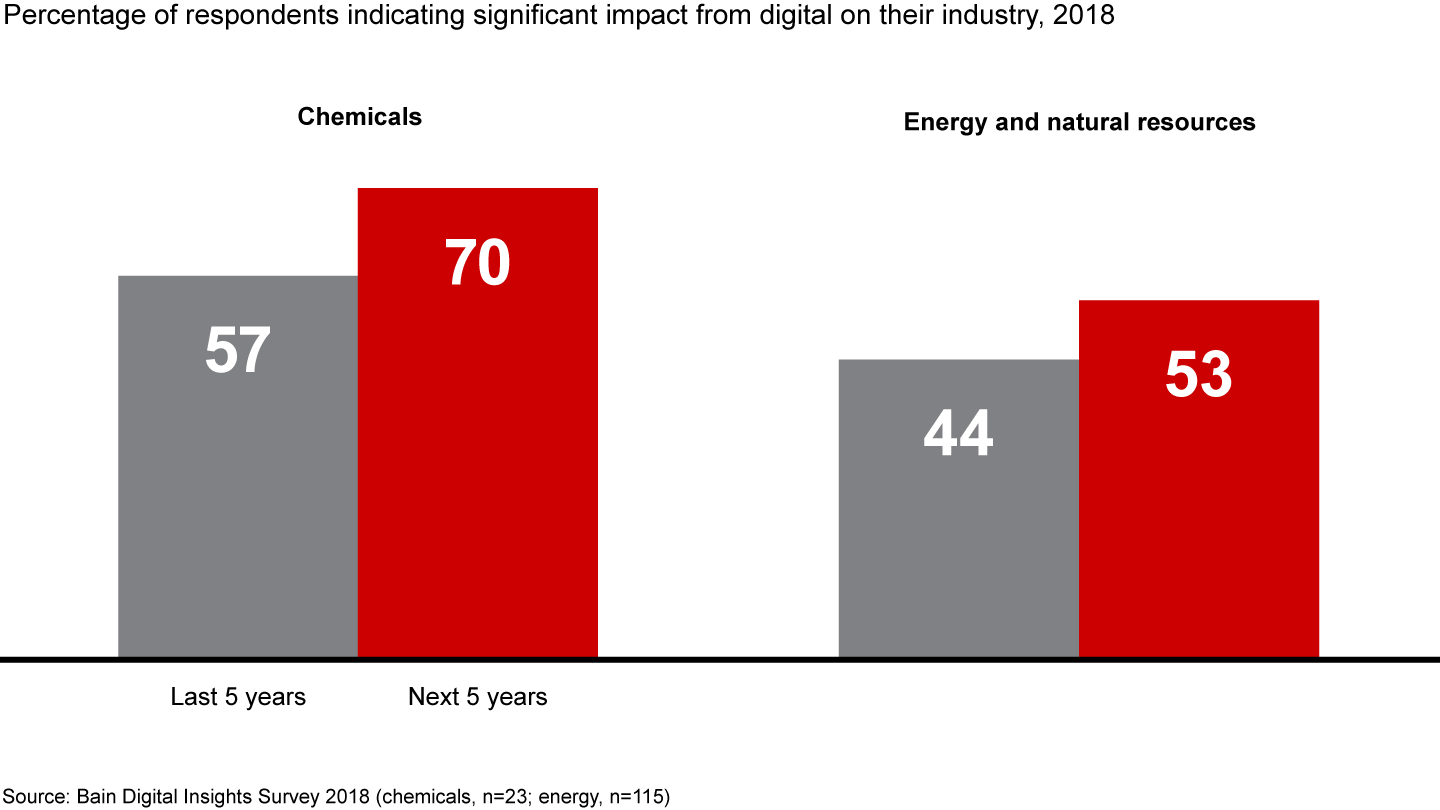
Over the past 12 to 18 months, however, more signs indicate that the pace of change in chemicals is beginning to accelerate. Bain & Company’s Digital Insights Survey indicates chemical producers are expecting more disruption from digital solutions over the next five years, and the equipment makers and control system providers that supply the industry are investing to meet that demand (see Figure 1). More executive teams are open to experimentation with different technologies to increase worker safety and to squeeze a couple of more points of productivity from their operations, and more of them understand the potential value in data and are eager to leverage it. Customers are also increasingly open to digital solutions—in fact, digital enablement now routinely informs purchasing decisions. Finally, and perhaps most intriguing, digital natives are beginning to target the chemical sector and are trying to build vertical expertise to do so.
Figure 1

These tentative approaches are both tempered and spurred on by a fair degree of uncertainty. Chemical executives are unsure about the level of disruption the sector will experience from shifts in their end markets and potentially in feedstock sources, and it is not clear how supply chains and cost structures will have to evolve to meet these changes. Some are also concerned about the risk of disintermediation and commoditization by third parties who can make better use of data and analytical techniques to operate more efficiently, design better materials or build new business models.
Digital holds enormous and growing potential for chemical producers, but important questions must be answered to unlock this potential:
- What is out there? Where are the opportunities for my business?
- What do I need to capture it?
- How do I make sure I can scale the solutions into something transformative?
Major opportunities in digital
The chemical value chain presents a range of opportunities for digital technology, and most fall into one of six areas (see Figure 2).
Figure 2
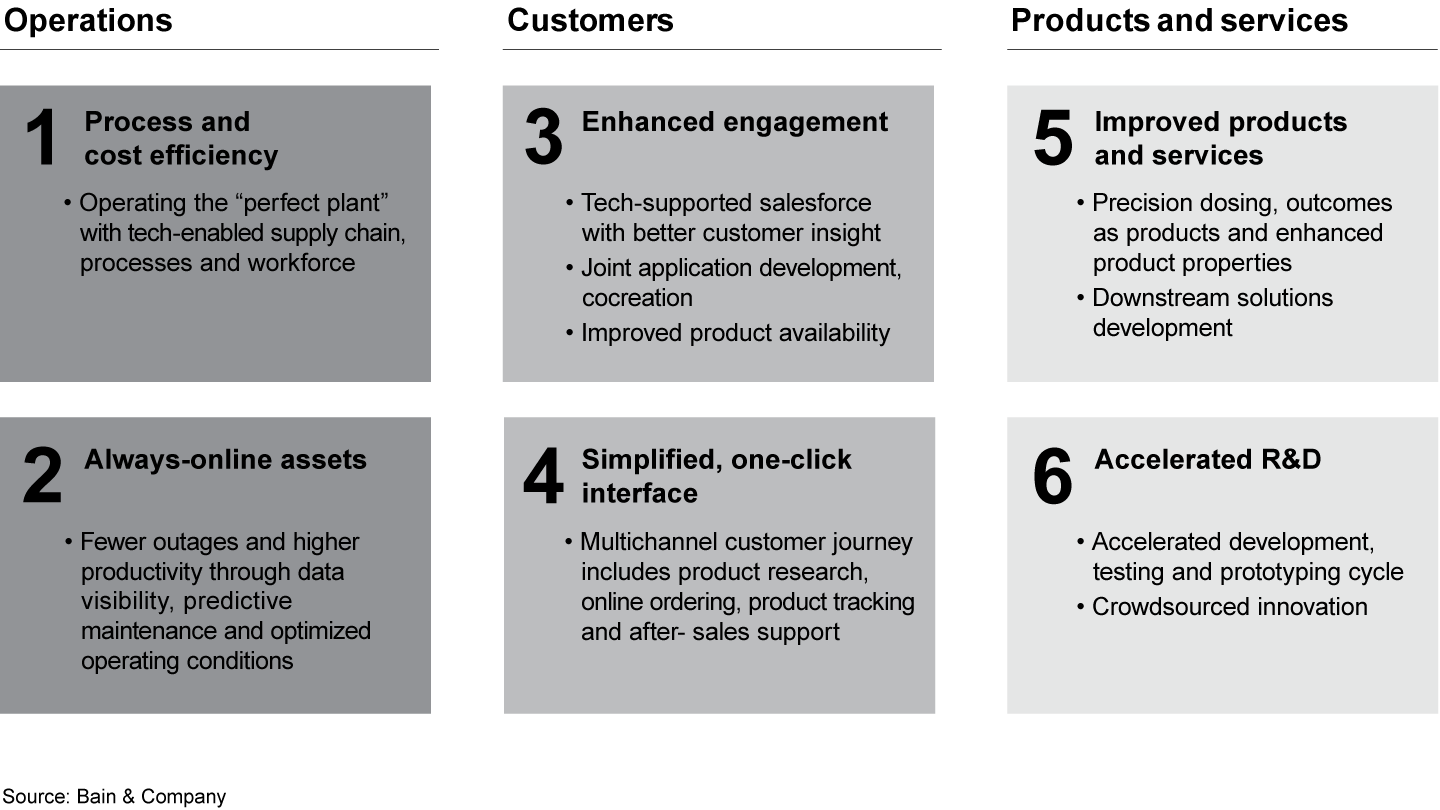

Each opportunity relies on various technologies, from Big Data to robotics to wearables. Depending on the maturity of the technology and the digital experience of the chemical company deploying it, some will be experimental, requiring years of development, while others are ready to implement with quick payback periods.
Given that wide array of possibilities, how do leading companies identify value and choose the right use cases to capture? Leaders share a commitment to two approaches that raise the chances of success:
- Focus on the business problem to solve. Winners treat digital as a strategic issue, prioritizing areas where it can add value, defining a digital destination for each area in line with their capabilities and aspirations, and constructing a business case for the digital solutions to be put in place to drive toward that destination.
- Build a clear roadmap. Once the business opportunity is defined, digital leaders carefully build a balanced portfolio of use cases that takes into account their risk tolerance, internal digital maturity and time horizon. Sensors for improved worker safety are a mature technology that requires minimal investment in systems and infrastructure, and produces a quick return. Analytics for advanced process control is a high value opportunity, but requires a high level of digital maturity and potentially significant investments to achieve the payout. Either or both could be the right answer for a particular producer, but constructing a roadmap based on those choices is important, and is critical to articulating the implications for timing, investments and capabilities required.
Once the roadmap is in place, how do organizations build these capabilities to capture the value from the roadmap of digital opportunities they have laid out?
Capabilities and partnerships
Many companies are investing significantly to build up their digital capabilities—finding and developing new sources of technical talent (including data scientists), creating digital officer roles and addressing data infrastructure limitations. However, successful companies broaden their ability to scale digital by turning to external partners that can help fill the gaps, provide the technology they may lack in the short term and build the skills of their internal teams.
Selecting the right digital partner is hard to do, and few companies have mastered the process of assessing and selecting the ones that best fit their needs and complement their capabilities. Companies frequently need multiple partners across the full technology stack of any given solution. The first challenge is understanding what’s out there. Chemical plants are generally not located in the booming centers of technology and finance where many digital natives are based, and chemical executives are often not ideally placed to learn about the cutting-edge technologies that could add value to their business. On a recent field trip to Silicon Valley firms, one executive with an industrial distributor saw a powerful demonstration of the ways that augmented-reality (AR) headsets could ensure more productive training and safer operation of equipment. His reaction clearly articulated this gap: “I can see how my business would benefit from this. If I hadn’t come on this trip, though, I never would have seen this.”
Producers also face a dizzying array of companies, ranging from prominent giants like Amazon, Google or Microsoft Azure, to incumbent suppliers to the chemical industry that are building their own digital capabilities, as well as start-ups they haven’t heard of. How do they decide which partner is right for them? How do these partners fit together into a complete solution?
There’s a real skill to finding the right partner and the right approach to involving them. Answering four questions can help executives frame the issues.
- What are their true capabilities? How do they complement your capabilities?
- How do they fit with your systems and processes?
- How will they structure data ownership and the ongoing implementation?
- How will they work with your team?
What are their true capabilities? Sometimes it takes a little effort to get past the marketing. What exactly do they do, and can they scale to meet your needs? Start-ups may have difficulty scaling, but they may provide more cutting-edge capabilities than large firms. Incumbent players may have a better understanding of your business, but may not have built out their digital capabilities as completely. Teaming with them also raises the risk of lock-in: Could your company become too dependent on the vendor, in terms of platforms and data?
How do they fit with your systems and processes? Do they understand the “art plus science” nature of chemical processes, as well as the reality of a patchwork of systems, equipment, control services and IT infrastructure present at most chemical companies? Do they have deep experience with process controls in general, and chemistry in particular—and most important, do they understand the safety imperatives? Can they work to integrate the solution to your existing manufacturing execution system, IT backbone and digital partnerships already in place?
How will they structure data ownership and the ongoing implementation? Many companies are belatedly waking up to the fact that data is nearly as valuable as cash, and cybersecurity is a priority issue. Given this, where will the data from this solution be housed? What will the partner leave you with—a process that you control, or a subscription service with an ongoing relationship? If they plan to transfer operational control, will they manage the transition and training or will you need someone else to do that?
How will they work with your team? A major component of successful digital scaling is behavior change, particularly in the chemical industry, where some employees may have been running the same tasks for 10 or 15 years. Now they are presented with a digital tool and interface. How do you manage that transition? How do you ensure the digital tools truly augment your team’s capabilities and enable them to do their jobs faster, more safely or more efficiently?
Answering these questions is key to ensuring that your organization is fully able to take advantage of the partnership and the evolving opportunities.
Scaling digital
Scaling a digital transformation is among the most critical challenges faced by chemical companies. How do you actually reach escape velocity beyond a couple of pilots?
Again, chemical producers face a unique set of challenges in this area: Multiple sites and systems with equipment of different age and digital maturity, low risk tolerance, a bias toward “this is how we do it” and a lack of digitally enabled talent to spread around the organization all slow down adoption and solution transfer. More fundamental challenges around systems, data, and talent and capabilities can be “shortcutted” for a pilot, but become limiting at scale. Unsurprisingly then, pockets of digital success may emerge, but teams face significant barriers as they try to scale up with new equipment, sites or functions.
The most successful companies in this area build an approach that deliberately orchestrates first and foremost the success of the pilots, but also where and how to go next, and the organizational choices around data structure, operating model and talent. Finally, they ensure senior leadership alignment, with a clear digital champion within the organization to ensure efforts are visible and investments are prioritized as needed.
Tangibly, this approach can be thought about as four components (see Figure 3):
Figure 3
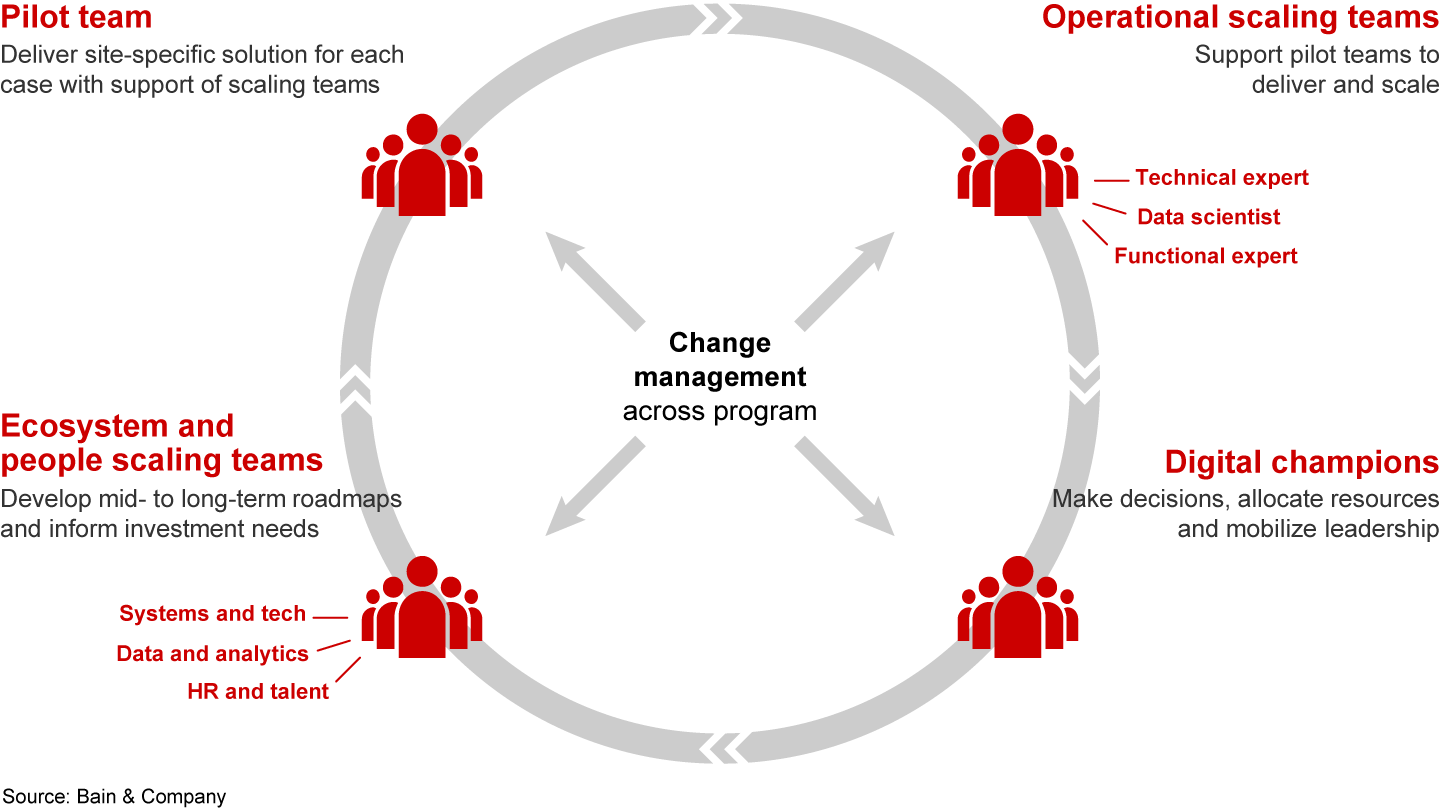

- Pilot teams. These frontline, cross-functional teams are tasked with ensuring the pilot succeeds. Often set up as agile teams, they work within the context of existing data, systems and behaviors to adapt a digital solution and generate a minimum viable product over the course of three to four sprints.
- Operational scaling team. These teams transfer and adapt the lessons from the pilot to new sites or functions. This includes codifying the required resources, coaching materials and toolkit, defining where to go next and modifying the approach as necessary. This group often serves as the seeds of a community of future digital practitioners across the organization.
- Ecosystem and people scaling team. This team is tasked with a higher-level view of resourcing needs and gaps, and helps to articulate choices on data, systems, technology and people. Their efforts contribute to building investment roadmaps and to determining where and how to allocate digital resources.
- Digital champions. This is a governance layer that ensures senior leadership visibility into digital and enables decisions that accelerate deployment and adoption. This role removes roadblocks and helps to articulate for senior leadership what investments are necessary and why.
As with any transformation, smart companies think about Results Delivery®, particularly in terms of change management and risk mitigation at all levels of the organization. This includes everything from enlisting the front line in developing solutions to ensuring buy-in, skills enhancement and coaching, and attention toward articulating the benefits of new digital solutions and tools to the populations that will be most affected by them.
Embarking on a digital transformation is an exciting journey, but one fraught with pitfalls. Addressing the most common failure modes can increase the odds of success and the ability to extract full value from the exciting new opportunities that digital technologies present.
Jason McLinn, Laurent Migom, Edel O’Sullivan and Mark Porter are partners with Bain & Company in Chicago, Brussels, Washington, DC, and London, respectively. All four work with Bain’s Global Chemicals practice, which Mark leads globally and Jason leads in the Americas.
Results Delivery® is a registered trademark of Bain & Company, Inc.
First published in 1월 2019