
Skip to Content
  • 오피스

    오피스

    미주
    • Atlanta
    • Austin
    • Bogota
    • Boston
    • Buenos Aires
    • Chicago
    • Dallas
    • Denver
    • Houston
    • Los Angeles
    • Mexico City
    • Minneapolis
    • Monterrey
    • Montreal
    • New York
    • Rio de Janeiro
    • San Francisco
    • Santiago
    • São Paulo
    • Seattle
    • Silicon Valley
    • Toronto
    • Washington, DC
    유럽, 중동, 아프리카
    • Amsterdam
    • Athens
    • Berlin
    • Brussels
    • Copenhagen
    • Doha
    • Dubai
    • Dusseldorf
    • Frankfurt
    • Helsinki
    • Istanbul
    • Johannesburg
    • Kyiv
    • Lisbon
    • London
    • Madrid
    • Milan
    • Munich
    • Oslo
    • Paris
    • Riyadh
    • Rome
    • Stockholm
    • Vienna
    • Warsaw
    • Zurich
    아시아, 호주
    • Bangkok
    • Beijing
    • Bengaluru
    • Brisbane
    • Ho Chi Minh City
    • Hong Kong
    • Jakarta
    • Kuala Lumpur
    • Manila
    • Melbourne
    • Mumbai
    • New Delhi
    • Perth
    • Seoul
    • Shanghai
    • Singapore
    • Sydney
    • Tokyo
    오피스 전체보기
  • 얼럼나이
  • 미디어 센터
  • 구독
  • 연락처
  • Korea | 한국어

    지역 및 언어 선택

    글로벌
    • Global (English)
    미주
    • Brazil (Português)
    • Argentina (Español)
    • Canada (Français)
    • Chile (Español)
    • Colombia (Español)
    유럽, 중동, 아프리카
    • France (Français)
    • DACH Region (Deutsch)
    • Italy (Italiano)
    • Spain (Español)
    • Greece (Elliniká)
    아시아, 호주
    • China (中文版)
    • Korea (한국어)
    • Japan (日本語)
  • Saved items (0)
    Saved items (0)

    You have no saved items.

    관심 있는 내용을 북마크하여 Red 폴더에 저장할 수 있습니다. Red 폴더 에서 저장된 내용을 읽거나 공유해보세요.

    Explore Bain Insights
  • 산업
    메인 메뉴

    산업

    • 우주항공, 방산 및 정부 서비스
    • 농업 관련 산업
    • 화학
    • 인프라, 건설 및 건축 자재
    • 소비재
    • 금융 서비스
    • 헬스케어
    • 산업용 기계 및 장비
    • 미디어 및 엔터테인먼트
    • 금속
    • 광업
    • 석유 및 가스
    • 제지 및 패키징 산업
    • 사모펀드
    • 사회 및 공공 부문
    • 유통
    • 기술
    • 텔레콤
    • 운송
    • 여행·여가
    • 유틸리티 및 재생가능 에너지
  • 컨설팅 서비스
    메인 메뉴

    컨설팅 서비스

    • Customer Experience
    • ESG
    • Innovation
    • M&A
    • 운영
    • 조직
    • 사모펀드
    • 고객 전략 및 마케팅
    • 전략
    • AI, 인사이트 및 솔루션
    • Technology
    • 변화 혁신
  • Digital
  • 인사이트
  • 베인 소개
    메인 메뉴

    베인 소개

    • 업무 소개
    • 베인의 신념
    • 구성원 및 리더십 소개
    • 고객 성과
    • 주요 수상 경력
    • 글로벌 파트너사
    Further: Our global responsibility
    • 다양성과 포용
    • 사회 공헌 활동
    • Sustainability
    • World Economic Forum
    Learn more about Further
  • Careers
    메인 메뉴

    Careers

    • Work with Us
      Careers
      Work with Us
      • Find Your Place
      • Our Work Areas
      • Integrated Teams
      • Students
      • Internships & Programs
      • Recruiting Events
    • Life at Bain
      Careers
      Life at Bain
      • Blog: Inside Bain
      • Career Stories
      • Our People
      • Where We Work
      • Supporting Your Growth
      • Affinity Groups
      • Benefits
    • Impact Stories
    • Hiring Process
      Careers
      Hiring Process
      • What to Expect
      • Interviewing
    FIND JOBS
  • 오피스
    메인 메뉴

    오피스

    • 미주
      오피스
      미주
      • Atlanta
      • Austin
      • Bogota
      • Boston
      • Buenos Aires
      • Chicago
      • Dallas
      • Denver
      • Houston
      • Los Angeles
      • Mexico City
      • Minneapolis
      • Monterrey
      • Montreal
      • New York
      • Rio de Janeiro
      • San Francisco
      • Santiago
      • São Paulo
      • Seattle
      • Silicon Valley
      • Toronto
      • Washington, DC
    • 유럽, 중동, 아프리카
      오피스
      유럽, 중동, 아프리카
      • Amsterdam
      • Athens
      • Berlin
      • Brussels
      • Copenhagen
      • Doha
      • Dubai
      • Dusseldorf
      • Frankfurt
      • Helsinki
      • Istanbul
      • Johannesburg
      • Kyiv
      • Lisbon
      • London
      • Madrid
      • Milan
      • Munich
      • Oslo
      • Paris
      • Riyadh
      • Rome
      • Stockholm
      • Vienna
      • Warsaw
      • Zurich
    • 아시아, 호주
      오피스
      아시아, 호주
      • Bangkok
      • Beijing
      • Bengaluru
      • Brisbane
      • Ho Chi Minh City
      • Hong Kong
      • Jakarta
      • Kuala Lumpur
      • Manila
      • Melbourne
      • Mumbai
      • New Delhi
      • Perth
      • Seoul
      • Shanghai
      • Singapore
      • Sydney
      • Tokyo
    오피스 전체보기
  • 얼럼나이
  • 미디어 센터
  • 구독
  • 연락처
  • Korea | 한국어
    메인 메뉴

    지역 및 언어 선택

    • 글로벌
      지역 및 언어 선택
      글로벌
      • Global (English)
    • 미주
      지역 및 언어 선택
      미주
      • Brazil (Português)
      • Argentina (Español)
      • Canada (Français)
      • Chile (Español)
      • Colombia (Español)
    • 유럽, 중동, 아프리카
      지역 및 언어 선택
      유럽, 중동, 아프리카
      • France (Français)
      • DACH Region (Deutsch)
      • Italy (Italiano)
      • Spain (Español)
      • Greece (Elliniká)
    • 아시아, 호주
      지역 및 언어 선택
      아시아, 호주
      • China (中文版)
      • Korea (한국어)
      • Japan (日本語)
  • Saved items  (0)
    메인 메뉴
    Saved items (0)

    You have no saved items.

    관심 있는 내용을 북마크하여 Red 폴더에 저장할 수 있습니다. Red 폴더 에서 저장된 내용을 읽거나 공유해보세요.

    Explore Bain Insights
  • 산업
    • 산업

      • 우주항공, 방산 및 정부 서비스
      • 농업 관련 산업
      • 화학
      • 인프라, 건설 및 건축 자재
      • 소비재
      • 금융 서비스
      • 헬스케어
      • 산업용 기계 및 장비
      • 미디어 및 엔터테인먼트
      • 금속
      • 광업
      • 석유 및 가스
      • 제지 및 패키징 산업
      • 사모펀드
      • 사회 및 공공 부문
      • 유통
      • 기술
      • 텔레콤
      • 운송
      • 여행·여가
      • 유틸리티 및 재생가능 에너지
  • 컨설팅 서비스
    • 컨설팅 서비스

      • Customer Experience
      • ESG
      • Innovation
      • M&A
      • 운영
      • 조직
      • 사모펀드
      • 고객 전략 및 마케팅
      • 전략
      • AI, 인사이트 및 솔루션
      • Technology
      • 변화 혁신
  • Digital
  • 인사이트
  • 베인 소개
    • 베인 소개

      • 업무 소개
      • 베인의 신념
      • 구성원 및 리더십 소개
      • 고객 성과
      • 주요 수상 경력
      • 글로벌 파트너사
      Further: Our global responsibility
      • 다양성과 포용
      • 사회 공헌 활동
      • Sustainability
      • World Economic Forum
      Learn more about Further
  • Careers
    최근 검색어
      최근 방문 페이지

      Content added to saved items

      Saved items (0)

      Removed from saved items

      Saved items (0)

      Brief

      Setting a New Pace for Personal Luxury Growth in China

      Setting a New Pace for Personal Luxury Growth in China

      Ongoing Covid-19 restrictions and economic uncertainty caused the first personal luxury market decline in five years.

      글 Bruno Lannes and Weiwei Xing

      • 읽기 소요시간
      }

      Brief

      Setting a New Pace for Personal Luxury Growth in China
      en
      At a Glance
      • In 2022, the Chinese luxury market declined 10% year over year, ending a five-year run of exponential growth. Covid-19-related business disruptions caused the downturn.
      • Despite the setback, the fundamentals for luxury consumption remain strong and growth is expected to resume in 2023.

      The China luxury market had been on a bull run over the past five years, with the market doubling between 2019 and 2021. That growth streak ended in 2022, brought to a halt by zero-Covid policies. Strict lockdowns remained in place through December, slowing economic and social activities and causing a significant number of stores to sit idle.

      As a result, the personal luxury market contracted 10% YOY (see Figure 1). In 2022, nearly every luxury category and most brands experienced their first major decline in five years.

      Figure 1
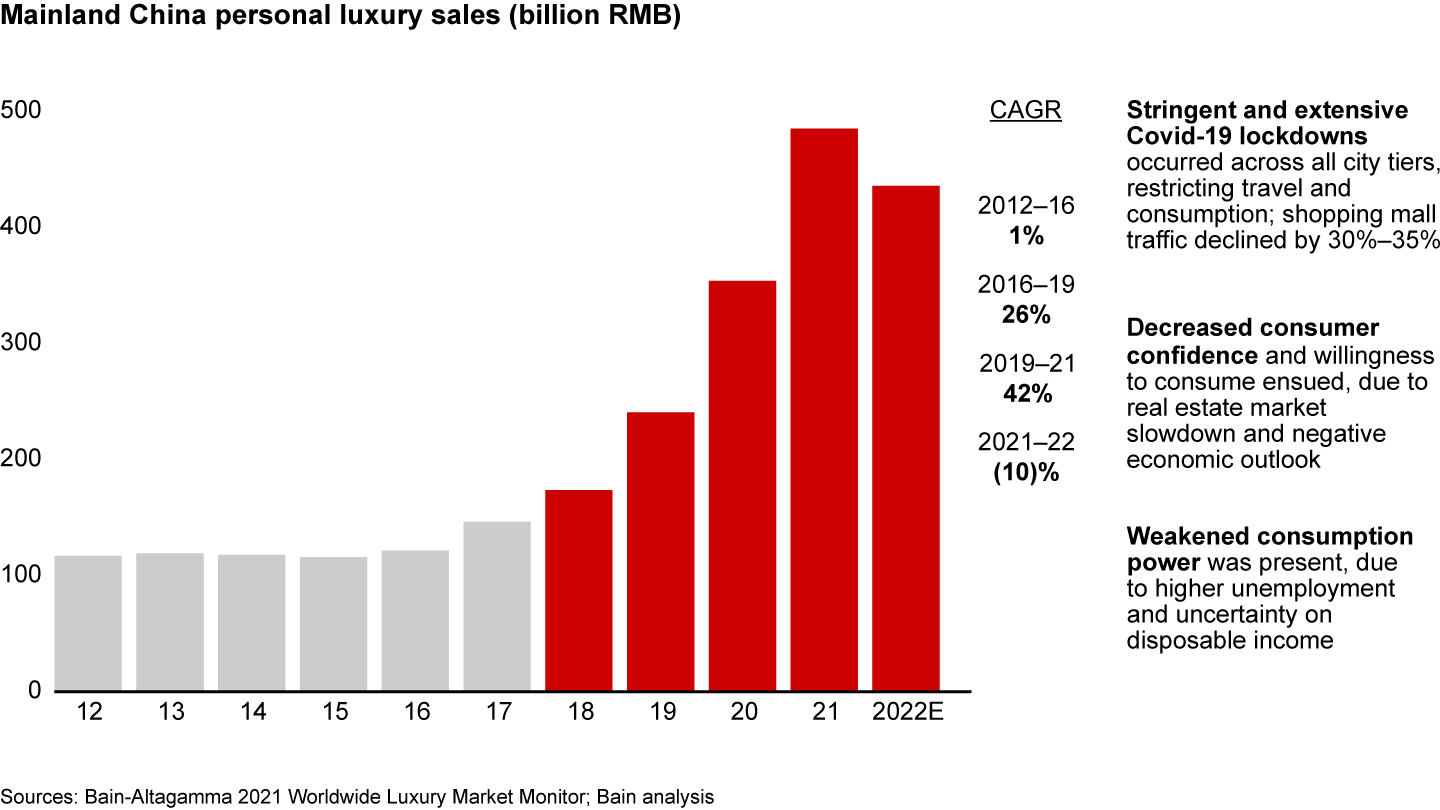
      In 2022, the Chinese luxury market declined 10%, ending a five-year growth spurt

      Since borders were still closed at the start of 2022, Chinese customers made most of their luxury purchases within the mainland. Despite a strong start to the year, Covid-related lockdowns started in the second quarter and created barriers to purchasing. Major cities were shut down, sometimes suddenly, which prevented in-person shopping.

      A decline in the real estate market, higher unemployment, and anxiety about Covid also weakened consumer sentiment. Many consumers opted to stay home, even after movement restrictions relaxed. Luxury brand leaders told us shopping mall traffic was down 30%–35%.

      Luxury sales did not decline as steeply as foot traffic because conversion rates increased significantly. Consumers completed very targeted and short shopping trips instead of casually browsing stores as they had in the past.

      All luxury categories were affected by the decline, although not to the same degree (see Figure 2). Categories with strong online penetration were less affected by lockdowns and fared better. For example, with 50% online penetration, luxury beauty only contracted 6%.

      Online penetration was lower in other segments (10%–15%), so they were more exposed during lockdowns. The watch market suffered the most, declining 20%–25% from 2021. Fashion and lifestyle categories experienced a 15%–20% decline. Jewelry and leather goods performed slightly better, with a 10%–15% decline.

      The impact across nonbeauty categories was consistent with historical trends. Typically, jewelry and leather post the strongest performances, fashion falls in the middle, and watches are the weakest.

      Figure 2
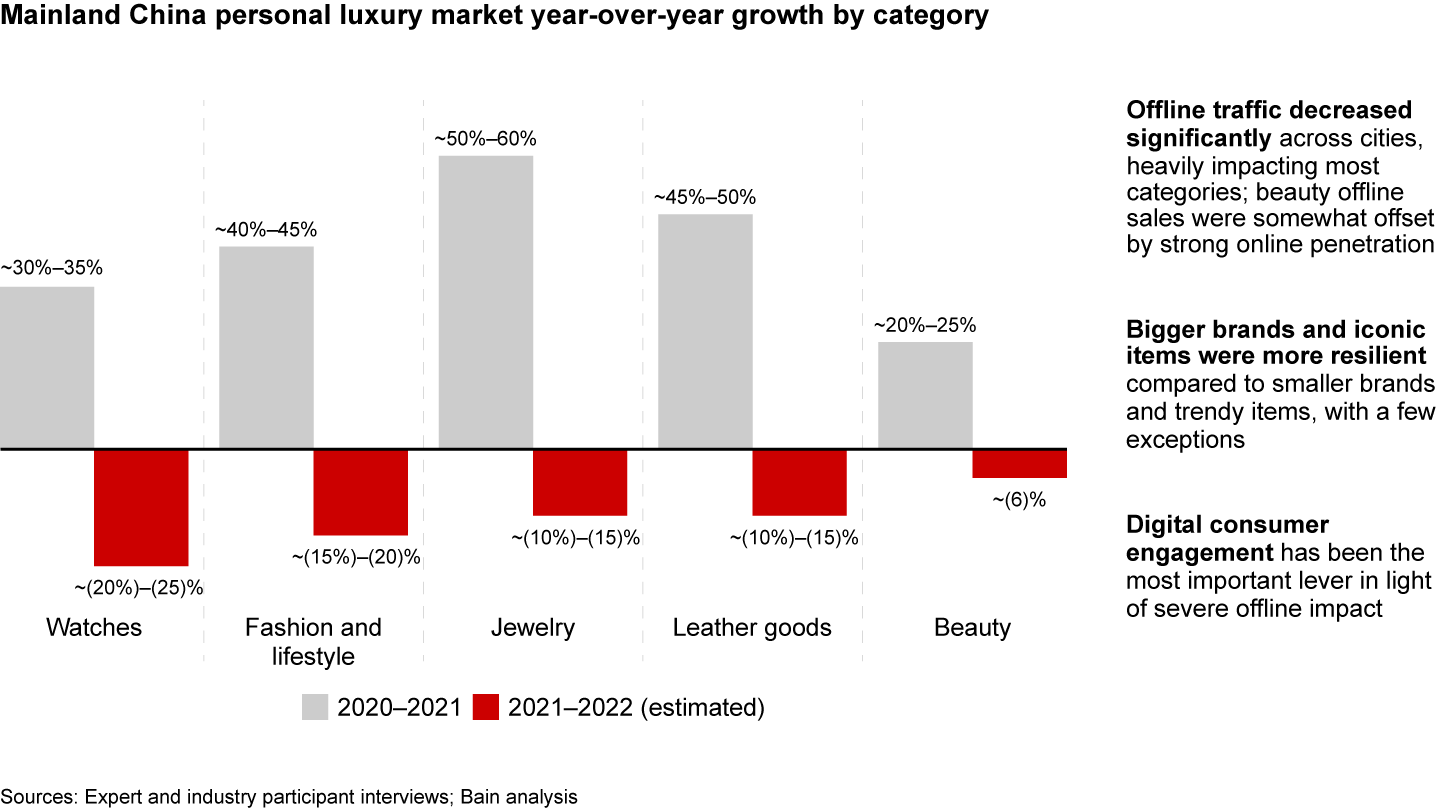
      All luxury categories declined in 2022, but watches suffered the most

      While most brands saw declines in 2022, a few stayed flat or grew despite these challenging conditions. Three factors contributed to their success:

      • On average, bigger brands out-performed smaller players.
      • Brands with iconic portfolios did better than those with trendy or seasonal merchandise.
      • Brands with a higher concentration of Very Important Clients (VICs) also fared better.

      This year, our research explores three major trends and how they could influence the luxury market’s comeback. They are the expansion of VICs, duty-free shopping, and global pricing strategies.

      Trend 1: The expansion of VICs

      Globally, the top 2% of customers account for about 40% of luxury sales, according to Bain’s most-recent luxury goods market study. China’s luxury market typically attracts a high concentration of VICs—and that trend expanded in 2022 (see Figure 3).

      Figure 3
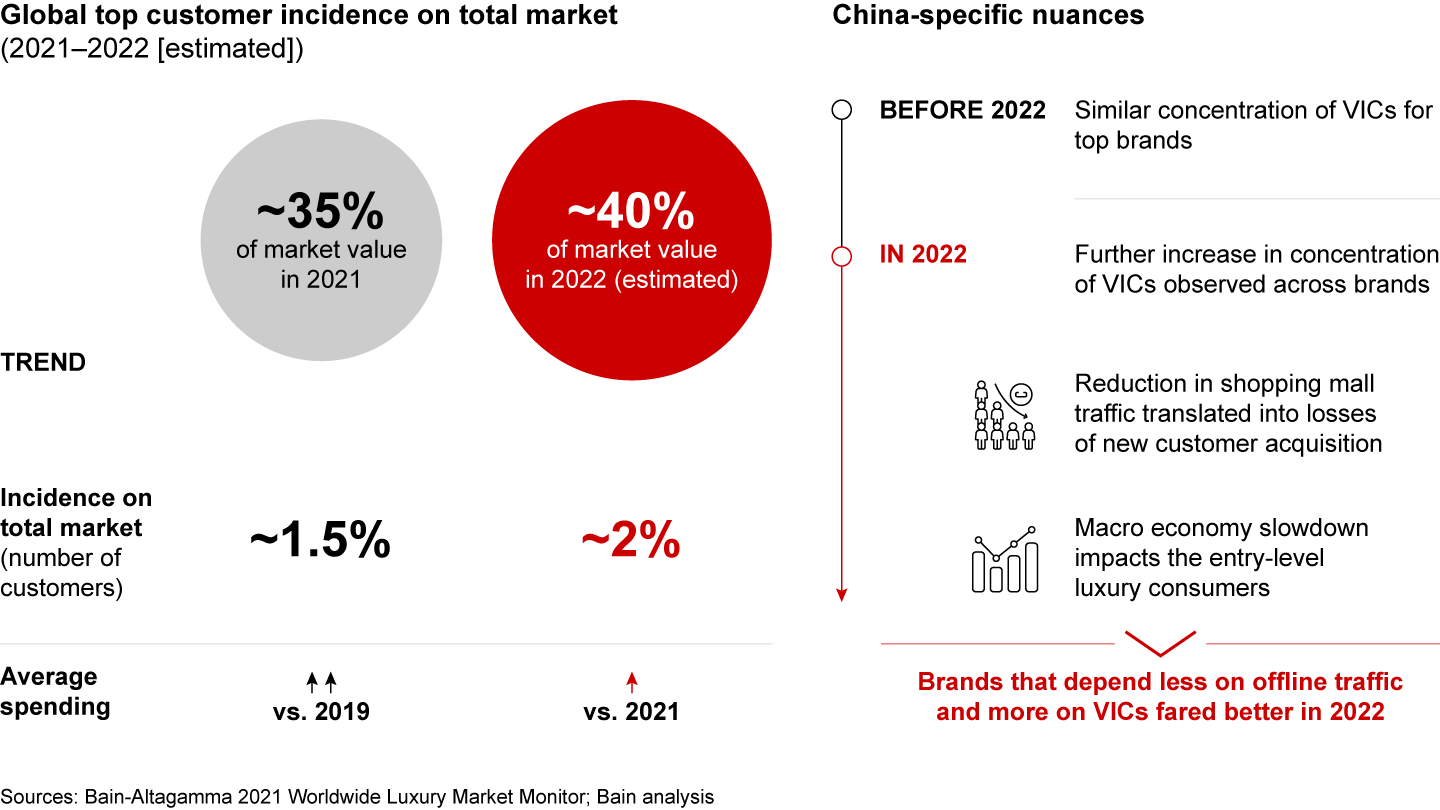
      The concentration of very important clients (VICs) in China grew in 2022

      The economic slowdown affected entry-level luxury consumers more than high-net-worth individuals (HNWIs). The decline in mall traffic also translated into fewer new customers entering luxury stores. As a result, sales skewed toward VICs in 2022. Some Chinese luxury brands achieved higher concentrations of VIC sales than the global average.

      VICs played an important role in online luxury sales, too. Shoppers who buy more than three times a year account for over 50% of sales and are the fastest-growing segment, according to leaders at Tmall Luxury Pavilion.

      Trend 2: The duty-free ecosystem

      In recent years, duty-free shopping in Hainan contributed to China’s luxury market boom. However, Hainan province was also affected by Covid policies, travel restrictions, and lockdowns in 2022.

      Duty-free sales could be down 30%, landing around RMB 35B in 2022 (see Figure 4). That was far below the Hainan Development and Reform Commission’s target of RMB 100B. The decline was slightly offset by an 8% increase in spending per shopper.

      Figure 4
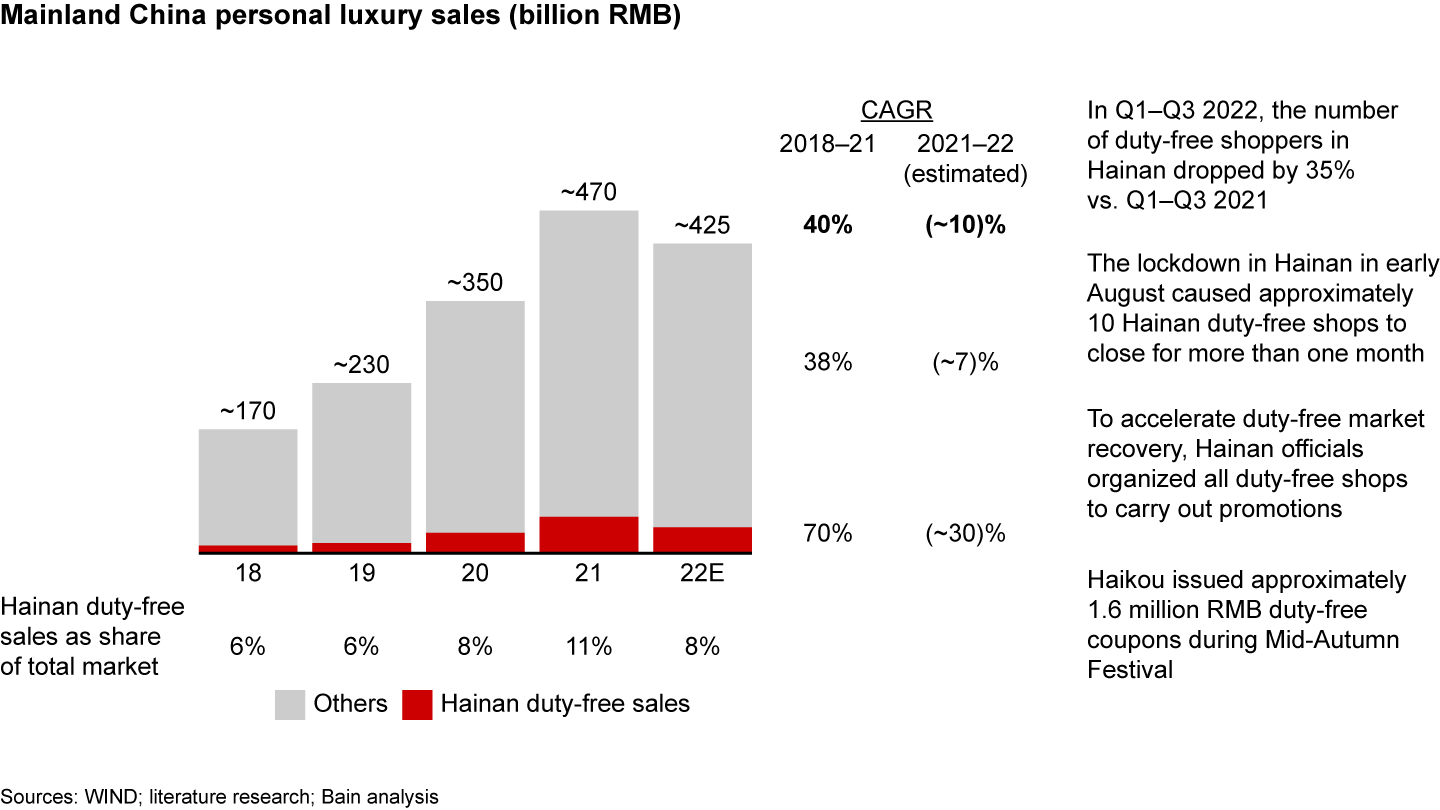
      Duty-free sales in Hainan dropped approximately 30% in 2022

      The decline in sales is directly linked to a reduction in traffic. Hainan had about 35% fewer duty-free shoppers in 2022. Strong promotions and an International Consumption Expo were held in the third quarter to reinvigorate travel and purchasing. However, they were followed by more lockdowns.

      Despite the lackluster results, the central government is committed to strongly promote Hainan and the repatriation agenda. Brands, retailers, and developers continue to follow through on their committed investments in the province.

      Meanwhile, China Duty Free Group (CDFG) and its affiliates have been aggressively pushing for domestic e-commerce options to offset declines caused by limited airline travel. Duty-paid items accounted for roughly 40% of CDFG’s revenue during the first half of 2022 (see Figure 5).

      Figure 5
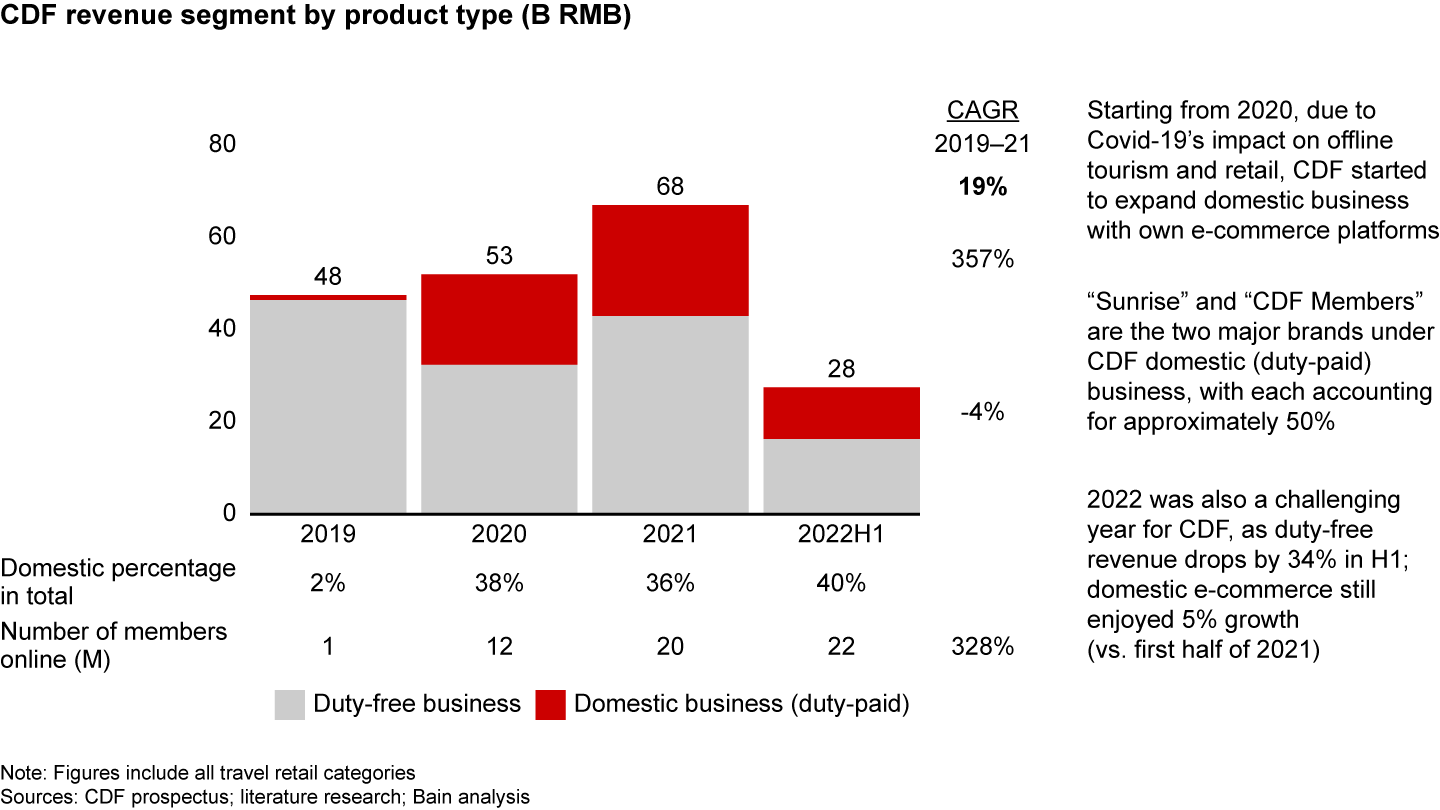
      Domestic, duty-paid e-commerce offered by travel retailers became a key shopping channel during Covid-19

      Growth in discounted duty-paid business makes it harder for luxury brands to harmonize pricing across channels. In mid-December 2022, the price gap between domestic and duty-paid beauty prices was 60%–70% for some leading brands. In the short to mid term, this trend could devalue luxury beauty brands.

      South Korea’s duty-free market continues to play an important role in the broader luxury beauty ecosystem. Travel has been lower over the past two years, yet duty-free sales are high. In 2022, visits to South Korea were over 90% lower than in 2019, but sales remained at ~70% of 2019 levels (see Figure 6). This suggests an abundance of cross-border exporting activities, such as daigou shopping.

      Figure 6
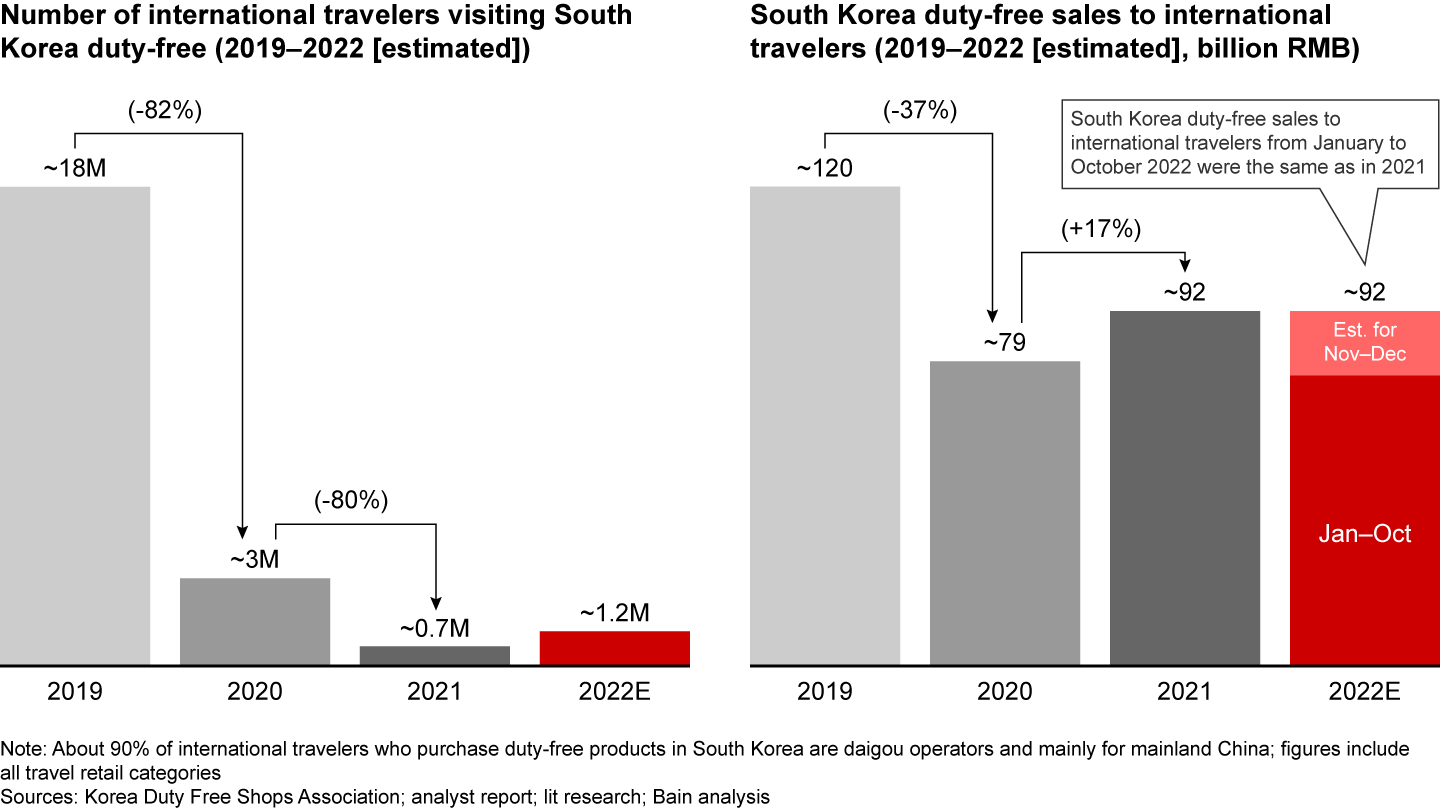
      Travel to South Korea contracted 90%, yet duty-free sales remained stable

      Trend 3: Global pricing strategies

      Chinese borders have been closed since 2020, so most brands have not needed to harmonize pricing between China and the rest of the world. Similar to pre-pandemic times, some luxury prices are now observed to have significant price gaps between China and Europe. Only a few brands maintained global pricing strategies over the past two years.

      A sample check of leading SKUs in the leather segment found a price gap of 25%–45% between China and Europe—before accounting for value-added tax (10%–12%). The price gap was larger for entry-level products than for more expensive merchandise.

      The price gap for shoes was significant (25%–35%), while jewelry and watches were less affected (see Figure 7). Many brands in those categories adopted global pricing strategies years ago and maintained their strategies despite borders being closed.

      Figure 7
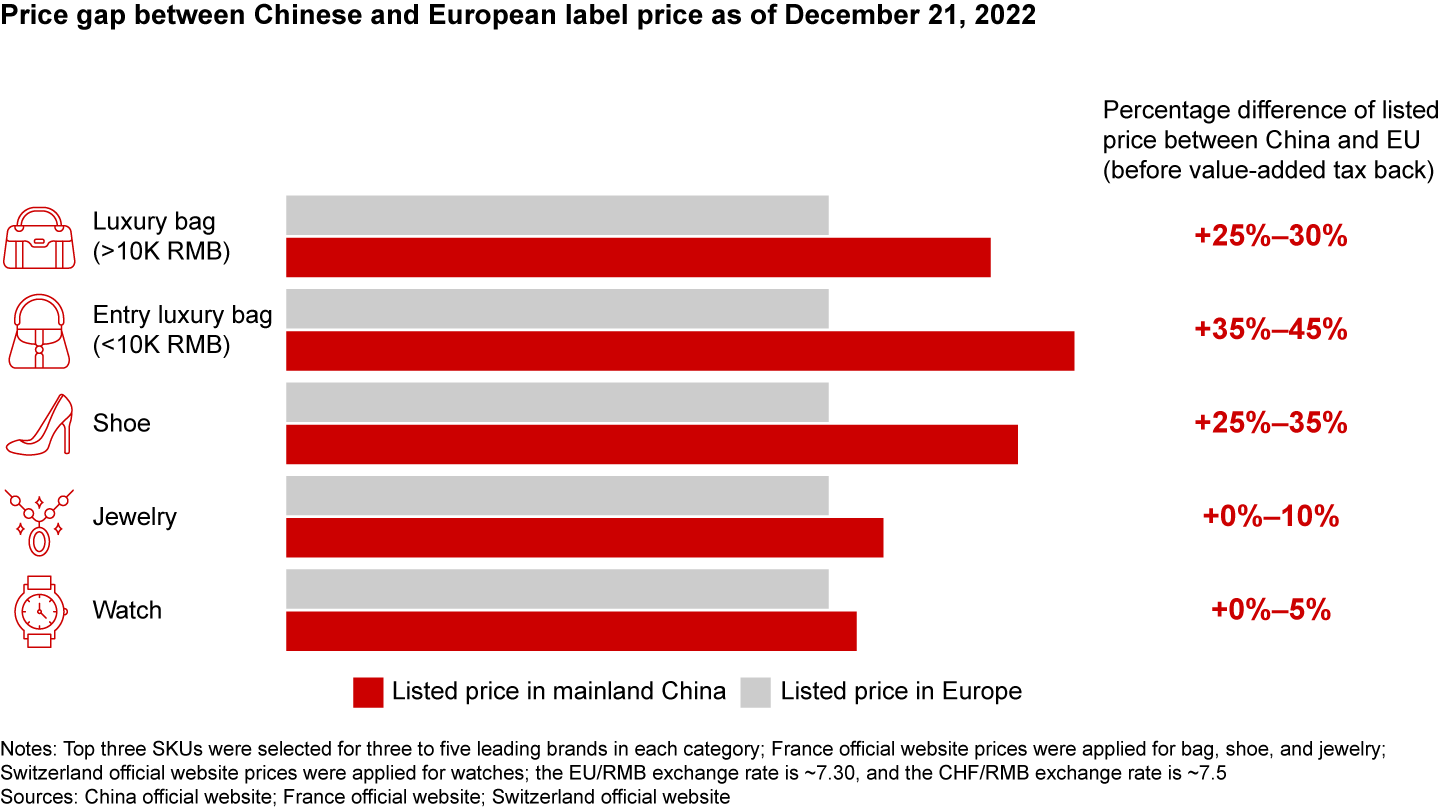
      Pricing gaps make purchasing abroad attractive to Chinese consumers, once international travel resumes

      A look ahead

      We believe 2022 was a reset, not a harbinger of more distress. Growth will resume in 2023 after China recovers from the most-recent Covid-19 impacts. We expect positive conditions to return before the end of the first quarter.

      The fundamentals of consumption in China are still intact. Compared to other emerging markets, China is a behemoth for luxury growth. It has a larger number of middle- and high-income consumers, and those populations are projected to double by 2030 (see Figure 8). In the mid to long term, “the next China” is China.

      Figure 8
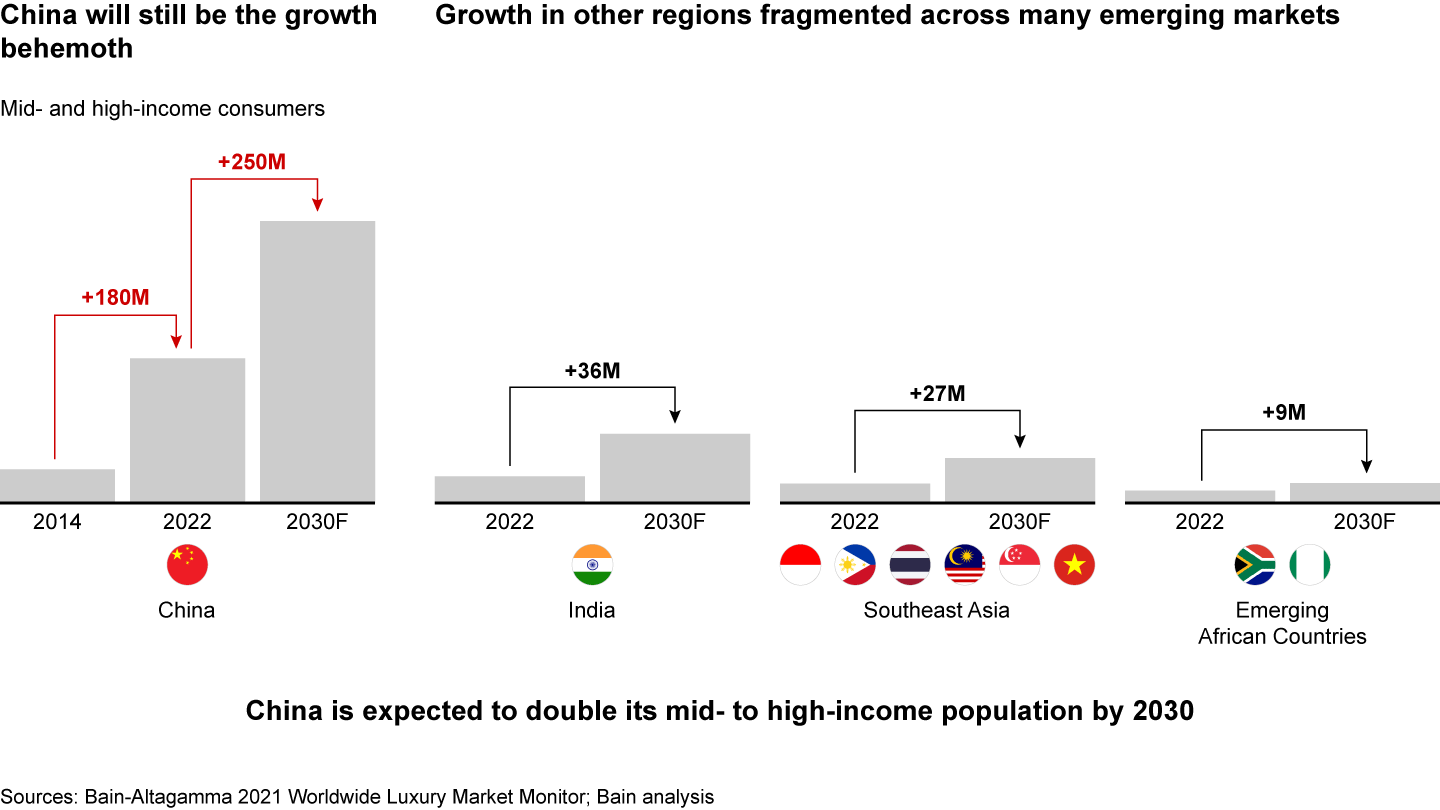
      Despite setbacks in 2022, China is still the most promising market for luxury goods

      Luxury consumption will recover once Covid-19 subsides, mall traffic improves, and consumer sentiment rebounds. We expect to see 2021 sales levels sometime between the first and second half of 2023.

      Hainan will rebound and become a key travel destination again, especially for the majority of Chinese travelers who are without passports. Demand for international travel will bounce back too, starting with Asia-Pacific destinations like Hong Kong, Macau, and Southeast Asia.

      Chinese luxury consumers have distinct shopping behaviors and preferences. Differences between the Chinese and global luxury market will widen, especially around digitalization, the retail environment, cultural references, and relationships with brands. Brands that understand the nuances of the China luxury market will succeed over time.

      While optimism abounds, there are also risks.

      Most important, brands need to resolve pricing gaps between China and Europe before international travel resumes. At the moment, airlines have not fully resumed operations, but demand and traffic will pick up soon. Similar to pre-pandemic times, exchange rate fluctuations will influence where consumers travel.

      In addition, some HNWIs are leaving China for Singapore, Hong Kong, and other destinations. Luxury brands may see a rebalancing between mainland China and the rest of the world.

      Brands have invested heavily in customer experience and customer service in China over the past three years. Now, Chinese luxury customers have high expectations, regardless of where they live. Brands need to ensure their CRM tools work effectively across borders. To continue growing, luxury brands must deliver excellent experiences everywhere in the world.

      The authors are grateful for all those who contributed to this report, especially Zoe Zou, a senior manager with Bain & Company’s Consumer Products and Retail practices in Greater China, and Zhewen Wei, an associate consultant in Bain’s Shanghai office.

      저자
      • Headshot of Bruno Lannes
        Bruno Lannes
        어드바이저 파트너, Shanghai
      • Headshot of Weiwei Xing
        Weiwei Xing
        Alumni, Hong Kong
      문의하기
      관련 산업
      • 유통
      • Luxury
      유통
      The 2025 Chinese Personal Luxury Goods Market

      Recalibration, resurgence, and more selective consumers are edging China’s personal luxury market toward recovery.

      자세히 보기
      유통
      Finding a New Longevity for Luxury

      After stabilizing in 2025, the industry can now reinforce its enduring value, according to the Bain-Altagamma Luxury Goods Worldwide Market Study.

      자세히 보기
      유통
      Luxury Is Ready for a New Era After Stabilizing in 2025

      Underlying annual sales of personal luxury goods are set to be flat. That’s a good base for renewal.

      자세히 보기
      유통
      Luxury and Technology: Tailoring Investment Strategies for Greater Business Impact

      As the industry accelerates its tech transformation, more precision and collaboration can boost ROI.

      자세히 보기
      유통
      Decarbonizing Fashion: How to Align Impact with Business Value

      New analysis separates the decarbonization paths of fashion and luxury apparel, revealing the highest-value actions brands can take today.

      자세히 보기
      First published in 2월 2023
      태그
      • 유통
      • Luxury

      프로젝트 사례

      고객 전략 및 마케팅 Inspiring retail employees to think and act like owners

      See more related case studies

      성과 개선 Retailer's performance improvement boosts shareholder value

      See more related case studies

      Digital Omnichannel strategy boosts fashion company

      See more related case studies

      베인에 궁금하신 점이 있으신가요?

      베인은 주저 없이 변화를 마주할 줄 아는 용감한 리더들과 함께합니다. 그리고, 이들의 담대한 용기는 고객사의 성공으로 이어집니다.

      급변하는 비즈니스 환경에서 살아남기 위한 선도자의 시각. 월간 Bain Insights에서 글로벌 비즈니스의 핵심 이슈를 확인하십시오.

      *개인정보 정책을 읽었으며 그 내용에 동의합니다.

      Privacy Policy를 읽고 동의해주십시오.
      Bain & Company
      문의하기 환경정책 Accessibility 이용약관 개인정보 보호 쿠키 사용 정책 Sitemap Log In

      © 1996-2026 Bain & Company, Inc.

      문의하기

      무엇을 도와드릴까요?

      • 프로젝트 문의
      • 채용 정보
      • 언론
      • 제휴 문의
      • 연사 초청
      오피스 전체보기