

M&A Report

한눈에 보기
- Locked-down consumers need to stay connected during the Covid-19 pandemic, making telecommunications a good business to be in and sparking further revival in M&A activity, including renewed interest by private equity investors.
- The nature of deals has changed. Regulators have eased up on scale deal approvals, companies have pulled the brakes on unessential scope deals, and infrastructure M&A designed to monetize highly valued infrastructure assets has continued apace.
- This changing landscape presents challenges. First movers have a big advantage in scale deals. And as increasing competition from private equity and infrastructure funds sets a higher bar for managing performance, infrastructure deals require a strategy and mindset shift.
Just when you thought telecom M&A was pronounced dead, it is bouncing back to life, revived in part by Covid-19.
While other industries struggled, telecommunications fared well in 2020. Locked-down, working-from-home, schooling-from-home, and entertaining-at-home consumers relied more heavily than ever on digital connectivity, content, and services. It is true that carriers lost roaming revenue as travel declined and that they continue to anticipate the longer-term impact from broader economic strains such as unemployment and insolvencies, yet overall telecom industry performance was robust in 2020—robust enough to reignite M&A activity and to generate interest by private equity (PE) investors after about a decade of shunning the industry.
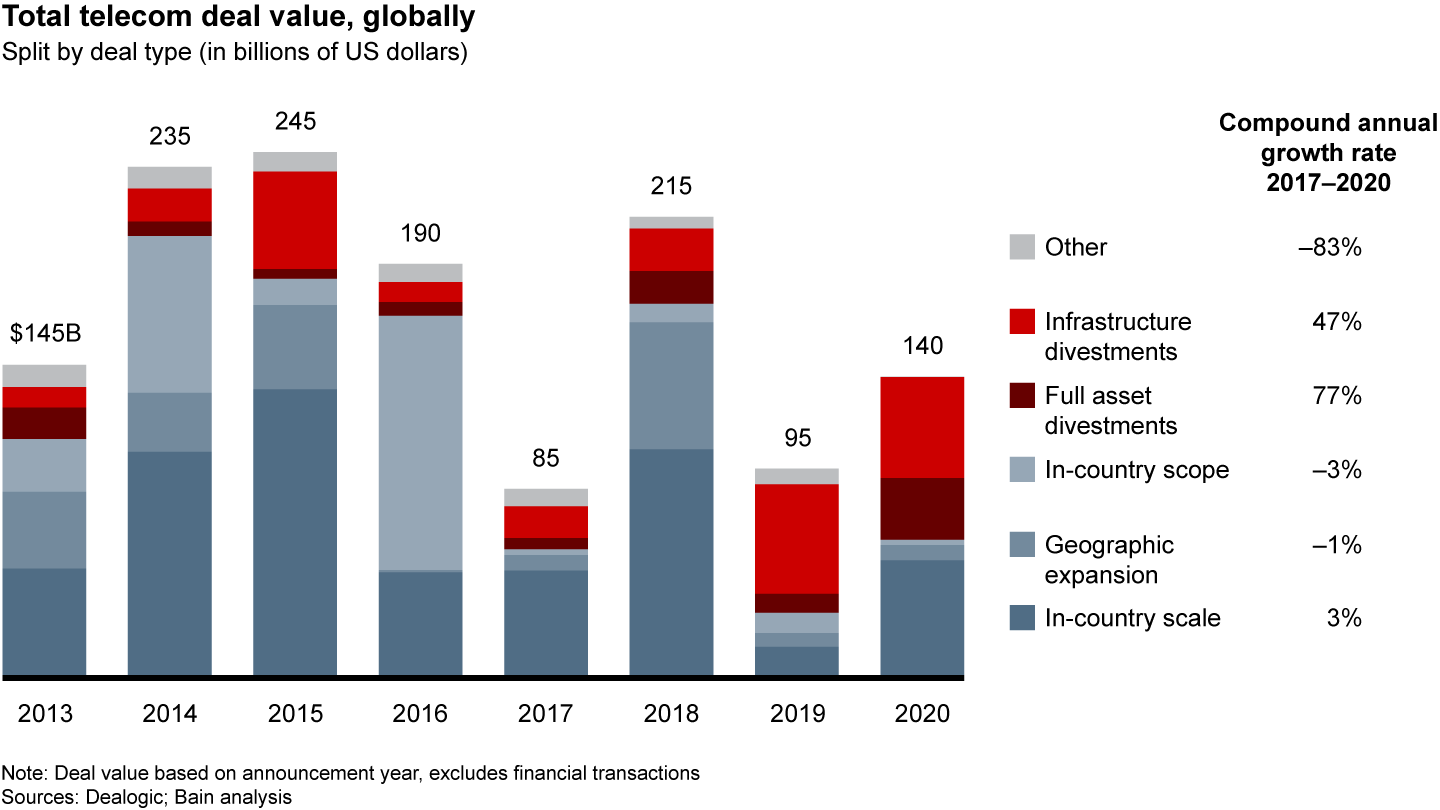
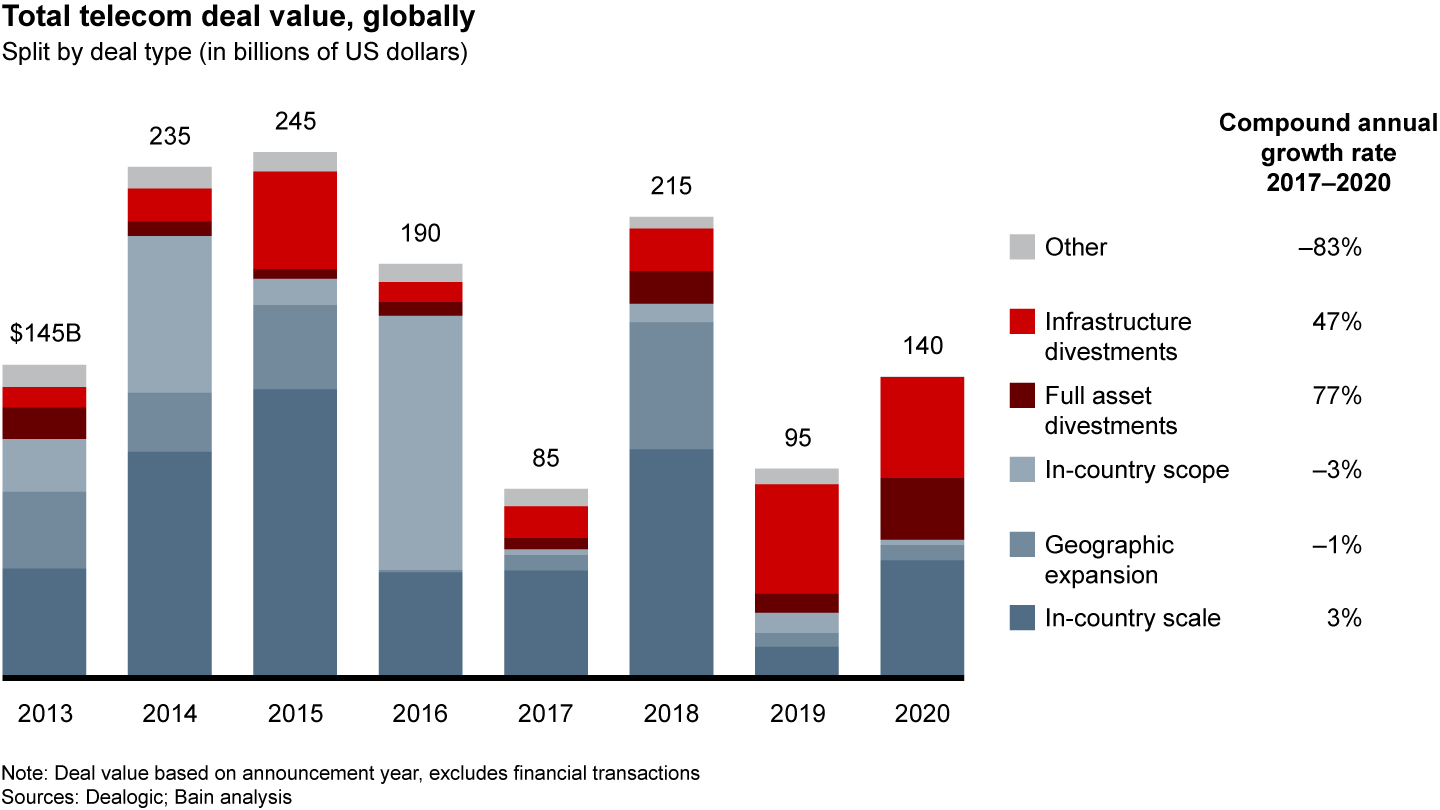
Following a steep drop in M&A activity in 2019, deal value grew by around 50% in 2020 (see Figure 1). The industry also witnessed a changing deal mix. Despite fears that further industry consolidation (even with relatively few opportunities) would be quashed by regulators, scale M&A rebounded. In-country scope deals, which represented more than 20% of all telecom M&A deals from 2013 to 2019, took a back seat in 2020 as the capabilities typically acquired in such deals were considered less desirable in the pandemic economy. Meanwhile, infrastructure M&A, a third type of deal that’s unique to telecommunications, continued apace as companies sought to monetize infrastructure assets that command three to four times the valuation multiples of the integrated telecom operators themselves.
Figure 1
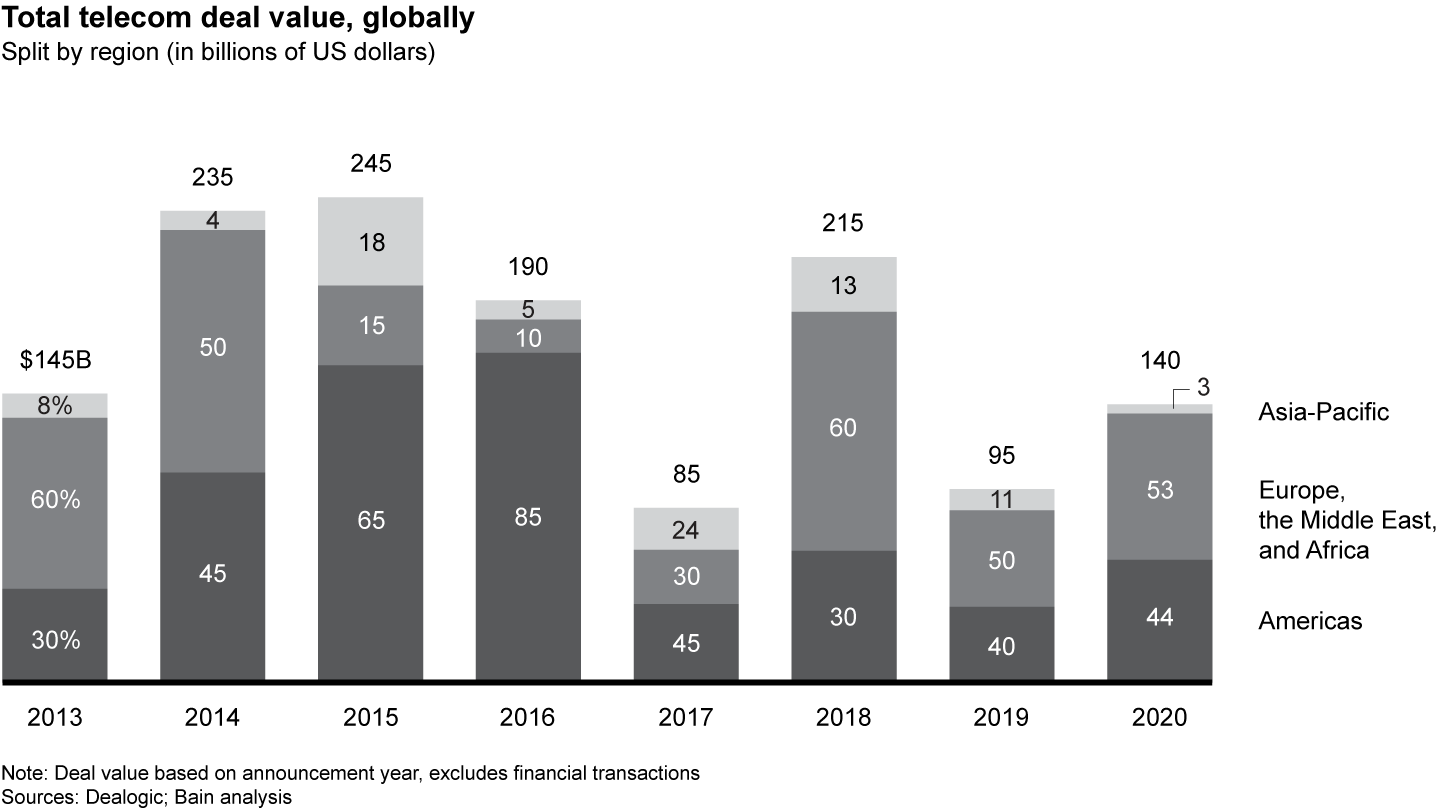
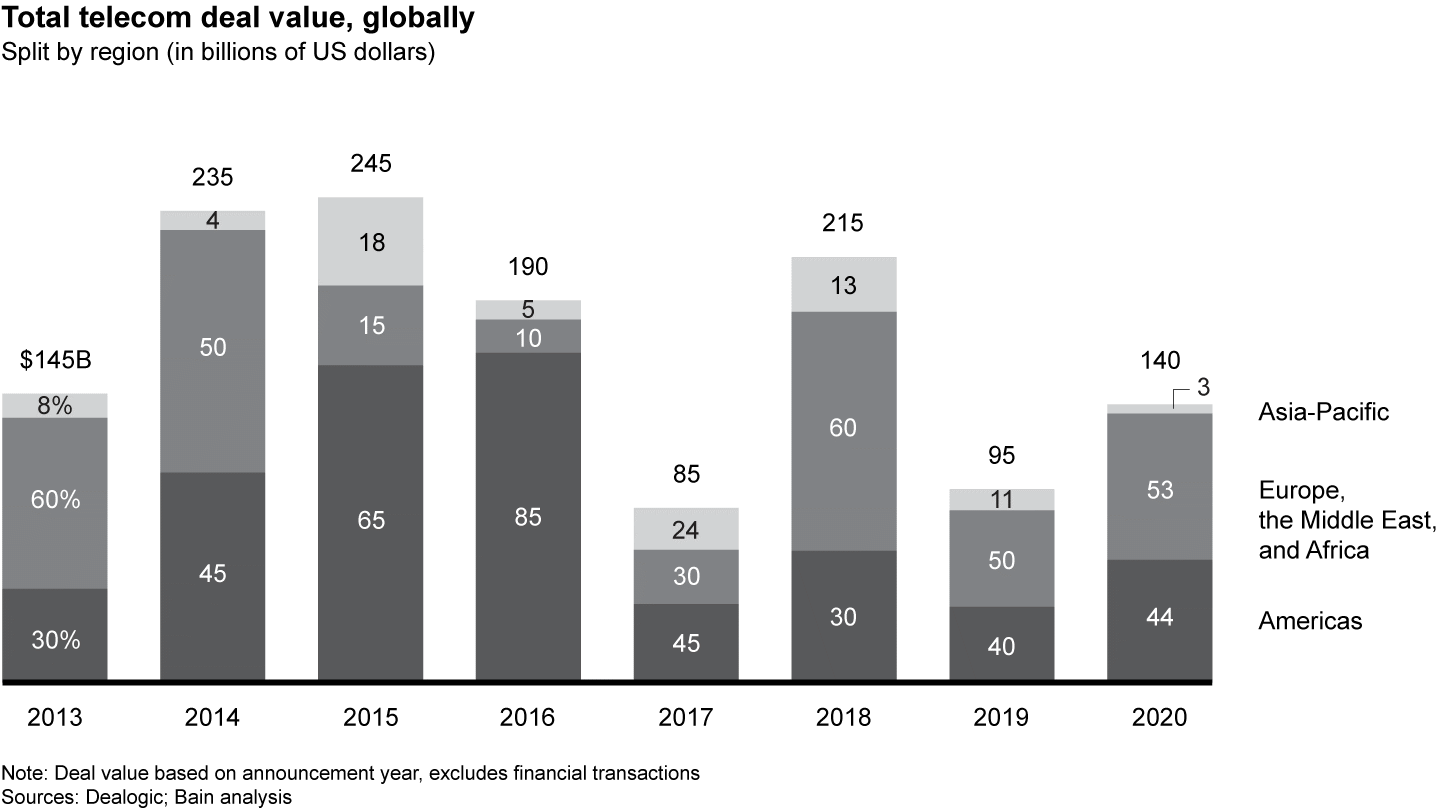
Beyond the pandemic, two main drivers fueled M&A engines for scale deals in 2020. First, in May, the European Court of Justice sent a big signal to the telecom industry when it annulled a decision by a European Commission competition authority to block mobile operators O2 and Three from merging in a $13.5 billion deal. The ruling found that the 2016 decision had failed to prove that such a merger would damage competition, opening the door for companies to revisit scale deals. Second, as governments throughout the world push to support 5G and fiber development, many markets still offer mobile-mobile and fixed-mobile consolidation options, with deals that provide opportunities for outsized cost synergies and improvements in industry structure and capital returns. The scale M&A comeback in 2020 included Virgin Media’s joint venture with Telefonica’s mobile company O2 UK in a deal valued by the companies at nearly $39 billion, Liberty Global’s surprise more than $7 billion acquisition of Switzerland's Sunrise Communications to merge with UPC Switzerland, Verizon’s announced acquisition of América Móvil's wireless service TracFone for $6.9 billion, and Orange Group’s announced acquisition of a majority interest in Telekom Romania from Deutsche Telekom. It is important to note, particularly in Europe, that each completed scale deal reduces the number of companies available for others to make such deals in the future.
While scale M&A is gaining traction, the same cannot be said for scope deals. Before the pandemic hit, many telcos made (mostly small) acquisitions to gain new capabilities or to enter an adjacent market by adding new offerings, such as media services to consumers or security services to business customers. Covid-19 rendered many such deals superfluous. That said, telcos did announce some scope deals in 2020 to support the work-from-home environment. Also, in the months ahead, cash-rich telecom companies will seize the opportunity to selectively acquire assets that will support remote capabilities, such as collaboration services, cybersecurity, and remote health monitoring.

Navigating the M&A Revival in Telecom
Telcos can tune in to new opportunities and tune up their dealmaking strategies to win in a changing landscape.
Meanwhile, infrastructure M&A, which has gained more importance in recent years, continues to ramp up across mobile, fixed, and data center infrastructures (see Figure 2). Spinning off high-valuation infrastructure assets allows companies to bring in new investors who are interested in the more predictable cash flows of infrastructure units and who create synergies from better infrastructure utilization. As they face dwindling options for profitable growth in a mature industry, telcos can use infrastructure deals to finance much-needed network upgrades with fiber, 5G, and mobile edge cloud. We expect more active network sharing, separation, and the creation of new assets for this deal type. Our outlook is also backed by our M&A practitioners’ survey, in which 31% of telecom executive respondents said that they expect deal multiples to grow over the next 12 months compared with only 18% who believe they will decline. This contrasts with 26% and 23%, respectively, across all executives surveyed.
Figure 2
A final big trend in 2020: Telcos’ steady performance during the pandemic has been noticed by private equity, which had largely ignored the industry during its decade of consolidation. This includes an increase in public-to-private (P2P) deals, such as the acquisition of Spanish telco Masmovil by Providence, Cinven, and KKR; the deal for Altice Europe by its controlling shareholder Patrick Drahi; and the acquisition of listed Polish operator Play by iliad. These deals reflect the different P2P flavors in which private investors or their investment vehicles go after listed telecom operators. In our view, P2P deals will continue for as long as private telecom valuations remain significantly higher than public company valuations. They will also remain popular where there are challengers with growth and opportunity for margin expansion (by moving a wholesale-based business onto its own infrastructure, for example). In our survey of M&A practitioners, 30% of telecom executives expected the P2P trend to accelerate, with only 10% expecting it to slow down.
Challenges for scale, scope, and infrastructure deals
But the revival of telecom M&A has also introduced challenges. With increasingly fewer scale deal opportunities, companies need to be proactive. First movers will have the advantage. Scale acquirers also will be required to preemptively (and creatively) prepare for potential divestments and other regulation-mandated remedies. Telecom companies that do not pursue scale M&A risk either missing the final round of industry consolidation or finding themselves to be another company’s attractive acquisition target.
A different set of challenges exist for companies engaging in scope M&A. Scope deals are typically much smaller than scale deals, generate lower synergies, and cost more, particularly with deal multiples remaining stubbornly high. In addition to concerns about achieving the required revenue synergies, executives need to worry about retaining talent, maintaining standalone momentum, and leveraging the acquired capabilities into their core businesses. Unlike their counterparts in other industries, telecom executives seem to grapple less frequently with the best way to integrate smaller assets into their existing portfolios. In our survey of M&A practitioners, more than 90% of telecom executives stated that they have done such “string of pearls” acquisitions, and almost 90% even believed that such deal activity is set to increase—despite scope deal volumes being muted in 2020 during the Covid-19 pandemic. This optimism was reflected in the fact that close to 70% of telecom executives reported that such deals were either successful or highly successful. They cited retention of critical talent and enablement of functional capability sharing as the two most important success factors.
- 90% of telecom executives stated that they have done “string of pearls” acquisitions
- 70% of telecom executives reported that such deals were either successful or highly successful
And while infrastructure deals promise high valuations and cash proceeds, they also require carve-outs as well as changes to the expenditure (capital and operating) profile and the steering logic of operators. Perhaps more important, they require both a strategy and mindset shift in which a telco’s infrastructure is no longer the source of competitive advantage and differentiation.
Finally, the rise of P2P bids and the return of PE owners such as EQT and Digital Colony to the telecom industry should signal a warning to telcos: They will need to manage much more ruthlessly for performance and learn how to act more like a private company that isn’t required to report quarterly progress to public markets.
Bain’s continuing research on M&A has consistently demonstrated that frequent acquirers outperform across industries and that the most successful acquirers build M&A capabilities for a repeatable model. To win with scale deals, telecom companies will need to update their strategies on the M&A chessboard, striving to be first movers. Scope deal success will require companies to refresh their M&A screening, among other capabilities. To make the most of infrastructure M&A, the best companies will assess their existing and planned infrastructure assets for deal opportunities. Meanwhile, to take advantage of the renewed interest by private equity, all telcos should track private investor interest in their businesses.
If anything, 2021 is the year for telcos to tune in to the new opportunities around them and tune up their M&A strategies.
First published in 2월 2021