

Brief

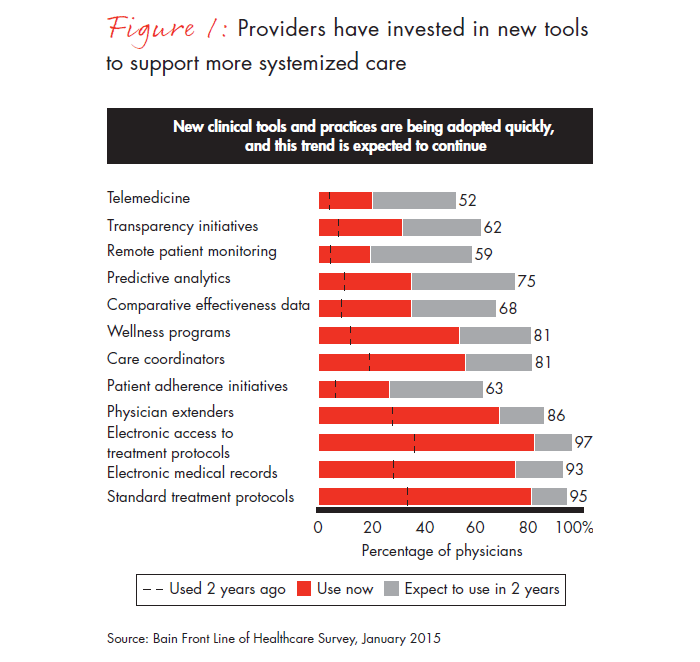
After a decade of sitting on the sidelines, the healthcare industry is now rapidly adopting digital technologies. In two years, 93% of US doctors will be using electronic medical records—up from 30% two years ago—and 97% will have electronic access to treatment protocols, more than double the rate in 2011, according to Bain research (see Figure 1). For pharma companies, which are also late to the game, this is a call to action.
It‘s not only pharma customers that are changing. Digital tools and data are poised to transform the pharma industry. They enable a faster, cheaper and more effective approach to drug research and development, as well as production and commercialization. Real-world data has already begun to disrupt the traditional approach to medical reimbursement as payers demand evidence of efficacy beyond the lab. In the future, only companies that use real-world data to demonstrate superior outcomes for new drugs will generate attractive returns.
Many companies have begun using digital tools in parts of the business. Novartis, for example, is investing in early-stage digital health companies and beyond-the-pill technologies through its joint investment company with Qualcomm Ventures. It also has partnered with Walgreens to recruit participants in clinical trials from the pharmacy’s 100 million customer database. So far, however, pharma industry initiatives have mostly been scattered. To deliver significant gains along the entire complex, data-heavy value chain, companies have to better link data, analytics, workflow and connectivity, both internally and externally.
Now the pace of change is quickening. US venture investment in digital healthcare quadrupled over the past four years, reaching more than $5 billion in 2014, and IBM Watson and Apple have joined the race with projects aimed at creating and curating treasure troves of health-related data. Over the next five years, most US healthcare providers and payers will go digital. Pharma companies that develop well-coordinated digital strategies and partnerships in tandem will have the opportunity to help codesign the industry’s future.
Building a successful digital strategy
Creating an overarching digital strategy is no easy task amid all the noise about digital transformation. Some companies feel overwhelmed and paralyzed by the challenge. Others are rushing in too quickly and without setting priorities. At one global pharma company, we found more than 200 digital projects and 2,000 related websites, many of which lacked the necessary coordination. The leadership team had no overview of the scattered activities and, as a result, derived little benefit from them.
Even strategically interesting projects risk budget cuts if management fails to set clear digital priorities. One US pharma company set up a listening center to survey social media to help it better understand what consumers were saying about its products. But the test project was not linked to a coordinated strategy. So, when the manager in charge tried to extend the listening center platform, he failed to secure funding because management was not aware of its benefits. Digital health is a broad and complex field, but it’s not a black box. We suggest companies break it into a manageable number of thematic clusters that allow leadership teams to speak a common language and have an informed discussion. For some firms, there will be 20 relevant clusters, but for others, it might be as high as 40. Together, the clusters represent a map of digital opportunities; they help determine which areas of investment are likely to deliver the greatest competitive edge across the entire pharma value chain (see Figure 2).
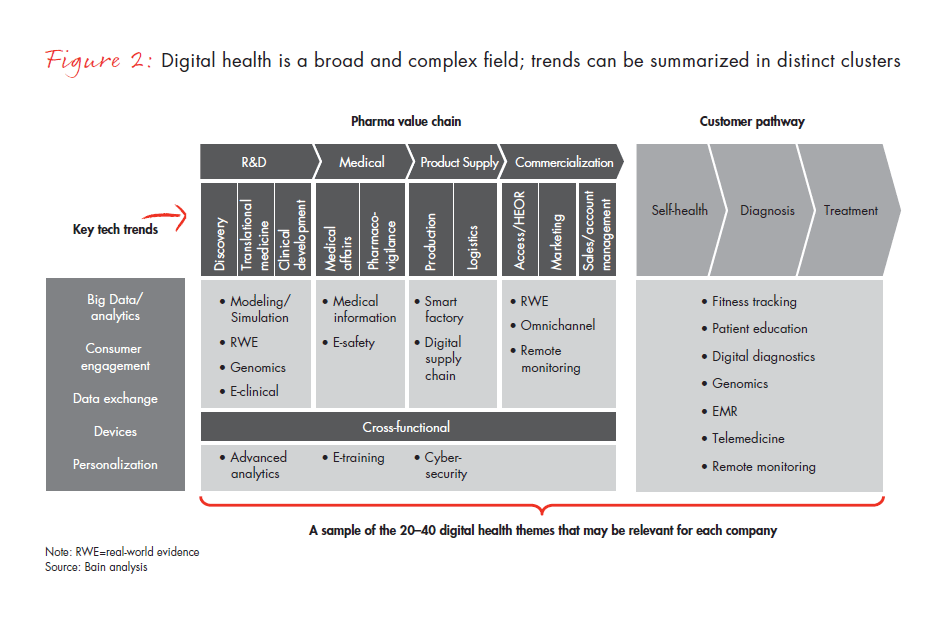
Big Data analytics, for example, enables pharma companies to harness real-world data to accelerate drug discovery while also providing valuable health economics and outcomes data for access, pricing and, potentially, safety. The goal is to select a few high-priority areas that represent the highest return for the lowest cost, risk and investment of time, based on the company’s strategy. By selecting a few concrete projects, leadership teams can move forward without getting lost in a digital maze.
There is no right answer about where to start the digital journey. As a growing number of pharma companies start down the trail, though, we see two areas where they are gaining good traction: working with real-world data and building a great digital experience for customers, patients and other stakeholders.
Embrace real-world data
Advanced analytics can speed the development of more effective pharmas, but most pharma companies lack the real-world data to benefit from analytics, modeling and simulation. Combined with the right tools, data becomes a torch in the darkness. Without it, all research trends look equally interesting. Those who are first to harness real-world data on a large scale will reap big gains. The top 10 pharma companies could each unlock $1 billion in value annually by tapping into this resource, according to a recent forecast by IMS Health.
But even the biggest players will need strategic partnerships to obtain it. Clinical trials, pharma companies’ main source of information, represent only a sliver of the world’s healthcare data. As the industry and governments adopt data tools such as electronic medical records and patient reporting platforms, they will increasingly partner to create rich troves of real-world data.
Bayer invested in generating real-world data for its anticoagulant Xarelto to address concerns about bleeding as a side effect. It used data from existing disease registries and funded new studies. The real-world trial of 6,784 patients showed 96 out of 100 patients did not experience any major bleeding or related side effects. The trial helped convince payers to reimburse patients and improve the drug’s rapid acceptance in the market.
Real-world data are particularly important for pharma companies with pipelines focused on treatments for rare diseases, which in turn have smaller markets and, therefore, high prices. To reach the appropriate patients, companies need to access or create data. One way to accomplish this is to offer genetic screening for family members. With pulmonary hypertension, screening of high-risk patient groups can help increase diagnosis rates and enable earlier treatment.
To harness real-world data, companies need a comprehensive digital platform that integrates internal data with external data systems, linking, for example, regulatory affairs, clinical research and marketing. Most importantly, the platform needs to include capabilities to semantically normalize and clean data from vastly disparate sources that are intended for widely varying uses. That’s a huge challenge given the structure of existing IT systems.
Adoption of digital technology among healthcare practitioners has increased fourfold over the past two years. To continue that momentum, many companies will need to take a deeper look at emerging digital trends in healthcare and how they apply technology to their day-to-day operations, says Michael Kunst, leader of Bain's Healthcare practice in Europe, the Middle East and Africa.
Build a digital customer experience
In a new digital world, winning means getting closer to customers, patients and other stakeholders by offering them a positive digital experience. Bain research shows physicians already spend significantly more time online for professional reasons than with pharma sales representatives. As payers and providers increasingly seek medical information online and embrace outcomes-driven healthcare, it’s important that pharma companies participate in these new models of clinical decision making.
An omnichannel approach and personalized marketing can help companies build a digital customer experience and increase their reach while significantly raising return on marketing and sales investments. Cost-effective technology tools can help companies move from a siloed to an integrated view of customers, ensuring messages are consistent and aligned as communication channels proliferate. Personalized marketing harnesses digital connectivity and data to address the individual consumer directly in real time and provide offers that are based on understanding individual behavior and preferences. Examples include focusing on over-the-counter treatments for sports enthusiasts or pregnant women. Merck, for example, took a majority stake in Physicians Interactive, which develops advanced analytics and marketing tools to better engage with physicians.
Some pharma companies are piloting electronic recruitment of patients for clinical trials. Others are building online communities around patient education. To participate in all those interactions with their customers more effectively, however, pharma companies need a range of capabilities, including access to natural history data and social media, the ability to process these complex data, participation in risk evaluation and mitigation strategies and prior-authorization platforms, and the provision of genomic, phenotypic and other diagnostic platforms.
Becoming a digital forerunner
Real-world data and the digital customer experience are only two of 20 to 40 strategic themes that may be relevant for each company. We highlight these two in particular because we see a handful of digital forerunners in the pharma industry gaining a competitive edge by building expertise around them. But a digital strategy can impact the entire value chain. Improved transparency with customers and suppliers, for example, can help companies minimize working capital and improve forecasts.
Some leadership teams may decide on a more aggressive approach, placing bigger bets and moving faster. The challenge is finding the right balance between staying true to the company’s core strengths, focusing on specific strategic needs and harnessing digital opportunities to smoothly integrate old and new approaches. Below are a few guidelines to keeping in step with those leading the transition:
- Sponsor from the top. Developing a digital edge is a strategic issue. To gain access to real-world data and advanced analytics, pursue partnerships and trend scouting. A lot of innovation is happening outside the industry—no pharma company can go it alone. Digital is also a cross-functional theme that requires collaboration across the internal functions. Strong engagement from the top of the company ensures that the investment in digital projects delivers comprehensive gains.
- Develop your digital muscle. Build or acquire the capability to gather, structure and analyze massive amounts of data, both inside and outside the company. Replace isolated IT islands with an integrated digital strategy that allows information to fl ow across all functions, including the supply chain. Create a smooth digital customer experience.
- Invest in a test-and-learn approach. Once you have selected a few high-priority digital themes, launch lighthouse projects that can help build organizational capabilities in digital and create a blueprint for further rollout. Ensure dedicated central funding.
- Create a corporate digital healthcare incubator. Forerunners are setting up incubators to oversee digital initiatives. One European pharma company has launched a digital health incubator with a dedicated budget to run a number of high-impact lighthouse projects. The incubator designs and tracks the progress of each initiative.
- Adopt an entrepreneurial mindset. A traditional short-term return-on-investment mentality will undercut the kind of test-and-learn approach that is critical to helping companies harness the power of digital technologies. Lighthouse projects should be managed as venture investors manage a portfolio of start-ups. Some will succeed and some will fail, but all the lessons learned are valuable.
- Design a digital strategy to support corporate strategy. There’s no uniform digital strategy for the pharma industry. Tailor your digital strategy to reinforce your corporate strategy.
Time to act
Digital technologies will bring many changes to the pharma industry, but they will not radically disrupt the business model. Pharma discovery and development, medical and safety, along with manufacturing and commercialization, will remain highly regulated, as well as capital and expertise intensive. Digital tools, however, will create new opportunities to develop competitive advantage across the entire value chain.
The pharma industry’s core strength is investing in early-stage technologies and basic science. Investing in digital capabilities is an equally strategic long-term investment. The following questions can help leadership teams sharpen their focus on a digital strategy:
- Do you have a common definition of what digital means for your company? What do you want to achieve with data, and what specific actions does this process encompass?
- Has the leadership team identified two to four digital areas that will have the biggest impact on the company’s business and initiated a few lighthouse projects? Do you have extra funding for these learning projects?
- Do you know which technology partners are relevant for the company?
- Do you have a plan to develop digital talent?
- What is your digital operating model? Are digital tools embedded throughout the organization?
Creating a digital strategy takes time. So far, no company has developed a comprehensive model for the pharma industry, but many are eyeing the prize. Companies that set clear priorities now will be able to cut through the digital noise and develop competitive advantage in a changing landscape.
Michael Kunst is a partner with Bain & Company based in Munich, and he leads the firm’s Healthcare practice in Europe, the Middle East and Africa. Ashish Singh is a partner with Bain & Company in Boston, and he leads the firm’s Global Healthcare practice. Grace Shieh is a partner with Bain & Company based in the Shanghai office, and she leads the Asia-Pacific Healthcare practice.
The authors would like to give special thanks to Bain & Company Advisor Simon Kennedy and Iris Danke, a principal in the company’s Zurich office, for their guidance and contributions to this article.
First published in 12월 2015