Skip to Content
  • 오피스

    오피스

    미주
    • Atlanta
    • Austin
    • Bogota
    • Boston
    • Buenos Aires
    • Chicago
    • Dallas
    • Denver
    • Houston
    • Los Angeles
    • Mexico City
    • Minneapolis
    • Monterrey
    • Montreal
    • New York
    • Rio de Janeiro
    • San Francisco
    • Santiago
    • São Paulo
    • Seattle
    • Silicon Valley
    • Toronto
    • Washington, DC
    유럽, 중동, 아프리카
    • Amsterdam
    • Athens
    • Berlin
    • Brussels
    • Copenhagen
    • Doha
    • Dubai
    • Dusseldorf
    • Frankfurt
    • Helsinki
    • Istanbul
    • Johannesburg
    • Kyiv
    • Lisbon
    • London
    • Madrid
    • Milan
    • Munich
    • Oslo
    • Paris
    • Riyadh
    • Rome
    • Stockholm
    • Vienna
    • Warsaw
    • Zurich
    아시아, 호주
    • Bangkok
    • Beijing
    • Bengaluru
    • Brisbane
    • Ho Chi Minh City
    • Hong Kong
    • Jakarta
    • Kuala Lumpur
    • Manila
    • Melbourne
    • Mumbai
    • New Delhi
    • Perth
    • Seoul
    • Shanghai
    • Singapore
    • Sydney
    • Tokyo
    오피스 전체보기
  • 얼럼나이
  • 미디어 센터
  • 구독
  • 연락처
  • Korea | 한국어

    지역 및 언어 선택

    글로벌
    • Global (English)
    미주
    • Brazil (Português)
    • Argentina (Español)
    • Canada (Français)
    • Chile (Español)
    • Colombia (Español)
    유럽, 중동, 아프리카
    • France (Français)
    • DACH Region (Deutsch)
    • Italy (Italiano)
    • Spain (Español)
    • Greece (Elliniká)
    아시아, 호주
    • China (中文版)
    • Korea (한국어)
    • Japan (日本語)
  • Saved items (0)
    Saved items (0)

    You have no saved items.

    관심 있는 내용을 북마크하여 Red 폴더에 저장할 수 있습니다. Red 폴더 에서 저장된 내용을 읽거나 공유해보세요.

    Explore Bain Insights
  • 산업
    메인 메뉴

    산업

    • 우주항공, 방산 및 정부 서비스
    • 농업 관련 산업
    • 화학
    • 인프라, 건설 및 건축 자재
    • 소비재
    • 금융 서비스
    • 헬스케어
    • 산업용 기계 및 장비
    • 미디어 및 엔터테인먼트
    • 금속
    • 광업
    • 석유 및 가스
    • 제지 및 패키징 산업
    • 사모펀드
    • 사회 및 공공 부문
    • 유통
    • 기술
    • 텔레콤
    • 운송
    • 여행·여가
    • 유틸리티 및 재생가능 에너지
  • 컨설팅 서비스
    메인 메뉴

    컨설팅 서비스

    • Customer Experience
    • ESG
    • Innovation
    • M&A
    • 운영
    • 조직
    • 사모펀드
    • 고객 전략 및 마케팅
    • 전략
    • AI, 인사이트 및 솔루션
    • Technology
    • 변화 혁신
  • Digital
  • 인사이트
  • 베인 소개
    메인 메뉴

    베인 소개

    • 업무 소개
    • 베인의 신념
    • 구성원 및 리더십 소개
    • 고객 성과
    • 주요 수상 경력
    • 글로벌 파트너사
    Further: Our global responsibility
    • 다양성과 포용
    • 사회 공헌 활동
    • Sustainability
    • World Economic Forum
    Learn more about Further
  • Careers
    메인 메뉴

    Careers

    • Work with Us
      Careers
      Work with Us
      • Find Your Place
      • Our Work Areas
      • Integrated Teams
      • Students
      • Internships & Programs
      • Recruiting Events
    • Life at Bain
      Careers
      Life at Bain
      • Blog: Inside Bain
      • Career Stories
      • Our People
      • Where We Work
      • Supporting Your Growth
      • Affinity Groups
      • Benefits
    • Impact Stories
    • Hiring Process
      Careers
      Hiring Process
      • What to Expect
      • Interviewing
    FIND JOBS
  • 오피스
    메인 메뉴

    오피스

    • 미주
      오피스
      미주
      • Atlanta
      • Austin
      • Bogota
      • Boston
      • Buenos Aires
      • Chicago
      • Dallas
      • Denver
      • Houston
      • Los Angeles
      • Mexico City
      • Minneapolis
      • Monterrey
      • Montreal
      • New York
      • Rio de Janeiro
      • San Francisco
      • Santiago
      • São Paulo
      • Seattle
      • Silicon Valley
      • Toronto
      • Washington, DC
    • 유럽, 중동, 아프리카
      오피스
      유럽, 중동, 아프리카
      • Amsterdam
      • Athens
      • Berlin
      • Brussels
      • Copenhagen
      • Doha
      • Dubai
      • Dusseldorf
      • Frankfurt
      • Helsinki
      • Istanbul
      • Johannesburg
      • Kyiv
      • Lisbon
      • London
      • Madrid
      • Milan
      • Munich
      • Oslo
      • Paris
      • Riyadh
      • Rome
      • Stockholm
      • Vienna
      • Warsaw
      • Zurich
    • 아시아, 호주
      오피스
      아시아, 호주
      • Bangkok
      • Beijing
      • Bengaluru
      • Brisbane
      • Ho Chi Minh City
      • Hong Kong
      • Jakarta
      • Kuala Lumpur
      • Manila
      • Melbourne
      • Mumbai
      • New Delhi
      • Perth
      • Seoul
      • Shanghai
      • Singapore
      • Sydney
      • Tokyo
    오피스 전체보기
  • 얼럼나이
  • 미디어 센터
  • 구독
  • 연락처
  • Korea | 한국어
    메인 메뉴

    지역 및 언어 선택

    • 글로벌
      지역 및 언어 선택
      글로벌
      • Global (English)
    • 미주
      지역 및 언어 선택
      미주
      • Brazil (Português)
      • Argentina (Español)
      • Canada (Français)
      • Chile (Español)
      • Colombia (Español)
    • 유럽, 중동, 아프리카
      지역 및 언어 선택
      유럽, 중동, 아프리카
      • France (Français)
      • DACH Region (Deutsch)
      • Italy (Italiano)
      • Spain (Español)
      • Greece (Elliniká)
    • 아시아, 호주
      지역 및 언어 선택
      아시아, 호주
      • China (中文版)
      • Korea (한국어)
      • Japan (日本語)
  • Saved items  (0)
    메인 메뉴
    Saved items (0)

    You have no saved items.

    관심 있는 내용을 북마크하여 Red 폴더에 저장할 수 있습니다. Red 폴더 에서 저장된 내용을 읽거나 공유해보세요.

    Explore Bain Insights
  • 산업
    • 산업

      • 우주항공, 방산 및 정부 서비스
      • 농업 관련 산업
      • 화학
      • 인프라, 건설 및 건축 자재
      • 소비재
      • 금융 서비스
      • 헬스케어
      • 산업용 기계 및 장비
      • 미디어 및 엔터테인먼트
      • 금속
      • 광업
      • 석유 및 가스
      • 제지 및 패키징 산업
      • 사모펀드
      • 사회 및 공공 부문
      • 유통
      • 기술
      • 텔레콤
      • 운송
      • 여행·여가
      • 유틸리티 및 재생가능 에너지
  • 컨설팅 서비스
    • 컨설팅 서비스

      • Customer Experience
      • ESG
      • Innovation
      • M&A
      • 운영
      • 조직
      • 사모펀드
      • 고객 전략 및 마케팅
      • 전략
      • AI, 인사이트 및 솔루션
      • Technology
      • 변화 혁신
  • Digital
  • 인사이트
  • 베인 소개
    • 베인 소개

      • 업무 소개
      • 베인의 신념
      • 구성원 및 리더십 소개
      • 고객 성과
      • 주요 수상 경력
      • 글로벌 파트너사
      Further: Our global responsibility
      • 다양성과 포용
      • 사회 공헌 활동
      • Sustainability
      • World Economic Forum
      Learn more about Further
  • Careers
    최근 검색어
      최근 방문 페이지

      Content added to saved items

      Saved items (0)

      Removed from saved items

      Saved items (0)

      Brief

      Accelerating Autonomous Networks: A Reality Check for Telcos

      Accelerating Autonomous Networks: A Reality Check for Telcos

      Early leaders are using AI to reengineer core business processes, but cultural and technological hurdles remain.

      글 Alex Bhak, John I. C. Gomes, Ulli Dannath, and Aaron Boasman-Patel

      • 읽기 소요시간
      }

      Brief

      Accelerating Autonomous Networks: A Reality Check for Telcos
      en
      한눈에 보기
      • Momentum is building for autonomous network operations as telcos move beyond traditional network automation.
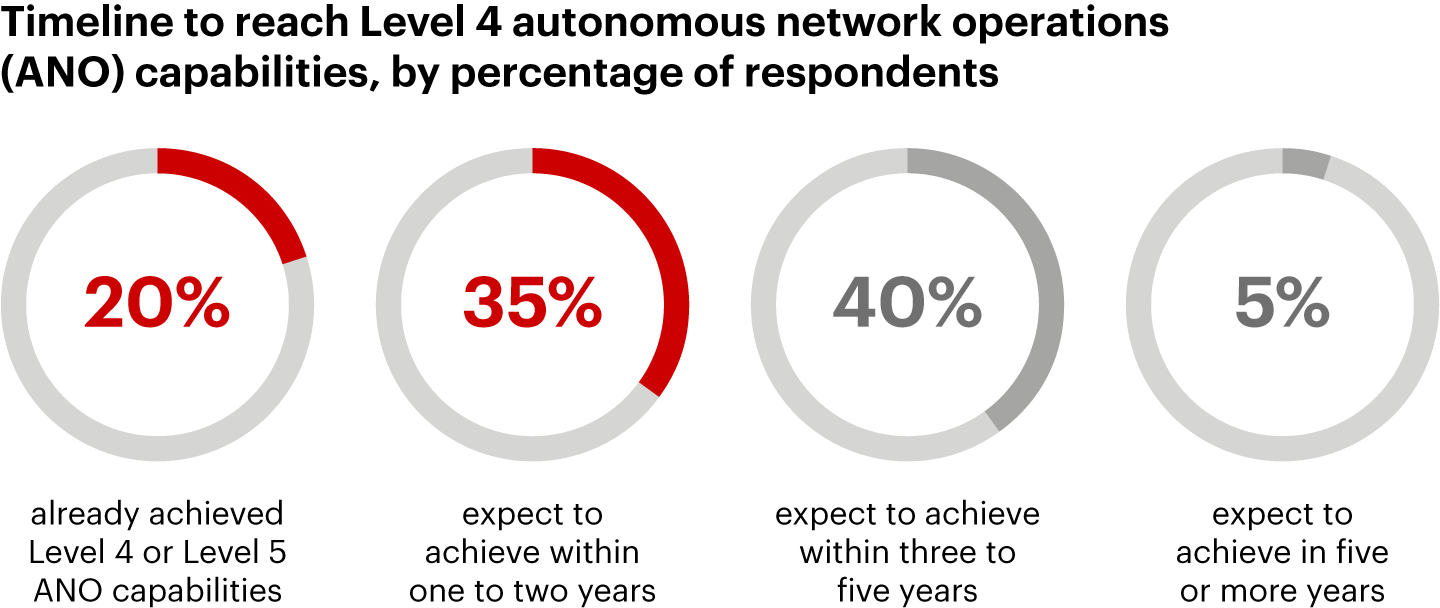
      • A Bain–TM Forum survey shows 20% of operators have reached Level 4 or 5 maturity in select domains; 35% expect to do so within two years.
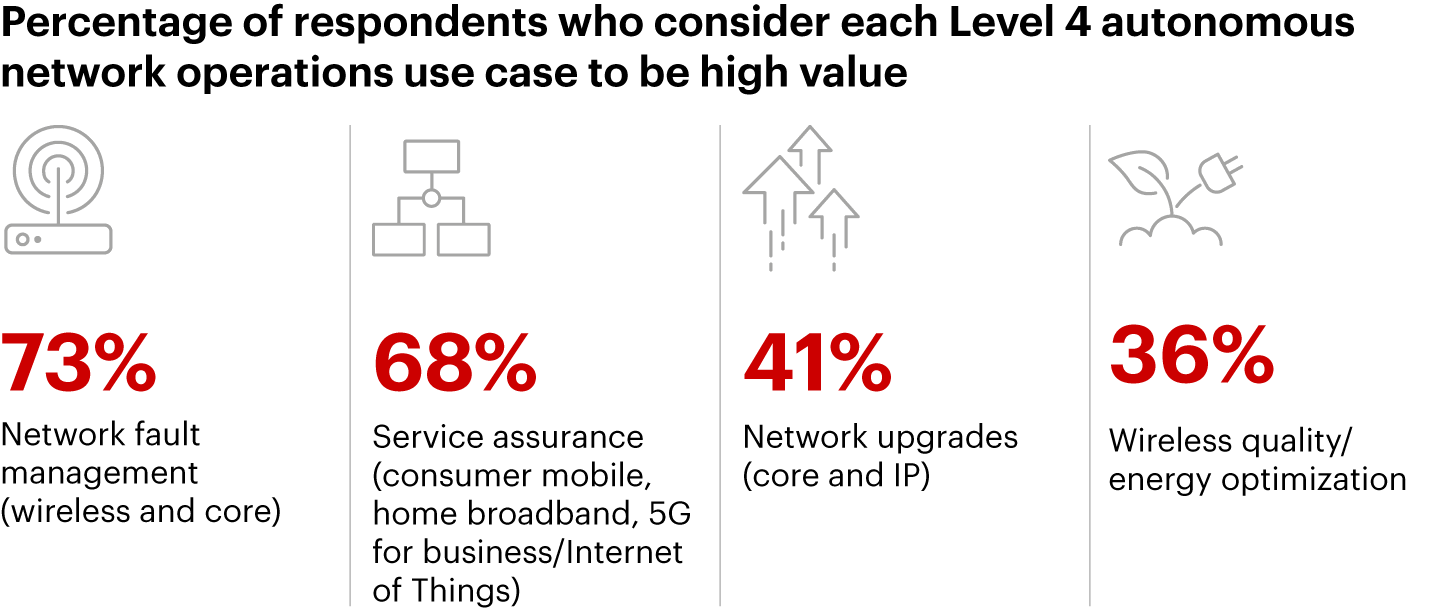
      • Network fault management and service assurance are today’s top use cases, with new growth opportunities emerging.
      • Technical debt, talent gaps, organizational silos, and cultural resistance remain major hurdles to adoption at scale.

      The telecom industry continues to face intense pressure to lower costs, elevate the customer experience, and unlock new avenues of top-line growth. Amid these challenges, autonomous networks have emerged as a critical lever, generating significant attention and strategic debate across the sector.

      To understand how talk is translating into action, Bain & Company partnered with TM Forum to assess momentum for autonomous networks. Through a global survey of chief technology and information officers (CTIOs) at leading telco operators, one-on-one conversations with CFOs, and industry sessions at the DTW Ignite conference in Copenhagen in June, we developed a clear snapshot of industry progress across adoption rates, priority use cases, realized benefits, persistent barriers, and emerging best practices.

      The bottom line: Momentum is building, early movers are widening the gap, and the greatest return on investment is being realized where automation and AI are reengineering core business processes.

      Defining autonomous network operations

      We define autonomous network operations (ANO) in telecoms as a set of AI-enabled systems or processes that perform specific activities with little to no human intervention. These go beyond traditional network automation to include customer interactions, care journeys, and field service operations. ANO can also unlock upstream capabilities—such as personalized marketing, dynamic pricing, and AI-assisted sales—powered by data-driven decision making.

      Adoption: Momentum is accelerating

      More than 70 communications service providers have endorsed TM Forum’s Autonomous Networks Manifesto , with 30 already conducting assessments of their respective organization’s maturity through its Autonomous Network Levels Evaluation Tool (ANLET) framework. Although timelines vary, 20% of surveyed operators report achieving Level 4 or 5 (the most mature levels) in select domains (see Figure 1). Notably, China Mobile has reportedly completed Level 4 trials and plans a full-scale, nationwide deployment over the next three years, while Google Fiber reportedly has ambitions to reach Level 5 autonomy for its backbone network by the end of 2025.

      Figure 1
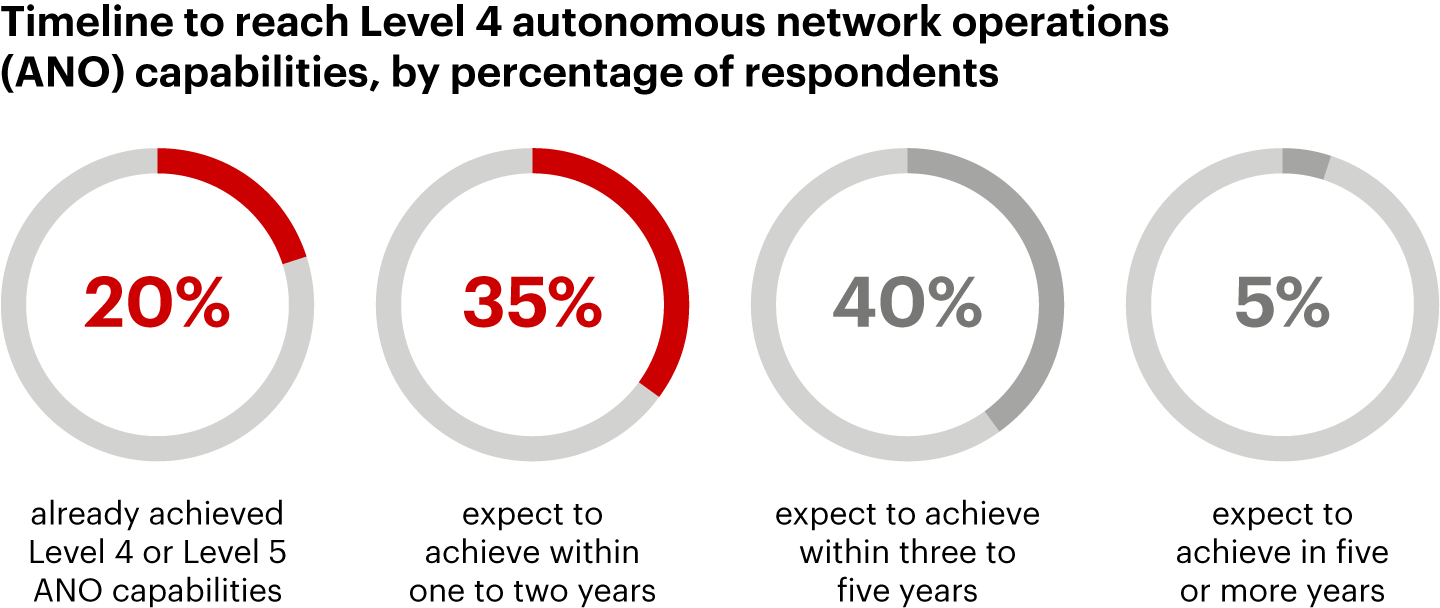
      More than half of telecom leaders expect their organizations to reach Level 4 capabilities of autonomous network operations within two years—or have already
      출처: Bain and TM Forum Autonomous Network Survey 2025 (n=22)

      Use cases: Fault management leads as new frontiers emerge

      The industry is converging around high-impact use cases, with network fault management and service assurance the most common applications so far, according to our survey (see Figure 2).

      Figure 2
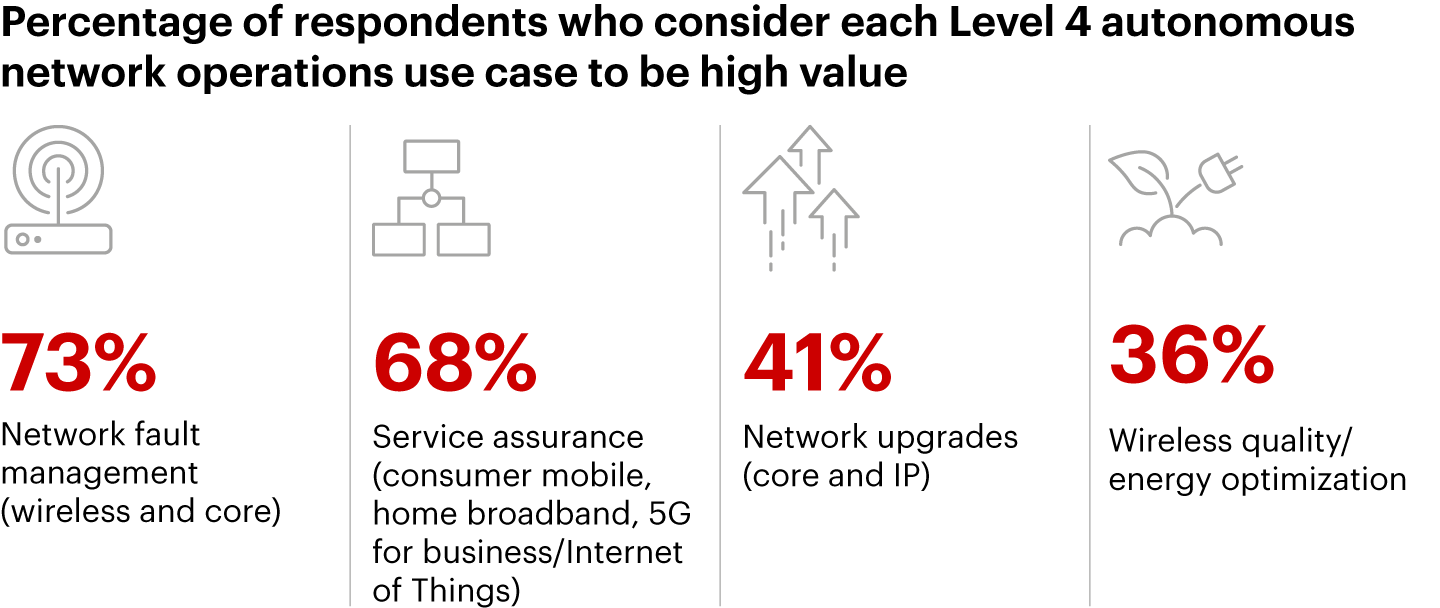
      Network fault management and service assurance are seen as the highest-value near-term applications of autonomous network operations
      출처: Bain and TM Forum Autonomous Network Survey 2025 (n=22)

      Advanced operators are reaping additional benefits such as faster provisioning for private networks, which is already translating into meaningful share gains given the importance of speed to many business customers. Leading operators have also seen dramatic savings in power consumption and increased efficiency in network planning and rollouts. Looking ahead, ANO could enable proactive field repair workflows, real-time technician support, and autonomous customer communications—moving closer to a fully adaptive, self-healing enterprise.

      Value creation: Beyond operational efficiency

      Cost savings are a major motivator, with most operators we surveyed targeting around 30% savings on operating expenditures by 2028. But the potential extends further: improved service quality (fewer errors, more consistent delivery); more resilient operations (faster disruption recovery and better uptime); and strategic advantages (smarter planning, resource allocation, and forecasting) (see Figure 3).

      Figure 3
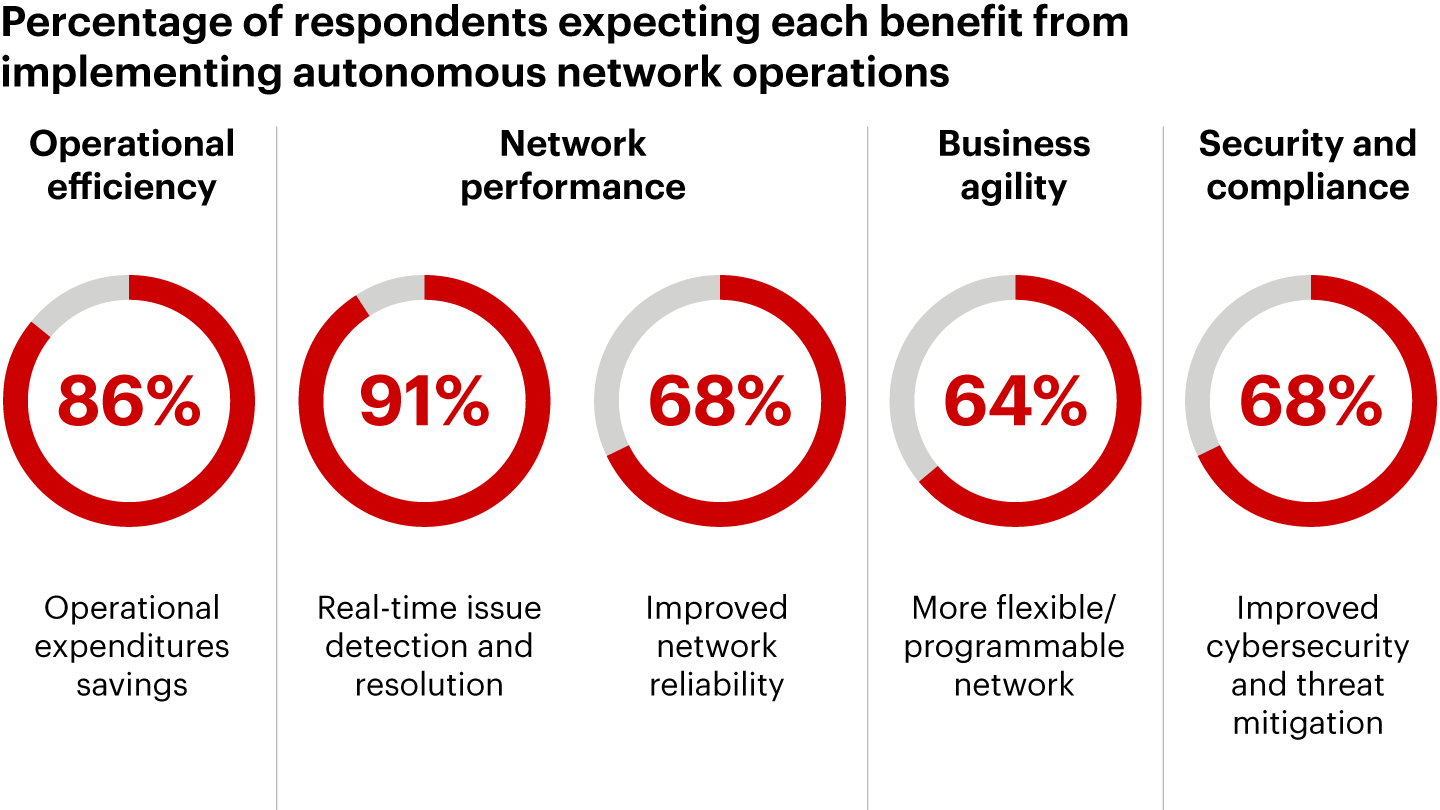
      Telcos are pursuing autonomous network operations primarily to gain strategic and performance advantages, cost savings, and resilience
      출처: Bain and TM Forum Autonomous Network Survey 2025 (n=22)

      Longer term, ANO paves the way for connectivity-as-a-service, creating new sources of potential growth. Telcos that focus solely on cost miss the broader opportunity: deploying automation to build more adaptive, intelligent organizations.

      Barriers: Technical, organizational, and cultural

      Despite technology readiness across AI, edge computing, analytics, and 5G, few operators have begun the hard work of stitching these technologies together. A common misconception is that ANO requires wholesale replacement of legacy technology infrastructure. In fact, incremental integration of AI and automation into existing systems can yield early wins with lower disruption and reduced risk.

      Technological hurdles are real. After technical debt, the most commonly cited obstacles are interoperability issues with vendors, the complexity of migrating legacy systems, and AI talent gaps. Silos between network, IT, and customer service teams have also confounded most operators (see Figure 4).

      Figure 4
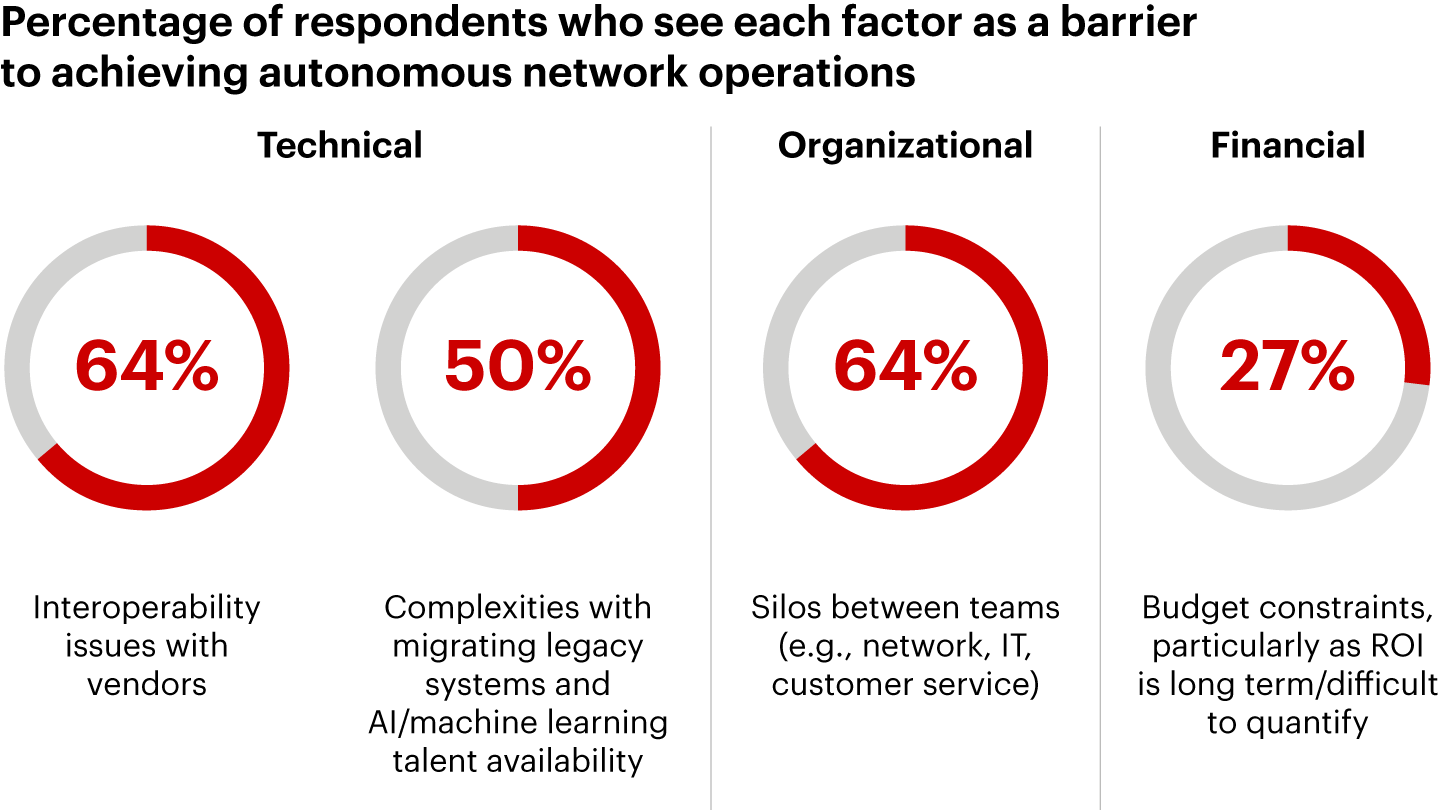
      Realizing the full potential of autonomous network operations requires overcoming key technical, organizational, and financial barriers
      출처: Bain and TM Forum Autonomous Network Survey 2025 (n=22)

      However, a deeper—and more frequent—challenge is organizational inertia. At the DTW conference, industry leaders pointed to cultural resistance as the primary hurdle to ANO progress. Success requires a bold vision that defines how automation will change the role of the network, with clear articulation of the business case and value mapping for ANO investments. Organizations must be willing to reimagine processes from end to end using an AI-first mindset. Network engineers will have to think like software engineers, pushing for continuous evolution. Companies will fall behind competitors if they don’t take a broader view of autonomous operations beyond the network, including the customer experience and enterprise operations.

      Three key actions for executives

      To set their ANO journeys on the right path, leading companies tend to focus on three things.

      1. Rigorously assess your starting point and track progress. The most effective companies start with a candid view of their organization’s technology maturity and business performance. They use guides such as TM Forum’s ANLET to benchmark technical progress and tools like Bain’s Northstar℠ or NPS® frameworks to identify high-value investment areas.

      2. Align business and technology from Day 1. Leading companies bring together business and technical leadership to co-own use case selection and goal setting. Creating value, whether through cost reduction or growth enablement, should guide prioritization and objectives. This may well mean not targeting the highest levels of automation everywhere all at once. There may be some instances where achieving Level 4 maturity gets you 90% of the value with less cost and risk than immediately aiming for Level 5.

      3. Govern for business value, not project delivery. This isn’t a traditional systems integration initiative. It’s a full business transformation requiring agile, cross-functional governance. Leaders must enable rapid decision making that grounds choices in delivering measurable value at every step.

      While ANO sits squarely within a CTIO’s domain, success depends on deep collaboration across the organization. Customer-facing teams (both consumer and enterprise) bring vital, direct insight into customer needs and market demands. Finance ensures investments are strategic and feasible. Operations, engineering, and marketing help embed automation into the fabric of how work gets done. Cross-functional ownership can help unlock innovation, accelerate execution, and ensure the company captures ANO’s full value. C-suite sponsorship is critical not just for funding but also to break through inertia and align stakeholders across the organization.

      Lead the way

      Autonomous networks are no longer a future bet—they’re a present-day competitive differentiator. Operators who act decisively today will shape tomorrow’s standards, vendor ecosystems, and customer expectations. By embracing the transformative potential of ANO—and avoiding the traps of organizational inertia, siloed thinking, and narrow cost-cutting—telcos can create faster, smarter, more resilient organizations ready for what’s next. Those who hesitate risk being viewed as less innovative by customers and ecosystem partners.

      In this era of AI and automation, the traditional reliance on technical minimum viable products and proofs of concept is becoming less critical. These approaches often focus narrowly on proving feasibility, when the real challenge is no longer whether the technology works, but how it can be aligned with business priorities to deliver meaningful impact.

      With AI capabilities advancing rapidly and available as mature, off-the-shelf solutions, the differentiator isn’t technical validation but identifying the right use cases, embedding them into operations, and delivering measurable value.

      In short, companies that focus on business outcomes rather than isolated technical pilots are far better positioned to scale AI initiatives and achieve sustainable competitive advantage.

      저자
      • Headshot of Alex Bhak
        Alex Bhak
        파트너, London
      • Headshot of John I. C. Gomes
        John I. C. Gomes
        파트너, Seattle
      • Headshot of Ulli Dannath
        Ulli Dannath
        파트너, Zurich
      • Headshot of Aaron Boasman-Patel
        Aaron Boasman-Patel
        Vice President, Innovation at TM Forum, London
      문의하기
      관련 산업
      • 텔레콤
      관련 컨설팅 서비스
      • 어드밴스드 애널리틱스
      • 운영
      • Digital
      최적의 솔루션 찾기
      • Artificial Intelligence
      Artificial Intelligence Insights
      How Can We Meet AI’s Insatiable Demand for Compute Power?

      Technological innovation, new revenue, and public support may be needed to fund and supply enough electricity.

      자세히 보기
      Artificial Intelligence Insights
      The 2026 Retail Executive Agenda

      Here are letters to the C-suite to help strengthen strategy, catalyze collaboration, and expand value creation in the AI age.

      자세히 보기
      텔레콤
      Shift to Vertical: David Haines, Group CEO, Flora Food Group

      What does it take to stay connected to your customers when scale and complexity threaten to pull you away? 

      자세히 보기
      Artificial Intelligence Insights
      What Business Leaders Need to Know About AI Sovereignty

      Aligning business strategy with national AI priorities is necessary to compete and scale.

      자세히 보기
      Artificial Intelligence Insights
      NeurIPS 2025: Signals for Enterprise Leaders from the AI Research Frontier

      Five themes that matter most for executives and boards.

      자세히 보기
      First published in 8월 2025
      태그
      • 어드밴스드 애널리틱스
      • 운영
      • 텔레콤
      • Artificial Intelligence
      • Artificial Intelligence Insights
      • CIO Insights
      • Digital

      프로젝트 사례

      Restoring Customer Advocacy With a Digital-First Approach

      See more related case studies

      전략 Jump-starting innovation for a telecom solutions provider

      See more related case studies

      M&A Post-merger cultural issues jeopardize a deal

      See more related case studies

      베인에 궁금하신 점이 있으신가요?

      베인은 주저 없이 변화를 마주할 줄 아는 용감한 리더들과 함께합니다. 그리고, 이들의 담대한 용기는 고객사의 성공으로 이어집니다.

      Net Promoter®, NPS®, NPS Prism®, and the NPS-related emoticons are registered trademarks and Net Promoter Score℠ and Net Promoter System℠ are service marks of Bain & Company, Inc., Satmetrix Systems, Inc., and Fred Reichheld. Northstar℠ is a service mark of Bain & Company, Inc.

      급변하는 비즈니스 환경에서 살아남기 위한 선도자의 시각. 월간 Bain Insights에서 글로벌 비즈니스의 핵심 이슈를 확인하십시오.

      *개인정보 정책을 읽었으며 그 내용에 동의합니다.

      Privacy Policy를 읽고 동의해주십시오.
      Bain & Company
      문의하기 환경정책 Accessibility 이용약관 개인정보 보호 쿠키 사용 정책 Sitemap Log In

      © 1996-2026 Bain & Company, Inc.

      문의하기

      무엇을 도와드릴까요?

      • 프로젝트 문의
      • 채용 정보
      • 언론
      • 제휴 문의
      • 연사 초청
      오피스 전체보기