

Brief

한눈에 보기
- Leaders of cost productivity appear in every industry, improving their cost structure year after year.
- Firms with consistent cost productivity realize higher total shareholder return, and this applies in good times and bad.
- These cost productivity champions know when to go “best in cost” and when to go “best in class.” They set explicit targets and incentives.
- Successful execution typically requires deployment of game-changing tools, including digital tools, and unleashing the front line to embrace them.
The laws of cost might seem immutable, with companies locked into industry limits on their ability to achieve a certain percentage of annual cost reduction over the long run and not much more. But the fact is that a few leadership teams in every industry are bending the cost curve to shape stronger and more productive enterprises.
The common moves that cost productivity leaders use to break away from their industry peers are highly revealing. While some companies make a onetime reset to quickly reduce costs, cost productivity champions go further—sustaining it year after year by changing behaviors and aligning incentives throughout the organization. Once they attain a lead position in cost productivity, they tend to stoke an ambition to achieve even greater productivity goals every year.
This takes a different mindset. While any business benefits from a competitive cost structure, for many companies, cost-cutting turns out to be debilitating. Executives feel pressured into a radical, fire-drill approach that creates short-term value but overburdens employees and guts the customer experience—only to have the costs creep back over time. Streamlining costs should not be a trade-off with delivering a strong customer experience. The lessons of the leaders show that companies create real value not through onetime takeouts that worm their way back in, but instead through a sustained program that permeates the entire organization and keeps costs out. That is precisely how they generate the resources required to fuel growth, improve the customer experience and increase shareholder returns.
Shareholders reward cost productivity
To understand what it takes to bend the cost curve, Bain & Company analyzed the cost productivity of 1,574 public companies across industries. To keep the analysis simple, we defined cost productivity as EBITDA growth less revenue growth—the part of EBITDA growth attributable to cost rather than revenue. To be clear, this metric is not perfect in isolating cost issues from pricing or product mix issues, nor does it not replace other standard metrics, such as cost of goods sold or return on capital employed.
That said, the strength of this cost productivity lens is its ability to produce insights about performance comparisons with direct competitors and across other industries. It also helps identify the companies and the practices that are succeeding in reducing costs and powering EBITDA year after year. This provides a powerful perspective for leadership teams when it comes to designing and sustaining real cost transformation.
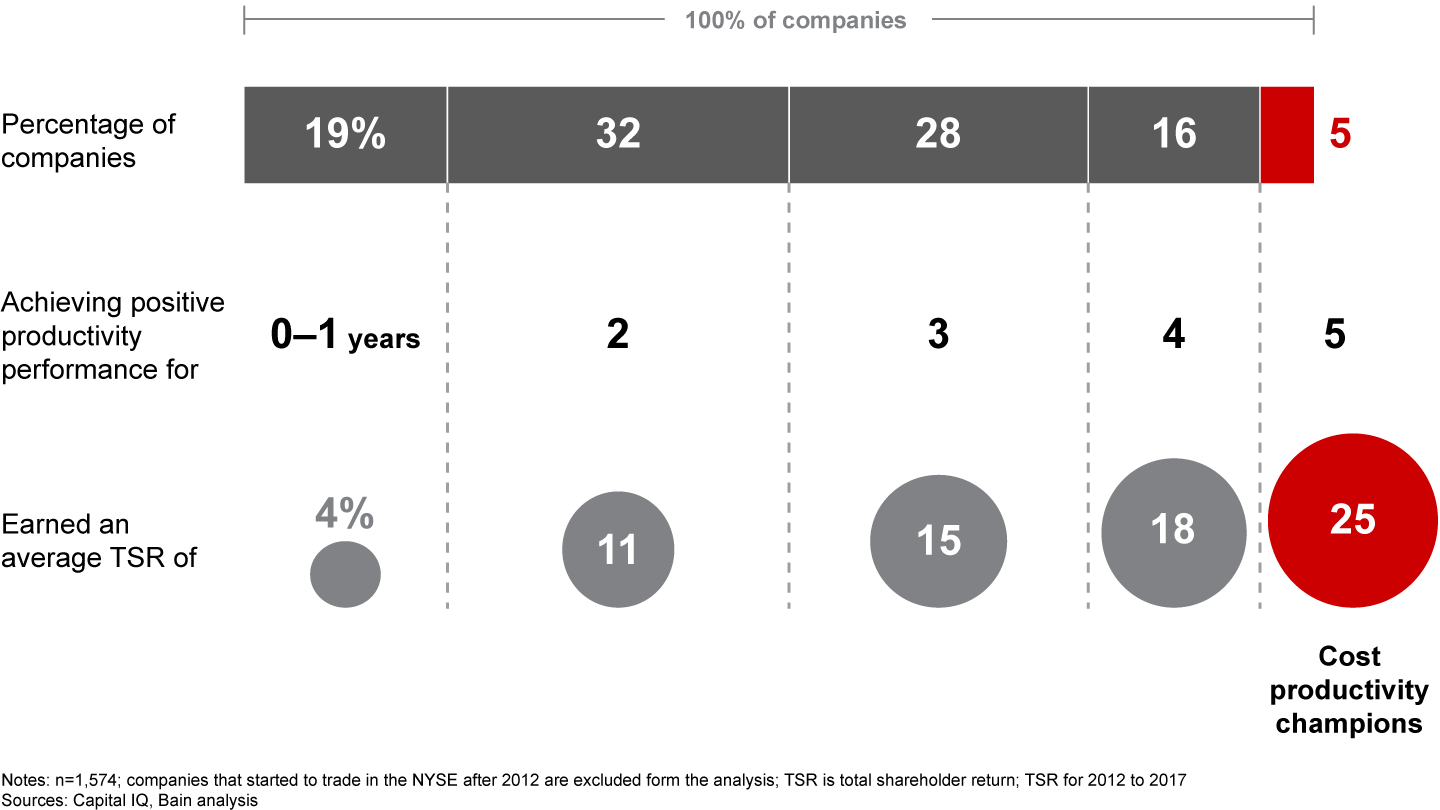
The findings from our analysis are clear: Companies with consistent cost productivity gains realized higher growth in total shareholder return (TSR). The top 5% of performers—those companies with five years of cost productivity gains between 2012 and 2017—achieved a TSR of 25% on average, double that of the rest of the pack (see Figure 1).
Figure 1

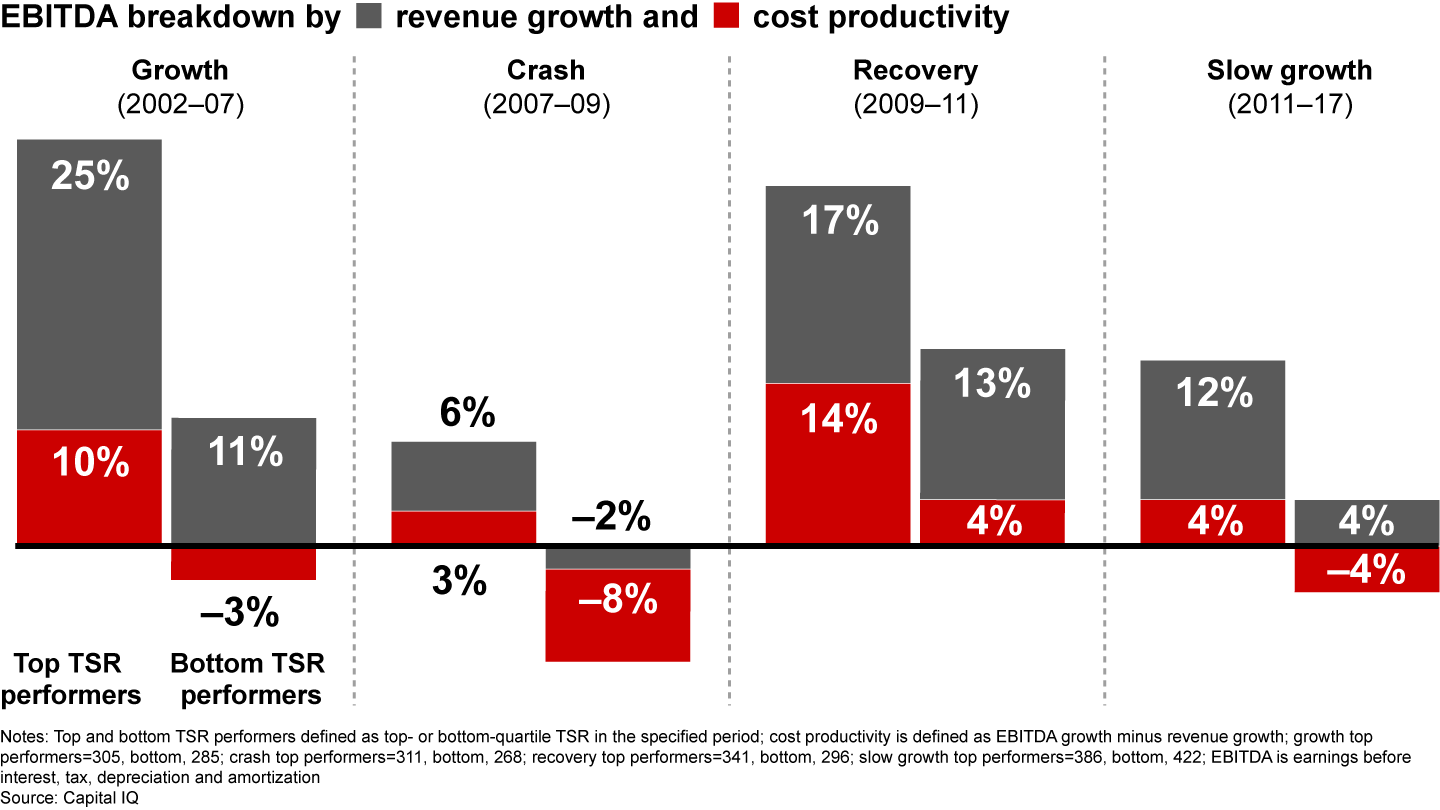
Moreover, cost productivity remains relevant at any point in the economic cycle. Top TSR performers far outpace bottom TSR performers in both revenue growth and cost productivity, in good times and bad. Every year, they become more cost efficient, allowing them to remain competitive, protect earnings and fuel growth (see Figure 2). These companies are the select group that can eat their cake and have it, too. It is a particularly relevant goal now that the current economic expansion is long in the tooth, and the risk of recession rises with every passing month.
Figure 2

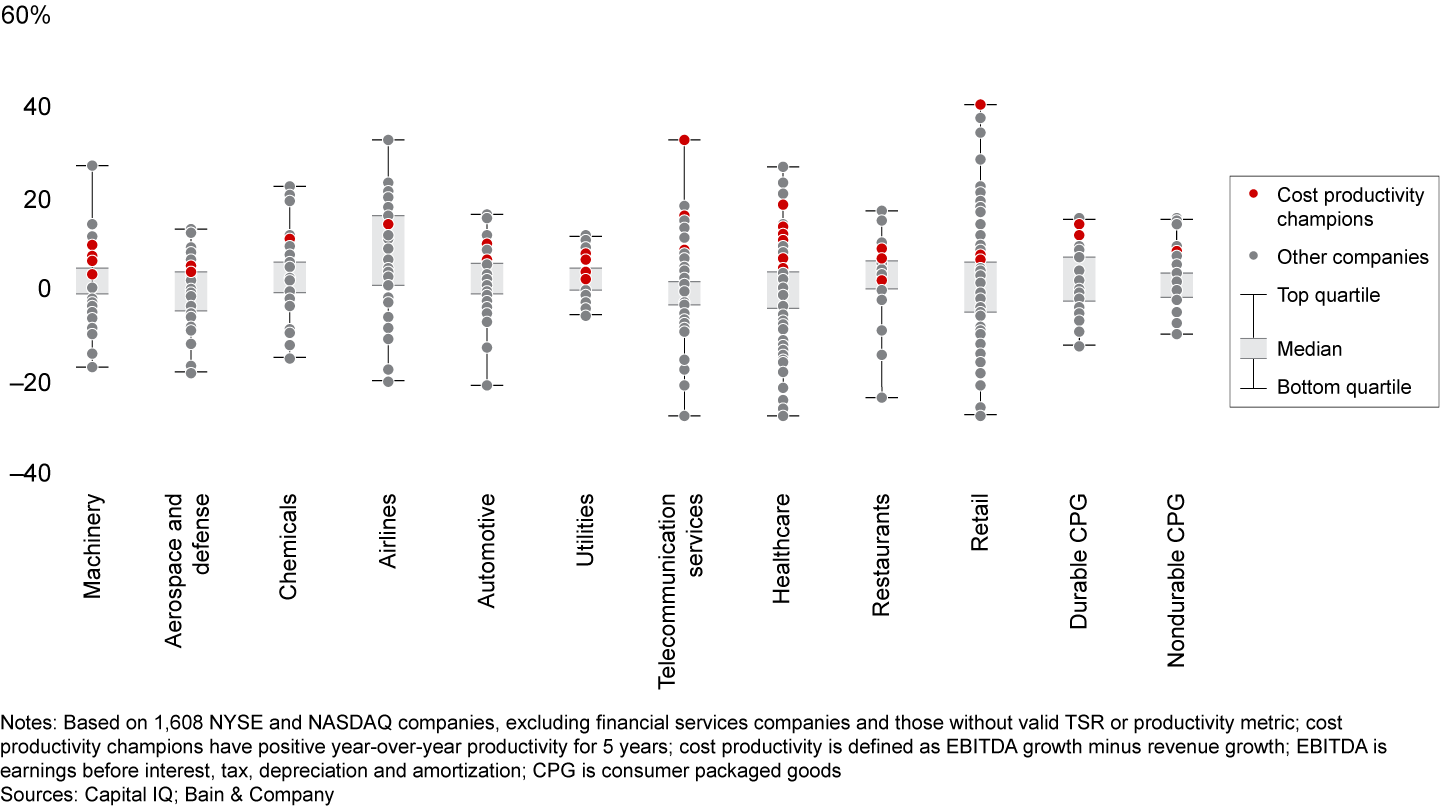
Our analysis shows that the top achievers, which we call cost productivity champions, appear in every industry (see Figure 3). And they have a number of things in common. These companies are exceptionally disciplined in allocating resources to deliver better customer experience, support the strategy and fuel growth. They simplify and adjust operations and the organizational model in ways that contain costs and improve the experience. Besides funding growth and raising returns to investors, the approach gives them the flexibility to adjust as the marketplace changes.
Figure 3

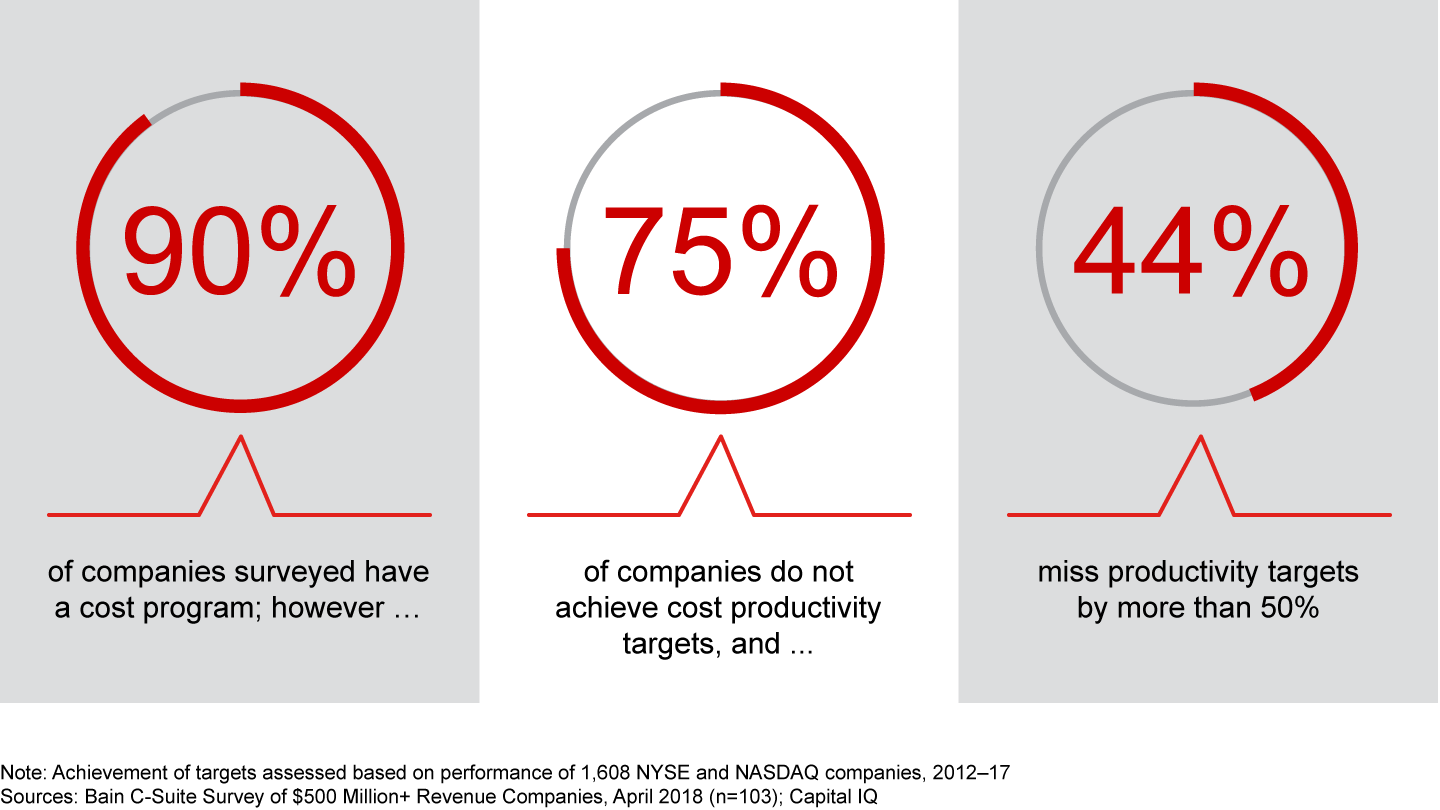
Yet improving cost productivity year after year is not easy. In fact, while some 90% of companies Bain surveyed recently have a cost program, 75% do not achieve their targets. And 44% miss targets by more than 50% (see Figure 4).
Figure 4

Five cost principles for growth
The elite group of cost champions think boldly about transformative efforts, as well as broadly about initiatives for continuous improvement. Specifically, they excel in implementing five principles.
Know when to go best in cost rather than best in class. Surprisingly, many companies have a hard time articulating exactly how they create value or how their cost structure aligns with their strategy, which makes it impossible to know which operation or function merits the next dollar of internal investment. They don’t get specific enough, and default to trying to achieve best-in-class capabilities everywhere. As a result, they are not able to achieve real cost transformation. Alternatively, they cut costs indiscriminately and to the bone, stalling growth.
Cost productivity champions take a different tack. They decide where they need to be best in class and where they can be “good enough” and low-cost. They are explicit about which activities should be performed and how—all informed by the chosen strategy and the ways the company creates value.
Bain Partner Hernan Saenz discusses why cost productivity matters.
Off-price apparel chain Ross, for instance, pursues a strategy focused on maintaining a significant cost advantage, in order to offer the lowest prices and attract value-conscious consumers. Ross achieves low-cost positions by taking advantage of dynamics in the purchasing cycle for apparel, as well as by continuously looking for productivity across supply chain and store operations. Ross designs stores for a self-service format rather than best-in-class service, but customers shopping for bargains don’t mind the reduced service. Now Ross is opening stores and growing sales at a time when many retailers are doing neither.
Make cost productivity a high priority and set explicit short- and long-term targets. The leaders take pains to shape a cost strategy and investment posture for their specific industry and market context. Their senior executive teams hold fast to the strategy, with explicit cost targets, programs and new incentives to put that commitment into practice.
Biotech firm Thermo Fisher Scientific follows a “Practical Process Improvement” system that empowers employees to continuously improve quality, productivity and the customer experience. Employee-led initiatives, for example, have dramatically reduced solvent use and paper waste. In 2016, the latest period available, the company saved $195 million through these projects.
Cost leaders optimize current operations in parallel with anticipating how economic models and ways of working will change in the future. A plan to automate a process in, say, three to five years should include early steps to simplify and improve the process, otherwise one ends up automating a broken one. And productivity leaders tend to have a backlog of projects with short-term and longer-term paybacks.
Construction products manufacturer Masco has achieved consistent positive cost productivity by focusing on both short-term initiatives and a long-term vision. Masco has annual cost reduction targets for corporate expenses and labor, while it also invests in multiyear technology systems and pursues regular acquisitions to reap efficiencies down the road.
Calibrate the sequence and mix of cost-containment techniques. Executives have a wide range of cost-reduction tools at their disposal, but piling on one tool after another rarely works. It is more effective to sequence and balance the use of tools so that they generate a substantial impact yet don’t tax the organization’s capacity to deliver results.
Much of the arsenal includes traditional, common-sense tools such as logistics network optimization and reducing organizational spans and layers. Add to them more innovative capabilities such as supply chain reinvention, complexity reduction and zero-based budgeting, and you can change the game.
Zero-based budgeting, for instance, takes a “blank sheet of paper” approach to resource planning, examining all cost centers for each new period, not just incremental expenditures in obvious areas. This approach requires managers to scrutinize all spending, including which activities should be performed at what levels and frequency, and examine how they could be better performed—potentially through streamlining, outsourcing or automation.
Smart executives carefully choose which tools to deploy and how to sequence them so that they remain within the team’s bandwidth and skills to install, learn and adopt new ways of working. Sometimes it is appropriate to start small. If a company wants to apply zero-based budgeting yet has severe resource limitations, it could start with a subset of the expenses, rather than with all of them.
One healthcare company that committed to a cost transformation plan over three years had its senior executive team dedicate 10%–20% of their time across more than 10 initiatives, a number of which focused on cost. The initiatives included quick hits in the areas of procurement and outsourcing, as well as more foundational changes such as consolidating the manufacturing network. Executives also changed the organization to break down silos and create a global business services function, and implemented mechanisms to spur continuous improvement. The program delivered roughly 15% in savings and now the company is implementing zero-based budgeting.
Unleash the front line. When classic cost programs fail to deliver their full potential, the disappointing results often stem from the fact that the changes were not owned by the front line. Highly centralized efforts rarely capture the many ideas for improvement that frontline employees have, and often fail to consider employee knowledge and buy-in that are vital to the well-being of the business.
Any organization will resist cutting costs if headquarters dictates the cuts. It is more effective to convince the business unit staff of the need to reduce costs, then agree with headquarters on a cost target and have the front line make the associated decisions and trade-offs.
One logical opening for the line-led approach occurs after a company already has made the easy or obvious moves, and now needs to capture benefits from a long list of smaller initiatives. These initiatives often emerge from the front line, because only a local manager will know of opportunities like obsolete inventory that can be sold to raise cash.
A line-led program also makes sense when execution of the transformation is inherently unpredictable. The pace of testing and learning may be so fast that initiative owners have to make decisions with incomplete data. In these circumstances, missteps and mistakes are inevitable, which means that employees will need to make course corrections quickly. That is best done by local leadership. Otherwise, adjustments get delayed by bureaucratic approval processes.
Multiply options and impact with digital tools. Digital technologies give companies new ways to move faster and deeper with both step-change and continuous improvements. In the finance function, for instance, FedEx automates tax, payroll, credit card reconciliations, treasury and other finance processes with robotic process automation (RPA) in the global shared services organization. Fossil Group uses RPA to automate the monthly financial close process.
In the area of training, companies such as Honeywell are using augmented reality (AR) tools. At Honeywell, the goal is to sharply reduce the time it takes to bring new employees up to speed. AR has also helped Honeywell reduce maintenance costs on offshore platforms by up to 50% by reducing the number of workers who need to be flown to the platform.
Digital tools also open a path to future economic models. A manufacturer, for instance, can take new technologies, such as embedded smart devices or 3-D printing, and reimagine how they might change or upend the current business or economic model. It can then start preparing for the most likely scenario.
Questions to design the program
As executives weigh how to drive cost productivity, some practical questions can help leadership teams get started:
- How does our resource allocation, and the resulting costs, support our strategy?
- Have we linked our current cost productivity efforts to growth and improvements in customer experience? Do these efforts deliver benefits consistently each year?
- Does our cost structure compare favorably with that of our competitors? Are we gaining or losing ground?
- Are we bold enough in employing game-changing tools such as zero-based budgeting or supply chain reinvention?
- Are we harnessing the power of our front line to spur continuous improvement?
- How should we take advantage of digital innovations to reset our cost structure? Could a competitor do this before us?
- Is our cost structure agile enough to respond quickly to a recession?
Cost productivity is a perpetual challenge. While the current champions have worked hard to achieve their leading positions, attaining the next wave of improvements will hinge on further innovations in how they tackle cost. And, for all companies, the next recession will stress the seams of their operating model. Preparing now, along the principles discussed here, raises the odds of weathering the recession and emerging in a stronger competitive position on the other side.
Greg Gerstenhaber is a partner with Bain & Company’s Performance Improvement practice, and Hernan Saenz is the global leader of the practice. They are based in Dallas. The authors thank Pedro Caruso for his contribution to this brief.
First published in 1월 2019