Skip to Content
  • 오피스

    오피스

    미주
    • Atlanta
    • Austin
    • Bogota
    • Boston
    • Buenos Aires
    • Chicago
    • Dallas
    • Denver
    • Houston
    • Los Angeles
    • Mexico City
    • Minneapolis
    • Monterrey
    • Montreal
    • New York
    • Rio de Janeiro
    • San Francisco
    • Santiago
    • São Paulo
    • Seattle
    • Silicon Valley
    • Toronto
    • Washington, DC
    유럽, 중동, 아프리카
    • Amsterdam
    • Athens
    • Berlin
    • Brussels
    • Copenhagen
    • Doha
    • Dubai
    • Dusseldorf
    • Frankfurt
    • Helsinki
    • Istanbul
    • Johannesburg
    • Kyiv
    • Lisbon
    • London
    • Madrid
    • Milan
    • Munich
    • Oslo
    • Paris
    • Riyadh
    • Rome
    • Stockholm
    • Vienna
    • Warsaw
    • Zurich
    아시아, 호주
    • Bangkok
    • Beijing
    • Bengaluru
    • Brisbane
    • Ho Chi Minh City
    • Hong Kong
    • Jakarta
    • Kuala Lumpur
    • Manila
    • Melbourne
    • Mumbai
    • New Delhi
    • Perth
    • Seoul
    • Shanghai
    • Singapore
    • Sydney
    • Tokyo
    오피스 전체보기
  • 얼럼나이
  • 미디어 센터
  • 구독
  • 연락처
  • Korea | 한국어

    지역 및 언어 선택

    글로벌
    • Global (English)
    미주
    • Brazil (Português)
    • Argentina (Español)
    • Canada (Français)
    • Chile (Español)
    • Colombia (Español)
    유럽, 중동, 아프리카
    • France (Français)
    • DACH Region (Deutsch)
    • Italy (Italiano)
    • Spain (Español)
    • Greece (Elliniká)
    아시아, 호주
    • China (中文版)
    • Korea (한국어)
    • Japan (日本語)
  • Saved items (0)
    Saved items (0)

    You have no saved items.

    관심 있는 내용을 북마크하여 Red 폴더에 저장할 수 있습니다. Red 폴더 에서 저장된 내용을 읽거나 공유해보세요.

    Explore Bain Insights
  • 산업
    메인 메뉴

    산업

    • 우주항공, 방산 및 정부 서비스
    • 농업 관련 산업
    • 화학
    • 인프라, 건설 및 건축 자재
    • 소비재
    • 금융 서비스
    • 헬스케어
    • 산업용 기계 및 장비
    • 미디어 및 엔터테인먼트
    • 금속
    • 광업
    • 석유 및 가스
    • 제지 및 패키징 산업
    • 사모펀드
    • 사회 및 공공 부문
    • 유통
    • 기술
    • 텔레콤
    • 운송
    • 여행·여가
    • 유틸리티 및 재생가능 에너지
  • 컨설팅 서비스
    메인 메뉴

    컨설팅 서비스

    • Customer Experience
    • ESG
    • Innovation
    • M&A
    • 운영
    • 조직
    • 사모펀드
    • 고객 전략 및 마케팅
    • 전략
    • AI, 인사이트 및 솔루션
    • Technology
    • 변화 혁신
  • Digital
  • 인사이트
  • 베인 소개
    메인 메뉴

    베인 소개

    • 업무 소개
    • 베인의 신념
    • 구성원 및 리더십 소개
    • 고객 성과
    • 주요 수상 경력
    • 글로벌 파트너사
    Further: Our global responsibility
    • 다양성과 포용
    • 사회 공헌 활동
    • Sustainability
    • World Economic Forum
    Learn more about Further
  • Careers
    메인 메뉴

    Careers

    • Work with Us
      Careers
      Work with Us
      • Find Your Place
      • Our Work Areas
      • Integrated Teams
      • Students
      • Internships & Programs
      • Recruiting Events
    • Life at Bain
      Careers
      Life at Bain
      • Blog: Inside Bain
      • Career Stories
      • Our People
      • Where We Work
      • Supporting Your Growth
      • Affinity Groups
      • Benefits
    • Impact Stories
    • Hiring Process
      Careers
      Hiring Process
      • What to Expect
      • Interviewing
    FIND JOBS
  • 오피스
    메인 메뉴

    오피스

    • 미주
      오피스
      미주
      • Atlanta
      • Austin
      • Bogota
      • Boston
      • Buenos Aires
      • Chicago
      • Dallas
      • Denver
      • Houston
      • Los Angeles
      • Mexico City
      • Minneapolis
      • Monterrey
      • Montreal
      • New York
      • Rio de Janeiro
      • San Francisco
      • Santiago
      • São Paulo
      • Seattle
      • Silicon Valley
      • Toronto
      • Washington, DC
    • 유럽, 중동, 아프리카
      오피스
      유럽, 중동, 아프리카
      • Amsterdam
      • Athens
      • Berlin
      • Brussels
      • Copenhagen
      • Doha
      • Dubai
      • Dusseldorf
      • Frankfurt
      • Helsinki
      • Istanbul
      • Johannesburg
      • Kyiv
      • Lisbon
      • London
      • Madrid
      • Milan
      • Munich
      • Oslo
      • Paris
      • Riyadh
      • Rome
      • Stockholm
      • Vienna
      • Warsaw
      • Zurich
    • 아시아, 호주
      오피스
      아시아, 호주
      • Bangkok
      • Beijing
      • Bengaluru
      • Brisbane
      • Ho Chi Minh City
      • Hong Kong
      • Jakarta
      • Kuala Lumpur
      • Manila
      • Melbourne
      • Mumbai
      • New Delhi
      • Perth
      • Seoul
      • Shanghai
      • Singapore
      • Sydney
      • Tokyo
    오피스 전체보기
  • 얼럼나이
  • 미디어 센터
  • 구독
  • 연락처
  • Korea | 한국어
    메인 메뉴

    지역 및 언어 선택

    • 글로벌
      지역 및 언어 선택
      글로벌
      • Global (English)
    • 미주
      지역 및 언어 선택
      미주
      • Brazil (Português)
      • Argentina (Español)
      • Canada (Français)
      • Chile (Español)
      • Colombia (Español)
    • 유럽, 중동, 아프리카
      지역 및 언어 선택
      유럽, 중동, 아프리카
      • France (Français)
      • DACH Region (Deutsch)
      • Italy (Italiano)
      • Spain (Español)
      • Greece (Elliniká)
    • 아시아, 호주
      지역 및 언어 선택
      아시아, 호주
      • China (中文版)
      • Korea (한국어)
      • Japan (日本語)
  • Saved items  (0)
    메인 메뉴
    Saved items (0)

    You have no saved items.

    관심 있는 내용을 북마크하여 Red 폴더에 저장할 수 있습니다. Red 폴더 에서 저장된 내용을 읽거나 공유해보세요.

    Explore Bain Insights
  • 산업
    • 산업

      • 우주항공, 방산 및 정부 서비스
      • 농업 관련 산업
      • 화학
      • 인프라, 건설 및 건축 자재
      • 소비재
      • 금융 서비스
      • 헬스케어
      • 산업용 기계 및 장비
      • 미디어 및 엔터테인먼트
      • 금속
      • 광업
      • 석유 및 가스
      • 제지 및 패키징 산업
      • 사모펀드
      • 사회 및 공공 부문
      • 유통
      • 기술
      • 텔레콤
      • 운송
      • 여행·여가
      • 유틸리티 및 재생가능 에너지
  • 컨설팅 서비스
    • 컨설팅 서비스

      • Customer Experience
      • ESG
      • Innovation
      • M&A
      • 운영
      • 조직
      • 사모펀드
      • 고객 전략 및 마케팅
      • 전략
      • AI, 인사이트 및 솔루션
      • Technology
      • 변화 혁신
  • Digital
  • 인사이트
  • 베인 소개
    • 베인 소개

      • 업무 소개
      • 베인의 신념
      • 구성원 및 리더십 소개
      • 고객 성과
      • 주요 수상 경력
      • 글로벌 파트너사
      Further: Our global responsibility
      • 다양성과 포용
      • 사회 공헌 활동
      • Sustainability
      • World Economic Forum
      Learn more about Further
  • Careers
    최근 검색어
      최근 방문 페이지

      Content added to saved items

      Saved items (0)

      Removed from saved items

      Saved items (0)

      Brief

      Carbon Offsets and Credits in the GCC

      Carbon Offsets and Credits in the GCC

      Voluntary carbon offset markets offer opportunities for success.

      글 Othmane Boujemaoui, Raja Atoui, Henning Huenteler, and Dale Hardcastle

      • 읽기 소요시간
      }

      Brief

      Carbon Offsets and Credits in the GCC
      en

      The proverbial alarm bell on swift action to reduce greenhouse gas emissions has long been sounding. While many hear its clang, clear and actionable direction on achieving net zero emissions can be complex, as it requires a combination of mature and early-stage solutions. Commitment to energy efficiency and renewable energy were, at one time, the standard in sustainability initiatives. But these actions alone are no longer sufficient to achieve climate ambitions aligned with the Paris Agreement.

      Success will require stakeholders to go beyond current efforts. In addition to the development and scale-up of new technologies (such as carbon capture and clean hydrogen use cases), access to mitigation projects outside their own value chain will be critical. Implementing a policy of carbon offsets (the reduction of emissions to make up for unavoidable emissions elsewhere) and carbon credits (permits that allow for a certain amount of emissions that can be traded if not used) enables the development of carbon removal levers (e.g., nature-based solutions [NBS] and technology development) (see Figure 1).

      Figure 1
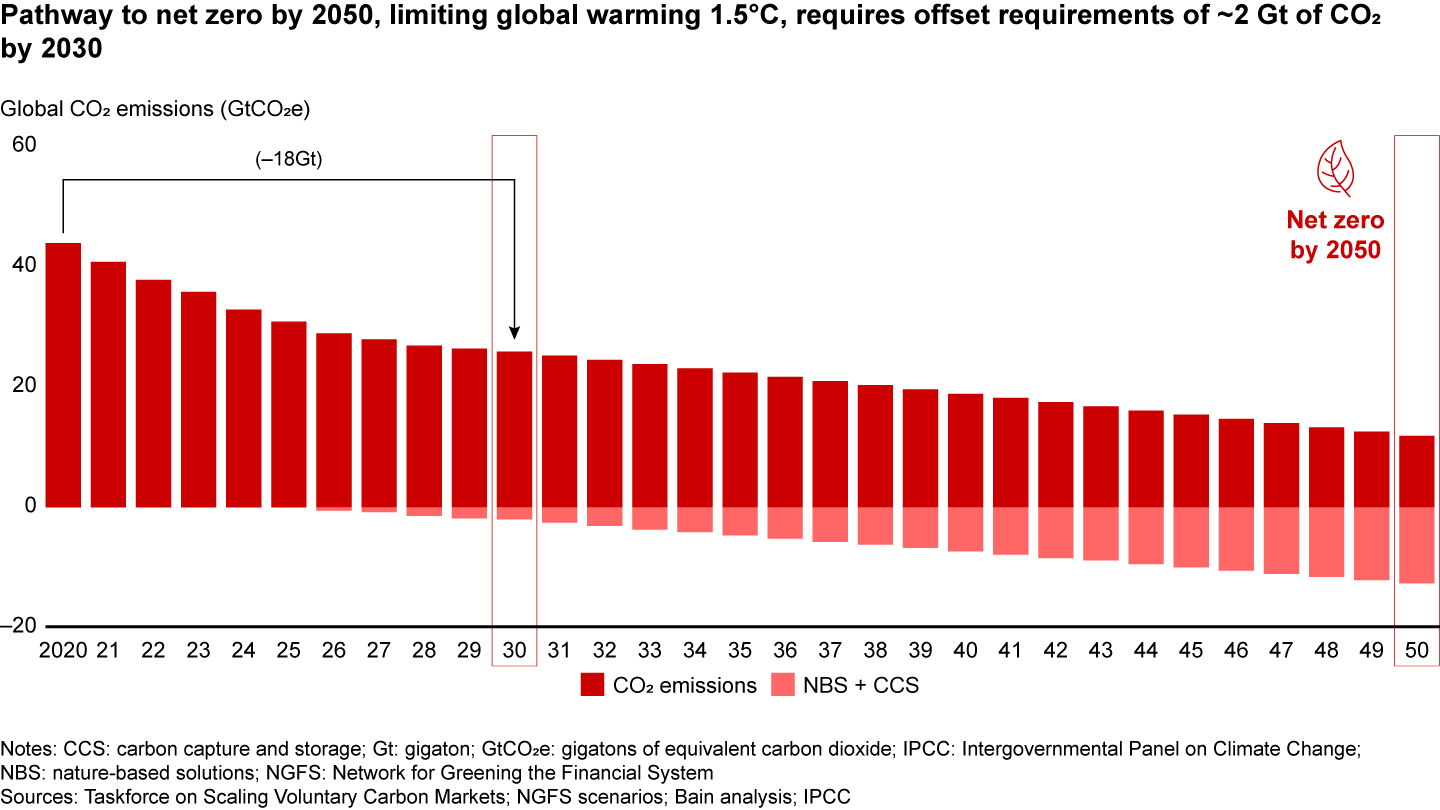
      Getting to net zero will require carbon offset strategies and efforts to reduce emissions

      Leading economies in the Gulf Cooperation Council (GCC) like the Kingdom of Saudi Arabia (KSA), United Arab Emirates (UAE), and Oman have announced ambitions to reach net zero emissions by 2060 (KSA) and 2050 (UAE and Oman), with decarbonization strategies that rely on a mix of well-established levers (renewable energy, energy efficiency) and forward-looking carbon abatement solutions (hydrogen, carbon capture, and NBS). During the past year they also revised their 2030 nationally determined contributions (NDCs), national climate commitments submitted to the UN under the Paris Agreement, and announced that they will use a wide array of decarbonization levers to meet them (see Figure 2).

      Figure 2
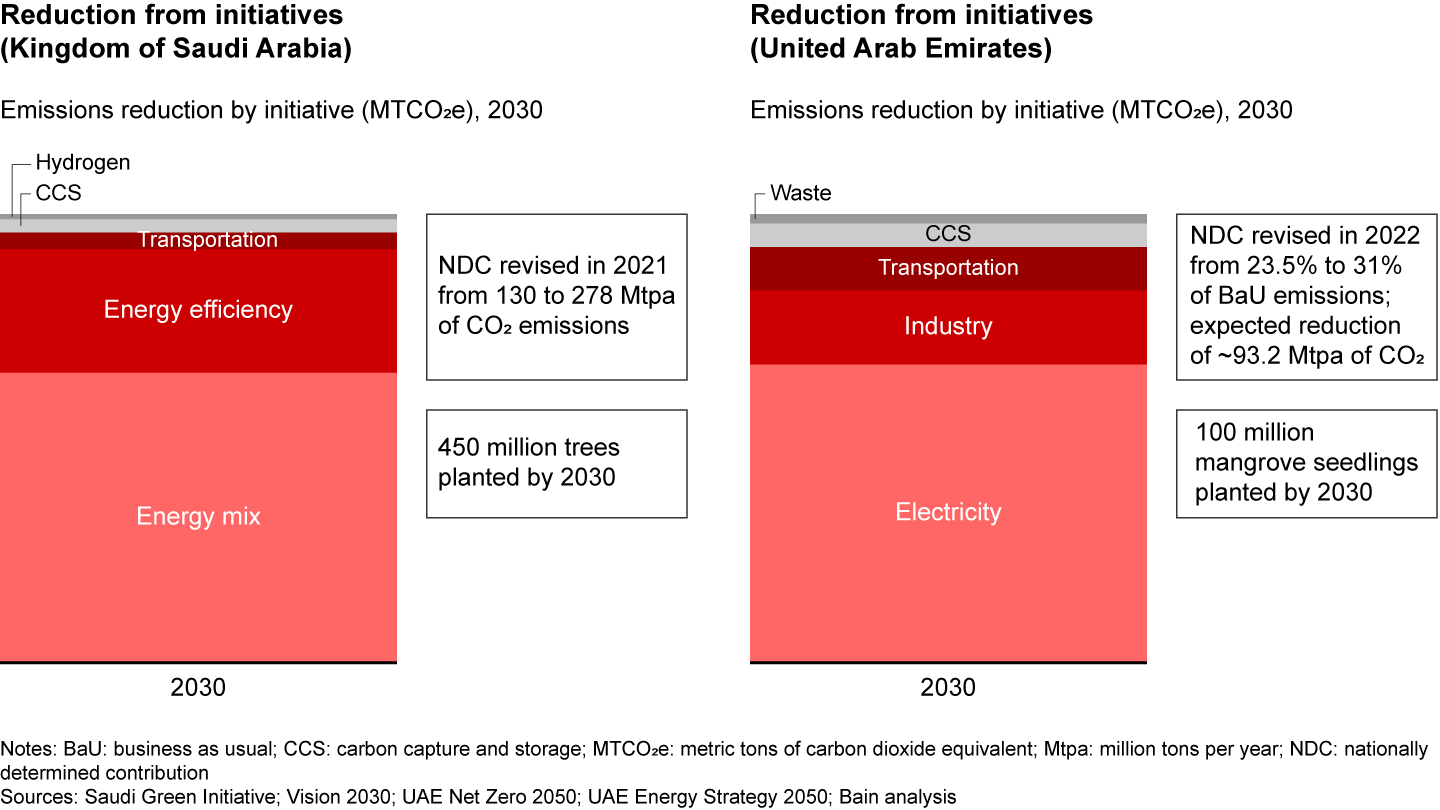
      The Kingdom of Saudi Arabia and United Arab Emirates revised their nationally determined contributions with clear initiatives to achieve them

      The value in voluntary carbon offset markets

      A voluntary carbon market, which connects the supply of carbon credits with demand from investors and organizations wanting to reduce their carbon footprint, is experiencing rapid growth around the world. While we have seen several initiative examples in the region, such as establishing exchanges, the practice is still in its infancy in the GCC and there is limited demand and supply compared to other regions (see Figure 3 and Figure 4).

      Figure 3
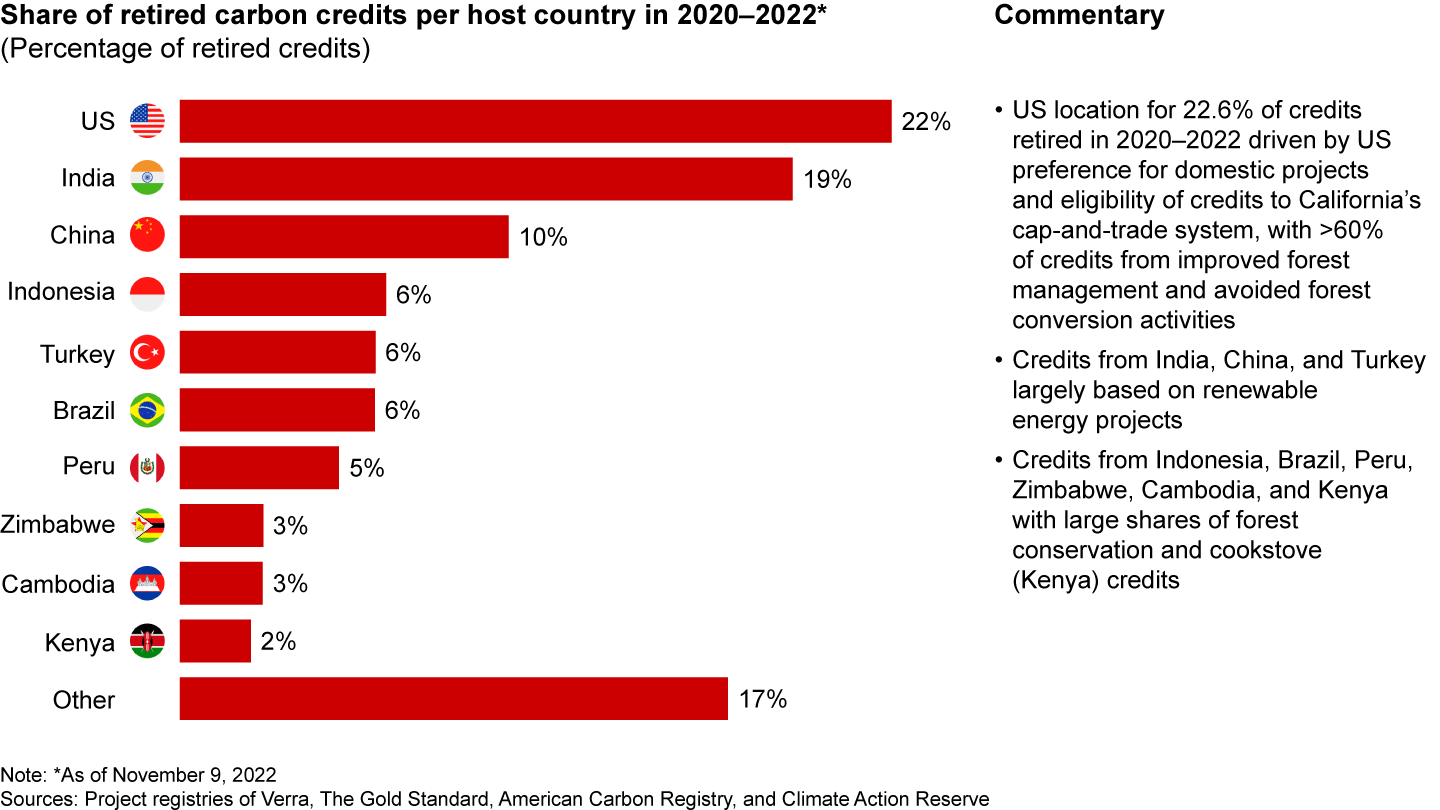
      The voluntary carbon market is growing rapidly worldwide, with the US, India, and China the most popular locations for offset buyers
      Figure 4
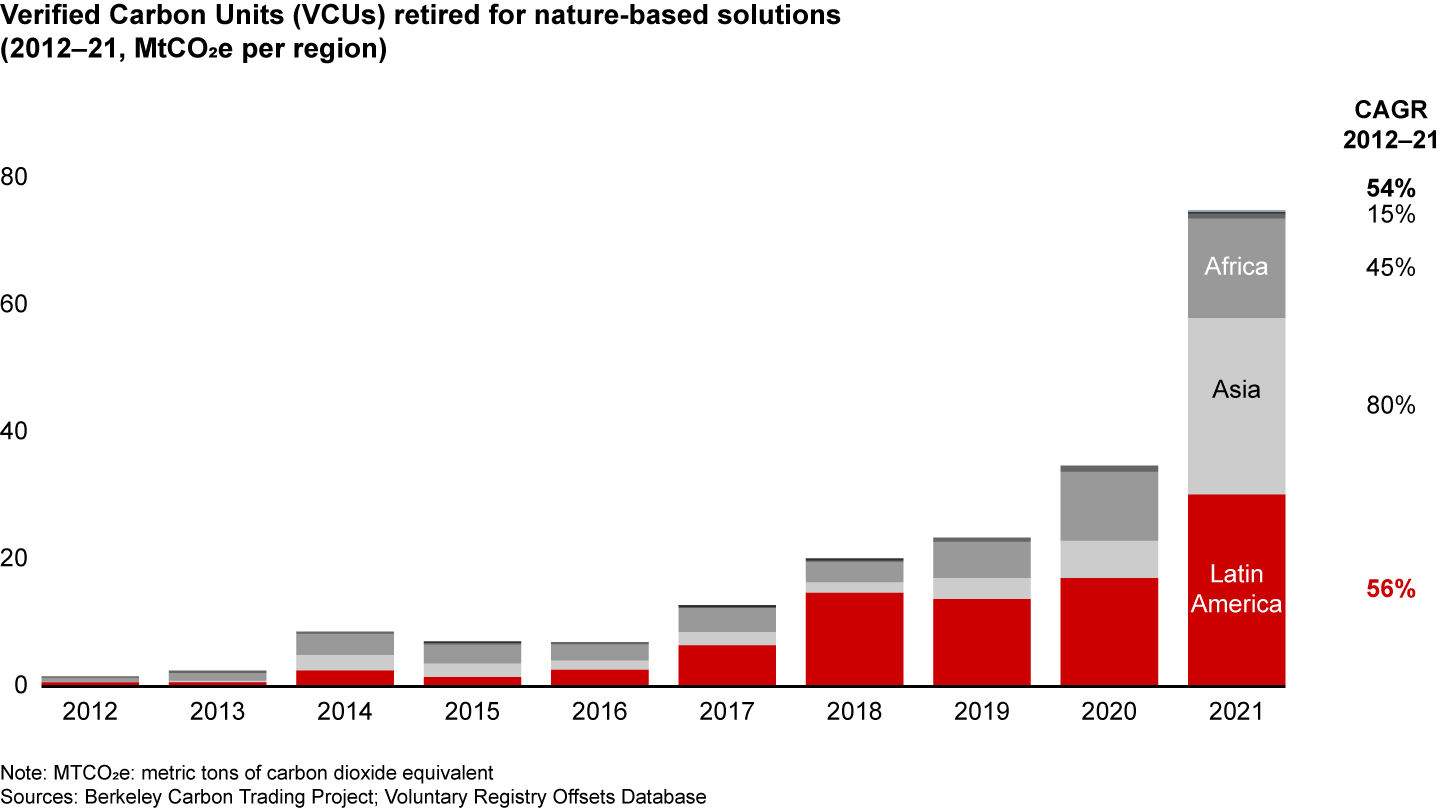
      Latin America is the leading location where projects are developed, followed by Asia and Africa

      The GCC has already taken a few steps in the right direction to tailor the regional voluntary carbon market to regional needs and specificities while complying with upcoming international trade agreements:

      • Exchanges: In KSA, the Public Investment Fund (PIF) and Saudi Stock Exchange, Tadāwul, announced a joint plan to establish a voluntary carbon exchange in Riyadh by 2023 for the trading of verified, approved, and high-quality carbon credit certificates. In UAE, Abu Dhabi Global Market (ADGM) announced the formation of a voluntary carbon credit trading exchange and clearinghouse. Also in UAE, Mubadala Investment Company acquired a strategic stake in AirCarbon Exchange (ACX).
      • Market activation: In October 2022, PIF and Tadāwul established a voluntary carbon market entity in charge of sourcing and auctioning high-quality carbon offsets. In conjunction with the Financial Investment Initiative held in Riyadh, they auctioned more than 1 million carbon offsets that complied with Carbon Offsetting and Reduction Scheme for International Aviation (CORSIA) regulations and were Verra certified (see Figure 5).
      • Issuance scheme: KSA launched a domestic carbon credit scheme at the start of 2023 that will issue credits compliant with Article 6 of the Paris Agreement.
      • Financing: KSA-based investment fund APICORP issued a $75 million funding facility for voluntary carbon offset projects.
      • Industrials: Large emitters are starting to be active in this space, with stakeholders in energy, aviation, mining, and utilities signing memorandums of understanding (MoUs) for carbon credit offtakes.
      Figure 5
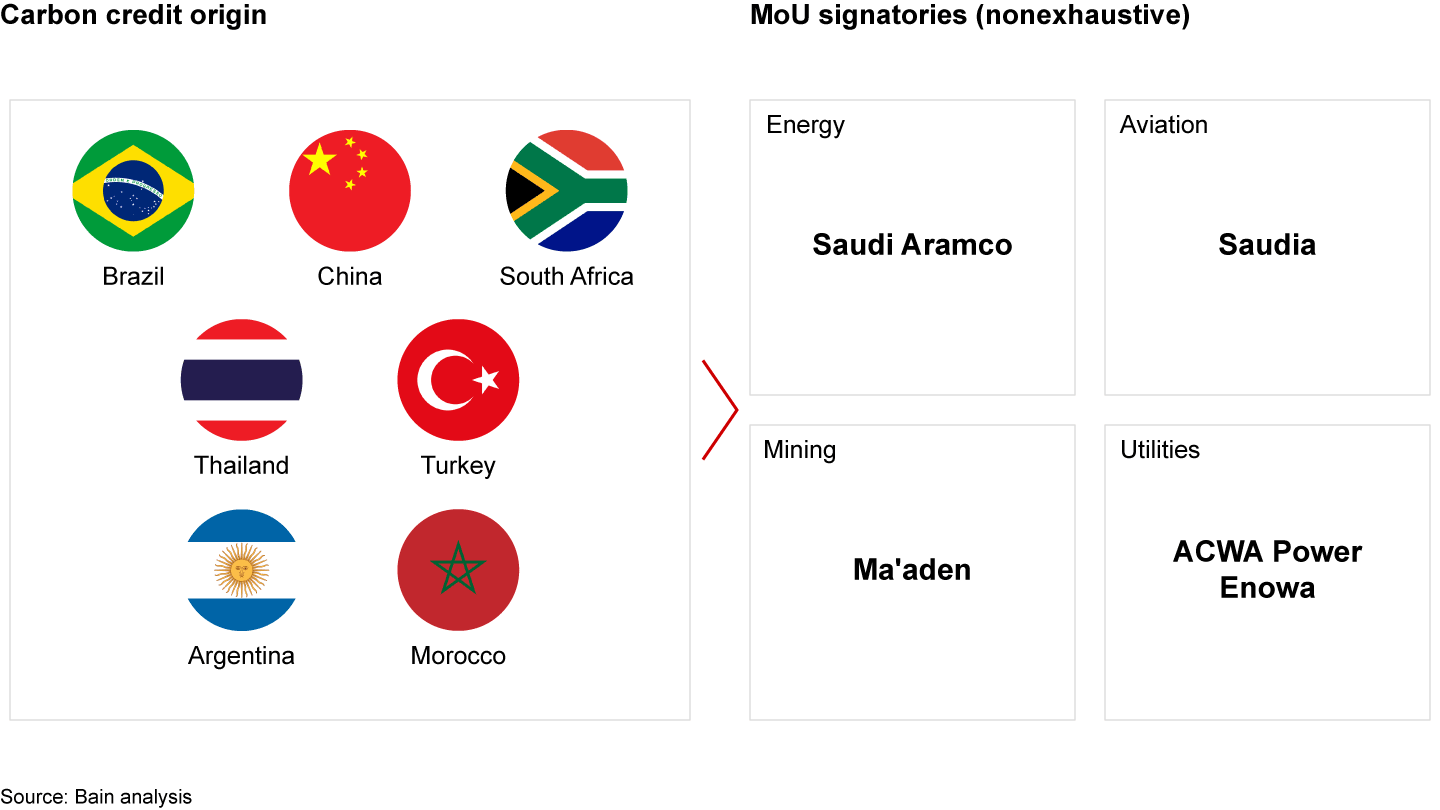
      PIF and Tadāwul auctioned more than 1 million CORSIA-compliant and Verra-certified carbon offsets

      Way forward

      It is imperative for governments to establish the infrastructure for the voluntary carbon market and clarify carbon ownership. This will be a critical prerequisite for GCC countries to ensure alignment between private sector efforts and their NDCs. In addition, there is currently a lack of clarity on how to issue certificates for select carbon abatement technologies, such as carbon capture, utilization and storage (CCUS). Providing clear certification guidelines will enable investors to make guided decisions (see Figure 6).

      Figure 6
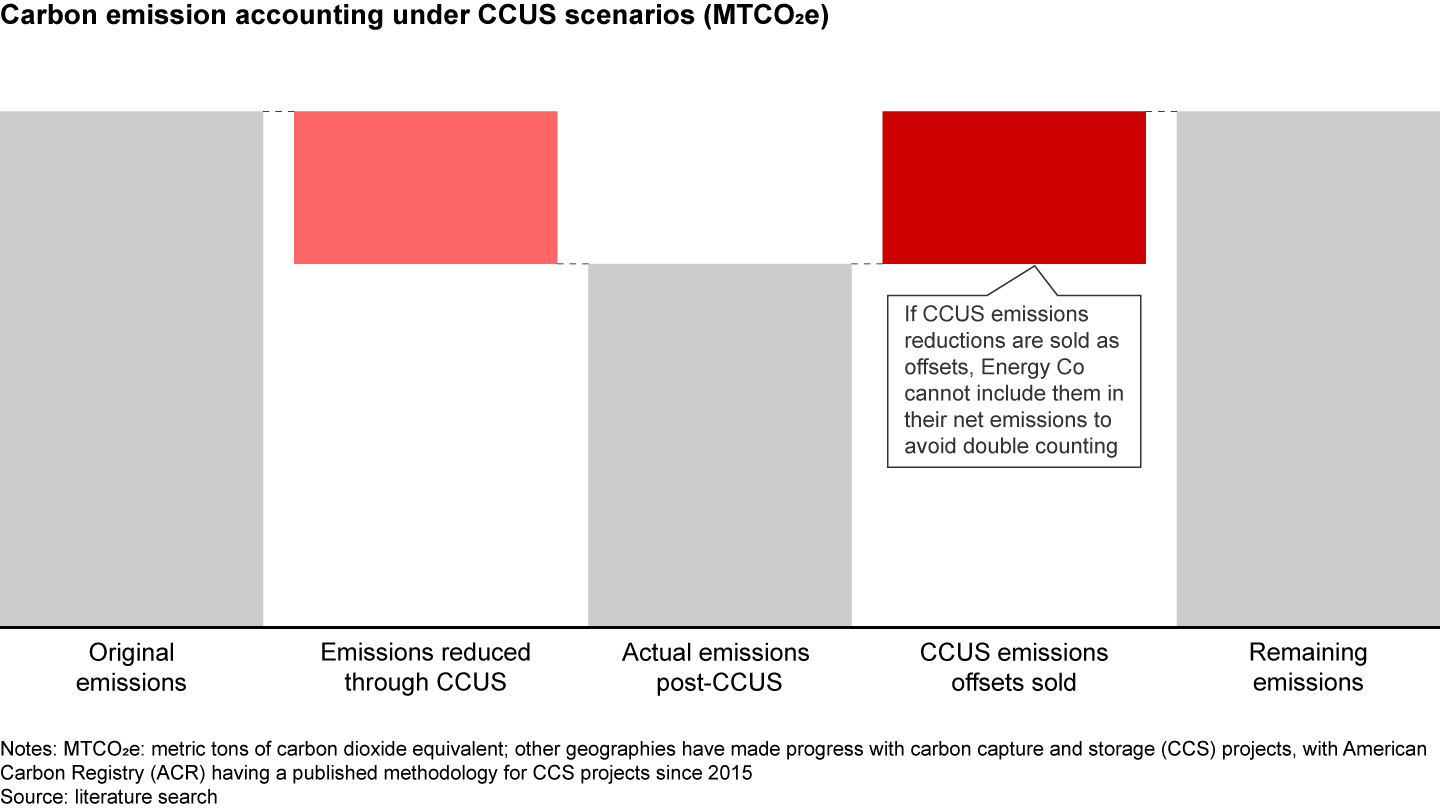
      Carbon abatement technologies—such as carbon capture, utilization, and storage—offer several potential means to leverage carbon offsets

      Lessons from a popular carbon offsetting project in the Philippines show that establishing a new regulatory structure, including a national projects registry, can help set up a market structure that attracts investors by playing on two dimensions:

      • Policy certainty: Demonstration of steady progress in providing clear policy direction for all market participants.
      • Openness to foreign trade: The Philippines intends to participate in the international carbon markets and designed its legislation in line with the Paris Agreement’s Article 6 requirements.

      Action levers for stakeholders

      Voluntary carbon credits provide a possible pathway from private investment sources to climate-action projects that would not otherwise receive funding.

      Financiers: Financial institutions are instrumental in building scale in voluntary carbon markets. They can accelerate the transition to net zero by seizing opportunities from the carbon credit market. Unfortunately, there is currently a financing shortfall for high-quality carbon removal solutions. To lift the market off the ground, financial institutions and asset managers should develop the financial instruments necessary to structure the carbon market, including project financing, exchanges, direct investments, and advising.

      Hard-to abate-industries: There are currently few cost-efficient emission reduction solutions for energy-intensive sectors. These industries need to invest in research and development (R&D) to develop low-carbon technologies whose deployment and rollout will take time. In the intermediate state, voluntary carbon markets provide a solution for corporations to accelerate decarbonization beyond value chain mitigation. Participation in the voluntary carbon market is, therefore, inevitable for those operating in industries that are “hard to abate,” are governed by emission regulations, or have announced net zero operational ambitions.

      Hard-to-abate industries, such as utilities, aviation, and heavy industrials, face a dilemma. Despite several net zero announcements by GCC companies (e.g., Saudi Aramco) or industry alliances with GCC members (e.g., the International Air Transport Association [IATA], of which major GCC airlines are members), there are currently few cost-efficient emission reduction solutions. But participation in the voluntary carbon market will play a major role in accelerating progress on decarbonization efforts.

      Leading regional industrial players will ultimately be driven to operate in the voluntary carbon market. Even if the carbon market currently lacks maturity and transparency, it is the right time to start building internal capabilities. This includes developing the optimal operating model and strategic recruitment strategies to minimize the risk of misallocated capital.

      Global companies in various sectors, investment banks, and commodity trading professionals are reporting success with operating model archetypes varying from over-the-counter (OTC) trading to proprietary project development.

      Looking ahead

      More than ever, organizations are in the position of looking beyond their ambitions and commitments to carbon offsets. As global policy becomes more prominent and complex,  stakeholders can take these steps to be better positioned:

      • Government entities: Provide clarity on the overall legal infrastructure around voluntary carbon markets, carbon rights, and credit additionality
      • Industrials: Ramp up internal capabilities to ensure readiness to play in voluntary carbon markets as a mitigation after investing in decarbonization and R&D for low-carbon technologies
      • Financial sector: Develop financial infrastructure to help fund projects where carbon credits are critical to reach economic feasibility 
      저자
      • Headshot of Othmane Boujemaoui
        Othmane Boujemaoui
        파트너, Dubai
      • Headshot of Raja Atoui
        Raja Atoui
        파트너, Middle East
      • Headshot of Henning Huenteler
        Henning Huenteler
        파트너, Amsterdam
      • Headshot of Dale Hardcastle
        Dale Hardcastle
        파트너, Singapore
      문의하기
      관련 산업
      • 산업재 및 서비스
      • 에너지와 천연자원
      관련 컨설팅 서비스
      • 지속 가능성 및 기업의 사회적 책임
      에너지와 천연자원
      Climate Week NYC 2025: Sustainability Integrates into the Core

      Leaders shift from pledges to practical solutions, revealing how energy, finance, manufacturing, and food systems are turning sustainability into strategy.

      자세히 보기
      지속 가능성 및 기업의 사회적 책임
      How AI Is Starting to Transform Circular Packaging

      There are 15 AI use cases companies across the value chain can use today to accelerate circularity.

      자세히 보기
      에너지와 천연자원
      Embracing the “Do-Say” Gap

      Three pragmatic questions that shift sustainability from ambition to action.

      자세히 보기
      지속 가능성 및 기업의 사회적 책임
      Exploring AI for Packaging Circularity

      AI is already creating value across the packaging lifecycle, from optimising design and reducing material use to improving sorting and traceability.

      자세히 보기
      에너지와 천연자원
      How Sustainability Is Creating B2B Growth

      Our survey of B2B buyers and sellers finds growth leaders using sustainability to create commercial value while laggards focus on compliance.

      자세히 보기
      First published in 1월 2023
      태그
      • 산업재 및 서비스
      • 에너지와 천연자원
      • 지속 가능성 및 기업의 사회적 책임

      프로젝트 사례

      전략 A roadmap for portfolio growth

      See more related case studies

      운영 New sourcing plan lowers costs

      See more related case studies

      성과 개선 Constructing a best-in-class global procurement organization

      See more related case studies

      베인에 궁금하신 점이 있으신가요?

      베인은 주저 없이 변화를 마주할 줄 아는 용감한 리더들과 함께합니다. 그리고, 이들의 담대한 용기는 고객사의 성공으로 이어집니다.

      급변하는 비즈니스 환경에서 살아남기 위한 선도자의 시각. 월간 Bain Insights에서 글로벌 비즈니스의 핵심 이슈를 확인하십시오.

      *개인정보 정책을 읽었으며 그 내용에 동의합니다.

      Privacy Policy를 읽고 동의해주십시오.
      Bain & Company
      문의하기 환경정책 Accessibility 이용약관 개인정보 보호 쿠키 사용 정책 Sitemap Log In

      © 1996-2026 Bain & Company, Inc.

      문의하기

      무엇을 도와드릴까요?

      • 프로젝트 문의
      • 채용 정보
      • 언론
      • 제휴 문의
      • 연사 초청
      오피스 전체보기