

Brief

한눈에 보기
- Just as companies were getting up to speed with their sustainability efforts, Covid-19 suddenly threatened their very survival. Can they maintain their sustainability initiatives as they deal with existential challenges?
- While Covid-19 creates some short-term headwinds for sustainability, it has also generated strong tailwinds. In some ways, it is a dress rehearsal for dealing with climate change.
- For executives, the crisis underscores the importance of building the capabilities and resilience to deal with low-probability scenarios.
Even as companies struggle to maintain their footing in a Covid-19 world, the pandemic is helping executives glimpse the sustainability revolution in their future.
Telework and virtual meetings are showing companies that they can reduce travel, with satellite images revealing the dramatic decline in air pollution. Companies are seeing the benefits of going the extra mile for employees, customers and suppliers—whether it’s Starbucks offering employees catastrophe pay and rolling out expanded mental health coverage, or Unilever providing early payment for its most vulnerable suppliers. And as they collaborate with governments to police false and misleading Covid-19 information on their platforms, tech companies may see the potential power of fighting misinformation about climate change.

Macro Surveillance Platform
For more detail on the business implications of coronavirus from Bain’s Macro Trends Group, log on to the Macro Surveillance Platform. Learn more about the platform >
In some ways, the Covid-19 crisis has become a dry run for the sustainability agenda and an opportunity for companies to see how they can tackle an expanding range of environmental, social and governance (ESG) challenges. The risk of a pandemic was known, and yet the crisis has exposed a lack of adaptability and resilience at many companies. After this, boards and executives will not be forgiven for underpreparing for various climate change scenarios. The pandemic has not only raised the stakes for sustainability but also shed light on moves that fly in the face of corporate responsibility—a company urging employees to work in offices despite official government guidelines, for example, or a CEO receiving a substantial raise as millions lose their jobs.
The crisis is making sustainability harder in the short term . . .
The coronavirus crisis has unleashed headwinds that threaten to limit the corporate response to the sustainability imperative. Many companies now find themselves in a difficult cash position, deeming anything not critical for survival as unnecessary. As companies struggle with decisions affecting their day-to-day existence, ESG matters may seem like slow-burning issues they can deal with tomorrow.
Across society, the pandemic could trigger a reversal of sustainability trends. In the US, the Environmental Protection Agency has temporarily relaxed pollution enforcement to allow companies to focus on survival—with no end date set. Some consumers and retailers are rejecting reusable grocery bags as unsanitary, and many cities and states are reversing recent bans on plastic bags. Stores are readopting throwaway plastic containers or plastic wrapping on fruit and vegetables.
Corporations are not simply watching these developments; in some cases, they are accelerating them. In the US, a plastics industry group asked for a halt to state-level plastic bag bans, and a petroleum lobbying group pushed for the relaxation of greenhouse gas emission enforcement.
Unpredictable and rapid changes in demand inhibit advance planning, limiting companies’ ability to respond sustainably. Lower oil prices could make the business case for sustainability moves—from renewables to bioplastics—look less compelling. For some businesses, however, the turbulence caused by recent Saudi and Russian actions may speed the shift to alternative fuels.
. . . but opening many doors
Indeed, for each headwind threatening sustainability, there are several corresponding tailwinds, many of which will be longer lasting. For example, consumers favor companies and brands with purposes that benefit the broader community. Consider that US sales of products marketed as sustainable grew 5.6 times faster than other products from 2013 to 2018, according to the NYU Stern School for Sustainable Business. By revamping production to meet the demand for hand sanitizer during the crisis, companies like Bacardi and Anheuser-Busch InBev have demonstrated their social commitment and purpose.
The pandemic is showing companies the options for flexibility in paid sick leave and sponsored childcare, as well as work schedules and location. And while the crisis exposes weaknesses in existing operations, it opens the door for companies to shorten supply chains and make them more transparent, socially conscious and environmentally friendly.
As people around the world focus on washing their hands and maintaining physical distance, they become more attuned to their own health and wellness. At the same time, Covid-19 has made companies more aware of the need to promote health and wellness among employees and consumers—for instance, by developing immunity-boosting foods or providing telemedicine services and biometric monitoring, markets that undoubtedly will grow during the crisis and beyond.
Meanwhile, the pandemic has swiftly redefined companies’ relationships with governments and other stakeholders, showing what is possible by inspiring collaboration and coordinated global action. Some governments are quickly acting to ensure a greener comeback. The European Council, made up of the heads of state of EU member countries, has stressed that its fiscal response to the Covid-19 pandemic will not mean abandoning its Green Deal for Europe principles. In the US, New York State passed legislation that accelerates the siting and construction of clean energy facilities to combat climate change and spur economic recovery from the crisis.
Companies have also seen that the crisis will not mean an end to investor pressure on sustainability issues, with the US Securities and Exchange Commission rejecting requests from several firms to block or delay shareholder motions on climate. Stocks of companies with strong ESG credentials have proven a safer haven in this period of market disruption. In fact, the coronavirus pandemic could elevate ESG factors as investors voice more concerns about employee benefits, supply-chain management and other ESG priorities. ESG investing was already poised for growth. A group of 300 mutual funds that consider ESG factors when making investment decisions saw inflows of $21.4 billion in 2019, vs. $5.4 billion a year earlier, according to Morningstar. Now, such funds’ relatively lower losses vs. the market overall may accelerate that trend.
A time to lean in
On balance, executives tell us that they will use Covid-19 as an opportunity to lean in on sustainability, as the pandemic has highlighted the importance of critical ESG factors. If the past is any indication, sustainability will remain a top priority even as companies focus on survival.
During the global recession of 2008–09, many predicted that companies would deprioritize sustainability as a nonessential component of their business. That didn’t turn out to be the case. In March 2009, the National Association of Insurance Commissioners announced a requirement that US insurers with annual premiums over $500 million disclose climate change risks and their policies for reducing this risk. Meanwhile, the UN Environment Programme Finance Initiative has encouraged some 200 financial institutions to sign onto a set of voluntary principles committing them to integrate environmental considerations into their business models, including “identifying and quantifying environmental risk.” If, as some experts propose, degraded habitats are a partial cause of Covid-19, a likely outcome will be intensified global focus on environmental reparation.
In many ways, the current pandemic serves as a dress rehearsal for the longer-lasting and irreversible impacts of the climate crisis, underscoring the urgency of climate change action. It has shown that anticipating a risk is not enough. Although the pandemic risk was known, many companies still found themselves woefully unprepared for the disruption it has brought. For example, call centers were considered resilient if they were spread across geographies; now we know that they are only resilient if they can remain active when everyone has to work from home.
Similarly, predicting the exact environmental scenario that will play out is not the task at hand. Rather, it is to ensure that your company is adaptable to known scenarios and resilient to unexpected scenarios as they emerge. While the circumstances and implications of Covid-19 are devastating, they illustrate how quickly behavior and actions can change when push comes to shove.
Many companies will use this opportunity to act responsibly and proactively to help their many stakeholders. A group of four CEOs and the founder of the World Economic Forum have issued a call to action, outlining six stakeholder principles for life after Covid-19 and urging the 140 members of WEF’s International Business Community group to sign on. JLL, a leader in real estate services, has confirmed social and corporate responsibility as one of its top priorities. Companies as diverse as BP, Finnair, Barclays and Samsonite have committed to continue their push for carbon-neutral operations, despite the pandemic.
How to keep sustainability alive while coping with disaster? From the beginning, management teams need to plan for continuity and have clear post-Covid objectives, complementing “act now” programs with corresponding “plan now” initiatives (see Figure 1).
Figure 1
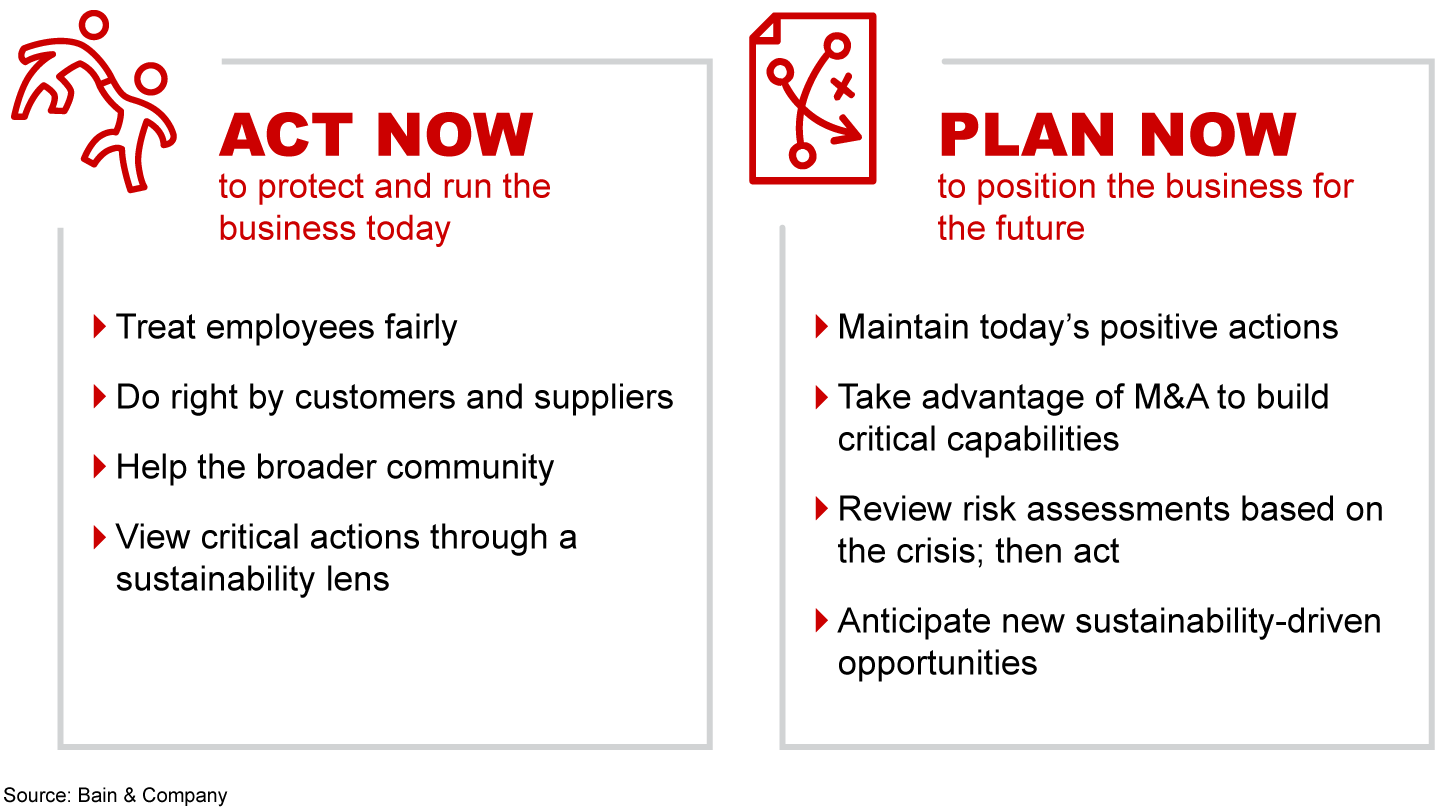

Act now
CEOs can make several moves right now to help mitigate the effects of the outbreak on sustainability and come through stronger on the other side.
Treat employees fairly. The Covid-19 crisis is a time to focus on your most important asset: people. Enhance safety protocols to protect team members, enable remote work where possible, and increase paid sick and family leave. Seek alternatives to layoffs (e.g., cutting everyone to 50% rather than laying off 50% of staff). If layoffs or hours reductions are inevitable, connect staff with resources and support. Cut executive salaries and bonuses when employees face cuts.
Retailer Target has temporarily increased worker wages by $2 an hour, offered paid leave for any team member at increased risk of contracting the virus and contributed to a fund to support affected employees. Multinational energy company Enel created an insurance policy for its global workforce of more than 68,000 to protect them in the event they fall sick with the virus.
Do right by customers and suppliers. Modify standard refund, return and other policies to mitigate the impact on customers. Protect vulnerable suppliers with payment term changes, and offer credit to good customers to help them stay in business. Unilever, for example, has pledged €500 million to support its supply chain through such moves as extending credit to select small-scale retail customers that rely on the company.
Help the broader community. Redirect facilities to crisis-critical activities, such as medical supply production or community support. Consider donating extra supplies on hand that communities and response teams desperately need. Contribute to philanthropic causes responding to the crisis. Among the companies that are lending a hand, Baidu created a layer in its map application to show confirmed and suspected cases of Covid-19. Dyson quickly designed a new ventilator that can be used in field hospital conditions.
View critical actions through a sustainability lens. When you embark on cost initiatives and other newly critical actions, use sustainability as a priority criterion. This could mean doubling down on energy efficiency measures that reduce both emissions and costs. The Great Recession accelerated coal plant closures, and the pandemic is likely to spur the same action.
Just before the crisis, one beauty company redesigned packaging to cut costs and eliminate emissions—saving more than 10% of procurement spending across categories, and 20,000 trees within an individual product subcategory—all while enhancing consumer appreciation of the product. Such measures can save money today and position the company for success tomorrow.
Plan now
In addition to short-term actions, companies need to plan now for medium-term moves that will set the stage for a sustainable future. As they prepare for the post-Covid world, they should focus on four areas.
Maintain today’s positive actions. Studies have found that initiatives introduced in a moment of change are more likely to stick later. Companies can decide which crisis-response actions would support a more sustainable future. Tech companies might bring the skills they’ve developed in combatting virus misinformation to the challenge of climate change denial and misleading political information. All companies can reevaluate if so much air travel is necessary for operations. Further, with employees rallying to deliver critical goods such as food and healthcare items, and rediscovering the value of their roles as they do, it’s also a time for companies to reignite the corporate mission.
Take advantage of M&A to build critical capabilities. Companies that have a strong balance sheet recognize the importance of emerging stronger from a downturn. When pursuing growth through M&A, look for sustainable start-ups and technologies. In the 2008–09 crisis, smart buildings technology company GridPoint strengthened its position by acquiring V2Green, Lixar and ADMMicro. Amid the economic uncertainty unleashed by Covid-19, Finland’s Neste, a leading manufacturer of renewable diesel, continues to acquire and partner with companies to develop scalable, sustainable feedstocks and technologies for renewable and circular solutions.
Review risk assessments based on the crisis; then act. Companies must get ready now for a range of scenarios to come. Use learnings from the current crisis to identify the biggest risks from sustainability-related disruptions. What if the carbon price goes to $150 per ton? What if that plastics legislation comes in faster than anticipated? What if consumers shift away from meat more quickly than expected?
That assessment may unlock sustainability investments or actions previously considered unattractive. Indeed, Covid-19 has shown that low-probability events do happen. What sustainability-related risks are you exposed to in areas such as public health and safety? How resilient are you to climate change? As reporting recommended by the Task Force on Climate-related Financial Disclosures becomes mainstream, now is the time to review your climate change risk exposure.
Anticipate new sustainability-driven opportunities. Seize on sustainability tailwinds brought about by the crisis, and embed that into your strategy. BlackRock, for instance, has committed to raising environmental standards for proxy votes to back company directors’ reelection. Those focused on closing the plastics loop may find an input source in postcrisis plastic waste (used masks, gowns, gloves), helping to push chemical recycling to affordable scale more quickly. As you address changes to your supply chain to make it more resilient in the future, consider how the same changes could improve sustainability. For example, traceability also helps enable sustainable sourcing and ensure responsible labor practices.
In addition, shifting to near-shore or onshore production and shorter supply chains will reduce emissions. Manufacturing pollution levels will drop as new sites are designed to comply with environmental policies, leveraging new technologies to be more efficient. As they make these moves, some businesses will be able to take advantage of stimulus money tied to environmental efforts.
Also consider how sustainability opportunities apply to products. After shedding many products during lockdown, consumers will be choosy about the items they bring back into their lives, considering whether they are good for them and for the world.
The pandemic that has upended millions of lives and businesses does not need to slow the pursuit of sustainability. To the contrary, it highlights the importance of taking care of each other and the planet—which, ultimately, is good for business.
Companies that commit to sustainability during the crisis will come out stronger, with more solid customer and supplier relationships, enhanced corporate reputations, and improved employee loyalty and productivity. Those that do not will face serious reputational ramifications that could—even more than the virus itself—threaten their survival.

Coronavirus
The global Covid-19 pandemic has extracted a terrible human toll and spurred sweeping changes in the world economy. Across industries, executives have begun reassessing their strategies and repositioning their companies to thrive now and in the world beyond coronavirus.
Jenny Davis-Peccoud and Jean-Charles van den Branden are Bain partners and coleaders of the firm’s Sustainability & Corporate Responsibility practice. They are based in Amsterdam and Brussels, respectively.
The authors would like to thank Clare Tovey for her contribution to this work.
First published in 4월 2020