

Brief

한눈에 보기
- Aerospace and defense engineers spend about half their time on active engineering work, of which 30% or more is spent on rework and more than 40% on lower value tasks.
- Increasing the engineering team’s efficiency can free up work capacity, reduce costs, and ignite growth.
- To achieve this, leading companies are focusing on the right scope of work, implementing new practices and tools to improve productivity, and allocating work to the right resources.
At their core, aerospace and defense (A&D) companies are engineering companies. And yet, despite engineering having one of the biggest labor budgets of any A&D function, many companies have historically treated it like a black box. Over time, this has led to a decline in engineering productivity and efficiency at many A&D businesses.
Industry executives are well aware of this issue. What’s surprising to many of them, however, is how acute the problem has become. Based on our analysis of leading A&D businesses, engineers spend about half their time on active engineering work. Furthermore, of that time, 30% or more is spent on rework and more than 40% is spent on self-reported lower value tasks (see Figure 1).
Figure 1
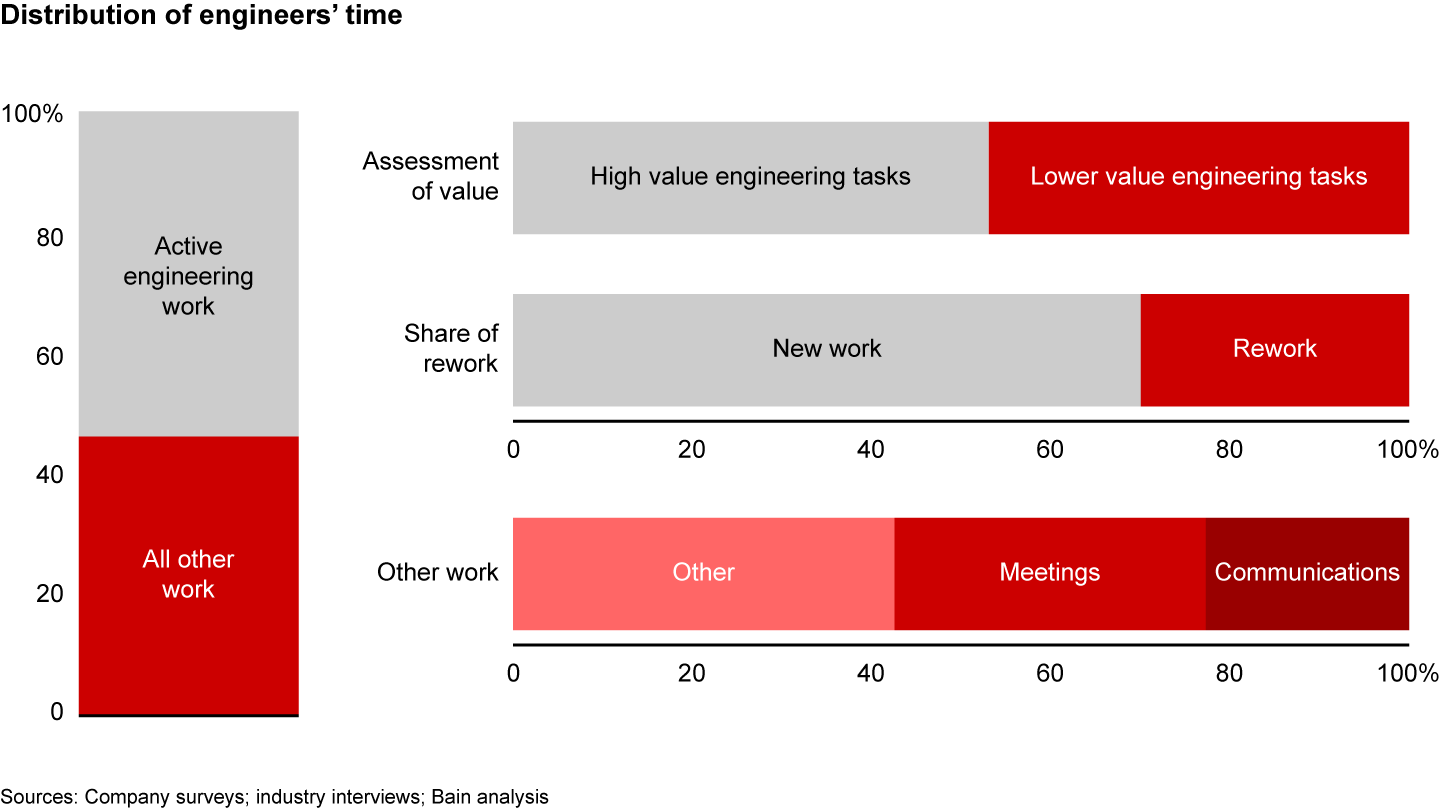

While other support functions at A&D companies have been revamped (some several times) in recent years, engineering has been left relatively untouched. This has led to a number of issues beyond engineers spending less time on design work that adds value. Frequently, mature legacy programs maintain excessively high staffing levels, while newer programs with greater growth potential are left short-staffed.
Our analysis has also found that hiring practices at many A&D companies remain stagnant. New sources of engineering talent, including candidates who have technical expertise but lack an engineering degree, often get overlooked. While technology companies, for example, have combed the globe for talent, A&D companies tend to have a smaller number of large engineering centers, often in high-cost locations. This approach made sense when product data was kept in physical formats and all engineering work needed to be done close to the product being designed or built, but that’s no longer the case.
Unfortunately for A&D companies, the timing of these mounting inefficiencies couldn’t be worse. The engineering team’s capacity has never been more crucial to A&D companies’ operations and competitiveness, but it has become increasingly scarce and expensive.
A&D leaders are grappling with an intensifying competition for talent. With an aging engineering workforce and low employee job satisfaction, especially among junior engineers, A&D companies are losing much of their best talent to either retirement or moves to other industries, particularly technology. The gap in employee satisfaction scores between large A&D and tech companies is one indicator of this growing issue. A&D employees say they are less satisfied than tech employees overall, as well as in specific areas such as career opportunities, culture and values, and compensation and benefits (see Figure 2).
Figure 2
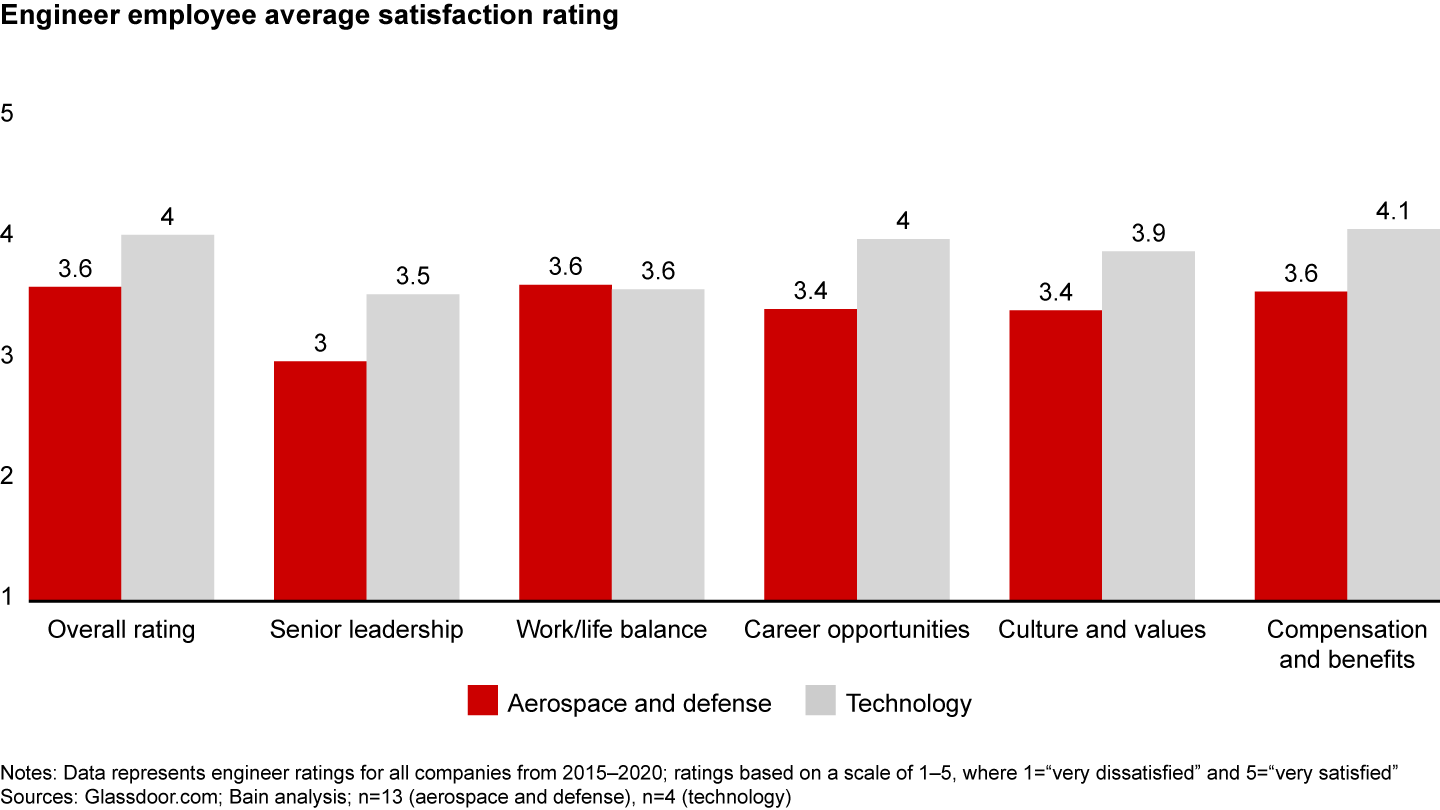

At the same time, A&D products have never been more complex, and customers are demanding that they be faster to field, updated more frequently, and more environmentally friendly. Facing growing budget pressure, government customers are demanding more cost certainty and placing greater emphasis on the total cost of ownership. This has resulted in fewer new programs and difficulty extending funding on high-cost legacy programs. Now, inflation is turning up the pressure on A&D companies to find ways to control costs as the prices of fuel, materials, and labor rise rapidly.
On top of all that, product changes and shifts in ways of working have placed additional demands on engineering teams. The digitization of designs has completely transformed how engineers work. In addition, Agile development has moved beyond software and is now the clear choice for all product engineering at most A&D companies. This has massive implications for legacy processes and demands a new mindset for many engineering leaders. Lastly, as with many industries, the Covid-19 pandemic has forced engineering teams to learn how to work and collaborate virtually.
A&D executives recognize that engineering inefficiencies are exacerbating these challenges and that boosting efficiency will be critical to outflanking competitors, especially as the talent crunch makes it more difficult to bolster engineering capacity through outside hiring. Increasing engineering efficiency can reduce costs and free up vital capacity that can be used to accelerate R&D or accomplish work that would have otherwise required additional personnel. Efficiency gains frequently have indirect benefits as well: reducing performance issues, production delays, and employee attrition; helping extend customer contracts; and enabling the company to submit more bids. In short, there’s an opportunity not only to reduce waste and costs, but to ignite growth using existing resources.
But many executives aren’t sure where to start. In our work with A&D companies worldwide, we’ve found that focusing on three areas can improve engineering efficiency by at least 10–15%.
Focus on the right scope of work
Simply put, engineers should be focused on activities with the highest return on investment. This may sound obvious, but it’s easy for companies to fall into bad habits and never step back to assess the big engineering picture. Leading companies recalibrate the scope of their engineering work and are more intentional about what engineers take on, eliminating unnecessary tasks or projects that don’t fit with the company’s strategy or capabilities.
What does this recalibration look like? It could involve make-vs.-buy decisions, e.g., outsourcing the development of nonstrategic or commodity assets or activities. It could mean more communication with customers to help them understand the cost and timing implications of new requests or requirements. It may require rethinking company R&D priorities to achieve a better balance of near-, medium-, and long-term investments.
One A&D company used to approve most elective changes to product designs without considering whether they had a strong business rationale. This kept products in a constant state of flux—a headache for the engineering and manufacturing teams. The company decided to redesign the change request process to include a stage gate that required an analysis of each suggested change’s projected return on investment and effect across the entire value stream. Within months of adding this protocol, elective product changes decreased by 60%. The increased product stability helped reduce manufacturing costs, and engineers were quickly redeployed to development projects with higher growth potential.
Implement new productivity practices and tools
In addition to refocusing engineering on the right tasks and projects, the most successful leadership teams figure out ways to help engineers do their work as efficiently and effectively as possible. This means giving them the tools, support, product ownership responsibilities, and trust in their leadership to allow engineers to focus on core design work instead of data hunts, endless reporting requirements, status meetings, or busywork.
Leading companies equip engineers with guides that collect company-standard designs and best practices to ensure engineers aren’t wasting time on problems the company has already solved. Computer-aided design tools can make this happen seamlessly by automatically factoring in the company’s design guides and information from the procurement team about standard parts and their costs. Other useful tactics include creating truly cross-functional product teams; instituting talent rotations that embed engineers within the manufacturing team and suppliers to expose engineers to those stakeholders’ problems and create stronger links with them; and mandating the use of key performance indicators that measure the feasibility of producing and manufacturing each product design. These tactics can increase engineers’ awareness of the full value stream and significantly reduce rework on designs, which will usually translate to significant cost savings and efficiency gains. Lastly, Agile development methodologies and lean principles keep engineers focused on the most important topics, make their work (and critical interdependencies) more visible, and avoid time spent on unnecessary reports or meetings.
For example, when one A&D company reviewed its engineering workflows, it discovered that engineers were spending nearly two days a week in meetings. In response, the company created a simple training program and flow charts that provided guidance on when it makes sense to hold a meeting, and it adopted Agile methodologies to increase the efficiency of the team’s workflows. These measures significantly reduced engineers’ meeting burden and helped increase capacity by 20%.
Allocate work to the right resources
Many A&D companies are overlooking a lever they can pull that would simultaneously boost efficiency and improve their engineering cost structure: allocating work to the right resources.
Even as legacy workforces move closer to retirement, some work at A&D companies is still done by highly skilled and specialized talent when a more junior engineer is more than qualified to handle it. Moreover, global engineering talent is strong, but many A&D companies aren’t making the most of it.
Creating more cost-effective engineering centers of excellence requires planning, identification of standard work packages, and some increased training costs, but it can be more than worth the investment in the long run. As part of a companywide cost transformation, one A&D company identified engineering cost savings of more than 25% by shifting some work to lower cost talent, implementing lean development principles, and better aligning R&D spending and the size of engineering program teams with customer demand and market realities.
Of course, successful execution across these three areas requires having the right talent, the right tools, and an operating model that supports the strategy. It will be difficult to achieve lasting improvement without the right support infrastructure, effective change management, and sponsorship from the highest levels. Management teams at the leading A&D companies are already working hard to ensure, at their core, that they are productive and efficient engineering companies.
First published in 3월 2022