
Skip to Content
  • 오피스

    오피스

    미주
    • Atlanta
    • Austin
    • Bogota
    • Boston
    • Buenos Aires
    • Chicago
    • Dallas
    • Denver
    • Houston
    • Los Angeles
    • Mexico City
    • Minneapolis
    • Monterrey
    • Montreal
    • New York
    • Rio de Janeiro
    • San Francisco
    • Santiago
    • São Paulo
    • Seattle
    • Silicon Valley
    • Toronto
    • Washington, DC
    유럽, 중동, 아프리카
    • Amsterdam
    • Athens
    • Berlin
    • Brussels
    • Copenhagen
    • Doha
    • Dubai
    • Dusseldorf
    • Frankfurt
    • Helsinki
    • Istanbul
    • Johannesburg
    • Kyiv
    • Lisbon
    • London
    • Madrid
    • Milan
    • Munich
    • Oslo
    • Paris
    • Riyadh
    • Rome
    • Stockholm
    • Vienna
    • Warsaw
    • Zurich
    아시아, 호주
    • Bangkok
    • Beijing
    • Bengaluru
    • Brisbane
    • Ho Chi Minh City
    • Hong Kong
    • Jakarta
    • Kuala Lumpur
    • Manila
    • Melbourne
    • Mumbai
    • New Delhi
    • Perth
    • Seoul
    • Shanghai
    • Singapore
    • Sydney
    • Tokyo
    오피스 전체보기
  • 얼럼나이
  • 미디어 센터
  • 구독
  • 연락처
  • Korea | 한국어

    지역 및 언어 선택

    글로벌
    • Global (English)
    미주
    • Brazil (Português)
    • Argentina (Español)
    • Canada (Français)
    • Chile (Español)
    • Colombia (Español)
    유럽, 중동, 아프리카
    • France (Français)
    • DACH Region (Deutsch)
    • Italy (Italiano)
    • Spain (Español)
    • Greece (Elliniká)
    아시아, 호주
    • China (中文版)
    • Korea (한국어)
    • Japan (日本語)
  • Saved items (0)
    Saved items (0)

    You have no saved items.

    관심 있는 내용을 북마크하여 Red 폴더에 저장할 수 있습니다. Red 폴더 에서 저장된 내용을 읽거나 공유해보세요.

    Explore Bain Insights
  • 산업
    메인 메뉴

    산업

    • 우주항공, 방산 및 정부 서비스
    • 농업 관련 산업
    • 화학
    • 인프라, 건설 및 건축 자재
    • 소비재
    • 금융 서비스
    • 헬스케어
    • 산업용 기계 및 장비
    • 미디어 및 엔터테인먼트
    • 금속
    • 광업
    • 석유 및 가스
    • 제지 및 패키징 산업
    • 사모펀드
    • 사회 및 공공 부문
    • 유통
    • 기술
    • 텔레콤
    • 운송
    • 여행·여가
    • 유틸리티 및 재생가능 에너지
  • 컨설팅 서비스
    메인 메뉴

    컨설팅 서비스

    • Customer Experience
    • ESG
    • Innovation
    • M&A
    • 운영
    • 조직
    • 사모펀드
    • 고객 전략 및 마케팅
    • 전략
    • AI, 인사이트 및 솔루션
    • Technology
    • 변화 혁신
  • Digital
  • 인사이트
  • 베인 소개
    메인 메뉴

    베인 소개

    • 업무 소개
    • 베인의 신념
    • 구성원 및 리더십 소개
    • 고객 성과
    • 주요 수상 경력
    • 글로벌 파트너사
    Further: Our global responsibility
    • 다양성과 포용
    • 사회 공헌 활동
    • Sustainability
    • World Economic Forum
    Learn more about Further
  • Careers
    메인 메뉴

    Careers

    • Work with Us
      Careers
      Work with Us
      • Find Your Place
      • Our Work Areas
      • Integrated Teams
      • Students
      • Internships & Programs
      • Recruiting Events
    • Life at Bain
      Careers
      Life at Bain
      • Blog: Inside Bain
      • Career Stories
      • Our People
      • Where We Work
      • Supporting Your Growth
      • Affinity Groups
      • Benefits
    • Impact Stories
    • Hiring Process
      Careers
      Hiring Process
      • What to Expect
      • Interviewing
    FIND JOBS
  • 오피스
    메인 메뉴

    오피스

    • 미주
      오피스
      미주
      • Atlanta
      • Austin
      • Bogota
      • Boston
      • Buenos Aires
      • Chicago
      • Dallas
      • Denver
      • Houston
      • Los Angeles
      • Mexico City
      • Minneapolis
      • Monterrey
      • Montreal
      • New York
      • Rio de Janeiro
      • San Francisco
      • Santiago
      • São Paulo
      • Seattle
      • Silicon Valley
      • Toronto
      • Washington, DC
    • 유럽, 중동, 아프리카
      오피스
      유럽, 중동, 아프리카
      • Amsterdam
      • Athens
      • Berlin
      • Brussels
      • Copenhagen
      • Doha
      • Dubai
      • Dusseldorf
      • Frankfurt
      • Helsinki
      • Istanbul
      • Johannesburg
      • Kyiv
      • Lisbon
      • London
      • Madrid
      • Milan
      • Munich
      • Oslo
      • Paris
      • Riyadh
      • Rome
      • Stockholm
      • Vienna
      • Warsaw
      • Zurich
    • 아시아, 호주
      오피스
      아시아, 호주
      • Bangkok
      • Beijing
      • Bengaluru
      • Brisbane
      • Ho Chi Minh City
      • Hong Kong
      • Jakarta
      • Kuala Lumpur
      • Manila
      • Melbourne
      • Mumbai
      • New Delhi
      • Perth
      • Seoul
      • Shanghai
      • Singapore
      • Sydney
      • Tokyo
    오피스 전체보기
  • 얼럼나이
  • 미디어 센터
  • 구독
  • 연락처
  • Korea | 한국어
    메인 메뉴

    지역 및 언어 선택

    • 글로벌
      지역 및 언어 선택
      글로벌
      • Global (English)
    • 미주
      지역 및 언어 선택
      미주
      • Brazil (Português)
      • Argentina (Español)
      • Canada (Français)
      • Chile (Español)
      • Colombia (Español)
    • 유럽, 중동, 아프리카
      지역 및 언어 선택
      유럽, 중동, 아프리카
      • France (Français)
      • DACH Region (Deutsch)
      • Italy (Italiano)
      • Spain (Español)
      • Greece (Elliniká)
    • 아시아, 호주
      지역 및 언어 선택
      아시아, 호주
      • China (中文版)
      • Korea (한국어)
      • Japan (日本語)
  • Saved items  (0)
    메인 메뉴
    Saved items (0)

    You have no saved items.

    관심 있는 내용을 북마크하여 Red 폴더에 저장할 수 있습니다. Red 폴더 에서 저장된 내용을 읽거나 공유해보세요.

    Explore Bain Insights
  • 산업
    • 산업

      • 우주항공, 방산 및 정부 서비스
      • 농업 관련 산업
      • 화학
      • 인프라, 건설 및 건축 자재
      • 소비재
      • 금융 서비스
      • 헬스케어
      • 산업용 기계 및 장비
      • 미디어 및 엔터테인먼트
      • 금속
      • 광업
      • 석유 및 가스
      • 제지 및 패키징 산업
      • 사모펀드
      • 사회 및 공공 부문
      • 유통
      • 기술
      • 텔레콤
      • 운송
      • 여행·여가
      • 유틸리티 및 재생가능 에너지
  • 컨설팅 서비스
    • 컨설팅 서비스

      • Customer Experience
      • ESG
      • Innovation
      • M&A
      • 운영
      • 조직
      • 사모펀드
      • 고객 전략 및 마케팅
      • 전략
      • AI, 인사이트 및 솔루션
      • Technology
      • 변화 혁신
  • Digital
  • 인사이트
  • 베인 소개
    • 베인 소개

      • 업무 소개
      • 베인의 신념
      • 구성원 및 리더십 소개
      • 고객 성과
      • 주요 수상 경력
      • 글로벌 파트너사
      Further: Our global responsibility
      • 다양성과 포용
      • 사회 공헌 활동
      • Sustainability
      • World Economic Forum
      Learn more about Further
  • Careers
    최근 검색어
      최근 방문 페이지

      Content added to saved items

      Saved items (0)

      Removed from saved items

      Saved items (0)

      Energy & Natural Resources Report

      Four Imperatives for Building Resilience in Energy and Natural Resources

      Four Imperatives for Building Resilience in Energy and Natural Resources

      The traditional focus on near-term risks leaves companies vulnerable to long-term challenges.

      글 David Knipe, Eric Beranger-Fenouillet, Aadarsh Baijal, Ethan Phillips, and Martha Eggenberger

      • 읽기 소요시간
      }

      Report

      Four Imperatives for Building Resilience in Energy and Natural Resources
      en
      At a Glance
      • Traditional approaches to resilience focus on near-term risks, exposing companies to the threats of long-term challenges.
      • These blind spots can leave executives overconfident about their companies’ resilience, when most have yet to be tested.
      • Leaders take a broad approach that includes strategic, operational, and supply chain resilience, in addition to managing the environmental risks to physical assets.

      This article is part of Bain’s Energy and Natural Resources Report 2023

      Explore the report

      We are living through one of the most volatile and uncertain periods the world has seen for some time. War continues into a second year in Ukraine while nations continue to recover from the Covid pandemic. At the same time, the effects of climate change are materializing stronger and more often than before, as the world inches toward net-zero carbon emissions.

      The need for resilience has never been more urgent for boards and executive teams, and resilience is likely to be one of the most critical strategic differentiators of a company’s success.

      But traditional corporate approaches to resilience don’t rise to today’s challenges. They focus too much on near-term risks, without fully recognizing the potential impacts up and down the value chain, well beyond individual company boundaries. They usually make very limited use of advanced predictive tools, which could help identify some of those risks. And they fail to connect risks to the organization’s long-term strategic goals and economic model.

      These narrow approaches can leave blind spots and create a false sense of security. Bain recently asked executives about their confidence in navigating five types of threats, spanning from the physical effects of climate change through to technological vulnerabilities, input shortages, and bottlenecks (see Figure 1). Confidence across the board appears surprisingly high, especially as many of these threats continue to escalate. 

      Figure 1
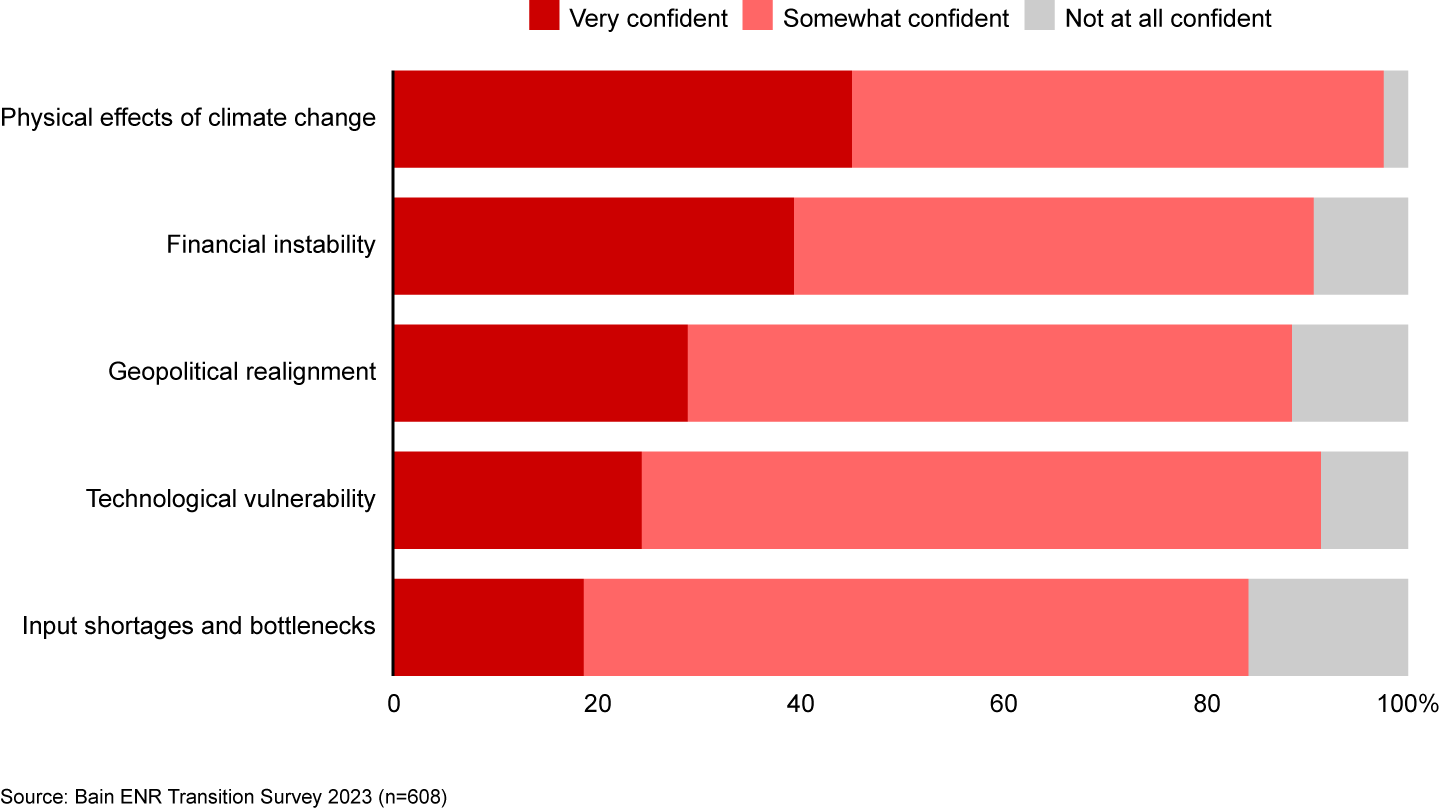
      Nearly all executives said they were very or somewhat confident in their ability to manage the physical effects of climate change

      These high numbers could reflect an overconfidence that’s not entirely justified by the limited investments most firms are making in resilience. People often fail to accurately assess the magnitude and likelihood of rare events, such as the physical effects of climate change, since most have not experienced them firsthand.

      Leading companies take a more comprehensive approach that includes strategic, operational, and supply chain resilience, in addition to managing the environmental risks to physical assets.

      Strategic resilience

      All strategy is formed amid some level of uncertainty, but the changes inherent in the energy transition multiply the difficulty. Uncertainty can handicap a firm in several ways. Overconfidence can lead to corporate myopia; under-confidence can leave firms in paralysis. Either scenario can stall action until it’s too late to prevent a bad outcome. 

      “Existing assets are vulnerable to the instabilities ultimately caused by climate change and shortage of resources.”

      Vice president, new energy company, Europe

      It’s rare that the losers in a transforming industry are really blindsided by change. More often, they fail to set a strategic direction that can adapt to shifting conditions. Leading firms start with a view of the future: What will customers need 30 years out? This approach can help companies set a long-term vision, free from the constraints of current practices and portfolios. Successful teams then plan for their long-term reference case, while continuously monitoring the environment and correcting course as necessary along the way.

      Even among companies that invest in long-term scenario planning, few consider the “corner scenarios”—events that are possible but much less likely, like unexpected policy shocks or losing access to capital markets. Planners often shelve these scenarios because they don’t want to invest time developing detailed plans for conditions that are unlikely to occur.

      But ignoring high-risk scenarios is, increasingly, a short-sighted strategy. The tumult of recent years makes it clear that the energy and natural resource transition is likely to become more disorderly, even chaotic. Stress testing a company’s capabilities has never been more essential, and it’s one of the ways that planners can locate the extreme corners, in order to understand the implications and potential opportunities of low-probability, high-risk scenarios.

      Operational resilience

      Reducing Scope 1 and 2 emissions helps ensure long-term commercial viability in several ways. First, it positions a company to be closer to compliance as regulations or carbon taxes increase. Closely related, it helps preserve an asset’s social license to operate, making it less susceptible to being targeted as a significant carbon emitter. It can also extend the working life span of the asset, given updates that renew operational capability. Reducing emissions signals all of these benefits to investors who are considering the long-term viability of businesses in a rapidly changing energy sector.

      In addition to ensuring resilience for operations, companies also have to ensure that their decarbonization programs are resilient and can adapt to changing conditions. In this context, resilience means the ability to persevere not only through extreme weather events but also economic downturns, changes in technology, and other unpredictable barriers. Some companies are moving quickly to gain front-runner status while others are taking a wait-and-see approach, aiming to take advantage of more efficient technologies and economies of scale.

      “The availability of a skilled workforce and overcoming key supply chain bottlenecks are critical to the transition.”

      Vice president, utilities company, Europe

      Supply chain resilience

      Once the purview of the COO and purchasing functions, supply chain resilience has risen to the highest levels of the corporate agenda over the past few years. The pandemic, a semiconductor shortage, and war in Ukraine are among the crises that have exposed vulnerable supply chains. Quality and price are still table stakes, but increasingly supply chain executives are investing to improve flexibility and resilience (see Figure 2).

      Figure 2
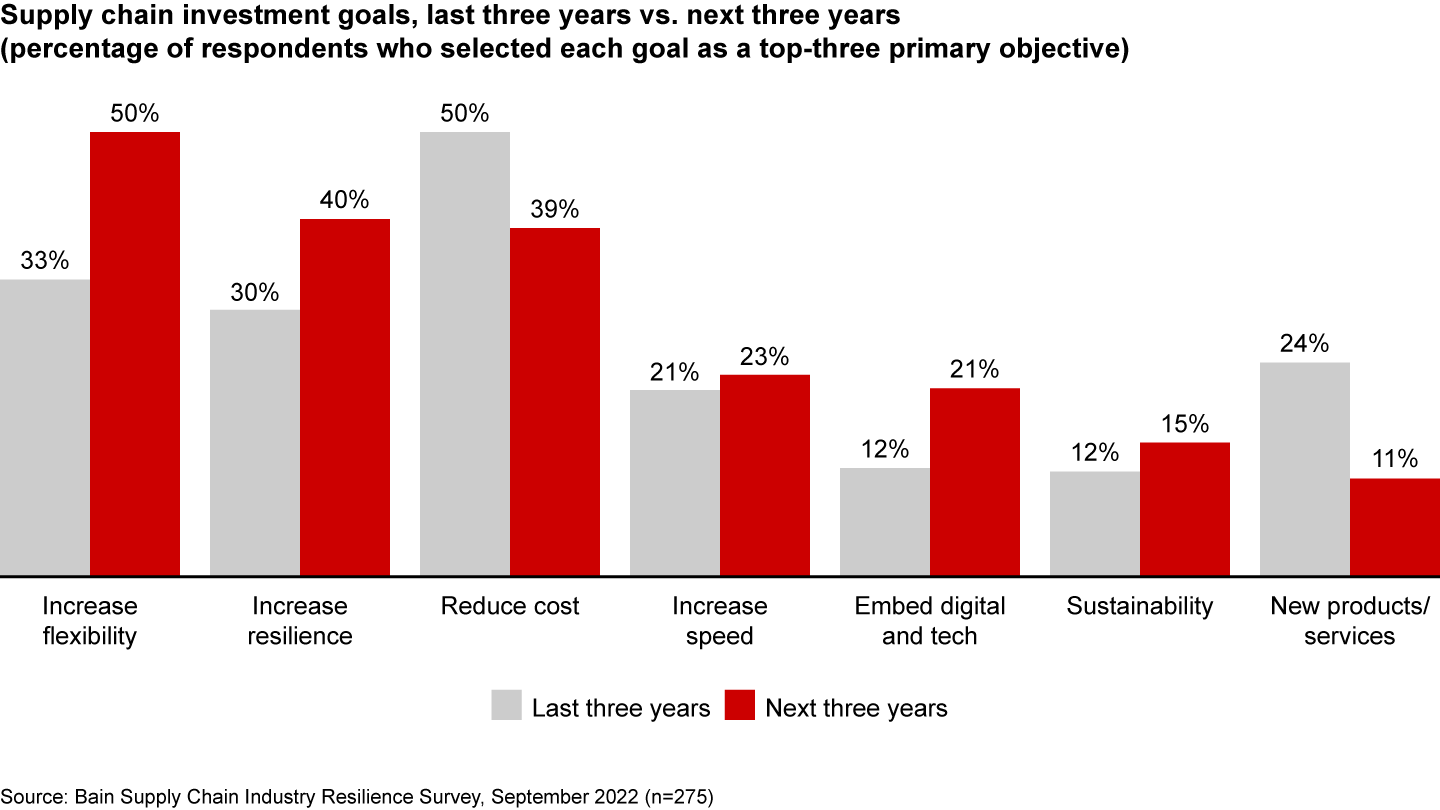
      Flexibility and resilience are becoming more important to supply chain executives

      “A critical issue to the transition is that supply chains are highly concentrated, increasing vulnerability to disruptions.”

      Vice president, power utility, North America

      Supply chain resilience means different things across the sector, but in general it’s the ability to proactively minimize risk, absorb inevitable shocks, and quickly recover from setbacks to lessen the impact on operations. Taking a holistic view of the entire chain can help companies identify the most important risks to the business and then assess the likelihood of each. Comparing strengths to competitors’ can help companies find opportunities to differentiate while mitigating their impacts on energy markets and the environment.

      Physical resilience

      Many companies are already experiencing the effects of climate change on their operations. For example, in 2022, Apple and Intel suffered a weeklong shutdown of some production facilities in Sichuan, China, where a drought stalled multiple hydropower plants. But many businesses underestimate the likelihood of physical climate risk events and their exposure to them, relying on a narrow set of risk-transfer tools (for example, insurance or financial hedges) rather than a broader set of strategic and operational levers for building resilience.

      “It is imperative that climate change adaptation efforts be put to the fore. Risk management and business continuity practices should be in place to ensure stability of services.”

      Senior manager, utilities company, Asia-Pacific

      Power utility Southern California Edison, for example, has been working for more than a decade to manage the effects of climate change on its power grid and generation assets, which include more frequent wildfires and droughts that jeopardize the viability of hydroelectric power. To address these risks, SCE embarked on a detailed assessment of climate risks to its assets, operations, and services across its 50,000-square-mile service area. The results helped SCE reprioritize capital investments for new infrastructure that can withstand more intense flooding and storms, extreme temperatures, and more severe wildfires. SCE says it invests about $5 billion each year to maintain and improve its grid, and that by the end of 2021 it had reduced wildfire risk by about 70% compared with pre-2018 expectations.

      A more proactive approach to resilience starts with a systemic look across the entire value chain, using analytical tools to estimate risks today and in the future. Companies can then focus on practical actions to adapt to these risks and make decisions about which assets or facilities to protect and what strategic changes may be necessary to survive and thrive. The changes may include revising capital planning processes, restructuring or nearshoring the supply chain, or advocating for new policy solutions.

      Read the Next Section

      The Energy Transition’s Other Big Puzzle: Making the Math Work

      More from the report

      • State of the Transition 2023: Global Energy and Natural Resource Executive Perspectives

      • The Dual Challenge of the Energy Transition Is Urgent and Unprecedented

      • The Energy Transition: Fragmented, Disorderly, and Ripe with Opportunity

      • Willing but Not Able? The Energy Transition Has a Scaling Problem

      • The Energy Transition’s Other Big Puzzle: Making the Math Work

      Read our Energy and Natural Resources Report 2023

      Explore the full report Download PDF
      저자
      • Headshot of David Knipe
        David Knipe
        Alumni, London
      • Headshot of Eric Beranger-Fenouillet
        Eric Beranger-Fenouillet
        파트너, Middle East
      • Headshot of Aadarsh Baijal
        Aadarsh Baijal
        파트너, Singapore
      • Headshot of Ethan Phillips
        Ethan Phillips
        파트너, Houston
      • Headshot of Martha Eggenberger
        Martha Eggenberger
        파트너, Toronto
      문의하기
      관련 산업
      • 금속 및 광업
      • 농업 관련 산업
      • 석유 및 가스
      • 에너지와 천연자원
      • 유틸리티 및 재생가능 에너지
      • 화학
      관련 컨설팅 서비스
      • 지속 가능성 및 기업의 사회적 책임
      최적의 솔루션 찾기
      • Climate Change
      Energy and Natural Resources Report
      The Dual Challenge of the Energy Transition Is Urgent and Unprecedented

      Meeting the growing demand for energy while also reducing greenhouse gas emissions is the central challenge of the 21st century.

      자세히 보기
      Energy and Natural Resources Report
      The Energy Transition’s Other Big Puzzle: Making the Math Work

      Strong investment returns are within reach for companies that focus on the fundamentals and aren’t afraid to get creative.

      자세히 보기
      에너지와 천연자원
      Sustaining Capital: From Chaos to Discipline

      Fragmented budgets, poor visibility, and missed forecasts are fixable with the right approach.

      자세히 보기
      Climate Change
      Financing Climate Solutions in Brazil

      A study conducted by Bain, in partnership with BNDES, highlights both the challenges and the opportunities to accelerate the climate transition.

      자세히 보기
      지속 가능성 및 기업의 사회적 책임
      How AI Is Starting to Transform Circular Packaging

      There are 15 AI use cases companies across the value chain can use today to accelerate circularity.

      자세히 보기
      First published in 9월 2023
      태그
      • 금속 및 광업
      • 농업 관련 산업
      • 석유 및 가스
      • 에너지와 천연자원
      • 유틸리티 및 재생가능 에너지
      • 지속 가능성 및 기업의 사회적 책임
      • 화학
      • Climate Change
      • Energy and Natural Resources Report

      프로젝트 사례

      An Environmental Services Company Captures Massive Savings from a Merger

      See more related case studies

      전략 New products propel profitability for metals manufacturer

      See more related case studies

      고객 전략 및 마케팅 Revitalizing a utility's market position with customer loyalty

      See more related case studies

      베인에 궁금하신 점이 있으신가요?

      베인은 주저 없이 변화를 마주할 줄 아는 용감한 리더들과 함께합니다. 그리고, 이들의 담대한 용기는 고객사의 성공으로 이어집니다.

      급변하는 비즈니스 환경에서 살아남기 위한 선도자의 시각. 월간 Bain Insights에서 글로벌 비즈니스의 핵심 이슈를 확인하십시오.

      *개인정보 정책을 읽었으며 그 내용에 동의합니다.

      Privacy Policy를 읽고 동의해주십시오.
      Bain & Company
      문의하기 환경정책 Accessibility 이용약관 개인정보 보호 쿠키 사용 정책 Sitemap Log In

      © 1996-2026 Bain & Company, Inc.

      문의하기

      무엇을 도와드릴까요?

      • 프로젝트 문의
      • 채용 정보
      • 언론
      • 제휴 문의
      • 연사 초청
      오피스 전체보기