

M&A Report

한눈에 보기
- Healthcare M&A value dropped by 37% in 2020, one of the largest declines of any industry. Deal volume picked up in the second half of 2020, and it looks poised to accelerate in 2021.
- Activity will vary by subsector, with pharma/biotech poised for strong acquisition activity and medtech likely to benefit from a resumption of elective surgeries and an influx of cash among diagnostics and testing companies.
- We expect deal volume to grow among payers, particularly for technology capability deals in areas such as telehealth and payments processing. Provider deals are likely to vary from expansion by large hospital systems to consolidations among physician practices and alternative care sites.
- Amid rapid regulatory changes and Covid-19 uncertainty, opportunities exist for acquirers with strong balance sheets: Past recoveries have shown that shrewd investments during a downturn can capture significant value on the rebound.
Healthcare deal value dropped more than any other sector in 2020
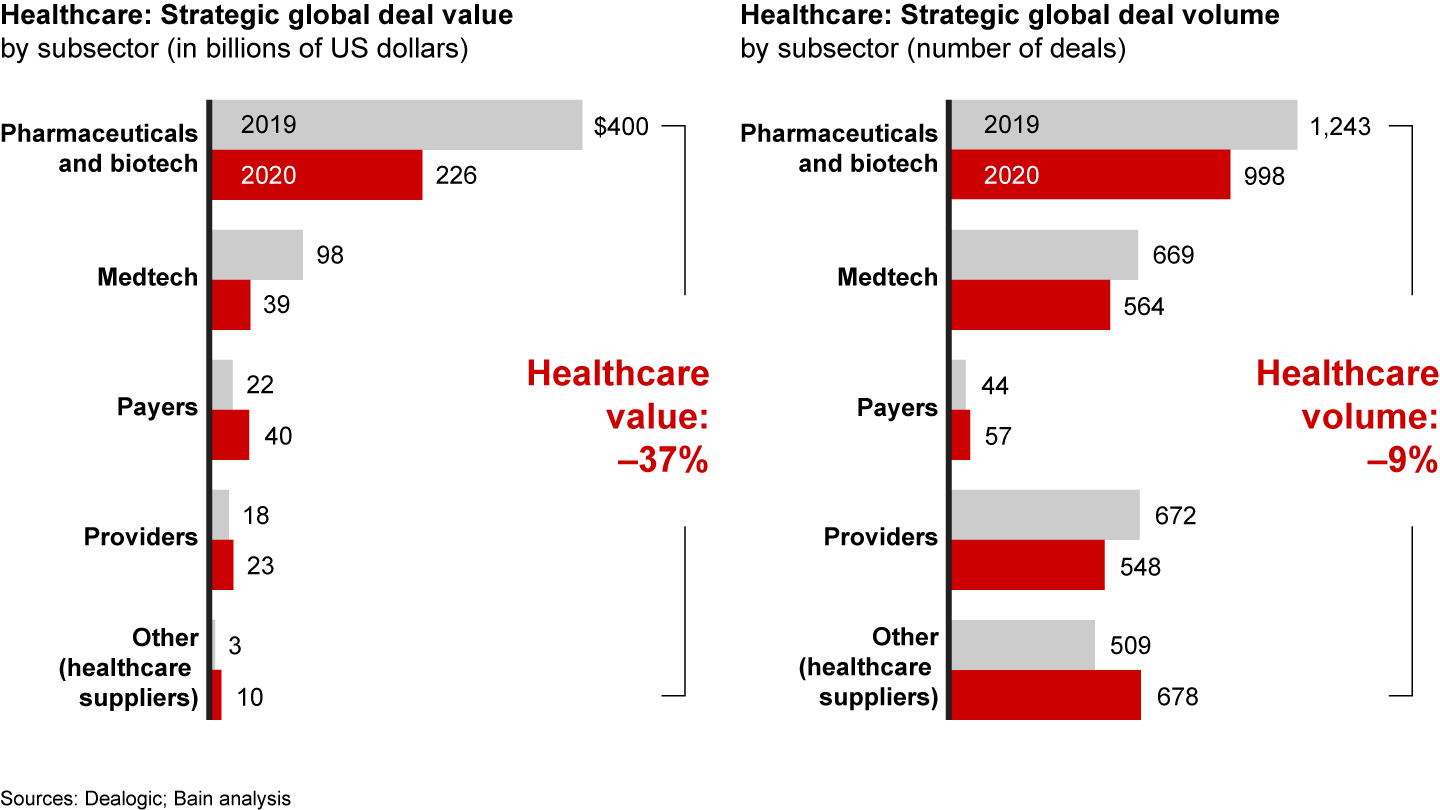
After reaching an all-time high of roughly $540 billion in strategic deal value in 2019, the ban on elective surgeries and general worries about economic uncertainty led the healthcare industry to experience a 37% drop in deal value in 2020. Healthcare suffered one of the biggest M&A value declines of any industry during the Covid-19 pandemic (see Figure 1). Deal value fell significantly in pharmaceuticals/biotech and medtech, but it rose in payers and providers.
In terms of deal volume, healthcare saw a 9% decline, roughly in line with the overall market.
Figure 1

The decline in megadeals contributed to the overall lower deal value in 2020, with only five megadeals valued at more than $10 billion in healthcare. This compares with eight in 2019.
Scope deals, which generally are aimed at helping a company to enter fast-growing markets or to add needed capabilities, made up the bulk of healthcare M&A activity in 2020, with each of the year’s top 10 transactions primarily scope in nature. In fact, scope activity accounted for a whopping 95% of all deals valued at $1 billion or more in 2020. This continues a trend the industry has been seeing since 2015. Scope deals are a higher portion of total transactions in healthcare than in any other industry, with the next-highest sector, technology, at 66%.
There are several areas within healthcare that should benefit from significant deal activity in 2021 and beyond.
Scope deals, which generally are aimed at helping a company to enter fast-growing markets, made up the bulk of healthcare M&A activity in 2020.
Pharma/biotech: The market rewards top-line growth over profitability
Even though pharma/biotech transaction value was down 43% in 2020, the subsector still made up two-thirds of overall healthcare transaction value. If you exclude 2019’s BMS and Celgene as well as AbbVie and Allergan megadeals, pharma/biotech would be 4% higher in 2020, suggesting that sector fundamentals and underlying catalysts for deal activity remain strong.
From 2015 to 2020, about 56% of total shareholder returns (TSRs) in pharma/biotech were generated by revenue growth, which contributed about three times more than earnings before interest, taxes, depreciation, and amortization growth. Further, there is no discernable difference in the contribution to TSR from organic vs. acquisitive growth. Simply put, the market rewards high-gross-margin pharma/biotech companies for top-line growth more than anything else. As long as this relationship holds, we expect that transaction volume in the subsector will remain strong.
We continue to see pharma/biotech companies turn to M&A to supplement their R&D pipelines in existing areas of expertise. That was the impetus behind the Sanofi and Principia deal in autoimmune as well as the AbbVie and Genmab deal in oncology. The same is true for companies seeking to add new technology capabilities to their portfolios. Consider the Sanofi acquisition of Kymera in protein degradation as well as the Biogen and Sangamo deal in gene regulation therapy. We anticipate that the pursuit of R&D and new technology will continue to spur activity in 2021 and beyond.
Medtech: Despite elective surgery restrictions, some areas are poised for a rise in acquisitions
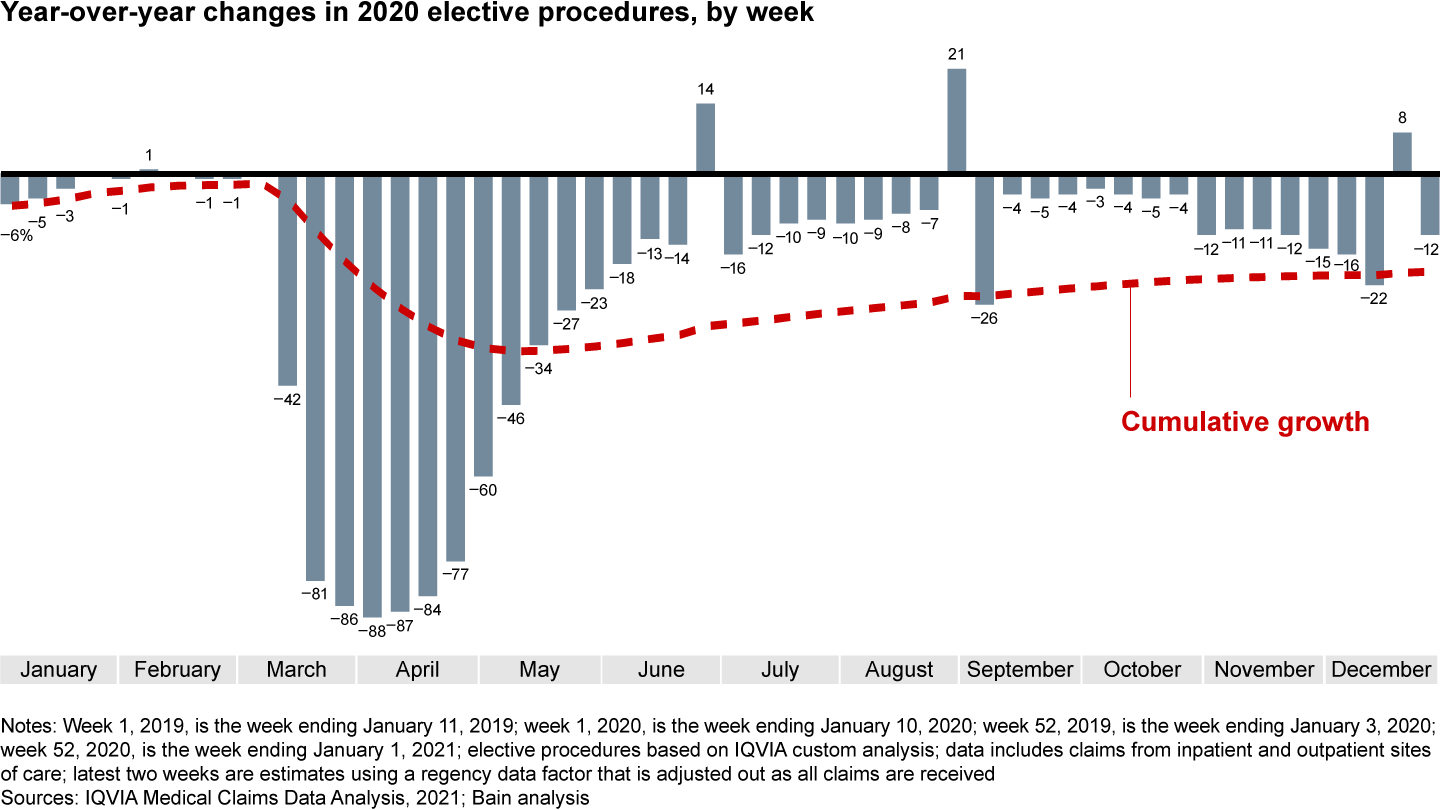
Medtech deal value was down by 60% in 2020 as companies absorbed the impact of elective surgery restrictions—elective surgeries dropped by nearly 90% in the US in the second quarter because of Covid-19 restrictions, but they rebounded in the third quarter before falling slightly in the fourth quarter (see Figure 2). While the halting of elective surgeries did not affect all medtech companies equally, the overall influence was significant enough to drag down deal volume across the entire sector.
Figure 2

Of the medtech transactions that did occur in 2020, the largest was Siemens’ acquisition of Varian for roughly $16.5 billion—it was the third-largest healthcare transaction for the year. This acquisition is a scope deal that will supplement Siemens’ CT scanner business with Varian’s linear accelerator business to create the largest provider of cancer treatment medical devices.
While the uncertain future for elective surgeries and hospital access should continue to depress medtech transaction volumes near term, there are two areas within which we anticipate a potential major revival in activity:
- Diagnostic and testing companies receive a major influx of cash and may use it either to reinvest in their core or to diversify into other businesses.
- Companies with portfolios less exposed to elective surgeries or larger players with strong balance sheets may opportunistically scoop up distressed assets.
Over the longer term, when elective surgery volumes return to pre-pandemic levels, we expect the pursuit of category leadership to return as a major force behind transaction volumes as companies purchase assets within areas in which they currently compete. In 2020, the largest example of this type of deal was Stryker’s $5 billion acquisition of Wright Medical to enhance its extremities business.
Transaction value fell by 4% in 2020, continuing the downward trend from 2017.
Payers: Investment will continue in telehealth and payments technologies
Payer transaction value increased by 79% in 2020, largely the result of the $14.7 billion merger between Teladoc and Livongo in a deal that blurred the lines between a traditional healthcare provider and a pure-play technology company. Excluding that deal, transaction value fell by 4% in 2020, continuing the downward trend from 2017 as payers take a wait-and-see approach to the pandemic and integrate past years’ megadeals. While the halt of elective procedures had a positive near-term effect on payers, the longer-term impact is less clear. Among the factors at play: a potential resurgence of elective surgeries, the shift to telehealth, and the unfolding health implications of recovered Covid-19 patients.
The Teladoc and Livongo deal could signal a pickup in activity in areas such as enabling software for telehealth/remote visitation and healthcare payments—technologies that are becoming increasingly relevant in a Covid-19 world and beyond.
It also is likely that financial sponsor activity will rise in this area because of the potential for building businesses that ultimately could be compelling targets for strategic acquirers.
Providers: Pursuing new opportunities so that the strong can get stronger
Covid-19’s impact in healthcare has been most acutely felt among providers as hospitals not only lost a major source of revenue in elective surgeries but also faced the negative margin impact of Covid-19 patients. As providers focused on staying solvent amid the pandemic, provider M&A slowed down in the second quarter. The second half saw a pickup in activity, however, leading to an overall increase of 28% in transaction value in 2020.
Transactions focused on the consolidation of physician practice management and alternative care sites to drive down costs and increase clinical outcomes via standardized processes. Two such examples include GenesisCare’s acquisition of 21st Century Oncology and North American Partners in Anesthesia’s acquisition of American Anesthesiology.
In the months ahead, we expect M&A activity to continue to accelerate. There will be major opportunities for well-funded and well-run assets to acquire and turn around distressed assets as well as continued activity in capabilities and services such as telehealth and patient engagement. As our colleagues reported in US Healthcare Trends 2020: Insights from the Front Line, 50% of hospital administrators say their organizations are highly likely to make one or more acquisitions over the next two years, and nearly 70% of independent physician practices are amenable to a merger or acquisition.
Private equity (PE) will play a key role in provider M&A. Financial sponsors’ share of deal value rose from 27% to 61% over the past five years. Given the amount of dry powder and availability of assets, this is a space to watch as sponsors look to build on existing platforms and develop new ones.
Regulatory uncertainty will continue to create complexity across all sectors
The year 2020 included endless speculation on new regulations that could result from governments evaluating their healthcare industries in light of Covid-19.
In the US alone, several major potential regulations took center stage—among the biggest: drug pricing regulations, adjustments to the 510(k) approval process for medical devices, and significant changes to Medicare reimbursement rates to include bundled pricing. Some states in the US have increased their scrutiny of PE-backed transactions. Our 2020 survey of healthcare M&A practitioners found that roughly 50% of respondents are highly concerned about the rising scrutiny of pharmaceutical pricing. In Europe, there continues to be uncertainty around the impact and timing of both EU medical device regulations and Brexit.
Almost 60% of respondents agree that the desire to localize supply chains because of their current regulatory concerns will be a key factor guiding their M&A decisions.
Meanwhile, growing US-China friction has led to an increased scrutiny of deals and post-close operations, causing corporate decision makers to reevaluate how they operate within China and to pursue alternatives such as joint ventures and minority structures instead of direct entry deals. Also, almost 60% of respondents agree that the desire to localize supply chains because of their current regulatory concerns will be a key factor guiding their M&A decisions over the next 12 months.
Finally, rising nationalism resulted in increased deal scrutiny in many parts of the world, and Covid-19 slowed the response time in market interviews. The combined result was longer approval timelines for deals and more mandated divestitures as a precondition for approval. Companies need to carefully devise integration plans so that they can move quickly while also avoiding possible rework if delays in approval occur.
A continuing lag in divestitures as companies focus on top-line growth
Healthcare companies did not view 2020 as an optimal time to divest. The uncertainty created by Covid-19 meant that there were no megadeal divestitures on the level of those we saw in 2019, such as Pfizer’s divestiture of Upjohn to Mylan and GE’s BioPharma unit divestiture to Danaher.
After a slow 2020 for divestitures, the year 2021 may see distressed companies divesting assets to free up cash or return to divesting as a way of cleaning out portfolios. We expect the aggregate value of divestitures to continue to lag full asset purchases. Healthcare executives will maintain their focus on dealing with Covid-19 and driving top-line growth before they turn their attention to divesting noncore assets.
Investing in a downturn for superior returns
Past recessions have shown that companies that are willing to invest during a downturn can emerge stronger and quickly gain share during a recovery. In 2018, nearly a decade after Roche’s full acquisition of Genentech, about one-third of its total sales were generated by Genentech’s flagship cancer drugs (Herceptin, Avastin, Rituxan). Another successful example is Medtronic’s acquisitions of CoreValve and Ventor Technologies in 2009 to become a leader in the US transcatheter aortic valve replacement market. Over the following decade, Medtronic has averaged a 12% annual TSR.
To replicate such success, the best acquirers in the current downturn will have a clear investment thesis that articulates a short list of actions to achieve the most value from a transaction. They will be aggressive but realistic on synergies and one-time costs, running multiple post–Covid-19 scenarios. They will recognize the challenges of executing an integration in a virtual world, but they will know that they can succeed with planning and focus—and by injecting the strongest talent in the places that will deliver the deal and integration thesis.
While Covid-19 has introduced arguably the most complex deal market in decades, we believe that transaction value and volumes will rebound (in some areas significantly and quickly), with opportunities for companies willing to take on an increased risk of uncertainty.
First published in 2월 2021