
Skip to Content
  • 오피스

    오피스

    미주
    • Atlanta
    • Austin
    • Bogota
    • Boston
    • Buenos Aires
    • Chicago
    • Dallas
    • Denver
    • Houston
    • Los Angeles
    • Mexico City
    • Minneapolis
    • Monterrey
    • Montreal
    • New York
    • Rio de Janeiro
    • San Francisco
    • Santiago
    • São Paulo
    • Seattle
    • Silicon Valley
    • Toronto
    • Washington, DC
    유럽, 중동, 아프리카
    • Amsterdam
    • Athens
    • Berlin
    • Brussels
    • Copenhagen
    • Doha
    • Dubai
    • Dusseldorf
    • Frankfurt
    • Helsinki
    • Istanbul
    • Johannesburg
    • Kyiv
    • Lisbon
    • London
    • Madrid
    • Milan
    • Munich
    • Oslo
    • Paris
    • Riyadh
    • Rome
    • Stockholm
    • Vienna
    • Warsaw
    • Zurich
    아시아, 호주
    • Bangkok
    • Beijing
    • Bengaluru
    • Brisbane
    • Ho Chi Minh City
    • Hong Kong
    • Jakarta
    • Kuala Lumpur
    • Manila
    • Melbourne
    • Mumbai
    • New Delhi
    • Perth
    • Seoul
    • Shanghai
    • Singapore
    • Sydney
    • Tokyo
    오피스 전체보기
  • 얼럼나이
  • 미디어 센터
  • 구독
  • 연락처
  • Korea | 한국어

    지역 및 언어 선택

    글로벌
    • Global (English)
    미주
    • Brazil (Português)
    • Argentina (Español)
    • Canada (Français)
    • Chile (Español)
    • Colombia (Español)
    유럽, 중동, 아프리카
    • France (Français)
    • DACH Region (Deutsch)
    • Italy (Italiano)
    • Spain (Español)
    • Greece (Elliniká)
    아시아, 호주
    • China (中文版)
    • Korea (한국어)
    • Japan (日本語)
  • Saved items (0)
    Saved items (0)

    You have no saved items.

    관심 있는 내용을 북마크하여 Red 폴더에 저장할 수 있습니다. Red 폴더 에서 저장된 내용을 읽거나 공유해보세요.

    Explore Bain Insights
  • 산업
    메인 메뉴

    산업

    • 우주항공, 방산 및 정부 서비스
    • 농업 관련 산업
    • 화학
    • 인프라, 건설 및 건축 자재
    • 소비재
    • 금융 서비스
    • 헬스케어
    • 산업용 기계 및 장비
    • 미디어 및 엔터테인먼트
    • 금속
    • 광업
    • 석유 및 가스
    • 제지 및 패키징 산업
    • 사모펀드
    • 사회 및 공공 부문
    • 유통
    • 기술
    • 텔레콤
    • 운송
    • 여행·여가
    • 유틸리티 및 재생가능 에너지
  • 컨설팅 서비스
    메인 메뉴

    컨설팅 서비스

    • Customer Experience
    • ESG
    • Innovation
    • M&A
    • 운영
    • 조직
    • 사모펀드
    • 고객 전략 및 마케팅
    • 전략
    • AI, 인사이트 및 솔루션
    • Technology
    • 변화 혁신
  • Digital
  • 인사이트
  • 베인 소개
    메인 메뉴

    베인 소개

    • 업무 소개
    • 베인의 신념
    • 구성원 및 리더십 소개
    • 고객 성과
    • 주요 수상 경력
    • 글로벌 파트너사
    Further: Our global responsibility
    • 다양성과 포용
    • 사회 공헌 활동
    • Sustainability
    • World Economic Forum
    Learn more about Further
  • Careers
    메인 메뉴

    Careers

    • Work with Us
      Careers
      Work with Us
      • Find Your Place
      • Our Work Areas
      • Integrated Teams
      • Students
      • Internships & Programs
      • Recruiting Events
    • Life at Bain
      Careers
      Life at Bain
      • Blog: Inside Bain
      • Career Stories
      • Our People
      • Where We Work
      • Supporting Your Growth
      • Affinity Groups
      • Benefits
    • Impact Stories
    • Hiring Process
      Careers
      Hiring Process
      • What to Expect
      • Interviewing
    FIND JOBS
  • 오피스
    메인 메뉴

    오피스

    • 미주
      오피스
      미주
      • Atlanta
      • Austin
      • Bogota
      • Boston
      • Buenos Aires
      • Chicago
      • Dallas
      • Denver
      • Houston
      • Los Angeles
      • Mexico City
      • Minneapolis
      • Monterrey
      • Montreal
      • New York
      • Rio de Janeiro
      • San Francisco
      • Santiago
      • São Paulo
      • Seattle
      • Silicon Valley
      • Toronto
      • Washington, DC
    • 유럽, 중동, 아프리카
      오피스
      유럽, 중동, 아프리카
      • Amsterdam
      • Athens
      • Berlin
      • Brussels
      • Copenhagen
      • Doha
      • Dubai
      • Dusseldorf
      • Frankfurt
      • Helsinki
      • Istanbul
      • Johannesburg
      • Kyiv
      • Lisbon
      • London
      • Madrid
      • Milan
      • Munich
      • Oslo
      • Paris
      • Riyadh
      • Rome
      • Stockholm
      • Vienna
      • Warsaw
      • Zurich
    • 아시아, 호주
      오피스
      아시아, 호주
      • Bangkok
      • Beijing
      • Bengaluru
      • Brisbane
      • Ho Chi Minh City
      • Hong Kong
      • Jakarta
      • Kuala Lumpur
      • Manila
      • Melbourne
      • Mumbai
      • New Delhi
      • Perth
      • Seoul
      • Shanghai
      • Singapore
      • Sydney
      • Tokyo
    오피스 전체보기
  • 얼럼나이
  • 미디어 센터
  • 구독
  • 연락처
  • Korea | 한국어
    메인 메뉴

    지역 및 언어 선택

    • 글로벌
      지역 및 언어 선택
      글로벌
      • Global (English)
    • 미주
      지역 및 언어 선택
      미주
      • Brazil (Português)
      • Argentina (Español)
      • Canada (Français)
      • Chile (Español)
      • Colombia (Español)
    • 유럽, 중동, 아프리카
      지역 및 언어 선택
      유럽, 중동, 아프리카
      • France (Français)
      • DACH Region (Deutsch)
      • Italy (Italiano)
      • Spain (Español)
      • Greece (Elliniká)
    • 아시아, 호주
      지역 및 언어 선택
      아시아, 호주
      • China (中文版)
      • Korea (한국어)
      • Japan (日本語)
  • Saved items  (0)
    메인 메뉴
    Saved items (0)

    You have no saved items.

    관심 있는 내용을 북마크하여 Red 폴더에 저장할 수 있습니다. Red 폴더 에서 저장된 내용을 읽거나 공유해보세요.

    Explore Bain Insights
  • 산업
    • 산업

      • 우주항공, 방산 및 정부 서비스
      • 농업 관련 산업
      • 화학
      • 인프라, 건설 및 건축 자재
      • 소비재
      • 금융 서비스
      • 헬스케어
      • 산업용 기계 및 장비
      • 미디어 및 엔터테인먼트
      • 금속
      • 광업
      • 석유 및 가스
      • 제지 및 패키징 산업
      • 사모펀드
      • 사회 및 공공 부문
      • 유통
      • 기술
      • 텔레콤
      • 운송
      • 여행·여가
      • 유틸리티 및 재생가능 에너지
  • 컨설팅 서비스
    • 컨설팅 서비스

      • Customer Experience
      • ESG
      • Innovation
      • M&A
      • 운영
      • 조직
      • 사모펀드
      • 고객 전략 및 마케팅
      • 전략
      • AI, 인사이트 및 솔루션
      • Technology
      • 변화 혁신
  • Digital
  • 인사이트
  • 베인 소개
    • 베인 소개

      • 업무 소개
      • 베인의 신념
      • 구성원 및 리더십 소개
      • 고객 성과
      • 주요 수상 경력
      • 글로벌 파트너사
      Further: Our global responsibility
      • 다양성과 포용
      • 사회 공헌 활동
      • Sustainability
      • World Economic Forum
      Learn more about Further
  • Careers
    최근 검색어
      최근 방문 페이지

      Content added to saved items

      Saved items (0)

      Removed from saved items

      Saved items (0)

      Brief

      How Will Generative AI Change the Video Game Industry?

      How Will Generative AI Change the Video Game Industry?

      Executives see AI improving quality and speeding time to market but not alleviating the talent shortage.

      글 Anders Christofferson, Andre James, Tom Rowland, and Imogen Rey

      • 읽기 소요시간
      }

      Brief

      How Will Generative AI Change the Video Game Industry?
      en
      한눈에 보기
      • Video game industry executives believe that within 5 to 10 years, AI could manage more than half of game development.
      • Most believe that AI will improve the quality of games and deliver them more quickly; fewer believe that AI will reduce costs.
      • AI is already being used in preproduction stages, planning out game content, and industry executives expect that within a few years, it will play a larger role in production, developing characters, dialogue, and environments.
      • Few expect AI to solve the industry's talent shortage, and many said that although the technology may free developers from mundane work, it won't replace the creative spark.

      Generative AI is just beginning to have an effect on video games, but gaming industry executives believe that over the next 5 to 10 years, it will contribute to more than half of the video game development process.

      Bain spoke with gaming industry executives about the potential and the challenges of generative AI for their industry. Most have high expectations for generative AI and the machine learning it’s based on, and they expect it to have a greater effect on their business than other transformative technologies, such as virtual reality or augmented reality and cloud gaming.

      Most of these executives see generative AI improving quality and bringing games to market faster. Generative AI will also help make bigger, more immersive, and more personalized experiences a reality. Interestingly, only 20% of executives believe that generative AI will reduce costs, which might be a disappointment to some, given that top-tier games may cost as much as $1 billion to develop. As with any form of automation, there may be concerns about generative AI taking jobs. But most of the executives we spoke with (60%) don’t expect generative AI to have a significant effect on their talent model or alleviate the industry’s critical talent shortage.

      Of the four steps in the video game life cycle—namely, preproduction concept development and planning, building the game (production), testing and launch, and ongoing live operations (postlaunch)—executives say they are deploying generative AI mostly in preproduction. For example, Blizzard Entertainment created Blizzard Diffusion, an image generator trained on its own hit titles, including World of Warcraft, to produce concept art for new ideas.

      How will the use of generative AI evolve?

      Over time, most executives expect generative AI to show more potential in production and later phases, particularly in several key areas (see Figure 1).

      • Story generation and nonplayable characters (NPCs): Generative AI could enable limitless interactive stories personalized for each player. NetEase, a Chinese game publisher, has already announced that it will use generative AI to create an NPC chat function in the upcoming mobile version of its massively multiplayer online game Justice Online.
      • Game assets: As confidence in the tools grows, generative AI could be used beyond concept art—for example, to fill in or even generate drafts of whole maps.
      • Live ops: While executives we spoke with focused mostly on the ability to rapidly generate new in-game assets, such as personalized skins, we see a significant opportunity ahead for generative AI to improve community management and player support.
      • User-generated content: Giving players access to generative AI tools could allow them to play a more central role in the story, increasing engagement and inviting players to support the never-ending demand for content.
      Figure 1
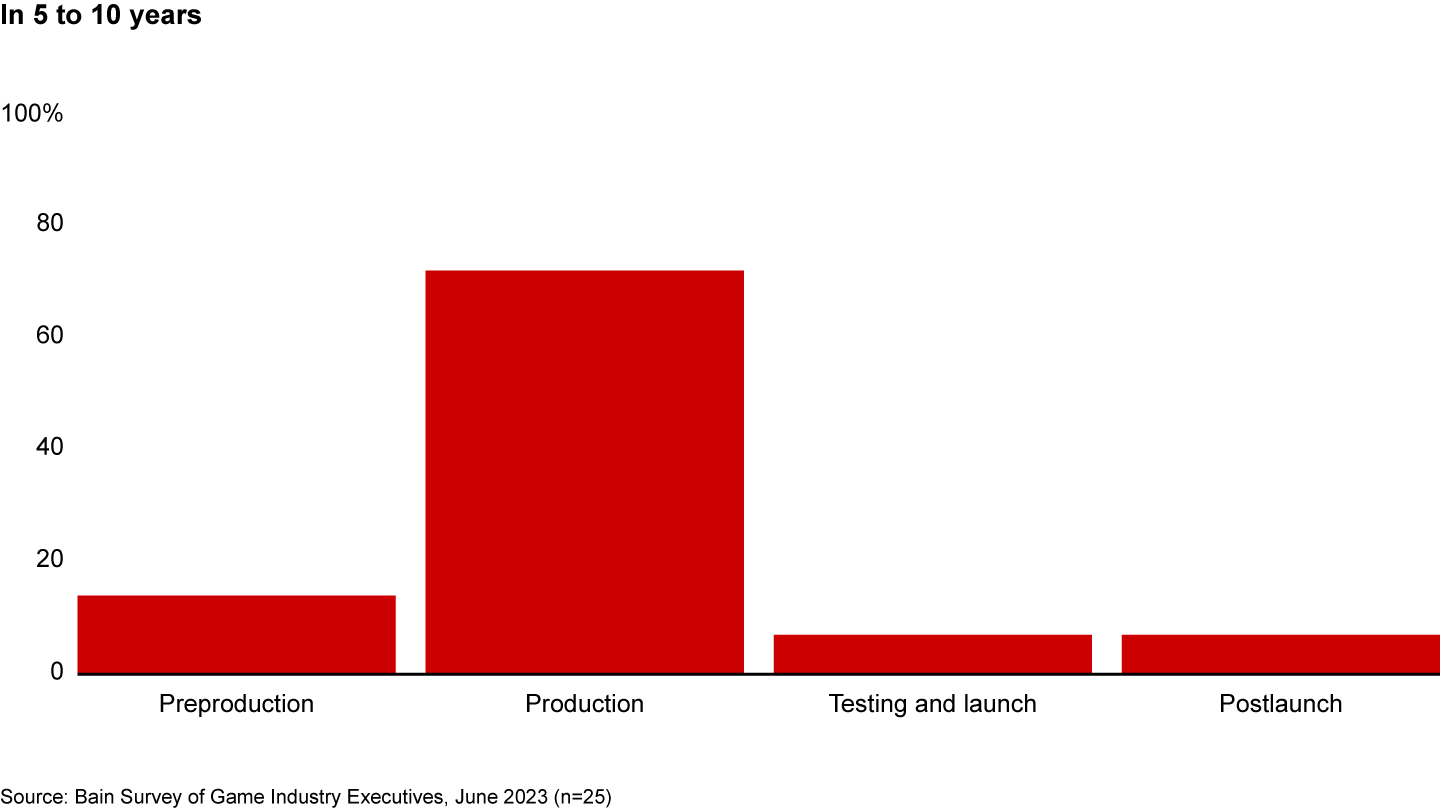
      Generative AI is used mostly in preproduction today, but gaming executives see more opportunities in production over the next 5 to 10 years
      Generative AI is used mostly in preproduction today, but gaming executives see more opportunities in production over the next 5 to 10 years
      Generative AI is used mostly in preproduction today, but gaming executives see more opportunities in production over the next 5 to 10 years

      Challenges to realizing generative AI’s potential

      Although many executives expect IP concerns to be resolved within a few years, the complexities around rights and ownership of created content are significant, and the video game industry will likely face the same challenges as the broader media and entertainment industry.

      And there are longer-term challenges as well.

      • Generative AI strategy: Gaming companies don’t yet have clear, well-developed strategies for making the most of generative AI. That’s common when a new technology arrives. But those that develop a thoughtful ambition and approach will see the earliest success and mitigate potential risks from improper use of the technology. Failing to deploy a disciplined approach to generative AI in the production process could create challenges around prioritization, resource allocation, and integration with existing processes.
      • Navigating a complex, nascent generative AI landscape: There are many companies entering this space, from scale leaders to niche players focusing on specific applications. The landscape changes from week to week, no single player offers everything, and it’s not clear yet which company’s products are the best.
      • Technology implementation: Executives see technical challenges as a major hurdle, including integrating generative AI into game engines and other development tools, as well as training the model for specific applications, developer styles, and franchises (see Figure 2).
      • Talent implications: Generative AI is a contentious subject, and any implementation should be treated with care. Most executives we spoke with agreed that the talent model will benefit by freeing up creatives from labor-intensive tasks, such as coding content for games. Content may be created quicker, but human creativity will remain the source of what makes a video game fun (game design, mechanics). Few expect generative AI to complete tasks all on its own, and many emphasized the importance of human oversight, guidance, and iteration. Only 10% are moderately or extremely concerned about the rise of generative AI. In general, they see generative AI as another tool on the bench of their designers and developers, one that may create new roles and require new training.
      Figure 2
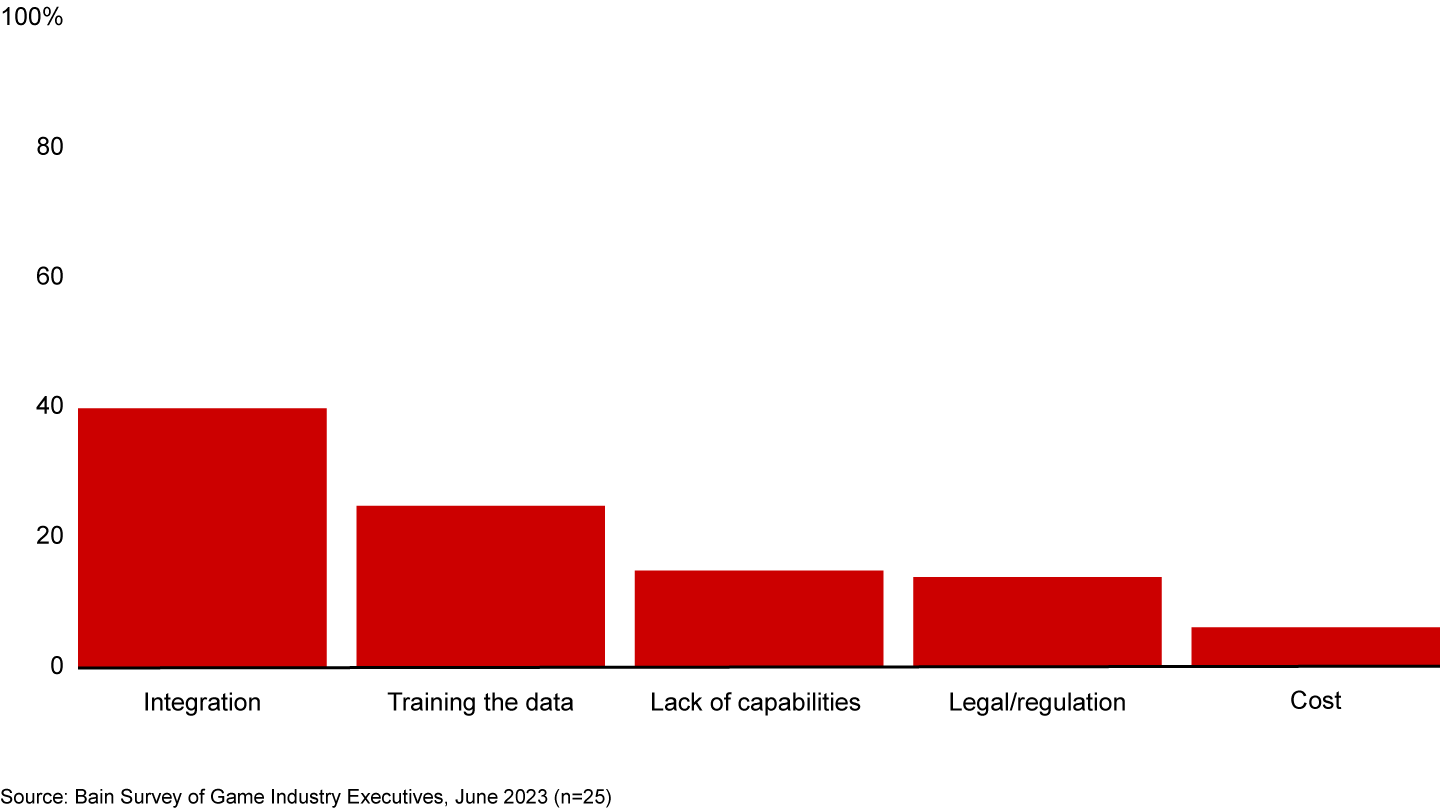
      Gaming executives see integration and training the data as the biggest barriers to using generative AI in their work
      Gaming executives see integration and training the data as the biggest barriers to using generative AI in their work
      Gaming executives see integration and training the data as the biggest barriers to using generative AI in their work

      What should video game developers do?

      Generative AI has risen in prominence so quickly that it caught many off guard. Four key steps can help gaming companies ensure that they’re on solid ground.

      • Take a disciplined and proactive approach to generative AI. As the hype around generative AI grows, many companies are jumping in without a clear strategy. Executives taking the time to agree on an ambition and approach alongside appropriate guardrails and governance will improve return on investment and limit risk.
      • Base decisions on what will benefit the player. The core goal is still creating fun, engaging games. Generative AI can help in many ways, but overreliance could also make it a hindrance. More content and engagement in a game does not guarantee a better player experience. This was the case earlier this year when developers of Forspoken adjusted the game to reduce the chattiness of main characters after players expressed frustration at the quantity of dialogue.
      • Strategically assess building vs. buying vs. partnering opportunities. A huge ecosystem of applications is evolving rapidly, providing a wide range of services. Developer-publishers should carefully assess when to build in-house, when to partner with scale players within the ecosystem, and when to partner with smaller, niche players.
      • Recognize this is more than a technological transformation. To achieve generative AI’s full potential, companies will need to stand up a new operating model by redesigning existing work processes, creating new processes, addressing downstream implications (including the impact on talent), and developing AI enterprise architecture strategy.

      It’s an exciting time for the video game industry. Games are getting bigger, development costs are ballooning, and it remains as hard as ever to retain top talent. At the same time, players’ expectations are rising, as they’re demanding more immersive experiences and a bigger role in creating those experiences. Now, generative AI enters the game. There’s plenty of hype, but there’s also incredible potential, which, if harnessed properly, can deliver massive benefits to players, creators, and publishers.

      저자
      • Headshot of Anders Christofferson
        Anders Christofferson
        파트너, Denver
      • Headshot of Andre James
        Andre James
        Alumni, Los Angeles
      • Headshot of Tom Rowland
        Tom Rowland
        파트너, Los Angeles
      • Imogen Rey
        Alumni, New York
      문의하기
      관련 산업
      • Gaming
      관련 컨설팅 서비스
      • 어드밴스드 애널리틱스
      최적의 솔루션 찾기
      • Artificial Intelligence
      Artificial Intelligence Insights
      Not Yet, Robots: How to Win in Media’s Flooded Era

      As AI floods the market with cheap content, human creativity will stand out—and new tech tools might even help.

      자세히 보기
      Artificial Intelligence Insights
      The 2026 Retail Executive Agenda

      Here are letters to the C-suite to help strengthen strategy, catalyze collaboration, and expand value creation in the AI age.

      자세히 보기
      Gaming
      Roshn Saudi League Season Highlights 2024–25

      RSL’s strong growth in the past two seasons has laid the foundation for long-term success.

      자세히 보기
      Artificial Intelligence Insights
      What Business Leaders Need to Know About AI Sovereignty

      Aligning business strategy with national AI priorities is necessary to compete and scale.

      자세히 보기
      어드밴스드 애널리틱스
      How AI Is Starting to Transform Circular Packaging

      There are 15 AI use cases companies across the value chain can use today to accelerate circularity.

      자세히 보기
      First published in 9월 2023
      태그
      • 어드밴스드 애널리틱스
      • Artificial Intelligence
      • Artificial Intelligence Insights
      • Gaming

      프로젝트 사례

      A Beauty Company Enables Always-On Brand Acceleration

      See more related case studies

      Digital Reimagining Insurance for the AI Era

      See more related case studies

      조직 A Video Game Company Levels Up With a New Operating Model

      See more related case studies

      베인에 궁금하신 점이 있으신가요?

      베인은 주저 없이 변화를 마주할 줄 아는 용감한 리더들과 함께합니다. 그리고, 이들의 담대한 용기는 고객사의 성공으로 이어집니다.

      급변하는 비즈니스 환경에서 살아남기 위한 선도자의 시각. 월간 Bain Insights에서 글로벌 비즈니스의 핵심 이슈를 확인하십시오.

      *개인정보 정책을 읽었으며 그 내용에 동의합니다.

      Privacy Policy를 읽고 동의해주십시오.
      Bain & Company
      문의하기 환경정책 Accessibility 이용약관 개인정보 보호 쿠키 사용 정책 Sitemap Log In

      © 1996-2026 Bain & Company, Inc.

      문의하기

      무엇을 도와드릴까요?

      • 프로젝트 문의
      • 채용 정보
      • 언론
      • 제휴 문의
      • 연사 초청
      오피스 전체보기