

Energy & Natural Resources Report

한눈에 보기
- Improving the circularity of plastics—returning used plastic to the supply chain rather than having it become waste—will be critical to meet sustainability goals.
- At the current pace, only 10% to 14% of plastics will be recycled by 2030, falling well short of announced targets.
- Companies that make and use plastics need to establish partnerships and change the way they operate to develop joint solutions that improve circularity.
- Supportive legislation and industry standards are also needed to help change behaviors and strengthen circular economics.
This article is part of Bain’s Energy and Natural Resources Report 2022
As attention has focused on the problem of plastic pollution in the environment, governments and the private sector have taken steps to promote recycling and reduce plastic waste. These measures include phasing out certain single-use plastics and setting specific goals on plastics recycling. Targets vary by region. For example, the European Union aims to recycle all plastic packaging by 2030, whereas the US aims to recycle half.
In the private sector, companies that make and use plastics are making new commitments to expand the use of recycled and bio-based plastics, reducing the amount of plastic used, and increasing recycling through better design and new investments in infrastructure. There are also many new recycling initiatives and partnerships, along with innovation in new plastic types such as low-carbon plastics made from biomaterials.
Our clients tell us they understand that more needs to be done to improve the sustainability and circularity of plastic products, that is, the ability to put materials back into the supply chain, rather than depositing them as waste. Plastics producers and users know that if concerns aren’t addressed, they risk facing more stringent regulation and more pressure from customers.
But they’ve also said this is one of their many priorities, along with broader environmental, social, and corporate governance (ESG) commitments, including emissions reductions (see Figure 1). In many cases, improving plastic circularity will also reduce emissions, making it essential for delivering on the industry’s decarbonization goals and ensuring the license to operate among growing concern about plastic waste.
Figure 1
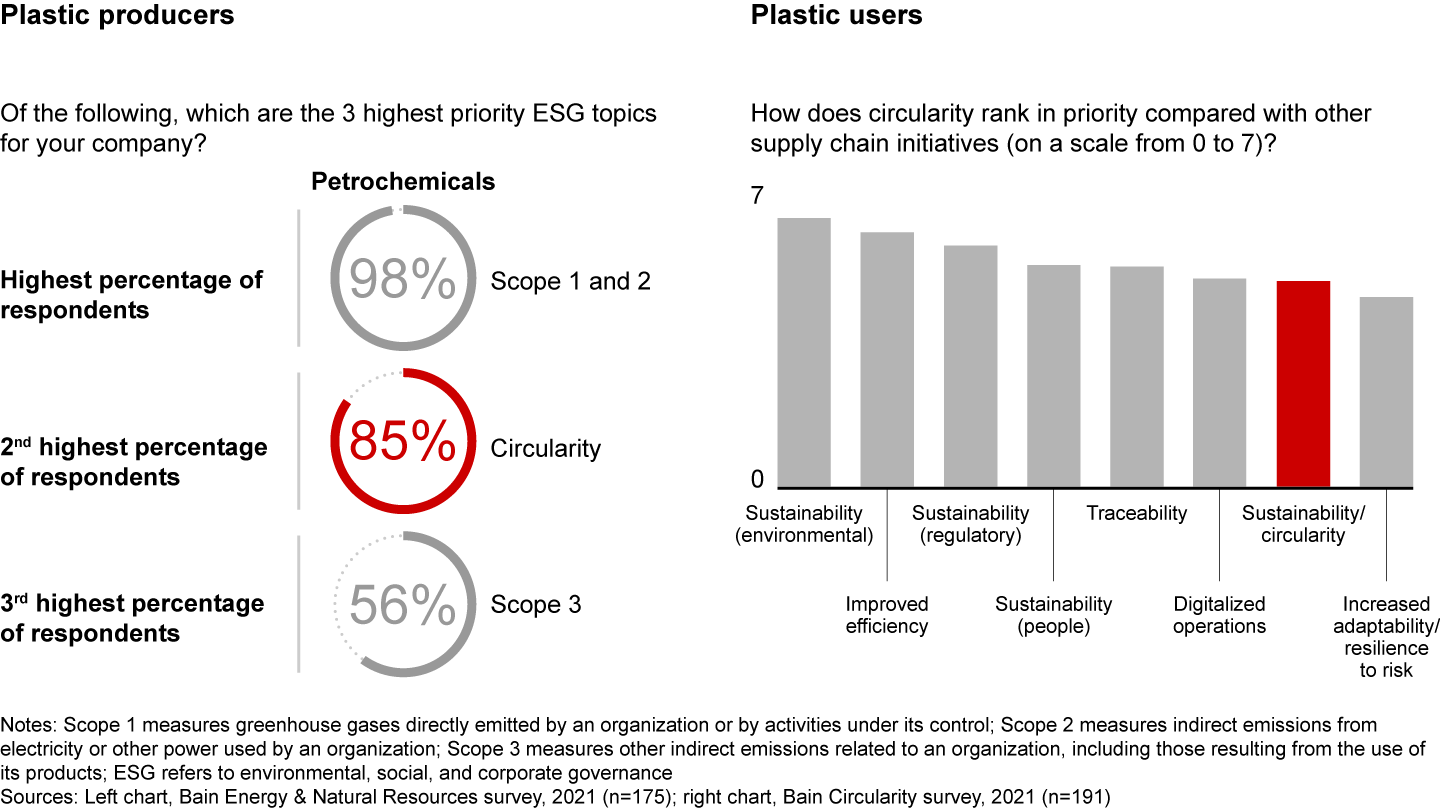

Circularity efforts fall short
There’s a lot of activity underway on recycling and circularity, but it’s still not enough to provide the amount of recycled material that industry will need. Our recycling scenarios, based on current industry efforts and trajectories, suggest that by 2030, between 50 million and 70 million metric tons of plastics will be recycled annually, or 10% to 14% of total plastic consumption (see Figure 2), well below the targets set by companies and governments in, for example, the US and the EU.
Figure 2
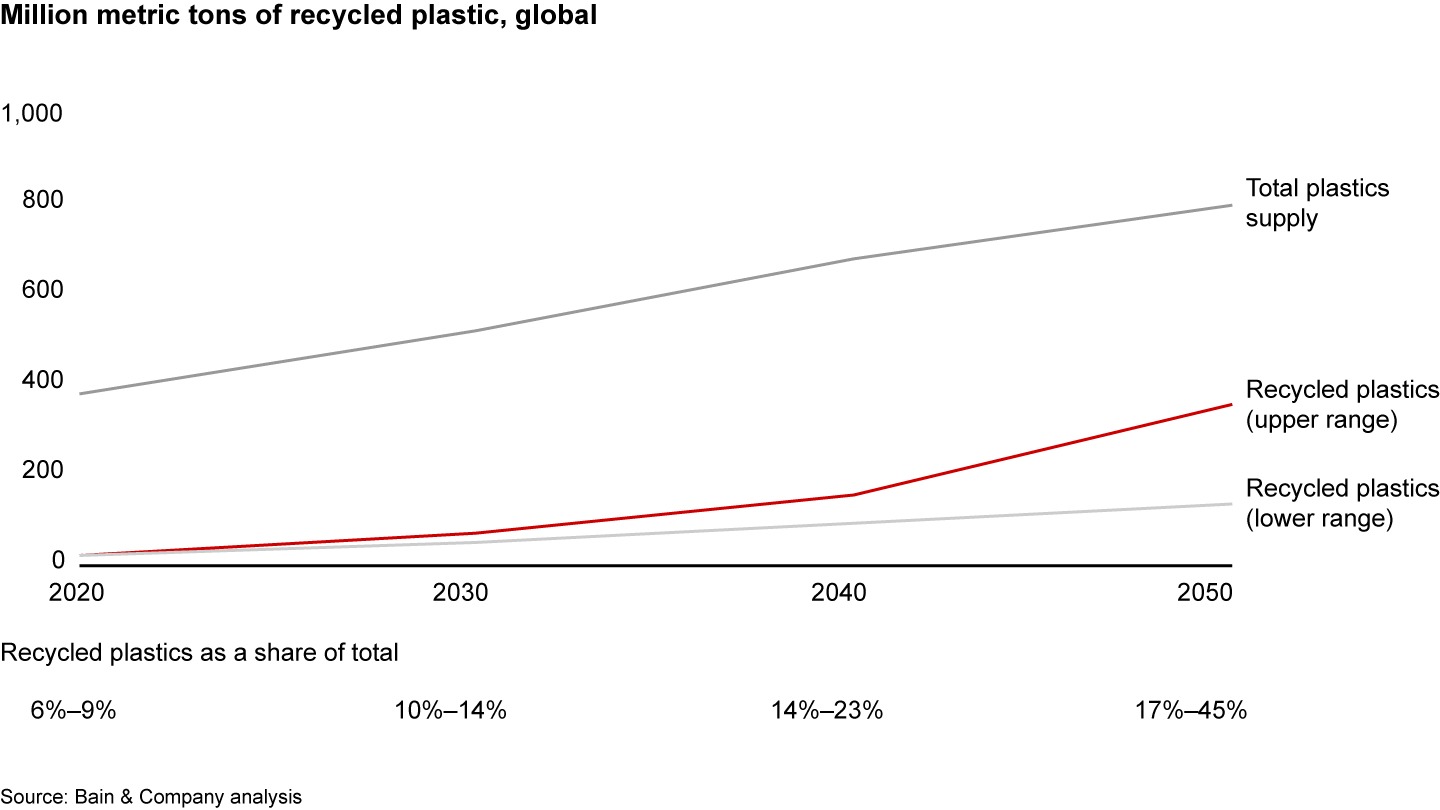

This misalignment between what companies want to buy and what will be available could inflate prices for recycled plastics, as competition heats up for the limited supply. Also, as the feedstock required for producing recycled plastics becomes bottlenecked, plastics producers will need to secure supplies to remain competitive as the market scales. These dynamics add to the uncertainty of the prospects for recycled plastics growth and will hinder investment.
A shortage of recycled and renewable plastics could also permanently reduce demand for these products if users shift to alternatives to meet their recycling targets. This will be in addition to customer efforts to reduce the amount of plastics used, and the risk of cost increases for virgin plastics due to new taxes like the UK’s plastics tax or other extended producer responsibility measures. So it’s important for plastics producers to scale up their recycling efforts and develop solutions to meet their customers’ needs for sustainable and low-carbon solutions at scale. Faster industrialization of the recycling industry, better waste-sorting solutions, and more technical expertise, especially in chemical recycling, will all be needed.
Accelerating plastics circularity
As we talk with our clients, we’re seeing three types of actions aimed at accelerating the momentum behind plastics recycling.
- Innovation and new technology
- Partnerships and new business models
- Legislation and standards
Innovation and new technology. One reason that recycling rates are so low is that the technologies involved aren’t well-developed. Recycling rates are higher in categories where technology, infrastructure, and public and consumer engagement are more mature—for example, mechanical recycling for PET bottles in Europe, which is around 50%. Scaling up recycling also comes with challenges, though, as it gets increasingly difficult and costly to increase collection rates while also capturing smaller and less-efficient volumes of used plastic.
Most plastic recycling today is mechanical—processing the material, but keeping the molecule intact. Chemical processing—changing the chemical structure of polymeric waste—can recycle more plastic. But chemical recycling remains mostly at R&D levels (1 kiloton or less) or pilot-program scale (10 to 30 kilotons), focused mostly on polyolefins. Pilots help overcome technical challenges, demonstrate scalability and commercial viability, and provide experience that improves process stability and yield. We expect some of these efforts to scale to commercial levels over the next five years.
Advances in chemical recycling technologies targeting other plastics, such as polystyrene and PVC, are also gaining traction. Improving circularity for those plastics will be an important building block to boost overall plastics ESG performance and circularity across such end markets as electronics and automotive, where more companies are thinking about circularity.
Recycling advances aren’t limited to technology, but also extend to collection, sorting, and processing to improve the quality of waste streams—a necessary step to boost recycling rates. Some companies are building up these capabilities. For example, before divesting the asset to PreZero Recycling, waste management company Suez (now Veolia) opened Europe’s most advanced facility for sorting used packaging in Germany. That plant can process 100 kilotons annually, using an innovative optical system to improve waste recovery. Another advancement under discussion is secondary material recovery facilities (MRFs), which aggregate residual waste streams from primary MRFs to pull out lower-value plastics and paper cartons more effectively.
Several material innovations have also been pushed by resin producers to improve circularity, which are now being adopted by plastic converters. These innovations include better-performing monomaterials, which improve the recyclability of the application, and lightweight polymers to help reduce packaging volume. Finally, low-carbon solutions are also developing quickly, with greater emphasis on producing chemicals from renewable sources. For example, Origin Materials focuses on improving production of plant-based building blocks for PET as a negative-carbon solution to replace fossil-based PET.
Partnerships and new business models. Scale, sustainable solutions will require partnerships that ensure a steady supply of renewable materials and a market for recycled material. Supply chain partnerships can help ensure a consistent flow of renewable inputs, which is essential to develop a market. These partnerships need to extend beyond the local initiatives that have emerged in some regions. Plastics users are also forming partnerships. Mondelez International is working with waste management start-up Plastic Energy to use its polypropylene feedstock made from postconsumer plastics for Philadelphia Cream Cheese containers.
Offtake agreements are critical to ensure demand for recycled materials as production scales up. These agreements, which ensure delivery of the recycled materials produced, give producers a runway to gain experience, become more efficient, and reduce costs. We typically find that early offtake agreements are with customers willing to pay a premium for better ESG performance, whether because of individual commitments or local regulation. Companies like The Coca-Cola Company, Nestlé, and PepsiCo have made commitments to increasing recycled content in plastic bottles. Our customer research has found that brands are typically willing to pay initial premiums of up to 25% above virgin pricing for these applications. Depending on the application, the relative change in product price will be much lower as the plastic forms only a small part of the total cost. In plastic resins for bottles, for example, a premium of around 20% for recycled plastics raises the price of the end product by about 2%. A Bain survey across the UK, France, and the Netherlands found that 75% of consumers said they’d pay more for sustainable products.
Legislation and standards. Plastic producers, recyclers, and consumers will need to work together to build support for change. They’ll need to develop better policies for collecting and managing plastic waste, supported by better consumer education and behavior on waste sorting. They’ll need to encourage investments and funding for new technologies, for example, through the OECD’s Extended Producer Responsibility project. They’ll need to agree on taxonomy as well as standards, for example, around using a mass balance approach or segregated supply chains for virgin and recycled plastics.
Governments can also take specific actions to support growth in recycling. For example, they could restrict the use of, or tax, virgin plastics, thus promoting the use of recycled content. They could also consider minimum requirements of recycled content in plastics by extending renewable blending requirements to chemicals, similar to renewable fuel standards, which will help promote the use of renewable hydrocarbons in petrochemicals.
Support is also developing around the world. In March 2022, the UN agreed to develop a treaty designed to end plastic pollution. Details are still to be ironed out, but the specific resolution is likely to address the full life cycle of plastic, including production, design, and disposal. The outcome, with internationally binding commitments, could be an important step in creating a global environment with investments channeled toward building up recycling infrastructure. Companies and associations, such as the International Council of Chemical Associations, have endorsed the treaty as an important step to address plastic pollution.
. . .
Although current efforts aren’t yet at the scale required, plastics recycling, the use of recycled content, and the use of low-carbon plastics are sure to increase. Companies that prepare now to scale up, connect to high-quality waste streams, and ensure a long-term supply of feedstock can put themselves in a stronger position in sustainable plastics.
Data-rich perspectives
Transition trends
Strategic capabilities
Read our Energy and Natural Resources Report 2022
First published in 6월 2022