

Brief

한눈에 보기
- Industrial companies are sharpening the focus on growing their service business, as machinery buyers prioritize conserving cash and extending the life span of their existing equipment.
- But many have had trouble landing on the right go-to-market strategy.
- The most successful companies systematically identify market and customer opportunities, define the route-to-market and commercial responsibilities, and rigorously manage the service sales team’s performance.
With industrial machinery buyers prioritizing cash conservation and extending the life span of their existing equipment, a growing number of industrial executives are recognizing that a sometimes-overlooked piece of their company could hold the key to unleashing growth: the service business.
Some industrial companies have historically treated service as an afterthought, and instead directed most of the company’s R&D investments, resources and talent, and management attention toward new equipment sales.
Now, those priorities are shifting; service has risen to the top of executives’ agendas across manufacturing and other industrial sectors. Why?
Written in collaboration with
Written in collaboration with

Many industrial companies now operate in mature markets and face headwinds that make it challenging to grow their new equipment sales. In addition, it’s becoming clearer that service is not only a stabilizer of the business, but also the source of significant growth opportunities in both the short and long term. That’s because effective service can increase the lifetime value of products, help retain customers, stabilize the company’s revenue against external shocks, and grow profits. Moreover, the transition to value-added services—a combination of product, service, and digital solutions—and new monetization models is shining an even brighter spotlight on the service business.
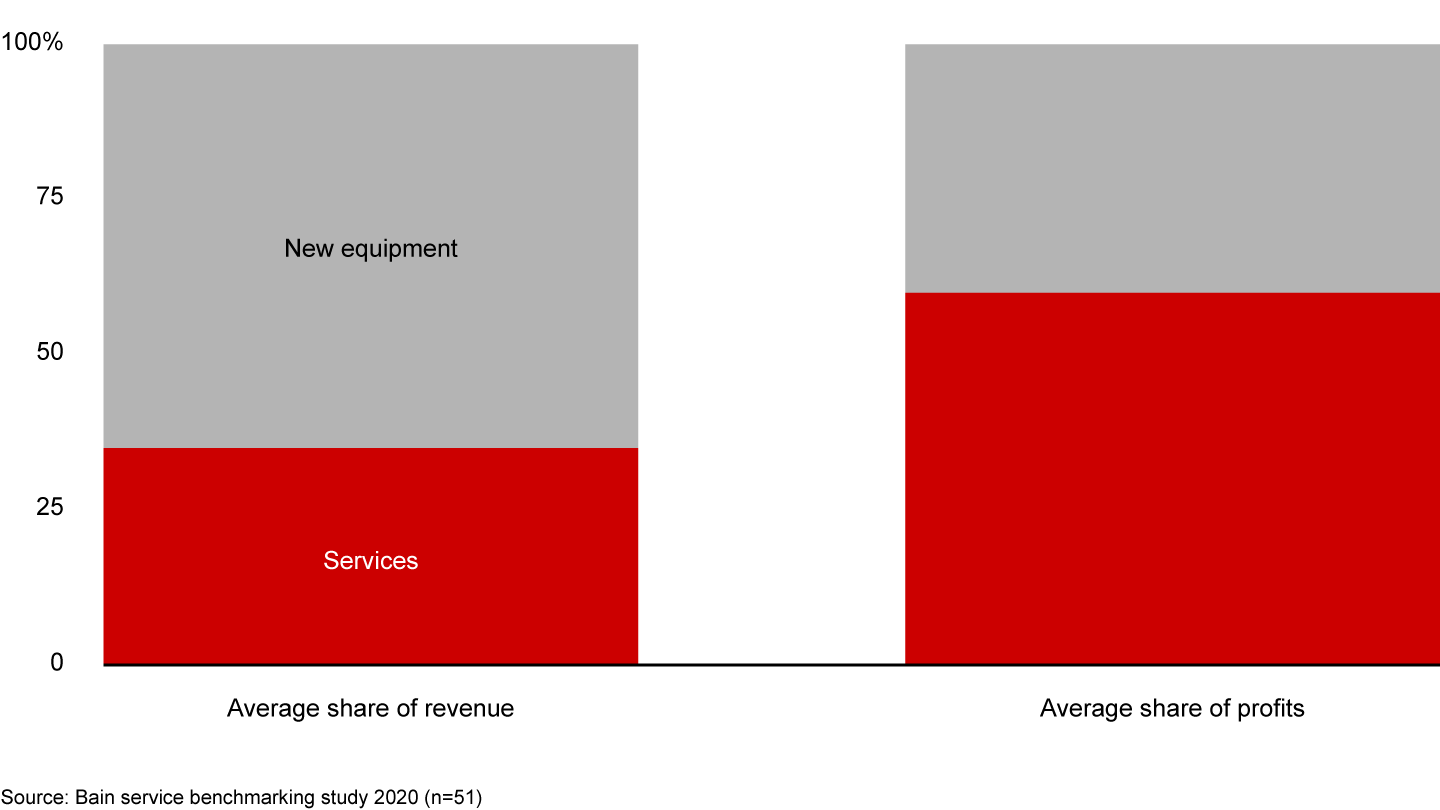
Services already contribute significantly to industrial companies’ top and bottom lines. In a Bain & Company survey of 51 industrial companies worldwide last year, services on average constituted 35% of their revenue and 60% of profits (see Figure 1).
Figure 1

Now, industrial firms have an opportunity to increase those numbers, as the Covid-19 pandemic has made effective service an imperative. Travel restrictions have expanded the use of digitally enabled services. Meanwhile, customers’ emphasis on preserving cash during the pandemic is here to stay. Rather than investing in new machinery and equipment, many are trying to extend the life span of their existing assets, which is dialing up the pressure on industrial companies to find new revenue sources in other areas such as services. Lastly, the pandemic has forced customers to invest more in supply chain reliability and operational continuity, which means they value high-quality service more than ever.
The challenge for industrial companies is that many have a long way to go to reach full potential in their service business, often because they’re struggling to find the right commercial model. In a recent survey of managers and frontline employees at 54 global industrial companies by the University of St.Gallen’s Institute of Technology Management, only 13% of respondents said they consider their company’s service sales strategy to be “excellent” or “exceptional.”
Companies that develop an effective go-to-market strategy for their service business can quickly reap significant rewards. Leading companies have increased their service business’s annual revenue by 20% to 30% within three years by honing their sales approach, and they doubled or tripled service revenue for individual products across each one’s life cycle. Of course, the upside will vary depending on a number of factors, most notably the size of the company’s installed base and current share of services provided to those customers.
Honing the go-to-market strategy
Our analysis of leading companies found the go-to-market strategies for their service businesses have three things in common.
- They systematically identify market and specific customer opportunities.
- They clearly define the route-to-market and commercial responsibilities.
- They rigorously manage the service sales team’s execution and performance.
Systematically targeting market opportunities. The most effective service organizations clearly understand the commercial opportunities in their installed base. They implement a plan to systematically, proactively target commercial touchpoints across the entire service life cycle, deploying advanced analytics in areas such as point of sale, product warranty, and contract renewal (see Figure 2).
Figure 2
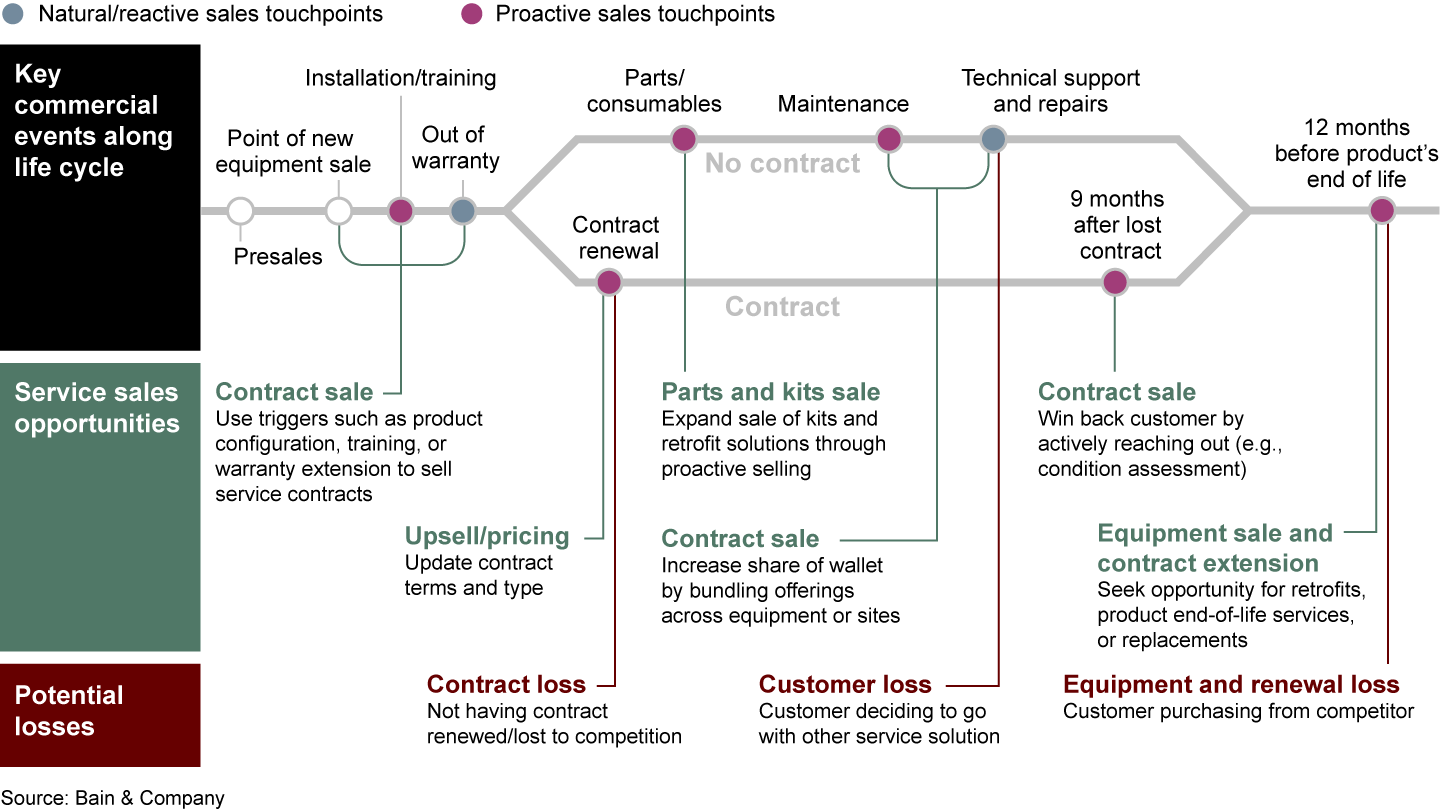

In the University of St.Gallen survey, 10 companies with the best service orientation and service sales performance were identified as leaders. Of the top performers, 75% said they systematically assess the installed base for service sales opportunities, compared with just 44% among the followers. When selling services, 71% of top performers assess the total value opportunity, 2.6 times the rate of followers. While 56% of top performers systematically feed their customer relationship management system with relevant data for service sales, only 40% of the followers do so. That’s a missed opportunity because this information can be crucial to planning service sales initiatives targeting underserved customers.
Consider the holistic approach one US-based industrial machinery manufacturer took to revamping its service operations and enhancing its sales approach. It started by defining what it considered standard service work for each major product and contract type. Then it built a bottom-up forecast for each type of service bill and reconciled that with the business’s top-down budget guidance.
The manufacturer also created standardized solutions and sales collateral for major operating issues expected in the fleet of sold products. As projected service events approached, the company established a series of milestone dates as guideposts for adjusting the scope of service tasks, releasing material and crews, and refining cost estimates. For its aging fleet, the company developed a package of streamlined services to stay cost-competitive with independent service providers.
Lastly, for long-term contract renegotiations and bigger transactions, it established recurring, simple meeting formats with account teams that focused the conversations on a small set of key metrics.
This combination of efforts has helped increase the efficiency and effectiveness of the manufacturer’s service sales team.
Clearly defining route-to-market and commercial responsibilities. Best-in-class industrial companies clearly define their route to market (direct vs. indirect sales, inside vs. field salesforces, e-commerce vs. brick-and-mortar stores) and service sales accountability across the product life cycle. They also define their sales approach for each customer touchpoint, segment, and product.
The leading companies always put their best foot forward in each situation and account. That might sound obvious, but a lot of companies fall short because they undervalue a key principle: service sales isn’t the sole responsibility of the service organization. It’s a companywide effort that involves new equipment and service sales personnel, but also includes nonsales employees (service technicians, customer support teams) and new channels (e-commerce, external partners), and often features a hybrid approach between these channels.
Rigorously managing service sales performance. Leading companies manage the service business’s sales with the same level of professionalism as traditional goods. That means, for example, linking individual sales targets to the total value of the equipment’s potential service needs over its life span, diligently managing frontline employees, and supporting them with coaching and sales tools, such as value calculators.
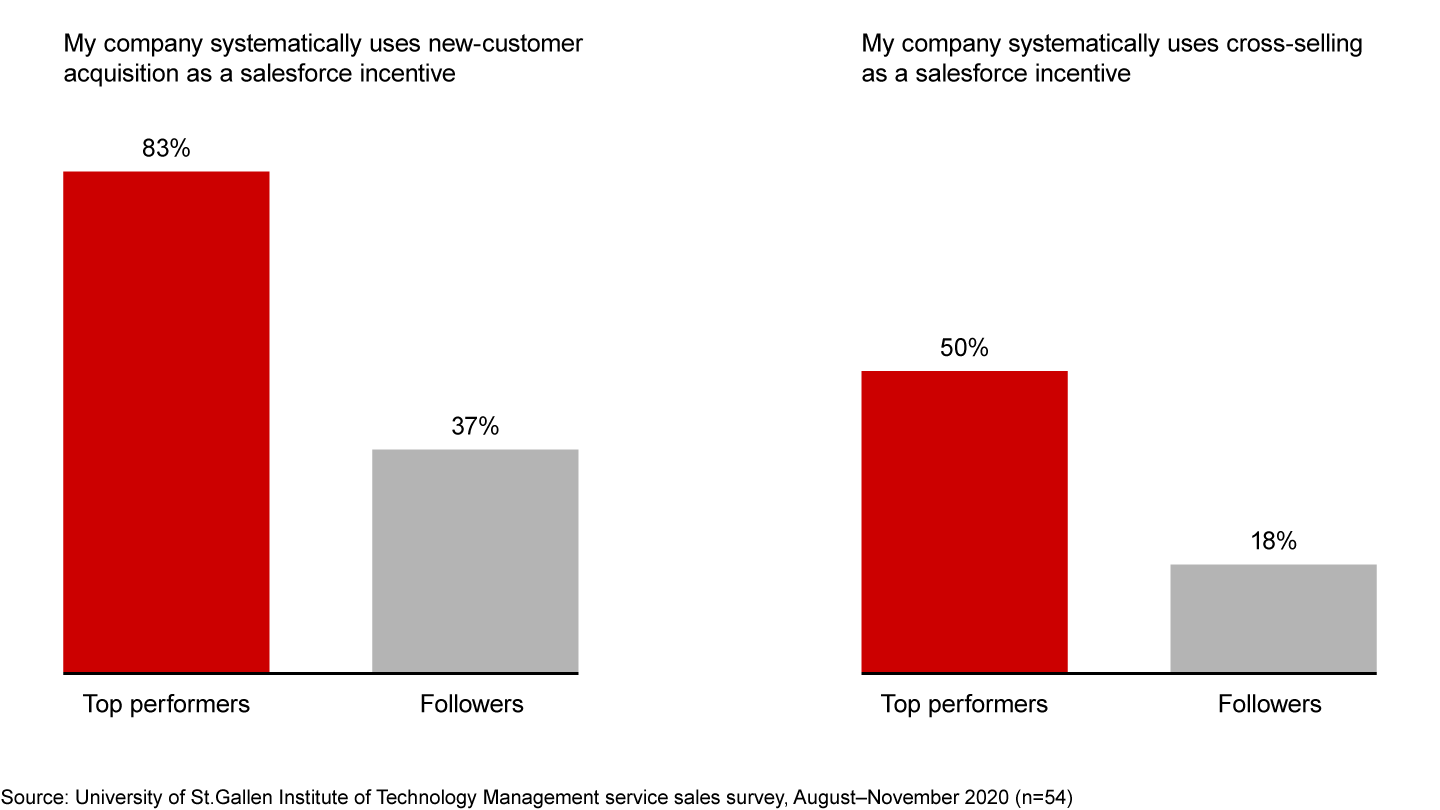
Part of what distinguishes top performers’ strategy is they reward long-term value creation from both new and existing customers. In the University of St.Gallen survey, 83% of top performers’ incentive plans for salespeople included new-customer acquisition, and 50% included cross-selling. Those rates were 2.2 times and 2.8 times higher than those of followers, respectively (see Figure 3).
Figure 3

Hilti, a Liechtenstein-based maker of power tools, fastening systems, and other construction and manufacturing products, aligned its salesforce’s rewards with the core objective of increasing each customer’s lifetime value. This means Hilti pursues a customer-centric strategy that views each one as a “partner,” and the company seeks stable, sustained revenue growth from these relationships.
As a result, the company applies an incentive system to motivate salespeople to nurture long-term customer relationships instead of boosting specific services through incentives. This motivates salespeople to continuously deliver value to customers and take extra efforts to retain them. This approach has fostered alignment between the service and sales teams, rewarded long-term partnerships, and created more value for the customers and the company.
Of course, an attractive service offering and value proposition are required for these three pillars of the go-to-market strategy to be effective. These strategies also benefit from excellence in commercial operations (marketing, pricing, tools, and the organization). These elements can only increase the service business's potential upside.
Tapping the service business’s full potential
A few simple questions can help industrial company executives understand the level of untapped growth in their service business, and begin to form a strategy to deliver on it.
- Is the strategic role of service clearly defined in our overall strategy, and are we allocating resources and focus accordingly?
- Does our company profoundly understand the service needs of our customer segments and related opportunities throughout the customer and product life cycle? If so, how effectively are we using this information to steer service sales?
- Are we taking full advantage of available channels, digital capabilities, data analytics, and artificial intelligence tools to boost service sales?
- Do we have clear roles and accountability of service sales defined across all stages in the product life cycle?
- How effectively do we measure and reward service sales performance?

About the University of St.Gallen
Founded in 1898, the University of St.Gallen in Switzerland consistently ranks among the top European business schools. The university is internationally recognized for the excellence of its integrative education through EQUIS, AACSB, and AMBA accreditation. Its programs in business administration, economics, law, social sciences, and international affairs attracts a diverse and motivated student body of 9,000 students from 83 countries.
First published in 7월 2021