

Global Private Equity Report

At a Glance
- While most fund managers have never had to deal with inflation, they have certainly benefited from its absence.
- Now it poses the dual threat of rising costs for portfolio companies and muted multiple expansion during ownership.
- Firms can do a lot to mitigate inflation’s impact, but the time to start is well before it begins affecting performance.
This article is part of Bain’s 2022 Global Private Equity Report
If the investment world has had one constant over the past two decades, it has been the downward trend in interest rates. For years, the global risk of deflation in developed markets has generally outweighed the risk of rising prices, persuading central bankers around the world to keep the monetary spigots open, driving real interest rates to historic lows.
Most investors can barely remember the inflation-driven days and double-digit rates of the 1970s and ’80s. Their professional careers have been defined by the superabundance of capital that has energized markets globally since the run-up to the dot-com boom in the late 1990s. Although the line is jagged in both cases, the persistent downward slope of interest rates has been mirrored by a steady uptick in asset prices, creating massive wealth around the world.
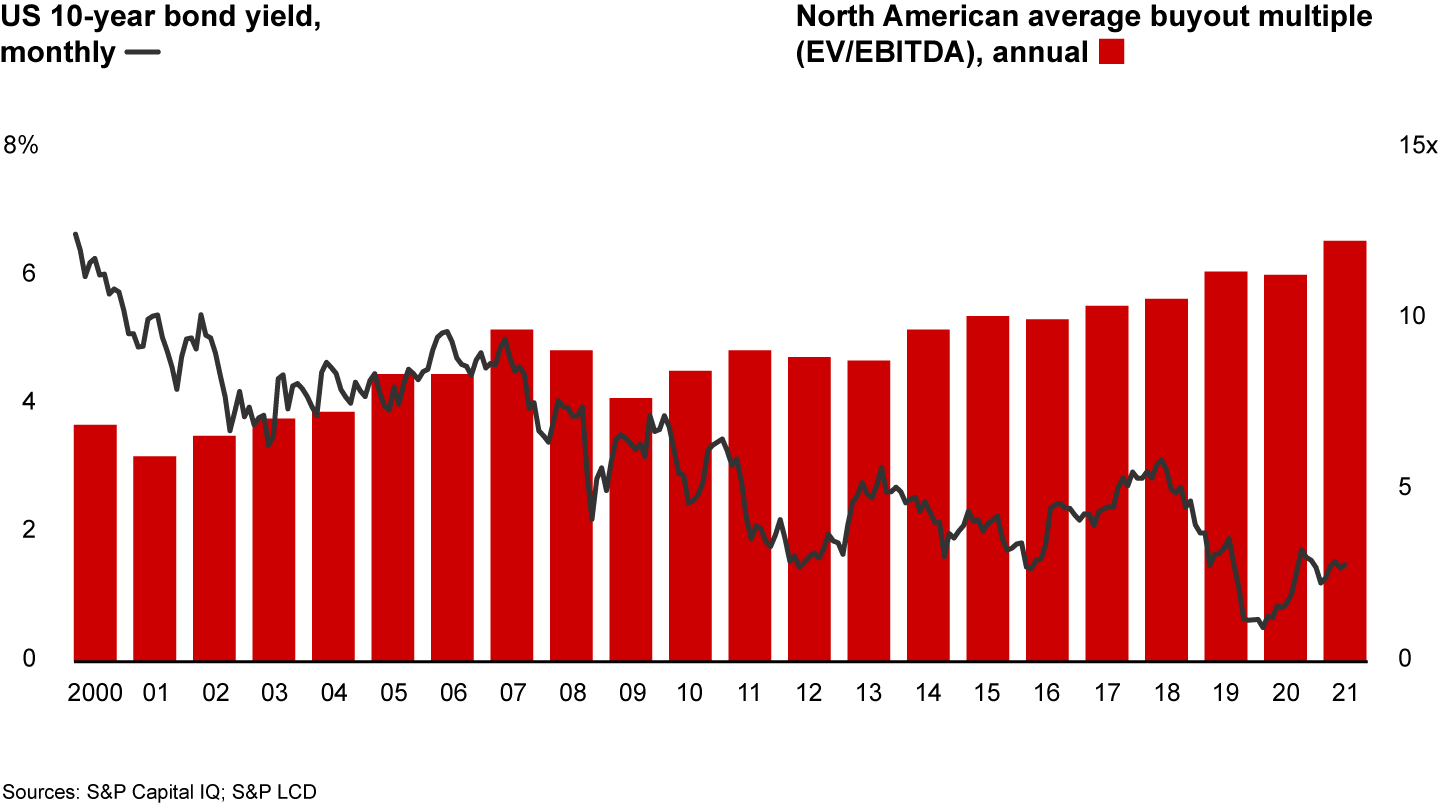
Consider the last 20 years of interest rate movements. While the 10-year Treasury yield has dropped from 6.0% in 2000 to around 1.5% today, the average leveraged buyout multiple has jumped to 12.3 times earnings before interest, taxes, depreciation, and amortization (EBITDA), from 6.8x in 2000—a 1.8-fold increase (see Figure 1).
Figure 1

But the inflation outlook has shifted dramatically in the wake of the Covid-19 pandemic and the war in Ukraine. Spikes in both producer and consumer prices suggest the era of easy money may be drawing to a close. It is certainly debatable whether price increases are a temporary result of the broken global supply chain and other Covid-related disruptions, but it is clear that companies across the economy are scrambling to push through long-deferred price increases that they will be reluctant to reverse. And while the macro impacts of the war are impossible to gauge, it is likely the disruption will maintain upward pressure on prices, while creating a massive humanitarian crisis that is shaking Europe and world.
This explains why stock traders over the past several months have been reflexively hitting the sell button every time the consumer price index or the latest crude report supports the notion that inflationary pressures are here to stay.
Hugh MacArthur discusses private equity's record year and the future outlook amid rising inflation.
The concern, of course, is elementary finance—when discount rates fall, asset prices rise, and vice versa. All things being equal, the amount investors are willing to pay for an asset increases along with the present value of its earnings, which means that rising rates undercut the value of assets today. This shifts the tide: Rather than floating along in a market buoyed by rising multiples, investors may have to swim against the monetary current as they seek to increase value. Generating returns in such an environment can be significantly harder.
How hard? For private equity investors, that question should be front and center. Whether or not you believe inflation is an enduring concern, there’s no arguing that private equity faces a dual threat from rising rates and costs. On the one hand, dealmakers who have benefited mightily from the run-up in multiples over the past two decades risk the opposite if valuations flatten out. On the other, inflationary cost pressures and the resulting margin pressure pose a real threat to just about any portfolio company.
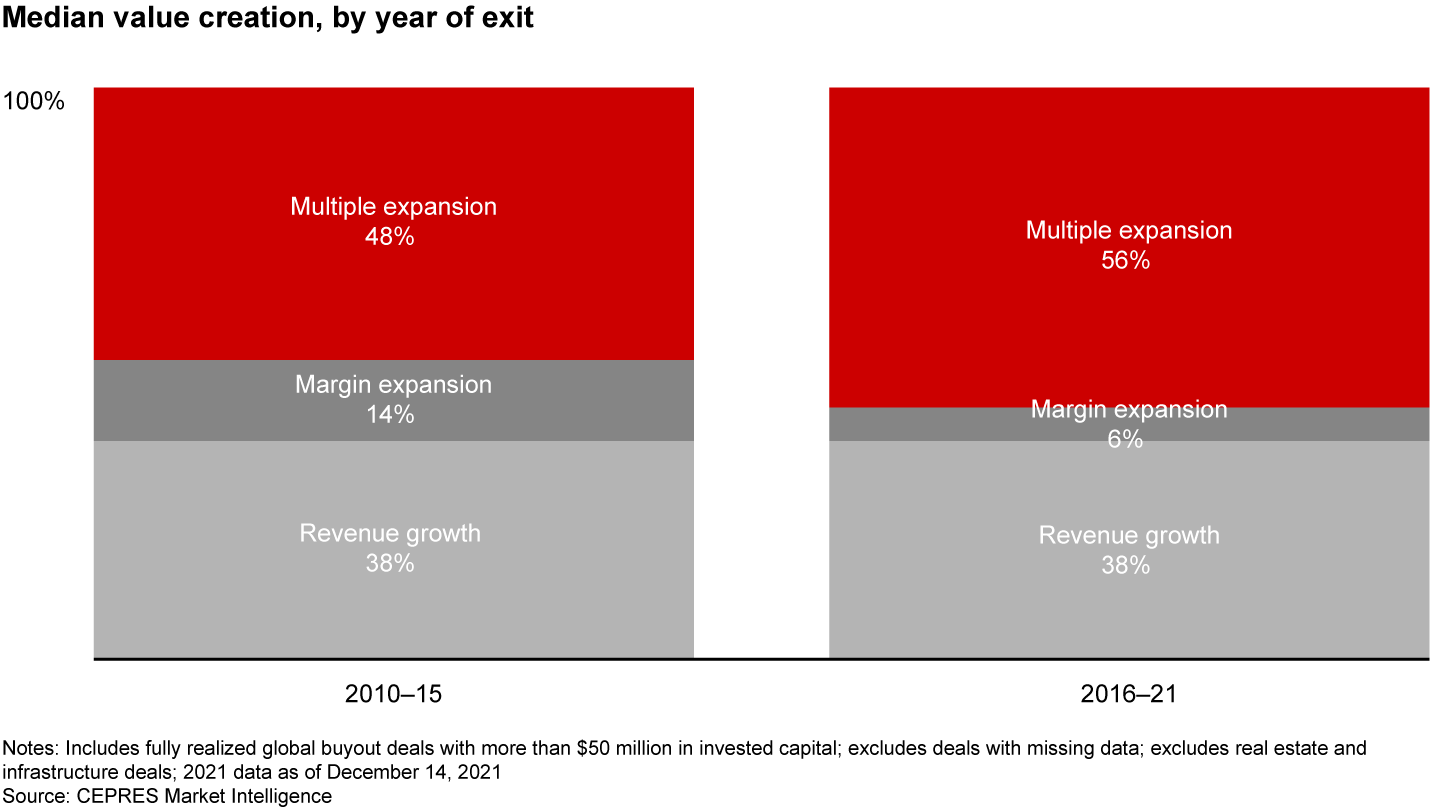
The industry’s exposure is evident in data showing the composition of returns. According to CEPRES Market Intelligence, multiple expansion has been by far the largest contributor to private equity buyout returns over the past decade, dwarfing revenue growth and margin improvement as sources of value creation. Over the past five years, the trend has become even more pronounced. While multiple expansion accounted for 48% of value creation in the average deal from 2010 to 2015, that number jumped to 56% from 2016 to 2021 (see Figure 2).
Figure 2

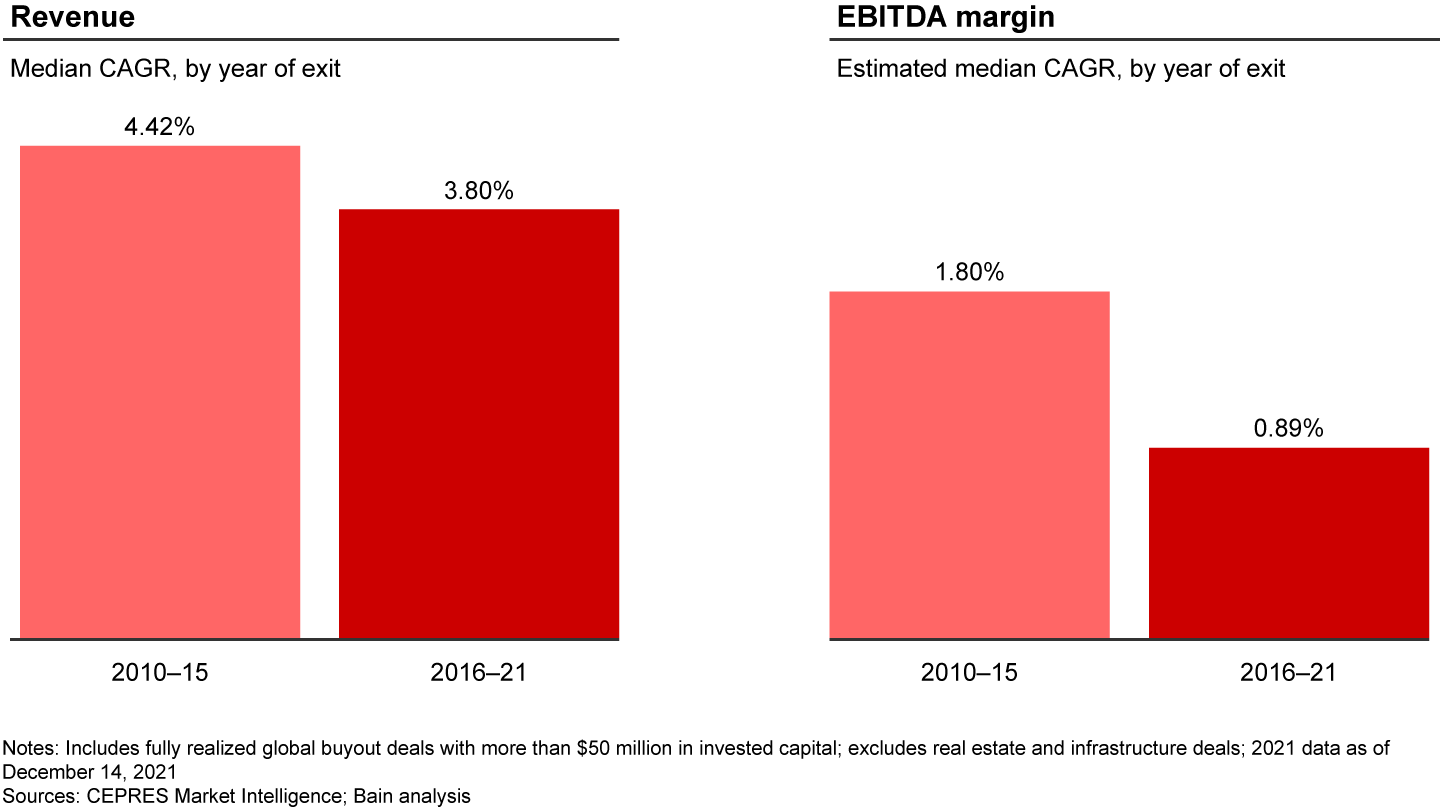
The imbalance owes much to the steady tailwind provided by rising asset multiples, which can allow general partners (GPs) to buy a portfolio company and see an increase in value even if little has changed in its operational performance. Something else is going on as well: Buyout investors on average have actually become less adept at improving the performance of their portfolio companies. Comparing those same five-year periods, CEPRES data shows that revenue and margin growth among buyout companies have fallen 14% and 51%, respectively (see Figure 3). For the past decade, then, private equity funds have not only developed an outsize reliance on multiple expansion to generate returns, but they have also lost ground when it comes to adding organic value.
Figure 3

Turning this trend around in the years to come isn’t going to get easier. Well before Russian troops marched into Ukraine, firms were already seeing significant cost pressure across their portfolios from the rising price of inputs. In the wake of the invasion, food and energy prices spiked even more, and while they may ease off again in the months ahead, they are unlikely to fall back below pre-war levels anytime soon.
Meanwhile, demographic trends also promise to make capital more expensive. The world’s baby boomers are moving from their peak savings years (ages 45–59) into retirement, when their spending could add to inflationary pressures. Germany, especially, is feeling the early impact of this shift.
Inflation aside, many other global factors also pose challenges for companies trying to improve profitability. The Covid effect and geopolitical tensions have forced companies to think hard about whether they will have to reverse years of cost optimization to shore up their global supply chains. Expensive regulation has accelerated globally as governments react to environmental and security concerns. Sustainability and ESG initiatives can add costs across the organization even as they confer other important benefits. Labor shortages, though partially offset by automation, are putting upward pressure on wages.
At the same time, political tensions, demographic trends, and a retreat from globalization have already begun to restrict the flow of cheap capital, even as labor shortages and the push for automation simultaneously increase demand. There are plenty of early signs that geopolitics and national security concerns may become impediments to global capital flows. A few examples include China’s crackdown on ride-hailing company Didi Chuxing, Germany blocking China’s acquisition of satellite and radar technology firm IMST, and new disclosure requirements for Chinese companies from the US Securities & Exchange Commission. Now come new sanctions on Russia's central bank. Those will have long-term implications for the perceived safety of reserves held by some governments in foreign countries.
Together, these factors could make it significantly more challenging in the years ahead for GPs to deliver the kinds of returns their limited partners have come to expect. After three decades of negligible inflation, PE firms and portfolio companies will have to learn how to manage effectively amid rising prices and rates. Many firms will also have to become much more adept at generating alpha by helping portfolio companies make the operational and strategic improvements that generate sustained EBITDA growth. Amid the market’s clear warning signs, firms should be asking themselves several key questions.
How, specifically, could inflation affect our portfolio companies, and how should we address those risks?
Given both the threat and opportunity inflation poses for private equity investors, this is clearly question No. 1. And it will pay to move quickly. Companies that wait for their suppliers to send them price increases will find it is already too late to get ahead of the problem.
At the moment, markets and customers see the logic and inevitability of price moves, providing an unprecedented opportunity to capture increases. To take full advantage, however, most firms will likely have to learn how to manage effectively in a period of persistently rising prices. Having essentially ignored inflation for three decades, they will have to adopt a new mindset and acquire new skills.
The immediate challenge for private equity firms is to diagnose exposure to inflation across the portfolio and then devise strategies to react quickly. That starts with setting up a “control tower” at the fund level to quickly gather essential information: Which companies are seeing supply cost increases? Which are already working on pricing initiatives? What are they hearing in the market?
Companies that wait for their suppliers to send them price increases will find it is already too late to get ahead of the problem.
At the portfolio company level, the imperative is to diagnose cost pressures and pricing opportunities product by product, customer by customer. Blanket pricing moves don’t work. Companies need to be surgical based not just on input costs, but also on factors like the value of a customer or segment, historical performance, and the company’s position in the relevant market.
For one private equity–owned durable goods company with operations across the US and Europe, this process started after managers began seeing supplier price increases in isolated pockets of its business. Before the problem spread more broadly, the firm launched a three-part intervention. For each product and customer, it first determined a price floor based on rising inputs and the inflation forecast. It then set an ambitious price ceiling to cover future inflation based on the competitive environment.
Finally, it came up with concrete, realistic pricing moves for each customer and segment, in close consultation with the front line. This last part is essential. It leads to the best decisions and secures buy-in from salespeople who would naturally avoid pricing conversations if they could help it. The company was firm in holding the sales team to task. But it also made their jobs easier by creating incentives and equipping them with clear data, sales scripts, account-specific targets, and coaching.
This focused program generated quick results. But it also established a repeatable model to add future value through pricing discipline and flexibility—a model that could be applied to one company or across a firm’s entire portfolio. This is the kind of commercial excellence initiative that can be a powerful antidote to reliance on multiple expansion. For many companies, pricing discipline is a foreign concept, and leakage through off-contract discounts and other bad habits can be a significant drain on profitability. Proactive GPs can use the inflation challenge to help companies instill more discipline.
Where do our returns really come from, and does that leave us vulnerable?
Breaking this question down starts with a deal-by-deal analysis to understand what factors are most responsible for returns. It’s a valuable exercise at any time, but especially amid the threat of rising rates. Firms need clear visibility into two things: How much has the general buoyancy of asset prices contributed to returns, and how much has come from boosting revenue growth or improving margins? In other words, if rising rates flatten multiples, where would that leave you in terms of generating differentiated returns?
Understanding the composition of its returns was a game changer for one fund looking to boost its performance. The firm that sponsored it had always excelled at buying undervalued or distressed companies and boosting their margins through cost initiatives that stick. An analysis of historical returns, however, revealed an opportunity to improve when it came to generating value through revenue growth. That insight led to a series of strategic changes. First, the firm shifted its sweet spot, targeting companies with both cost and growth characteristics. It then invested in adding new talent and developing industry-specific playbooks that would ensure its teams could identify and capture the revenue opportunities that those “growthier” deals relied on.
If rising rates flatten multiples, where would that leave you in terms of generating differentiated returns?
A good example was the acquisition of a fast-growing retail healthcare chain. The company benefited both from the firm’s prowess in finding efficiencies and from its newfound emphasis on growth. Instead of relying on cost measures alone to improve EBITDA, the new owners invested in revenue growth through rapid geographic expansion and by vastly improving the company’s scattershot approach to acquiring new customers. These were motions the firm wasn’t used to at first, but they have since become business as usual.
The key to embedding a powerful new strategy for value creation is a holistic approach. It’s not enough to sharpen the firm’s focus; you also have to ensure that every link in the value-creation chain lines up. This firm’s shift not only changed the kinds of deals it would target, but it also made certain the right pool of internal and external expertise was in place to execute those deals effectively. The results have been impressive. A strong exit of the retail health company and other significant realizations helped the fund in question generate an internal rate of return topping 30%—well within the top quartile of its vintage.
Are we prepared to hold onto assets longer?
The average amount of time private equity firms hold assets has slipped steadily, from 5.8 years in 2014 to 4.4 years in 2021. Dependable multiple expansion has enabled firms to buy a company, lever it up, and get out sooner, moving on to the next deal. The exception is the “best of both worlds” approach: divesting a large portion of equity as soon as possible but holding onto a slice of the company to capture even more multiple expansion.
The question now is, what happens to this formula in a more volatile environment, when cycles are more jagged and selling early is no longer so advantageous? Can the firm rely on producing at least a 2x return without finding new sources of revenue or improving EBITDA margins?
Trying to predict the course of inflation in a macro environment like today’s is largely a waste of time. But what’s clear already is that companies across the global economy are feeling cost pressures, and inflation expectations are affecting pricing behavior. This creates short-term imperatives—both offensive and defensive—to understand and manage through this dynamic, turbulent pricing environment at every company in your portfolio.
It should also signal that firms may not be able to afford the luxury of surfing on multiple expansion to keep limited partners happy. In an era of inflation, top-tier returns will inevitably depend on nuts-and-bolts value creation, helping improve a portfolio company’s ability to generate more revenue and cash flow. The good news: Investments in these capabilities will benefit a firm’s performance in any environment.
More from the report
Read our 2022 Global Private Equity Report
First published in 3월 2022