
Skip to Content
  • 오피스

    오피스

    미주
    • Atlanta
    • Austin
    • Bogota
    • Boston
    • Buenos Aires
    • Chicago
    • Dallas
    • Denver
    • Houston
    • Los Angeles
    • Mexico City
    • Minneapolis
    • Monterrey
    • Montreal
    • New York
    • Rio de Janeiro
    • San Francisco
    • Santiago
    • São Paulo
    • Seattle
    • Silicon Valley
    • Toronto
    • Washington, DC
    유럽, 중동, 아프리카
    • Amsterdam
    • Athens
    • Berlin
    • Brussels
    • Copenhagen
    • Doha
    • Dubai
    • Dusseldorf
    • Frankfurt
    • Helsinki
    • Istanbul
    • Johannesburg
    • Kyiv
    • Lisbon
    • London
    • Madrid
    • Milan
    • Munich
    • Oslo
    • Paris
    • Riyadh
    • Rome
    • Stockholm
    • Vienna
    • Warsaw
    • Zurich
    아시아, 호주
    • Bangkok
    • Beijing
    • Bengaluru
    • Brisbane
    • Ho Chi Minh City
    • Hong Kong
    • Jakarta
    • Kuala Lumpur
    • Manila
    • Melbourne
    • Mumbai
    • New Delhi
    • Perth
    • Seoul
    • Shanghai
    • Singapore
    • Sydney
    • Tokyo
    오피스 전체보기
  • 얼럼나이
  • 미디어 센터
  • 구독
  • 연락처
  • Korea | 한국어

    지역 및 언어 선택

    글로벌
    • Global (English)
    미주
    • Brazil (Português)
    • Argentina (Español)
    • Canada (Français)
    • Chile (Español)
    • Colombia (Español)
    유럽, 중동, 아프리카
    • France (Français)
    • DACH Region (Deutsch)
    • Italy (Italiano)
    • Spain (Español)
    • Greece (Elliniká)
    아시아, 호주
    • China (中文版)
    • Korea (한국어)
    • Japan (日本語)
  • Saved items (0)
    Saved items (0)

    You have no saved items.

    관심 있는 내용을 북마크하여 Red 폴더에 저장할 수 있습니다. Red 폴더 에서 저장된 내용을 읽거나 공유해보세요.

    Explore Bain Insights
  • 산업
    메인 메뉴

    산업

    • 우주항공, 방산 및 정부 서비스
    • 농업 관련 산업
    • 화학
    • 인프라, 건설 및 건축 자재
    • 소비재
    • 금융 서비스
    • 헬스케어
    • 산업용 기계 및 장비
    • 미디어 및 엔터테인먼트
    • 금속
    • 광업
    • 석유 및 가스
    • 제지 및 패키징 산업
    • 사모펀드
    • 사회 및 공공 부문
    • 유통
    • 기술
    • 텔레콤
    • 운송
    • 여행·여가
    • 유틸리티 및 재생가능 에너지
  • 컨설팅 서비스
    메인 메뉴

    컨설팅 서비스

    • Customer Experience
    • ESG
    • Innovation
    • M&A
    • 운영
    • 조직
    • 사모펀드
    • 고객 전략 및 마케팅
    • 전략
    • AI, 인사이트 및 솔루션
    • Technology
    • 변화 혁신
  • Digital
  • 인사이트
  • 베인 소개
    메인 메뉴

    베인 소개

    • 업무 소개
    • 베인의 신념
    • 구성원 및 리더십 소개
    • 고객 성과
    • 주요 수상 경력
    • 글로벌 파트너사
    Further: Our global responsibility
    • 다양성과 포용
    • 사회 공헌 활동
    • Sustainability
    • World Economic Forum
    Learn more about Further
  • Careers
    메인 메뉴

    Careers

    • Work with Us
      Careers
      Work with Us
      • Find Your Place
      • Our Work Areas
      • Integrated Teams
      • Students
      • Internships & Programs
      • Recruiting Events
    • Life at Bain
      Careers
      Life at Bain
      • Blog: Inside Bain
      • Career Stories
      • Our People
      • Where We Work
      • Supporting Your Growth
      • Affinity Groups
      • Benefits
    • Impact Stories
    • Hiring Process
      Careers
      Hiring Process
      • What to Expect
      • Interviewing
    FIND JOBS
  • 오피스
    메인 메뉴

    오피스

    • 미주
      오피스
      미주
      • Atlanta
      • Austin
      • Bogota
      • Boston
      • Buenos Aires
      • Chicago
      • Dallas
      • Denver
      • Houston
      • Los Angeles
      • Mexico City
      • Minneapolis
      • Monterrey
      • Montreal
      • New York
      • Rio de Janeiro
      • San Francisco
      • Santiago
      • São Paulo
      • Seattle
      • Silicon Valley
      • Toronto
      • Washington, DC
    • 유럽, 중동, 아프리카
      오피스
      유럽, 중동, 아프리카
      • Amsterdam
      • Athens
      • Berlin
      • Brussels
      • Copenhagen
      • Doha
      • Dubai
      • Dusseldorf
      • Frankfurt
      • Helsinki
      • Istanbul
      • Johannesburg
      • Kyiv
      • Lisbon
      • London
      • Madrid
      • Milan
      • Munich
      • Oslo
      • Paris
      • Riyadh
      • Rome
      • Stockholm
      • Vienna
      • Warsaw
      • Zurich
    • 아시아, 호주
      오피스
      아시아, 호주
      • Bangkok
      • Beijing
      • Bengaluru
      • Brisbane
      • Ho Chi Minh City
      • Hong Kong
      • Jakarta
      • Kuala Lumpur
      • Manila
      • Melbourne
      • Mumbai
      • New Delhi
      • Perth
      • Seoul
      • Shanghai
      • Singapore
      • Sydney
      • Tokyo
    오피스 전체보기
  • 얼럼나이
  • 미디어 센터
  • 구독
  • 연락처
  • Korea | 한국어
    메인 메뉴

    지역 및 언어 선택

    • 글로벌
      지역 및 언어 선택
      글로벌
      • Global (English)
    • 미주
      지역 및 언어 선택
      미주
      • Brazil (Português)
      • Argentina (Español)
      • Canada (Français)
      • Chile (Español)
      • Colombia (Español)
    • 유럽, 중동, 아프리카
      지역 및 언어 선택
      유럽, 중동, 아프리카
      • France (Français)
      • DACH Region (Deutsch)
      • Italy (Italiano)
      • Spain (Español)
      • Greece (Elliniká)
    • 아시아, 호주
      지역 및 언어 선택
      아시아, 호주
      • China (中文版)
      • Korea (한국어)
      • Japan (日本語)
  • Saved items  (0)
    메인 메뉴
    Saved items (0)

    You have no saved items.

    관심 있는 내용을 북마크하여 Red 폴더에 저장할 수 있습니다. Red 폴더 에서 저장된 내용을 읽거나 공유해보세요.

    Explore Bain Insights
  • 산업
    • 산업

      • 우주항공, 방산 및 정부 서비스
      • 농업 관련 산업
      • 화학
      • 인프라, 건설 및 건축 자재
      • 소비재
      • 금융 서비스
      • 헬스케어
      • 산업용 기계 및 장비
      • 미디어 및 엔터테인먼트
      • 금속
      • 광업
      • 석유 및 가스
      • 제지 및 패키징 산업
      • 사모펀드
      • 사회 및 공공 부문
      • 유통
      • 기술
      • 텔레콤
      • 운송
      • 여행·여가
      • 유틸리티 및 재생가능 에너지
  • 컨설팅 서비스
    • 컨설팅 서비스

      • Customer Experience
      • ESG
      • Innovation
      • M&A
      • 운영
      • 조직
      • 사모펀드
      • 고객 전략 및 마케팅
      • 전략
      • AI, 인사이트 및 솔루션
      • Technology
      • 변화 혁신
  • Digital
  • 인사이트
  • 베인 소개
    • 베인 소개

      • 업무 소개
      • 베인의 신념
      • 구성원 및 리더십 소개
      • 고객 성과
      • 주요 수상 경력
      • 글로벌 파트너사
      Further: Our global responsibility
      • 다양성과 포용
      • 사회 공헌 활동
      • Sustainability
      • World Economic Forum
      Learn more about Further
  • Careers
    최근 검색어
      최근 방문 페이지

      Content added to saved items

      Saved items (0)

      Removed from saved items

      Saved items (0)

      Management Tools

      Supply Chain Management

      Supply Chain Management

      Supply Chain Management is a system that synchronizes the efforts of all parties—suppliers, manufacturers, distributors, dealers, customers, and so on—involved in meeting a customer’s needs.

      • 읽기 소요시간

      Article

      Supply Chain Management
      en

      What Is Supply Chain Management?

      Supply Chain Management is a system that synchronizes the efforts of all parties—suppliers, manufacturers, distributors, dealers, customers, and so on—involved in meeting a customer’s needs. It forges closer relationships among all links in the value chain to deliver the right products to the right places at the right times. The goal is to establish such strong bonds of connection and trust among all parties that they can effectively function as a single unit, aligned to streamline business processes and achieve total customer satisfaction.
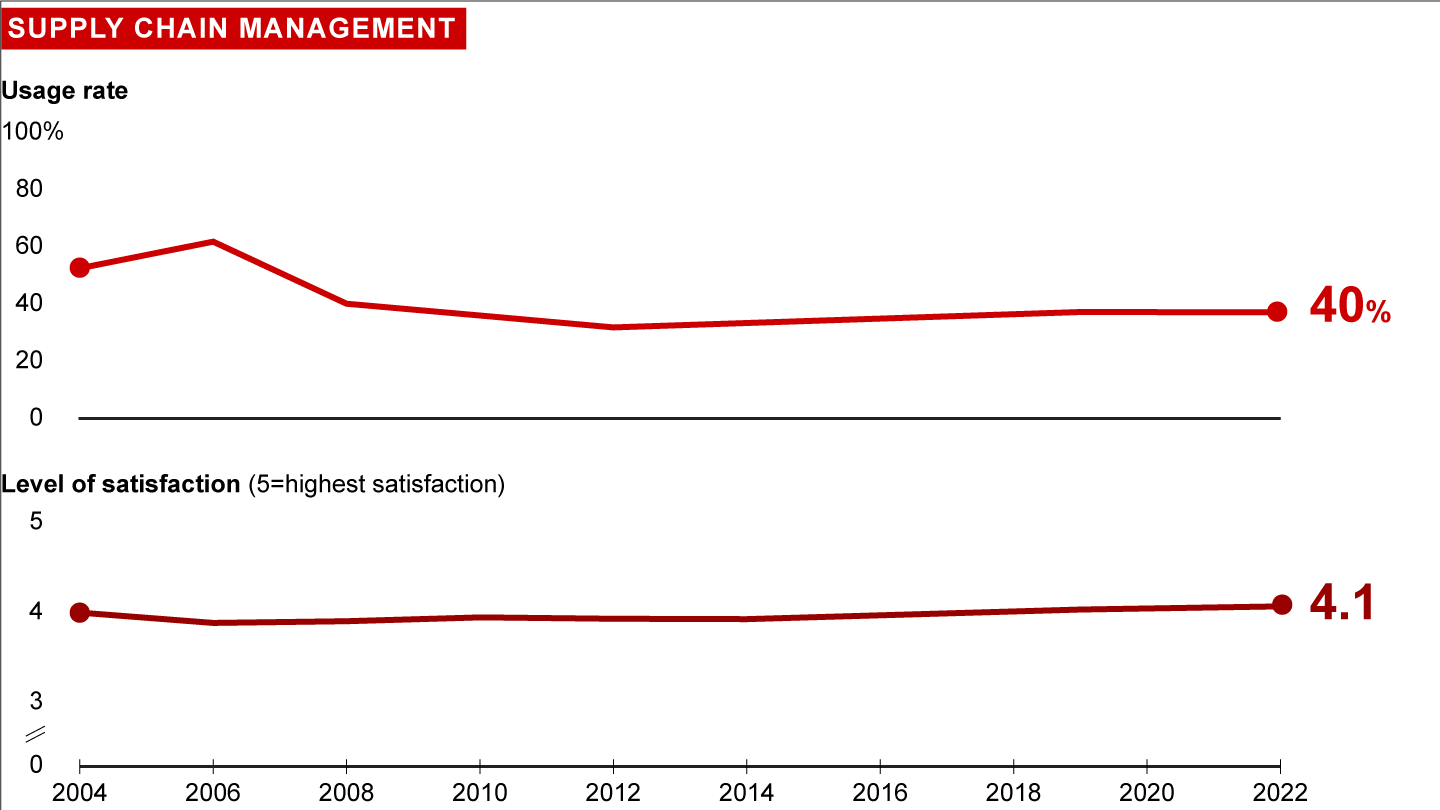
      Usage and satisfaction among survey respondents

      In response to a host of external forces (e.g., trade wars, demand and supply shortfalls), Supply Chain Management increasingly goes beyond reducing cost and inventory and improving service and quality, and includes developing resilience, creating responsible (e.g., sustainable, traceable) operations, and winning on responsiveness. Supply Chain Management capitalizes on the rise of digital technologies and automation to provide seamless, real-time visibility, accelerated processes, and improved flexibility and decision making.

      How Is Supply Chain Management Implemented?

      Companies typically implement Supply Chain Management in four stages:

      • Stage One seeks to increase the level of trust among vital links in the supply chain. Managers learn to treat former adversaries as valuable partners. This stage often leads to longer commitments with preferred partners.
      • Stage Two increases the exchange of information. It creates more accurate, up-to-date knowledge of demand forecasts, inventory levels, capacity utilization, production schedules, delivery dates, and other data that could help supply chain partners improve performance.
      • Stage Three expands efforts to manage the supply chain as one overall process rather than dozens of independent functions. It leverages the core competencies of each player, automates information exchange, changes management processes and incentive systems, eliminates unproductive activities, improves forecasting, reduces inventory levels, cuts cycle times, and involves customers more deeply in the Supply Chain Management process.
      • Stage Four identifies and implements radical ideas to transform the supply chain with improved processes, digitization, or simplification. It develops a view of future supply chain performance, considering innovative solutions to address current constraints as well as future needs. Scenarios are typically developed for transforming the performance of the supply chain that span different risk and benefit profiles. For leading scenarios, initiatives are identified, sequenced, and piloted.

      Related Topics

      • Borderless Corporation

      • Collaborative Commerce

      • Value Chain Analysis


      What Are Common Uses of Supply Chain Management?

      Recognizing that value is leaking out of the supply chain, but that only limited improvement can be achieved by any single company, managers turn to Supply Chain Management to help them deliver products and services faster, better, and less expensively.

      Effective supply chain management can:

      • Accelerate revenue growth: Increases ability to rapidly serve changes in market demand and expand output capacity through operation optimization
      • Boost customer satisfaction and advocacy: Increases customer collaboration through feedback loops and perfect order rate by eliminating operational silos
      • Unlock savings and cash flow: Reduces manufacturing and logistics costs through outsourcing and redesigning routes. Also helps optimize safety stock levels.
      • Minimize risk and increase reliability: Helps enhance forecast accuracy with improved tools and reduces disruptions by building buffers within network.
      • Improve environmental and social impacts
      • Selected references (click to expand)

        Chopra, Sunil. Supply Chain Management: Strategy, Planning, and Operation. Pearson Education, 2019.

        Ferdows, Karsa, Hau L. Lee and Xiande Zhao. “How to Turn a Supply Chain Platform into an Innovation Engine.” Harvard Business Review, July-August 2022.

        Gaur, Vishal and Abhinav Gaiha. “Building a Transparent Supply Chain.” Harvard Business Review, May/June 2020.

        Hugos, Michael H. Essentials of Supply Chain Management. Wiley, 2018.

        Panwar, Rajat, Jonatan Pinkse, and Valentina De Marchi. “The Future of Global Supply Chains in a Post-COVID-19 World.” California Management Review, 64(2), 5–23, January 2022.

        Sanders, N. R. “How to Use Big Data to Drive Your Supply Chain.” California Management Review, 58(3), 26–48, May 2016.

        Sheffi, Yossi. The New (Ab)Normal: Reshaping Business and Supply Chain Strategy Beyond Covid-19. MIT CTL Media, 2020.

        Sinha, Amit, Ednilson Bernardes, Rafael Calderon, and Thorsten Wuest. Digital Supply Networks: Transform Your Supply Chain and Gain Competitive Advantage with Disruptive Technology and Reimagined Processes, McGraw Hill, 2020.

        Stanton, Daniel. Supply Chain Management for Dummies. Wiley, 2021.

        Searcy, Cory, Pavel Castka, Jakki Mohr, and Sönke Fischer. “Transformational Transparency in Supply Chains: Leveraging Technology to Drive Radical Change.” California Management Review, 65(1), 19–43, November 2022.

        Vandeput, Nicolas. Data Science for Supply Chain Forecasting, De Gruyter, 2021.

        Villena, Verónica H. and Dennis A. Gioia. “A More Sustainable Supply Chain.” Harvard Business Review, March/April 2020.

      Read the Brief

      Management Tools & Trends 2023

      On the 30th anniversary of our survey, managers seem surprisingly upbeat.

      관련 컨설팅 서비스
      • 운영
      • Supply Chain
      운영
      How AI Is Starting to Transform Circular Packaging

      There are 15 AI use cases companies across the value chain can use today to accelerate circularity.

      자세히 보기
      경영관리 툴 및 트렌드
      Decarbonization

      Decarbonization is the process of reducing or removing carbon dioxide emissions from Earth’s atmosphere.

      자세히 보기
      경영관리 툴 및 트렌드
      Stakeholder Strategies

      Stakeholder strategies are a way to grow value for a company’s full business system (including shareholders, customers, employees, suppliers, and communities).

      자세히 보기
      운영
      Don’t Underestimate the Cost of Overcapacity

      Overcapacity is endemic to the paper and packaging industry, but these actions can help you maintain margins.

      자세히 보기
      경영관리 툴 및 트렌드
      Digital Transformation

      Digital Transformation is a way to integrate digital technologies into an organization’s strategy and operations.

      자세히 보기
      First published in 1월 2023
      태그
      • 경영관리 툴 및 트렌드
      • 운영
      • Supply Chain

      프로젝트 사례

      성과 개선 Turning bottlenecks into growth opportunities

      See more related case studies

      운영 Don't give customers options they don't want

      See more related case studies

      성과 개선 Carmaker shifts its production model

      See more related case studies

      베인에 궁금하신 점이 있으신가요?

      베인은 주저 없이 변화를 마주할 줄 아는 용감한 리더들과 함께합니다. 그리고, 이들의 담대한 용기는 고객사의 성공으로 이어집니다.

      급변하는 비즈니스 환경에서 살아남기 위한 선도자의 시각. 월간 Bain Insights에서 글로벌 비즈니스의 핵심 이슈를 확인하십시오.

      *개인정보 정책을 읽었으며 그 내용에 동의합니다.

      Privacy Policy를 읽고 동의해주십시오.
      Bain & Company
      문의하기 환경정책 Accessibility 이용약관 개인정보 보호 쿠키 사용 정책 Sitemap Log In

      © 1996-2026 Bain & Company, Inc.

      문의하기

      무엇을 도와드릴까요?

      • 프로젝트 문의
      • 채용 정보
      • 언론
      • 제휴 문의
      • 연사 초청
      오피스 전체보기