
Skip to Content
  • 오피스

    오피스

    미주
    • Atlanta
    • Austin
    • Bogota
    • Boston
    • Buenos Aires
    • Chicago
    • Dallas
    • Denver
    • Houston
    • Los Angeles
    • Mexico City
    • Minneapolis
    • Monterrey
    • Montreal
    • New York
    • Rio de Janeiro
    • San Francisco
    • Santiago
    • São Paulo
    • Seattle
    • Silicon Valley
    • Toronto
    • Washington, DC
    유럽, 중동, 아프리카
    • Amsterdam
    • Athens
    • Berlin
    • Brussels
    • Copenhagen
    • Doha
    • Dubai
    • Dusseldorf
    • Frankfurt
    • Helsinki
    • Istanbul
    • Johannesburg
    • Kyiv
    • Lisbon
    • London
    • Madrid
    • Milan
    • Munich
    • Oslo
    • Paris
    • Riyadh
    • Rome
    • Stockholm
    • Vienna
    • Warsaw
    • Zurich
    아시아, 호주
    • Bangkok
    • Beijing
    • Bengaluru
    • Brisbane
    • Ho Chi Minh City
    • Hong Kong
    • Jakarta
    • Kuala Lumpur
    • Manila
    • Melbourne
    • Mumbai
    • New Delhi
    • Perth
    • Seoul
    • Shanghai
    • Singapore
    • Sydney
    • Tokyo
    오피스 전체보기
  • 얼럼나이
  • 미디어 센터
  • 구독
  • 연락처
  • Korea | 한국어

    지역 및 언어 선택

    글로벌
    • Global (English)
    미주
    • Brazil (Português)
    • Argentina (Español)
    • Canada (Français)
    • Chile (Español)
    • Colombia (Español)
    유럽, 중동, 아프리카
    • France (Français)
    • DACH Region (Deutsch)
    • Italy (Italiano)
    • Spain (Español)
    • Greece (Elliniká)
    아시아, 호주
    • China (中文版)
    • Korea (한국어)
    • Japan (日本語)
  • Saved items (0)
    Saved items (0)

    You have no saved items.

    관심 있는 내용을 북마크하여 Red 폴더에 저장할 수 있습니다. Red 폴더 에서 저장된 내용을 읽거나 공유해보세요.

    Explore Bain Insights
  • 산업
    메인 메뉴

    산업

    • 우주항공, 방산 및 정부 서비스
    • 농업 관련 산업
    • 화학
    • 인프라, 건설 및 건축 자재
    • 소비재
    • 금융 서비스
    • 헬스케어
    • 산업용 기계 및 장비
    • 미디어 및 엔터테인먼트
    • 금속
    • 광업
    • 석유 및 가스
    • 제지 및 패키징 산업
    • 사모펀드
    • 사회 및 공공 부문
    • 유통
    • 기술
    • 텔레콤
    • 운송
    • 여행·여가
    • 유틸리티 및 재생가능 에너지
  • 컨설팅 서비스
    메인 메뉴

    컨설팅 서비스

    • Customer Experience
    • ESG
    • Innovation
    • M&A
    • 운영
    • 조직
    • 사모펀드
    • 고객 전략 및 마케팅
    • 전략
    • AI, 인사이트 및 솔루션
    • Technology
    • 변화 혁신
  • Digital
  • 인사이트
  • 베인 소개
    메인 메뉴

    베인 소개

    • 업무 소개
    • 베인의 신념
    • 구성원 및 리더십 소개
    • 고객 성과
    • 주요 수상 경력
    • 글로벌 파트너사
    Further: Our global responsibility
    • 다양성과 포용
    • 사회 공헌 활동
    • Sustainability
    • World Economic Forum
    Learn more about Further
  • Careers
    메인 메뉴

    Careers

    • Work with Us
      Careers
      Work with Us
      • Find Your Place
      • Our Work Areas
      • Integrated Teams
      • Students
      • Internships & Programs
      • Recruiting Events
    • Life at Bain
      Careers
      Life at Bain
      • Blog: Inside Bain
      • Career Stories
      • Our People
      • Where We Work
      • Supporting Your Growth
      • Affinity Groups
      • Benefits
    • Impact Stories
    • Hiring Process
      Careers
      Hiring Process
      • What to Expect
      • Interviewing
    FIND JOBS
  • 오피스
    메인 메뉴

    오피스

    • 미주
      오피스
      미주
      • Atlanta
      • Austin
      • Bogota
      • Boston
      • Buenos Aires
      • Chicago
      • Dallas
      • Denver
      • Houston
      • Los Angeles
      • Mexico City
      • Minneapolis
      • Monterrey
      • Montreal
      • New York
      • Rio de Janeiro
      • San Francisco
      • Santiago
      • São Paulo
      • Seattle
      • Silicon Valley
      • Toronto
      • Washington, DC
    • 유럽, 중동, 아프리카
      오피스
      유럽, 중동, 아프리카
      • Amsterdam
      • Athens
      • Berlin
      • Brussels
      • Copenhagen
      • Doha
      • Dubai
      • Dusseldorf
      • Frankfurt
      • Helsinki
      • Istanbul
      • Johannesburg
      • Kyiv
      • Lisbon
      • London
      • Madrid
      • Milan
      • Munich
      • Oslo
      • Paris
      • Riyadh
      • Rome
      • Stockholm
      • Vienna
      • Warsaw
      • Zurich
    • 아시아, 호주
      오피스
      아시아, 호주
      • Bangkok
      • Beijing
      • Bengaluru
      • Brisbane
      • Ho Chi Minh City
      • Hong Kong
      • Jakarta
      • Kuala Lumpur
      • Manila
      • Melbourne
      • Mumbai
      • New Delhi
      • Perth
      • Seoul
      • Shanghai
      • Singapore
      • Sydney
      • Tokyo
    오피스 전체보기
  • 얼럼나이
  • 미디어 센터
  • 구독
  • 연락처
  • Korea | 한국어
    메인 메뉴

    지역 및 언어 선택

    • 글로벌
      지역 및 언어 선택
      글로벌
      • Global (English)
    • 미주
      지역 및 언어 선택
      미주
      • Brazil (Português)
      • Argentina (Español)
      • Canada (Français)
      • Chile (Español)
      • Colombia (Español)
    • 유럽, 중동, 아프리카
      지역 및 언어 선택
      유럽, 중동, 아프리카
      • France (Français)
      • DACH Region (Deutsch)
      • Italy (Italiano)
      • Spain (Español)
      • Greece (Elliniká)
    • 아시아, 호주
      지역 및 언어 선택
      아시아, 호주
      • China (中文版)
      • Korea (한국어)
      • Japan (日本語)
  • Saved items  (0)
    메인 메뉴
    Saved items (0)

    You have no saved items.

    관심 있는 내용을 북마크하여 Red 폴더에 저장할 수 있습니다. Red 폴더 에서 저장된 내용을 읽거나 공유해보세요.

    Explore Bain Insights
  • 산업
    • 산업

      • 우주항공, 방산 및 정부 서비스
      • 농업 관련 산업
      • 화학
      • 인프라, 건설 및 건축 자재
      • 소비재
      • 금융 서비스
      • 헬스케어
      • 산업용 기계 및 장비
      • 미디어 및 엔터테인먼트
      • 금속
      • 광업
      • 석유 및 가스
      • 제지 및 패키징 산업
      • 사모펀드
      • 사회 및 공공 부문
      • 유통
      • 기술
      • 텔레콤
      • 운송
      • 여행·여가
      • 유틸리티 및 재생가능 에너지
  • 컨설팅 서비스
    • 컨설팅 서비스

      • Customer Experience
      • ESG
      • Innovation
      • M&A
      • 운영
      • 조직
      • 사모펀드
      • 고객 전략 및 마케팅
      • 전략
      • AI, 인사이트 및 솔루션
      • Technology
      • 변화 혁신
  • Digital
  • 인사이트
  • 베인 소개
    • 베인 소개

      • 업무 소개
      • 베인의 신념
      • 구성원 및 리더십 소개
      • 고객 성과
      • 주요 수상 경력
      • 글로벌 파트너사
      Further: Our global responsibility
      • 다양성과 포용
      • 사회 공헌 활동
      • Sustainability
      • World Economic Forum
      Learn more about Further
  • Careers
    최근 검색어
      최근 방문 페이지

      Content added to saved items

      Saved items (0)

      Removed from saved items

      Saved items (0)

      Report

      Fast-Forward Darwin: The Speed Imperative in Tech

      Fast-Forward Darwin: The Speed Imperative in Tech

      The pace of industry evolution continues to pick up.

      글 David Crawford and Matthew Crupi

      • 읽기 소요시간
      }

      Report

      Fast-Forward Darwin: The Speed Imperative in Tech
      en

      This article is Chapter 2 of Bain’s global Technology Report 2020. Explore the contents of the report here or download the PDF to read the full report.

      For a sobering reminder of the pace of change in technology markets, just look at the turnover at the top (see Figure 1). 

      Figure 1
      The 15 most-valuable technology companies have changed dramatically from 1999 to 2019

      In 1999, the list of the 15 highest-valued technology companies worldwide was populated by mainframe legacy companies such as IBM; enterprise resource planning (ERP) darlings such as Oracle; and the winners of the PC/workgroup computing phenomenon: Microsoft, Intel, Cisco, Dell and HP.

      A decade later, about half of the list had been replaced. The most notable additions were early winners in search (Google), mobile (Apple, Qualcomm, Samsung) and ERP consolidation (SAP). For the first time, a semiconductor foundry (Taiwan Semiconductor Manufacturing Co.) also made the list.

      By 2019, 40% of the top 15 had turned over again. The newcomers illustrate the importance of social media (Facebook) and the growing influence of China (Tencent, Alibaba). But the decade’s most transformative trend was the massive global success of cloud technology. It enabled the growth of other newcomers to the list (Amazon, Netflix, Adobe), and stalwarts from 2009 (Microsoft, Apple, Alphabet) rode the wave to massive valuations 10 years later.

      This rate of creative destruction speaks directly to the vibrancy and capacity for innovation of the technology sector. But is this dynamic nature par for the course in most industries?

      The answer is no.

      Bain research shows that technology companies are 12% more likely to be disrupted than companies in retail and 25% more likely than those in financial services, two other industries that have historically gone through disruptions (see Figure 2). Although the term “disruption” has become a cliché, here we’re specifically referring to companies whose annual market capitalization growth lags their sector’s average by 2 percentage points or more for at least three years in a row. Only advanced manufacturing and services companies have a higher likelihood of being disrupted than technology companies.

      Figure 2
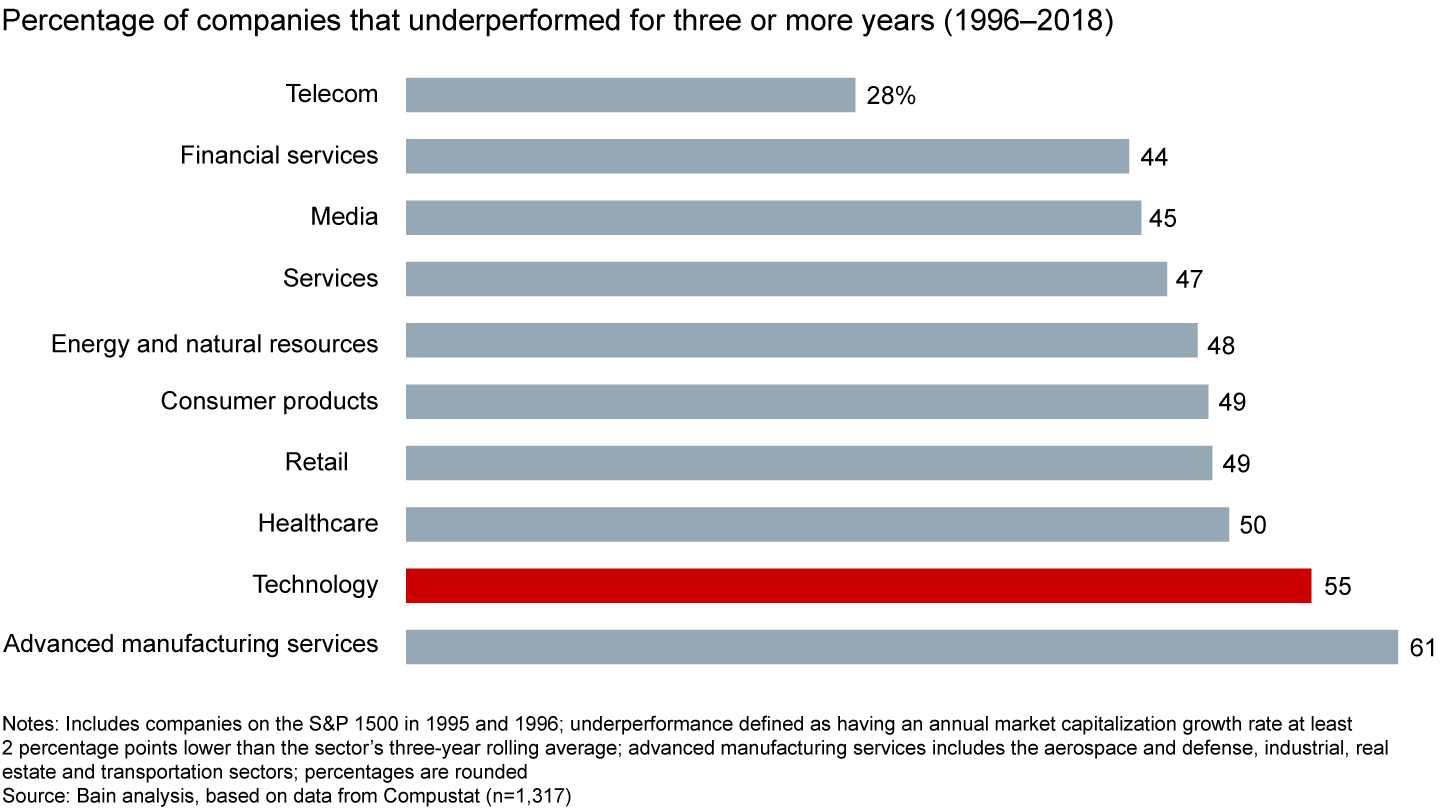
      Technology companies are easily disrupted
      Chart showing that companies in the technology industry are among the most easily disrupted by innovators, relative to other industries
      Chart showing that companies in the technology industry are among the most easily disrupted by innovators, relative to other industries

      And once a technology company falls behind, it can be difficult to repair. The same Bain research suggests that a technology company that has been disrupted is 12% less likely to return to sector-average market capitalization growth or higher than companies in retail and 17% less likely than those in healthcare, for example (see Figure 3). 

      Figure 3
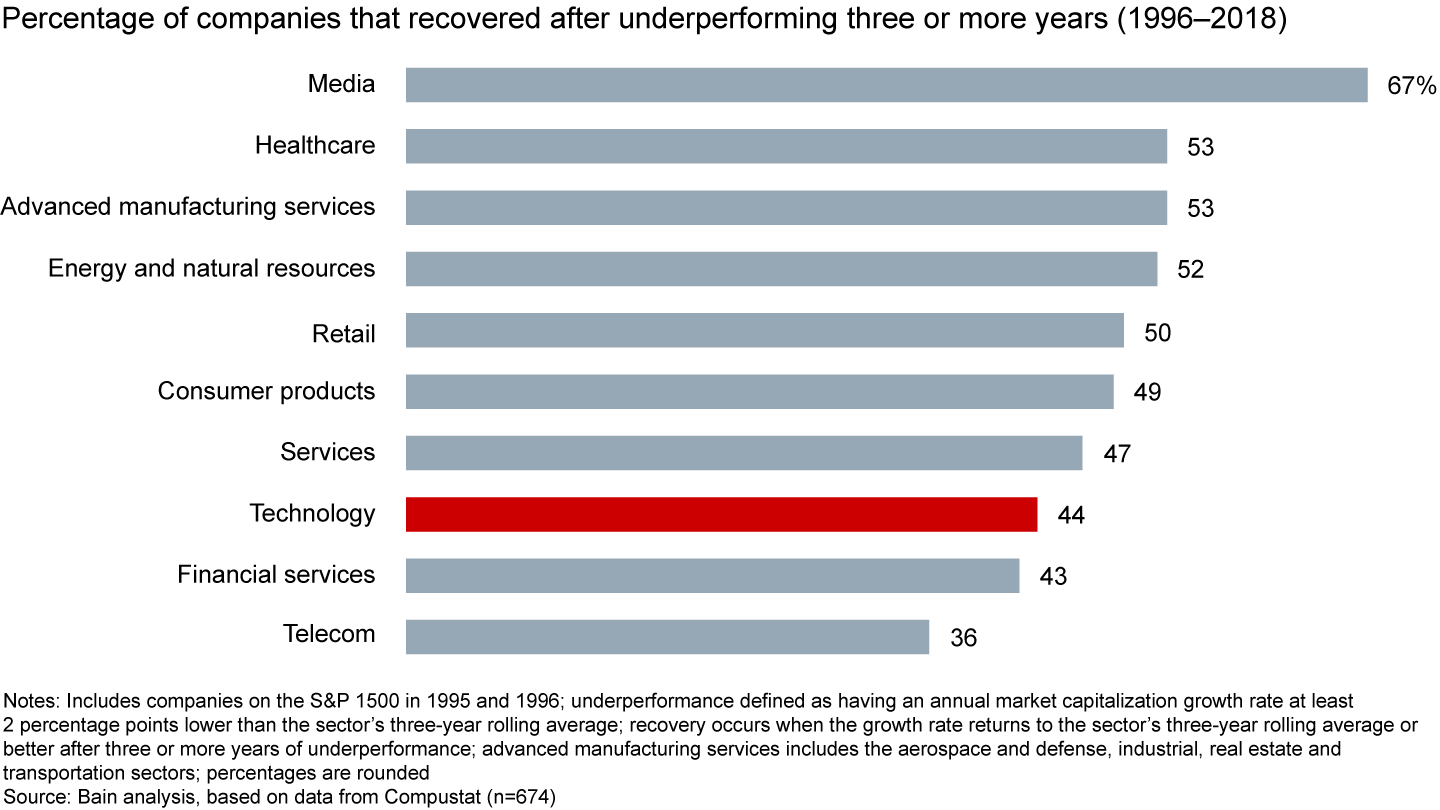
      Once disrupted, technology companies can be hard to repair
      Chart showing that once a technology company is disrupted by another, it can be hard to recover lost ground due to the speed of innovation
      Chart showing that once a technology company is disrupted by another, it can be hard to recover lost ground due to the speed of innovation

      Even more striking, the data shows that once a technology company trails its sector for three years or more, its chances of turning things around are very low, indeed (see Figure 4).  

      Figure 4
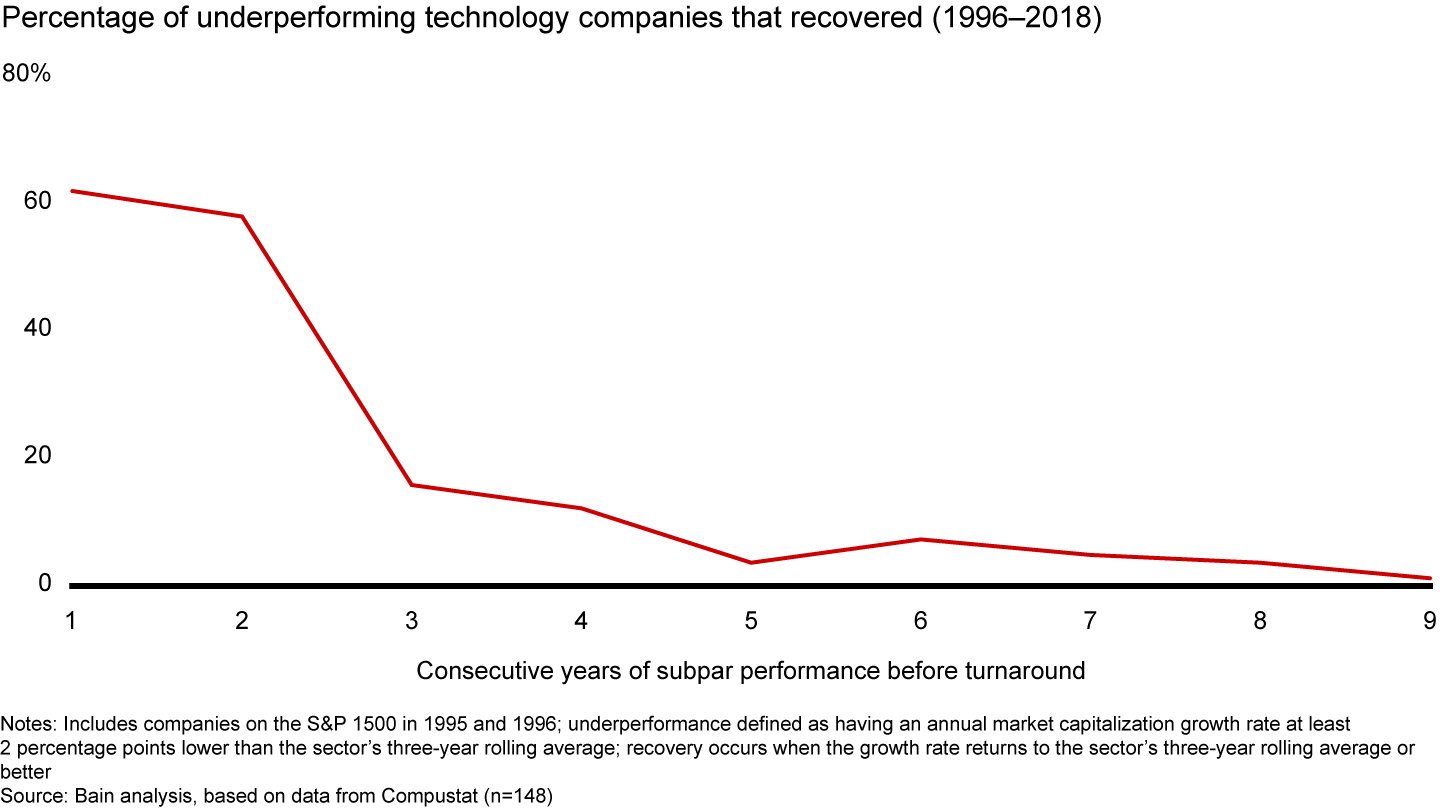
      The longer a technology company underperforms, the lower its chances of a turnaround
      Chart showing that the longer a technology company underperforms, the lower its chances of a successful turnaround.
      Chart showing that the longer a technology company underperforms, the lower its chances of a successful turnaround.

      Why is strong business growth so difficult to maintain in the technology industry? Many industry CEOs attribute it primarily to the speed at which technology transitions occur. 

      In some industries, such as manufacturing or oil and gas, the cycle times for a paradigm-shifting product to evolve and take hold can take many years, sometimes decades. However, the transition from feature phones to smartphones, for example, was completed in just seven years—from the introduction of the Apple iPhone in 2007 to the sale of Nokia’s handset unit to Microsoft in 2014. 

      Consumer mobile applications can ramp up with even more dizzying speed. ByteDance was reportedly worth $78 billion just seven years after its 2012 founding. The China-based company rode the runaway successes of TikTok and Musical.ly, an app acquired in 2017 and later merged with TikTok. These apps helped usher in an era of videostreaming and social media built on simple tools that allow users to post short, creative videos and riff off of each other’s creations. TikTok is now a global phenomenon with hundreds of millions of daily users, although it’s currently confronted by a controversy over how it handles user data and is under pressure from the Trump administration to become part of a US-based company.

      The pace of these transitions continues to accelerate. After launching in 2004, it took Facebook less than four years to reach 50 million users, according to news articles. By 2016, it took Instagram Stories less than two months to get to 50 million users, BuzzFeed News and other media outlets reported. 

      This also speaks to the “winner-takes-most” effect in the technology industry. Due to abundant cloud-computing infrastructure and mobile connectivity worldwide, a technology platform can reach a massive audience at unprecedented rates. And, of course, increasing scale digitally is nearly frictionless. It doesn’t require the time or costs involved in producing or distributing physical products. Ultimately, scale accrues so quickly to the winners that once a transition is missed, it’s difficult for other companies to get in the game.

      As all technology executives know, technology talent is remarkably mobile and often compensated with company stock. When a technology firm falls behind in its sector, employees often dust off their résumés and begin scouting new jobs at the next fast-rising company. 

      Finally, most technology companies find they must rely on mergers and acquisitions to reposition and extend their businesses. But many lose several years mired in a common series of pitfalls before they hone their M&A strategy and skills. These missteps often include assigning core-business veterans to new market domains where they lack necessary expertise; hiring token outsiders who struggle to lead veteran teams; and making tiny acquisitions and overintegrating them to the point that the benefits of the deal are dissipated. The time lost navigating these mistakes often closes the company’s window for recovering.

      Technology CEOs understand these challenges well, but that doesn’t make them any less daunting. So, how do leading technology companies create value and—just as important—maintain it? The keys are getting the most out of their core businesses and being willing to evolve, even when it’s painful in the short term.

      Read the Next Chapter

      Creating Value in Tech through Constant Reinvention


      저자
      • Headshot of David Crawford
        David Crawford
        파트너, Silicon Valley
      • Headshot of Matthew Crupi
        Matthew Crupi
        파트너, Dallas
      문의하기
      관련 산업
      • 기술
      • Software
      관련 컨설팅 서비스
      • 정보기술(IT)
      Technology Report
      Five Functions Where AI Is Already Delivering

      Spurred on by early success, companies of all sizes are increasing their spending on generative AI.

      자세히 보기
      Technology Report
      Will Agentic AI Disrupt SaaS?

      Disruption is mandatory. Obsolescence is optional.

      자세히 보기
      기술
      Software M&A

      The good news: Most deal best practices still apply to AI acquisitions.

      자세히 보기
      기술
      How Businesses Can Prepare for Post-Quantum Cybersecurity Threats

      Your company will soon face attackers armed with quantum technology. Will you be ready?

      자세히 보기
      Technology Report
      State of the Art of Agentic AI Transformation

      Tech-forward enterprises have cracked the code on ROI for AI. Falling behind is riskier than ever as the next wave of agentic AI raises the stakes.

      자세히 보기
      First published in 10월 2020
      태그
      • 기술
      • 정보기술(IT)
      • Software
      • Technology Report

      프로젝트 사례

      지속 가능성 및 기업의 사회적 책임 Can Microchips Turbocharge Sustainability Improvement?

      See more related case studies

      Helping a Midsize ERP Player Compete against the Giants

      See more related case studies

      고객 전략 및 마케팅 Video: A Marketing Transformation Puts a Software Leader Back on Top

      See more related case studies

      베인에 궁금하신 점이 있으신가요?

      베인은 주저 없이 변화를 마주할 줄 아는 용감한 리더들과 함께합니다. 그리고, 이들의 담대한 용기는 고객사의 성공으로 이어집니다.

      급변하는 비즈니스 환경에서 살아남기 위한 선도자의 시각. 월간 Bain Insights에서 글로벌 비즈니스의 핵심 이슈를 확인하십시오.

      *개인정보 정책을 읽었으며 그 내용에 동의합니다.

      Privacy Policy를 읽고 동의해주십시오.
      Bain & Company
      문의하기 환경정책 Accessibility 이용약관 개인정보 보호 쿠키 사용 정책 Sitemap Log In

      © 1996-2026 Bain & Company, Inc.

      문의하기

      무엇을 도와드릴까요?

      • 프로젝트 문의
      • 채용 정보
      • 언론
      • 제휴 문의
      • 연사 초청
      오피스 전체보기