

Brief

한눈에 보기
- Turbulent times are a chance to refocus innovation on real, scalable growth opportunities.
- A reset starts with focusing ruthlessly on return on investment and killing zombie projects.
- Changes in customer behavior spawn new markets, but smart companies test before investing.
- The larger pool of available talent and cheaper M&A can accelerate innovation.
Hard times are fertile ground for growth and innovation. Time and again, the companies that accelerated fastest out of a downturn were the ones that seized the opportunities that downturn created.
Corporate innovation programs often can feel more like a drag than an accelerant. Ideas abound, but results are unclear and return on investment (ROI) is elusive. So when economic troubles loom, it’s tempting to turn to a cost-cutting playbook and put innovation bets on hold until better days return.
Hunkering down poses more risk than it avoids. A downturn is more than just a good reason to pull the plug on projects that can’t get off the ground: it’s a potential catalyst. Downturns create opportunities for disruption, moments when your company can rapidly seize market share … or lose it to someone else. The bolder and safer move, then, is to launch or accelerate innovation efforts that promise real, scalable ROI, and to invest in ways that truly can deliver a new engine of growth.
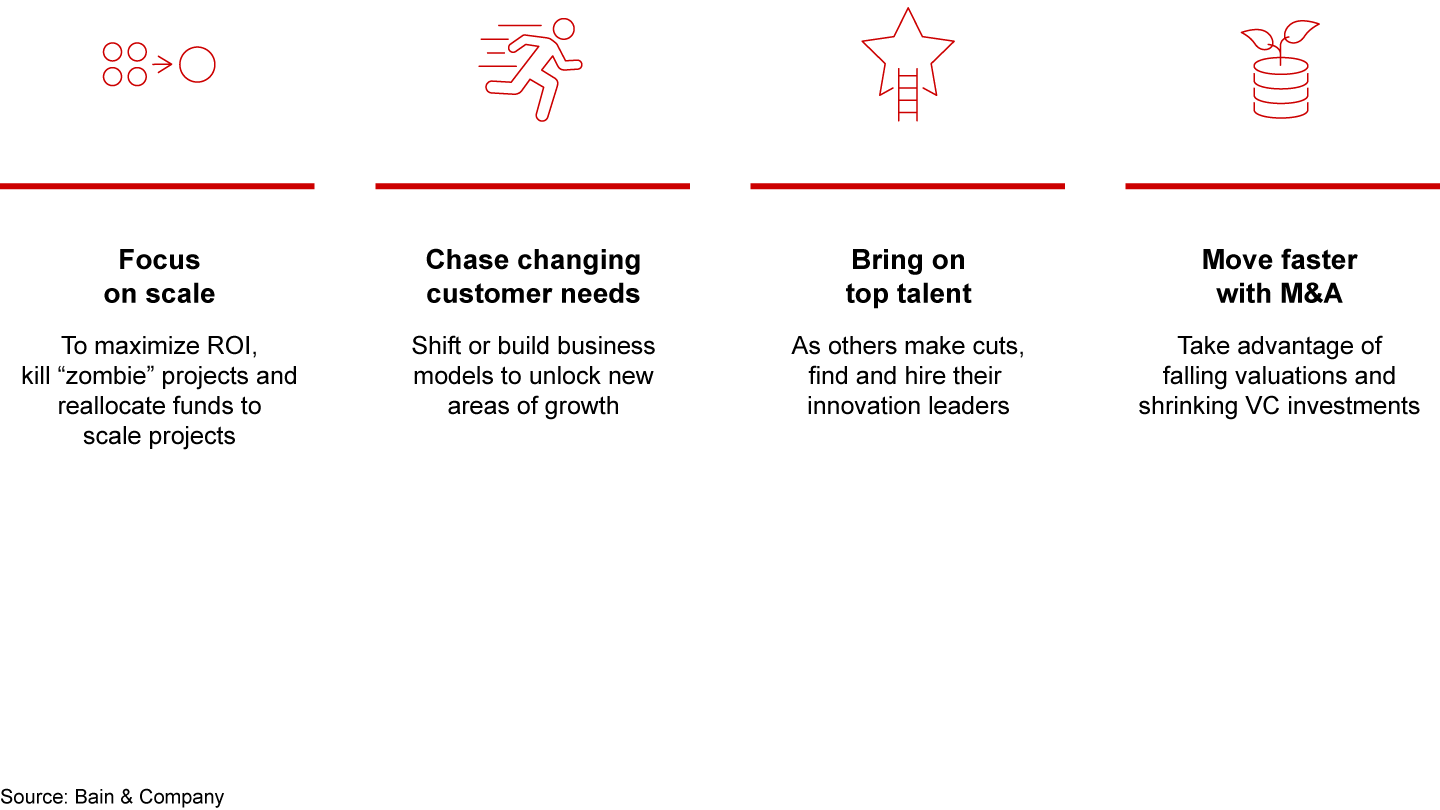
Companies willing to brave a downturn can still lack the know-how and capabilities to transform ideas into real, scalable businesses—and quickly. A ruthless emphasis on scale and ROI can turn scattered innovation bets into a tightly managed portfolio of viable investments. That starts with narrowing your focus to large markets where your company has a right to win. It requires methodically measuring the performance of both your portfolio and individual ventures as they evolve. And companies that do so now can take advantage of an environment where acquisitions are cheaper, knowledgeable talent are more available, and changing customer needs are creating new markets (see Figure 1).
Figure 1

ROI starts with a focus on scale
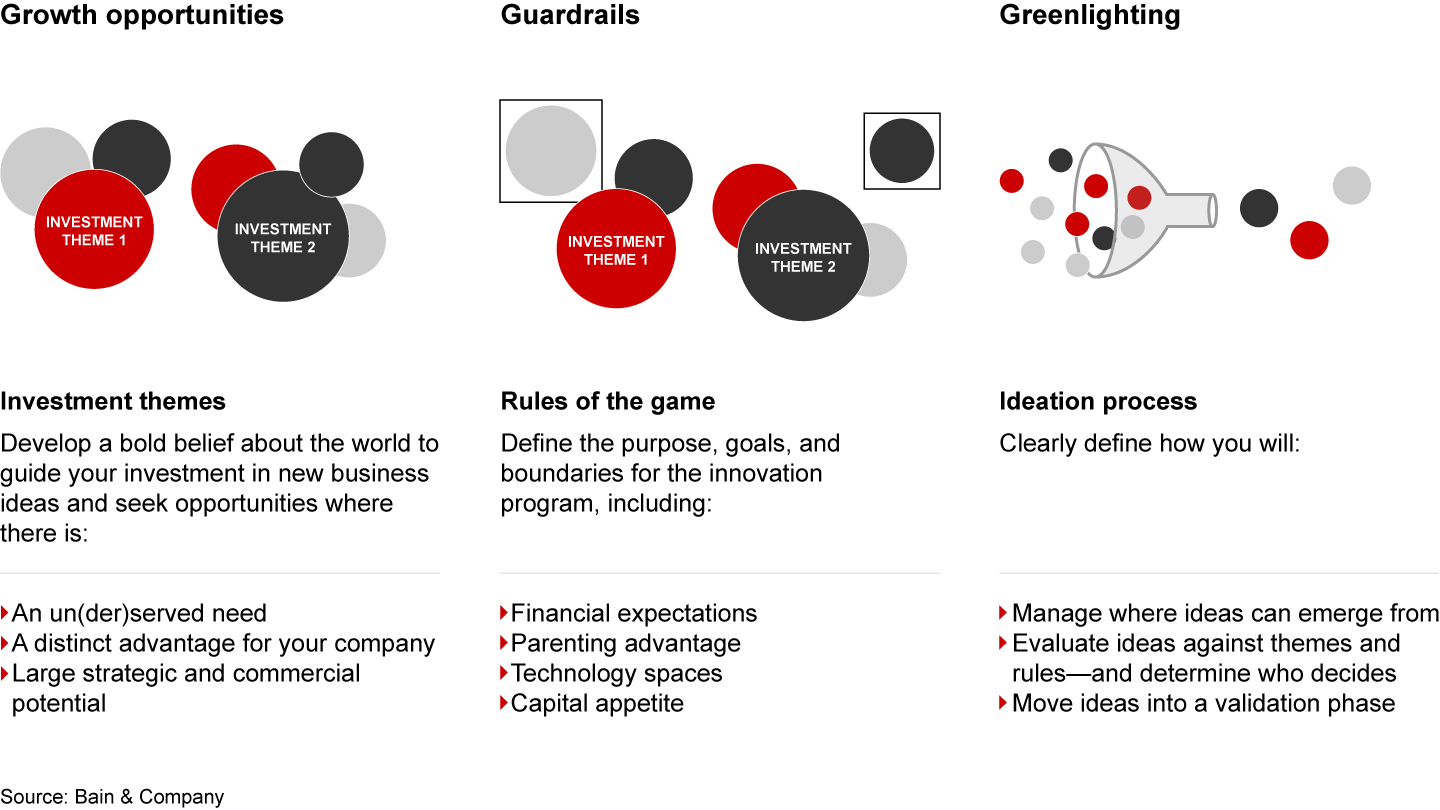
Innovation can be seductive, but companies can’t let sexy ideas or pet projects distract from the ultimate goal: growing a business to scale. That starts by finding the right opportunities for growth: Does a potential offering solve a real market need (that we have a distinct ability to deliver)? Could it grow large enough to change the trajectory of our business, and, if so, how long will that take? Innovation ROI also requires rules: clear financial expectations (and appetite) for individual projects and overall portfolios. And it means carefully managing where innovation ideas come from, how they’re evaluated, and who decides whether they meet the criteria for investment (see Figure 2).
Figure 2

For many companies, the first step toward ROI is shutting down existing in-market projects that don’t have a clear path to scale—a task that can be easier in the cold light of a downturn. For years, abundant, inexpensive capital fueled the funding of ideas that should have received less—or nothing. A methodical, objective portfolio analysis can identify likely winners but also can unearth the “zombie” ventures that somehow keep lurching forward, sucking up talent and resources despite stagnant growth. If fewer than 40% of surveyed customers say they would be “highly disappointed” to see an in-market project disappear, then it is probably time to make it disappear. That frees up funds that can be redirected to projects with favorable customer acquisition costs and high revenue per dollar spent.
In a notable recent example, Microsoft CEO Satya Nadella cited the need to invest in AI, “the next major wave of computing,” as one reason for cost cuts the company announced in January. A few days later, Microsoft revealed a new multibillion-dollar investment in OpenAI.
Chase changing customer needs
Customer needs often change significantly in a downturn. Companies that can quickly shift and innovate in response can capture the resulting growth opportunities; those that don’t risk losing share. Take, for example, Uber’s rapid reallocation of resources to its UberEats food delivery during the depths of the pandemic—meeting a soaring new customer need as its core ride-sharing volume all but collapsed. Now, with ride-sharing returning and Uber projecting operating income profitability this year, food delivery accounts for more than 30% of Uber revenues, while its primary competitor, Lyft, is struggling.
In times of change, a hard-nosed business-by-business portfolio analysis can help identify whether your company’s innovation investment efforts are focused on the right emerging opportunities with the right offerings. That can also reduce investment and speed returns.
Traditionally, the best sign of a successful innovation was a working product in the market. That’s an expensive goal that can take years to achieve. Even a minimum viable product (MVP) requires substantial time and money. A more economical approach is to directly measure customer demand via in-market experimentation before a product even exists. Disciplined innovation teams that continuously and efficiently gather their own market data can reduce the risk of investing in ideas the market may not want.
For example, a leading European insurer identified the “connected home” as a potential new growth engine in early 2022. Within just a few weeks, digital ads and landing page tests launched directly in-market proved customer interest and validated the market size, giving the insurer confidence to aggressively pursue the opportunity. “Our tests allowed us to focus on and accelerate this project,” says the company’s senior vice president for innovation.
Bringing on the top talent you need
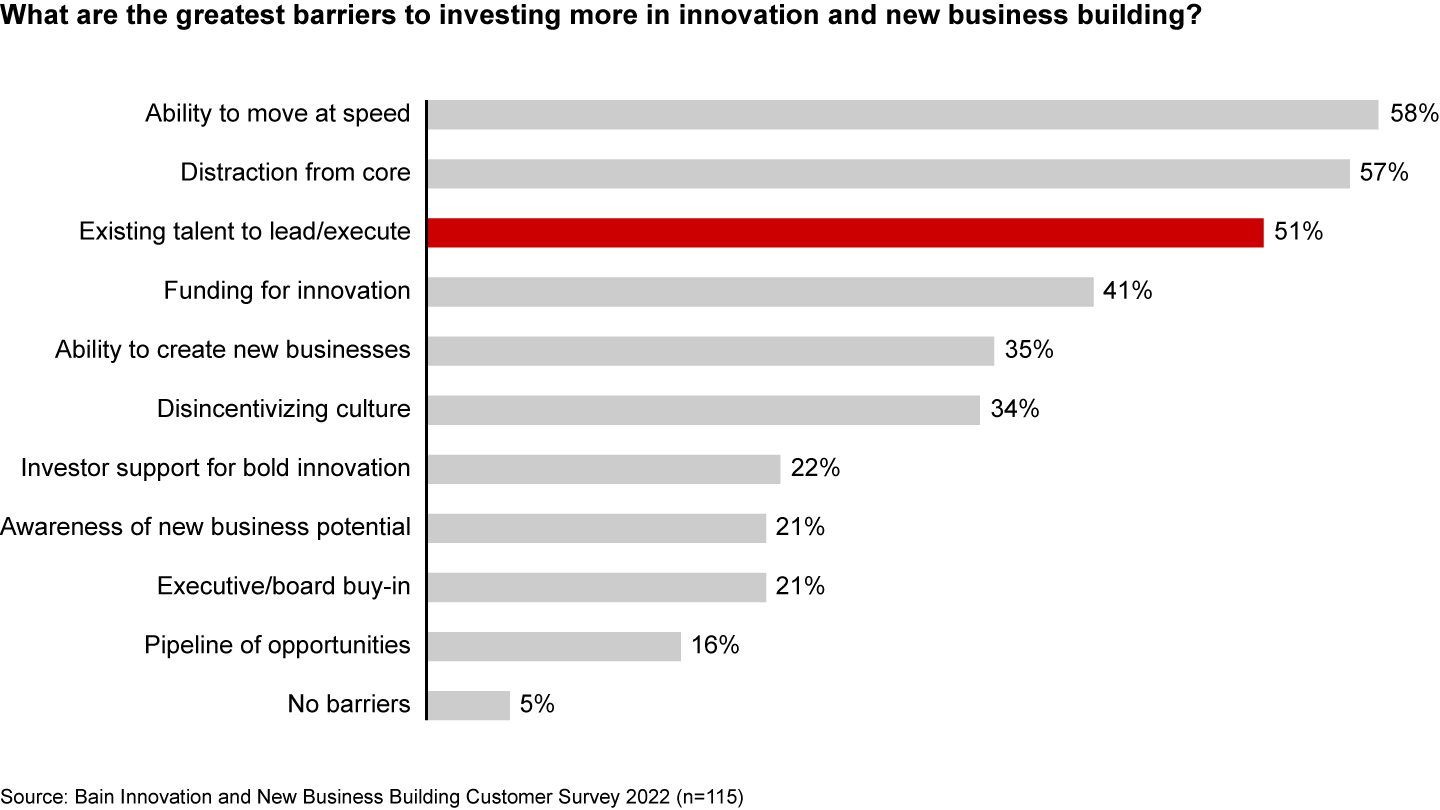
Once start-up companies and their venture capital backers gain traction in the market, they shift gears, hiring a CEO who can broaden the start-up’s focus from pure development to the equally challenging work of getting the business to scale. Corporate innovation needs that same type of leadership. Yet more than 50% of executives say a lack of leadership talent is one of the three top barriers to innovation, below only the need for speed and distractions from their core business (see Figure 3).
Figure 3

Here again, downturns can favor traditional companies, making more talent available. Major technology growth companies shed 140,000 employees in 2022, followed by a second wave of layoffs in the first weeks of 2023. The start-up world also became a less secure option for innovation talent during this period, with investment size falling and the number of start-up investments dropping 59%, from 14,400 in the last quarter of 2021 to just 5,900 in the last quarter of 2022.
Still, competing for talent with start-ups, tech firms, and insurgent brands has not been easy for traditional companies. Experienced innovation talent who like to move fast and make a big impact may hesitate to join corporations they view as bureaucratic, slow, or inflexible. Companies can alter the balance in the talent war if they can back their commitment to ROI with an operating model that harnesses the best of both worlds: a start-up venture culture and the scale parenting advantages of the mother ship (see Figure 4). That means getting incentives, timing, and the role of the parent company right.
Figure 4
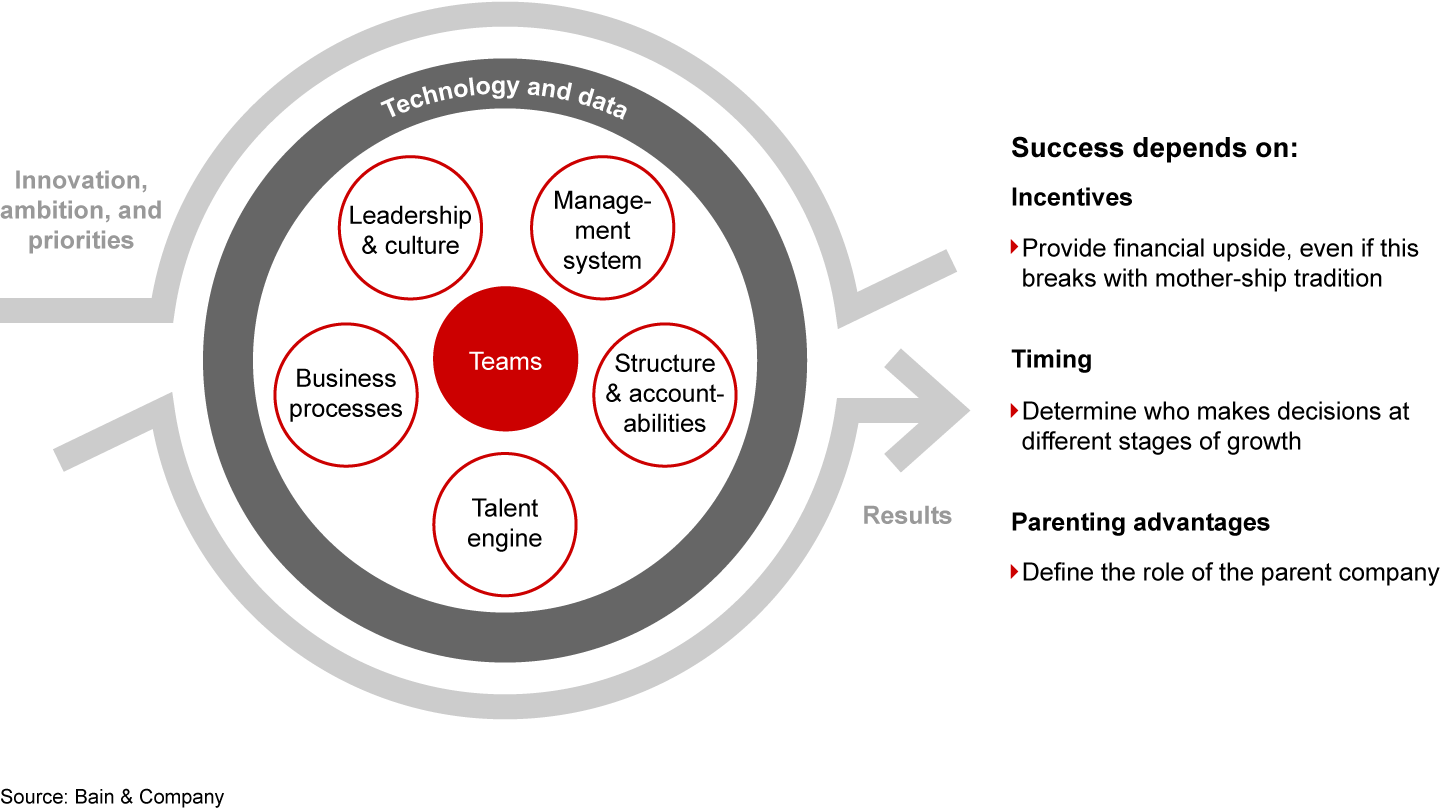

Companies that boast a focused portfolio and funding pipelines of at least 18–24 months can make attractive offers—especially during times when VC investment recedes. Gearing incentive programs and operating models to appeal to innovation talent can also help level the playing field for talent that has traditionally prized financial upside over stability.
From an ROI perspective, however, the greatest challenge may not be finding the right talent but hiring them at the right time. Bringing an experienced scaling leader onboard before an innovation project proves viable increases investment and risk. But wait too long and a new business can fail to reach full scale. “In some of our early ventures, we brought in talent much later, which did not work well because we had to unwind some of the work done by earlier teams,” one Singapore-based chief investment officer told us.
While an independent start-up culture is valuable in the early stages of incubation, innovation teams and their leaders need to know how and when to switch gears and seek the scale resources of the mother ship. Viable market offerings need sales, marketing, legal, and technology support.

Singapore Economic Development Board & Bain
With Innovation & Business Building, Bain is an appointed venture studio partner of the Singapore Economic Development Board (EDB) as part of its Corporate Venture Launchpad 3.0 program (CVL 3.0). Designed to enable corporates and scale-ups to launch new ventures from Singapore, the program provides funding and support to help companies.
“We have to take a stand on [who leads a venture] at a certain point,” says the head of incubation at a global financial services company. “Having someone who has been 110% behind the idea and owned it through incubation is helpful, but you need to then bring in somebody who knows how to scale that idea.”
Build or buy? Whichever gets you there fastest
While size matters most, when it comes to ROI, so does speed. Shorter time to market reduces investment and produces faster returns (little wonder, as noted earlier, that executives rank their company’s ability to move at speed as the top barrier to innovation). Many of the techniques discussed here, from Agile experiments to recruiting the right talent, help companies build a business faster. By far the most extreme accelerant, however, is to buy or partner rather than build. Bain’s latest M&A report surveyed hundreds of Engine 2 businesses over the past 25 years. Of the 58 most successful, 40 used M&A as a significant part of their scaling plans (see Figure 5).
Figure 5
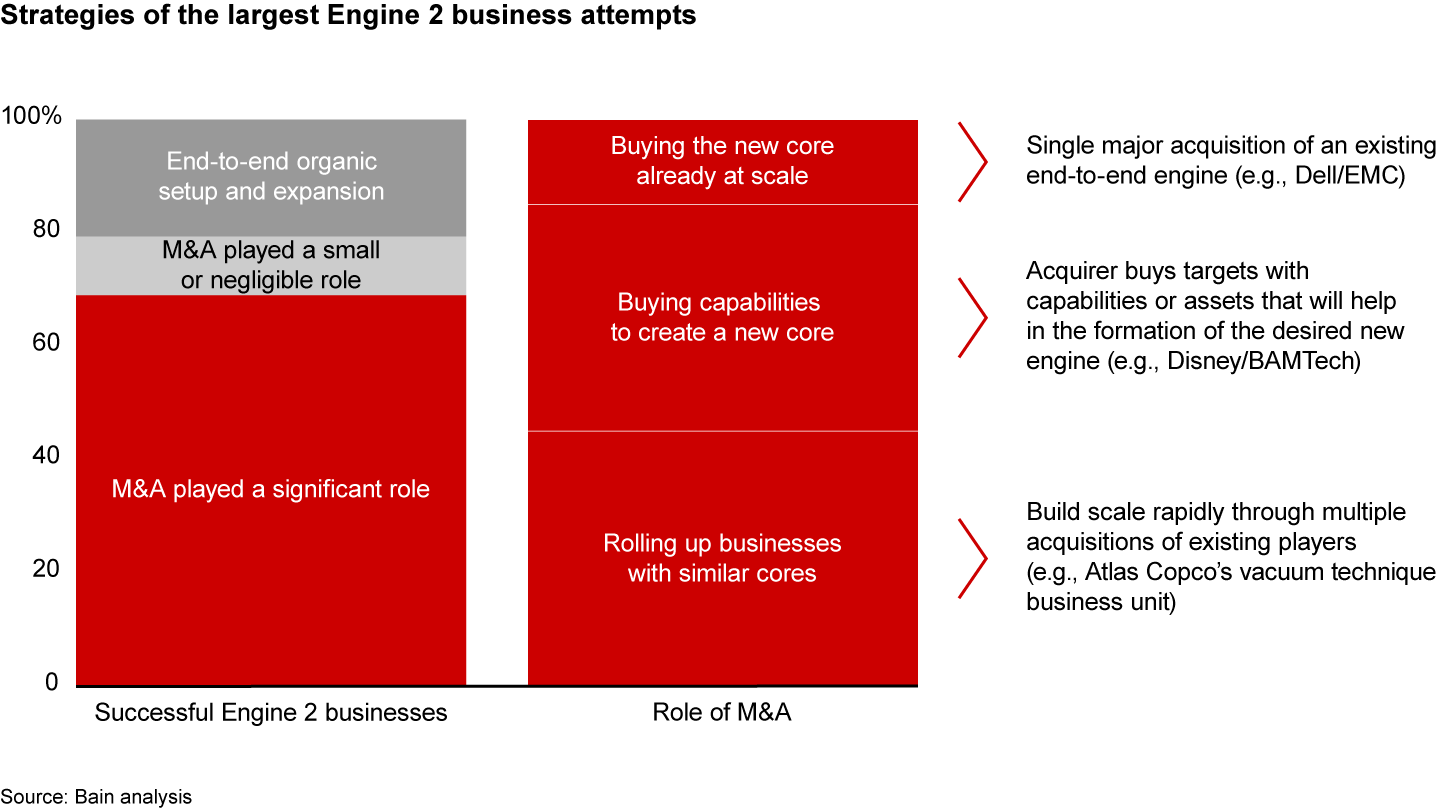

Just as a focus on ROI demands an objective view about which scale initiatives to accelerate and which to kill, it also rewards an agnostic view of building versus buying or partnering. The right path? Whichever gets you to market fastest.
Of course, buying demands careful due diligence to avoid missing or overpaying for opportunities. Here, again, the downturn helps, offering a buyer’s market with lower valuations and less competition for strategic buyers as VC funds watch other exit options dwindle.
Partnering with existing ventures can also help companies get to market faster, providing access to talent and lowering risk. “On every project, we’re working with external partners in some way, shape, or form,” says the head of ventures for an Asia-Pacific–based pharmaceutical company. “And we’re doing that to incubate and accelerate those new business opportunities.”
Downturns are temporary, innovation is forever
Although they can make acquisitions cheaper, talent easier to find, and zombies easier to kill, downturns don’t last forever. Companies that take advantage of them now can not only advance existing innovation efforts, but they can build an innovation culture focused on ROI that will thrive in good times and in bad.
First published in 4월 2023