

Brief

한눈에 보기
- As few as 22% of B2B companies consistently measure and act on their customers’ experience.
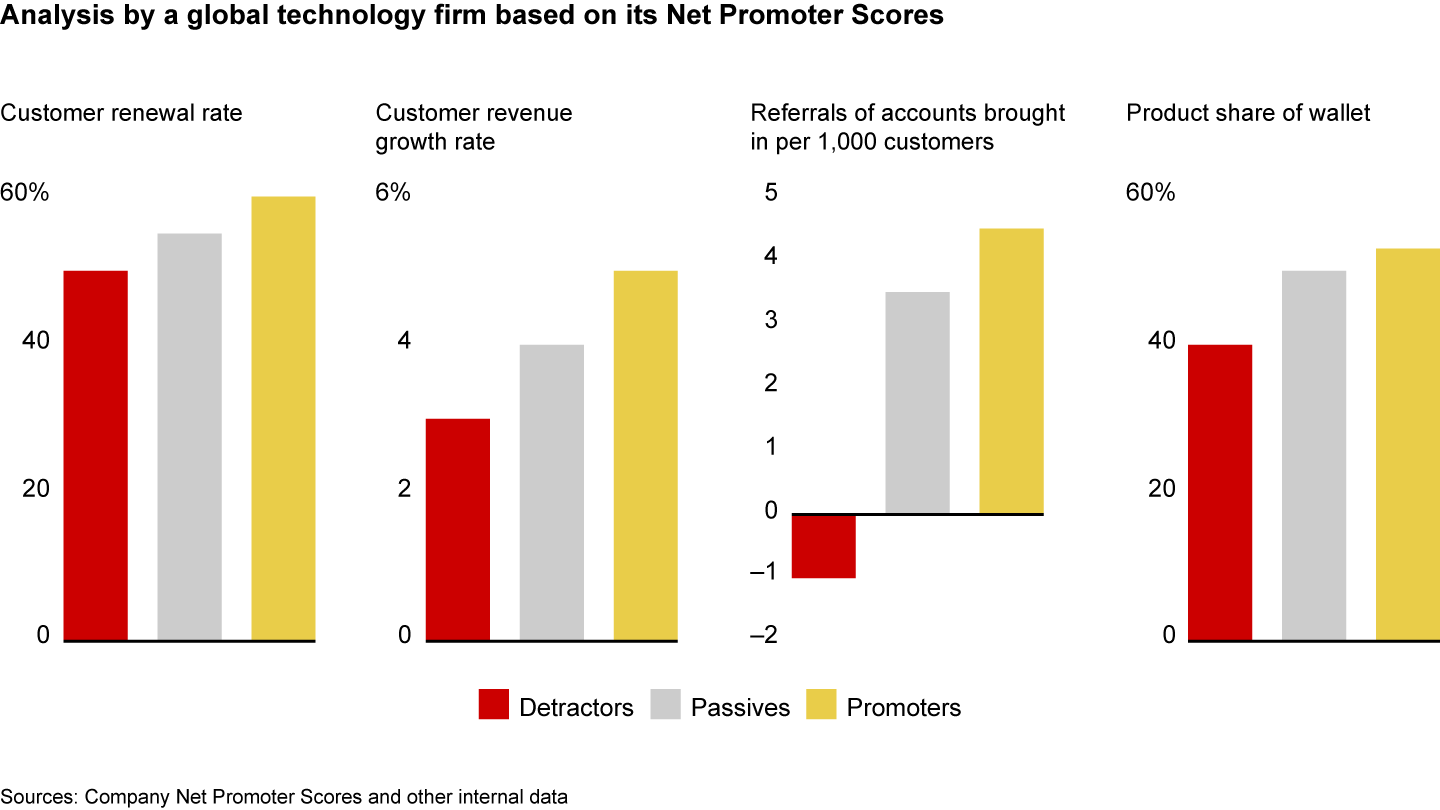
- The business case is clear. One B2B technology company that linked customer loyalty data to financials showed that customers who are promoters have a 10 percentage point higher renewal rate and a 2 percentage point higher revenue growth rate than detractors.
- Companies can build more effective account plans by looking beyond account size or share of wallet and infusing account plans with customer sentiment.
- Two otherwise similar accounts will have different perceptions of a company and thus require tailored sales and service motions.
Most large business-to-business companies have long used account size to guide account planning efforts, focusing attention and resources on a few large clients. They tend to overlook the role that customer experience measurement can play in guiding account plans.
Recent Bain & Company research finds that as few as 22% of B2B companies consistently measure and act on their customers’ experience. Among companies that do measure the experience, those metrics rarely connect with the sales process. For instance, most companies don’t marry readouts of satisfaction surveys or Net Promoter Score℠ results (a key metric of loyalty and advocacy) with account planning efforts. A team might examine customer sentiment in aggregate or for one step of the experience, but fail to connect these insights to individual buyers, opportunities with individual accounts, or particular sales campaigns.
Consider a common situation where the head of sales at a telecommunications company asks for an account and share-of-wallet assessment in advance of the company’s quarterly leadership meeting. Her team uses a combination of customer relationship management and sales data to analyze performance and inform which areas to prioritize and which sales plays to deploy in those areas. On the surface, the output seems insightful (see Figure 1). It highlights the largest customers as well as a few midsized accounts with a low share of wallet.
Figure 1
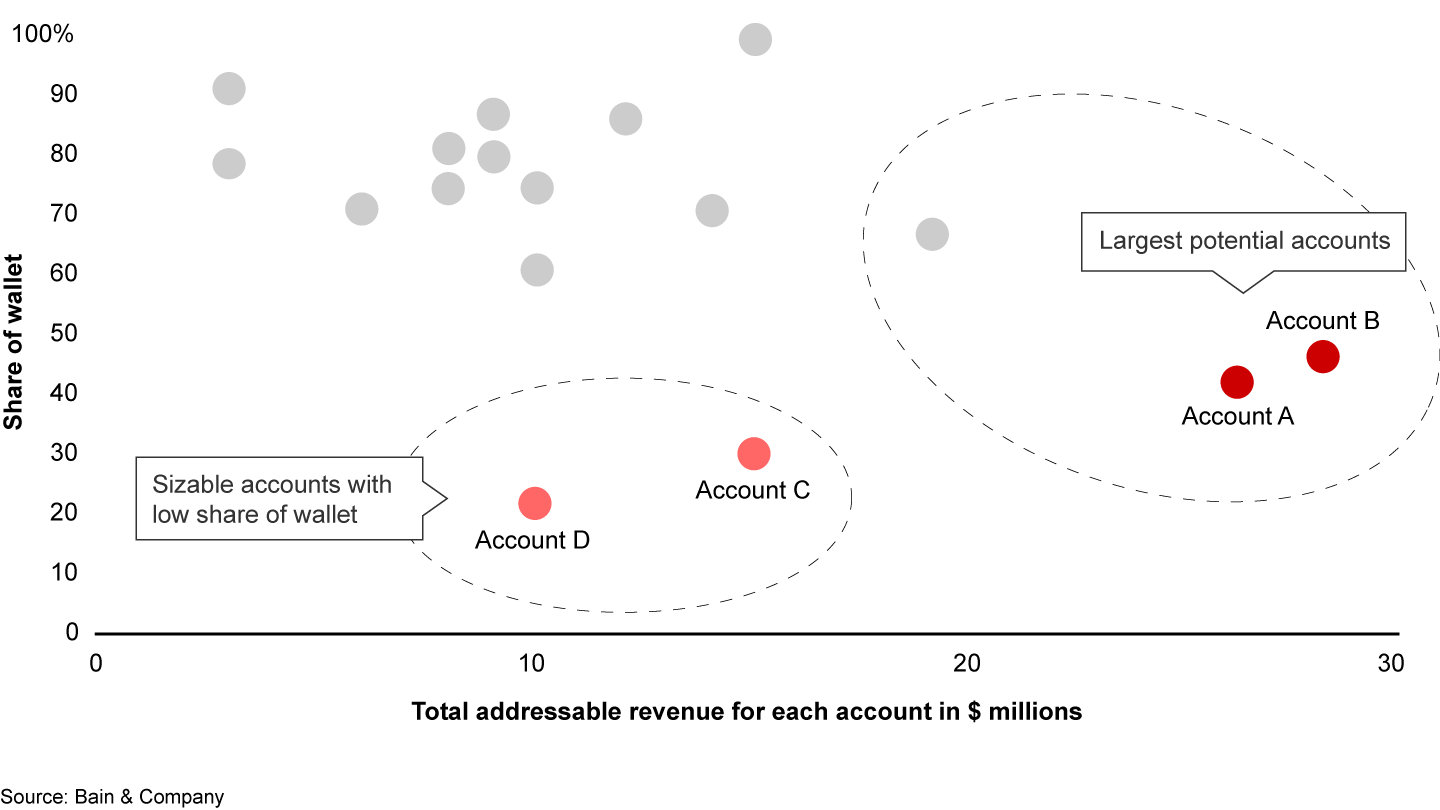

What this picture misses is each customer’s perception of the company, which informs willingness to buy and to recommend the company to others. As a result, the group is overlooking opportunities and leaving money on the table.
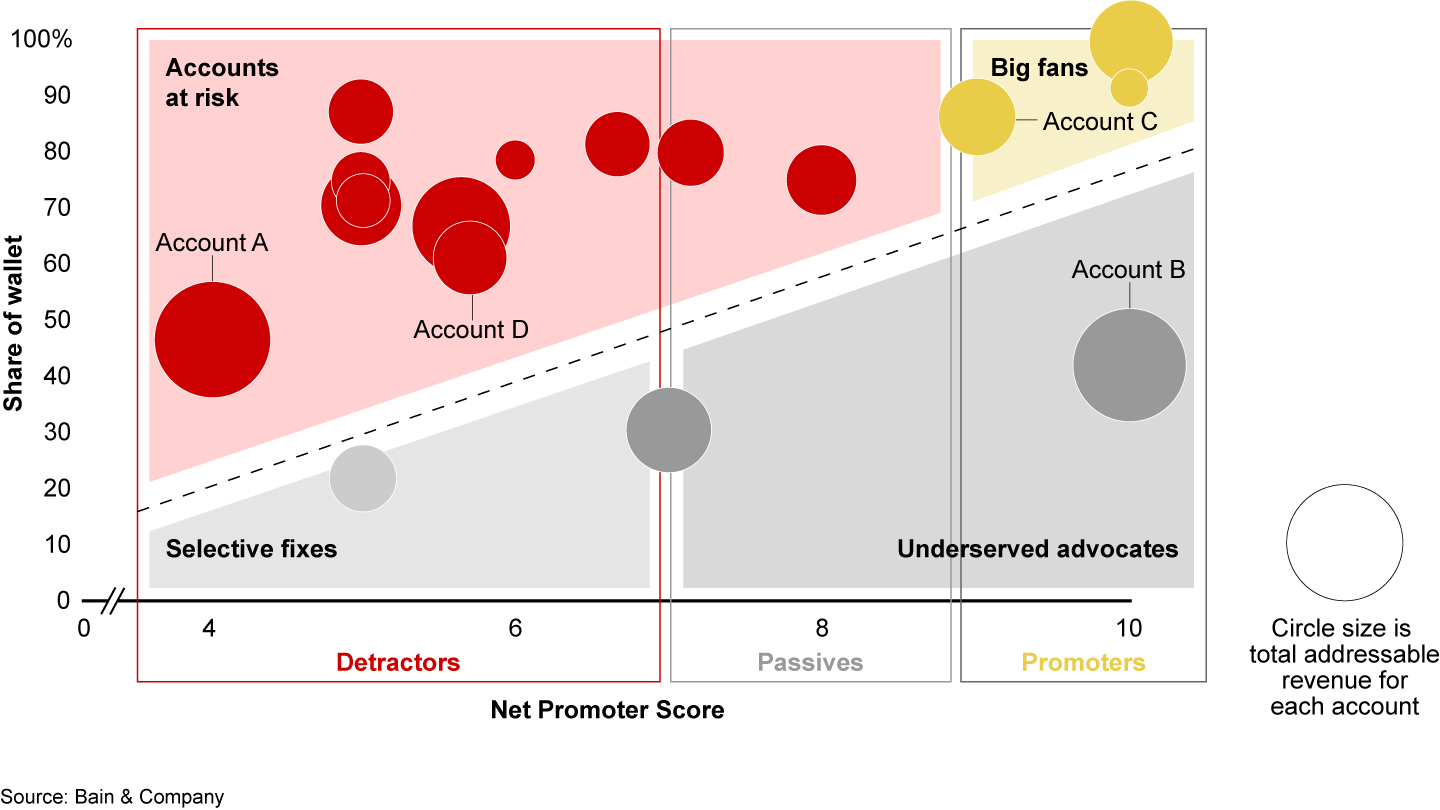
Adding customer sentiment data to the equation creates a far more useful picture (see Figure 2). Two accounts, roughly equal in current revenue, such as accounts A and B or C and D, have very different perceptions of the company and thus require tailored sales and service motions. Considering customer sentiment clarifies the opportunities across accounts.
Figure 2

A more useful taxonomy
Armed with this information, companies across industries can sort accounts into several useful categories, lighting up the most promising opportunities:
- Underserved advocates. These customers love the company and are open to buying more, but they don’t get much love or attention. Untapped accounts often are midsized or small accounts with huge potential, as sales representatives have not activated these promoters or exhausted chances to pitch products and services to another buyer at the account.
That was the situation at one industrials company, which had a high-growth client with significant support and happy buyers. It wasn’t until the end of a client dinner years into their relationship that executives of the industrials company became aware of other lines of business they could pursue. One conversation, which could have happened earlier if the company possessed the right information, changed the nature of their relationship. - Accounts at risk. They are seemingly stable customers—until they can afford not to be. A long history or outwardly solid relationship may lull sales teams into complacency. This group could contain many large, highly penetrated accounts that are detractors or at best passives.
Case in point: A communications service provider had a large global client with whom it enjoyed significant spending over the years. However, the provider failed to track that the relationship was eroding, especially beyond the primary buyer, due to complex processes and problems with operational quality. Over a short span of time, the customer shifted most of its spending to other vendors, which came as a shock to the provider’s financials.
Mobilizing to address the problems and priorities of this segment may consume a lot of resources, because of the sheer size of the accounts and the executive-level conversations required. But the investment pays off when it repairs strategic relationships or prevents potential problems. - Selective fixes. Now we turn to customers that give the company low marks and spend little with it. Some of them may be won over, though converting them could be an uphill battle, especially if they are strongholds of competing providers.
In these selective interventions, account teams should focus on accounts that have some urgency (such as an imminent contract renewal), offer higher odds of success (an account with strategic fit that’s clearly underserved), or represent a high upside for profitable revenues.
One logistics company had an e-commerce customer with a low share of wallet and relatively low Net Promoter Scores. The company had underestimated the overall size of the account, as the account was part of a larger portfolio owned by a parent company. This insight led the logistics firm to intervene with this e-commerce account and gain a higher share of the business over time, as the customer shifted from dual-sourced to single-sourced. - Big fans. Sales leaders know this short list—the strongest advocates who buy more and frequently bring in referrals. High-performing companies actively rally their promoters to earn growth, by using them as a reference when selling to a new customer, having them provide testimonials, or featuring them in their annual conferences.
In addition, companies must focus on continuing to delight customers, not only delivering on the basics but also deepening relationships over time. One medical technology provider brought its promoters onto a customer advisory board to help inform future product launches—expanding on a strategic partnership and adding value to each party.
Owning and fixing the problems
To see how this account prioritization informs practical actions, consider the recent experience of the services arm of a global technology firm. It enjoyed a market-leading customer experience but ran into problems while transitioning to a software-as-a-service model, including stagnant growth in the installed hardware customer base.
The company used a deeper understanding of advocacy and share of wallet to improve its growth outlook. The assessment revealed untapped cross-selling opportunities to key accounts. In one instance, the account was a strong promoter with a low share of wallet. So the company firm mapped all the individuals it did business with at the account, which had decentralized purchasing across geographies. Two buyers were happy with the firm, but a third was using a competitor. Asking the two buyers to recommend the firm to the third, the company paved the path to roughly $20 million of new revenue.
Next, customer feedback opened the door to upselling premium offers to certain customers that were most likely to be interested, such as those in a subset of industries that saw greater value in the solution. In those cases, premium offers earned higher customer loyalty, despite having a higher price. As part of the new upselling moves, the company used anecdotes from customer feedback to bring a clear story to decision makers at prioritized accounts.
Analyzing customer feedback also highlighted opportunities to improve the experience. The technology company learned, for example, that several features in one product line caused problems for customers. Yet no group in the organization would take ownership for the problems, as Engineering and Service each blamed the other. By combining customer feedback with operational data on issues submitted to the contact center, the technology firm identified both a coding product design issue and a support issue. It could then address the issues from several angles. On the product front, the Engineering team fixed features in the next version of the product. Select customer support issues were rerouted to more experienced employees who could resolve them faster. And the company rolled out training for the entire support team.
Finally, the company established a “CFO-certified” link between Net Promoter Scores and profitable growth, with tracking and accountability mechanisms to keep the relevant groups on task. For example, the customers who are promoters have a 10-percentage-point higher renewal rate and a 2-percentage point-higher revenue growth rate than detractors (see Figure 3). So far, the results have been encouraging. The firm identified opportunities representing up to 10% additional revenues in a previously declining business unit; it realized a 20-point improvement in its Net Promoter Score during the pilot phase; and it reduced support calls by more than 20%.
Figure 3

Questions to shape a new account planning design
Companies committed to building a nuanced view of the customer experience that will achieve the full potential of account planning can start by answering a set of high-gain questions:
- Do we have a clear perspective on who our highest-priority customers are, based not just on current revenue but also on untapped potential?
- Do we know what our high-priority customers really value? Do we have robust, real-time feedback that produces insights on the customer experience?
- Do we have CFO-certified measurement of the experience that links to financial value?
- Have we equipped our sales team to embed insights about the experience into their account planning?
- Which promoters will we activate today, especially within our most strategic accounts?
- What short list of under-penetrated accounts will we select to develop?
Companies that learn each customer’s priorities and perceptions in detail will be better positioned to uncover high-value opportunities, triage the rest, and allocate sales and marketing resources more effectively.
First published in 7월 2022