

Brief

한눈에 보기
- China’s once red-hot mobility industry, a model for the rest of developing Asia, has watched growth slow and profits fail to materialize.
- E-hailing, bike sharing and business-to-consumer car sharing are all stalled. Only instant-delivery players show signs of immediate hope.
- There is a route to profitable growth. For example, e-hailing companies need best-in-class operations, geographic focus, more adjacencies and innovation.
- Autonomous vehicles will be the biggest game changer for mobility in developing Asia. Companies can get into the game by forming smart partnerships, alliances and open platforms.
China’s mobility market was riding high for three exciting years, as users eagerly embraced e-hailing, bike sharing, car sharing and instant delivery. But now, much of the industry has taken a sharp and unexpected turn.
The road to recovery in China, the most advanced mobility market among Asia’s developing countries, will serve as a lesson for players hoping to advance in what we call the “Five Races”: customer focus, autonomous driving, connectivity, electric powertrains and shared mobility services.
Beginning in 2014, companies providing a range of mobility services appeared to be on a steady path to profits once they achieved scale. However, even after rapidly growing in popularity, most companies have not yet turned a profit. This story is playing out throughout the world.
What happened? In China, the mobility industry was poised to reach a market size of $72 billion by 2020. We now project it will grow to $60 billion by 2021. Industry leader Didi’s red-hot growth prospects swiftly and unexpectedly cooled when the rapes and murders of two passengers led the Chinese government to suspend the company’s Hitch carpool service. To ensure safety and market sustainability, local authorities began imposing tighter operating-license regulations. More than 200 Chinese cities issued new regulations on platforms, vehicles and drivers, regulating everything from insurance to drivers’ health. In a bid to reach profitability, Didi reduced passenger discounts and driver incentives, a move that ultimately decreased the supply of available cars.
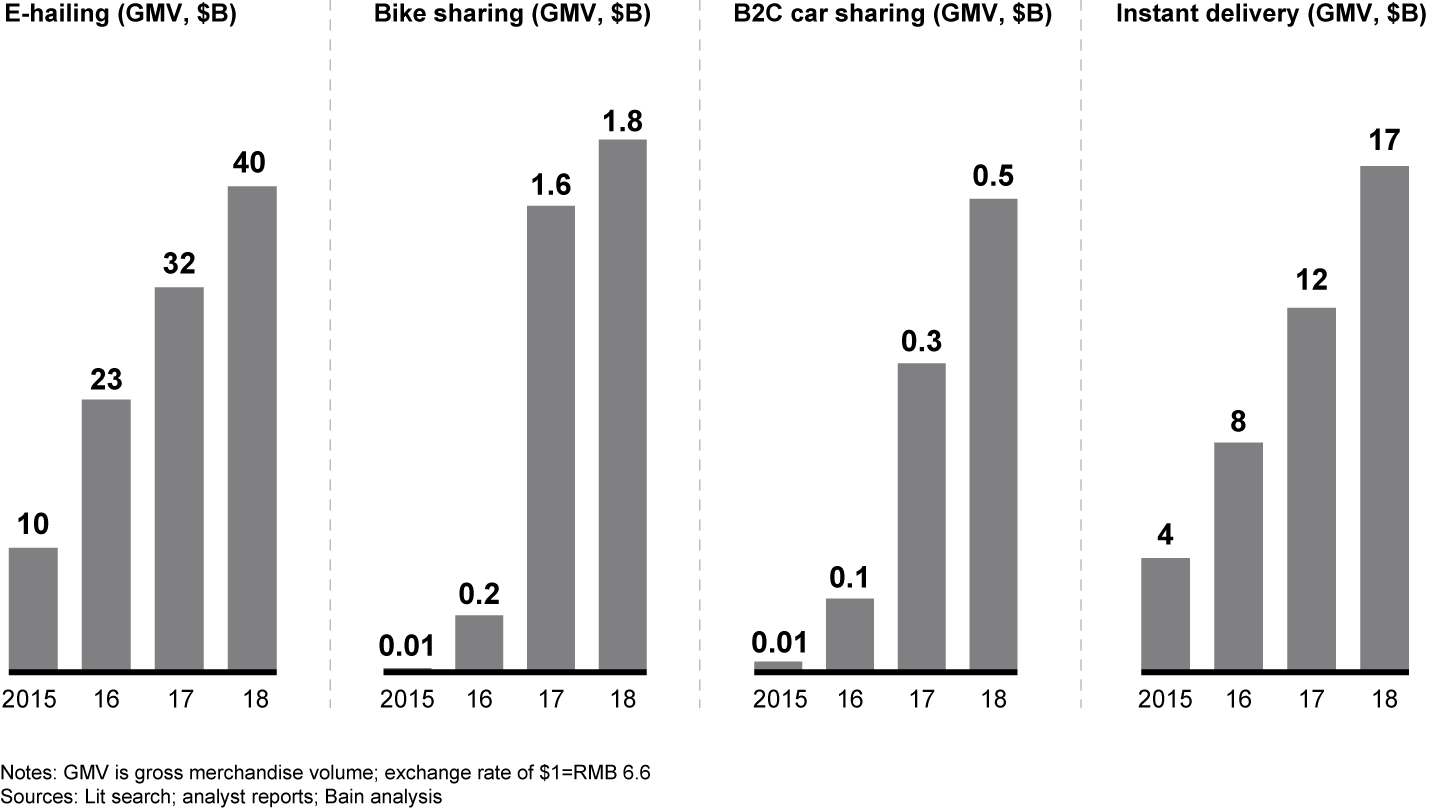
In 2018, annual growth in China’s e-hailing industry dropped to 25% as the number of monthly active users fell by 5% (see Figure 1). The downward trend is expected to continue amid the safety issues and mounting regulations. For example, Didi recently announced that it removed 300,000 unqualified drivers from its platform. We anticipate growth will be less than 5% in 2019, then regain momentum and range from 10% to 15% in 2021, based on restored consumer confidence and a potential return of Hitch services with safety measures in place.
Figure 1

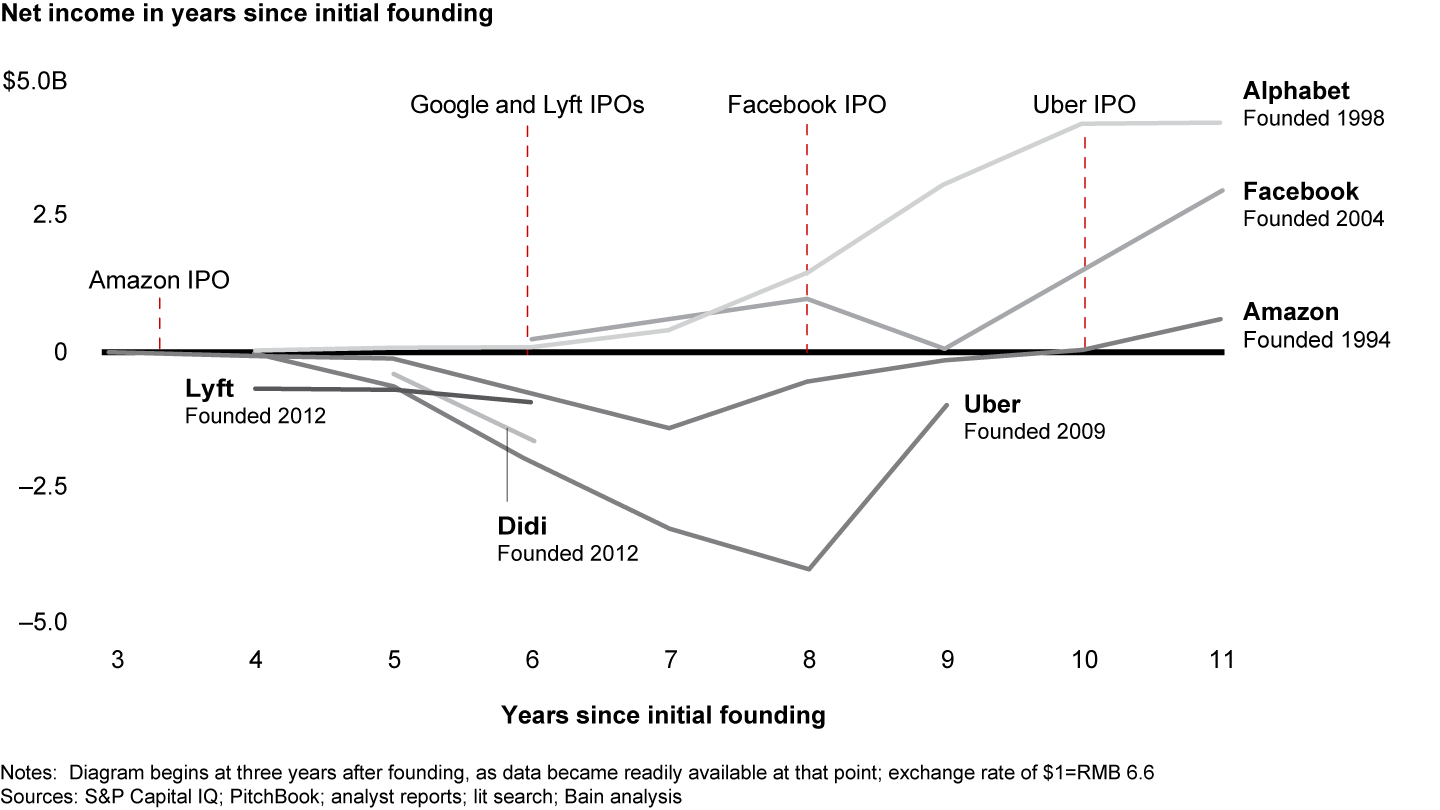
It always takes time for a new technology company to achieve profitability, but in this case, more than its share of obstacles have blocked the road to profits (see Figure 2). For one thing, e-hailing leaders have struggled to defend their market share. Just as Uber’s 60% share of the US market could not scare away upstart Lyft, Didi‘s absolute leadership in China could not stop newcomers like Meituan from quickly establishing new services in targeted regions. The stiff competition, from both local ride-hailing companies and taxis, limits market leaders’ flexibility in pricing and “take rates” (a company’s share of the fare)—and take rates are subject to government control, too. Complicating the situation further: Didi achieved profitability on a per-ride basis in its Hitch service, but now must wait to see if that service is restored in order to resume its journey to companywide profits.
Figure 2

Two other segments of the mobility industry are in a similar funk. Bike sharing’s once glowing promise has dimmed, with most businesses in China closing shop—including No. 2 player Ofo—as cash flow dwindled and major cities set limits on the number of available bikes. Business-to-consumer car sharing encountered its own set of woes. The top five companies in China expanded their fleet size fivefold in just two years, burning cash in the process and struggling to find profits. The rate of growth slowed to 50% in 2018.
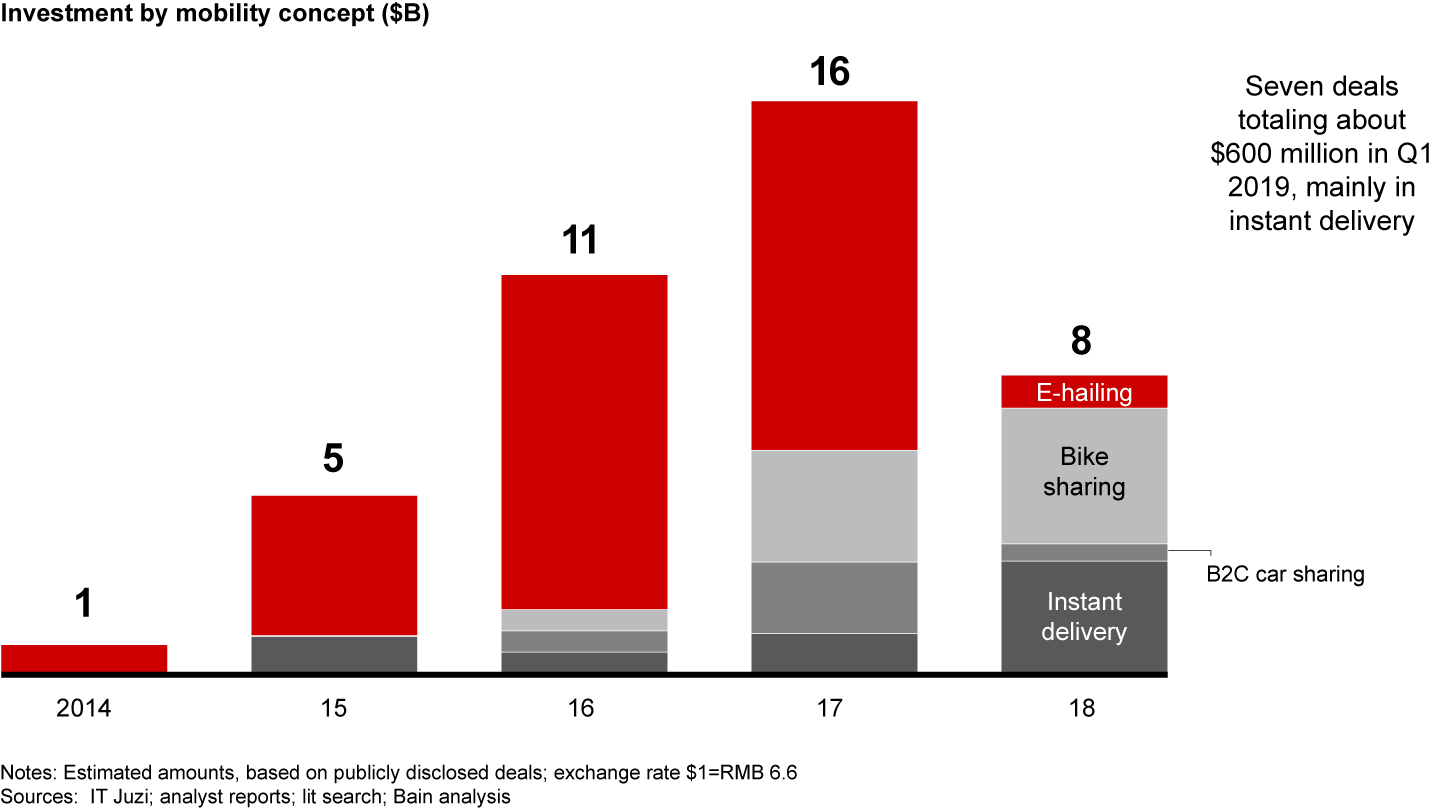
In China’s mobility industry, only instant-delivery companies are showing signs of immediate hope, with sales rising by 40% in 2018 and the steady introduction of new concepts such as grocery delivery, intracity express and consumer-to-consumer errand services. Those new services have made instant delivery an investment hot spot even as shared mobility services fall from grace. Overall mobility investments dropped by 48% in China in 2018 (see Figure 3). But while investments in e-hailing plummeted by roughly 90%, investments in instant-delivery companies tripled.
Figure 3

Despite these challenges, we see a route to profits for the mobility industry, not only in China, but throughout Asian developing markets from Indonesia to India. The economics can work for leaders willing to make the tough decisions and acknowledge that success will not happen overnight. For example, as e-hailing companies continue to tackle safety and quality issues, passenger confidence will gradually return, despite constraints on supply. Also, in China and elsewhere in developing Asia, companies can pursue growth opportunities in lower-tier cities. They can save costs by cutting passenger incentives and boost revenues by delivering higher-priced services. More dramatically, they can develop a full platform of services, bet big on vertical integration, and consider the massive savings to be reaped by investing in electric vehicles—all while preparing for the day when autonomous vehicles will transform the industry, making profits significantly easier to achieve for well-positioned players.
Four ways to get there
Focusing on the e-hailing segment, we have identified the four imperatives for achieving profitability.
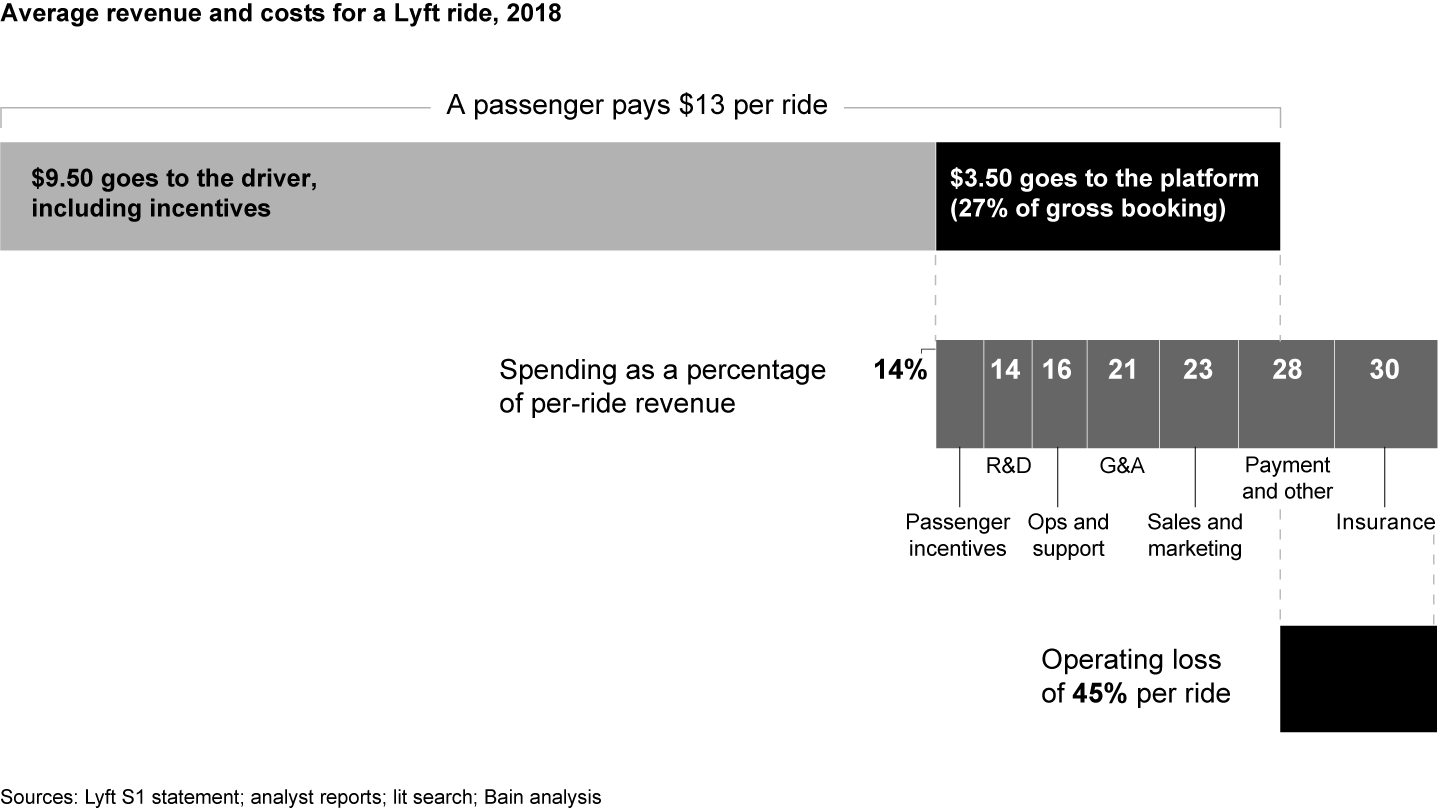
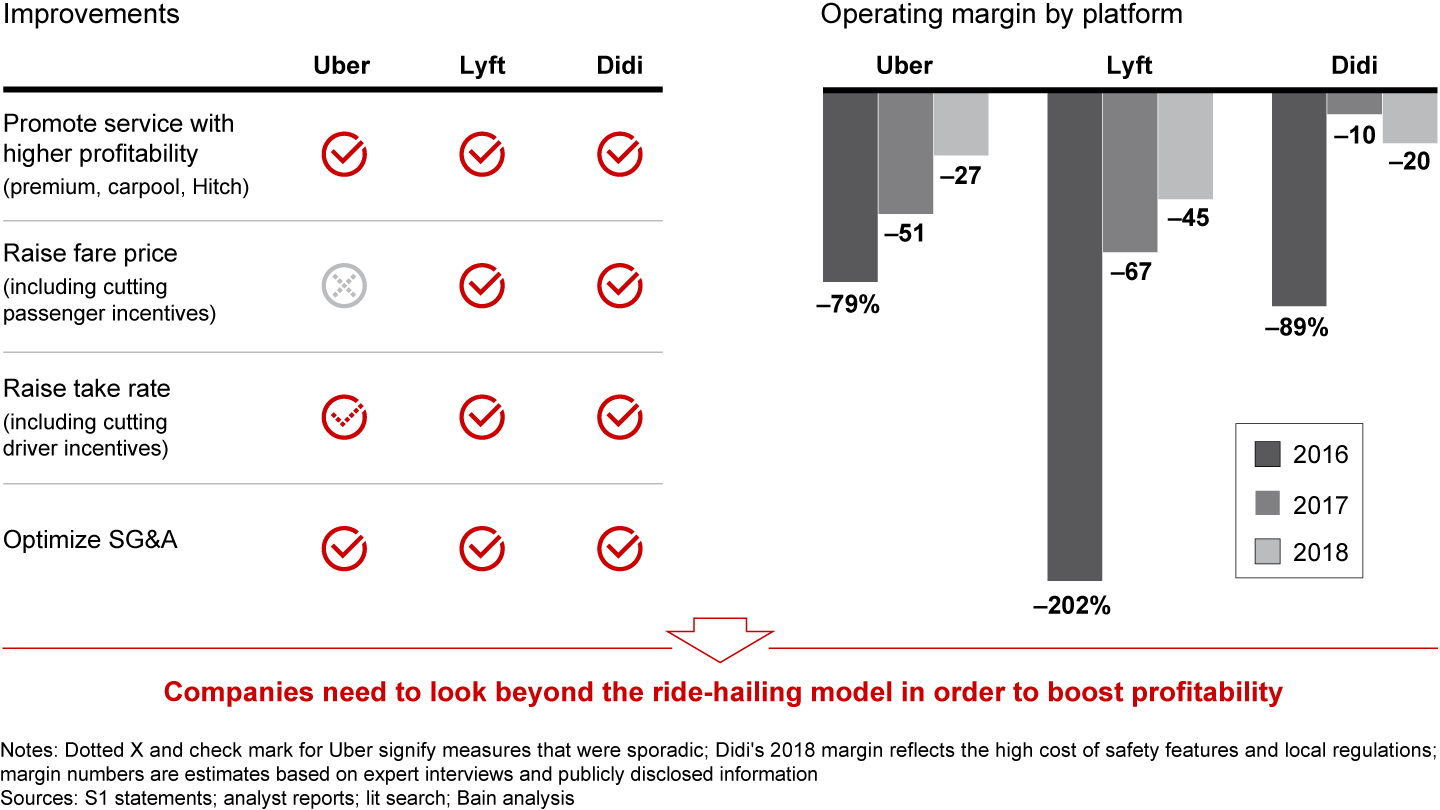
Create best-in-class operations. Companies are responding to the safety challenge through such features as emergency contacts, real-time location sharing, audio recordings and privacy numbers. These initiatives should help restore passenger confidence. However, companies need to aggressively improve their fare levels and take rates in order to counter some of the big costs contributing to their losses: driver pay, incentives and insurance (see Figure 4).
Figure 4

Some companies are upgrading with premium services for such customers as business passengers, airport travelers and riders traveling with babies and children. Two- and three-passenger carpools can raise profits as much as 100%, for example. In addition to improving their service mix, the best companies will make better use of data and proprietary algorithms for real-time adjustments to pricing and incentives. Localized pricing strategies are also an option, as affordability, public transportation and access to taxis vary among cities. Winners will also rigorously pursue cost initiatives. Both Uber and Lyft have controlled fixed costs in the past three years through such measures as standardized operations or improving the efficiency of insurance expenses and sales and marketing (see Figure 5).
Figure 5

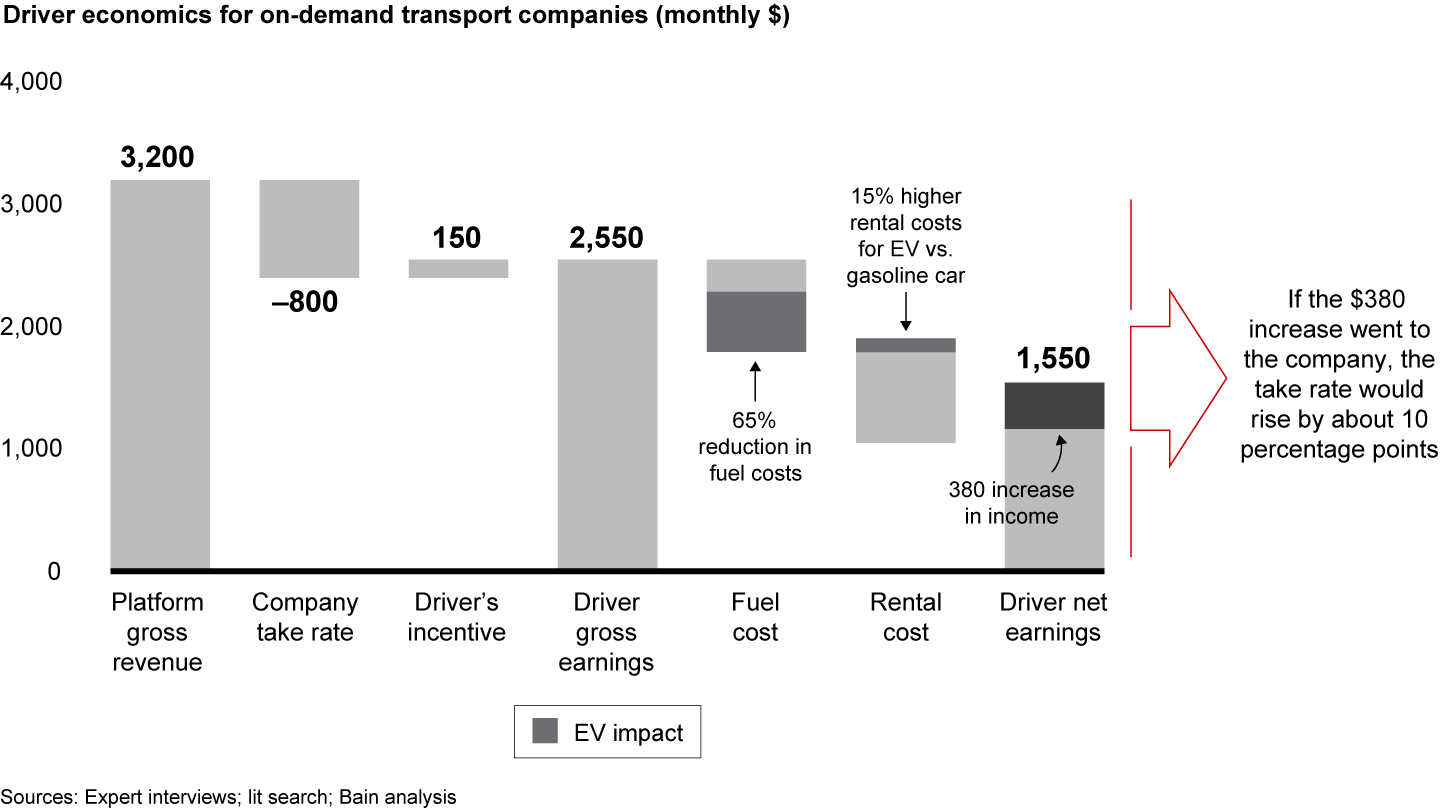
E-hailing companies can reap significant benefits by investing in electric vehicle fleets. That could reduce fuel costs by 65%, more than offsetting a 15% increase in the rental costs, according to Bain research in China (see Figure 6). That also would allow companies to raise their take rate without affecting drivers’ income—an important consideration as attracting drivers becomes more difficult. Electric vehicle fleets could be a viable near-term alternative in China, where the number of charging stations will increase more than sixfold from 2018 to 2020. However, in the developing economies of Southeast Asia, electric vehicles will remain scarce in the immediate future, until they become more affordable, the government offers incentives to manufacturers and consumers, and a sufficient infrastructure is in place. Among the many obstacles to overcome: government policies in countries like Indonesia and Malaysia discourage imported vehicles, and currently no electric models are manufactured locally (see the Bain Brief “Finding a New Route to Southeast Asia’s Electric Vehicle Future”). However, Indonesia has begun working on financial incentives to encourage sales and domestic production of electric vehicles.
Figure 6

Stay geographically focused. Regional density is critical for profitability in e-hailing. Uber realized it could not make it in China, Russia and Southeast Asia, where it had subscale business, so it quickly sold out to local leaders, reducing its losses. Companies should target regions for market leadership and build a dense and stable fleet, reducing both passenger waiting time and operating costs. In China, where e-hailing penetration is reaching the saturation point, that means shifting focus to the high-growth opportunities in lower-tier cities.
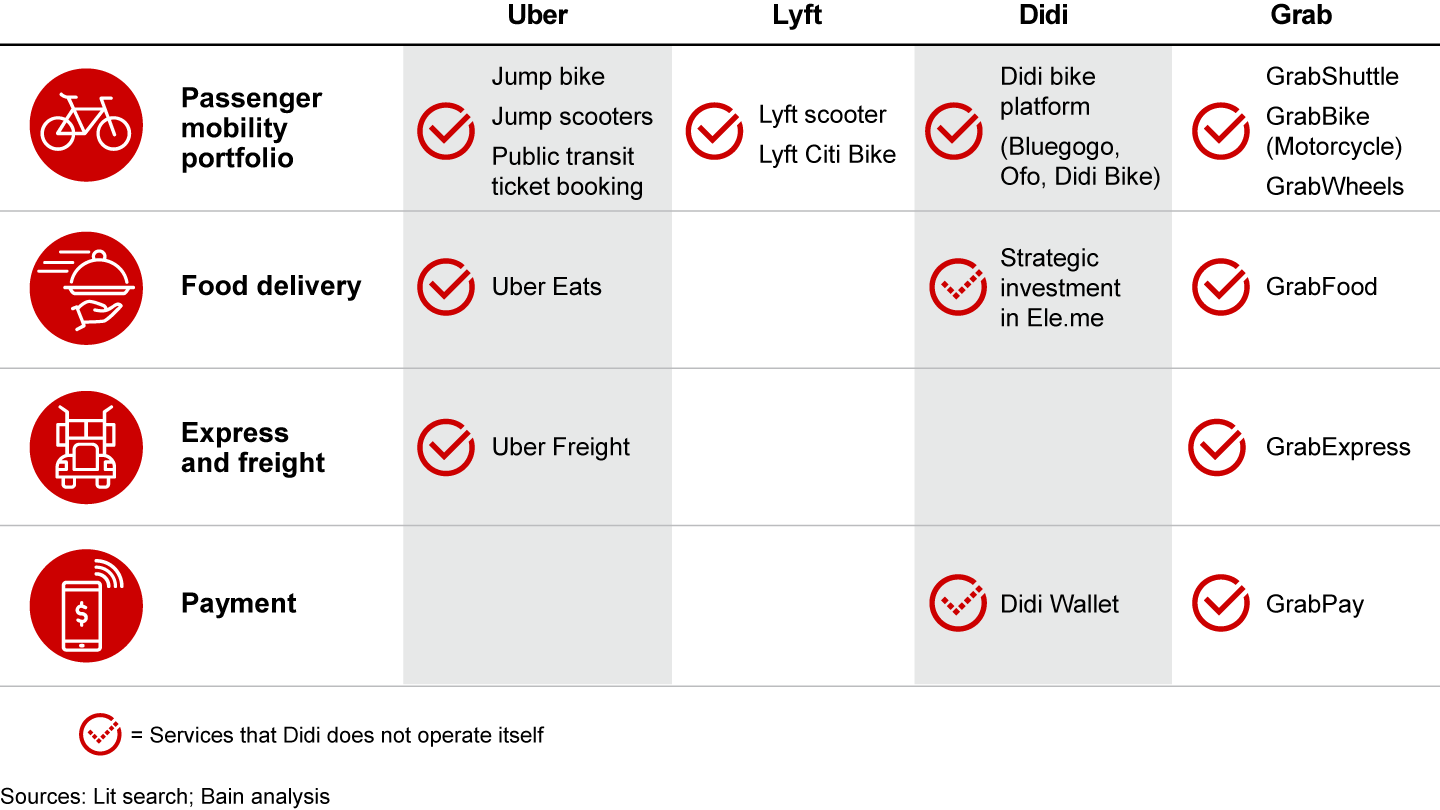
Explore adjacency expansion. The best e-hailing companies will develop a full platform of products (see Figure 7). They will expand to other transportation modes or services, such as scooters or instant delivery, making the most of their algorithm and platform. Consider Uber’s move into freight and food delivery; Lyft’s scooters and Citi Bikes; and Didi’s bicycle platform, as well as its strategic investments in food-delivery service Ele.me and in payments with Didi Wallet. In Southeast Asia, Grab has expanded into all of these areas, in addition to shuttles and motorcycles.
Figure 7

Successful e-hailing companies will also make big bets on vertical integration, venturing along the automotive value chain to explore new revenue streams in everything from auto financing and after-sales service to used car sales and the central procurement of gasoline and parts. We estimate the auto-financing profit pool in China totals $3 billion, with operating margins of 25% to 30%. In after-sales service, including one-stop solutions linked with real-time vehicle data, the profit pool in China adds up to $30 billion, with operating margins of 12% to 15%.
Innovate. E-hailing companies are in a prime position to play the gatekeeper role for future value-added services and data with the connected people and vehicles on their platforms. A single example: they can build a mobility ecosystem, allowing third parties to provide innovative services through their platforms such as targeted advertising and entertainment, thus monetizing vehicle and user behavior data.
How difficult will it be to implement these four imperatives? The answer often differs across the globe.
In building best-in-class operations, for example, there is less leeway in China to increase e-hailing prices, given the low taxi fares and mature public transportation. Southeast Asia is better positioned than most markets to boost take rates, as drivers there already earn an average of 25% more than taxi drivers do. Yet, all markets have the potential to improve costs as they shift from growing scale to pursuing profits. Focused play is a strategy that is possible in all regions, too; it already is helping Uber concentrate its resources on key markets. Adjacency expansion is more of an option in the US and Southeast Asia, where shared service concepts like food delivery are still nascent, than in China, where the business is already well-established. Meanwhile, innovation can be an answer anywhere, especially for companies that actively seek partnerships with third-party providers.
Enter the game changer
The momentous advance that stands to revolutionize mobility throughout the world is autonomous vehicles. This will happen in four ways. First, autonomous vehicles will reshape ride-hailing fleet operations by greatly reducing driver costs and improving fleet utilization. They will transform the passenger experience with completely redesigned interiors featuring large screens, for example, and in-vehicle interfaces for data-enabled offerings such as route planning. They will expand opportunities for cloud service and open up possibilities for monetizing passenger data. That means targeted marketing to the right audience at the right time and location. Passengers could receive location-based restaurant ads or baby-care ads during a homeward commute, for example, depending on their profile and location. Finally, autonomous vehicles will introduce “intelligent” cities, with such new capabilities as controlled traffic flow and vehicle-to-everything communication.
Getting there fast means joining forces. Autonomous vehicles will give rise to a complex cast of new stakeholders and a shifting of power among them. Fleets will own the majority of vehicles. Interfaces will take on the data gatekeeper role. Amid these and other huge changes, all players will need to be part of an open platform or partnerships (among original equipment manufacturers, mobility service providers and tech companies, for example) just to stay in the game. This already is happening around the world. Consider Toyota’s keiretsu for the in-house development of autonomous driving, which includes Uber, Aisin, Denso, Nauto and Nvidia. Meanwhile, more than 100 partners—including Daimler and Honda—are working with Baidu to develop an operating system for autonomous driving.
Given the tangible benefit to customers, the stakes for tech giants and OEMs, and the upside for cities, autonomous vehicles will inevitably break through. This is not a fairy tale. With government support, technology advancement and customer acceptance, China could catch up with global speed on the adoption of L4+ (see the sidebar, “Autonomous vehicle levels, explained”), clearing a path to solid profits for its mobility industry and setting a pace for the rest of developing Asia.
-
Autonomous vehicle levels, explained (click to expand)
SAE International, the global professional association established as the Society of Automotive Engineers, defines six levels of automation.
Level 0: No automation
Level 1: Driver assistance. Under certain conditions, the car controls either the steering or the vehicle speed, but not both simultaneously.
Level 2: Partial automation. The car can steer, accelerate and brake in certain circumstances.
Level 3: Conditional automation. In the right conditions, the car can manage most aspects of driving, including monitoring the environment. The system prompts the driver to intervene when it encounters a scenario it cannot navigate.
Level 4: High automation. The car can operate without human input or oversight, but only under select conditions defined by factors such as road type or geographic area.
Level 5: Full automation. The driverless car can operate on any road and in any conditions a human driver could negotiate.
There are no clear winners yet in the mobility industry’s Five Races, but the early movers will put themselves at a significant advantage. Becoming a relevant player in the future mobility ecosystem calls for making strategic decisions now and forming the smart partnerships and alliances that will be key to success. It could mean the difference between writing mobility’s future and being written out of it.
Raymond Tsang is a Bain partner with the firm’s Advanced Manufacturing & Services practice, and is based in Shanghai. Dorothy Cai is a partner with Bain’s Advanced Manufacturing & Services practice, based in Toronto. Helen Liu is a principal in Bain’s Automotive practice in Shanghai.
First published in 8월 2019