

Brief

한눈에 보기
- Companies can accrue significant business benefits by making giant leaps toward sustainability—what we call “next practices.”
- Leading companies will envision their future in a truly sustainable economy and craft an objective to fit that vision. They will make “sustainable” irresistible for consumers and perform on-the-ground work to achieve system changes at scale.
- In addition, leaders will use advanced technology to intensify their sustainability efforts, redefine what value creation means for their enterprise and reinvent their core business, if necessary—all while trying to avoid common pitfalls.
Climate change, unfair labor practices, corruption and other sustainability issues have become daily fixtures in newspaper headlines—and are rapidly taking their place alongside financial targets as top CEO priorities. Yet, the more that leaders work toward their early sustainability commitments, the more they discover how much further they need to go to prepare for a future where competitiveness and sustainability are inseparable. As sustainability best practices become more widely adopted, pioneering firms are taking a giant leap. They are pursuing the next practices that will allow them to achieve step changes in their business while helping to deliver a truly sustainable next economy. We believe that those who move first will unlock significant business benefits.
A truly sustainable economy will look different depending on your industry. In agriculture, it will mean poverty elimination in smallholder farmer communities, increased productivity to keep up with a growing population and environmentally restorative practices. For automotive companies, it will likely mean full adoption of autonomous vehicles fueled by clean energy, with a sharing model allowing high vehicle utilization. In finance, the investor community will fully integrate environmental, social and governance (ESG) considerations into its investing approach.
There is no question that sustainability is moving up on the corporate agenda. When Bain & Company surveyed 297 global companies, 81% said sustainability is more important to their business today than it was five years ago, and 85% believe that it will be even more important in five years. The evidence is everywhere. Sustainability is now incorporated into two-thirds of companies' core missions. Signatories of the UN's Principles for Responsible Investment now represent over half of the world's institutional assets, and major investors like BlackRock are calling for companies to serve a social purpose.
Gerard Manley, managing director and CEO of Olam Cocoa, discusses plans for a collaborative portal that will give customers access to the Olam product-sourcing journey.
Yet even as awareness grows and industries respond, companies realize that their efforts to date are just a drop in the bucket compared with what is required and the potential value at stake. Among companies surveyed, 99% believe we need to either maintain a fast pace of progress or increase the pace of progress. These companies recognize that our current trajectory will have immense human and financial costs. Consider that recent reports predict a paltry 5% chance of meeting the Paris Agreement targets for emissions reduction. Or that by 2025, two-thirds of the global population could be living under water-stressed conditions, and that 700 million people may be displaced due to water scarcity by 2030. Further, the aging workforce combined with the oncoming automation wave will create challenging labor markets and rising income inequality in future decades, according to recent Bain research (see "Labor 2030: The Collision of Demographics, Automation and Inequality"). On the other hand, these daunting forecasts also contain huge opportunities for companies that pursue solutions. For example, the Business & Sustainable Development Commission estimates that meeting the UN's Sustainable Development Goals could generate $12 trillion in business savings and revenue, and create 380 million jobs, by 2030.
How will businesses respond? Some companies are less advanced on this journey, still focusing on the basics of their sustainability strategies and the early stages of implementation. Based on our research and work with clients, however, sustainability leaders1—as well as followers looking to leapfrog to the top—will increasingly adopt six "next practices" to turbocharge both sustainability and business success (see Figure 1).
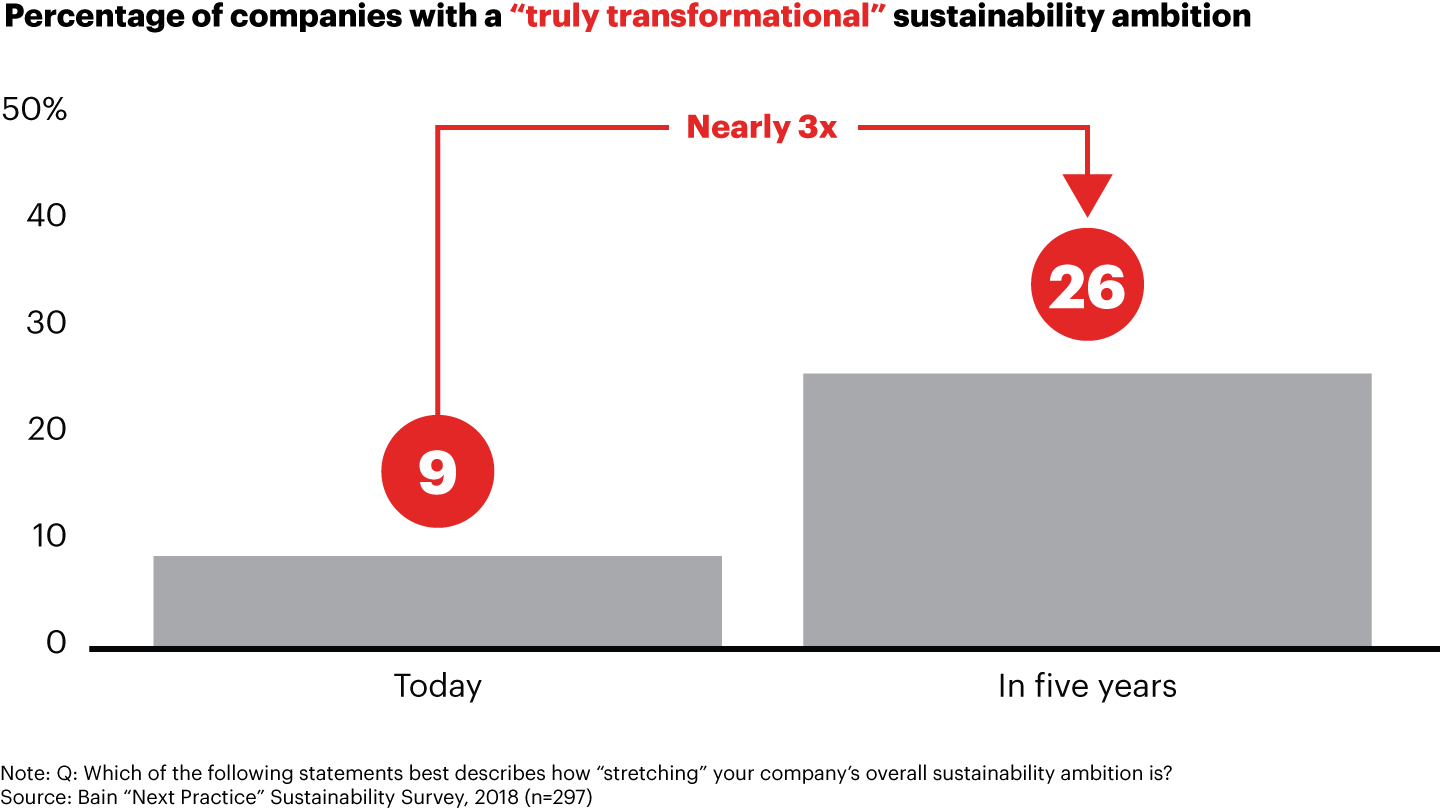
Using "future back" thinking to create transformative ambitions. Setting targets from a baseline is an important part of making progress, and many companies with unambitious goals could benefit from stretching them. But instead of making incremental improvements, leaders will take a more transformational approach by thinking from the future back. What do we mean by that? They will create a vision of what their future will look like in a truly sustainable economy and then craft an objective to fit that vision. In fact, the share of companies that have adopted a truly transformative sustainability aspiration will nearly triple over the next five years, from 9% to 26%, according to our survey (see Figure 2). These companies will follow the lead of trailblazers like Tesla, which envisioned a long-term global need for sustainable vehicles and energy, adopted a mission to "accelerate the world's transition to sustainable energy" and built a business model to meet that aspiration. Interface, the world's largest modular carpet manufacturer, set an ambition in 1994 to turn a petroleum-intensive business into the first environmentally sustainable, and ultimately restorative, company. It has since been exploring radical product innovations and business model changes to help it achieve its "Mission Zero" by 2020.
Making "sustainable" irresistible for customers. Over the next five years, customer loyalty and revenue generation will replace public reputation and cost savings as the primary drivers for sustainability action among leaders, according to our survey. Today, the most commonly cited barrier to success is low customer willingness to pay for sustainable goods. But forward-thinking companies aren't deterred by this obstacle. They are expanding their reach beyond a niche group of customers by making sustainability part of a holistic value proposition, using innovation to create attractive product attributes, such as price savings, customer service or performance, that are complemented by sustainability.
Figure 1
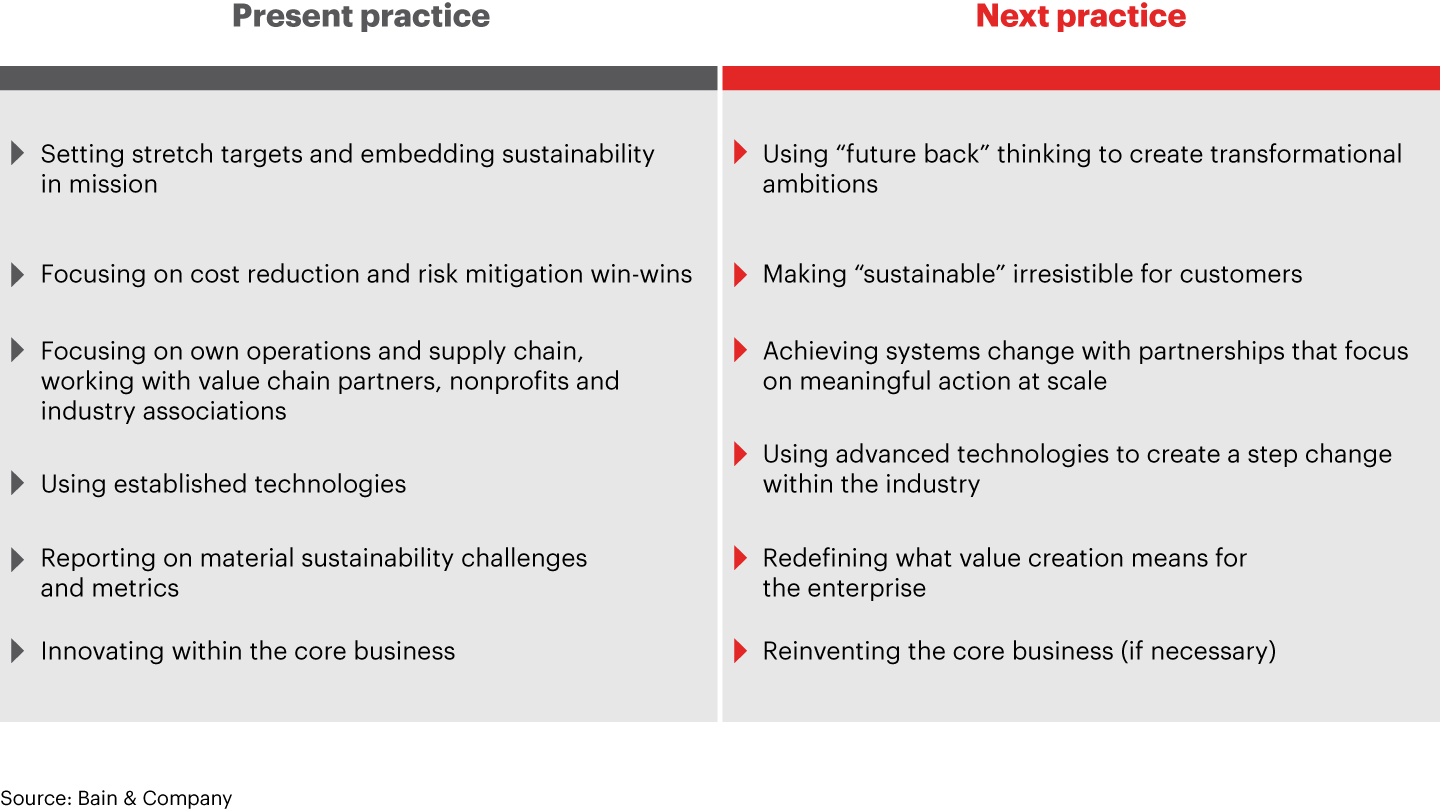

Figure 2

Procter & Gamble was one of the first companies to market cold-water detergent, which allows consumers to save on energy and increase clothing longevity. It reduces the energy used in washing by up to 90%. Bulb, a UK-based renewable energy supplier start-up, has signed up 2% of the UK market in just three years—quite an achievement for a new entrant, given that the top six players controlled 84% of the market in 2016. Bulb's value proposition is to offer a fair price, great customer service and interfaces, and green practices. Many companies in the petrochemical-intensive shoe industry are exploring more sustainable materials options: Adidas sold over 1 million pairs of shoes made with ocean plastic in 2017, combining an environmentally friendly proposition with desirable design and performance. Each of these companies has integrated sustainability seamlessly into a superior or cheaper product or service, rather than simply counting on sustainability to be inherently attractive.
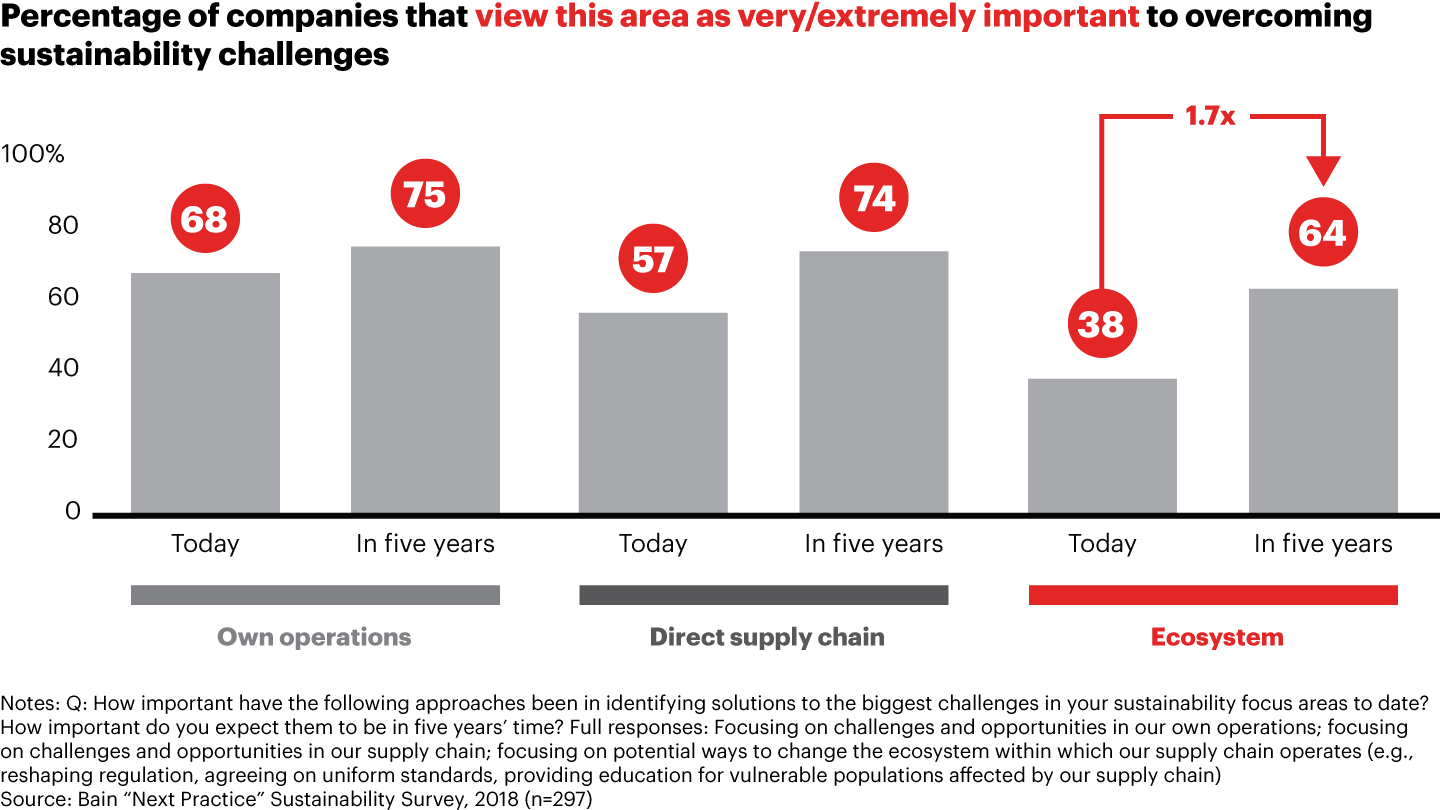
Achieving systems change with partnerships that focus on meaningful action at scale. Sustainability leaders aren't just looking to optimize their operations and those of their value chains; increasingly, they are seeking to address the root causes of the challenges their value chains face. For over a decade, leaders have been collaborating to make commitments, outline solutions and develop frameworks for action. Now we are seeing these same leaders collaborate on the deep on-the-ground work required to achieve real system changes at scale. Among the companies we surveyed, 64% say focusing on changing the system will be very or extremely important for their company in five years, a significant increase compared with the 38% who view it as very or extremely important today (see Figure 3).
System thinking starts with identifying the root causes of challenges by mapping all the participants in the ecosystem and considering their incentives—everything from government incentive structures to labor incentives for suppliers. Often, solutions to underlying challenges require innovative collaboration. In fact, our survey found that companies expect to increase their work with regulators, legislators, multi-stakeholder coalitions and competitors substantially over the next five years. Partnerships with NGOs, industry associations and value chain partners will remain popular but will not grow as quickly, according to the survey.
Figure 3

Nespresso and its nonprofit development partner TechnoServe are working with USAID to rebuild the coffee industry in South Sudan after it was stifled by the country's civil war. The project seeks to train 1,500 South Sudanese farmers by 2019 in an effort to increase farmer wages and exports. More than 700 farmers have attended monthly agronomy trainings since August 2015. For its part, Olam International, one of the largest global agribusiness companies, with nearly $20 billion in annual revenue, has achieved a number of successes working collaboratively to transform the sustainability and yields of its plantations. For example, it became the first agribusiness company to achieve the Alliance for Water Stewardship Standard for its Aviv coffee plantation in Tanzania, after working with nonprofits and local stakeholders to ensure water security for the 300,000 people living in the surrounding Ruvuma River basin. Olam's recently launched AtSource platform aims to shape change on the ground by increasing the involvement and engagement of its consumer products customers.
Using advanced technologies to create a step change within the industry. Companies have always used technology to improve sustainability, but leaders will seek and seize opportunities to use advanced technology to intensify their efforts while achieving competitive advantage. Rapid advances are putting game-changing tools within firms' grasps like never before. For instance, when Google applied artificial intelligence (AI) to optimize data-center energy efficiency, it reduced the amount of energy used for cooling by 40%. Apple uses Daisy, a recycling robot, to disassemble and sort used iPhones. Meanwhile, Walmart, IBM and others formed the Blockchain Food Safety Alliance to improve supply chain traceability in China.
Although breakthrough technologies can bring great benefits, they also can cause unintended harm. For example, AI and robotics could make it affordable for mining companies to dig deeper and cause greater environmental damage, and autonomous vehicles have the potential to displace public transit and increase emissions if not paired with renewable fuels. Companies must implement technology with integrity and for good in order to retain trust among employees, customers and their communities—and to win in the long term. Additionally, companies cannot sit back and expect technology to solve global problems. They must instead take a proactive approach, using advanced technologies to promote their sustainability strategies. If every company waits for others to demonstrate the potential benefits of new technologies, no progress will be achieved.
Redefining what value creation means for the enterprise. Many companies are now well versed in materiality assessments and transparent reporting. Leaders exceed these basics; they acknowledge that a truly sustainable economy requires expanding a company's view of value creation beyond financial profit to consider society and the planet as a whole.
Ideas such as shared value and measuring nonfinancial benefits are not new. What is new: large companies accepting and implementing these concepts at scale. For example, De Volksbank defines shared value as benefits for customers, responsibility to society, meaning for employees and return for shareholders. Chemical company BASF measures economic, social and environmental benefits in its calculation of net impact for each step of the value chain.
Investors are facilitating this shift by redefining the kinds of value they expect from companies, with major firms such as APG, BNP Paribas and CalPERS factoring environmental and social considerations into valuations and investment decisions. ING and others supplied a €1 billion loan to Philips with an interest rate that varies based on changes in the company's ESG performance.
Such advances support a mindset shift that empowers companies to invest in a future where better business practices lead to improved social and environmental outcomes. Fortunately, a growing body of evidence supports the correlation, and even causation, between ESG performance and returns. The shift is not a financial trade-off.
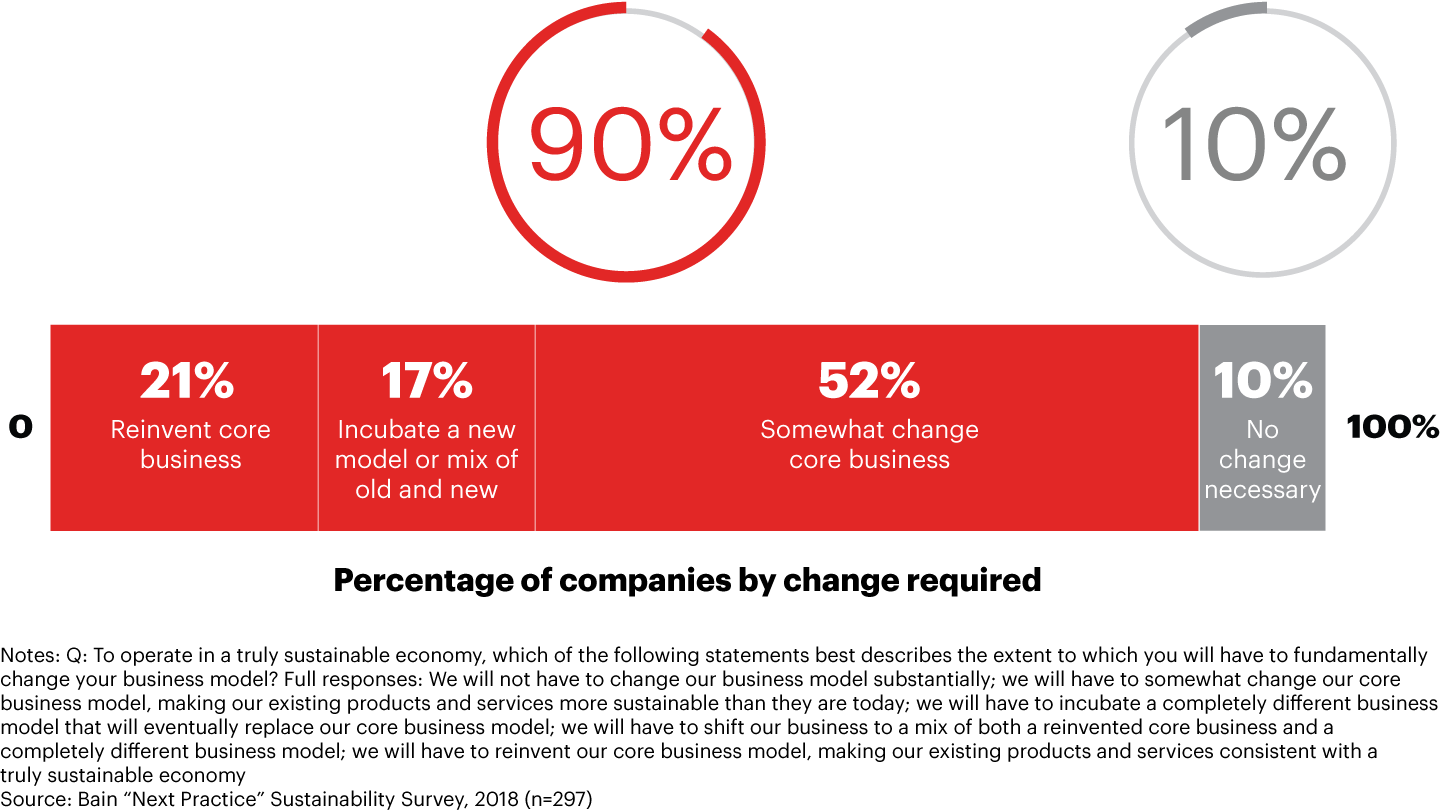
Reinventing the core business (if necessary). When companies look into the future, many will see that their only option for becoming sustainable is to make a drastic shift in direction. Our survey found that 90% of companies feel they need to change their core business model at least somewhat in order to operate in a truly sustainable economy, and 38% of companies feel that their core business model will need to change radically (see Figure 4). That is a huge proportion when you consider how infrequently companies reinvent their core, and do so successfully.
We see companies engage in four flavors of reinvention: making significant changes to their products (e.g., from a physical product to a virtual one); shifting the customer and engagement channel (e.g., sharing services and goods vs. single-owner use); rethinking operations (e.g., "closed loop" production); and transforming the economic model (e.g., charging based on the amount the product is used rather than on ownership).
Figure 4

Business reinvention is not without risk, as many companies' early entries into solar demonstrate. Yet others show how reinvention can succeed. The Danish utility Ørsted (formerly named Dong Energy) has made great strides in its conversion from fossil fuels to wind power. It has reduced its coal consumption by 82%, with the goal to reach a 96% reduction in carbon emissions by 2023, exceeding science-based targets. After more than 150 years of operating a business focused on cigarettes, Philip Morris International is reinventing itself for a "smoke-free future" by pursuing reduced-risk products. Volvo has said that in 2019 it will stop producing cars powered solely by an internal combustion engine.
Charting a tailored path
After using future back thinking to create a long-term vision, companies can use today forward thinking to map the pathways to get there. They can pursue the most attractive and achievable route, knowing that the journey is likely to change along the way.
Indeed, companies that move the needle to the next economy will need to pursue two tracks—simultaneously improving and starting to reinvent their core business. The balance between the two depends on the headroom for improvement in the core business and on whether there is a fundamental problem with the sustainability of the business model (see Figure 5).
Some companies, such as those in renewables and healthcare services, are rooted in creating social or environmental value with a model that is already—or at least has the potential to be—sustainable for generations to come. These companies will focus on improving the sustainability of their core business and spend less time on business reinvention. At the other extreme, companies engaging in environmentally or socially detrimental activities need to seriously pursue reinvention or prepare to manage a decline in business, as they will be a target for disruption or regulatory action.
Figure 5
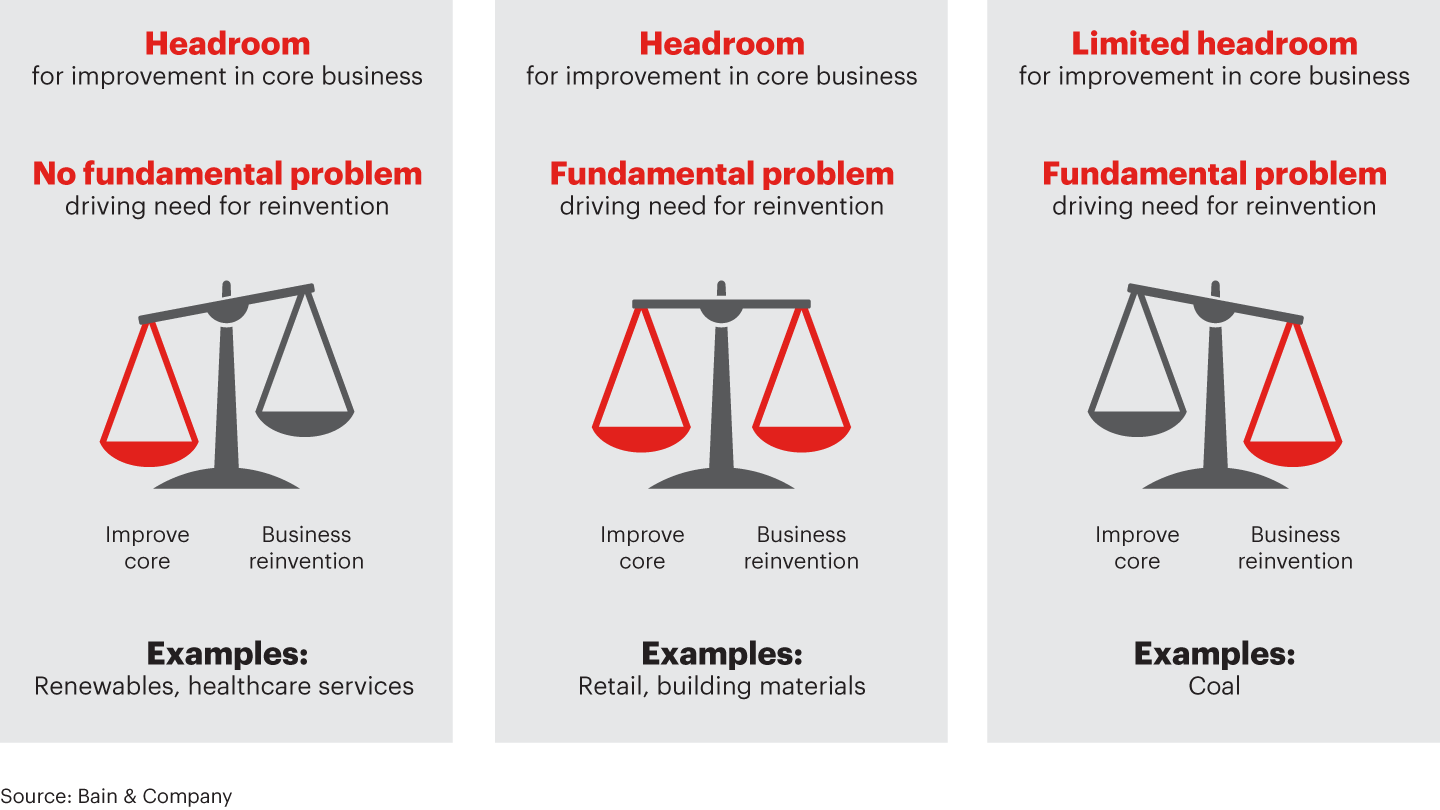

Figure 6

Most industries fall somewhere in between—where there's plenty of improvement to be made in the core, but reinvention is still required to become truly sustainable and ensure a resilient, long-term business model.
In retail, for example, leaders will follow both tracks, continuing to focus on improving the sustainability of their operations and products while simultaneously investigating alternative business models to improve resource consumption. UK retailer Marks & Spencer plotted its journey in five stages. Three of those stages address core business improvement: reduction of waste and energy, integrating that approach into the business, and improving employee and customer engagement. The fourth stage involves exploring new business models. The fifth and final stage is building coalitions that support the company's multiple-track approach. Mike Barry, M&S's chief sustainability officer, describes the types of new business models that it considers radical shifts: producing closed-loop clothing (using recycled and recyclable fibers) and offering personalized wellness diets based on customers' DNA profiles. By considering possible reinvention paths alongside continued improvement of the core business, leading retailers are positioning themselves to make steady progress while pioneering future trends.
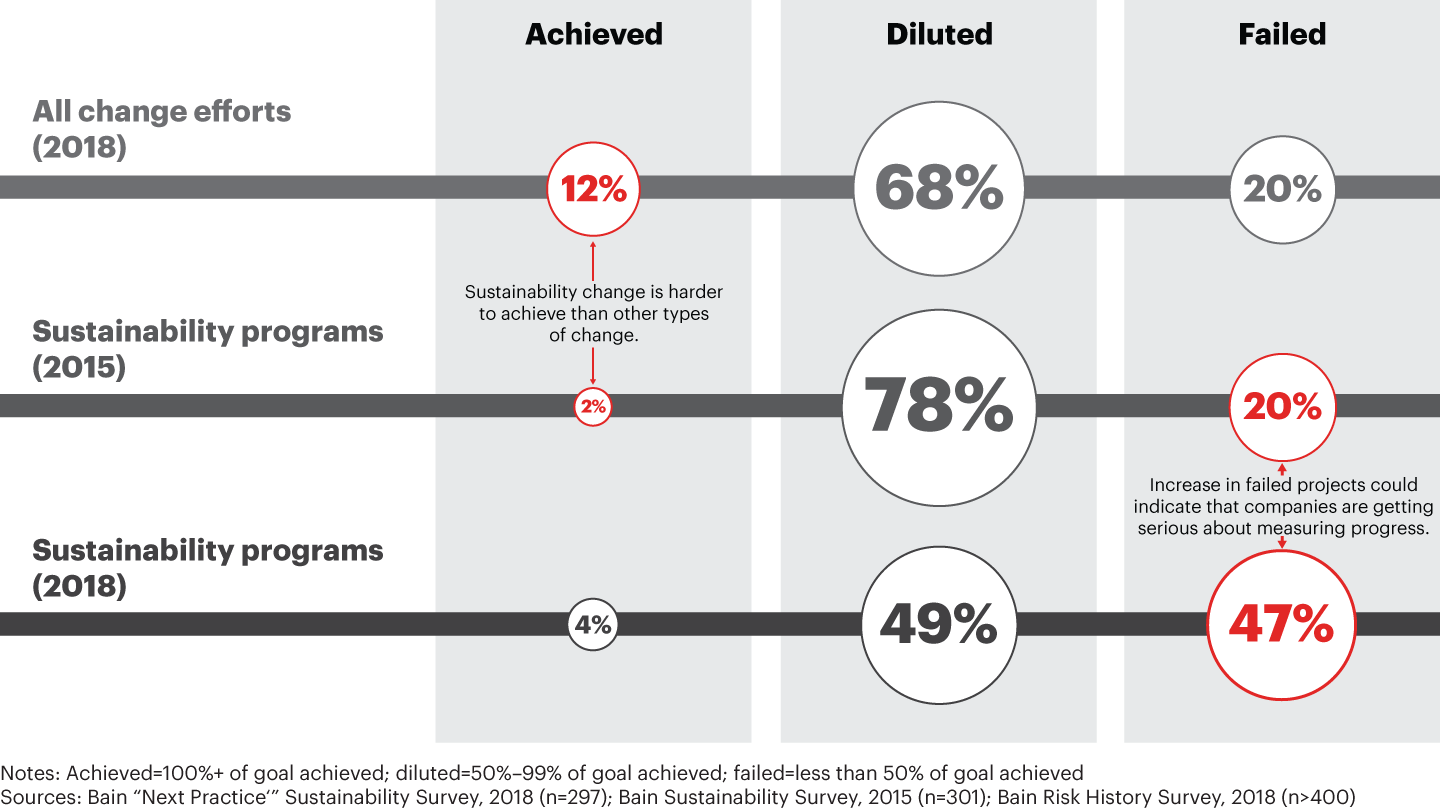
Whatever strategy a company chooses, making it happen will not be easy. Among the alarming findings from our survey: Only 4% of respondents say their companies are achieving or exceeding their sustainability goals. Nearly half of all sustainability programs are considered failures by the companies deploying them—and the failure rate has doubled in the past two years (see Figure 6 and the sidebar, "How to avoid the failure trap"). The rise in failed projects could be evidence that companies are taking the issue seriously, and therefore more scrupulously measuring progress and acknowledging that advances are insufficient. But it also highlights just how hard it will be to build a truly sustainable economy.
Indeed, achieving true sustainability may seem daunting, but it is necessary and inevitable. Companies that take the leap from best practice to next practice will lead the shift to a sustainable world—and gain competitive advantage in doing so.
How to avoid the failure trap
Wherever they are in their sustainability journey, all companies face the significant challenge of making change happen. Our survey shows just how hard sustainability change efforts are to pull off: Among survey respondents, only 4% say they fully succeeded in achieving their sustainability goals, compared with 47% who say they failed.
But there are ways that companies can boost their odds of success. Creating a compelling story, making bold commitments and loudly championing them helps to galvanize change. Companies that succeed ensure that sustainability is owned at the CEO level, and that influential and trusted opinion leaders are on board. They make sustainability an "and" not an "or," giving managers appropriate air cover and incentives to connect corner-office passion to frontline realities.
The companies that are most successful at enacting change push on the open doors: They start with easier initiatives to create proof points. They use industry collaboration to overcome barriers. And they align governance and day-to-day activities to support the combined sustainability and business strategy.
1 Leaders are defined as respondents who ranked their companies in the top 20% (score >81) on the question "If 100 represents the most sustainable company in your industry, and 0 is the least, where would you consider your company to fall in this range?"
Jenny Davis-Peccoud is the global practice leader of Bain & Company's Sustainability & Corporate Responsibility practice. She is based in Amsterdam. Axel Seemann is a Bain advisory partner based in Munich. Michael Jongeneel is a partner in Amsterdam. Fernando Martins is a Bain Expert Vice President based in Chicago.
The authors would like to thank Clare Tovey for leading the development of this point of view as well as Connor McLane and Daniel Cole for their significant contributions to this work.

Jenny Davis-Peccoud: Transforming Business for a Sustainable Economy
Some companies are leading the way with a number of actions designed to help create a truly sustainable economy.
First published in 8월 2018