

Brief

한눈에 보기
- As banks look to move faster on digital product design, time to market, and security, partnerships with fintechs have become increasingly attractive.
- But realizing the full value of partnerships has been elusive for most participants.
- Common pitfalls include vague definition of the business need, unclear performance metrics, and opaque decision-making processes.
- Success in this area entails looking beyond the technological issues to focus more on partnerships rather than providing solutions.
When it comes to moving quickly on innovative products or going to market, many banks are stepping up partnerships with fintechs—start-up or scale-up businesses that leverage technology to fulfill functions required to deliver offerings to customers—rather than building a product or capability themselves.
Written in collaboration with
Written in collaboration with

The model is particularly salient given recent developments. For one thing, Covid-19 boosted consumers’ demand for digital interactions. Digital acceleration changed everything from the user interface to the type of products a bank can offer to security protocols. These changes were hard to accomplish quickly using only a bank’s internal resources, so banks had to look outside for help. Moreover, volatility caused by the pandemic put a premium on agility and flexibility—which partnerships can address.
In addition, as venture capital funding tightened and fintechs struggled to scale up consumer offerings, many pivoted to business products. Fintechs provided the technology, banks the funding and customers, with each augmenting the potential of the other. Established fintechs with mature and successful offerings look attractive to banks because they are less risky, and banks would otherwise have to spend money and time to build.
However, a successful partnership—a joint venture or a long-term commercial agreement to deliver a mutually beneficial function influencing both parties’ futures—is not easy to source, implement, and manage. Many banks are still looking for ways to realize substantial value from their fintech partnerships. To that end, Bain & Company and the Euro Banking Association (EBA) interviewed 37 banks and fintechs in order to distill the key elements of success for such partnerships and identify how to avoid the pitfalls.
Responding to new customer priorities
A decade ago, neobanks and banking fintechs were largely observed from a distance by traditional banks. As investment in fintechs picked up, some strong, sustainable fintechs emerged. Banks began partnerships, but with little knowledge of how to best implement the new technologies and no blueprint for working together. As a result, most of the early partnerships appeared on the surface to be innovative but struggled to make meaningful progress.
As the pandemic accelerated the need to digitalize channels and processes, banks realized they would benefit from treating fintechs not merely as suppliers or investments but as true partners. Today, partnerships are an essential part of financial services, with an average of 9.4 fintech partners per bank reported by Gartner. And yet, two-thirds of these partnerships fall below expectations, according to a survey by Aite-Novarica, suggesting that banks have not yet fully mastered the ability to partner successfully.
There is a lot at stake here. Banks report spending $378 million per year on average on their digital transformation, according to Finastra. And 88% of senior bank executives in the UK view technology, automation, and digital investments as their top strategic priority for the next 12 months, according to the government’s Fintech Delivery Panel.
Among US banks surveyed by Cornerstone Advisors, the top three domains for partnerships are the following:
- payment facilitation and money movement, with 39% of respondents having partnered and another 39% planning to partner;
- fraud and risk management, with 35% partnered and 24% planning to; and
- mobile wallet, with 34% partnered and 21% planning to.
When it comes to partnership objectives, respondents ranked loan volume, loan productivity, and new revenue as the most important. But their track record in those areas does not measure up to the areas’ importance.
The high-priority use cases—payments, moving money, and storing deposits—form the heart of banking. Once digitalization of these core functions has taken place, partnerships can address more advanced use cases. Partnership-enabled growth still has ample headroom.
To understand the direction partnerships may take, it is useful to identify the four most common types based on their function, with a few examples:
- Distribution, to reach new customers. For example, J.P. Morgan invested a 49% stake in Viva Wallet to grow in the fragmented European payments market. Viva Wallet has a proprietary, cloud-based payments platform that offers services complementary to J.P. Morgan’s payments business.
- Products that improve the customer experience or expand current offerings. Barclays and Form3, a cloud-native fintech, created a directly connected access solution to Europe’s SEPA Instant payment scheme. This allows nonregulated payment institutions to offer international bank account numbers to their customers at the SEPA Instant clearing mechanism.
- Platforms for core banking software of the sponsor bank. Lloyds Banking Group and Thought Machine joined up to accelerate the bank’s use of digital technologies, and Lloyds Banking Group also took a 10% stake in Thought Machine. They are developing a new core platform for the bank, which it believes will provide customers with more tailored products and enable faster development cycles.
- Operations, to streamline internal processes, improve data sharing, or further automation. When the Swiss Federal Council announced plans to allow zero-interest loans, generating thousands of requests, UBS and Automation Anywhere partnered to create robotic process automation for the granting of loans, with automation allowing UBS to reduce processing time by about 85%.
Common pitfalls—and how to avoid them
Regardless of which function a given partnership performs, we see common pitfalls cropping up at each stage of the endeavor—sourcing, implementing, and managing. But these barriers can be overcome with the right planning and tactics.
Sourcing partners sets the foundation for orchestrating a successful partnership, yet it can be derailed in several ways. One is the lack of a well-defined business need. Pursuing partners without detailing the purpose of the envisaged partnership will fail to obtain commitment from the relevant business units. And a great product for the wrong purpose, or at the wrong time, will not benefit the bank. For fintechs, neglecting a sharply defined business need results in a scattershot sales strategy, thinly spreading resources across potential partnerships that may not materialize.
Another pitfall is failing to assess the build vs. partner trade-off (see Figure 1). Without this evaluation of business fit and costs, banks miss the chance to think about what they are trying to achieve, what it may cost, and how it could develop over time.
Figure 1
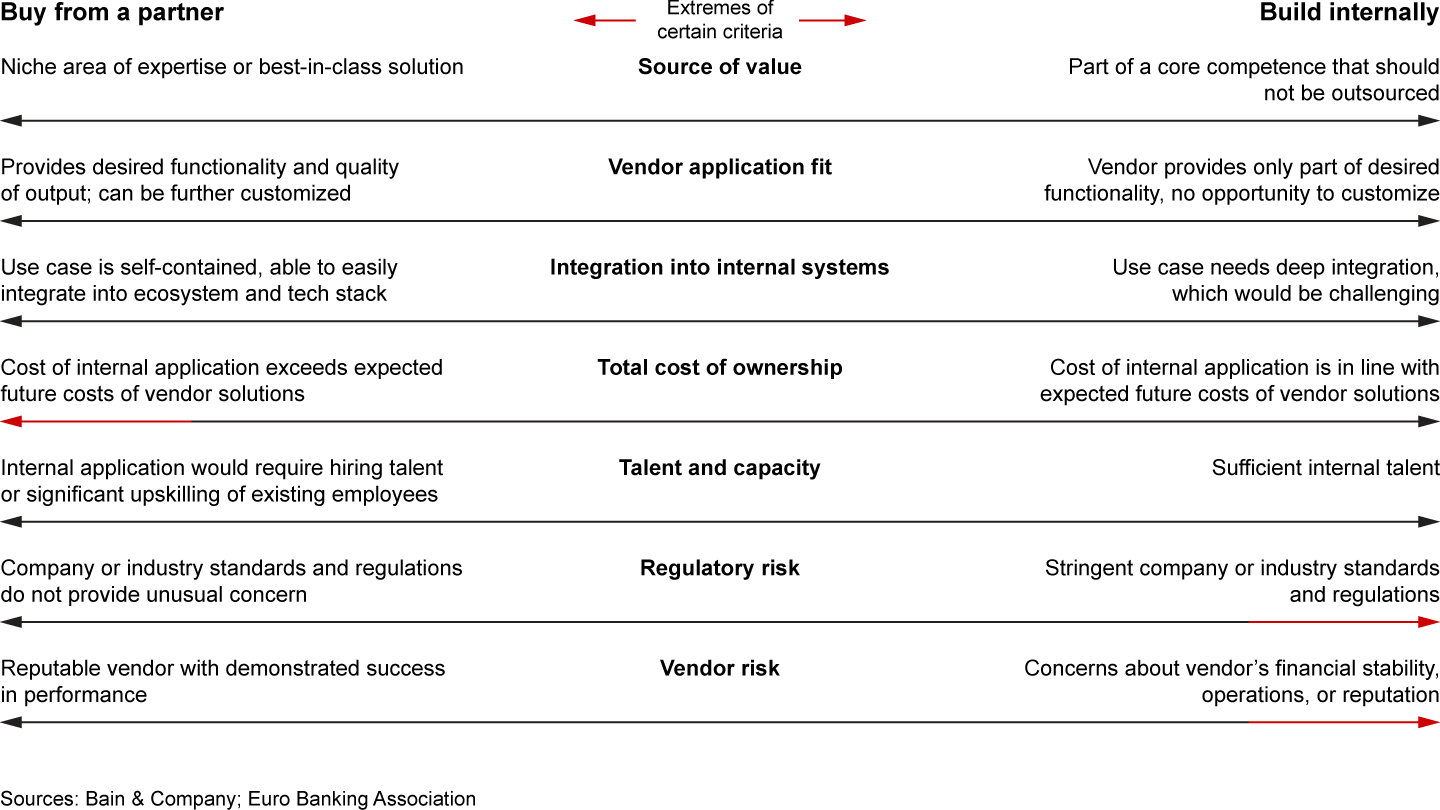

Banks may also neglect getting all key decision makers and internal stakeholders to engage and align early on. This creates process delays that may jeopardize time-sensitive opportunities, puts a drag on resources, and focuses efforts on impossible partnerships.
Solving these common problems involves thoughtful planning and reorganizing. Both parties should identify the crucial business need that a partnership will help them to address. They should jointly prioritize how a collaboration will build value, and align on specific metrics for success. Establishing an operating model that includes a single point of contact on both sides, while keeping all key stakeholders engaged, fosters transparent processes and mutual understanding.
Implementation involves integrating technology and businesses, spanning the partnership process from initial contracts through proof of concept up to the point of going live. Common barriers to implementation tend to involve misalignment of people and processes rather than technical integration.
Problems often stem from insufficient resources and engagement. Dedicated resources from start to finish of implementation will help ensure that both parties realize their desired return on investment. Business, technology, and legal teams must continually engage on issues of procurement and risk.
Implementation may also stall because of drawn-out, generic vendor assessments. Applying full vendor assessments to niche fintechs tends to slow the pace of innovation and creates unnecessary work. Fintechs often do not have the resources or capabilities to meet all of a bank’s assessment requirements, but that does not necessarily mean they are not a suitable partner—assuming, of course, they can meet legal and supervisory requirements.
In addition, proofs of concept sometimes get disconnected from the desired outcomes. Partnerships wither if not regularly tended, wasting time and never advancing beyond the proof-of-concept state.
Solving these problems involves changes and adaptations on both sides. Fintechs need dedicated relationship managers who oversee execution by the product, engineering, and legal teams, and who constantly communicate with their counterparts at the banks.
Part of the answer can be found in tailored, transparent onboarding for vendors. Fintechs can prepare requirements up front and thereby demonstrate their reliability and speed. Banks, for their part, need a clear, fit-for-purpose procurement process proportional to the size and risk of the outcome the partnership aims to deliver. They also need dedicated resources from business units to focus on delivering the defined outcomes.
Each side should agree on what exactly they are testing with a proof of concept and should ensure that those criteria link to the required proof in order to model the next steps in implementing the solution.
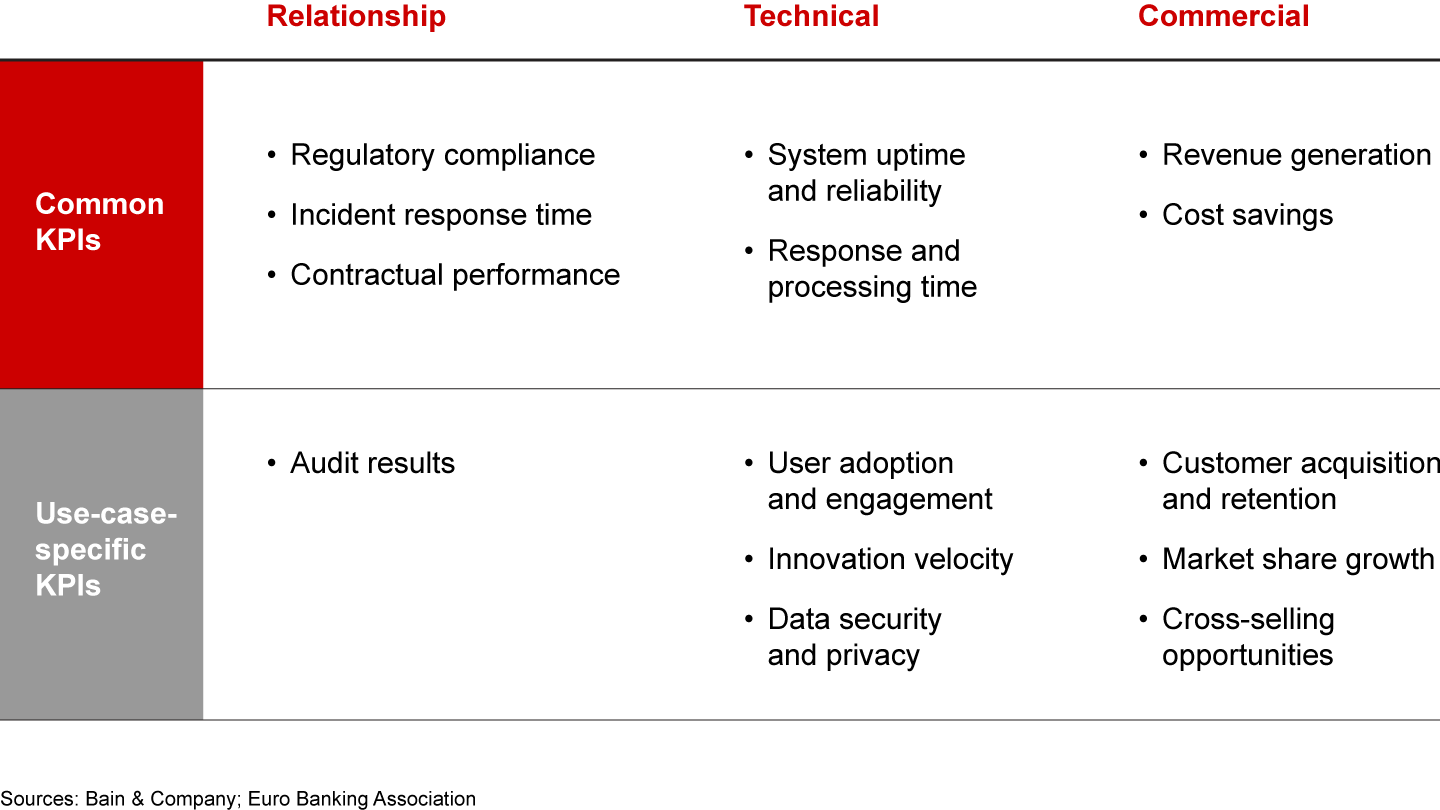
Management of a partnership should aim to nurture a thriving alliance that yields financial rewards. This phase entails vigilant tracking of progress, persistent alignment, and true collaboration. The main vulnerability here lies in the absence of a structured post-sales framework, jeopardizing growth and oversight and ultimately leading to a decline in the relationship. This may happen for several reasons, one of which is unclear or misaligned KPIs. Without clear metrics of success, neither party will be able to prove their value or instill confidence that the partnership model will deliver results (see Figure 2).
Figure 2

Other reasons are unstructured or missing governance processes across technology, commercial groups, and relationships. This is a major cause of partnership failure. In addition, either party may miss opportunities to expand the relationship. Partnerships lose steam if they fail to offer new value as strategic objectives and challenges evolve. One mechanism to overcome the steep learning curve that both banks and fintechs experience is to create a partnership team within the bank. This team helps the fintech partner understand the process, set expectations, connect them to the relevant business units, and put a clear and transparent structure around the partnership process. The banks we interviewed with the most mature partnerships have this team and process in place.
The best management thrives on an unwavering commitment and a shared vision for the project. Several specific practices support such commitment. Explicit key performance indicators curtail unproductive scope creep and allow fintechs to prove their reliability in delivery. In addition, each party should tend the project through regular sessions that focus on addressing problems, improving technical integration and performance, delivering on commercial and strategic goals, and managing compliance.
Fintechs should strive to continually increase the value they provide to the bank. Those that accomplish this tend to implement smaller, well-defined products and solutions that can expand to deepen the integration with the bank.
People and processes first, technology second
Bank executives have realized they cannot keep up a sufficient pace on innovation or going to market if they work alone. Fintechs, meanwhile, look to partnerships for the revenue or investments that allow them to grow and access new markets.
But partnerships take sustained work and attention. While they are often perceived to raise technological challenges, our interviews point to larger issues regarding alignment of people and processes. Successful partnerships depend on hands-on engagement and mutual appreciation of each business’s needs. These are not transactions but relationships that prize trust and transparency, and they depend on deep forms of collaboration.

The Euro Banking Association (EBA) is a practitioners’ body for banks and other service providers supporting a pan-European vision for payments. The mission of the EBA is to foster dialogue and experience exchange amongst payments industry practitioners towards a pan-European vision for payments. We pursue our mission through involving member organisations and relevant stakeholders in thought leadership on innovation, helping our members to understand and implement regulation and by supporting the development of market practices. The EBA has more than 160 members from the European Union and across the world. For additional information about the Euro Banking Association, please visit www.abe-eba.eu or follow us on LinkedIn and Twitter.
First published in 12월 2023