
Skip to Content
  • 오피스

    오피스

    미주
    • Atlanta
    • Austin
    • Bogota
    • Boston
    • Buenos Aires
    • Chicago
    • Dallas
    • Denver
    • Houston
    • Los Angeles
    • Mexico City
    • Minneapolis
    • Monterrey
    • Montreal
    • New York
    • Rio de Janeiro
    • San Francisco
    • Santiago
    • São Paulo
    • Seattle
    • Silicon Valley
    • Toronto
    • Washington, DC
    유럽, 중동, 아프리카
    • Amsterdam
    • Athens
    • Berlin
    • Brussels
    • Copenhagen
    • Doha
    • Dubai
    • Dusseldorf
    • Frankfurt
    • Helsinki
    • Istanbul
    • Johannesburg
    • Kyiv
    • Lisbon
    • London
    • Madrid
    • Milan
    • Munich
    • Oslo
    • Paris
    • Riyadh
    • Rome
    • Stockholm
    • Vienna
    • Warsaw
    • Zurich
    아시아, 호주
    • Bangkok
    • Beijing
    • Bengaluru
    • Brisbane
    • Ho Chi Minh City
    • Hong Kong
    • Jakarta
    • Kuala Lumpur
    • Manila
    • Melbourne
    • Mumbai
    • New Delhi
    • Perth
    • Seoul
    • Shanghai
    • Singapore
    • Sydney
    • Tokyo
    오피스 전체보기
  • 얼럼나이
  • 미디어 센터
  • 구독
  • 연락처
  • Korea | 한국어

    지역 및 언어 선택

    글로벌
    • Global (English)
    미주
    • Brazil (Português)
    • Argentina (Español)
    • Canada (Français)
    • Chile (Español)
    • Colombia (Español)
    유럽, 중동, 아프리카
    • France (Français)
    • DACH Region (Deutsch)
    • Italy (Italiano)
    • Spain (Español)
    • Greece (Elliniká)
    아시아, 호주
    • China (中文版)
    • Korea (한국어)
    • Japan (日本語)
  • Saved items (0)
    Saved items (0)

    You have no saved items.

    관심 있는 내용을 북마크하여 Red 폴더에 저장할 수 있습니다. Red 폴더 에서 저장된 내용을 읽거나 공유해보세요.

    Explore Bain Insights
  • 산업
    메인 메뉴

    산업

    • 우주항공, 방산 및 정부 서비스
    • 농업 관련 산업
    • 화학
    • 인프라, 건설 및 건축 자재
    • 소비재
    • 금융 서비스
    • 헬스케어
    • 산업용 기계 및 장비
    • 미디어 및 엔터테인먼트
    • 금속
    • 광업
    • 석유 및 가스
    • 제지 및 패키징 산업
    • 사모펀드
    • 사회 및 공공 부문
    • 유통
    • 기술
    • 텔레콤
    • 운송
    • 여행·여가
    • 유틸리티 및 재생가능 에너지
  • 컨설팅 서비스
    메인 메뉴

    컨설팅 서비스

    • Customer Experience
    • ESG
    • Innovation
    • M&A
    • 운영
    • 조직
    • 사모펀드
    • 고객 전략 및 마케팅
    • 전략
    • AI, 인사이트 및 솔루션
    • Technology
    • 변화 혁신
  • Digital
  • 인사이트
  • 베인 소개
    메인 메뉴

    베인 소개

    • 업무 소개
    • 베인의 신념
    • 구성원 및 리더십 소개
    • 고객 성과
    • 주요 수상 경력
    • 글로벌 파트너사
    Further: Our global responsibility
    • 다양성과 포용
    • 사회 공헌 활동
    • Sustainability
    • World Economic Forum
    Learn more about Further
  • Careers
    메인 메뉴

    Careers

    • Work with Us
      Careers
      Work with Us
      • Find Your Place
      • Our Work Areas
      • Integrated Teams
      • Students
      • Internships & Programs
      • Recruiting Events
    • Life at Bain
      Careers
      Life at Bain
      • Blog: Inside Bain
      • Career Stories
      • Our People
      • Where We Work
      • Supporting Your Growth
      • Affinity Groups
      • Benefits
    • Impact Stories
    • Hiring Process
      Careers
      Hiring Process
      • What to Expect
      • Interviewing
    FIND JOBS
  • 오피스
    메인 메뉴

    오피스

    • 미주
      오피스
      미주
      • Atlanta
      • Austin
      • Bogota
      • Boston
      • Buenos Aires
      • Chicago
      • Dallas
      • Denver
      • Houston
      • Los Angeles
      • Mexico City
      • Minneapolis
      • Monterrey
      • Montreal
      • New York
      • Rio de Janeiro
      • San Francisco
      • Santiago
      • São Paulo
      • Seattle
      • Silicon Valley
      • Toronto
      • Washington, DC
    • 유럽, 중동, 아프리카
      오피스
      유럽, 중동, 아프리카
      • Amsterdam
      • Athens
      • Berlin
      • Brussels
      • Copenhagen
      • Doha
      • Dubai
      • Dusseldorf
      • Frankfurt
      • Helsinki
      • Istanbul
      • Johannesburg
      • Kyiv
      • Lisbon
      • London
      • Madrid
      • Milan
      • Munich
      • Oslo
      • Paris
      • Riyadh
      • Rome
      • Stockholm
      • Vienna
      • Warsaw
      • Zurich
    • 아시아, 호주
      오피스
      아시아, 호주
      • Bangkok
      • Beijing
      • Bengaluru
      • Brisbane
      • Ho Chi Minh City
      • Hong Kong
      • Jakarta
      • Kuala Lumpur
      • Manila
      • Melbourne
      • Mumbai
      • New Delhi
      • Perth
      • Seoul
      • Shanghai
      • Singapore
      • Sydney
      • Tokyo
    오피스 전체보기
  • 얼럼나이
  • 미디어 센터
  • 구독
  • 연락처
  • Korea | 한국어
    메인 메뉴

    지역 및 언어 선택

    • 글로벌
      지역 및 언어 선택
      글로벌
      • Global (English)
    • 미주
      지역 및 언어 선택
      미주
      • Brazil (Português)
      • Argentina (Español)
      • Canada (Français)
      • Chile (Español)
      • Colombia (Español)
    • 유럽, 중동, 아프리카
      지역 및 언어 선택
      유럽, 중동, 아프리카
      • France (Français)
      • DACH Region (Deutsch)
      • Italy (Italiano)
      • Spain (Español)
      • Greece (Elliniká)
    • 아시아, 호주
      지역 및 언어 선택
      아시아, 호주
      • China (中文版)
      • Korea (한국어)
      • Japan (日本語)
  • Saved items  (0)
    메인 메뉴
    Saved items (0)

    You have no saved items.

    관심 있는 내용을 북마크하여 Red 폴더에 저장할 수 있습니다. Red 폴더 에서 저장된 내용을 읽거나 공유해보세요.

    Explore Bain Insights
  • 산업
    • 산업

      • 우주항공, 방산 및 정부 서비스
      • 농업 관련 산업
      • 화학
      • 인프라, 건설 및 건축 자재
      • 소비재
      • 금융 서비스
      • 헬스케어
      • 산업용 기계 및 장비
      • 미디어 및 엔터테인먼트
      • 금속
      • 광업
      • 석유 및 가스
      • 제지 및 패키징 산업
      • 사모펀드
      • 사회 및 공공 부문
      • 유통
      • 기술
      • 텔레콤
      • 운송
      • 여행·여가
      • 유틸리티 및 재생가능 에너지
  • 컨설팅 서비스
    • 컨설팅 서비스

      • Customer Experience
      • ESG
      • Innovation
      • M&A
      • 운영
      • 조직
      • 사모펀드
      • 고객 전략 및 마케팅
      • 전략
      • AI, 인사이트 및 솔루션
      • Technology
      • 변화 혁신
  • Digital
  • 인사이트
  • 베인 소개
    • 베인 소개

      • 업무 소개
      • 베인의 신념
      • 구성원 및 리더십 소개
      • 고객 성과
      • 주요 수상 경력
      • 글로벌 파트너사
      Further: Our global responsibility
      • 다양성과 포용
      • 사회 공헌 활동
      • Sustainability
      • World Economic Forum
      Learn more about Further
  • Careers
    최근 검색어
      최근 방문 페이지

      Content added to saved items

      Saved items (0)

      Removed from saved items

      Saved items (0)

      Brief

      Why Successful Transformations Depend on Frontline Ownership

      Why Successful Transformations Depend on Frontline Ownership

      Energizing the front line and leveraging cross-functional expertise can help you overcome the complexity (and disappointment) that often befall transformation efforts.

      글 Marco D’Avino and Simon Henderson

      • 읽기 소요시간
      }

      Brief

      Why Successful Transformations Depend on Frontline Ownership
      en

      No matter your approach, business transformations can test the mettle of any organization. Traditional transformation programs are highly centralized, top-down processes: Headquarters orders staff and outside consultants to identify a set of deliverables, which leads to a design phase, a strategic three-year roadmap, and reliance on a program office that executes the initiatives outside the routine flow of business.

      But there’s one valuable component that many of these carefully choreographed programs lack: frontline ownership.

      Letting the front line take the lead

      Without line ownership, a tension exists between program sponsors, who attempt to spur change but lack formal authority over resources, and line managers, who control those resources but must also focus on running the business. Confusion arises around roles and responsibilities, with change agents constantly circling back for permission to act or escalate a decision. When only a fraction of the workforce gets mobilized for the effort, the bulk of managers and employees feel disengaged, and few want to contribute ideas or participate. The transformation does not achieve the desired results, or benefits that are achieved tend to slip as soon as the program ends.

      Line-led teams, effective at delivering fast-paced results, should be at the heart of running and delivering the transformation, along with managing regular day-to-day responsibilities. They should be supplemented with cross-functional teams, which are formed and empowered to solve the 5 to 10 most complex initiatives. Those initiatives may require test-and-learn processes or “one-way door” solutions with sophisticated design and interdependency management.

      But the true ownership of the transformation sits with line managers, who have the authority and aligned incentives to achieve key targets. While line-led transformations may still have a results delivery office, its role is to set up initiatives and, subsequently, the front line for success. Responsibility for delivering changes to the business lies with the line-led team.

      One reason that highly centralized efforts often come up short is that they fail to capture the abundance of improvement recommendations that frontline employees have or overlook vital employee knowledge. For example, when headquarters executives at an oil and gas company wanted to wring short-term savings from their pipeline operation they changed the specifications for equipment in new production processes, which later led to operational shutdowns and required costly repairs. In another case, a major retailer’s attempt to cut costs resulted in reduced staff hours at stores, causing long checkout lines and widespread annoyance among customers. In both cases the view from on high missed critical facets of ground-level operations.

      In contrast, tapping into local knowledge and experience can uncover ideas that are not visible to the center. When a multinational healthcare corporation held ideation sessions with frontline maintenance teams to learn about their biggest concerns, they discovered that a troublesome power cord design was causing repeated failures and high maintenance costs. The issue was known by maintenance staff, but they lacked the ownership to correct the root cause until the transformation program gave them a platform.

      Marco D'Avino, a partner with Bain’s Performance Improvement practice, shares two ingredients that are necessary for a successful line-led transformation.

      Executing a line-led transformation

      Two ingredients, often absent in “business as usual” operations, are essential to orchestrate a successful line-led transformation: intent and accountability (see Figure 1).

      Figure 1
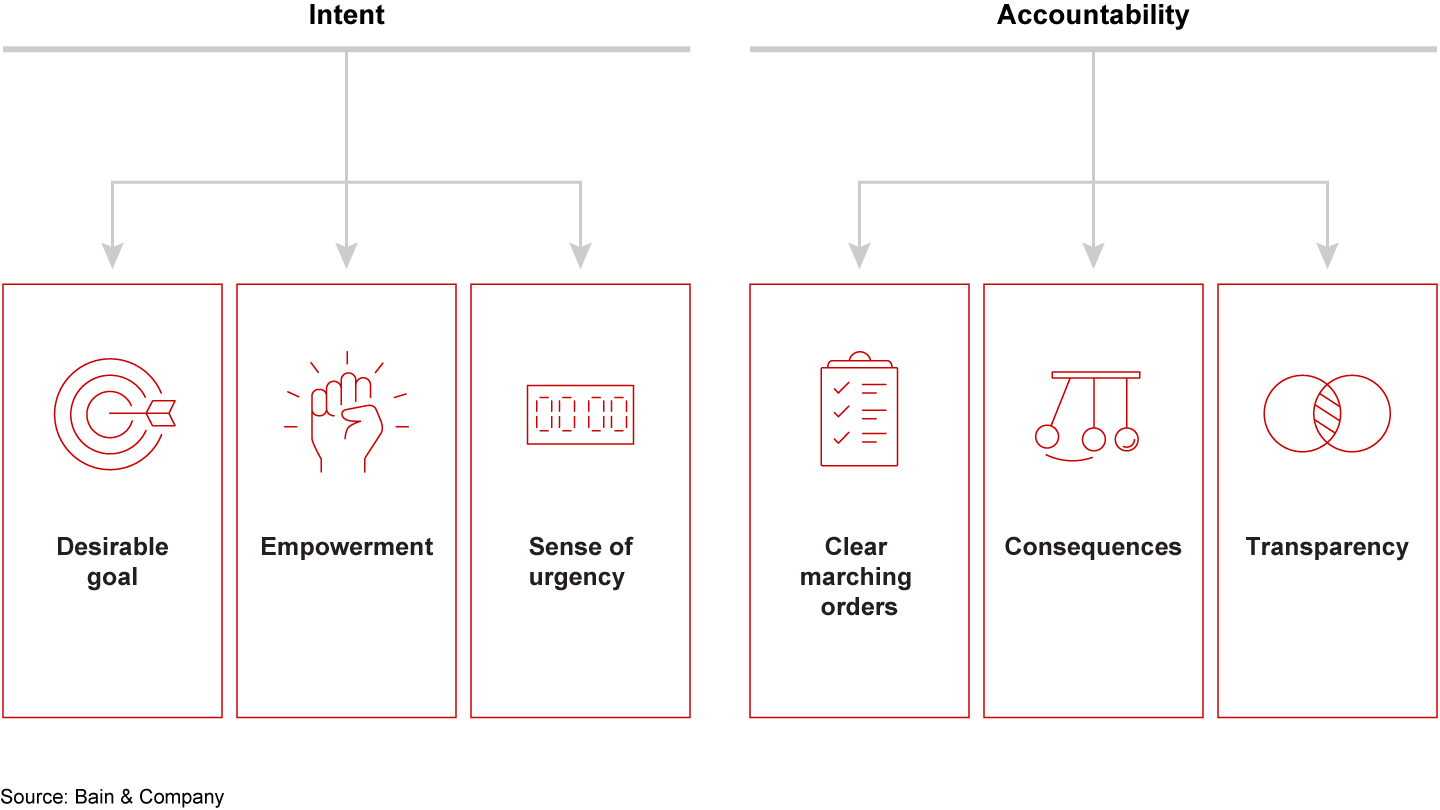
      The key ingredients of a line-led transformation

      Intent consists of three components:

      • a goal that’s articulated simply and understood by all employees;
      • empowerment of each of the initiative owners so they feel they can make a difference; and
      • a sense of urgency that reinforces the key messages of the transformation.

      Accountability can be infused throughout the organization by relying on another set of components:

      • specific targets for each business unit and a concrete plan showing how to attain those targets (see Figure 2) ;
      • positive and negative consequences that kick in when individuals hit or miss their targets; and
      • transparency, using metrics that indicate progress toward the goals and that everyone follows.
      Figure 2
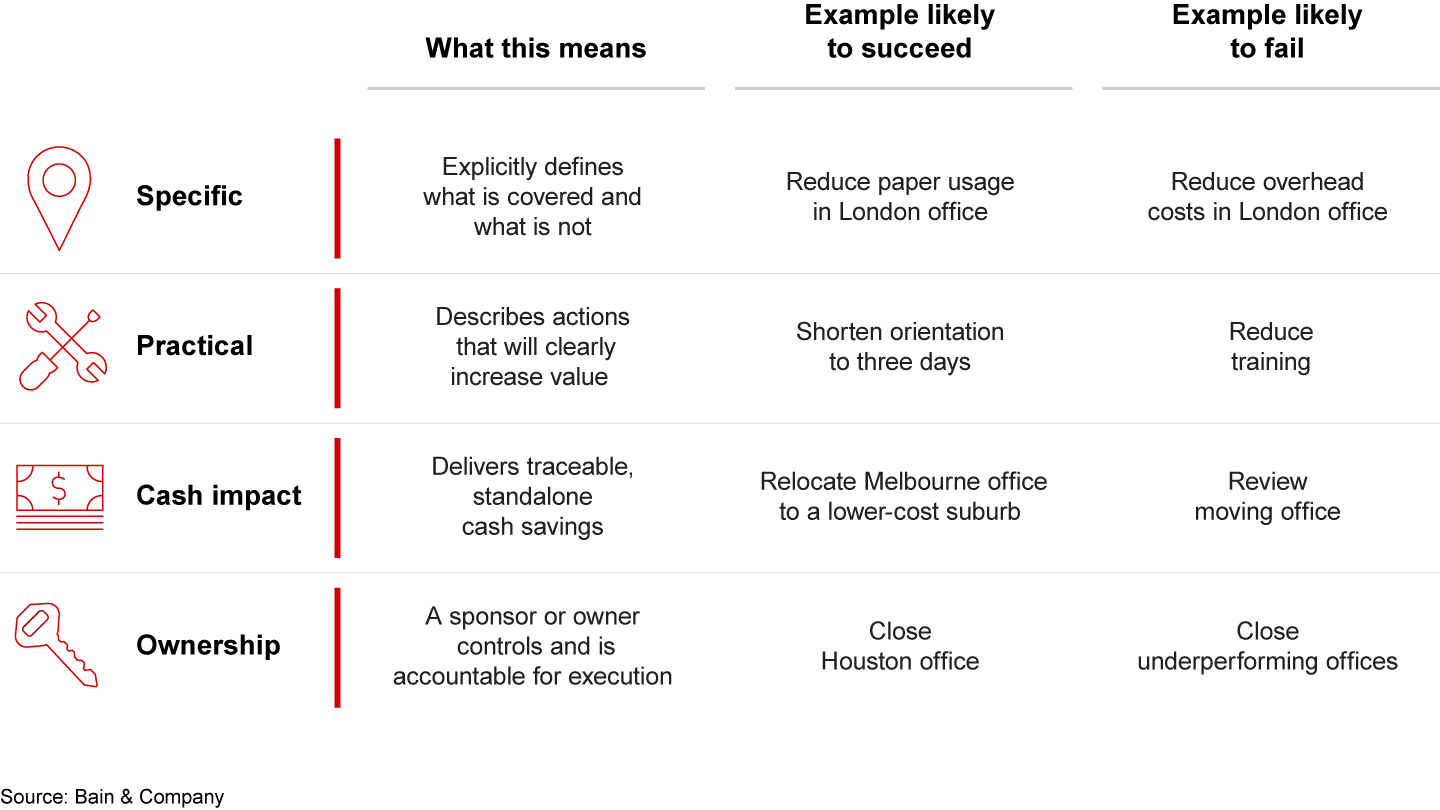
      Effective line-led initiatives have several distinct characteristics

      It is critical to select line managers who are motivated and capable to drive transformation initiatives. You might successfully address intent and accountability, but if line managers don’t exhibit change-oriented behavior, effectiveness will suffer. One company was able to solve this this by delegating parts of the initiative to up-and-coming “star” employees.

      To increase frontline manager effectiveness, companies can more directly link transformation targets with an individual’s performance targets, increase training and coaching for line managers, and structure the transformation organization according to best practices.

      Balancing line-led and cross-functional teams

      Listening to the front line, getting their buy-in for initiatives, and having them drive implementation are all critical regardless of the type of change a company is seeking. But there is also a role for cross-functional teams; the balance should be dictated by the company’s needs. For example, does the company need to rapidly reduce costs to stabilize the business, or is it looking to improve the business’s core functions to enable strategic growth?

      When an organization requires immediate results, line-led teams need to be the primary drivers. Frontline teams can generate hundreds of innovative ideas, then quickly transition to execution through a stage-gate process. Simple, handbrake initiatives can quickly capture value and build momentum for continued grassroots ideation and solutions. Once the line-led transformation is initiated, cross-functional teams can be leveraged to drive further value.

      When change is less time sensitive, a transformation program can begin with cross- functional teams. Overcoming challenges related to strategic growth often requires solving complex, nonlinear problems. These initiatives may unlock significant value. However, they require critical insights and innovative solutions best tackled by cross- functional teams. When this is the case, line-led teams are introduced later in the transformation to implement ready-to-deploy solutions and fill the hopper with new ideas.

      A healthcare provider’s success story

      A European healthcare provider that operates hospitals, primary care facilities, and community services was facing severe, long-term headwinds, many of which were exacerbated by Covid-19. These included a dramatic uptick in the number of people waiting on elective procedures; increased rates of staff burnout; continued budget constraints caused by an uncertain macroeconomic outlook; and higher healthcare demands from an aging population.

      In response, the executive team decided to transform their operations with the goal of continually delivering value-based results. Frontline managers and employees provided numerous valuable initiatives, with two pressing problems emerging as priorities: reducing clinic appointment cancellations and maximizing the utilization of clinic time slots.

      Contact centers introduced new processes to ensure patients weren’t booked into slots that would be canceled later (for reasons such as a doctor’s absence for training or annual leave). In the first month after rollout, avoidable cancellations fell by 54% across four pilot medical specialties. Outpatient services developed new systems aimed at filling all available time slots, reducing open clinic spots, and increasing the number of patients seen each day. A pilot demonstrated a 30% reduction in the share of vacant clinic spots after implementing the new processes. As a result, in the first year of the transformation, the program delivered 30,000 hours of released frontline nursing time; created 6,000 additional clinic appointments each year; and built the organizational foundation to continue delivering results.

      Patience pays off for line-led transformations

      A line-led approach can produce huge dividends. One major engineering firm that adopted this approach achieved an overhead cost-reduction target of $450 million over 18 months, off a total cost base of $1.2 billion. Investors rewarded this by quadrupling the stock price. The transformation became an enabler for their entire strategic agenda, allowing the company to aggressively pursue M&A, drive innovation, and transition the company’s focus to sustainability—all with this same line-led approach.

      But it’s important to remember that line-led transformations do not happen overnight. They usually require initial prodding from the center until the logic and enthusiasm take hold locally—a “tell them, then coach them, then let them run” evolution. As change-oriented behavior takes root, organizations reap the benefits of successful transformations and foster an enduring culture shift that continually generates value.

      저자
      • Headshot of Marco D'Avino
        Marco D'Avino
        파트너, Rome
      • Headshot of Simon Henderson
        Simon Henderson
        파트너, London
      문의하기
      관련 컨설팅 서비스
      • 변화 혁신 전략
      • 성과 개선
      • Accelerated Performance Transformation
      최적의 솔루션 찾기
      • Zero-based Budgeting
      성과 개선
      Tamara Olsen: Leading a Transformation from the Front Line

      When undertaking transformation efforts, companies often fail to fully engage the front line.

      자세히 보기
      기술
      Stephen Bertrand: Using a Line-Led Approach to an Accelerated Transformation

      Organizations can follow five principles to accomplish their transformation targets.

      자세히 보기
      성과 개선
      Perform Today, Prove Tomorrow, Propel the Stock Valuation

      Leading banks build credibility with investors by aligning their strategy, execution, and equity story.

      자세히 보기
      Zero-based Budgeting
      The New Case for Zero-Based Cost Management

      A clean-sheet approach helps leaders produce savings that stick—even in turbulent times.

      자세히 보기
      Zero-based Budgeting
      Zero-Based Budgeting

      Zero-based budgeting (ZBB) is a budgeting method that takes a “blank sheet of paper” approach to resource planning.

      자세히 보기
      First published in 11월 2023
      태그
      • 변화 혁신 전략
      • 성과 개선
      • Accelerated Performance Transformation
      • Zero-based Budgeting

      프로젝트 사례

      전략 Virgin Australia: From Turbulence to Triumph

      See more related case studies

      정보기술(IT) Cost Transparency Helps Insurer Strengthen Tech Expense Management Capability

      See more related case studies

      성과 개선 Strategic G&A approach cooks up savings

      See more related case studies

      베인에 궁금하신 점이 있으신가요?

      베인은 주저 없이 변화를 마주할 줄 아는 용감한 리더들과 함께합니다. 그리고, 이들의 담대한 용기는 고객사의 성공으로 이어집니다.

      급변하는 비즈니스 환경에서 살아남기 위한 선도자의 시각. 월간 Bain Insights에서 글로벌 비즈니스의 핵심 이슈를 확인하십시오.

      *개인정보 정책을 읽었으며 그 내용에 동의합니다.

      Privacy Policy를 읽고 동의해주십시오.
      Bain & Company
      문의하기 환경정책 Accessibility 이용약관 개인정보 보호 쿠키 사용 정책 Sitemap Log In

      © 1996-2026 Bain & Company, Inc.

      문의하기

      무엇을 도와드릴까요?

      • 프로젝트 문의
      • 채용 정보
      • 언론
      • 제휴 문의
      • 연사 초청
      오피스 전체보기