

Paper & Packaging Report

한눈에 보기
- Leading companies account for the full life cycle of substrates—from the raw materials that go into packaging design to end-of-life disposal.
- Companies configure their end-to-end sustainability strategy by product, geographic location, and associated regulations.
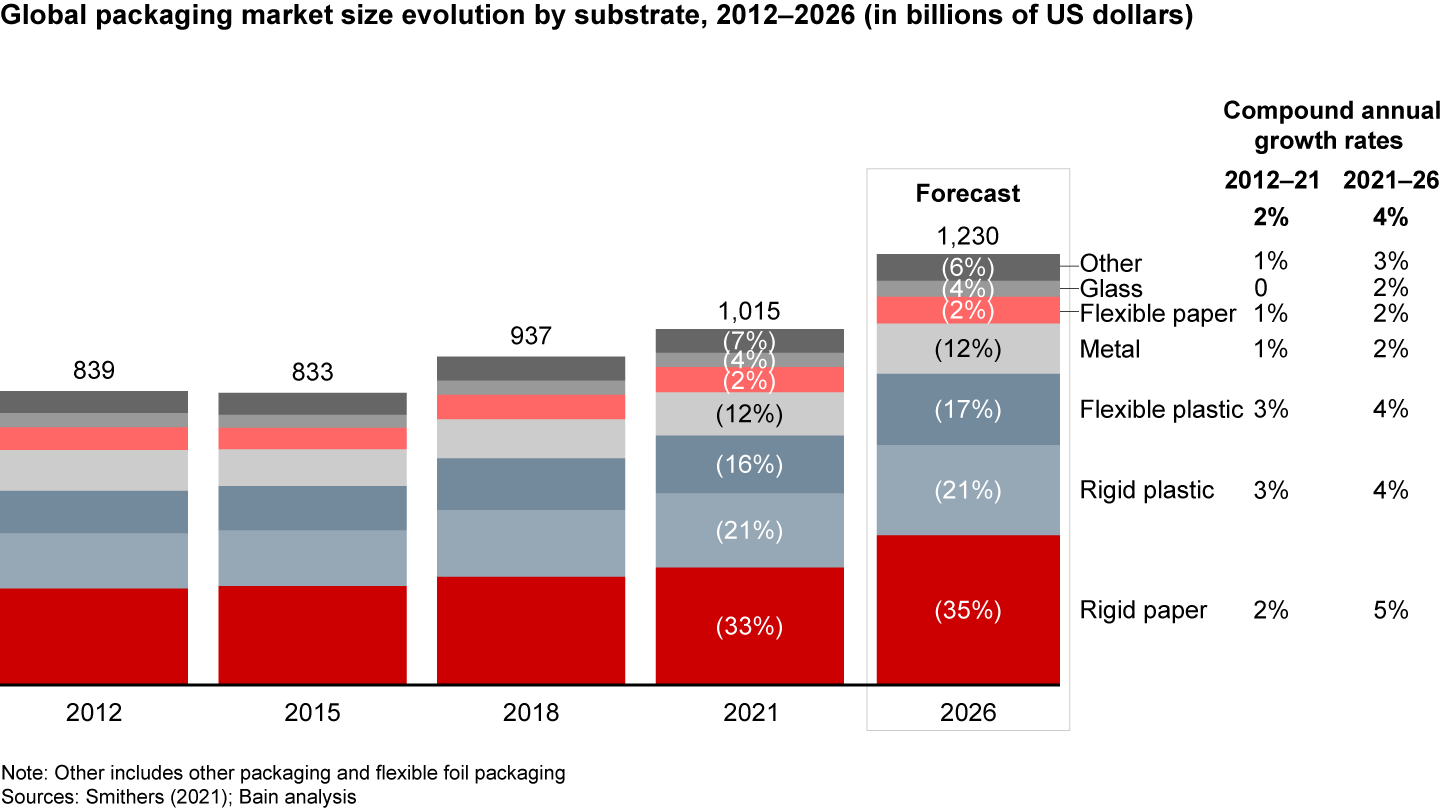
- Rigid paper packaging growth rates may surpass plastic packaging growth rates by 2026.
This article is part of Bain’s 2023 Paper & Packaging Report
Four packaging CEOs meet at a sustainability conference, each representing a different substrate. “My products are more sustainable than yours,” starts the paper packaging CEO. “Fiber-based packaging is the only compostable substrate, and it degrades faster than other alternatives.”
The plastic packaging company CEO responds immediately, “My products are more sustainable than yours. Plastic packaging has a very low carbon footprint, and it is increasingly becoming recyclable.”
The glass packaging company CEO cannot hold back: “You talk about recyclability, but my products are actually recycled, without downcycling. Plus, you can reuse them, cutting down the footprint even further.”
Finally, the metal packaging company CEO chips in, too: “My products are fully recycled, without downcycling, and metal cans are much more lightweight than glass, resulting in lower carbon emissions when transported.”
While the anecdote above is imaginary, the arguments about which products are the most sustainable are all very real. Whereas companies historically considered cost, functionality, and consumer experience as they determined which substrate to use for a given product, now sustainability is top of mind for everyone from regulators to consumers to the C-suite.
In this early moment of transformation, however, there is no clear winner (see Figure 1). Even though some substrates such as rigid paper may have an edge, it’s too early to tell. And across geographies, there is still not a shared understanding of what is necessarily the preferred or most sustainable type of packaging.
Figure 1

What is clear, however, is that packaging producers must proactively focus the discussion around substitution and provide solutions to consumer packaged goods (CPG) companies, retailers, and consumers—or they risk being unpleasantly surprised by their customers’ choices.
Leading companies are assessing the environmental impact of different substrates and taking the full life cycle into account—from resource extraction and production to transportation and products’ end of life. They employ a proactive strategy that considers packaging design, collection and recycling, and the regional regulations regarding each of their products. They communicate early and clearly with regulators and their customers. They also appreciate that CPGs are striking a balance between environmental benefits and making their offerings more premium, meaning they will use what drives more rotation on the shelves and what allows them to charge more for the same product.
Stakeholders demand sustainability
Executives are feeling the pressure from every angle to improve sustainability—whether that’s decreasing their carbon footprint, using more bio-based materials, or ensuring that their production is pollution free.
Regulators are pushing toward more circular products, meaning products that can be reused or that are created with a plan for how they will be recycled into something else after their first use. The EU is ahead of other regions regarding sustainability as it has introduced bans on certain substrates as well as effective recycling and reuse targets for others. For example, in November 2022, regulation was proposed in the EU to achieve climate neutrality by 2050 and to ensure that all packaging in EU markets is graded on recyclability, with greater than 70% of packaging assessed recyclable by 2030.
Consumers are also increasingly demanding sustainable products as greater media and nongovernmental organization scrutiny is raising general awareness regarding the environmental impact of plastic packaging. In 2023, researchers found that there are more than 170 trillion pieces of plastic in the oceans, or more than 21,000 plastic pieces for each of the 8 billion residents of Earth.
While consumers are increasingly concerned, at the same time, many customers have limited willingness to pay and a poor understanding of the real environmental performance of products. For example, according to a 2022 Bain survey of nearly 4,000 US consumers, 70% of consumers believe single-use glass has a lower carbon footprint than single-use plastic, while only 12% guessed it was plastic—the correct answer.
Retailers are responding. Most consumer product companies have publicly announced sustainability commitments, though brand owners still do not have a clear view on which substrates they prefer across different applications. Many companies have focused on replacing virgin plastics and increasing recyclability and reusability for plastics in compliance with the Ellen MacArthur Foundation Global Commitment 2022 initiative. Some targets cover all packaging substrates, such as Nestlé, which aims to make 100% of its packaging recyclable or reusable by 2025. Other companies are making clear commitments about eliminating one type of substrate, typically plastics. Apple, for instance, is planning to eliminate all plastic packaging by 2025.
To meet the varied demands of their multiple stakeholders, leading companies are setting the foundation for their sustainability strategy by first analyzing the key environmental properties for each of their products throughout their life cycle, from production to transport to end-of-life disposal (see Figure 2).
Figure 2
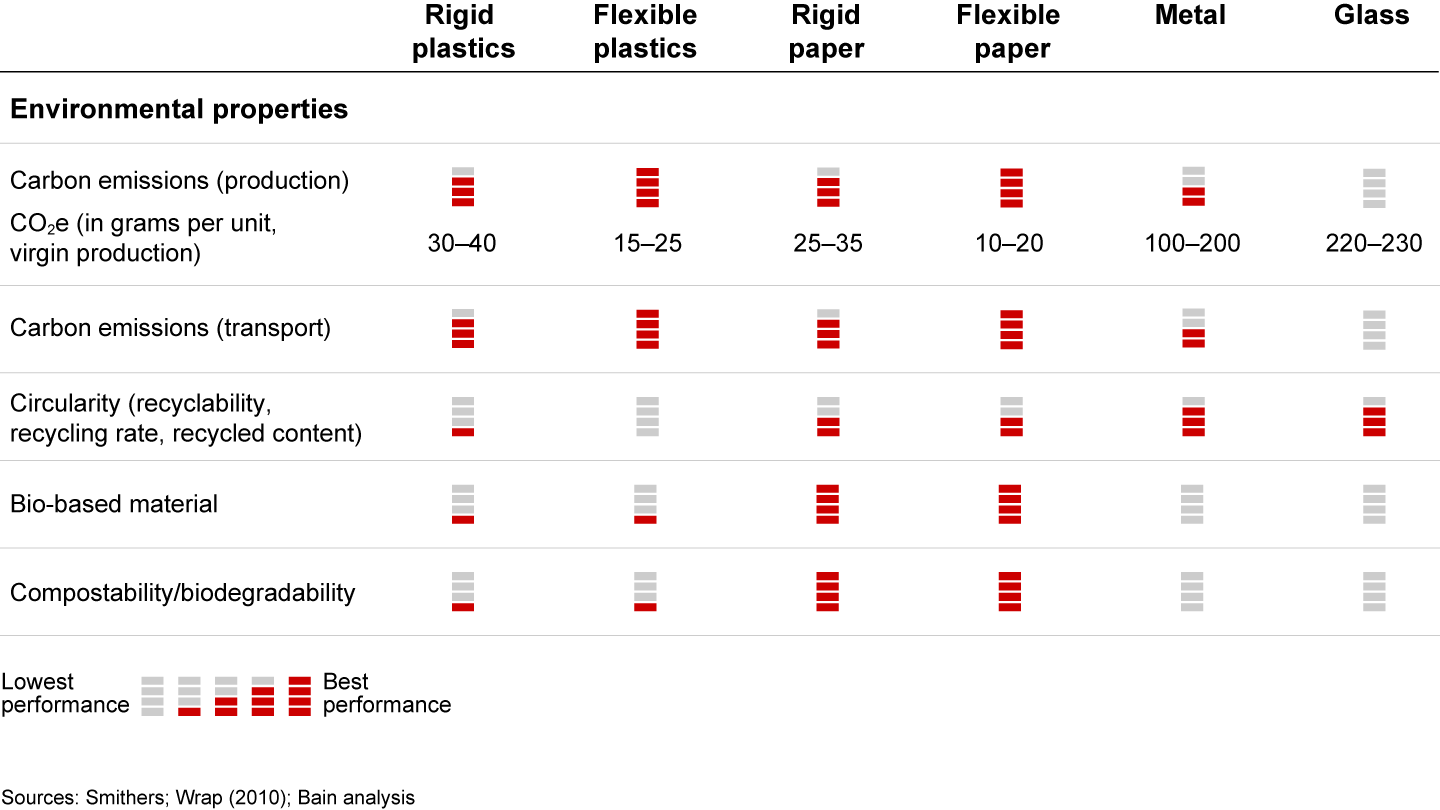

Paper and packaging executives are asking themselves the following questions: Who are the customers and end consumers for each product in our portfolio? How will the product be used? How will it be disposed of? Which role do we play in our customers’ value chain? Certain substrates may score very well on one dimension but badly on another, so which dimension is more important to us?
With answers to these questions, it becomes possible to identify the key environmental criteria of your customers, such as is it more urgent to act on carbon emissions or recyclability or recycled content? Retailers are increasingly stating targets for specific packaging substrates in their sustainability guidelines. For example, Walmart classifies the recyclability of different packaging substrates and formats in its internal guidelines, expecting its suppliers to change unrecyclable packaging to more recyclable versions. Unrecyclable packaging as defined by Walmart includes bags made from multiple materials, polystyrene/polyvinyl chloride bottles, or paper-based containers with metal tops or bottoms.
After identifying the key environmental criteria for customers, leaders can prioritize segments where they have the highest external pressure to act. For example, one of the larger paper manufacturers has identified substituting paper for plastic as a key priority for its end customers, so the company has started creating new products that help its customers transition to paper-based packaging.
How to incorporate substrate substitution into your sustainability strategy
With the key environmental criteria established, and the priority segments selected, companies can design their sustainability strategy, which typically includes developing clear sustainability and substrate ambitions, starting with packaging design, considering collection and recycling, and communicating with regulators and customers (see Figure 3).
Figure 3
Develop clear sustainability and substrate ambitions. Adopt an end-to-end, upstream-downstream perspective. This perspective considers every step—from where to source sustainable raw materials to how to meet market and regulatory demands as well as factoring in what customers want. Your goals should differ per region given regulations and your customers’ sustainability focus in that geography. As a result, what you optimize for will vary based on region.
Start with packaging design. Leading companies design their packaging with expected substitution pressures in mind. They constantly seek to improve their own product to meet external requirements by optimizing the total environmental impact and incorporating a higher input of recycled materials.
Frozen food company Frosta, for example, introduced an innovative new packaging format made of 100% compostable paper instead of plastic. At the same time, some companies are experimenting with up to 100% plant-based plastic bottles. Finnish company Sulapac makes a biodegradable, moldable alternative to plastic that can be used for a variety of items, including cosmetics containers (such as perfume jars) and drinking straws.
Collaborating with other players in the value chain can optimize solutions. For example, a packaging converter could partner with a carton producer to create packaging with higher recycled fiber input, better recyclability, and lower environmental impact.
Consider collection and recycling. Up until recently, recycling has often been managed by governments or specialized organizations. Companies are increasingly recognizing that without proper recycling solutions, many substrates fall behind in the ranking of sustainability.
CPGs and retailers can leverage recycling to secure valuable raw materials, such as recycled PET (polyethylene terephthalate), especially as post-consumer recycled raw materials have recently become dear. For example, Schwarz Gruppe (the parent company of Lidl and one of Europe’s largest retailers) founded PreZero in 2018 to enter the waste management and recycling business, providing access to in-demand recycled substrates.
In June 2023, a new recycling line for post-consumer beverage cartons, backed by Tetra Pak and Stora Enso, started operations in Poland. Set to serve as one of Europe’s main recycling hubs, this line will triple the country’s recycling capacity—and it has the potential to recycle the entire volume of beverage cartons sold in Poland, with additional volumes coming from neighboring countries such as Hungary, Slovakia, and the Czech Republic.
The facility is solely meant to handle beverage carton material separation, with the recycled fibers being used for new paper-based packaging materials. This will be complemented by other solutions to recycle polymers and aluminum into other end applications such as pellets and crates.
Communicate with regulators and customers. Engage with regulators and industry associations to understand which regulation is likely to influence your business going forward, how you can react early on to optimize your position, and how you can influence upcoming regulation.
Communicate your selling points to the consumer. While producers and converters typically have limited direct touchpoints with consumers, it’s the consumer who in the end makes the purchasing decisions. Since consumers are not always great at making sustainability decisions, actively educate them and communicate the benefits you and your substrate offer to enable them to make informed decisions.
After rolling out and implementing one’s substrate substitution plan, it is equally important to track and share results and adjust the plan accordingly. Every company is upping their sustainability game, so whether a CEO decides to lead and take market share or follow, they will be scrutinized, and their work in this area cannot just be marketing or greenwashing. For those investing in this area, extra due diligence is required as every substrate will claim to be the most sustainable. To determine the best bet, investors will need to dig deeper and determine which substrate is winning for each specific application and geography (where specific regulations play a large role).
Winning companies are approaching their substrate strategy from an end-to-end perspective, from considering the raw materials that go into the packaging design all the way to the end-of-life disposal of their substrate. This end-to-end strategy is also configured based on each one's geographic location and its associated regulations.
More from the report
Read our Paper & Packaging Report 2023
First published in 8월 2023