

Brief

한눈에 보기
- A growing share of consumers say they are willing to pay higher electricity and fuel prices to curb emissions, but the size of the premium they’re prepared to bear is shrinking, according to Bain survey data.
- Fewer than 20% of consumers are willing to pay a premium above 10% on their electric bill or a fuel tax above 25 cents.
- Nearly half of businesses would pay a premium greater than 5% for a sustainable product or service from a supplier, but that share drops with higher premiums.
- Leading companies are engaging customers with deeper precision, rethinking value delivery, and steering capital projects with increased rigor.
A striking disconnect continues to impede energy transition-related businesses: Consumer concerns about climate change are increasing, yet too few are willing to shoulder the costs to combat it. This paradox complicates the road to a low-carbon future, forcing energy and natural resource companies to navigate a widening gap between rising capital project costs and decreasing premiums that consumers are willing to pay to fund those investments.
The financial viability of the energy transition hinges on capital formation. For every $1 billion of capital deployed at a 10% cost of capital, businesses need more than $160 million in annual revenue to cover equity returns, debt servicing, taxes, and depreciation. Factor in inflation, rising capital costs, and increasing project expenses, and executives are telling us it’s increasingly difficult to make the math work for energy transition projects.
So, although global clean energy investments are set to grow to $2 trillion this year, that’s still less than half the roughly $4.5 trillion annual investment by 2030 that the International Energy Agency estimates is required to achieve net-zero carbon emissions by 2050.
Why is that gap so large? In our work with energy and natural resource companies worldwide, the most common constraint executives cite is finding enough consumers and business customers willing to pay higher prices (or having equivalent policy support) to create sufficient return on investment. About 70% of executives in our 2024 industry survey said lack of customer willingness to pay or return on investment is a very significant roadblock to scaling up their energy transition-oriented businesses—a jump of 14 percentage points from last year’s survey (see Figure 1).
Figure 1


Note: Not all categories are shown
Sources: Bain ENR Transition Survey 2023 (n=608); Bain ENR Transition Survey 2024 (n=638)Consistently securing a revenue premium from consumers remains challenging, according to Bain’s Consumer Lab ESG Survey of nearly 19,000 consumers worldwide. Despite more than 60% of surveyed consumers expressing intensifying concerns about climate change over the last two years, fewer than half said they would pay price increases of 2% or more for electricity or fuel to reduce greenhouse gas emissions. Although the share of consumers willing to pay a premium increased from last year, the size of the premium they’re prepared to bear is diminishing, according to our calculation of consumers’ average annual willingness to pay, based on Bain’s survey data.
It’s a clear reminder that consumers face a range of intensifying economic pressures that could affect their perspectives. Wages haven’t kept pace with climbing costs, and electric bills are getting doubly squeezed by increasing electricity costs and higher demand due to rising peak temperatures. In the US, average residential electricity prices rose about 4.5% last year, with some states seeing increases above 10%. EU average residential electricity prices have stabilized from the 2022 crisis, but prices for the first half of 2024 still jumped more than 20% year over year in some countries. Inflation and grid infrastructure investments are among the common factors cited in rate increase proposals, which have drawn consumer pushback and protests in some regions. Importantly, the reluctance to pay more is a global phenomenon, with consistent perspectives in every jurisdiction we surveyed except Brazil.
The way survey questions are formulated may produce different responses, so we intend to develop a longitudinal view to better understand how consumer sentiment evolves over time. Anecdotally, in our work with energy companies around the world, there’s no question that executives perceive a limit on what consumers are willing to shoulder to further the energy transition. Given the capital intensity of what’s required, this hinders the pace of progress. We intend to continue monitoring consumer sentiment to see whether climate concerns translate into willingness to pay premiums at scale for electricity, fuel, and gasoline.
Electricity
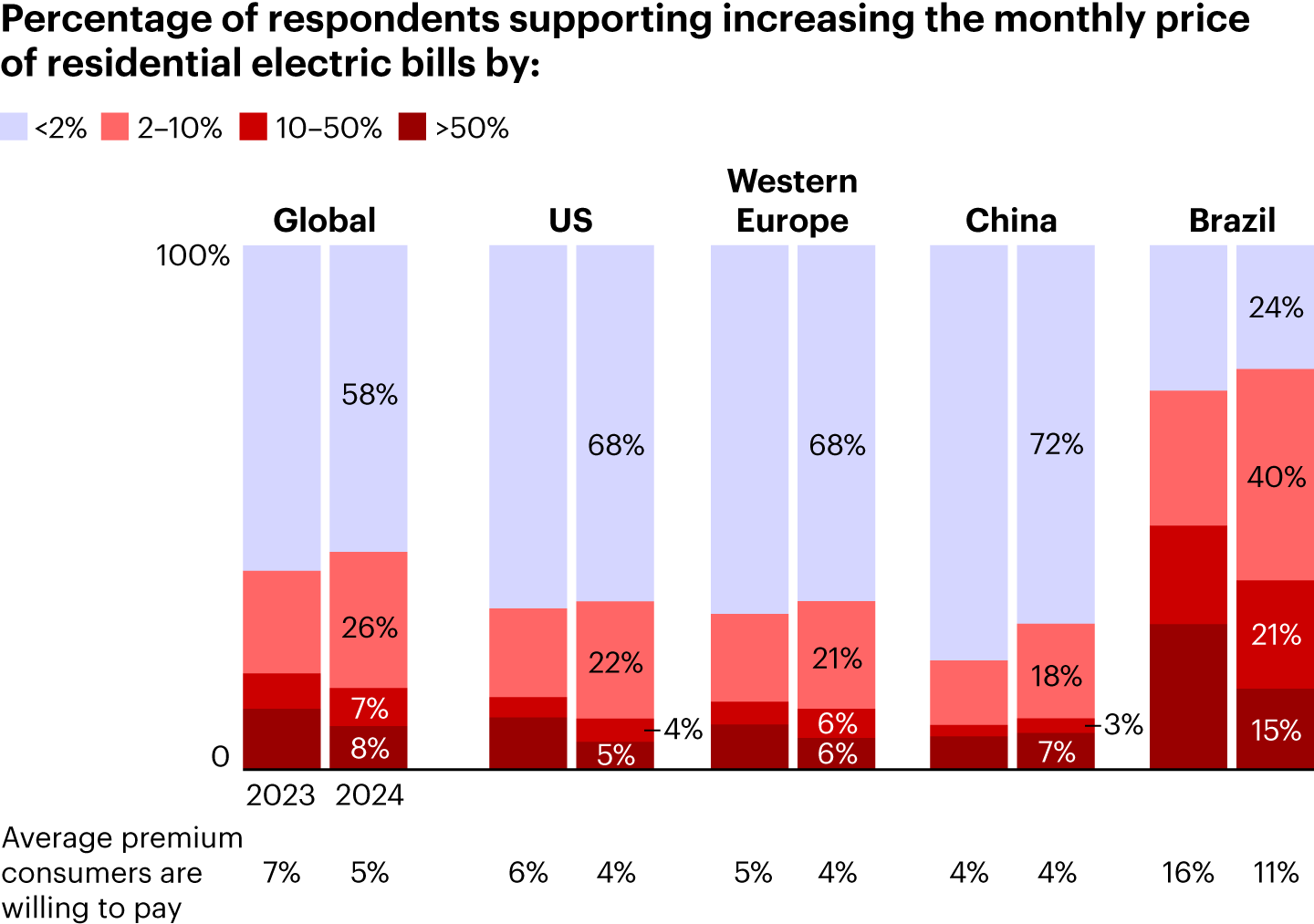
In the residential electricity market, only 40% of consumers are willing to pay more than a 2% premium, and this number drops sharply as the premium increases. Fewer than 20% of consumers are willing to pay a premium exceeding 10%, and fewer than 10% of respondents are willing to pay a premium above 50% (see Figure 2). The share of consumers willing to pay higher premiums declined from last year’s survey, pushing down the global average premium that consumers are willing to pay to reduce electricity-related greenhouse gas emissions from 7% to 5%.
This trend is fairly consistent globally, with some notable outliers such as Brazil, which has one of the highest social consensuses on climate change and one of the cleanest electricity supplies. We see a tighter spread in willingness to pay across political affiliations in Brazil, indicating it’s a less polarizing issue there. Other factors that could be influencing consumers include the country’s electric infrastructure, the prevalence of low-carbon alternatives (e.g., residential solar), policies, broader public discourse on the topic, and personal experience with extreme weather and climate change.
Figure 2

Note: Averages measure price premium consumers are willing to pay for electric bills in order to reduce greenhouse gas emissions
Sources: Bain Consumer Lab ESG Survey, June 2023 (n=23,374); Bain Consumer Lab ESG Survey 2024 (n=18,991)Fuel
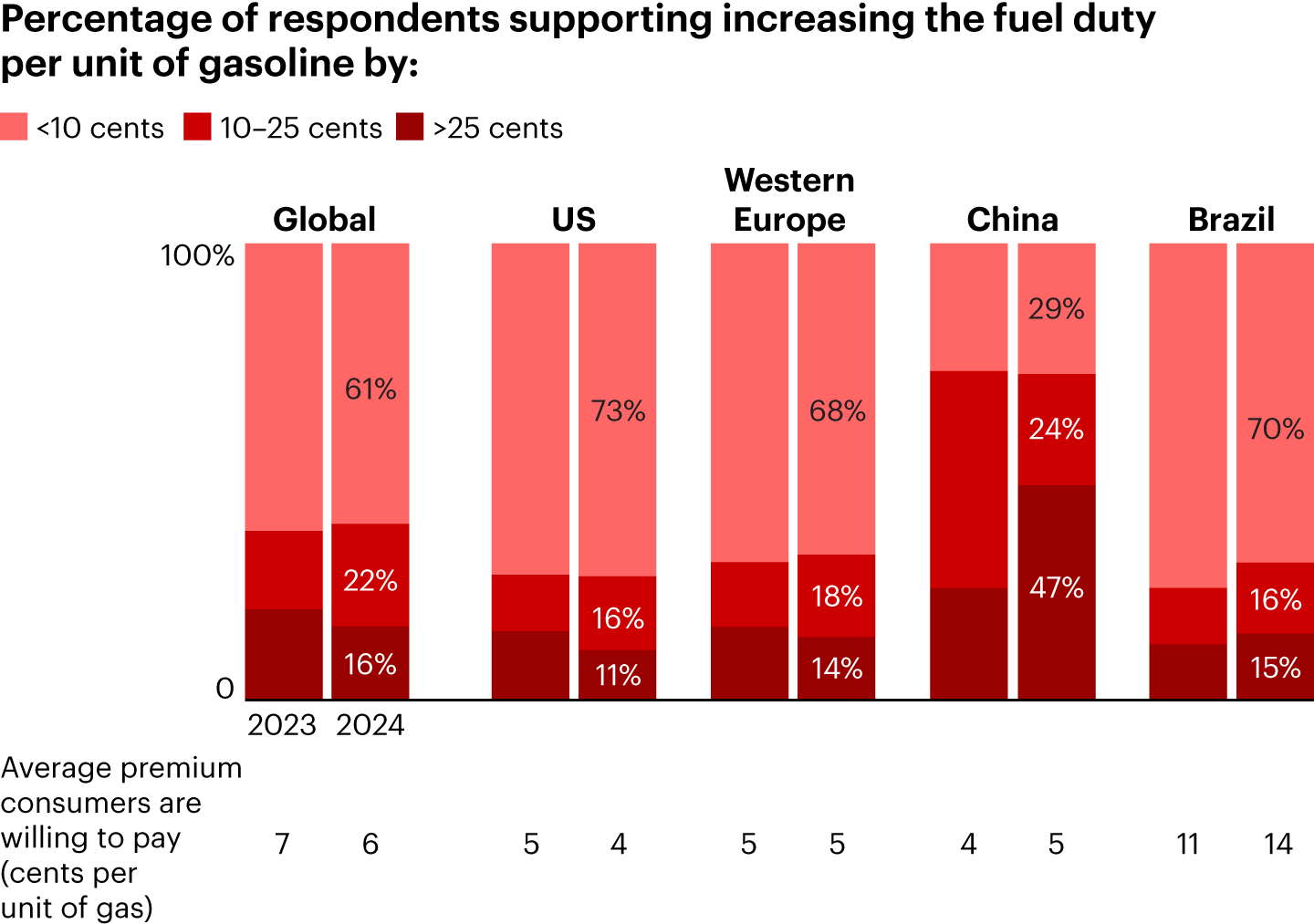
A similar trend is playing out in fuel markets. While more consumers are open to paying a tax for fuel or gasoline to reduce greenhouse gas emissions, the size of the premium they’re willing to pay is declining in many countries Bain surveyed (see Figure 3). As a result, the global average fuel tax that consumers are willing to pay dropped from 7 cents per unit last year to 6 cents per unit in this year’s survey.
Figure 3

참고: Averages measure price premium consumers are willing to pay for fuel duty in order to reduce greenhouse gas emissions; unit for US respondents is gallon and for all other markets is liter
Sources: Bain Consumer Lab ESG Survey, June 2023 (n=23,374); Bain Consumer Lab ESG Survey 2024 (n=18,991)Consumer willingness to pay a fuel or gasoline tax also varies across countries and demographics. Chinese consumers, for example, show a higher tolerance for fuel taxes. While difficult to pinpoint with certainty, there are several potential factors at play, such as concern about air pollution and public health, relative energy costs as a share of income, fuel policies, inflation, and cultural dynamics. Unsurprisingly, higher-income respondents are more willing to pay premiums.
What about business customers?
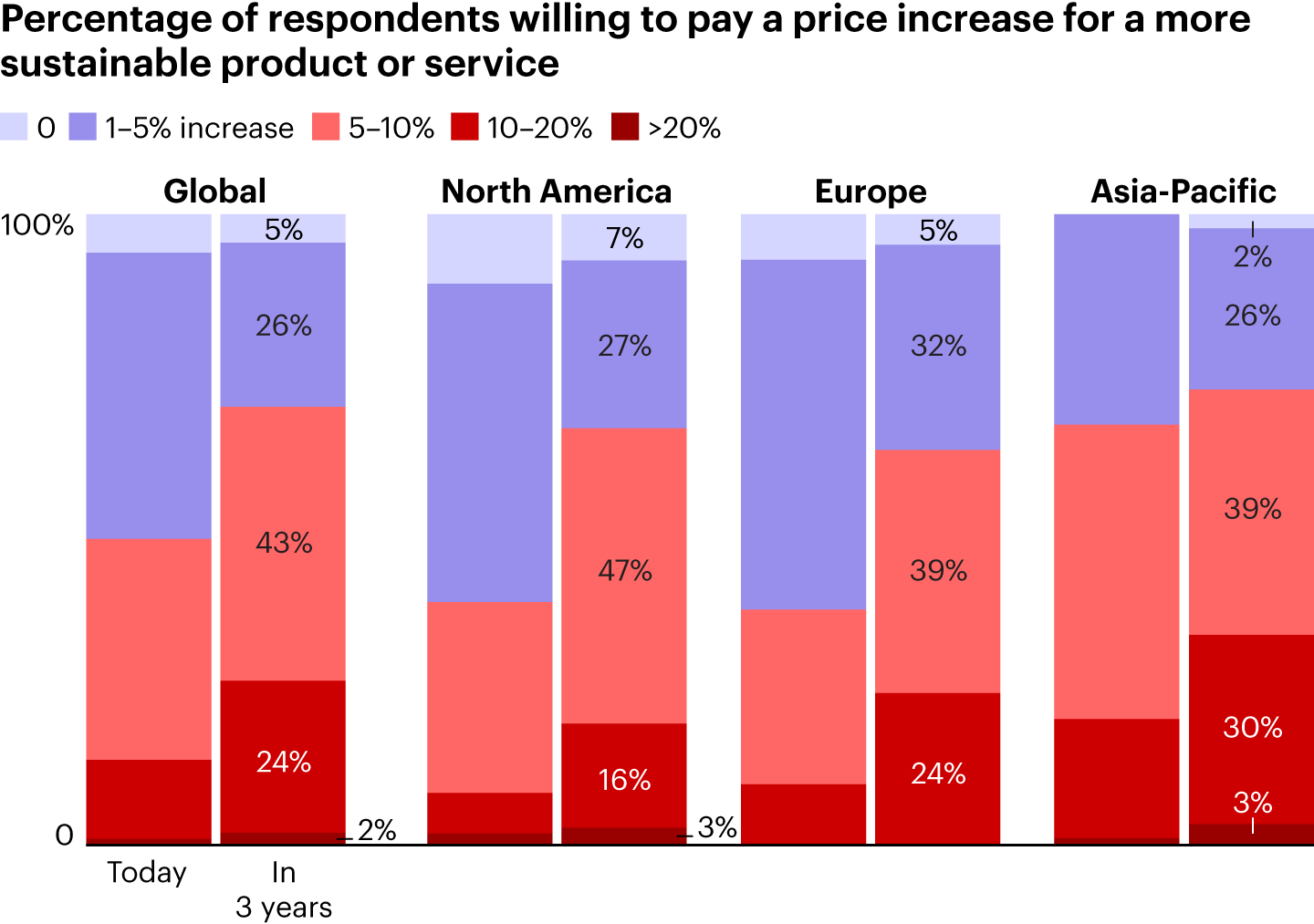
Nearly half of businesses say they’re willing to pay a premium greater than 5% for a sustainable product or service from a supplier, according to a Bain survey of B2B buyers and sellers in April (see Figure 4). Like with consumers, that share drops with higher premiums—fewer than 15% of businesses say they’re willing to pay a premium greater than 10%. Still, it’s notable that businesses expect their willingness to pay premiums to increase over the next three years as the sustainability of suppliers’ operations and product offerings continues to gain importance as a purchasing criterion.
Figure 4

Three actions executives can take
Looking ahead, falling interest rates may provide a boost to low-carbon investments, but macroeconomic shifts alone won’t solve the problem. We see emerging leaders taking three actions:
1. Developing the right strategy based on a deep understanding of market economics and customer willingness to pay. Leading companies craft their strategies by assessing the end-to-end value chain economics for low-carbon solutions and how they differ from legacy offerings. This includes understanding the investments and production cost curves for new technologies and assessing the revenue increase needed to make the math work. Among B2B companies, this often means thinking through the implications for their company’s direct customers as well as their customers’ customers. One of the challenges is that investments in new energy technologies require accounting for all costs and are competing with the marginal operating costs of existing energy systems, where capital may already have been significantly depreciated.
A key question to ask about any given strategy is, “What is its implied customer bill or cost growth, and is there sufficient customer headroom (or political support) to achieve that?” Leading utilities run multiple strategy scenarios through a bill growth calculator, reviewing anticipated effects of different energy transition scenarios in order to establish the optimal pace for their customers.
2. Strengthening capabilities to identify and cultivate customers willing to pay modest premiums. The most effective companies are using data-driven customer segmentation to prioritize customers. They’re also forming partnerships for long-term offtake agreements and improving their supply chain traceability so that B2B customers can enhance the value proposition for their customers (and thereby pull through the premium).
A building materials producer has developed a sustainable product line that now represents more than 50% of its business. By targeting sectors that prioritize sustainability, such as LEED-certified construction and government projects with environmental requirements, the company has increased its market share and demonstrated an ability to capture a premium for a more sustainable product. The keys to success were segmenting its customer base, tailoring products to meet customers’ specific sustainability needs, and upskilling its salesforce to effectively market the offering, often in tandem with product experts. Since its global launch in 2020, the initiative has generated above-market growth and expanded the company’s EBITDA margins.
3. Managing capital project delivery and costs tightly. This includes properly scoping projects to design for value, tightening delivery requirements to help stay on budget, and rethinking the traditional stage-gate process to systematically improve outcomes across the project portfolio.
A mining company planned to increase its annual capital expenditures by eightfold in just five years, a tall order given its past struggles with project costs and schedule predictability. To address this, the company restructured its project management approach, concentrating its team’s expertise by project type and establishing an end-to-end project organization in order to increase employees’ sense of ownership. The company also began engaging key engineering, procurement, and construction vendors in a programmatic way across its portfolio of projects. As a result, the company tripled its annual capital execution within two years, with substantial improvements in both cost and schedule predictability.
Navigating the bumpy road ahead
The energy transition continues to be disorderly and fragmented. Given the decreasing price premium that customers are willing to pay to curb emissions, energy and natural resource companies must redefine their playbook by engaging customers with precision, rethinking value delivery, and steering capital projects with rigor. The companies that manage this balance effectively will make prudent bets and lead the way through the energy transition.
First published in 12월 2024