
Skip to Content
  • 오피스

    오피스

    미주
    • Atlanta
    • Austin
    • Bogota
    • Boston
    • Buenos Aires
    • Chicago
    • Dallas
    • Denver
    • Houston
    • Los Angeles
    • Mexico City
    • Minneapolis
    • Monterrey
    • Montreal
    • New York
    • Rio de Janeiro
    • San Francisco
    • Santiago
    • São Paulo
    • Seattle
    • Silicon Valley
    • Toronto
    • Washington, DC
    유럽, 중동, 아프리카
    • Amsterdam
    • Athens
    • Berlin
    • Brussels
    • Copenhagen
    • Doha
    • Dubai
    • Dusseldorf
    • Frankfurt
    • Helsinki
    • Istanbul
    • Johannesburg
    • Kyiv
    • Lisbon
    • London
    • Madrid
    • Milan
    • Munich
    • Oslo
    • Paris
    • Riyadh
    • Rome
    • Stockholm
    • Vienna
    • Warsaw
    • Zurich
    아시아, 호주
    • Bangkok
    • Beijing
    • Bengaluru
    • Brisbane
    • Ho Chi Minh City
    • Hong Kong
    • Jakarta
    • Kuala Lumpur
    • Manila
    • Melbourne
    • Mumbai
    • New Delhi
    • Perth
    • Seoul
    • Shanghai
    • Singapore
    • Sydney
    • Tokyo
    오피스 전체보기
  • 얼럼나이
  • 미디어 센터
  • 구독
  • 연락처
  • Korea | 한국어

    지역 및 언어 선택

    글로벌
    • Global (English)
    미주
    • Brazil (Português)
    • Argentina (Español)
    • Canada (Français)
    • Chile (Español)
    • Colombia (Español)
    유럽, 중동, 아프리카
    • France (Français)
    • DACH Region (Deutsch)
    • Italy (Italiano)
    • Spain (Español)
    • Greece (Elliniká)
    아시아, 호주
    • China (中文版)
    • Korea (한국어)
    • Japan (日本語)
  • Saved items (0)
    Saved items (0)

    You have no saved items.

    관심 있는 내용을 북마크하여 Red 폴더에 저장할 수 있습니다. Red 폴더 에서 저장된 내용을 읽거나 공유해보세요.

    Explore Bain Insights
  • 산업
    메인 메뉴

    산업

    • 우주항공, 방산 및 정부 서비스
    • 농업 관련 산업
    • 화학
    • 인프라, 건설 및 건축 자재
    • 소비재
    • 금융 서비스
    • 헬스케어
    • 산업용 기계 및 장비
    • 미디어 및 엔터테인먼트
    • 금속
    • 광업
    • 석유 및 가스
    • 제지 및 패키징 산업
    • 사모펀드
    • 사회 및 공공 부문
    • 유통
    • 기술
    • 텔레콤
    • 운송
    • 여행·여가
    • 유틸리티 및 재생가능 에너지
  • 컨설팅 서비스
    메인 메뉴

    컨설팅 서비스

    • Customer Experience
    • ESG
    • Innovation
    • M&A
    • 운영
    • 조직
    • 사모펀드
    • 고객 전략 및 마케팅
    • 전략
    • AI, 인사이트 및 솔루션
    • Technology
    • 변화 혁신
  • Digital
  • 인사이트
  • 베인 소개
    메인 메뉴

    베인 소개

    • 업무 소개
    • 베인의 신념
    • 구성원 및 리더십 소개
    • 고객 성과
    • 주요 수상 경력
    • 글로벌 파트너사
    Further: Our global responsibility
    • 다양성과 포용
    • 사회 공헌 활동
    • Sustainability
    • World Economic Forum
    Learn more about Further
  • Careers
    메인 메뉴

    Careers

    • Work with Us
      Careers
      Work with Us
      • Find Your Place
      • Our Work Areas
      • Integrated Teams
      • Students
      • Internships & Programs
      • Recruiting Events
    • Life at Bain
      Careers
      Life at Bain
      • Blog: Inside Bain
      • Career Stories
      • Our People
      • Where We Work
      • Supporting Your Growth
      • Affinity Groups
      • Benefits
    • Impact Stories
    • Hiring Process
      Careers
      Hiring Process
      • What to Expect
      • Interviewing
    FIND JOBS
  • 오피스
    메인 메뉴

    오피스

    • 미주
      오피스
      미주
      • Atlanta
      • Austin
      • Bogota
      • Boston
      • Buenos Aires
      • Chicago
      • Dallas
      • Denver
      • Houston
      • Los Angeles
      • Mexico City
      • Minneapolis
      • Monterrey
      • Montreal
      • New York
      • Rio de Janeiro
      • San Francisco
      • Santiago
      • São Paulo
      • Seattle
      • Silicon Valley
      • Toronto
      • Washington, DC
    • 유럽, 중동, 아프리카
      오피스
      유럽, 중동, 아프리카
      • Amsterdam
      • Athens
      • Berlin
      • Brussels
      • Copenhagen
      • Doha
      • Dubai
      • Dusseldorf
      • Frankfurt
      • Helsinki
      • Istanbul
      • Johannesburg
      • Kyiv
      • Lisbon
      • London
      • Madrid
      • Milan
      • Munich
      • Oslo
      • Paris
      • Riyadh
      • Rome
      • Stockholm
      • Vienna
      • Warsaw
      • Zurich
    • 아시아, 호주
      오피스
      아시아, 호주
      • Bangkok
      • Beijing
      • Bengaluru
      • Brisbane
      • Ho Chi Minh City
      • Hong Kong
      • Jakarta
      • Kuala Lumpur
      • Manila
      • Melbourne
      • Mumbai
      • New Delhi
      • Perth
      • Seoul
      • Shanghai
      • Singapore
      • Sydney
      • Tokyo
    오피스 전체보기
  • 얼럼나이
  • 미디어 센터
  • 구독
  • 연락처
  • Korea | 한국어
    메인 메뉴

    지역 및 언어 선택

    • 글로벌
      지역 및 언어 선택
      글로벌
      • Global (English)
    • 미주
      지역 및 언어 선택
      미주
      • Brazil (Português)
      • Argentina (Español)
      • Canada (Français)
      • Chile (Español)
      • Colombia (Español)
    • 유럽, 중동, 아프리카
      지역 및 언어 선택
      유럽, 중동, 아프리카
      • France (Français)
      • DACH Region (Deutsch)
      • Italy (Italiano)
      • Spain (Español)
      • Greece (Elliniká)
    • 아시아, 호주
      지역 및 언어 선택
      아시아, 호주
      • China (中文版)
      • Korea (한국어)
      • Japan (日本語)
  • Saved items  (0)
    메인 메뉴
    Saved items (0)

    You have no saved items.

    관심 있는 내용을 북마크하여 Red 폴더에 저장할 수 있습니다. Red 폴더 에서 저장된 내용을 읽거나 공유해보세요.

    Explore Bain Insights
  • 산업
    • 산업

      • 우주항공, 방산 및 정부 서비스
      • 농업 관련 산업
      • 화학
      • 인프라, 건설 및 건축 자재
      • 소비재
      • 금융 서비스
      • 헬스케어
      • 산업용 기계 및 장비
      • 미디어 및 엔터테인먼트
      • 금속
      • 광업
      • 석유 및 가스
      • 제지 및 패키징 산업
      • 사모펀드
      • 사회 및 공공 부문
      • 유통
      • 기술
      • 텔레콤
      • 운송
      • 여행·여가
      • 유틸리티 및 재생가능 에너지
  • 컨설팅 서비스
    • 컨설팅 서비스

      • Customer Experience
      • ESG
      • Innovation
      • M&A
      • 운영
      • 조직
      • 사모펀드
      • 고객 전략 및 마케팅
      • 전략
      • AI, 인사이트 및 솔루션
      • Technology
      • 변화 혁신
  • Digital
  • 인사이트
  • 베인 소개
    • 베인 소개

      • 업무 소개
      • 베인의 신념
      • 구성원 및 리더십 소개
      • 고객 성과
      • 주요 수상 경력
      • 글로벌 파트너사
      Further: Our global responsibility
      • 다양성과 포용
      • 사회 공헌 활동
      • Sustainability
      • World Economic Forum
      Learn more about Further
  • Careers
    최근 검색어
      최근 방문 페이지

      Content added to saved items

      Saved items (0)

      Removed from saved items

      Saved items (0)

      Global Private Equity Report

      The Year Cash Became King Again in Private Equity

      The Year Cash Became King Again in Private Equity

      Future fund-raising will depend on the industry’s creativity in returning cash to investors.

      글 Hugh MacArthur, Rebecca Burack, Alexander Schmitz, Brenda Rainey, and Mike McKay

      • 읽기 소요시간
      }

      Report

      The Year Cash Became King Again in Private Equity
      en
      한눈에 보기
      • With exit channels in deep freeze, unsold assets are piling up in private equity portfolios, preventing distributions to investors and threatening future fund-raising.
      • If rates ease in the coming year, exits should recover faster than they did in the wake of the global financial crisis.
      • Even so, GPs need to prioritize getting capital back to LPs by developing comprehensive, pragmatic strategies to generate near-term exits.

      This article is part of Bain’s 2024 Global Private Equity Report

      Explore the report

      The 2006 vintage of buyout funds will always be remembered with a certain measure of dread by private equity investors who lived through the global financial crisis (GFC).

      Things turned out all right in the end, but getting there was a slow-motion slog through the mud.

      Most fund vintages follow a predictable “J curve” that plots cash flows from inception to close. General partners (GPs) call the capital, it gets invested, and then it takes around seven years to generate distributions that exceed the original capital outlays.

      But 2006 was different (see Figure 1). 

      Figure 1
      Drawdowns from recent fund vintages, such as 2020, are mirroring those from 2006, causing anxiety among cash-strapped limited partners

      In the lead-up to the GFC, a record amount of capital got called and invested just before the financial markets collapsed. Amid the ensuing recession, exit markets seized up, deals transacted at peak valuations suddenly faced trouble, and all that investor capital froze in place. It took 10 years for the vintage to start generating positive cash flows, leaving 2006 as the poster child for what happens when unusually rapid investment is followed by sudden economic disruption.

      Why dig up such a painful episode? Because drawdowns from recent fund vintages are tracking the 2006 vintage closely (adjusted for industry size). After an initial flurry of postpandemic investment activity (also at record-high multiples), exit markets abruptly shut down amid rising interest rates, stanching the flow of capital back to limited partners (LPs). Now the trajectory of recent fund vintages is raising fears that the massive bolus of capital laid out in recent years is trapped and won’t come back to fund new allocations in a timely fashion.

      What can fund managers do about it? A good starting point is to take a breath and recognize that conditions in the years following 2006 were very different from what we’re facing today.

      The 2006 vintage was loaded with massive public-to-private deals intended to exit back onto the public markets eventually. But the sharp recession torpedoed earnings for many of these companies, and holding periods stretched out as funds scrambled to justify those high multiples. Sponsors had to wait for opportune IPO windows to free up capital, and because fully exiting through an IPO can take years, cash flows were delayed even longer.

      Today’s private equity portfolios are built differently. Absent is the public-to-private overweight, and exit strategies are overwhelmingly geared toward sales to corporate buyers or other sponsors. With corporate M&A slumping and sponsor-to-sponsor deals cooled by the rapid rise in interest rates, exits are suffering for now. But the economy has so far avoided recession, and as inflation moderates, the rate bias in early 2024 is down, not up. Absent additional shocks, easing rates could improve exit conditions rapidly. It will help that GPs have a record $1.2 trillion in buyout dry powder available for sponsor-to-sponsor deals and that the buoyant stock market is propping up corporate buying power.

      The growing cash mandate

      Sitting still and waiting, however, would be a mistake. With buyout funds sitting on 28,000 unsold companies worth a record $3.2 trillion, the current threat to investor cash flows is very real. Buyout fund-raising hit a near record in 2023, yet allocations were targeted narrowly at the largest funds with the best returns over time. For the average buyout fund, this is a period of fund-raising scarcity and hardship.

      That means GPs need to focus on what they can control—which doesn’t include interest rates. In 2024, taking charge of your own destiny will likely boil down to how creatively you can manage your portfolio to generate distributions, so LPs can reinvest in your next fund.

      The latest data shows that over half of all the unsold assets (54%) have been held for three years or less. But companies held five years or longer grew 18% year over year in 2023, and companies held for four years or longer comprised 46% of the total, the highest level since 2012 (see Figure 2).

      Figure 2
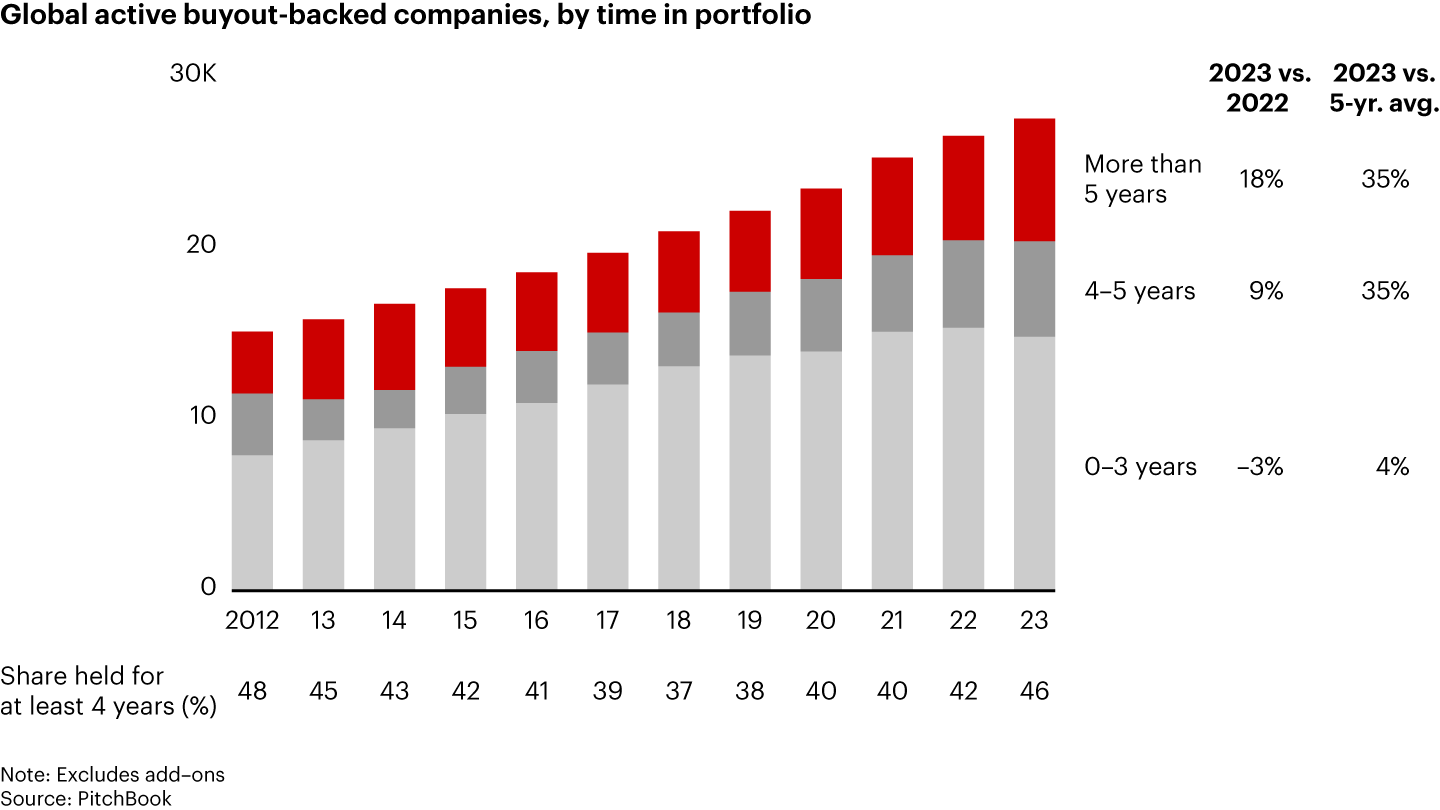
      The proportion of long-held companies in buyout portfolios is growing and hasn’t been this big since 2012

      Advancing age is not necessarily a bad thing. The problem is when valuations and prospects for future gains have stalled. According to MSCI, 36% of companies acquired six years ago or more are now just at breakeven or below (see Figure 3). Another 34% are marked at a 1.0x to 2.5x multiple on invested capital (MOIC), adding up to a modest internal rate of return. The numbers are slightly better for companies held four years or longer (29% at or below 1x, and 41% better than 1x but below 2.5x). Overall, 70% of the companies four years old or older are doing just OK or worse. These are the deals LPs are particularly focused on.  

      Figure 3
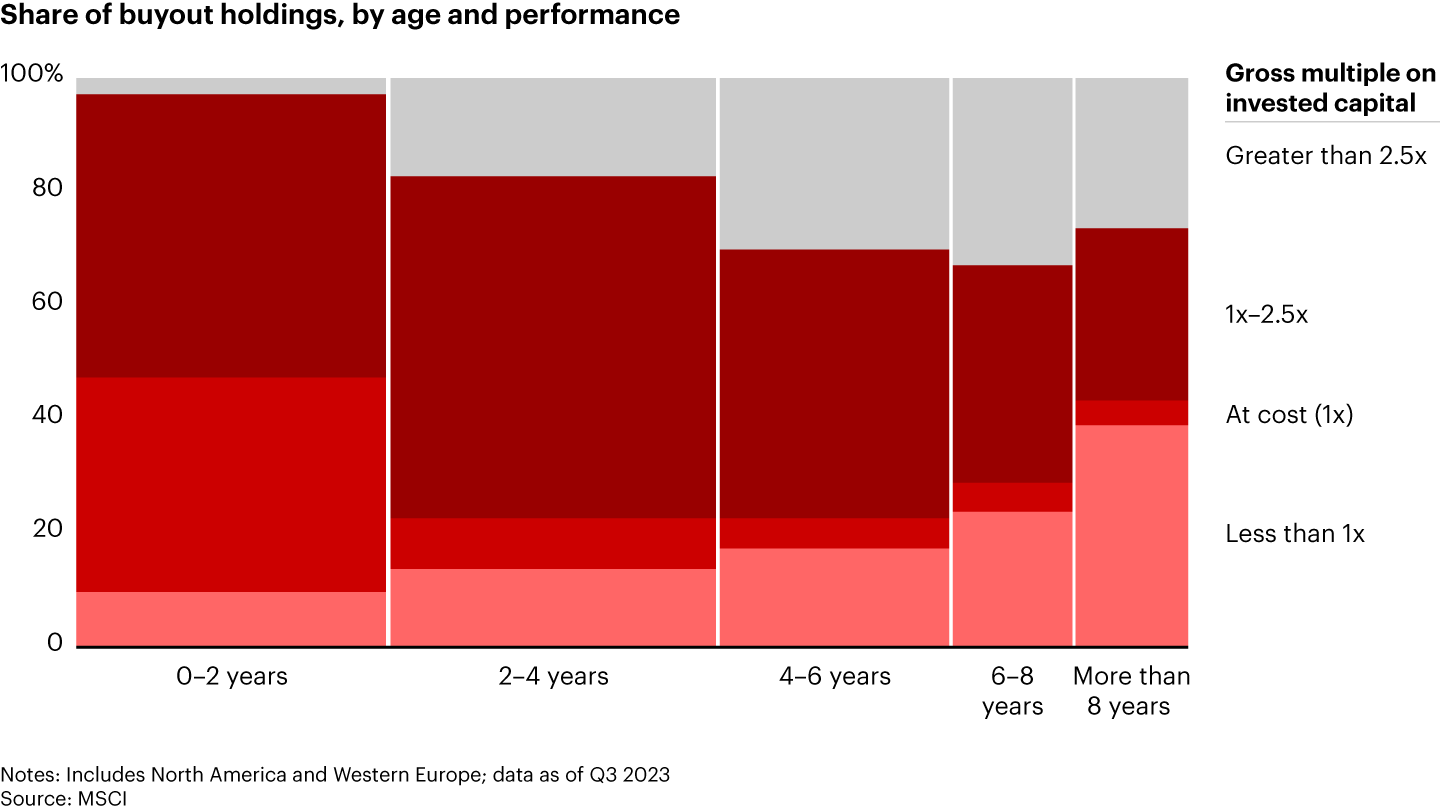
      Some 70% of buyout portfolio companies held four years or longer have yet to break through as clear winners

      Exit strategy, writ large

      The value trapped in these aging companies isn’t enough to solve the distributions issue on its own. Indeed, generating more liquidity is a years-long process, not a quick fix. What’s required of GPs right now is credibility building. For firms looking to raise capital in the next 24 months, LPs are almost certainly going to be asking for a well-defined blueprint for generating near-term distributable cash—a holistic, portfolio-wide strategy that uses every tool at the firm’s disposal to boost distributed to paid-in capital (DPI).

      What likely won’t work is business as usual: managing directors making isolated exit-or-hold decisions based on some variation of “we’ll sell when the time is right.” GPs will also have to recognize that not all distributions are the same. LPs are sensitive to tactics like funding distributions with NAV loans that generate cash now but obligations later. Continuation vehicles are evolving and gaining currency, but LPs are often wary of the terms, and, on an industry scale, these vehicles are cash flow neutral. Some LPs are getting checks; others are writing them.

      All of this is to say that raising meaningful cash across a fund’s portfolio will require a nuanced approach that balances the need to protect returns with the need to increase DPI. On the investment side, GPs typically have a firmwide investment committee to think strategically about putting money to work. Increasingly, firms will need to consider an analogous exit committee, charged with planning exits strategically based on a clear assessment of shifting LP cash requirements.

      Developing a comprehensive strategy starts with the obvious: determining which assets the firm can sell now for an attractive return. What may need some adjustment, however, is how you define “attractive.” While the deal team for a particular company will typically want to hold out for an extra half turn of MOIC, the GP’s interests overall may be better served by generating cash now to burnish relationships with LPs.

      Next come the companies that would benefit from a defined program to improve earnings before interest, taxes, depreciation, and amortization and shore up the exit story. A significant drop in interest coverage over the past year is just one indicator that there may be fewer companies than usual poised for a “strong enough” exit right now. For these companies, LPs will want to understand what specifically you plan to do to get them back in the game.

      Some companies will need a formal “re-underwriting”—and there will be some hard questions here. Is this a business in which we still see long-term potential? What will it take to realize it? If the balance sheet is broken, renegotiate with the banks to buy time until conditions improve. If the company requires capital to reinvigorate a stalled acquisition program or organic growth plan, this is the time to inject it, pay down debt if required, and give the fresh capital a chance to earn its return.

      If the strategy is still good but the return is going to take three or more years to pay off, the answer might be some flavor of continuation vehicle or secondary that allows current investors to cash out if they want, while giving the GP and more patient investors a chance to harvest better returns up the road.

      Finally, there will be a group of companies with broken strategies—those muddling along at negative or subpar returns with no plausible plan for improvement. The question to ask with these: Are the time and resources needed to fix this company better spent supporting a different asset with more chance of generating a meaningful distribution?

      What’s critical here is demonstrating to LPs that your firm is a responsible steward of capital with a disciplined, unemotional plan for getting assets unstuck. Cash—or, more precisely, DPI at the best possible return—is clearly king right now in private capital. If generating more of it isn’t at the top of your agenda, it may be time to make it your priority.

      • Acknowledgments

        This report was prepared by Hugh MacArthur, chairman of Bain & Company’s Global Private Equity and Financial Investors practice; Mike McKay, advisory partner; Rebecca Burack, head of the Global Private Equity and Financial Investors practice; and a team led by Johanne Dessard, vice president of the Global Private Equity and Financial Investors practice, with Brenda Rainey and Lynn Xue in advisory roles and day-to-day management from Shilpi Gupta.

        The authors wish to thank Graham Rose, Christophe De Vusser, Alexander De Mol, Kiki Yang, and Sebastien Lamy for their contributions on market trends; Cédric Bovy, Colleen Von Eckartsberg, Emily Miller, Thomas Hood, Tim O’Connor, Robert Howgego, Alexander De Mol, Chris Precht, and David Hoverman for their contributions on buy-and-build; Brian Kmet, Lars Dingemann, Allison Gans, Angus Dow, Francesco Scorza, Luca Penna, Ethan Phillips, and Whit Keuer for their perspectives on late-stage value-creation plans; Brenda Rainey, Or Skolnik, and Alexander De Mol for their perspectives on secondaries; Richard Lichtenstein, Gene Rapoport, Karen Khalaf, Richard Allinson, and Graham Eckert for their insights on generative AI; Karen Harris for her contributions as managing director of Bain’s Macro Trends Group; Steve Oluoch, Jack Kim, Eleanor Seddon, and Tabitha Balogun for their contributions and analytic support; Emily Lane and John Peverley for their research assistance; Soraya Zahidi and Ecenur Avci for their marketing support; and Michael Oneal for his editorial leadership.

        The authors are grateful to AVCJ, DealEdge, Dealogic, MSCI, PitchBook, and Preqin for the valuable data they provided and for their responsiveness to special requests. For more information, please visit their websites or contact them by email:

        AVCJ   www.avcj.com; AVCJ-research@avcj.com

        DealEdge   www.dealedge.com

        Dealogic   www.dealogic.com

        MSCI   www.msci.com

        PitchBook   www.pitchbook.com; info@pitchbook.com

        Preqin   www.preqin.com; info@preqin.com


      Read our 2024 Global Private Equity Report

      Explore the full report Download the PDF

      More from the report

      • Outlook for 2024

      • Renovating Your Growth Strategy

      • The Secondaries Tipping Point

      • Strengthening Buy-and-Build

      • Harnessing Generative AI

      • Cash Becomes King Again

      저자
      • Headshot of Hugh MacArthur
        Hugh MacArthur
        파트너, Boston
      • Headshot of Rebecca Burack
        Rebecca Burack
        파트너, Boston
      • Headshot of Alexander Schmitz
        Alexander Schmitz
        파트너, Dusseldorf
      • Headshot of Brenda Rainey
        Brenda Rainey
        Executive Vice President, Boston
      • Headshot of Mike McKay
        Mike McKay
        어드바이저 파트너, Boston
      문의하기
      관련 산업
      • 사모펀드
      글로벌 PE 리포트
      Inside Bain's 2025 Private Equity Report

      Bain's Hugh MacArthur shares key insights from our 2025 Global Private Equity Report.

      자세히 보기
      사모펀드
      Spotting the Downturn Early and Coming Out Ahead with Gryphon’s David Andrews

      We ask the co-CEO of Gryphon Investors how he spotted one of the harshest cycles in the industry’s history and when he thinks it may finally break.

      자세히 보기
      글로벌 PE 리포트
      PE-Backed Carve-Outs Used to Be Reliable Winners. So What Happened?

      Top-tier deals still deliver, but the average carve-out lags. Here’s how the best funds continue to win.

      자세히 보기
      사모펀드
      What Kind of AI Cycle Are We Actually In?

      The question for investors is not whether AI will boom or bust, but who may be unwittingly subsidizing the buildout.

      자세히 보기
      글로벌 PE 리포트
      Wanted: Margin Growth in Software Investing

      Private equity investors have relied almost exclusively on revenue growth and multiple expansion to power software buyout returns. That was nice, but those days are over.

      자세히 보기
      First published in 3월 2024
      태그
      • 글로벌 PE 리포트
      • 사모펀드

      프로젝트 사례

      A Strategic Vision Inspires a Strategic Acquisition

      See more related case studies

      Rapid Tech Due Diligence Helped a Private Equity Firm Invest with Confidence

      See more related case studies

      M&A Broader market plus tighter sales strategy equals big success for a portfolio company

      See more related case studies

      베인에 궁금하신 점이 있으신가요?

      베인은 주저 없이 변화를 마주할 줄 아는 용감한 리더들과 함께합니다. 그리고, 이들의 담대한 용기는 고객사의 성공으로 이어집니다.

      급변하는 비즈니스 환경에서 살아남기 위한 선도자의 시각. 월간 Bain Insights에서 글로벌 비즈니스의 핵심 이슈를 확인하십시오.

      *개인정보 정책을 읽었으며 그 내용에 동의합니다.

      Privacy Policy를 읽고 동의해주십시오.
      Bain & Company
      문의하기 환경정책 Accessibility 이용약관 개인정보 보호 쿠키 사용 정책 Sitemap Log In

      © 1996-2026 Bain & Company, Inc.

      문의하기

      무엇을 도와드릴까요?

      • 프로젝트 문의
      • 채용 정보
      • 언론
      • 제휴 문의
      • 연사 초청
      오피스 전체보기