

Brief

한눈에 보기
- An increasing share of online revenue comes from web access via mobile devices, but companies have not adapted to their customers’ evolving behavior.
- Customer-centric design, strong technology and a data-driven approach to measuring and improving performance of mobile access can help companies increase traffic and revenues.
- Mobile experiences should evolve, and the company’s broader strategy should reflect that.
Each day, more than 5 billion people globally go online using their mobile devices. By 2025, an estimated 6 billion people per day will use a browser on a smartphone or tablet to access a webpage.
Yet, while an omnichannel business model is high on most companies’ agendas, customers’ browsing experience on different online channels is often inconsistent. One culprit is the mistaken belief that a similar offer for desktop and mobile devices will do the job. It doesn’t. Too often, the mobile option is difficult to navigate or simply does not delight users. As a result, customer satisfaction drops, sales channels underperform and, ultimately, financial performance suffers.
A few fundamental to-dos, however, can turn mobile into a well-performing channel. An optimized customer journey, the proper mobile technology and the right key performance indicators (KPIs) can boost usage, conversion and sales.
In this brief, we use the term mobile to describe a customer’s experience using a browser on a smartphone or similar device to access a webpage. Dedicated apps are not considered here.
Mobile is bigger than you think
In much of Europe, Internet users spend more than twice as much time—3 hours on average—on mobile devices as they do on desktop computers. More than 60% of Google searches in the region come from mobile devices. In Switzerland, more website traffic comes via mobile than via desktop (see Figure 1).
Figure 1
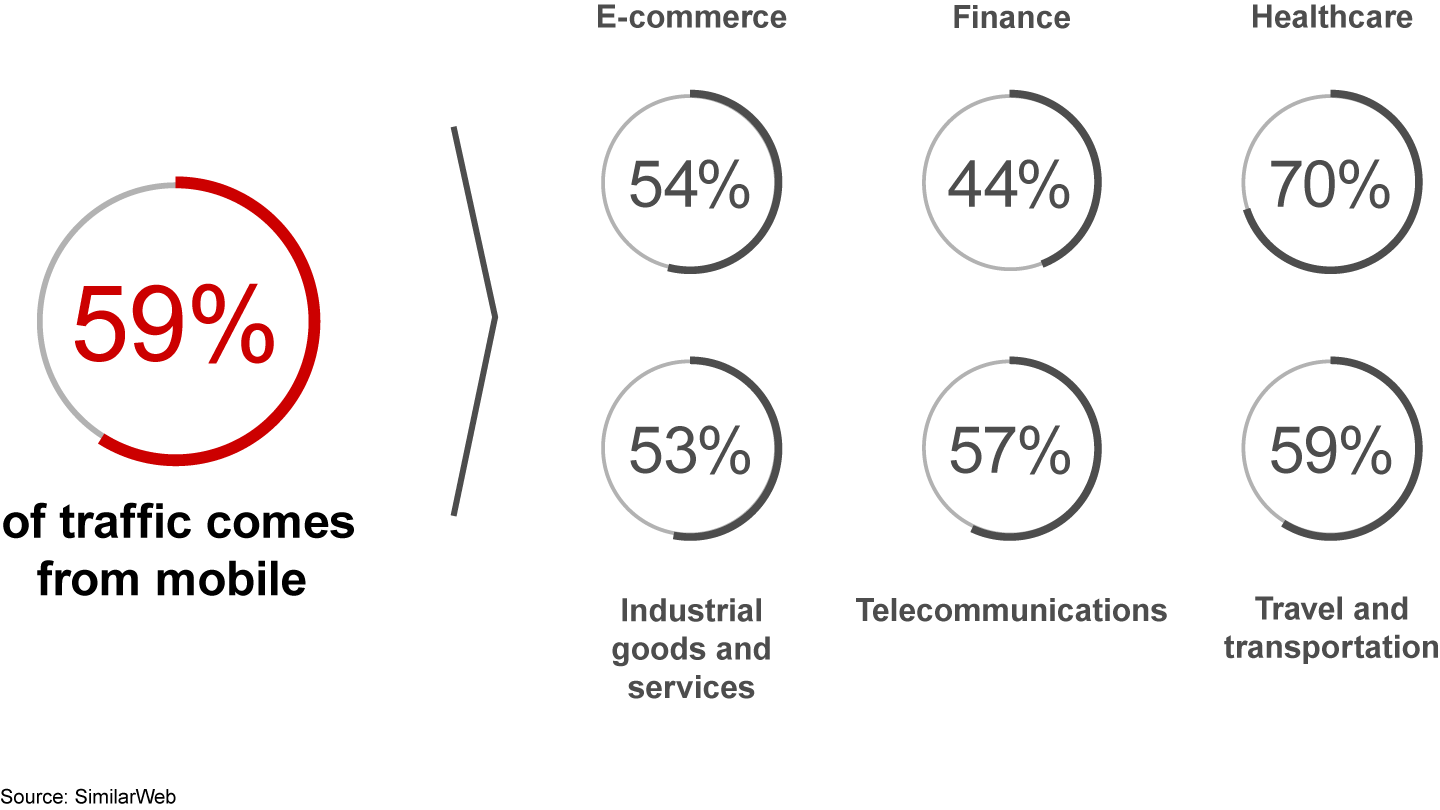

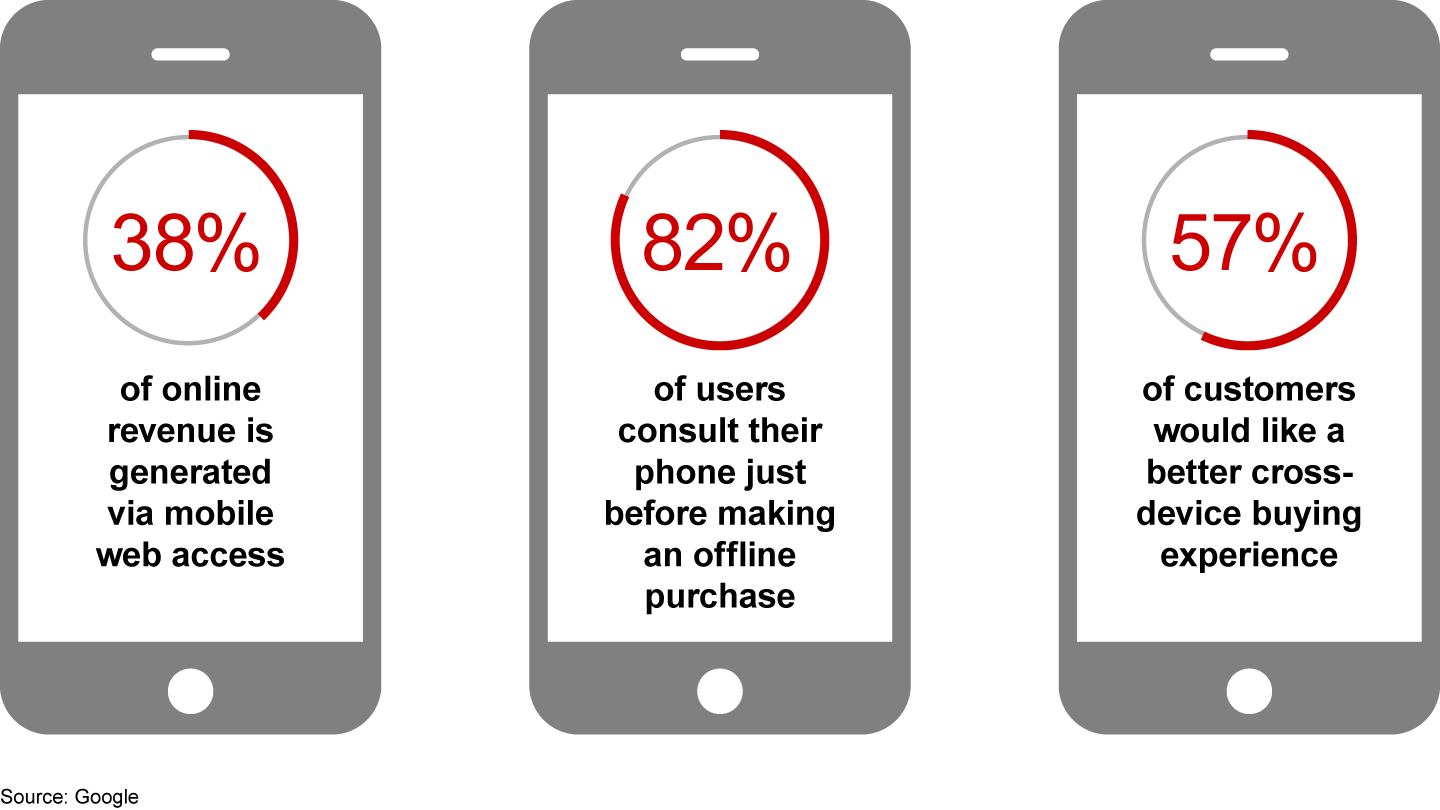
Where traffic goes, sales follow. An increasing share of revenue comes from mobile devices, which account for almost 40% of all online sales in Western Europe today. Mobile also has a direct impact on offline sales: 82% of smartphone users consult their mobile phone just before they make an in-store purchase.
Companies, however, are only slowly adapting their omnichannel online experience to their customers’ evolving shopping behavior. Notably, nearly 60% of customers in Western Europe cite the lack of a cross-device buying experience—such as seamless switching between desktop and mobile—as a hurdle in the purchase process (see Figure 2).
Figure 2

Boosting mobile sales and profits
Companies that leverage the mobile channel best excel in three areas. First, they have customer-centric design. Second, they have the technology to support it. Finally, they take a data-driven approach to measuring and improving performance.
- Customer-centric design: Most companies realize that customer-centric design is key to attracting and retaining their desired customer base. Yet too often, the mobile experience falls short of creating a frictionless customer journey. Mobile users tend to be goal oriented, as Google research has shown. They expect to get what they need from a mobile site quickly, easily and on their own terms. Mobile leaders design their sites with that context and their customers’ needs in mind, without sacrificing richness of content.
- Technology: Fast page-load times and flawless interactions are the second nonnegotiable requirement for mobile. A mobile site demands a slicker and leaner setup than a desktop site, so leading companies clear out everything not needed on mobile and minimize the remaining lines of code. Resources such as Lighthouse, an open-source tool included in Google Chrome, as well as other open-source and commercial options, give concrete recommendations for improving image-load performance and introducing user-centric load prioritization. Achieving top performance may mean incorporating technologies such as Progressive Web Apps and Accelerated Mobile Pages to improve speed and enrich the overall user experience.
- Data-driven approach: Explicitly tracking mobile KPIs and evaluating the performance of this channel is critical. A good mobile dashboard captures, at a minimum, the site’s load performance, conversion and bounce rate, and mobile customer satisfaction. The goal is to measure whether mobile technology is functioning, see how customers are responding and ultimately predict business outcomes.
When steps and seconds matter
The consequences of a poor mobile user experience are severe: 61% of users leave for a competitor’s site if they don’t find what they are looking for right away, and 52% are less likely to engage with the company in the future.
Assessing whether your user experience and interface (UX/UI) and your technological setup are working is important, as they immediately affect sales and profitability. Consider the findings of a recent review of the mobile websites of European insurance providers. When applying for coverage online, customers were sometimes asked to fill in page after page of information, often without any idea how far along they were in the process or how much more was to come. Frustrated, many left the sites without completing the application, leading to high bounce rates.
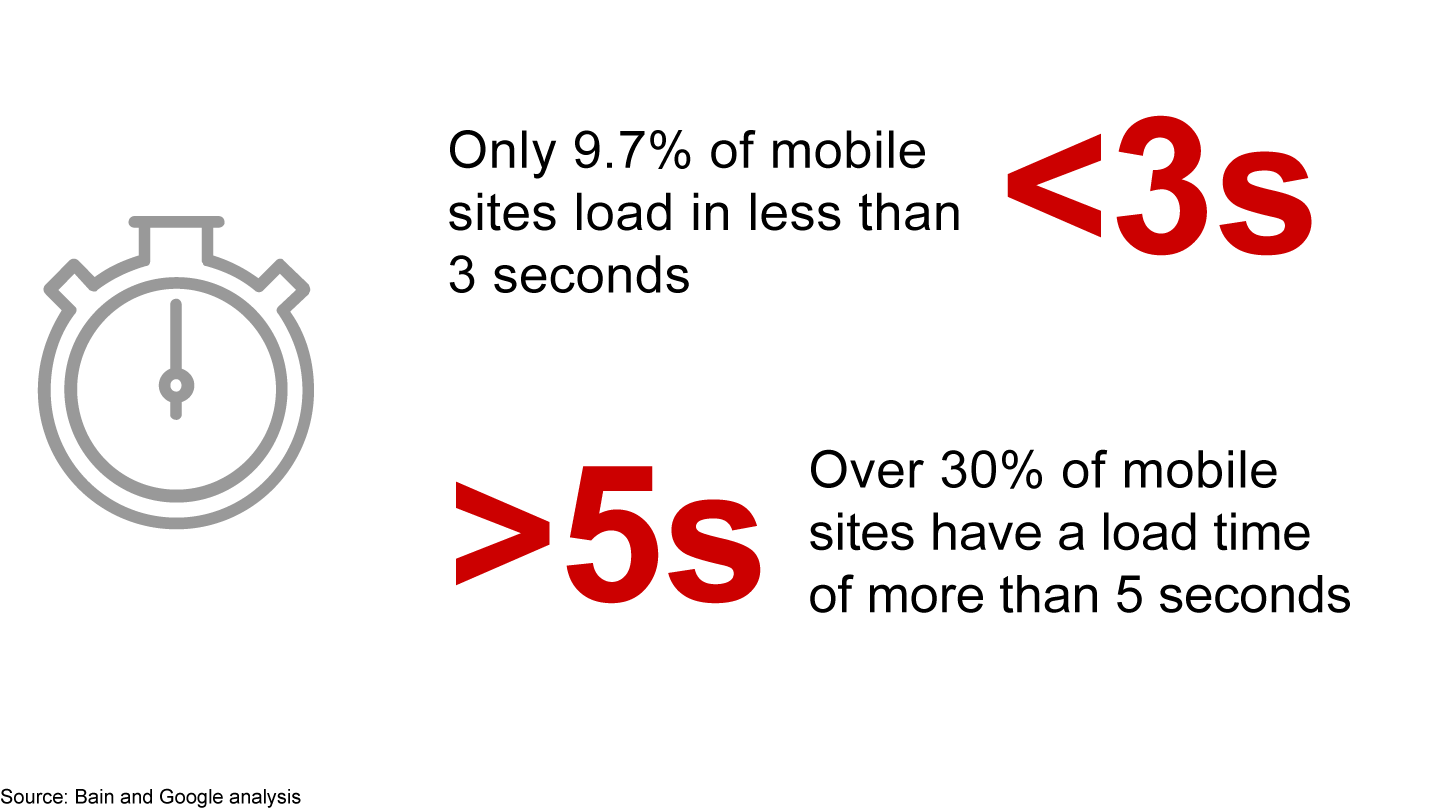
In terms of technology, load time is important to track. Every extra second in load time decreases the share of website visitors who complete the customer journey—the conversion rate—by 12%. Of the 100 most visited websites in Switzerland in each of 10 industries, only 1 in 10 had a mobile load time of less than 3 seconds, our research found. While some industries overall performed better than others, no industries achieved an average load time of less than 3 seconds. Users abandoned 53% of website visits if the page took more than 3 seconds to load, so speeding up load time offers clear opportunity (see Figure 3).
Figure 3

Quick action can reverse the negative effects of slow load times, as outdoor clothing retailer Dakine discovered following an audit of its German online store (www.dakine-shop.de). When it learned that the site’s large images and slideshows—meant to show the active lifestyle its customers love—were causing pages to load slowly and diminishing the customer experience, the company jumped on the issue. Through a combination of browser caching, image optimization and prioritizing content on the site’s mobile pages, Dakine reduced the load time of the home page by 55%. The load time of category pages dropped 48% and that of product pages by 65%. Over the next year, the site’s mobile traffic increased 31% and mobile revenue climbed 45%.
Continuous improvement
With mobile, you can’t just set it and forget it. Our research on the outcomes of web investments by large brands shows that 40% of sites regress on web performance within six months. This is partly because a website is a complicated entity; many people within an organization can influence its design and direction. Often, after an initial concerted effort to upgrade a site’s performance, priorities shift to new features and content.
To create a great mobile experience that continues to evolve, mobile has to be part of an overall digital strategy. Many companies have had some success with digital transformation, but the process will never be complete. With that in mind, executives should integrate four critical elements into their agendas.
Digital future. Mobile strategy needs to reflect the company’s vision for the future, and how it can play and win in that future. This vision is based on the overall industry direction, competitor moves, emerging consumer and technological trends, and the company’s own point of digital departure.
Business model. Digital follows business, not vice versa. Digital initiatives should support the ongoing transformation of the overall company. They must create real value for the customer and improve outcomes for the business, not merely install technology for technology’s sake. Technology choices for mobile need to align with the company’s overall technology strategy.
Enablers. Mobile is part of a broader digital journey, and digital journeys require changing or augmenting four key business enablers: data and analytics, IT systems, operating models, and people and culture. While digital transformations are obviously about technology, technology often turns out to be relatively easy to get right. What tends to determine success is organization and culture, both of which can be difficult to change. Some of the most challenging aspects are hiring new talent, enhancing the skills of existing staff, and refocusing the culture on innovation and continuous improvement. As Pawan Verma, CIO of Foot Locker, has said of his company’s efforts to create connected journeys and experiences for customers, “Changing a technology, or changing the paradigm around marketing or different ways of delivering the customer experience, is a much easier part of digital transformation than the internal organizational readiness and shifting enterprise thinking. Culture change is much harder, and that’s the strongest muscle that we had to build.”
Orchestration. Leadership is critical to the success of any transformation. Leaders must share priorities frequently, secure funding and resources, and ensure that the necessary enablers are in place. In addition, high-potential leaders from across functions, including mobile, should act as digital ambassadors to break down silos in the organization and help everyone move toward the same objectives.
As customers increasingly browse the web on mobile devices, companies must continuously improve their mobile sites and connect them to their broader customer experience and business goals. By putting users at the center of site design, investing in the right technology, tracking performance and then embedding that mobile approach into a broader digital strategy, companies can take the lead in the march toward an ever more mobile future.
Gregor Doser is a multi-vertical industry leader for Google in Switzerland. Mario Häuptli is a partner based in Bain & Company's Zurich office. Benoit Hanzen leads strategic partnerships for Google in Switzerland. Daniel Suter is a partner based in Bain & Company’s Zurich office. Dr. Sebastian Walter leads ADAPT, Bain’s digital innovation and solutions team for Europe, the Middle East and Africa and Bain’s Digital Discovery Hub in Berlin.
Google's mission is to organize the world's information and make it universally accessible and useful. Through products and platforms like Search, Maps, Gmail, Android, Google Play, Chrome and YouTube, Google plays a meaningful role in the daily lives of billions of people and has become one of the most widely known companies in the world. Google is a subsidiary of Alphabet Inc.
First published in 12월 2019