

Brief

Executive Summary
- Even though discounts and markdowns are losing their power in soft goods, many retailers are still spending a big chunk of their sales on price reductions that bring an unclear return.
- Moving to a more effective discounting strategy without alienating customers is possible. Success can benefit the bottom line and release funds for urgent reinvestment.
- Three actions can help this transition: tailoring advanced analytics tools to the realities of soft goods retail, taking a holistic view of process and people, and embracing test-and-learn.
Given the prevalence of discounts and markdowns in soft goods retailing today, you’d think they were the answer to the sector’s most pressing strategic questions. For instance, in the bumper shopping days immediately after last Thanksgiving, online specialty apparel retailers in the US marked down 60% of their assortments, compared with 48% a year earlier, according to StyleSage. Discounts in this period averaged 26%, up from 19%. Reductions are relentless outside the holiday season, too. Overall, we find that a typical fashion retailer now spends 20%–50% of its net sales on markdowns, including an outlay of 5%–20% of net sales on temporary promotions.
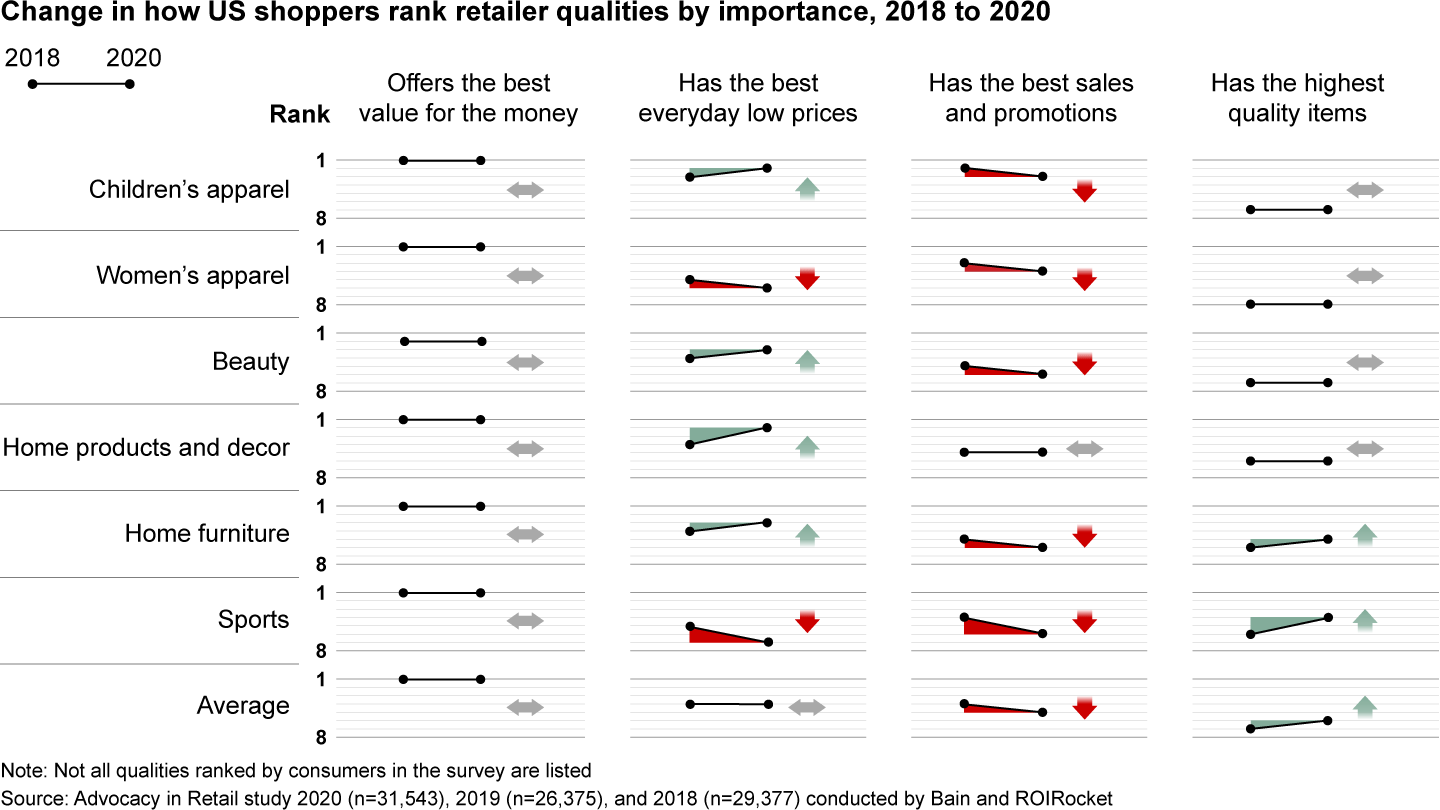
Yet for all this frenetic price-cutting, evidence is mounting that discounts and markdowns are losing their power for shoppers and retailers alike. Bain & Company asked more than 30,000 US consumers what they look for in a soft goods retailer. “Having the best sales and promotions” ranked a lowly fifth in this 2020 survey, down from fourth in 2018 (see Figure 1). Shoppers still care about price, of course: Value for money remains the top priority in most soft goods categories, such as clothing, home furniture, and sporting equipment. But the Bain survey showed that the link between discounting and value is weak, and getting weaker, in the consumer’s mind. Contrast that with their faith in everyday low pricing (EDLP), which correlated strongly with perceived value in our research.
Figure 1

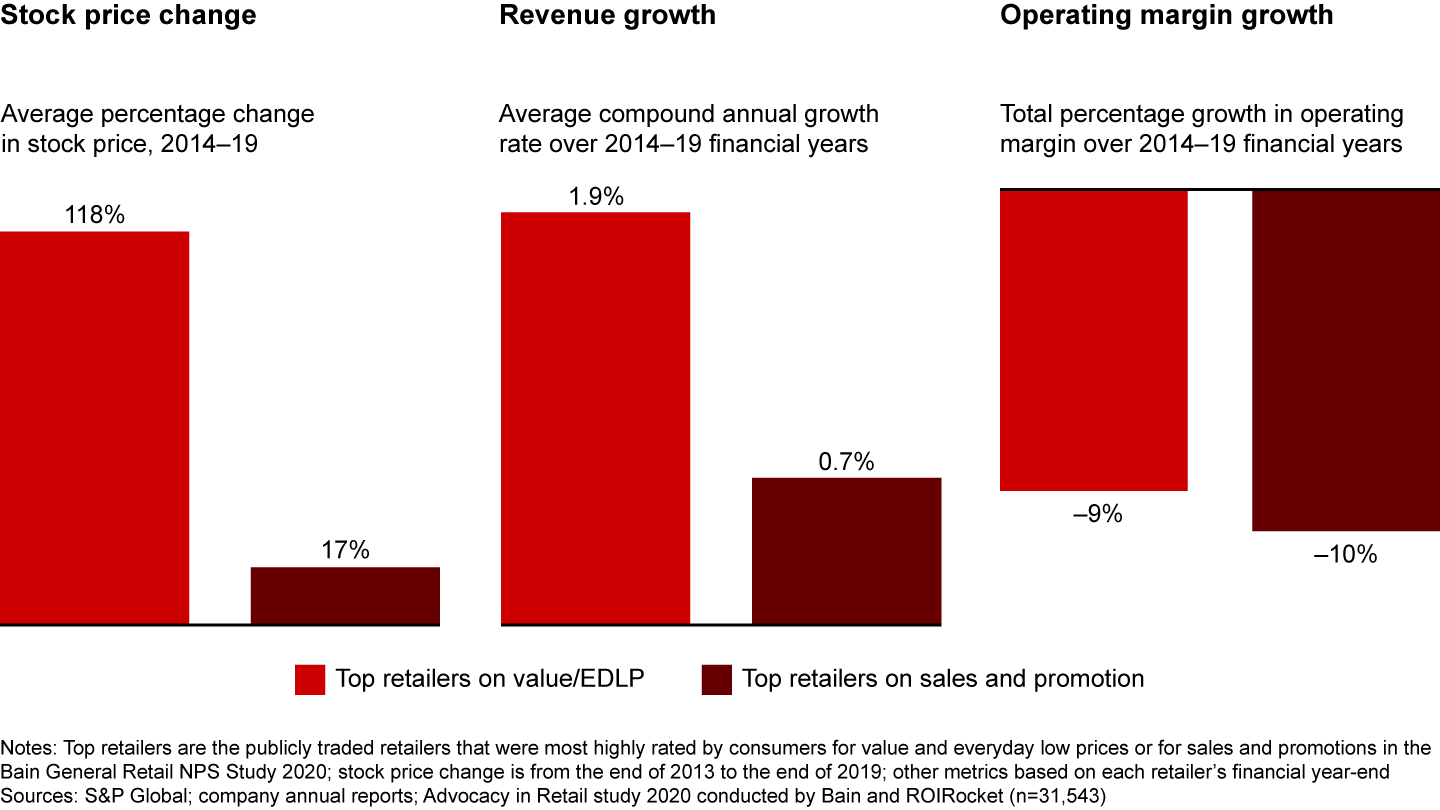
What’s more, soft goods retailers that discount steeply are at risk of underperforming financially. In children’s and women’s apparel, for example, we analyzed the relative performance of retailers that were most associated with value for money and everyday low prices in our consumer survey. They outpaced the retailers that were most highly rated for sales and promotions, generating superior gains in stock price, revenue, and operating margin (see Figure 2).
Figure 2

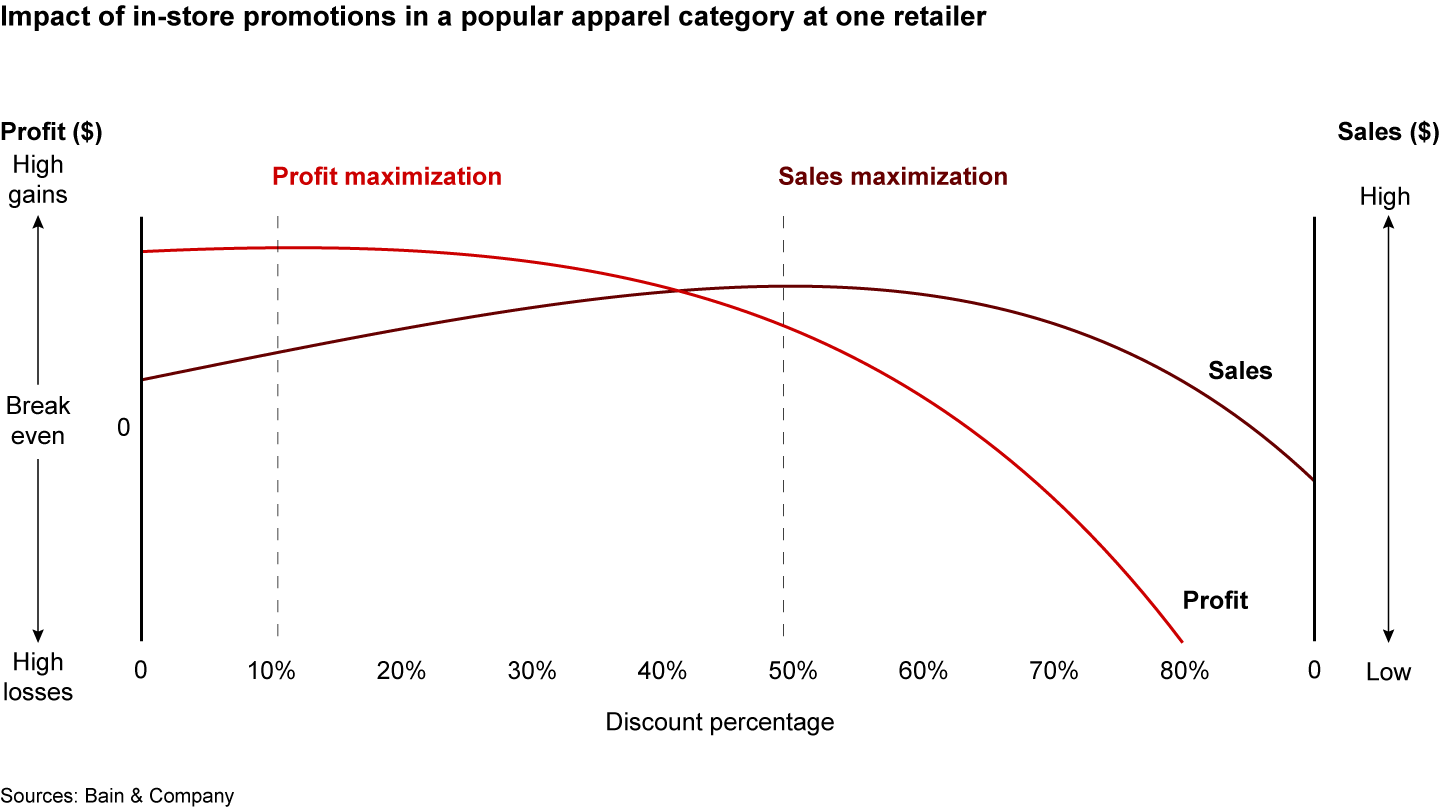
It doesn’t help that the effectiveness of discounting can erode as markdowns get bigger. One US mass retailer with a national presence experienced this in a basic apparel category. Upping the discount from 20% to 30% yielded an extra 7% of sales, but a similar move from 50% to 60% backfired, cutting sales by 3% and leaving the retailer with a hefty loss.
Even as they unveil fresh discounts and markdowns, many executive teams know they have a discounting problem. Simpler pricing is resonating with rivals—not just the EDLP crowd but also fast-fashion retailers, off-price outlets, and digital natives such as Amazon. While it doesn’t show up on the profit and loss account, discounting is still an investment, albeit one whose return is often unclear. As such, it could come with an opportunity cost that siphons funds from worthier projects among the many initiatives jostling for investment at every retailer. Yet ditching discounts can backfire, as J.C. Penney discovered in 2012–13, when a push to simplify pricing made its sales plummet.
Working with soft goods retailers, we’ve seen how they can avoid the spiral of ever-deeper discounts and move to more transparent, streamlined pricing without alienating customers or investors (or moving to EDLP). Amid tectonic movements in the retail landscape, getting this right can be doubly beneficial, improving financial performance today and freeing up the sort of cash that can have a real impact tomorrow when reinvested in support of a company’s strategic agenda. Specifically, we’ve found that three actions can boost the return on investments in discounting by 5%–10%. The actions are: tailoring advanced analytics tools, taking a holistic view of process and people, and embracing test-and-learn. Together, these moves can free up millions of dollars to redeploy at many retailers.
Tailoring advanced analytics tools to the realities of soft goods retail
Marketing spending is increasingly determined by rigorous calculations about return on investment. Not so pricing and promotions, where behavior is still shaped by instinct and comparisons with what the company did last year. That’s not sustainable. Pricing and merchant teams that use advanced analytics to understand customer psychology and measure the effectiveness of past promotions will increasingly have an edge over those that rely primarily on intuition.
What’s the right initial price, the right time for a hard markdown, the right depth for a promotion across an assortment? How will our sales and profits compare at a 30% discount vs. a 20% discount? Advanced analytics is the only way to control for the noise and tease out these questions with any degree of precision. There are just too many factors for the gut to digest on its own. Were sales of a given product high on a given day because the weather was great, or because it snagged a great advertising slot on the retailer’s website, or for a host of other reasons? It’s time to use data to supplement “feel.”
However, most pricing analytics solutions in retail were built for grocery, where the commercial dynamics are very different. For one thing, it’s easier to predict sales of a high-volume, branded cereal than a beaded sweater on sale in a department store for one short season only. To calibrate their own decision making correctly, soft goods retailers need customized analytical models that fit their own category archetypes. For instance, a grocery-derived analytics model might struggle with differences in the way people shop for clothing staples and fashion-led items such as dresses. When they are shopping for apparel basics, shoppers are less influenced by deals and less likely to buy on impulse. A customized approach would accommodate these nuances and develop individual models for each soft goods archetype.
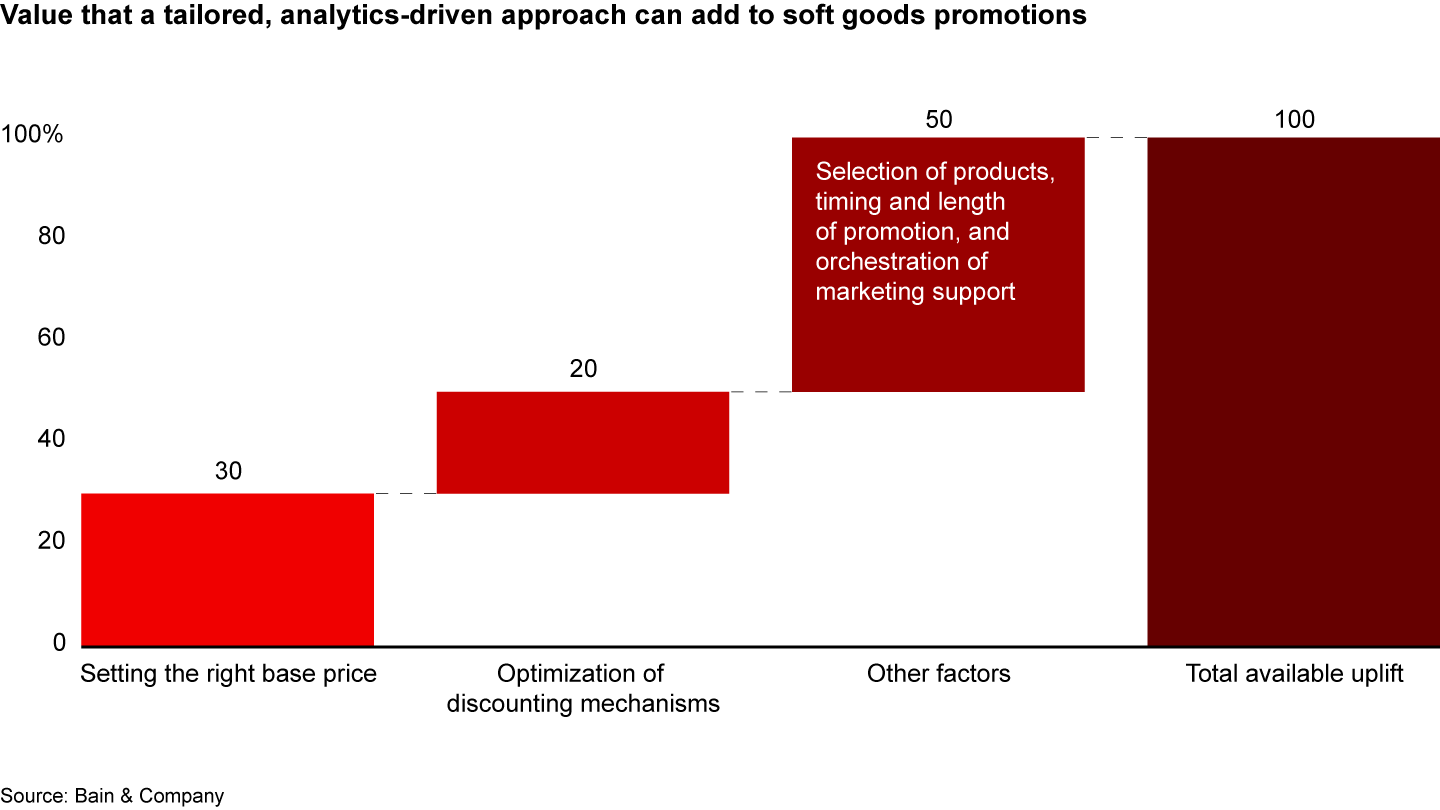
Customization isn’t the end of the story, though. In our experience, setting a price at the right level accounts for only 30% of the value uplift that a tailored, analytics-driven approach can bring to promotions (see Figure 3). Executive teams need to consider other factors that affect price perception. How discounts are delivered is crucial. For instance, do you construct the offer as a percentage reduction or emphasize a newly lowered price to tempt shoppers? Optimization of discounting mechanisms such as these can account for another 20% of the value uplift. The other 50% lies in selecting the right products to promote (taking care to avoid cannibalization of another product’s sales, for instance), nailing the timing and the length of the promotion (short, well-spaced offers tend to work best), and orchestrating marketing support. All of these things are quantifiable and measurable with the right analytical model.
Figure 3

In addition, a further stage of optimization is needed to accommodate variations in promotional impact across channels. Outcomes can differ hugely online and in-store. For instance, one US soft goods retailer offered similar temporary promotions in both physical and digital channels but experienced drastically different results. By using tailored analytical models, it learned that 60% of the promotions lost money in-store while only 15% of the same promotions lost money online.
Overall, the effectiveness of advanced analytics is at its greatest if the promotional objective is clear and avoids a common bias in discounting: the juicing of short-term sales at the expense of profit. It also pays to have absolute clarity on the objective of the price-cutting, as the optimal discount can vary greatly depending on the aim. At one retailer, the sweet spot for profit maximization for a popular apparel category was a 10% discount, but it rose to 50% for sales maximization (see Figure 4).
Figure 4

Crucially, all the retail teams involved need to sign up for the clearly framed objective. It’s not a recipe for success if the marketing team wants a revenue boost, the buying team focuses on purchasing as cheaply as possible, and other colleagues prioritize a profit increase. No model can reconcile those competing imperatives, not even a tailored one.
Taking a holistic view of process and people
At the mass retailer mentioned earlier, backfiring deep discounts weren’t the only complication it had to overcome when it promoted apparel basics. The price impact of one promotion turned out to be very different from what it had intended. By offering 25%–40% point-of-sale discounts in bursts across a month, it had wanted bargain-conscious shoppers to rush to the registers before full price was temporarily reimposed. But the marketing department was also running storewide promotions. The second promotion neutralized the first. Instead of sporadically snapping back to the reference level as the high-low tactic had intended, the price fluctuated in a narrow band, within $1.50 of an average $30 for the vast majority of the month.
Executive teams are more likely to avoid setbacks like this if they take a holistic view of the discounting process. On one level, that big picture approach means optimizing across all the price-setting levers (base price, headline discount, etc.) to ensure that one promotion doesn’t sabotage another. On another level, it means broadening the focus from product to customer, looking past the immediate profit or loss implications to assess the impact that decisions are likely to have on customer lifetime value.
To exploit advanced analytics fully—reaching a point where data-rich insights are turned into shrewd decisions and effective action—a focus on the human side of change management is key. The majority of pricing tools in soft goods wither due to lack of adoption. Retailers that buck the trend are skilled at getting buy-in from both merchants and buying teams; they also strive to make sure that the analytics tool is not seen as a forbidding black box. Companies can realize the potential of these powerful tools by investing in the technology adoption journey, redesigning business processes, and supporting merchants with dedicated pricing experts.
The human element cannot be ignored in the execution of promotions either. In one test we observed, a highly promotional retailer was presented with some head-scratching results. The same product was being sold for 50% off in one group of its stores and 30% off in another. Yet the former group actually sold fewer items. It turned out that customers in those stores hadn’t fully understood the discount stacking that underpinned the promotion. Thankfully, new technologies are making it easier to ensure that discounting intentions are executed faithfully. For instance, electronic price tags cut the risk that an employee fails to adjust all relevant price tags manually during a promotion.
Embracing test-and-learn
With shoppers so accustomed to getting a deal in soft goods, many executive teams fear the consequences of sudden and drastic changes in their usual promotional approach. That’s understandable. The well-documented experience of J.C. Penney is a cautionary tale. With the promise of “no games, just great prices,” the department store retailer moved away from special offers and discount coupons in 2012 as part of a broader revamp. The shift proved to be too rapid and disorienting for shoppers who were accustomed to hunting for treasure amid the markdowns. Comparable store sales in the first quarter after the move were almost a fifth less than the same period a year earlier. The decline worsened. Annual sales fell by a quarter, by which time the company had started to bring back the sales and coupons to which its customers were habituated.
Soft goods retailers that adopt a test-and-learn approach to the introduction of advanced analytics can reduce the risk of alienating customers and investors. Gradual experimentation—through phased changes that expand from one market or category, for instance—can encourage a retailer’s employees to start trusting the models. It can also prove the value of analytics while minimizing unhelpful comparisons with prior year performance, seasonal plans, or a theoretical baseline that might already have been the object of skepticism. Once advanced analytics is firmly embedded in the organization, retailers can only maximize its value if they keep adjusting analytical models and processes in line with lessons learned from usage in real market conditions.
One retailer in China successfully followed a gradualist playbook when it piloted a new apparel promotion approach based on an artificial intelligence (AI) engine. The exercise lasted a month across several dozen pairs of pilot and control stores, and a range of almost 600 products. With discounts optimized by the AI engine, the pilot stores enjoyed a 24% increase in net profit margin on the products involved in the test, relative to those sold in the control stores. That was significantly higher than the 10%–15% margin boost that such pilots tend to generate. Crucially, the pilot also identified ways in which the algorithm could be improved, as well as gaps in data collection that needed filling.
How executive teams can get started
The dangerously circular need for ever-deeper discounts has been building for years. There is a way to break the cycle, however. To create the momentum needed for sustained improvement, some executive teams have begun by asking themselves a series of questions, including the following:
- Do we use tailored advanced analytics models to help make pricing decisions?
- Are we getting enough credit from consumers and investors for our price positioning and our investment in discounting?
- How do our merchandising, pricing, and marketing teams work together to reinforce our price perception?
- Do we have a consistent approach to testing pricing changes and validating their customer impact?
The good news is that soft goods retailers now have access to tools and fresh approaches that can increase the impact of their promotional budgets, release funds for strategic strengthening elsewhere in the business, and start to bring discounting into a healthy equilibrium.
First published in junho 2021