


Skip to Content
  • Bureaux

    Bureaux

    Amérique du Nord et Amérique du Sud
    • Atlanta
    • Austin
    • Bogota
    • Boston
    • Buenos Aires
    • Chicago
    • Dallas
    • Denver
    • Houston
    • Los Angeles
    • Mexico City
    • Minneapolis
    • Monterrey
    • Montreal
    • New York
    • Rio de Janeiro
    • San Francisco
    • Santiago
    • São Paulo
    • Seattle
    • Silicon Valley
    • Toronto
    • Washington, DC
    Europe, Moyen-Orient et Afrique
    • Amsterdam
    • Athens
    • Berlin
    • Brussels
    • Copenhagen
    • Doha
    • Dubai
    • Dusseldorf
    • Frankfurt
    • Helsinki
    • Istanbul
    • Johannesburg
    • Kyiv
    • Lisbon
    • London
    • Madrid
    • Milan
    • Munich
    • Oslo
    • Paris
    • Riyadh
    • Rome
    • Stockholm
    • Vienna
    • Warsaw
    • Zurich
    Asie et Australie
    • Bangkok
    • Beijing
    • Bengaluru
    • Brisbane
    • Ho Chi Minh City
    • Hong Kong
    • Jakarta
    • Kuala Lumpur
    • Manila
    • Melbourne
    • Mumbai
    • New Delhi
    • Perth
    • Seoul
    • Shanghai
    • Singapore
    • Sydney
    • Tokyo
    Voir tous les bureaux
  • Alumni
  • Presse
  • S’abonner
  • Contacter
  • France | Français

    Sélectionnez votre région et votre langue

    Global
    • Global (English)
    Amérique du Nord et Amérique du Sud
    • Brazil (Português)
    • Argentina (Español)
    • Canada (Français)
    • Chile (Español)
    • Colombia (Español)
    Europe, Moyen-Orient et Afrique
    • France (Français)
    • DACH Region (Deutsch)
    • Italy (Italiano)
    • Spain (Español)
    • Greece (Elliniká)
    Asie et Australie
    • China (中文版)
    • Korea (한국어)
    • Japan (日本語)
  • Saved items (0)
    Saved items (0)

    You have no saved items.

    Bookmark content that interests you and it will be saved here for you to read or share later.

    Explore Bain Insights
  • Expertises Sectorielles
    Menu principal

    Expertises Sectorielles

    • Aerospace et Défense
    • Agroalimentaire
    • Automobile
    • Chimie
    • Infrastructures, BTP et Matériaux de Construction
    • Grande Consommation
    • Services Financiers
    • Santé
    • Engins & Equipements Industriels
    • Media et Divertissement
    • Metals
    • Mining
    • Pétrole & Gaz
    • Papier et Emballage
    • Private Equity
    • Secteur Public
    • Distribution
    • Technologie
    • Télécommunications
    • Transportation
    • Travel & Leisure
    • Utilities & Energies Renouvelables
  • Expertises Fonctionnelles
    Menu principal

    Expertises Fonctionnelles

    • Expérience Client
    • ESG
    • Innovation
    • Fusions et Acquisitions
    • Opérations
    • People & Organization
    • Private Equity
    • Sales & Marketing
    • Stratégie
    • IA, Perspectives et Solutions
    • Technology
    • Transformation
  • Digital
  • Points de Vue
  • À propos
    Menu principal

    À propos

    • Notre Activité
    • Nos Valeurs
    • Nos Collaborateurs et Notre Équipe Dirigeante
    • Notre Impact
    • Prix & Récompenses
    • Partenariats Internationaux
    • Evénements
    Further: Our global responsibility
    • Diversité et Inclusion
    • Impact Social
    • Sustainability
    • World Economic Forum
    Learn more about Further
  • Carrières
    Menu principal

    Carrières

    • Rejoignez-nous
      Carrières
      Rejoignez-nous
      • Trouvez votre place
      • Nos domaines d’expertise
      • Equipes multidisciplinaires
      • Étudiants
      • Stages et programmes
      • Événements de recrutement
    • La vie chez Bain
      Carrières
      La vie chez Bain
      • Blog: Dans les coulisses de Bain
      • Récits de carrière
      • Nos collaborateurs
      • Nos bureaux
      • Soutenir votre évolution professionnelle
      • Groupes d’affinités
      • Avantages chez Bain
    • Histoires d’impact
    • Notre processus de recrutement
      Carrières
      Notre processus de recrutement
      • Ce que vous pouvez attendre
      • Entretiens
    Trouver un poste
  • Bureaux
    Menu principal

    Bureaux

    • Amérique du Nord et Amérique du Sud
      Bureaux
      Amérique du Nord et Amérique du Sud
      • Atlanta
      • Austin
      • Bogota
      • Boston
      • Buenos Aires
      • Chicago
      • Dallas
      • Denver
      • Houston
      • Los Angeles
      • Mexico City
      • Minneapolis
      • Monterrey
      • Montreal
      • New York
      • Rio de Janeiro
      • San Francisco
      • Santiago
      • São Paulo
      • Seattle
      • Silicon Valley
      • Toronto
      • Washington, DC
    • Europe, Moyen-Orient et Afrique
      Bureaux
      Europe, Moyen-Orient et Afrique
      • Amsterdam
      • Athens
      • Berlin
      • Brussels
      • Copenhagen
      • Doha
      • Dubai
      • Dusseldorf
      • Frankfurt
      • Helsinki
      • Istanbul
      • Johannesburg
      • Kyiv
      • Lisbon
      • London
      • Madrid
      • Milan
      • Munich
      • Oslo
      • Paris
      • Riyadh
      • Rome
      • Stockholm
      • Vienna
      • Warsaw
      • Zurich
    • Asie et Australie
      Bureaux
      Asie et Australie
      • Bangkok
      • Beijing
      • Bengaluru
      • Brisbane
      • Ho Chi Minh City
      • Hong Kong
      • Jakarta
      • Kuala Lumpur
      • Manila
      • Melbourne
      • Mumbai
      • New Delhi
      • Perth
      • Seoul
      • Shanghai
      • Singapore
      • Sydney
      • Tokyo
    Voir tous les bureaux
  • Alumni
  • Presse
  • S’abonner
  • Contacter
  • France | Français
    Menu principal

    Sélectionnez votre région et votre langue

    • Global
      Sélectionnez votre région et votre langue
      Global
      • Global (English)
    • Amérique du Nord et Amérique du Sud
      Sélectionnez votre région et votre langue
      Amérique du Nord et Amérique du Sud
      • Brazil (Português)
      • Argentina (Español)
      • Canada (Français)
      • Chile (Español)
      • Colombia (Español)
    • Europe, Moyen-Orient et Afrique
      Sélectionnez votre région et votre langue
      Europe, Moyen-Orient et Afrique
      • France (Français)
      • DACH Region (Deutsch)
      • Italy (Italiano)
      • Spain (Español)
      • Greece (Elliniká)
    • Asie et Australie
      Sélectionnez votre région et votre langue
      Asie et Australie
      • China (中文版)
      • Korea (한국어)
      • Japan (日本語)
  • Saved items  (0)
    Menu principal
    Saved items (0)

    You have no saved items.

    Bookmark content that interests you and it will be saved here for you to read or share later.

    Explore Bain Insights
  • Expertises Sectorielles
    • Expertises Sectorielles

      • Aerospace et Défense
      • Agroalimentaire
      • Automobile
      • Chimie
      • Infrastructures, BTP et Matériaux de Construction
      • Grande Consommation
      • Services Financiers
      • Santé
      • Engins & Equipements Industriels
      • Media et Divertissement
      • Metals
      • Mining
      • Pétrole & Gaz
      • Papier et Emballage
      • Private Equity
      • Secteur Public
      • Distribution
      • Technologie
      • Télécommunications
      • Transportation
      • Travel & Leisure
      • Utilities & Energies Renouvelables
  • Expertises Fonctionnelles
    • Expertises Fonctionnelles

      • Expérience Client
      • ESG
      • Innovation
      • Fusions et Acquisitions
      • Opérations
      • People & Organization
      • Private Equity
      • Sales & Marketing
      • Stratégie
      • IA, Perspectives et Solutions
      • Technology
      • Transformation
  • Digital
  • Points de Vue
  • À propos
    • À propos

      • Notre Activité
      • Nos Valeurs
      • Nos Collaborateurs et Notre Équipe Dirigeante
      • Notre Impact
      • Prix & Récompenses
      • Partenariats Internationaux
      • Evénements
      Further: Our global responsibility
      • Diversité et Inclusion
      • Impact Social
      • Sustainability
      • World Economic Forum
      Learn more about Further
  • Carrières
    Recherches les plus fréquentes
    • Agile
    • Digital
    • Stratégie
    Vos recherches précédentes
      Pages récemment visitées

      Content added to saved items

      Saved items (0)

      Removed from saved items

      Saved items (0)

      Etude

      Nuclear and Megaproject Delivery: Five Elements That Predict Success

      Nuclear and Megaproject Delivery: Five Elements That Predict Success

      In complex construction programs, precision in execution matters as much as precision in engineering.

      Par Grant Dougans, Juan Carlos Gay, Edward Stone, et Denis Janin

      • min
      }

      Etude

      Nuclear and Megaproject Delivery: Five Elements That Predict Success
      en
      En Bref
      • Interest in nuclear investment is rising, but projects face persistent delivery challenges.
      • Successful nuclear programs follow a repeatable formula built on proven design, a programmatic approach, industrialized delivery, strong owner leadership, and stakeholder alignment.
      • The greatest impact comes from designing these elements as an integrated system and actively managing them throughout execution.
      • Beyond nuclear, the formula applies broadly to the delivery of large-scale capital programs across sectors.

      A new wave of nuclear investment is under consideration globally. But investment and execution are two different things. Nuclear projects have a weak delivery track record, with few completed on time and on budget. The same failure patterns recur across sectors when programs start before designs, teams, and delivery systems are ready.

      The good news: Success is not a mystery. Evidence from nuclear fleets worldwide points to a repeatable formula—one that can be applied across geographies, technologies, and delivery models.

      Regardless of location and reactor type, the most reliable predictor of schedule and cost performance is not the feasibility of the technology itself. It is whether the project is set up to succeed. Research by Bain & Company’s Nuclear Energy and Capital Projects centers of excellence identifies five elements that distinguish successful programs: proven design, a programmatic approach, industrialized delivery, strong owner leadership, and stakeholder alignment. The key is to embed these elements early and actively manage them throughout delivery.

      Outcomes hinge on program design, not technology failure

      Before we discuss each element in depth, a look at several contemporary EPR builds is instructive. Projects such as Flamanville 3 in France, Olkiluoto 3 in Finland, and Hinkley Point C in the UK illustrate how beginning construction without an execution‑ready design and stable approvals can cascade into rework, approval bottlenecks, and multiyear overruns. By contrast, the UAE’s Barakah program benefited from deploying a mature APR-1400 reference design with disciplined replication across four units and an integrated delivery ecosystem, though it still required a deliberate effort to build owner and operator readiness.

      Proof points also exist at fleet scale. France’s nuclear buildout from the 1970s through the 1990s demonstrated that standardization and serial delivery can generate learning‑curve benefits and predictability, particularly when supported by a strong owner “architect‑engineer” capability and disciplined handling of innovation. China’s post‑2000 program further shows what is possible when repeatable designs are deployed at scale with coordinated industrial capacity and workforce continuity.

      These patterns extend beyond nuclear. Megaprojects face systematic cost and schedule overruns; cost overruns of about 50% are common. Yet liquefied natural gas export programs such as Sabine Pass demonstrate that repeatable designs, sequenced “train” delivery, long‑lead procurement discipline, and industrialized supply chain planning can materially improve predictability vs. one‑off execution (see Figure 1).

      Figure 1
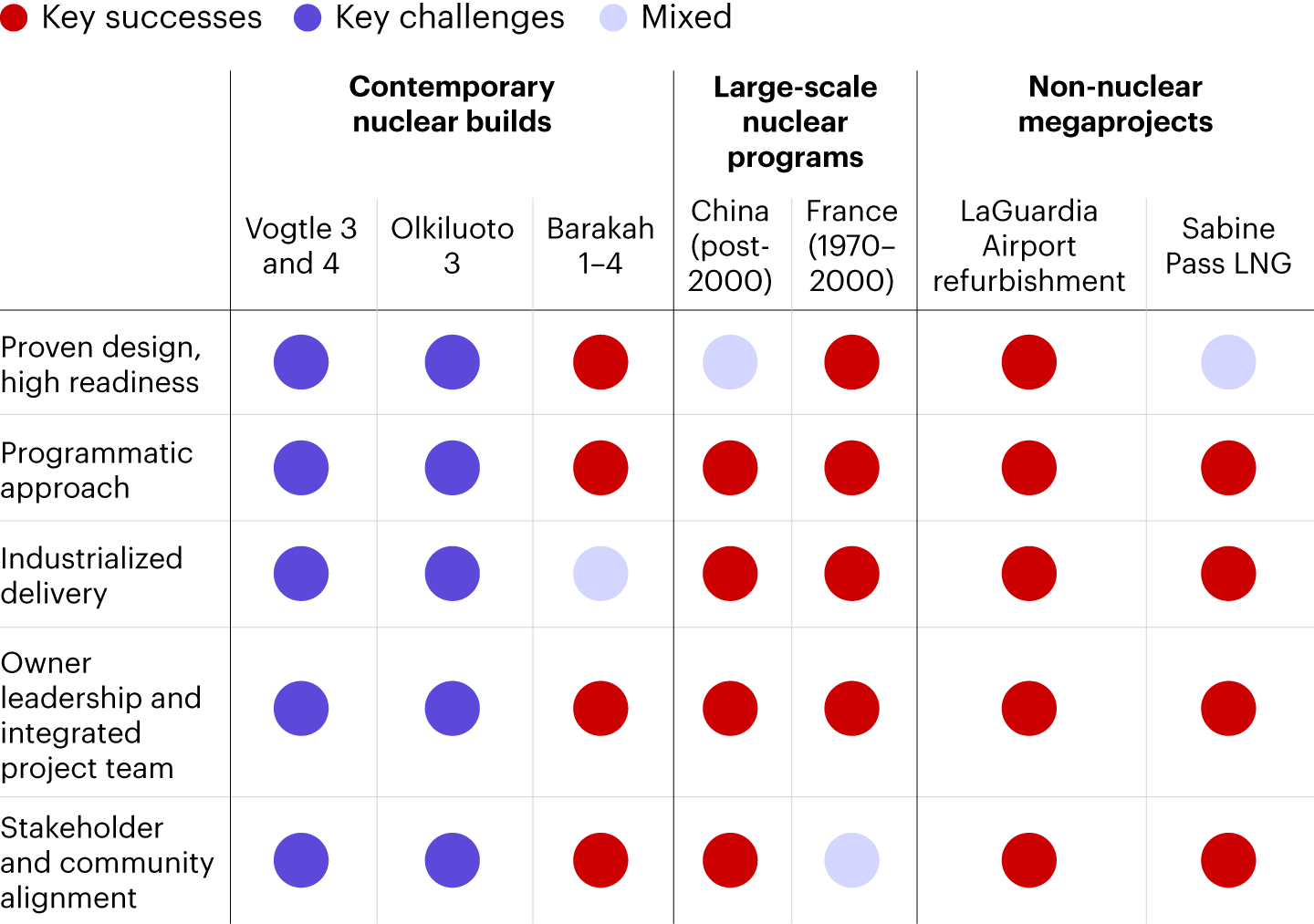
      Predictable nuclear delivery depends on five critical elements
      Source: Bain & Company

      A repeatable formula for success

      Understanding how each of the five elements works in practice is key to delivering on time and on budget. While each element matters on its own, full advantage comes from integrating them into a single delivery system from the outset.

      1. Proven design, high readiness

      Successful nuclear programs adopt a proven reference design, minimize variation between units and sites, and treat design maturity as a gating condition, not a parallel activity to construction. “Start fast” is often a false economy. If drawings, interfaces, and the licensing basis are not frozen, the field becomes the integration lab, causing resequencing and rework and compounding indirect costs.

      This aligns with Bain’s long-held capital projects view: Starting fast is rarely progress if critical path, constructability, supply chain, and workforce constraints are not resolved. Our recent research also shows that disciplined planning and scenario testing before the final investment decision (FID) is the most reliable way to accelerate the objective that matters: shrinking the construction window by preventing rework and disruption. This often requires expenditures of about 20% of the total project cost in the planning, development, and early works phases (see Figure 2).

      Figure 2
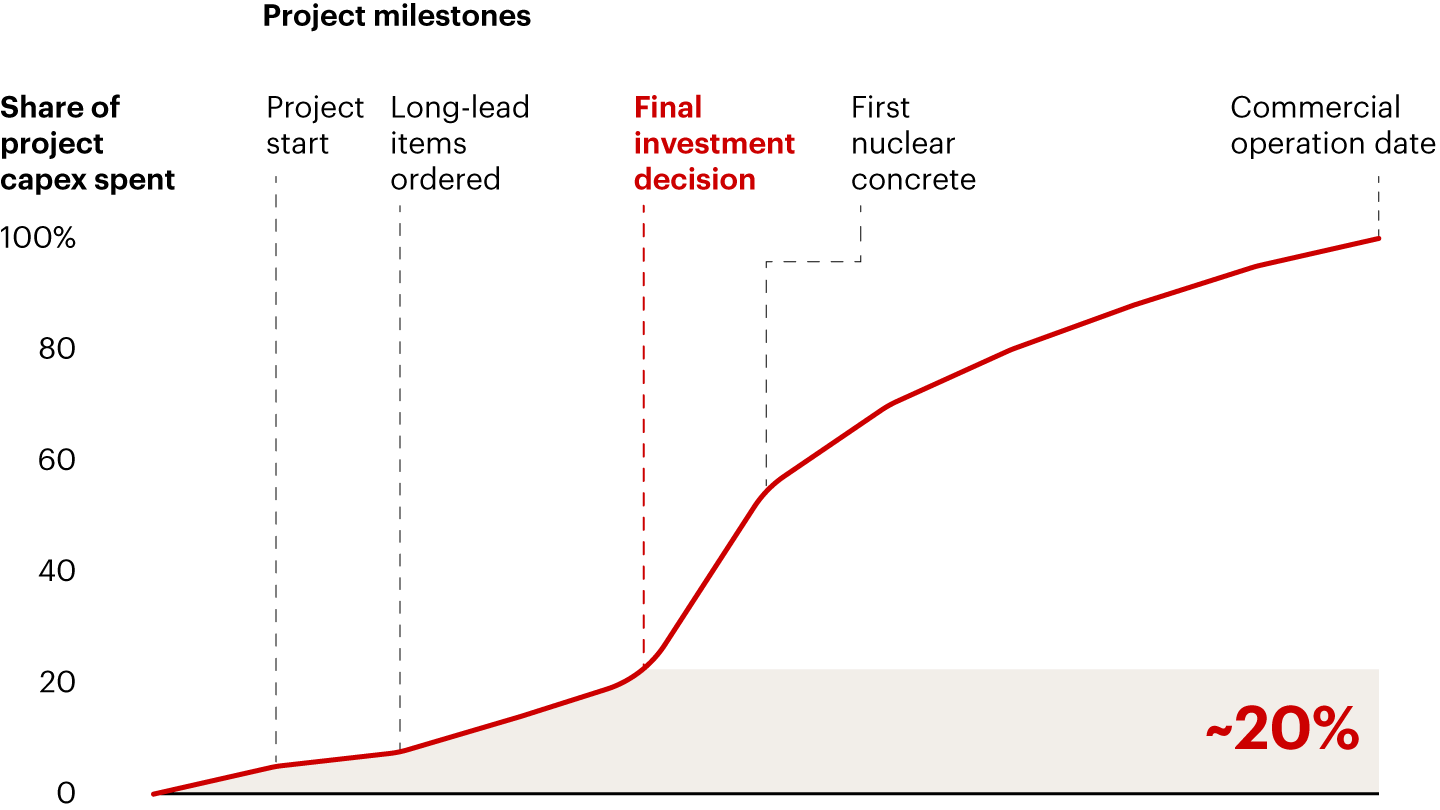
      Leading nuclear projects invest heavily in planning and readiness before FID
      Source: Bain & Company

      Successful programs invest early to “think slow, act fast.” They complete critical engineering, validate constructability, and lock long‑lead specifications before first nuclear concrete. Changes after the freeze are treated as true exceptions—tightly governed, quantified for schedule and cost impact, and aligned to licensing and supply chain realities.

      Flamanville 3 illustrates the cost of starting before design maturity. Construction commenced with limited design completion, resulting in cascading scope changes, regulatory-driven rework, and major delay and cost escalation. By contrast, Barakah’s replication of a mature reference design across four units limited discretionary changes and improved predictability.

      Executive imperative: Make “design freeze before first nuclear concrete” a board-level gating condition with quantified change control.

      2. Programmatic approach

      Executing as a fleet program, not a one‑off plant, is another key dimension. A programmatic approach sequences multiunit builds (often in pairs) and replicates across sites to sustain learning curves, retain productive crews, and stabilize supplier performance. Baselines are anchored in evidence—benchmarks and reference‑class forecasting from the closest analogue projects—rather than optimism or single‑point estimates. In practice, this means tranching the program into manageable, interdependent units and modularizing where it reduces interfaces and field complexity, so learning and productivity improve from unit to unit.

      For organizations without natural scale, collaboration can replicate some fleet advantages. Partnerships, shared procurement, and standardized work packages help unlock fleet benefits such as repeatable designs, vendors, and training. Critically, lessons learned are not captured after the fact; they are translated into design principles and boundary conditions that are enforced across subsequent units.

      France’s fleet buildout, for example, captured nth-of-a-kind benefits by ordering and delivering a series of near-identical units, sustaining learning curves and supplier/workforce continuity. While Hinkley Point C was an attempt to replicate Flamanville 3’s design, it encountered some first-of-a-kind challenges in execution due to scope growth and governance bottlenecks.

      Executive imperatives: Break the program into repeatable units. Standardize work packages and interfaces across units and sites, and embed lessons learned into processes from the get-go.

      3. Industrialized delivery

      Successful nuclear projects treat supply chain and workforce readiness as critical‑path workstreams from day one. They secure long‑lead components early, qualify vendors to nuclear standards, and provide multiyear demand visibility that unlocks capacity investment, improves quality, and reduces price volatility.

      They also build and retain a nuclear‑qualified workforce and contractor ecosystem, recognizing that a small number of craft or supplier failures can derail project execution. Industrialization means repeatable work packages, predictable quality assurance and control, and a delivery rhythm that avoids boom‑bust labor cycles.

      Vogtle 3 and 4 and VC Summer in the US show how a small number of nuclear-grade supply chain and craft bottlenecks (e.g., module fabrication readiness, critical component quality) can disrupt the entire critical path. In France, the MATCH program—a tool for nuclear capacity building—and subsequent workforce development investments such as the University of Nuclear Professions (UMN) are expected to de-risk the EPR2 program. In contrast, China’s post-2000 nuclear program relies on a strong domestic industrial ecosystem.

      Executive imperatives: Secure long-lead slots early. Launch multiyear apprenticeships and vendor qualification programs now.

      4. Owner leadership and integrated project team

      Top performers build a unified delivery team across the owner, original equipment manufacturer (OEM), and EPC contractor, with clear roles and decision rights, well-managed interfaces, and strong owner oversight. Owners do not delegate accountability. They set the delivery system, arbitrate system‑level trade‑offs, and step in early when performance drifts. In nuclear projects, risk cannot be fully outsourced.

      Increasingly, this “one team” model is enabled by a shared digital backbone, including common data standards and simulation‑led validation to prove constructability, coordinate interfaces, and manage change with real‑time visibility. Digital tools create value only when paired with governance, clear change gates, configuration control, and a disciplined decision cadence.

      In Canada, Darlington’s small modular reactor program illustrates the value of an integrated project team model—shared incentives, fewer handoffs, and clear decision authority—paired with an experienced owner able to validate readiness gates and maintain schedule discipline. At Vogtle 3 and 4, the attempt to rely on the OEM as EPC contractor proved fragile. Execution capability gaps and the Westinghouse bankruptcy ultimately forced a major delivery reset (including a handover to Bechtel), underscoring the importance of owner oversight.

      Executive imperative: Stand up an intrusive owner “delivery architect” function with clear decision rights and performance management routines.

      5. Stakeholder and community alignment

      Successful programs treat regulators, permitting, cost recovery, political durability, and community acceptance as core delivery inputs, managing them as structured workstreams aligned to construction milestones. Early, continuous engagement reduces late-cycle surprises and prevents approval timelines from becoming hidden critical paths.

      They also invest early in local legitimacy, jobs, skills, and economic development narratives, recognizing that social license becomes a form of schedule and cost protection. When permitting and cost recovery are not synchronized with the construction plan, projects become vulnerable to midstream resets that destabilize economics and delivery.

      At Vogtle 3 and 4, delivery challenges were amplified by the reality that routine constructability-driven design changes still triggered multi-month regulatory impacts. Meanwhile, prolonged schedule and cost escalation eroded public and political support as ratepayer impacts grew more visible. In contrast, France’s fleet program paired standardization with proactive local engagement through formal information committees with elected officials and stakeholders, helping sustain community legitimacy and political durability across repeated builds.

      Executive imperative: Align permitting, cost recovery, and community commitments to construction milestones with early and comprehensive funding commitments.

      Design for success early—and own it throughout delivery

      Predictable nuclear delivery is achievable, but only when the elements of success are built into the program before FID and actively managed throughout execution. Although there may be some differences across cultures, the highest-performing sponsors consistently act as delivery architects. They set the operating model, enforce readiness gates, integrate interfaces across contractors, and maintain configuration discipline so the program optimizes for the global outcome rather than a series of local workstreams. When these conditions are in place, the formula for success becomes repeatable across units and transferable across sectors.

      The lesson from leading programs is clear: Success doesn’t come simply from executing each element well, but from designing and managing them as an integrated system from the outset. If these principles can drive predictable delivery in nuclear—one of the most complex and highly scrutinized capital environments—they can also improve execution across major capital programs in other sectors.

      Auteurs
      • Headshot of Grant Dougans
        Grant Dougans
        Associé, Washington, DC
      • Headshot of Juan Carlos Gay
        Juan Carlos Gay
        Associé, London
      • Headshot of Edward Stone
        Edward Stone
        Associé, London
      • Denis Janin
        Senior Manager, Copenhagen
      Contactez-nous
      Synergies sectorielles
      • Energie et Ressources Naturelles
      • Utilities & Energies Renouvelables
      Energie et Ressources Naturelles
      The $560 Billion Energy Question

      With an aging grid and rising demand, time is running out for utilities to bridge a generational funding gap.

      Voir plus
      Energie et Ressources Naturelles
      Southeast Asia’s Green Economy Report 2026

      The new calculus: How can SEA deliver power fast enough for new sources of demand?

      Voir plus
      Energie et Ressources Naturelles
      Making the Nuclear Final Investment Decision the Right Way

      A "yes" that pays off requires integrated prework across business case, delivery risk, and financing.

      Voir plus
      Energie et Ressources Naturelles
      Inside Bain's Latest Survey of Energy and Natural Resources Executives

      Bain partners discuss how companies are navigating market volatility, geopolitical shifts, and the evolving economics of the energy transition.

      Voir plus
      Energie et Ressources Naturelles
      Global Energy and Materials Outlook 2026

      Modeling growth, build rates, and resource constraints helps shed light on the opportunities and risks ahead.

      Voir plus
      First published in juin 2026
      Mots clés
      • Energie et Ressources Naturelles
      • Utilities & Energies Renouvelables

      Comment nous avons aidé nos clients

      An Environmental Services Company Captures Massive Savings from a Merger

      Lire l’étude de cas

      Amélioration de la Performance Boosting a utility's workforce productivity

      Lire l’étude de cas

      Stratégie Client et Marketing Revitalizing a utility's market position with customer loyalty

      Lire l’étude de cas

      Vous souhaitez continuer cette conversation ?

      Nous aidons des dirigeants du monde entier à matérialiser des impacts et des résultats pérennes et créateurs de valeur dans leurs organisations.

      Les points de vue de Bain : notre perspective sur des problématiques auxquelles sont confrontées les entreprises à travers le monde, envoyés chaque mois dans votre boîte de réception. 

      *J’ai lu la politique de confidentialité et j’accepte les conditions.

      Merci de lire notre politique de confidentialité.
      Bain & Company
      Contactez-nous Sustainability Accessibility Conditions d’utilisation Politique de Confidentialité Cookie Policy Mentions Légales Sitemap Log In

      © 1996-2026 Bain & Company, Inc.

      Contacter Bain

      Comment pouvons-nous vous aider ?

      • Business inquiry
      • Career information
      • Press relations
      • Partnership request
      • Speaker request
      Voir tous les bureaux