


Article


|
At a Glance
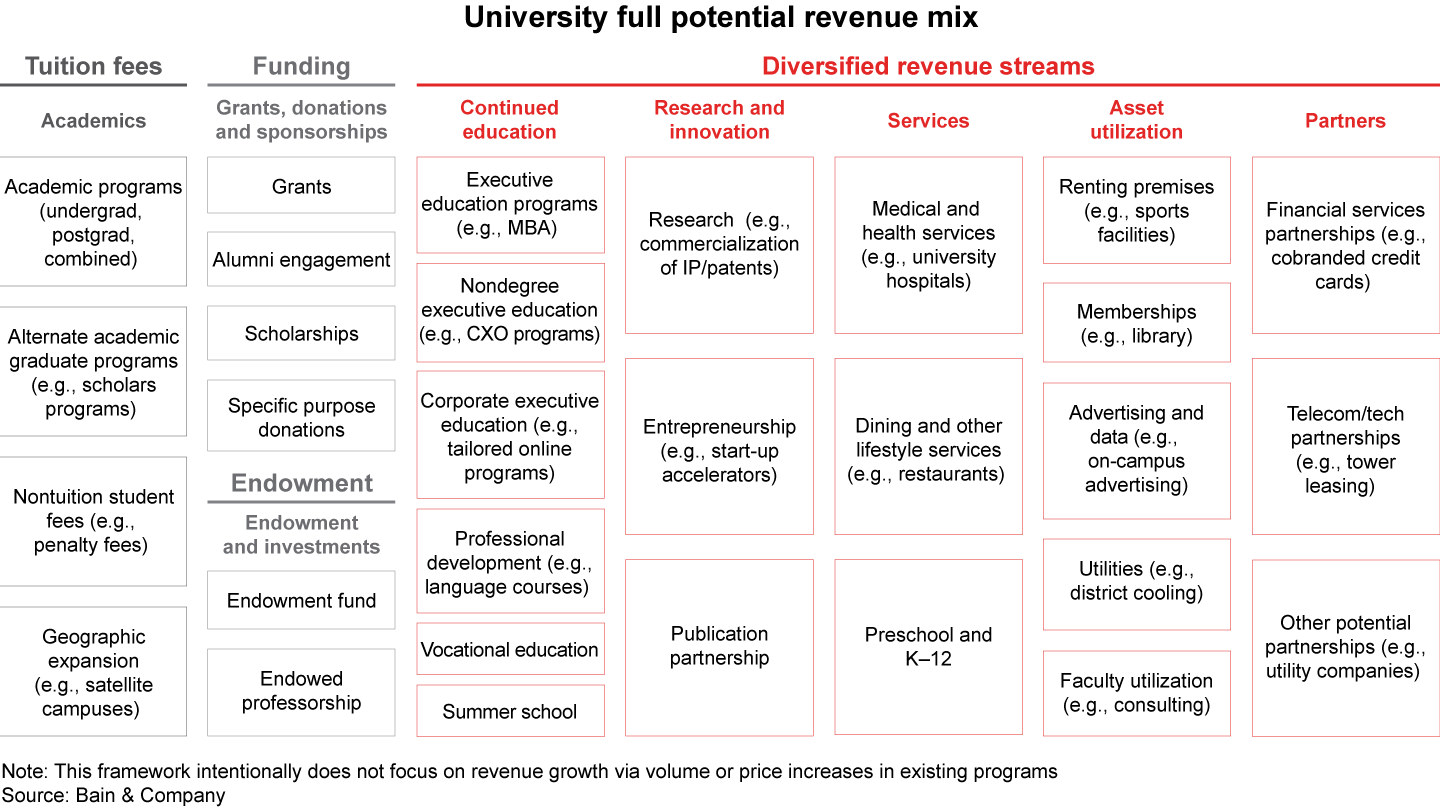
Public universities in Gulf Cooperation Council (GCC) nations are at a strategic turning point; they are also experiencing significant budget disruptions. On the funding side, public support for education is under pressure: Total public funding on a per student basis is declining in Saudi Arabia and the United Arab Emirates (UAE). Furthermore, funding is moving away from lump sum awards and becoming more outcome based. Finally, specific programs, such as postgraduate studies, are increasingly self-funded. On the tuition side, universities are beginning to be unable to increase fees for students without sacrificing occupancy levels. As bleak as these difficulties may seem, they provide many opportunities for GCC public universities to question their existing approaches and find new strategic directions. Particularly, there is excellent potential for local players seeking to establish control over their own budgets through endowment funds or revenue diversification. Also, institutions looking for greater autonomy and flexibility in funding, with lower emphasis on public sources, and those wishing to optimize their financial resource allocations to fuel strategic growth can challenge the status quo. To achieve these goals, universities will have to rethink their entire strategic, operating, organizational and financial models. This article focuses specifically on rethinking financial models to deliver early gains to GCC universities. Financial models typically cover tuition fees, funding, endowment returns and revenue diversification. Based on our experience and in light of the significantly undertapped potential in the region, revenue diversification can provide the earliest gains. In order to do so, regional universities should study the financial models of leading global universities that typically achieve greater than 10% diversification of their operating revenue from sources other than traditional tuition and research activities. Revenue diversification is a critical component of overall revenue mix, and it requires a holistic approach based on five key revenue diversification levers: continued education, research and innovation, services, asset utilization, and partners (see Figure 1).
Figure 1

What follows are some specific examples of how leading global universities have successfully applied revenue diversification initiatives.
In our experience, GCC universities are already aware of, or are deploying, some of these levers. The schools typically pursue them in an ad hoc fashion, however, and lack a consistent strategy. As a result, the chances of success are limited, and they often fall victim to a host of regional pitfalls. For instance:
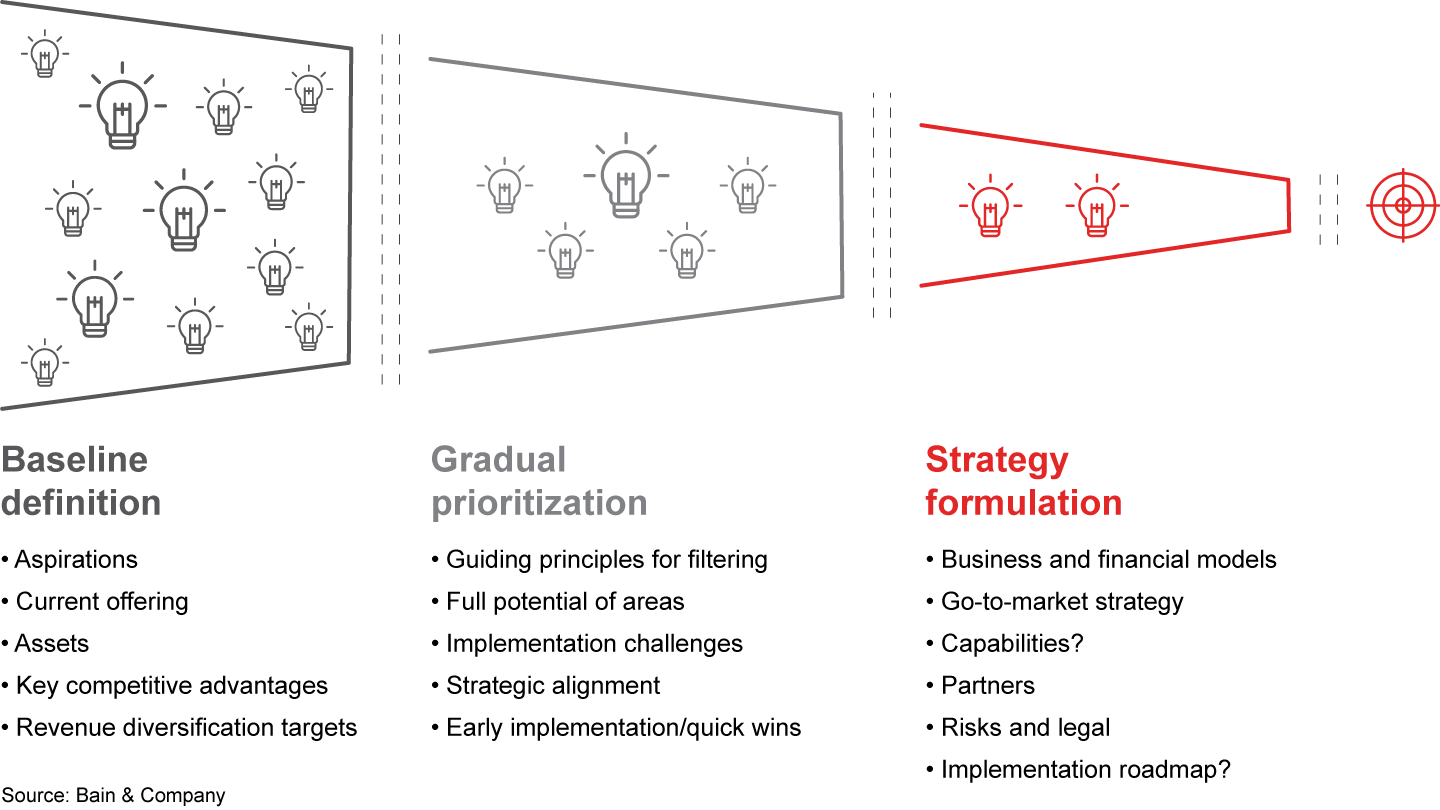
To be successful, GCC universities need to approach revenue diversification as a holistic and structured exercise. Diversification is a phased process that depends on the university’s starting point, including its strengths and its objectives. As a result, this process requires tailoring to be fitted to the unique university profile. We have worked with a leading university in the GCC to tailor its approach to revenue diversification. The university was previously less than 1% revenue diversified; we identified the potential for 10% revenue diversification and prepared a quick-win initiative representing 3% to 4% revenue diversification that is now being implemented. To enable this, we followed a prioritization approach split into three phases: baseline definition, gradual prioritization and strategy formulation. Each phase is concentrated around a core set of questions and with a specific objective in mind (see Figure 2).
Figure 2

Once the strategy is formulated, its success most often lies in the robustness of the governance model. In that regard, we advise GCC universities to follow four guiding principles. First, the role of the center and accountability of stakeholders must be clearly defined. This includes a dedicated mandate for revenue diversification and a forum for discussion. Second, investment policies and criteria must be stated in order to classify prospective investments for comparison and ensure that financial commitments are compliant with the university and aligned with its strategy. Third, decision rights should be specifically allocated so that it’s understood which stakeholders are engaged at different decision points. Finally, the end-to-end process should be codified with clearly formalized milestones to track progress at each stage. Diversifying revenue is an ongoing process that can yield early as well as long-term benefits to GCC universities. Based on our global and regional experience, we recommend five key success factors to secure when planning revenue diversification.
Karim Shariff is a partner with Bain & Company, and Jürg Kronenberg is a Bain principal. Both work in Bain’s Middle East offices. The authors would like to thank Maxime Toth for his support. |