
Skip to Content
  • 오피스

    오피스

    미주
    • Atlanta
    • Austin
    • Bogota
    • Boston
    • Buenos Aires
    • Chicago
    • Dallas
    • Denver
    • Houston
    • Los Angeles
    • Mexico City
    • Minneapolis
    • Monterrey
    • Montreal
    • New York
    • Rio de Janeiro
    • San Francisco
    • Santiago
    • São Paulo
    • Seattle
    • Silicon Valley
    • Toronto
    • Washington, DC
    유럽, 중동, 아프리카
    • Amsterdam
    • Athens
    • Berlin
    • Brussels
    • Copenhagen
    • Doha
    • Dubai
    • Dusseldorf
    • Frankfurt
    • Helsinki
    • Istanbul
    • Johannesburg
    • Kyiv
    • Lisbon
    • London
    • Madrid
    • Milan
    • Munich
    • Oslo
    • Paris
    • Riyadh
    • Rome
    • Stockholm
    • Vienna
    • Warsaw
    • Zurich
    아시아, 호주
    • Bangkok
    • Beijing
    • Bengaluru
    • Brisbane
    • Ho Chi Minh City
    • Hong Kong
    • Jakarta
    • Kuala Lumpur
    • Manila
    • Melbourne
    • Mumbai
    • New Delhi
    • Perth
    • Seoul
    • Shanghai
    • Singapore
    • Sydney
    • Tokyo
    오피스 전체보기
  • 얼럼나이
  • 미디어 센터
  • 구독
  • 연락처
  • Korea | 한국어

    지역 및 언어 선택

    글로벌
    • Global (English)
    미주
    • Brazil (Português)
    • Argentina (Español)
    • Canada (Français)
    • Chile (Español)
    • Colombia (Español)
    유럽, 중동, 아프리카
    • France (Français)
    • DACH Region (Deutsch)
    • Italy (Italiano)
    • Spain (Español)
    • Greece (Elliniká)
    아시아, 호주
    • China (中文版)
    • Korea (한국어)
    • Japan (日本語)
  • Saved items (0)
    Saved items (0)

    You have no saved items.

    관심 있는 내용을 북마크하여 Red 폴더에 저장할 수 있습니다. Red 폴더 에서 저장된 내용을 읽거나 공유해보세요.

    Explore Bain Insights
  • 산업
    메인 메뉴

    산업

    • 우주항공, 방산 및 정부 서비스
    • 농업 관련 산업
    • 화학
    • 인프라, 건설 및 건축 자재
    • 소비재
    • 금융 서비스
    • 헬스케어
    • 산업용 기계 및 장비
    • 미디어 및 엔터테인먼트
    • 금속
    • 광업
    • 석유 및 가스
    • 제지 및 패키징 산업
    • 사모펀드
    • 사회 및 공공 부문
    • 유통
    • 기술
    • 텔레콤
    • 운송
    • 여행·여가
    • 유틸리티 및 재생가능 에너지
  • 컨설팅 서비스
    메인 메뉴

    컨설팅 서비스

    • Customer Experience
    • ESG
    • Innovation
    • M&A
    • 운영
    • 조직
    • 사모펀드
    • 고객 전략 및 마케팅
    • 전략
    • AI, 인사이트 및 솔루션
    • Technology
    • 변화 혁신
  • Digital
  • 인사이트
  • 베인 소개
    메인 메뉴

    베인 소개

    • 업무 소개
    • 베인의 신념
    • 구성원 및 리더십 소개
    • 고객 성과
    • 주요 수상 경력
    • 글로벌 파트너사
    Further: Our global responsibility
    • 다양성과 포용
    • 사회 공헌 활동
    • Sustainability
    • World Economic Forum
    Learn more about Further
  • Careers
    메인 메뉴

    Careers

    • Work with Us
      Careers
      Work with Us
      • Find Your Place
      • Our Work Areas
      • Integrated Teams
      • Students
      • Internships & Programs
      • Recruiting Events
    • Life at Bain
      Careers
      Life at Bain
      • Blog: Inside Bain
      • Career Stories
      • Our People
      • Where We Work
      • Supporting Your Growth
      • Affinity Groups
      • Benefits
    • Impact Stories
    • Hiring Process
      Careers
      Hiring Process
      • What to Expect
      • Interviewing
    FIND JOBS
  • 오피스
    메인 메뉴

    오피스

    • 미주
      오피스
      미주
      • Atlanta
      • Austin
      • Bogota
      • Boston
      • Buenos Aires
      • Chicago
      • Dallas
      • Denver
      • Houston
      • Los Angeles
      • Mexico City
      • Minneapolis
      • Monterrey
      • Montreal
      • New York
      • Rio de Janeiro
      • San Francisco
      • Santiago
      • São Paulo
      • Seattle
      • Silicon Valley
      • Toronto
      • Washington, DC
    • 유럽, 중동, 아프리카
      오피스
      유럽, 중동, 아프리카
      • Amsterdam
      • Athens
      • Berlin
      • Brussels
      • Copenhagen
      • Doha
      • Dubai
      • Dusseldorf
      • Frankfurt
      • Helsinki
      • Istanbul
      • Johannesburg
      • Kyiv
      • Lisbon
      • London
      • Madrid
      • Milan
      • Munich
      • Oslo
      • Paris
      • Riyadh
      • Rome
      • Stockholm
      • Vienna
      • Warsaw
      • Zurich
    • 아시아, 호주
      오피스
      아시아, 호주
      • Bangkok
      • Beijing
      • Bengaluru
      • Brisbane
      • Ho Chi Minh City
      • Hong Kong
      • Jakarta
      • Kuala Lumpur
      • Manila
      • Melbourne
      • Mumbai
      • New Delhi
      • Perth
      • Seoul
      • Shanghai
      • Singapore
      • Sydney
      • Tokyo
    오피스 전체보기
  • 얼럼나이
  • 미디어 센터
  • 구독
  • 연락처
  • Korea | 한국어
    메인 메뉴

    지역 및 언어 선택

    • 글로벌
      지역 및 언어 선택
      글로벌
      • Global (English)
    • 미주
      지역 및 언어 선택
      미주
      • Brazil (Português)
      • Argentina (Español)
      • Canada (Français)
      • Chile (Español)
      • Colombia (Español)
    • 유럽, 중동, 아프리카
      지역 및 언어 선택
      유럽, 중동, 아프리카
      • France (Français)
      • DACH Region (Deutsch)
      • Italy (Italiano)
      • Spain (Español)
      • Greece (Elliniká)
    • 아시아, 호주
      지역 및 언어 선택
      아시아, 호주
      • China (中文版)
      • Korea (한국어)
      • Japan (日本語)
  • Saved items  (0)
    메인 메뉴
    Saved items (0)

    You have no saved items.

    관심 있는 내용을 북마크하여 Red 폴더에 저장할 수 있습니다. Red 폴더 에서 저장된 내용을 읽거나 공유해보세요.

    Explore Bain Insights
  • 산업
    • 산업

      • 우주항공, 방산 및 정부 서비스
      • 농업 관련 산업
      • 화학
      • 인프라, 건설 및 건축 자재
      • 소비재
      • 금융 서비스
      • 헬스케어
      • 산업용 기계 및 장비
      • 미디어 및 엔터테인먼트
      • 금속
      • 광업
      • 석유 및 가스
      • 제지 및 패키징 산업
      • 사모펀드
      • 사회 및 공공 부문
      • 유통
      • 기술
      • 텔레콤
      • 운송
      • 여행·여가
      • 유틸리티 및 재생가능 에너지
  • 컨설팅 서비스
    • 컨설팅 서비스

      • Customer Experience
      • ESG
      • Innovation
      • M&A
      • 운영
      • 조직
      • 사모펀드
      • 고객 전략 및 마케팅
      • 전략
      • AI, 인사이트 및 솔루션
      • Technology
      • 변화 혁신
  • Digital
  • 인사이트
  • 베인 소개
    • 베인 소개

      • 업무 소개
      • 베인의 신념
      • 구성원 및 리더십 소개
      • 고객 성과
      • 주요 수상 경력
      • 글로벌 파트너사
      Further: Our global responsibility
      • 다양성과 포용
      • 사회 공헌 활동
      • Sustainability
      • World Economic Forum
      Learn more about Further
  • Careers
    최근 검색어
      최근 방문 페이지

      Content added to saved items

      Saved items (0)

      Removed from saved items

      Saved items (0)

      The Visionary CEO’s Guide to Sustainability

      AI and Sustainability: The Power of Integration

      AI and Sustainability: The Power of Integration

      Three practices will help companies deploy a more carbon-conscious “eco-AI” approach to their technology and sustainability priorities.

      글 Jean-Charles van den Branden, Caroline Jean, and Martha Moreau

      • 읽기 소요시간
      }

      Report

      AI and Sustainability: The Power of Integration
      en
      한눈에 보기
      • AI is helping to solve vital sustainability business challenges in ways that deserve CEO and executive attention.  
      • Constraints on green energy will likely increase, so companies must act now to win the race for future supply.
      • CSOs and CTOs need to work together on key steps, including supporting suppliers, upskilling staff, and deploying AI.

      This article is part of Bain's 2024 CEO Sustainability Guide

      EXPLORE THE REPORT

      Artificial intelligence and sustainability are hot topics in business, but while AI has enormous and accelerating momentum, there is concern that sustainability’s moment may be passing. In truth, both are profoundly important and in only their very first stages. Indeed, we are early enough in their evolution to bring AI and sustainability together to create—using what we call an eco-AI approach—an incredibly powerful source of advancement for both the planet and the corporate bottom line.

      Four pioneering strategic applications of AI

      Increasing numbers of forward-thinking companies are using AI to work on sustainability in ways that generate true business value. Here are four approaches that are worth every CEO and business leader’s attention.

      Deliver value to customers while boosting sustainability. Consumers and customers continue to rate sustainability as an important purchase criterion, but they often lack a clear understanding of what makes a product or service sustainable. AI can help close this gap by providing new and more effective approaches to communicate about sustainable products and propositions. Home furnishings giant Ikea, for example, built an AI recommendation engine that can tailor product suggestions for consumers based on their sustainability preferences. Twenty percent of interactions with the tool drive traffic to the company’s website, with 5% of those visits leading to transactions.   

      Improve financial and sustainability results. AI and digital systems can help companies develop sustainable offerings that save money, streamline innovation, and build new businesses. Consider how a food company might use digital tools to track and reward farmers for reducing their emissions. In addition to creating a more sustainable supply of raw materials, this could help the company build a premium, low-carbon product line. Profits from that line could then be used to pay back the upfront costs, thereby creating a positive flywheel.

      Reduce operational risk and maximize resilience. Bain & Company estimates that losses from natural disasters could represent up to 4% of global GDP by 2050. Remote monitoring, space-based technology, and more powerful predictive models all will be needed to assess exposure and build more resilient operations. AI can help mining, agriculture, and other companies estimate the exposure of facilities to a range of natural risks, including precipitation, heat, fire, wind, cold, and flood, and develop mitigation and transition plans for the most endangered locations based on that analysis.

      Build operational and supply chain digital twins. When fully deployed, AI will revolutionize how companies identify and realize sustainability improvements within operations and along the supply chain. By instantly modeling the impact of decisions on spending, carbon emissions, and other sustainability metrics, digital twins will strengthen decision making and reduce consumption of materials, energy, and water. In the public sector, the Virtual Singapore platform shows the possibilities. Pulling from diverse data sources, the platform’s 3D city model helps urban planners and designers identify opportunities for energy efficiency, assess the environmental impacts of development, and reduce emissions through optimized transportation systems.

      Eco-AI’s power couple: CSOs and CTOs

      As AI experimentation accelerates, leaders must consider the future implications of their IT strategies and priorities on their net-zero plans. While AI holds great promise to advance and speed sustainability efforts, the potential impact on emissions must be understood and addressed from the outset. This will require companies’ sustainability and technology functions to work together on key priorities. Three principles for effectively doing so are emerging.

      1. Technology’s power use and emissions can no longer be an afterthought. Carbon emissions from IT traditionally have been seen as little more than a rounding error. This was fine when most companies’ IT departments had a relatively small carbon footprint. For a typical consumer products company, for example, IT has historically represented about 1% of its carbon footprint, compared with 25% each for packaging and raw materials.

      AI will change that. By 2030, Bain projects that the growth of AI, along with increased cloud usage and rising volumes of data in traditional applications, will lead to significantly higher IT carbon emissions across industries. In consumer products alone, IT emissions are expected to increase by at least three times (see Figure 1).

      Figure 1
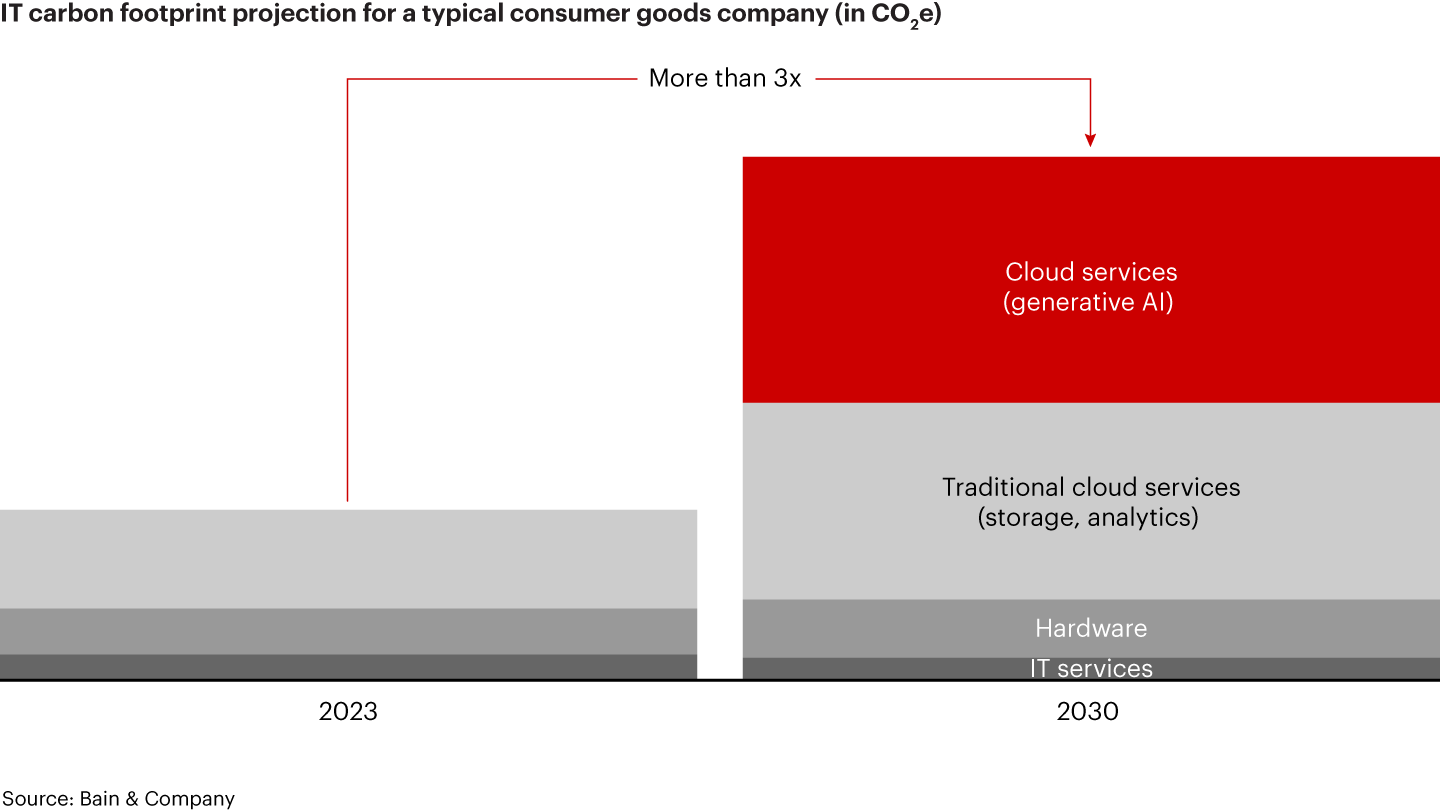
      The carbon emissions of IT departments are climbing, driven by generative AI

      A number of factors are pushing up AI’s energy use and carbon emissions. The first is an explosion of users and applications. Bain’s 2024 cross-industry AI survey shows that almost 90% of large companies in the US are using generative AI in some capacity. And corporate users are tapping increasingly large, sophisticated, and power-hungry models. The total number of parameters grew from 1.5 billion for GPT-2 in 2019 to 1.7 trillion for GPT-4 in 2023. Users are also engaged in more energy-intensive activities. Video generation, for example, requires up to 300 times more power than image generation. Projected gains in the energy efficiency of processes and chips are unlikely to offset this surging demand.

      A significant portion of tech-related emissions sits outside the IT department’s control. As a result, companies will have to take a broad and systemic view when mapping future emissions from technology. For B2C companies, this should include a calculation of emissions from consumer use of AI-enabled apps. With a large user base and a bias toward image and video generation, many of these apps are more power-intensive than most organizations realize. As AI-enabled initiatives expand in teams like purchasing, marketing, and finance, CTOs and CSOs will have to work across functions to get the information needed to build a holistic picture. This review should include work with third-party suppliers—for example, when marketing departments work with outside agencies on AI use cases.

      2. Win the race to decarbonize your cloud. Bain analysis shows that up to 70% of a typical company’s IT Scope 3 decarbonization goals will depend on the decarbonization of its IT suppliers. The fastest way to decarbonize IT is therefore to engage suppliers and support their decarbonization journeys. Cloud providers are scrambling to meet the burgeoning demand for sustainably powered data services and to capture the opportunities this presents. While progress is advancing on many fronts, the supply of green energy will be quite constrained in the medium term, creating significant headwinds for the net-zero ambitions of both the tech sector and its customers. Indeed, many experts expect total demand for electricity to increase beyond total supply in the next few years (see Figure 2).

      Figure 2
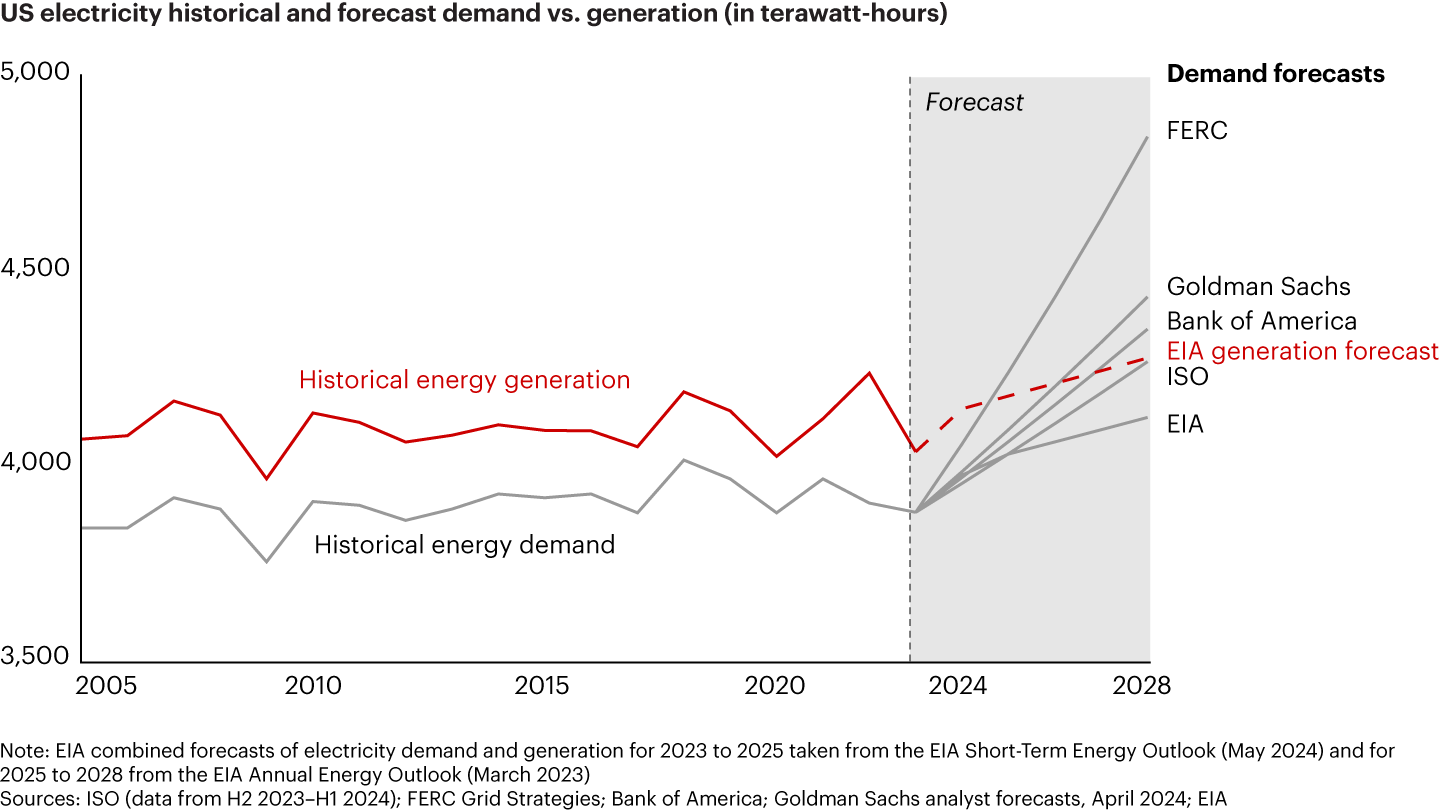
      If electricity generation growth remains as forecast, demand is likely to exceed supply in the near term

      Companies should act now to ensure they are first in line for green power. This starts with understanding the power usage efficiency of data center providers and alternative suppliers. There is a high level of variation across companies and among the sites of any single provider. New tools to track the energy efficiency of cloud service providers are becoming available, and suppliers are offering dashboards to help monitor and test consumption. Supplier selection and management processes will need to be bolstered, and purchasing teams will have to be trained to embed sustainability criteria in their process.

      3. Don’t hit the brakes on AI, but integrate sustainable behavior from the start. Could the combination of tremendous growth in AI demand, limited availability of green energy, and sustained stakeholder pressure to decarbonize eventually result in constraints on AI usage, or even rationing? While this sounds extreme, it’s urgent that forward-looking CEOs, CTOs, and CSOs push their organizations to use AI in the most effective and efficient ways.

      Two areas warrant immediate focus. The first is upskilling and creating awareness within the organization of eco-design and eco-utilization of generative AI. This includes selecting appropriately sized models for the task at hand. There can be more than 100 times difference in power use between the smallest and the largest model when applied to the same task. Also, not everyone needs AI’s most powerful tools. Bain estimates, for example, that 90% or more of a typical consumer goods company’s employees do not require access to energy-consuming video generation tools.

      There are other technical actions to take as well. Companies can leverage prompt engineering, such as the selection of predefined prompts for all users and semantic “caching” of existing responses based on identical or similar user requests, to reduce the number of requests per user. Fine-tuning a model rather than using a multipurpose one can reduce emissions by up to 70%, and deploying quantization in open-weight models to reduce model size and speed up processing can reduce emissions by up to 50% without a significant impact on output quality. 

      * * *

      Merging AI and sustainability presents tremendous opportunities for business. Companies should strategically embed AI within sustainability initiatives to fuel innovation, efficiency, and resilience. However, the surge in AI’s energy demand calls for a smart, sustainable approach. By embedding sustainability from the start, businesses can meet carbon targets and lead the charge toward a greener, tech-driven future. The challenge is clear: Innovate fast, but do it sustainably.

      Read the Next Section

      Olam Food Ingredients: Pioneering a New Financial Model for Sustainability

      Read our 2024 CEO Sustainability Guide

      EXPORE THE REPORT DOWNLOAD THE PDF

      More from the report

      • Four Questions for Every CEO

      • What Consumers Want

      • Selling Sustainability in B2B

      • Accelerating Decarbonization

      • AI and Sustainability

      • Voice of the CFO

      • Energy

      • Circularity

      • Food

      저자
      • Headshot of Jean-Charles van den Branden
        Jean-Charles van den Branden
        파트너, Brussels
      • Headshot of Caroline Jean
        Caroline Jean
        파트너, Paris
      • Headshot of Martha Moreau
        Martha Moreau
        Practice Executive Vice President, Paris
      문의하기
      관련 산업
      • 기술
      • 소비재
      • 유통
      관련 컨설팅 서비스
      • 변화 혁신 전략
      • 어드밴스드 애널리틱스
      • 지속 가능성 및 기업의 사회적 책임
      • Digital
      최적의 솔루션 찾기
      • Artificial Intelligence
      • Circular Economy
      • Climate Change
      Artificial Intelligence Insights
      Factory of the Future: How Industry 4.0 and AI Can Transform Manufacturing

      New digital technologies can upgrade lean manufacturing, boosting performance and accelerating sustainability.

      자세히 보기
      Artificial Intelligence Insights
      The 2026 Retail Executive Agenda

      Here are letters to the C-suite to help strengthen strategy, catalyze collaboration, and expand value creation in the AI age.

      자세히 보기
      소비재
      Embracing the “Do-Say” Gap

      Three pragmatic questions that shift sustainability from ambition to action.

      자세히 보기
      Climate Change
      COP30: What Businesses Need to Do Now

      At this year’s COP30 in Brazil, the message for businesses was clear: Climate strategy can’t just be commitments—it must be about execution.

      자세히 보기
      Artificial Intelligence Insights
      Taking a Globally Orchestrated Approach to Digital Disruption

      New technologies such as generative AI, quantum computing, and climate technology require unique but complementary managerial muscles.

      자세히 보기
      First published in 9월 2024
      태그
      • 기술
      • 변화 혁신 전략
      • 소비재
      • 어드밴스드 애널리틱스
      • 유통
      • 지속 가능성 및 기업의 사회적 책임
      • Artificial Intelligence
      • Artificial Intelligence Insights
      • CEO's Guide to Sustainability
      • CIO Insights
      • Circular Economy
      • Climate Change
      • Digital

      프로젝트 사례

      A Beauty Company Enables Always-On Brand Acceleration

      See more related case studies

      지속 가능성 및 기업의 사회적 책임 A Manufacturer Vows to “Push to Zero” Carbon Emissions

      See more related case studies

      전략 Focus on core delivers growth for retailer

      See more related case studies

      베인에 궁금하신 점이 있으신가요?

      베인은 주저 없이 변화를 마주할 줄 아는 용감한 리더들과 함께합니다. 그리고, 이들의 담대한 용기는 고객사의 성공으로 이어집니다.

      급변하는 비즈니스 환경에서 살아남기 위한 선도자의 시각. 월간 Bain Insights에서 글로벌 비즈니스의 핵심 이슈를 확인하십시오.

      *개인정보 정책을 읽었으며 그 내용에 동의합니다.

      Privacy Policy를 읽고 동의해주십시오.
      Bain & Company
      문의하기 환경정책 Accessibility 이용약관 개인정보 보호 쿠키 사용 정책 Sitemap Log In

      © 1996-2026 Bain & Company, Inc.

      문의하기

      무엇을 도와드릴까요?

      • 프로젝트 문의
      • 채용 정보
      • 언론
      • 제휴 문의
      • 연사 초청
      오피스 전체보기