
Skip to Content
  • 오피스

    오피스

    미주
    • Atlanta
    • Austin
    • Bogota
    • Boston
    • Buenos Aires
    • Chicago
    • Dallas
    • Denver
    • Houston
    • Los Angeles
    • Mexico City
    • Minneapolis
    • Monterrey
    • Montreal
    • New York
    • Rio de Janeiro
    • San Francisco
    • Santiago
    • São Paulo
    • Seattle
    • Silicon Valley
    • Toronto
    • Washington, DC
    유럽, 중동, 아프리카
    • Amsterdam
    • Athens
    • Berlin
    • Brussels
    • Copenhagen
    • Doha
    • Dubai
    • Dusseldorf
    • Frankfurt
    • Helsinki
    • Istanbul
    • Johannesburg
    • Kyiv
    • Lisbon
    • London
    • Madrid
    • Milan
    • Munich
    • Oslo
    • Paris
    • Riyadh
    • Rome
    • Stockholm
    • Vienna
    • Warsaw
    • Zurich
    아시아, 호주
    • Bangkok
    • Beijing
    • Bengaluru
    • Brisbane
    • Ho Chi Minh City
    • Hong Kong
    • Jakarta
    • Kuala Lumpur
    • Manila
    • Melbourne
    • Mumbai
    • New Delhi
    • Perth
    • Seoul
    • Shanghai
    • Singapore
    • Sydney
    • Tokyo
    오피스 전체보기
  • 얼럼나이
  • 미디어 센터
  • 구독
  • 연락처
  • Korea | 한국어

    지역 및 언어 선택

    글로벌
    • Global (English)
    미주
    • Brazil (Português)
    • Argentina (Español)
    • Canada (Français)
    • Chile (Español)
    • Colombia (Español)
    유럽, 중동, 아프리카
    • France (Français)
    • DACH Region (Deutsch)
    • Italy (Italiano)
    • Spain (Español)
    • Greece (Elliniká)
    아시아, 호주
    • China (中文版)
    • Korea (한국어)
    • Japan (日本語)
  • Saved items (0)
    Saved items (0)

    You have no saved items.

    관심 있는 내용을 북마크하여 Red 폴더에 저장할 수 있습니다. Red 폴더 에서 저장된 내용을 읽거나 공유해보세요.

    Explore Bain Insights
  • 산업
    메인 메뉴

    산업

    • 우주항공, 방산 및 정부 서비스
    • 농업 관련 산업
    • 화학
    • 인프라, 건설 및 건축 자재
    • 소비재
    • 금융 서비스
    • 헬스케어
    • 산업용 기계 및 장비
    • 미디어 및 엔터테인먼트
    • 금속
    • 광업
    • 석유 및 가스
    • 제지 및 패키징 산업
    • 사모펀드
    • 사회 및 공공 부문
    • 유통
    • 기술
    • 텔레콤
    • 운송
    • 여행·여가
    • 유틸리티 및 재생가능 에너지
  • 컨설팅 서비스
    메인 메뉴

    컨설팅 서비스

    • Customer Experience
    • ESG
    • Innovation
    • M&A
    • 운영
    • 조직
    • 사모펀드
    • 고객 전략 및 마케팅
    • 전략
    • AI, 인사이트 및 솔루션
    • Technology
    • 변화 혁신
  • Digital
  • 인사이트
  • 베인 소개
    메인 메뉴

    베인 소개

    • 업무 소개
    • 베인의 신념
    • 구성원 및 리더십 소개
    • 고객 성과
    • 주요 수상 경력
    • 글로벌 파트너사
    Further: Our global responsibility
    • 다양성과 포용
    • 사회 공헌 활동
    • Sustainability
    • World Economic Forum
    Learn more about Further
  • Careers
    메인 메뉴

    Careers

    • Work with Us
      Careers
      Work with Us
      • Find Your Place
      • Our Work Areas
      • Integrated Teams
      • Students
      • Internships & Programs
      • Recruiting Events
    • Life at Bain
      Careers
      Life at Bain
      • Blog: Inside Bain
      • Career Stories
      • Our People
      • Where We Work
      • Supporting Your Growth
      • Affinity Groups
      • Benefits
    • Impact Stories
    • Hiring Process
      Careers
      Hiring Process
      • What to Expect
      • Interviewing
    FIND JOBS
  • 오피스
    메인 메뉴

    오피스

    • 미주
      오피스
      미주
      • Atlanta
      • Austin
      • Bogota
      • Boston
      • Buenos Aires
      • Chicago
      • Dallas
      • Denver
      • Houston
      • Los Angeles
      • Mexico City
      • Minneapolis
      • Monterrey
      • Montreal
      • New York
      • Rio de Janeiro
      • San Francisco
      • Santiago
      • São Paulo
      • Seattle
      • Silicon Valley
      • Toronto
      • Washington, DC
    • 유럽, 중동, 아프리카
      오피스
      유럽, 중동, 아프리카
      • Amsterdam
      • Athens
      • Berlin
      • Brussels
      • Copenhagen
      • Doha
      • Dubai
      • Dusseldorf
      • Frankfurt
      • Helsinki
      • Istanbul
      • Johannesburg
      • Kyiv
      • Lisbon
      • London
      • Madrid
      • Milan
      • Munich
      • Oslo
      • Paris
      • Riyadh
      • Rome
      • Stockholm
      • Vienna
      • Warsaw
      • Zurich
    • 아시아, 호주
      오피스
      아시아, 호주
      • Bangkok
      • Beijing
      • Bengaluru
      • Brisbane
      • Ho Chi Minh City
      • Hong Kong
      • Jakarta
      • Kuala Lumpur
      • Manila
      • Melbourne
      • Mumbai
      • New Delhi
      • Perth
      • Seoul
      • Shanghai
      • Singapore
      • Sydney
      • Tokyo
    오피스 전체보기
  • 얼럼나이
  • 미디어 센터
  • 구독
  • 연락처
  • Korea | 한국어
    메인 메뉴

    지역 및 언어 선택

    • 글로벌
      지역 및 언어 선택
      글로벌
      • Global (English)
    • 미주
      지역 및 언어 선택
      미주
      • Brazil (Português)
      • Argentina (Español)
      • Canada (Français)
      • Chile (Español)
      • Colombia (Español)
    • 유럽, 중동, 아프리카
      지역 및 언어 선택
      유럽, 중동, 아프리카
      • France (Français)
      • DACH Region (Deutsch)
      • Italy (Italiano)
      • Spain (Español)
      • Greece (Elliniká)
    • 아시아, 호주
      지역 및 언어 선택
      아시아, 호주
      • China (中文版)
      • Korea (한국어)
      • Japan (日本語)
  • Saved items  (0)
    메인 메뉴
    Saved items (0)

    You have no saved items.

    관심 있는 내용을 북마크하여 Red 폴더에 저장할 수 있습니다. Red 폴더 에서 저장된 내용을 읽거나 공유해보세요.

    Explore Bain Insights
  • 산업
    • 산업

      • 우주항공, 방산 및 정부 서비스
      • 농업 관련 산업
      • 화학
      • 인프라, 건설 및 건축 자재
      • 소비재
      • 금융 서비스
      • 헬스케어
      • 산업용 기계 및 장비
      • 미디어 및 엔터테인먼트
      • 금속
      • 광업
      • 석유 및 가스
      • 제지 및 패키징 산업
      • 사모펀드
      • 사회 및 공공 부문
      • 유통
      • 기술
      • 텔레콤
      • 운송
      • 여행·여가
      • 유틸리티 및 재생가능 에너지
  • 컨설팅 서비스
    • 컨설팅 서비스

      • Customer Experience
      • ESG
      • Innovation
      • M&A
      • 운영
      • 조직
      • 사모펀드
      • 고객 전략 및 마케팅
      • 전략
      • AI, 인사이트 및 솔루션
      • Technology
      • 변화 혁신
  • Digital
  • 인사이트
  • 베인 소개
    • 베인 소개

      • 업무 소개
      • 베인의 신념
      • 구성원 및 리더십 소개
      • 고객 성과
      • 주요 수상 경력
      • 글로벌 파트너사
      Further: Our global responsibility
      • 다양성과 포용
      • 사회 공헌 활동
      • Sustainability
      • World Economic Forum
      Learn more about Further
  • Careers
    최근 검색어
      최근 방문 페이지

      Content added to saved items

      Saved items (0)

      Removed from saved items

      Saved items (0)

      Brief

      Technology, Strategy and People: Becoming a Digital Oil and Gas Company

      Technology, Strategy and People: Becoming a Digital Oil and Gas Company

      Digital initiatives must deliver short-term results, but they should also align with a longer-term strategic plan.

      글 Lodewijk de Graauw and Dmitry Naberezhnev

      • 읽기 소요시간
      }

      Brief

      Technology, Strategy and People: Becoming a Digital Oil and Gas Company
      en

      Although most oil and gas companies are closely focused on preserving margins to weather the low-price storm, many are also looking ahead and thinking about how digital technologies and data analytics will transform their industry.

      Of course, analytics are not new to oil and gas. Unlike other industries that are enjoying a sudden embrace of analytic benefits, energy companies have long depended on rich pools of data to discover and better understand the potential in their reservoirs and other production opportunities. Even so, most have yet to capture the full potential of their data because they haven’t been able to generate actionable insights or make better and faster decisions based on data.

      That will change as oil and gas companies upgrade their digital capabilities and improve the way they connect these insights to their operating model. We expect to see dramatic cost savings and significant improvements in productivity and revenue. Cisco estimates companies could see 11% earnings growth across the value chain, with most of the cost savings upstream. One integrated oil company managed to save about 10% on unit costs by digitizing a remote offshore operations center. Another reduced operating costs per barrel by about 10% and improved recoverability of reserves by applying selective applications in intelligent oilfields through collective computing and sharing real-time information at all company levels.

      Even so, few have undertaken a structured and holistic approach to identifying which digital technologies can help create long-term sustainable advantage. Most of today’s digital initiatives don’t seek to disrupt operating or business models. Instead, companies are making improvements in technical or operational capabilities. These include predictive maintenance, completed analysis on wells and using geological data from similar oilfields to build geophysical models and choose drilling patterns.

      One reason for this incremental approach is that there is already a large, untapped potential in existing data, which companies can use to generate new insights with advanced analysis techniques. Another is that most companies aren’t ready for a big transformation because they lack the people, processes and capital required to make it happen.

      Challenges to going digital


      Given the challenging economics of the day, oil and gas companies need to put their investments in analytics where they will deliver the most bang for the buck (see Figure 1). 
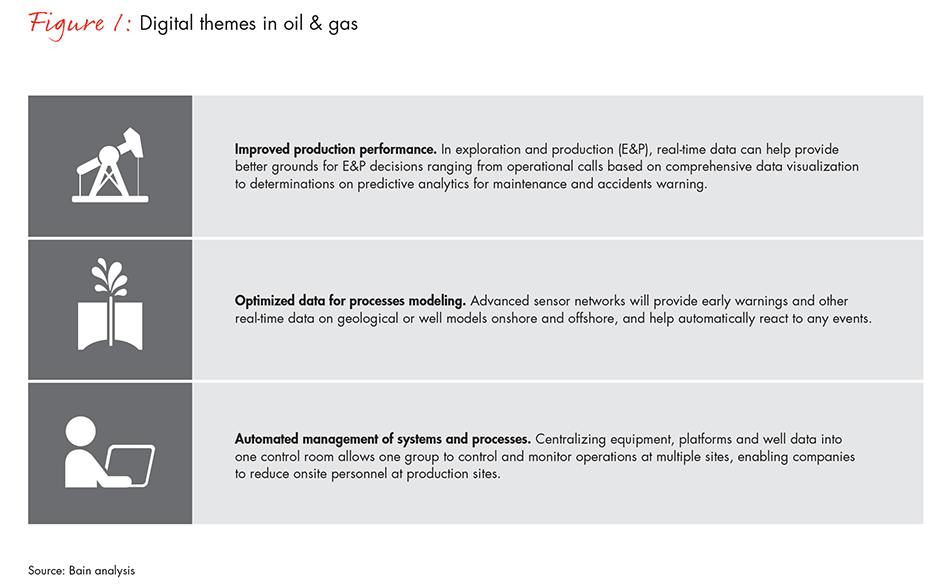

      becoming-a-digital-oil-and-gas-company-fig1_embed

      However, in our work, we frequently see companies facing three common challenges that are sure to limit their digital potential over the long term.

      • They haven’t developed a multiyear digital strategy. Many companies have ventured into digital investments without a clear understanding of where and when the transformation will bring the most benefit. Without a clear strategic, multiyear path, the risk is very high that companies could invest billions of dollars but only capture a fraction of the benefits. For example, offshore drilling and production can benefit from advanced analytics of reservoir and equipment data, if companies analyze the data to optimize equipment maintenance and minimize operations disruptions. According to Cisco data, a single offshore platform can generate 1–2 terabytes of data per day, but current satellite network bandwidth is extremely limited due to transfer speeds around 2 Mbps, making it impossible for subsurface and operations teams on the mainland to keep up with the available information in real time. In cases like this, the lack of an integrated digital strategy that could have placed analytics resources closer to the data results in missed opportunities to act on information in near real time.
      • They haven’t updated their operating model. Too often, companies fail to connect the information flows in ways that will actually improve how the organization operates. But if information doesn’t follow structure, it gets lost. For example, a company might invest in visualizing a scheduling system with sophisticated routing capabilities, but then fail to connect it to the line management’s scheduling decisions. Without those connections, data winds up as stranded information rather than becoming actionable insights.
      • They haven’t invested in their people. People are the most important component of a winning digital strategy, yet failing to upgrade their capabilities is the most common pitfall in unsuccessful transformations. Executives should assess their team’s current capabilities and develop a plan to manage change and improve technical expertise. This will involve a combination of recruiting fresh talent (including data scientists and other digitally savvy professionals) and teaching new skills to the operational staff. No one should assume that the front line will automatically embrace new processes and digital technologies. Change-management programs are needed to help them through the dramatic changes under way—for example, learning how and why to use an augmented-reality interface rather than turning to their familiar, dog-eared manual, or exchanging data and communicating in real time with technical experts to evaluate corrosion issues on a pipeline.

      Tapping the full potential


      Greater changes will come over time, but today most companies are still preparing the groundwork for the larger and more disruptive transformations that will come as oil and gas companies implement a broader range of digital technologies. As they put in place specific digital capabilities that can deliver fast results at reasonable costs, executives need to develop a strategic roadmap encompassing the digital strategy, operating model changes and, most importantly, people capabilities.

      Approaches differ, of course, from one company to the next, depending on appetite for risk, potential gains from digital and readiness for the transformation. But they typically include five key elements:

      • Identify the areas of the value chain with the highest impact on financial and operating results and cross them with the opportunities to enhance delivery through digital technologies (see Figure 2).
      • Monitor key industry and technology trends, focusing on the identified value chain areas that are specific to the operations. Decide whether to lead the industry by innovating or by acting as a fast follower by implementing tested technologies and processes.
      • Clearly define the links between the company’s most critical decisions and digital applications, including showing how digital applications will improve decision-making effectiveness. In addition, adjust the operating model to facilitate the sharing of key information, leveraging all available data sources.
      • Evaluate the investment necessary to digitize the key activities of the company’s value chain, and develop a multiyear budget and an overall roadmap balancing the capture of economic benefits with the financial burden on the cash flow.
      • Assess current personnel capabilities and develop a plan to address the gap. The talent upgrade plan should deal with deficits in technical expertise and include a comprehensive set of actions to instruct those at the front line on how to change their way of working.
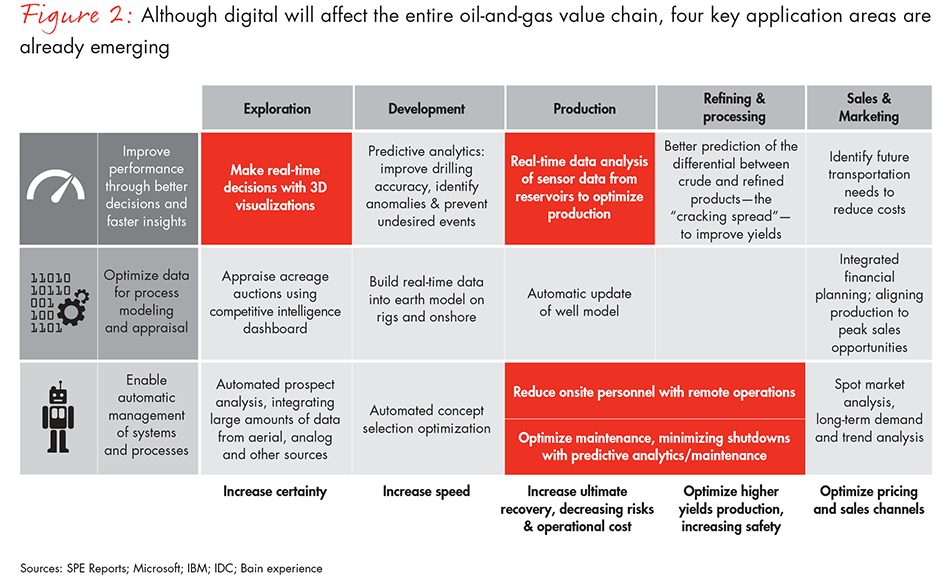
      becoming-a-digital-oil-and-gas-company-fig2_embed

      Every oil and gas company’s digital journey will differ, depending on their industry position, ambitions and opportunities. Digital leadership is not always the best strategy, and it can be expensive. However, at a time when low oil and gas prices are restricting investment capacity, this is one area of the business where cost has been decreasing and tools rapidly improving—so it should merit an increasing share of budget and focus. But whether a leader or fast follower, every oil and gas company will need to develop a strategic plan for how it will use digital technology to gain a competitive advantage over the next three to five years. All of these plans should include initiatives that offer short-term gains and build capabilities to develop long-term competitive advantage. Perhaps most importantly, they should all include details on how the flow of information necessitates changes to the operating model, and how each company plans to upgrade its talent and capabilities to make the most of its potential.

      Lodewijk de Graauw is a partner in Bain’s Perth office and Dmitry Naberezhnev is a Bain partner in Moscow. All three work with Bain’s Global Oil & Gas practice.


      becoming-a-digital-oil-and-gas-company-fig1_full

      becoming-a-digital-oil-and-gas-company-fig2_full
      저자
      • Headshot of Dmitry Naberezhnev
        Dmitry Naberezhnev
        Alumni, Middle East
      문의하기
      관련 산업
      • 석유 및 가스
      • 에너지와 천연자원
      관련 컨설팅 서비스
      • Digital
      석유 및 가스
      Big Data Analytics in Oil and Gas

      Converting the promise into value.

      자세히 보기
      석유 및 가스
      Energy Executive Agenda 2025: New Challenges, New Innovations

      Our latest survey finds executives facing rising costs, surging demand, and a long to-do list.

      자세히 보기
      석유 및 가스
      Oil & Gas M&A

      Why some companies are winning by a wider margin.

      자세히 보기
      Digital
      Retailers Have a Secret Weapon in AI-Powered Shopping: Trust

      US consumers would be more comfortable with AI buying on their behalf if a familiar retailer were involved.

      자세히 보기
      석유 및 가스
      Fueling the Future: How Business, Finance, and Policy Can Accelerate the Clean Fuels Market

      Why global clean fuel ambitions are outpacing investment, and what leaders must do to unlock capital and scale viable projects.

      자세히 보기
      First published in 5월 2016
      태그
      • 석유 및 가스
      • 에너지와 천연자원
      • Digital

      프로젝트 사례

      조직 Moving Beyond an Operating Model Redesign to Live the Model

      See more related case studies

      지속 가능성 및 기업의 사회적 책임 An Oil and Gas Leader Creates a New Clean Energy Business

      See more related case studies

      M&A An OFS captures post-merger growth synergies

      See more related case studies

      베인에 궁금하신 점이 있으신가요?

      베인은 주저 없이 변화를 마주할 줄 아는 용감한 리더들과 함께합니다. 그리고, 이들의 담대한 용기는 고객사의 성공으로 이어집니다.

      급변하는 비즈니스 환경에서 살아남기 위한 선도자의 시각. 월간 Bain Insights에서 글로벌 비즈니스의 핵심 이슈를 확인하십시오.

      *개인정보 정책을 읽었으며 그 내용에 동의합니다.

      Privacy Policy를 읽고 동의해주십시오.
      Bain & Company
      문의하기 환경정책 Accessibility 이용약관 개인정보 보호 쿠키 사용 정책 Sitemap Log In

      © 1996-2026 Bain & Company, Inc.

      문의하기

      무엇을 도와드릴까요?

      • 프로젝트 문의
      • 채용 정보
      • 언론
      • 제휴 문의
      • 연사 초청
      오피스 전체보기