Skip to Content
  • 오피스

    오피스

    미주
    • Atlanta
    • Austin
    • Bogota
    • Boston
    • Buenos Aires
    • Chicago
    • Dallas
    • Denver
    • Houston
    • Los Angeles
    • Mexico City
    • Minneapolis
    • Monterrey
    • Montreal
    • New York
    • Rio de Janeiro
    • San Francisco
    • Santiago
    • São Paulo
    • Seattle
    • Silicon Valley
    • Toronto
    • Washington, DC
    유럽, 중동, 아프리카
    • Amsterdam
    • Athens
    • Berlin
    • Brussels
    • Copenhagen
    • Doha
    • Dubai
    • Dusseldorf
    • Frankfurt
    • Helsinki
    • Istanbul
    • Johannesburg
    • Kyiv
    • Lisbon
    • London
    • Madrid
    • Milan
    • Munich
    • Oslo
    • Paris
    • Riyadh
    • Rome
    • Stockholm
    • Vienna
    • Warsaw
    • Zurich
    아시아, 호주
    • Bangkok
    • Beijing
    • Bengaluru
    • Brisbane
    • Ho Chi Minh City
    • Hong Kong
    • Jakarta
    • Kuala Lumpur
    • Manila
    • Melbourne
    • Mumbai
    • New Delhi
    • Perth
    • Seoul
    • Shanghai
    • Singapore
    • Sydney
    • Tokyo
    오피스 전체보기
  • 얼럼나이
  • 미디어 센터
  • 구독
  • 연락처
  • Korea | 한국어

    지역 및 언어 선택

    글로벌
    • Global (English)
    미주
    • Brazil (Português)
    • Argentina (Español)
    • Canada (Français)
    • Chile (Español)
    • Colombia (Español)
    유럽, 중동, 아프리카
    • France (Français)
    • DACH Region (Deutsch)
    • Italy (Italiano)
    • Spain (Español)
    • Greece (Elliniká)
    아시아, 호주
    • China (中文版)
    • Korea (한국어)
    • Japan (日本語)
  • Saved items (0)
    Saved items (0)

    You have no saved items.

    관심 있는 내용을 북마크하여 Red 폴더에 저장할 수 있습니다. Red 폴더 에서 저장된 내용을 읽거나 공유해보세요.

    Explore Bain Insights
  • 산업
    메인 메뉴

    산업

    • 우주항공, 방산 및 정부 서비스
    • 농업 관련 산업
    • 화학
    • 인프라, 건설 및 건축 자재
    • 소비재
    • 금융 서비스
    • 헬스케어
    • 산업용 기계 및 장비
    • 미디어 및 엔터테인먼트
    • 금속
    • 광업
    • 석유 및 가스
    • 제지 및 패키징 산업
    • 사모펀드
    • 사회 및 공공 부문
    • 유통
    • 기술
    • 텔레콤
    • 운송
    • 여행·여가
    • 유틸리티 및 재생가능 에너지
  • 컨설팅 서비스
    메인 메뉴

    컨설팅 서비스

    • Customer Experience
    • ESG
    • Innovation
    • M&A
    • 운영
    • 조직
    • 사모펀드
    • 고객 전략 및 마케팅
    • 전략
    • AI, 인사이트 및 솔루션
    • Technology
    • 변화 혁신
  • Digital
  • 인사이트
  • 베인 소개
    메인 메뉴

    베인 소개

    • 업무 소개
    • 베인의 신념
    • 구성원 및 리더십 소개
    • 고객 성과
    • 주요 수상 경력
    • 글로벌 파트너사
    Further: Our global responsibility
    • 다양성과 포용
    • 사회 공헌 활동
    • Sustainability
    • World Economic Forum
    Learn more about Further
  • Careers
    메인 메뉴

    Careers

    • Work with Us
      Careers
      Work with Us
      • Find Your Place
      • Our Work Areas
      • Integrated Teams
      • Students
      • Internships & Programs
      • Recruiting Events
    • Life at Bain
      Careers
      Life at Bain
      • Blog: Inside Bain
      • Career Stories
      • Our People
      • Where We Work
      • Supporting Your Growth
      • Affinity Groups
      • Benefits
    • Impact Stories
    • Hiring Process
      Careers
      Hiring Process
      • What to Expect
      • Interviewing
    FIND JOBS
  • 오피스
    메인 메뉴

    오피스

    • 미주
      오피스
      미주
      • Atlanta
      • Austin
      • Bogota
      • Boston
      • Buenos Aires
      • Chicago
      • Dallas
      • Denver
      • Houston
      • Los Angeles
      • Mexico City
      • Minneapolis
      • Monterrey
      • Montreal
      • New York
      • Rio de Janeiro
      • San Francisco
      • Santiago
      • São Paulo
      • Seattle
      • Silicon Valley
      • Toronto
      • Washington, DC
    • 유럽, 중동, 아프리카
      오피스
      유럽, 중동, 아프리카
      • Amsterdam
      • Athens
      • Berlin
      • Brussels
      • Copenhagen
      • Doha
      • Dubai
      • Dusseldorf
      • Frankfurt
      • Helsinki
      • Istanbul
      • Johannesburg
      • Kyiv
      • Lisbon
      • London
      • Madrid
      • Milan
      • Munich
      • Oslo
      • Paris
      • Riyadh
      • Rome
      • Stockholm
      • Vienna
      • Warsaw
      • Zurich
    • 아시아, 호주
      오피스
      아시아, 호주
      • Bangkok
      • Beijing
      • Bengaluru
      • Brisbane
      • Ho Chi Minh City
      • Hong Kong
      • Jakarta
      • Kuala Lumpur
      • Manila
      • Melbourne
      • Mumbai
      • New Delhi
      • Perth
      • Seoul
      • Shanghai
      • Singapore
      • Sydney
      • Tokyo
    오피스 전체보기
  • 얼럼나이
  • 미디어 센터
  • 구독
  • 연락처
  • Korea | 한국어
    메인 메뉴

    지역 및 언어 선택

    • 글로벌
      지역 및 언어 선택
      글로벌
      • Global (English)
    • 미주
      지역 및 언어 선택
      미주
      • Brazil (Português)
      • Argentina (Español)
      • Canada (Français)
      • Chile (Español)
      • Colombia (Español)
    • 유럽, 중동, 아프리카
      지역 및 언어 선택
      유럽, 중동, 아프리카
      • France (Français)
      • DACH Region (Deutsch)
      • Italy (Italiano)
      • Spain (Español)
      • Greece (Elliniká)
    • 아시아, 호주
      지역 및 언어 선택
      아시아, 호주
      • China (中文版)
      • Korea (한국어)
      • Japan (日本語)
  • Saved items  (0)
    메인 메뉴
    Saved items (0)

    You have no saved items.

    관심 있는 내용을 북마크하여 Red 폴더에 저장할 수 있습니다. Red 폴더 에서 저장된 내용을 읽거나 공유해보세요.

    Explore Bain Insights
  • 산업
    • 산업

      • 우주항공, 방산 및 정부 서비스
      • 농업 관련 산업
      • 화학
      • 인프라, 건설 및 건축 자재
      • 소비재
      • 금융 서비스
      • 헬스케어
      • 산업용 기계 및 장비
      • 미디어 및 엔터테인먼트
      • 금속
      • 광업
      • 석유 및 가스
      • 제지 및 패키징 산업
      • 사모펀드
      • 사회 및 공공 부문
      • 유통
      • 기술
      • 텔레콤
      • 운송
      • 여행·여가
      • 유틸리티 및 재생가능 에너지
  • 컨설팅 서비스
    • 컨설팅 서비스

      • Customer Experience
      • ESG
      • Innovation
      • M&A
      • 운영
      • 조직
      • 사모펀드
      • 고객 전략 및 마케팅
      • 전략
      • AI, 인사이트 및 솔루션
      • Technology
      • 변화 혁신
  • Digital
  • 인사이트
  • 베인 소개
    • 베인 소개

      • 업무 소개
      • 베인의 신념
      • 구성원 및 리더십 소개
      • 고객 성과
      • 주요 수상 경력
      • 글로벌 파트너사
      Further: Our global responsibility
      • 다양성과 포용
      • 사회 공헌 활동
      • Sustainability
      • World Economic Forum
      Learn more about Further
  • Careers
    최근 검색어
      최근 방문 페이지

      Content added to saved items

      Saved items (0)

      Removed from saved items

      Saved items (0)

      Report

      Regulate with Care: The Case for Big Tech M&A

      Regulate with Care: The Case for Big Tech M&A

      Most M&A spending by large tech firms benefits consumers and doesn't hamper competition.

      글 David Crawford and Michael Schallehn

      • 읽기 소요시간
      }

      Report

      Regulate with Care: The Case for Big Tech M&A
      en

      This article is part of Bain's 2021 Technology Report.

      Explore the report

      Regulatory scrutiny of “big tech” companies is growing worldwide. Platform business models have helped make the most prominent tech firms—the hyperscaler cloud tools and service providers—strong leaders in their respective markets and among the most valuable companies in the world.

      Given the size, complexity, and profitability of these businesses, scrutiny of their behavior is understandable. That said, when it comes to mergers and acquisitions, much of the recent attention has focused more on the fear of potential abuse of market power rather than a fact-based review of M&A track records. 

      When the facts are reviewed, most big tech M&A spending actually benefits consumers and doesn’t hamper competition. That’s according to Bain’s analysis of all $300 million-plus acquisitions, totaling more than $150 billion, from 2005 to 2020 by the five US hyperscalers: Alphabet, Amazon, Apple, Facebook, and Microsoft (see Figure 1). We recognize, of course, that’s a provocative conclusion in the current climate. Here’s how we reached it. We conducted a series of double-blinded case studies based on data analysis, which assessed the effect of each acquisition on end consumers (did it drive down prices, increase access to innovative products or services, or improve the products or services themselves?); and market dynamics (did the level of competition increase, did the deal put pressure on incumbents to innovate, or did it result in more external investment?). (Scroll to the bottom of the article for details about the methodology.)

      Figure 1
      To date, most US hyperscaler M&A spending has benefited consumers or enriched market dynamics

      Excluding deals from the past 18 months and the LinkedIn acquisition, which our analysis determined had a neutral effect on consumers and competition, we found that 72% of US hyperscaler M&A spending since 2005 created value for consumers. Competitive intensity and investment pace also increased after the majority of those deals. The share of hyperscaler M&A spending that benefited consumers rises to 89% when the Google and Microsoft acquisitions of Motorola’s and Nokia’s handset businesses, which were falling behind competitors and arguably no longer viable on their own, are removed from the mix.

      The clear takeaway is that, while there are valid reasons to monitor technology M&A, policymakers should proceed with care to avoid stifling the innovation and consumer benefits these deals consistently bring.

      Consumers enjoy the ride

      Most big tech acquisitions end up benefiting consumers in at least one of three ways, according to our research.

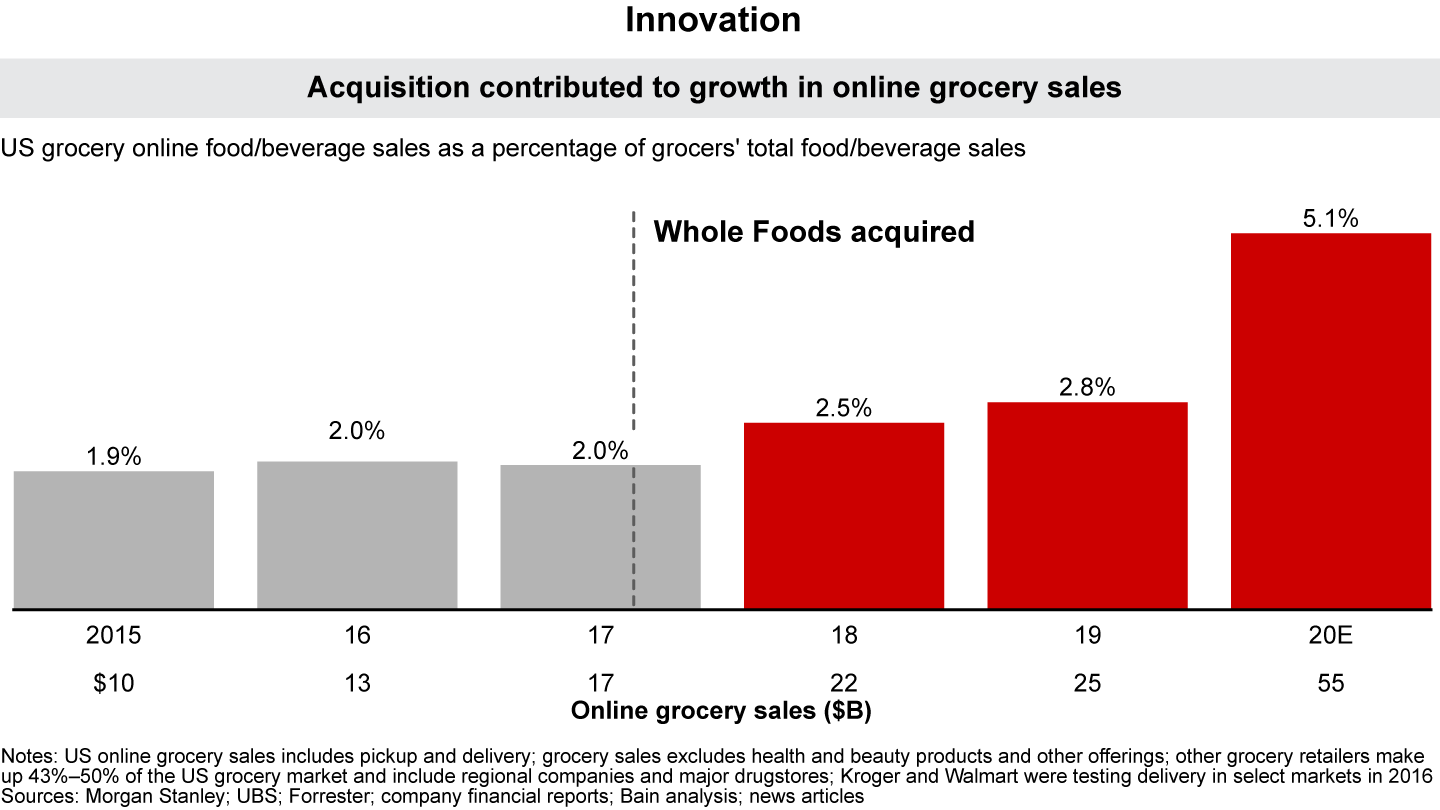
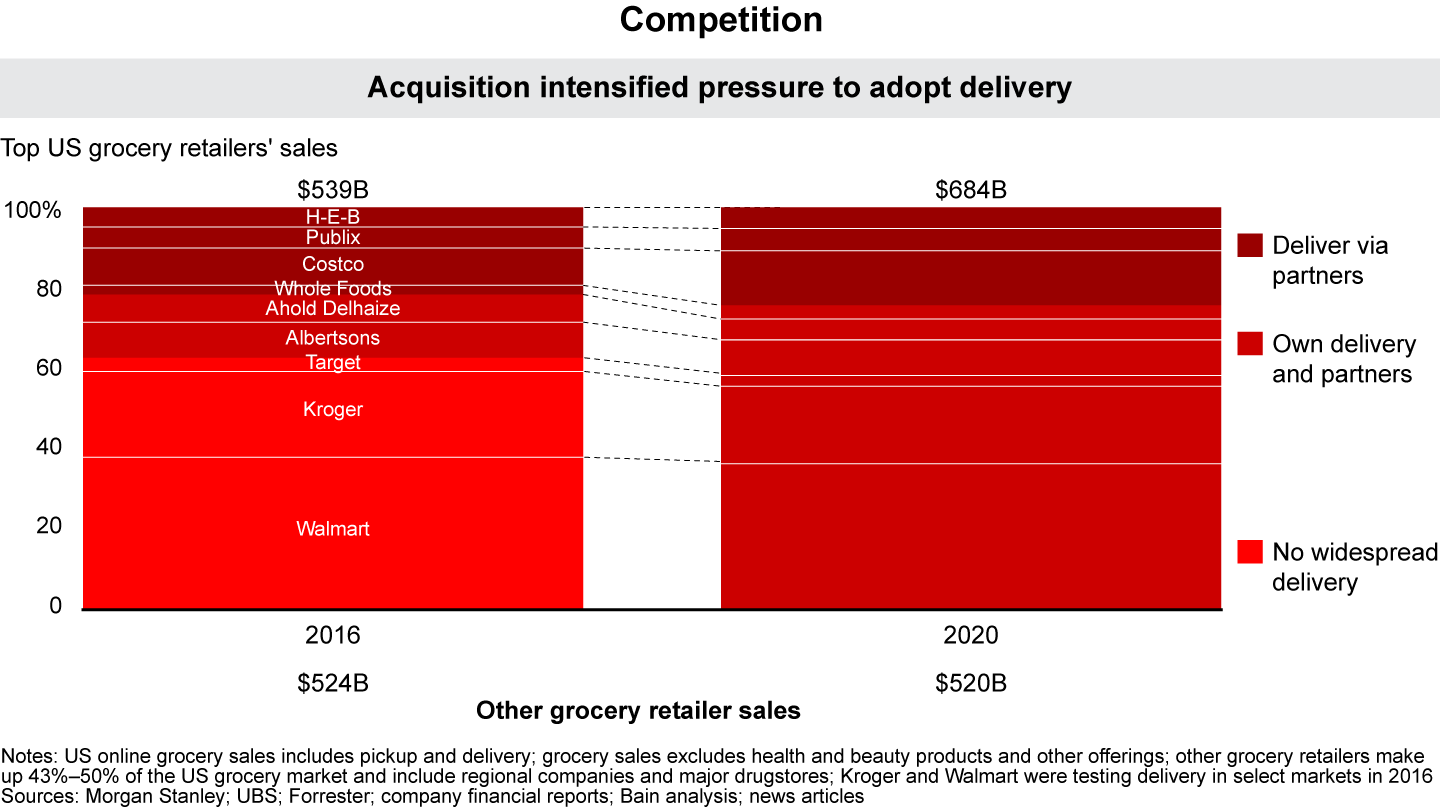
      Scaling up disruptive, low-cost ideas often results in lower prices for end customers. Amazon used its efficient supply chain and buying power to shrink Whole Foods’ price premium vs. conventional grocers, making healthy, fresh food more affordable for consumers (see Figure 2).

      Figure 2
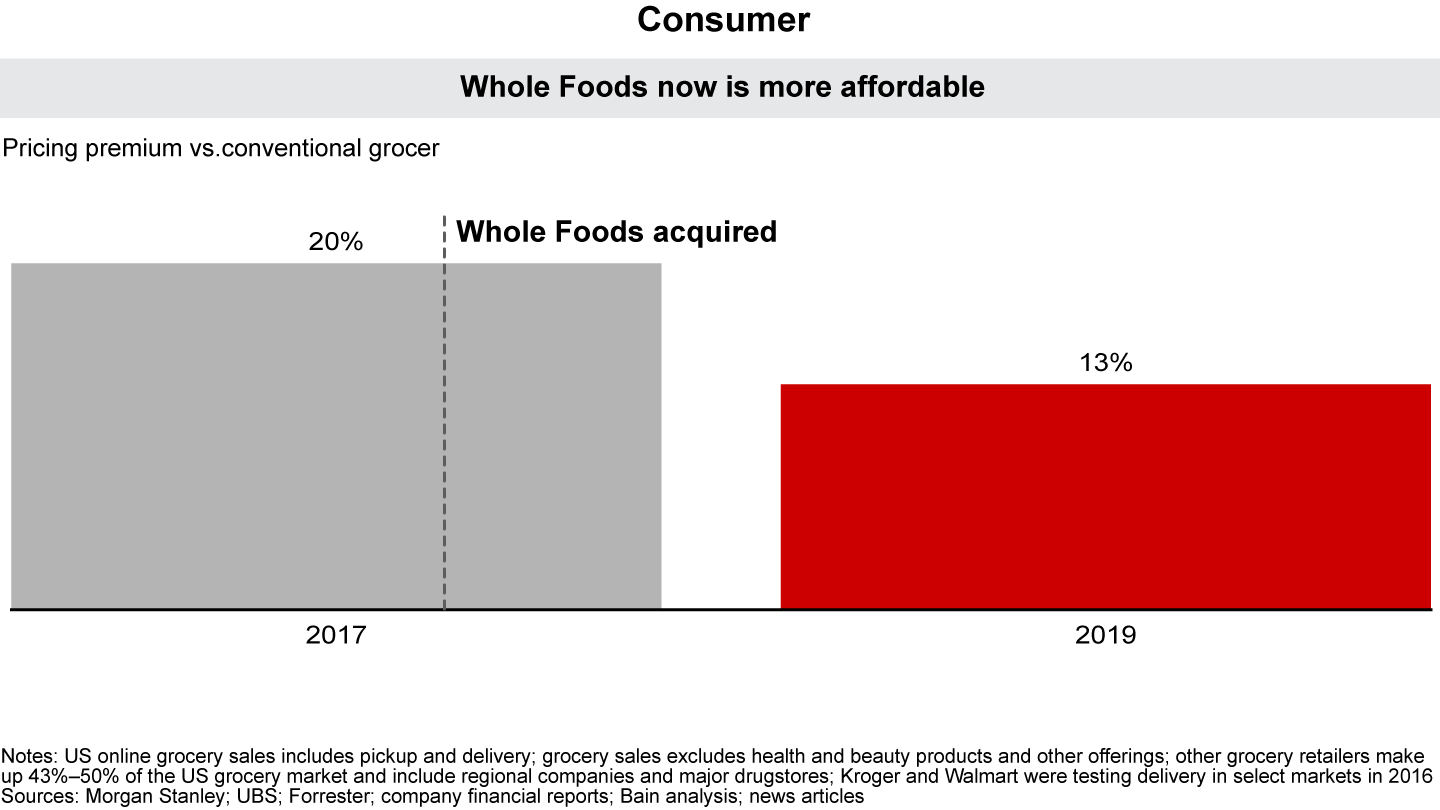
      Amazon’s Whole Foods acquisition accelerated other grocers’ e-commerce plans, while reducing Whole Foods’ pricing premium
      Figure 2
      Amazon’s Whole Foods acquisition accelerated other grocers’ e-commerce plans, while reducing Whole Foods’ pricing premium
      Figure 2
      Amazon’s Whole Foods acquisition accelerated other grocers’ e-commerce plans, while reducing Whole Foods’ pricing premium

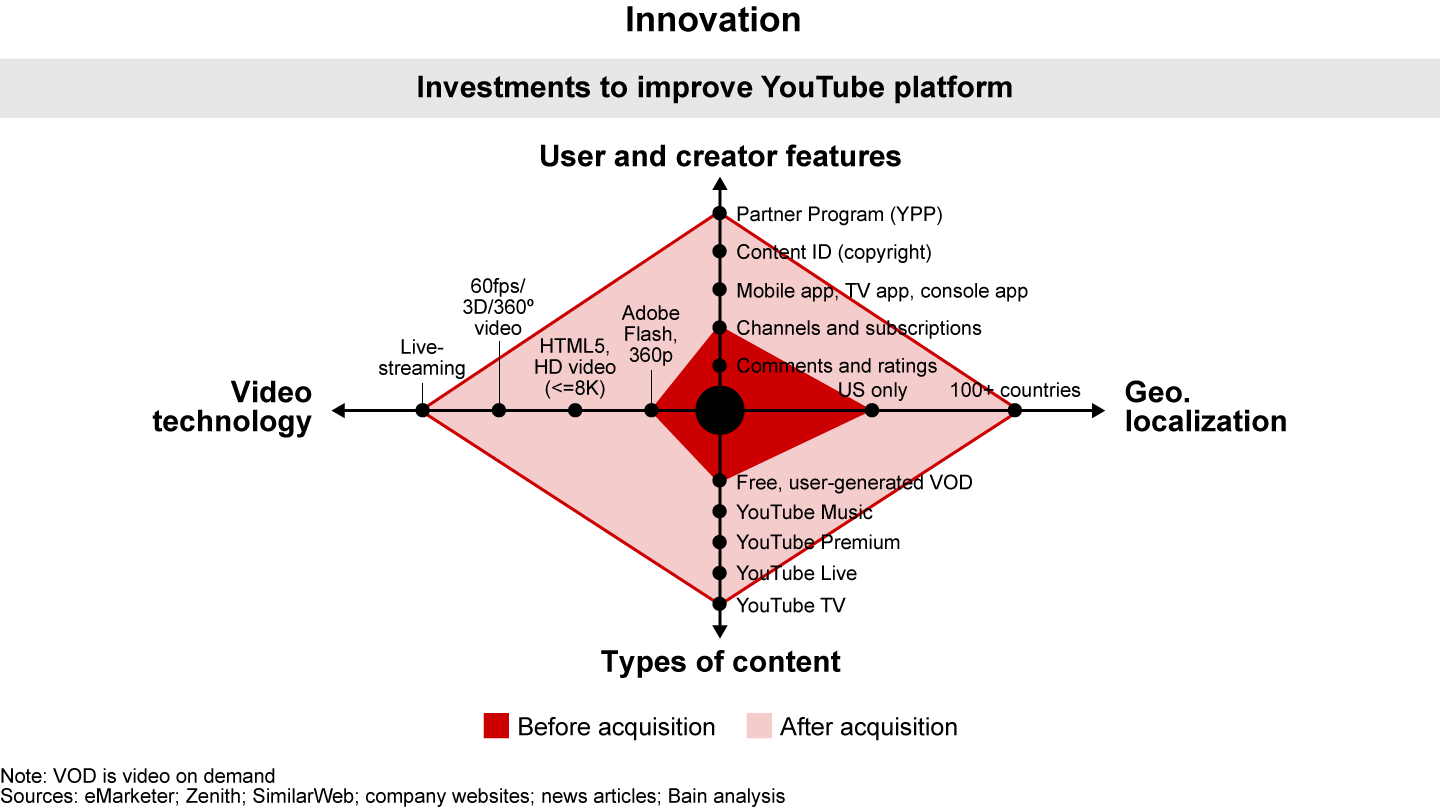
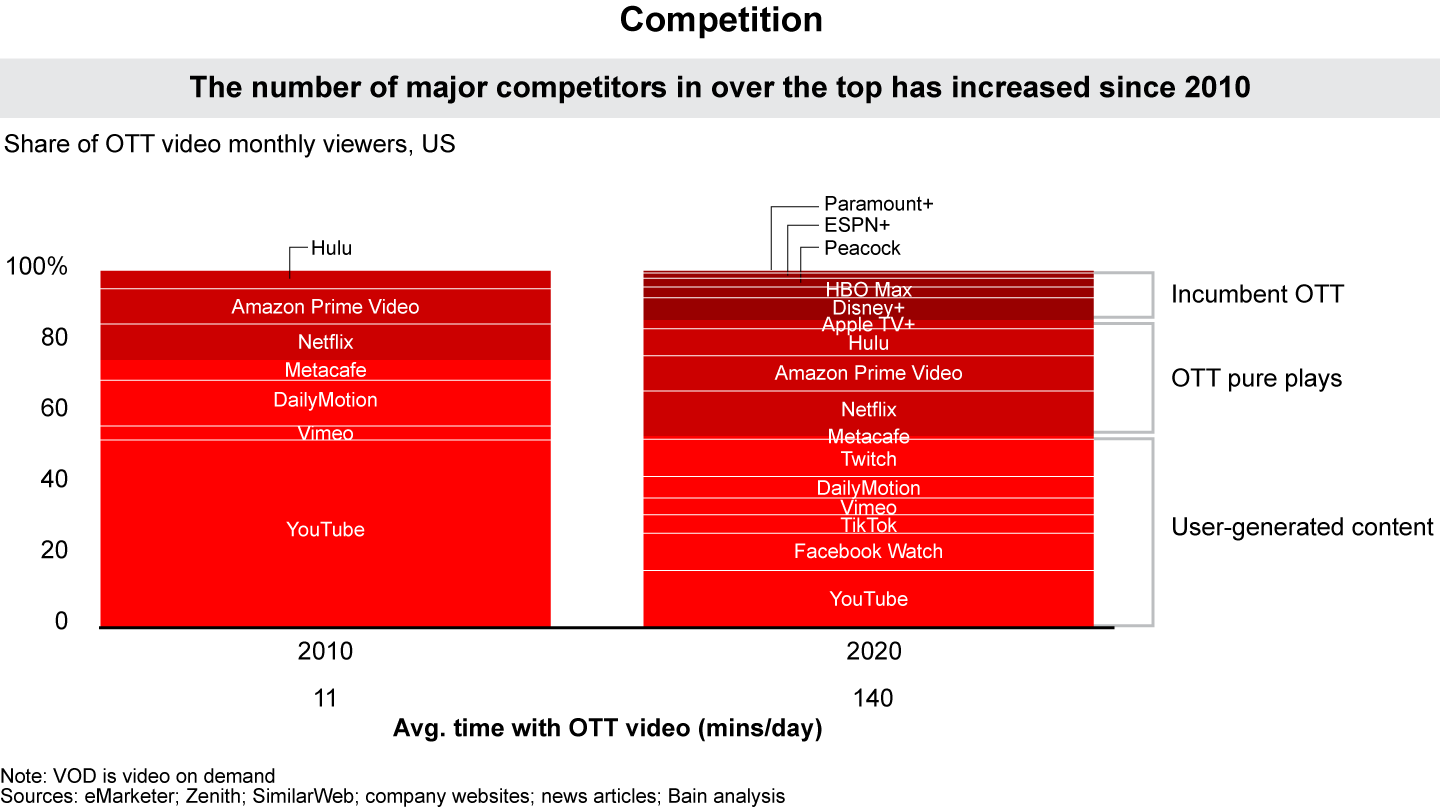
      Big tech companies’ scale can also allow more people to access innovative concepts. Google catapulted YouTube onto an immense growth path that essentially created today’s digital video streaming market. Since its 2006 acquisition, streaming video has grown hand-in-hand with YouTube, expanding from about 800 million monthly active users of YouTube in 2012 to around 2.3 billion in 2020 (see Figure 3).

      Amazon has also increased access to innovation through its dealmaking. The Whole Foods acquisition contributed to the growth of US grocers’ online food and beverage sales, which increased from 2% to 2.5% of US grocers’ total food and beverage sales the year after the deal. And Amazon’s acquisition of warehouse robotics company Kiva Systems reduced fulfillment times from an hour-plus to 15 minutes, shortening the time from click to delivery for consumers.

      Figure 3
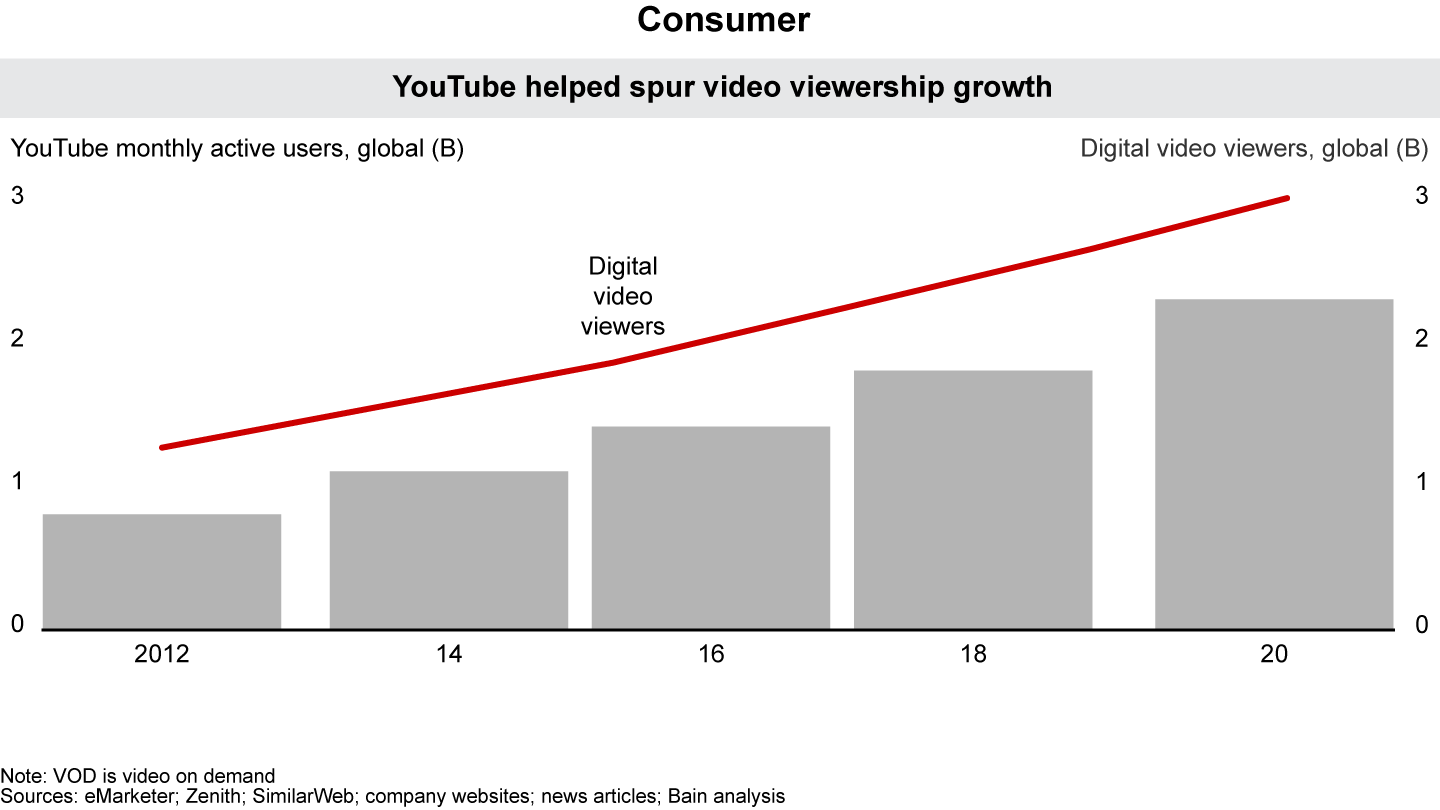
      Google’s YouTube acquisition helped increase online video viewership worldwide
      Figure3
      Google’s YouTube acquisition helped increase online video viewership worldwide
      Figure 3
      Google’s YouTube acquisition helped increase online video viewership worldwide

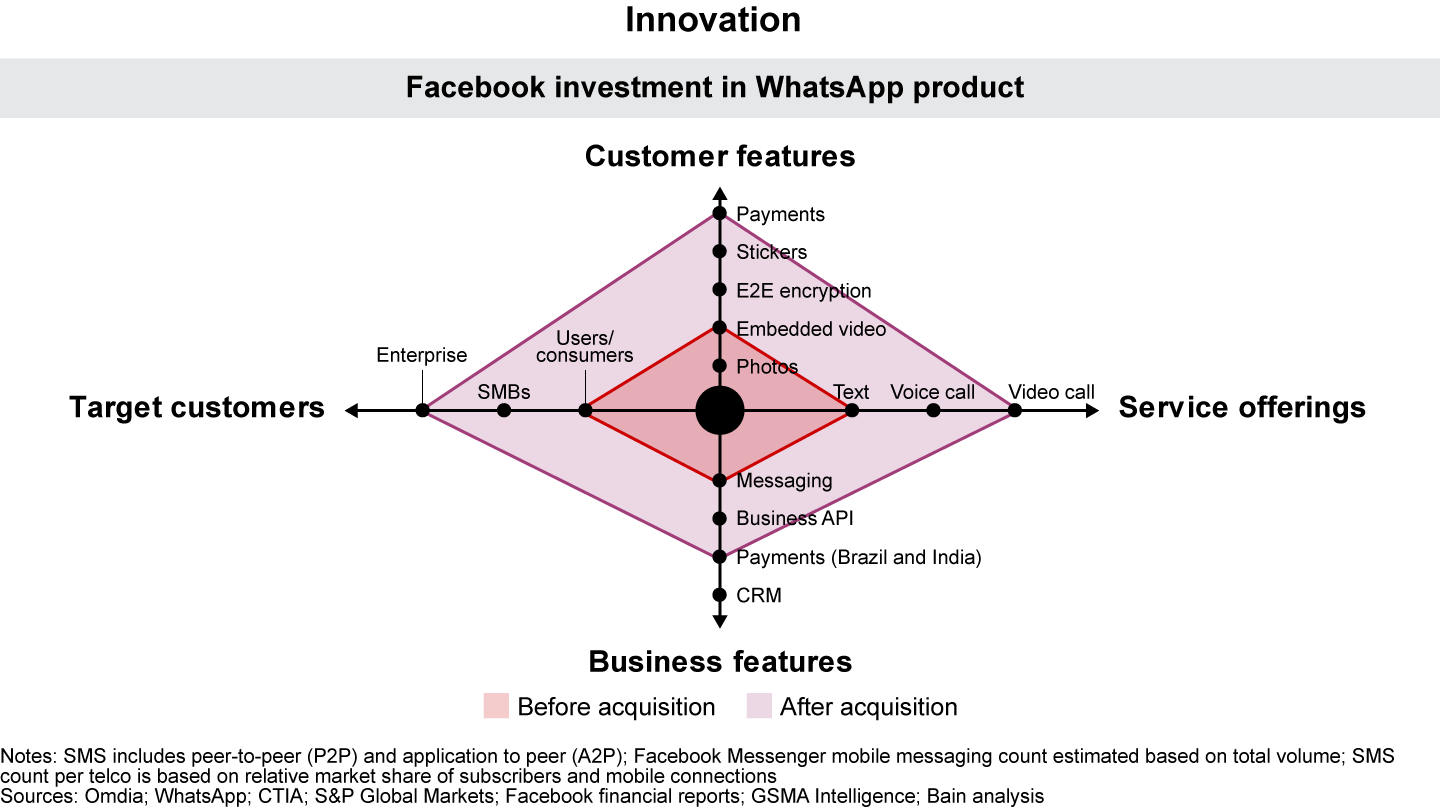
      A third benefit is that tech acquirers frequently accelerate purchased companies’ pace of innovation by providing resources and the breathing room to keep experimenting. Facebook’s WhatsApp acquisition freed the messaging service to focus on the consumer experience and relieved the pressure to become profitable before it was ready. Under the wing of its parent company, WhatsApp rapidly expanded the app and launched features such as end-to-end encryption, payments, and B2B services (see Figure 4).

      There are many examples of this. Amazon expanded Ring beyond connected doorbells and helped live-streaming service Twitch add new genres and partnerships. Google integrated Waze’s GPS navigation capabilities with music-streaming services and voice assistants. Facebook expanded virtual reality (VR) company Oculus’s offerings to include wireless VR. Microsoft improved the functionality of GitHub’s software development platform by adding features such as Codespaces, improving the site for developers.

      Figure 4
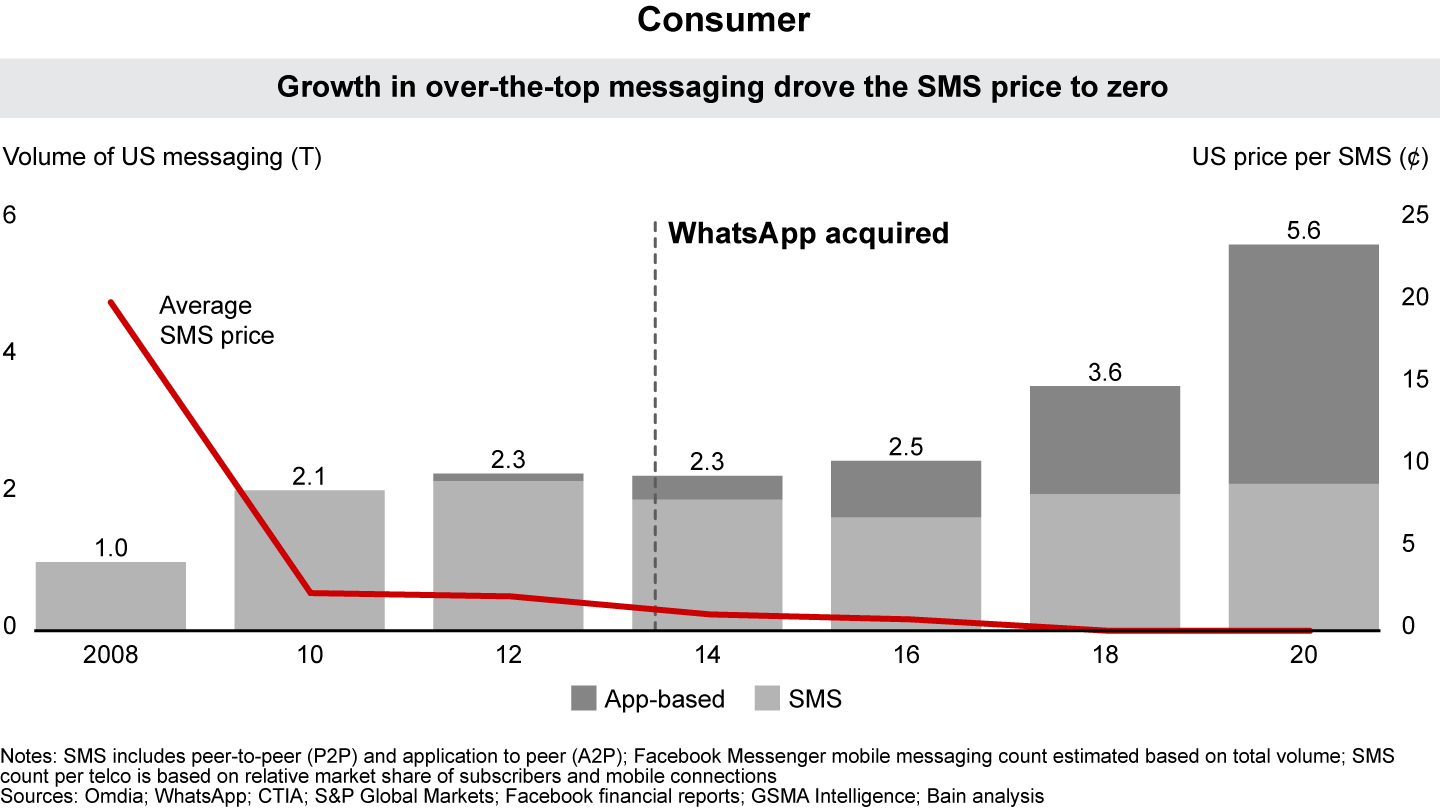
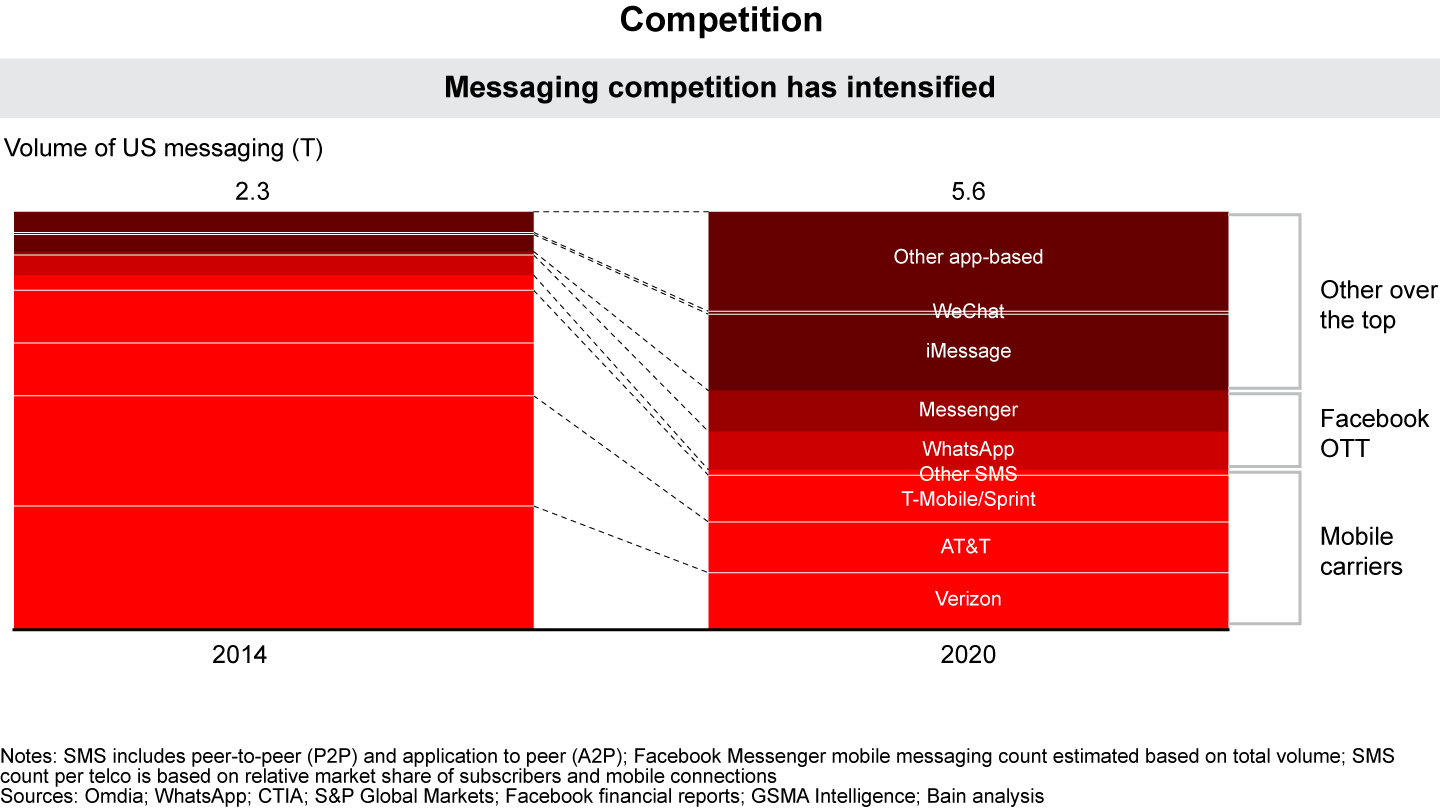
      After Facebook acquired WhatsApp, messaging prices continued to fall, the number of credible competitors increased, and WhatsApp expanded its offerings
      Figure 4
      After Facebook acquired WhatsApp, messaging prices continued to fall, the number of credible competitors increased, and WhatsApp expanded its offerings
      Figure 4
      After Facebook acquired WhatsApp, messaging prices continued to fall, the number of credible competitors increased, and WhatsApp expanded its offerings

      Competition is alive and well

      The common narrative is hyperscalers are acquiring disruptive competitors. But their M&A activity is only a small piece of the overall landscape, representing just 5% of total tech start-up exits last year (see Figure 5).

      Figure 5
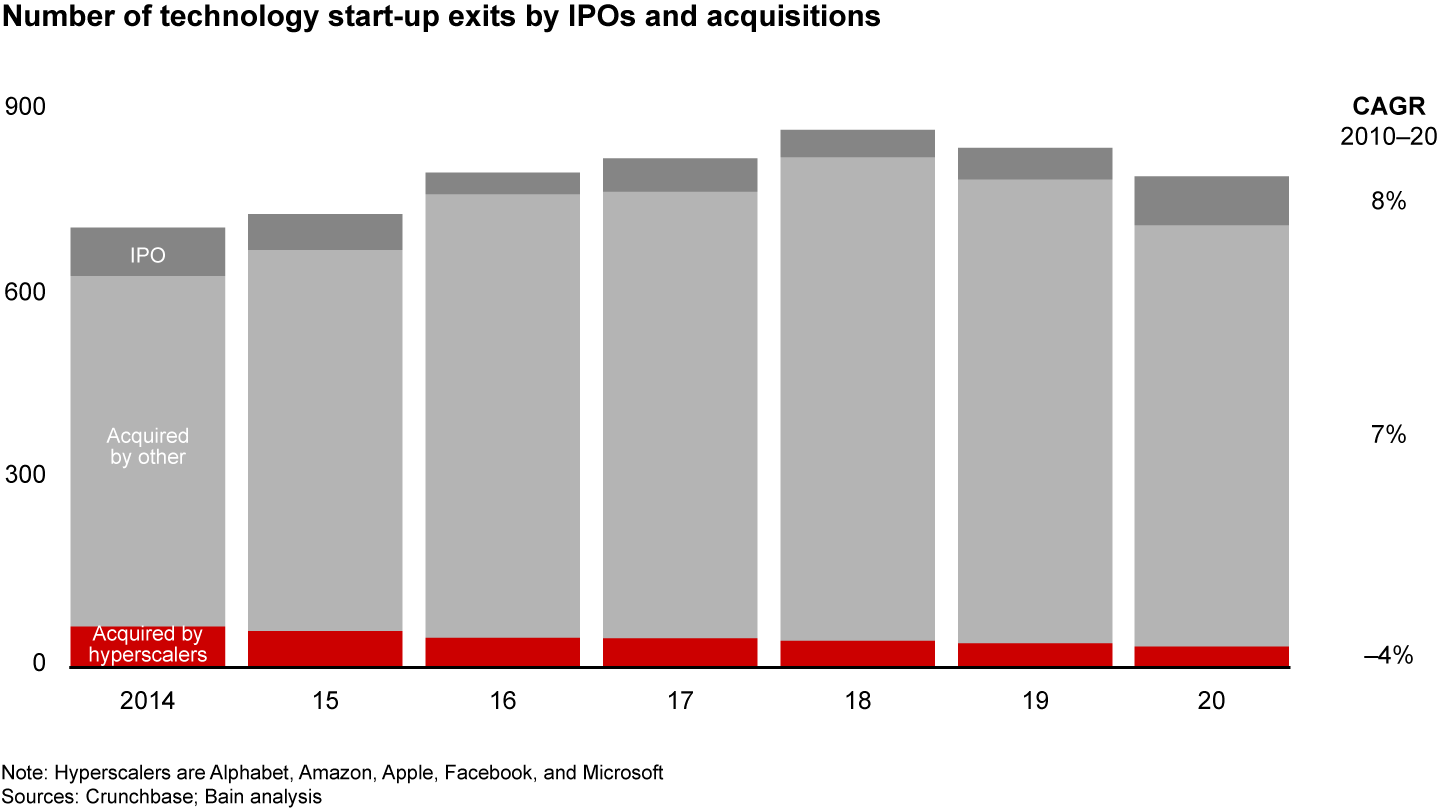
      Acquisitions by US hyperscalers represent a modest portion of total tech start-up exits

      What’s more, their dealmaking actually contributes to vibrant markets. Of the M&A spending that benefited consumers, 82% also saw more competition afterward, according to our analysis. This plays out in four ways.

      Increasing the number of credible competitors

      The competition between telcos and app-based messaging companies, including Facebook, Apple’s iMessage, and WeChat, has only grown fiercer since Facebook bought WhatsApp in 2014. Since the deal, the number of credible competitors has gone up, as app-based messaging companies’ share of US messaging volume grew to more than half of all messages sent last year. A judge’s dismissal of the US Federal Trade Commission’s lawsuit against Facebook in June signaled that tech companies continue to compete in broadly defined markets, though the FTC later filed an amended lawsuit to renew its case against Facebook.

      In video streaming, YouTube helped fuel the proliferation of “over the top” (OTT) video providers such as Hulu, Sling, and Disney+. Now, YouTube competes for advertising dollars both with other OTT providers and traditional television companies. 

      Pressuring incumbents to innovate

      Amazon’s 2013 expansion into grocery delivery with Amazon Fresh added pressure on US grocery retailers to begin offering online ordering and delivery services, and that pressure only intensified after Amazon acquired Whole Foods. Now, every major US grocery retailer offers online ordering and delivery services, either managed in-house or via partnerships. This was true even before the Covid-19 pandemic.

      In video games, Facebook’s purchase of Oculus helped push other companies to build products with virtual- and augmented-reality experiences.

      Spurring competition between hyperscalers

      Acquisitions have also fueled competition among the hyperscalers (see Figure 6). Facebook, Amazon, and Apple now challenge Google’s YouTube for video views. Apple Music, buoyed by its Beats acquisition, competes with YouTube Music and Amazon Prime Music for paid subscribers. Display ads are a fierce battleground among Facebook, Google, Amazon, and Microsoft, even after Google’s DoubleClick acquisition.

      Figure 6
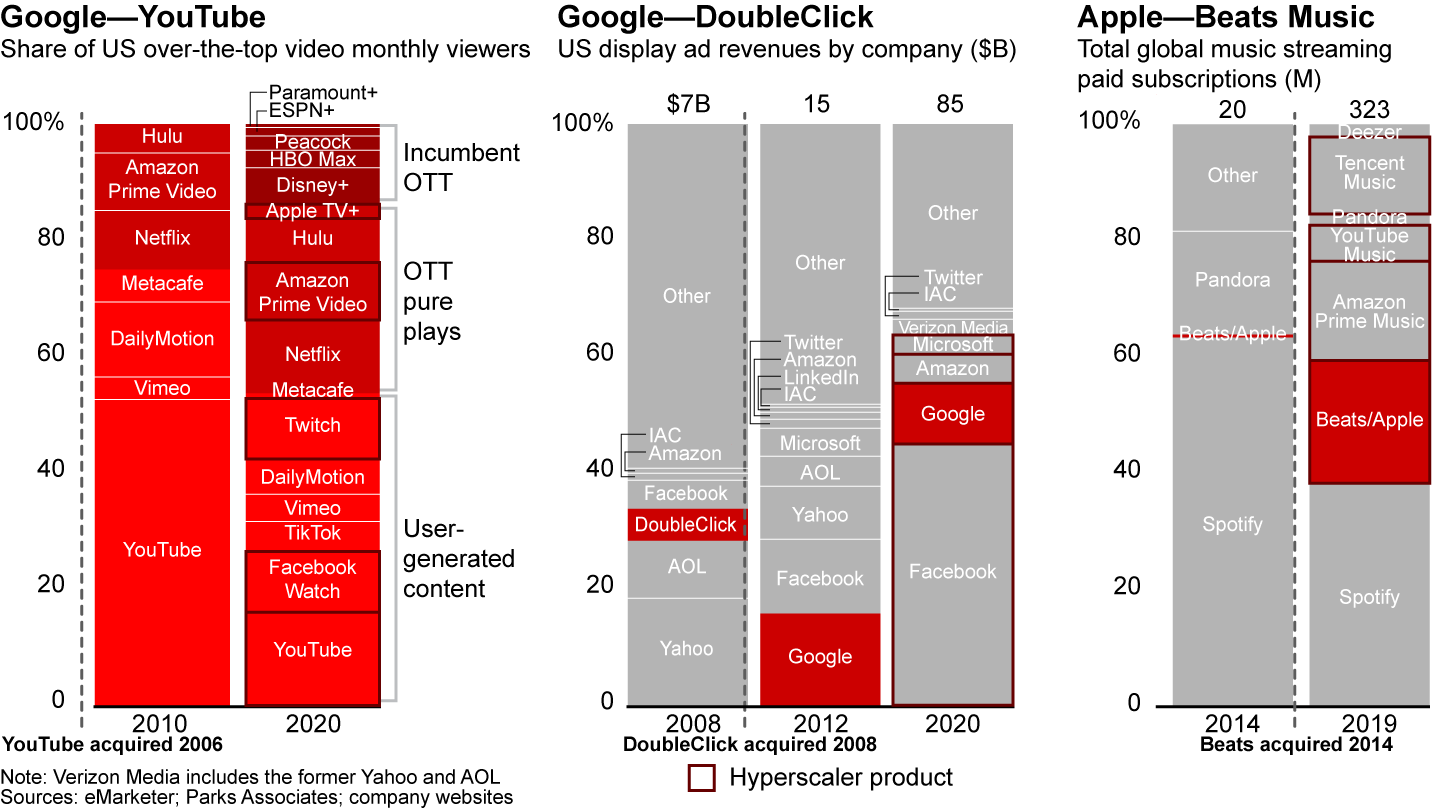
      Acquisitions have increased competition between hyperscalers

      Fueling venture capital investments

      Acquisitions power a virtuous cycle in start-up investments by providing viable exits that allow investors to pour money into the next wave of deals. Over the past decade, independent venture capital firms and corporate venture funds that sold 11% to 20% of their start-up portfolio invested in 40% more deals than funds that sold 10% or less of their portfolio (see Figure 7). The gap is even wider for firms that sold 21% or more of their portfolio.

      Figure 7
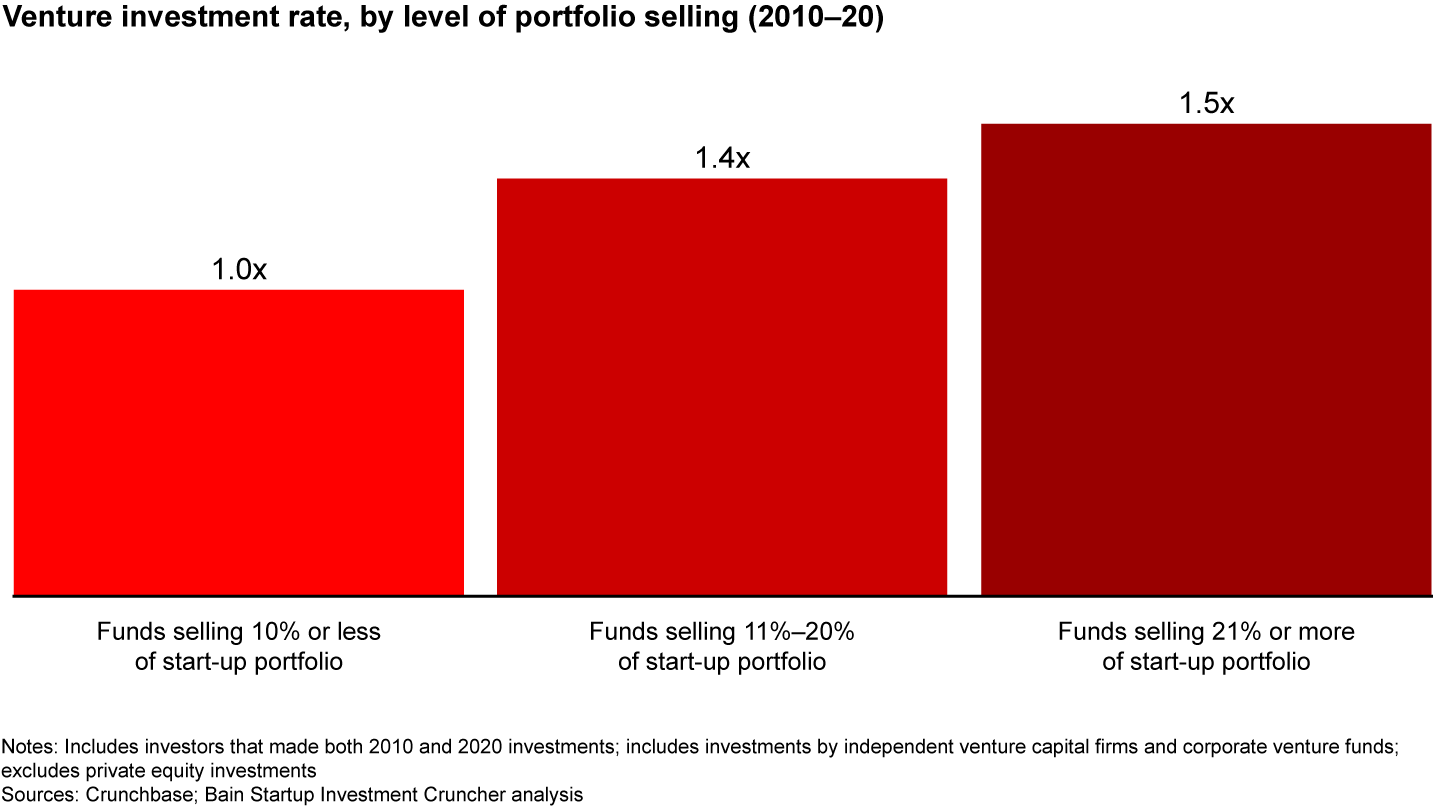
      Selling portfolio companies allows venture investors to make more deals

      When is more regulatory scrutiny justified?

      Of course, not every hyperscaler M&A deal benefits consumers and competition.

      In the vast majority of these cases where consumer value and competition were harmed, the acquired company was ultimately shut down after a decline in market share and/or profitability, thereby reducing competition.

      Amazon’s price cuts on diapers pushed Quidsi to sell its business, including the popular Diapers.com. After purchasing Quidsi, Amazon raised prices and shut down the business.

      The purchases of Motorola’s and Nokia’s handset businesses were both ill-fated acquisitions by Google and Microsoft, respectively, that may no longer have been viable standalone companies given their decline in market share and innovation even before the acquisitions. Similarly, Microsoft wrote off its aQuantive purchase after a failed attempt to shift the core business from display to search ads, and Facebook shuttered LiveRail due to the low quality of ad inventory and what turned out to be a more promising alternative product developed internally (Audience Network).

      For the remaining deals that reduced competition, the acquirer bought a target that was also a market-share leader in the same sector. For example, Google’s acquisition of DoubleClick in 2008 allowed the No. 1 competitor in digital ads to purchase the No. 5 competitor. By 2012, their combined share of US digital ad revenue was more than four times the size of their next-largest competitor. But our analysis determined this group of deals had a neutral effect on consumers, and it represents only 3% of total acquisition value in our analysis.

      What about data?

      A common refrain in tech is that companies with the most data win. But there’s a concern that if companies consolidate data, they might use it in combination with algorithms to steer users toward inferior products that are more profitable. While this can result from consolidating market power after acquisitions, our analysis found this rarely happens in hyperscaler acquisitions.

      Facebook’s acquisition of Instagram is often mentioned as an example of data consolidation’s potentially negative effects. However, Instagram only had 30 million users and no ad business at the time of acquisition. Under Facebook, Instagram expanded from a simple photo-editing app to include messaging, social stories, live broadcasts, and shopping. While Facebook has been good at increasing the size of Instagram’s data sets and effectively monetizing them, there’s good evidence that it was the parent company’s investment in the user experience and advertising engine that allowed Instagram to grow to more than 1.7 billion monthly active users, according to a UBS report.

      It’s healthy in any market-based society to have a vigorous debate over the benefits of scale to both consumers and competition. That can and should continue. Hopefully, this set of insights provides another useful perspective for both acquirers and regulators as they work to ensure these deals continue to create—not destroy—value.

      • Additional details on methodology

        Our analysis defined enriched market dynamics in a given sector based on whether, between the acquisition date and 2020, the level of competition increased (e.g., app-based messaging companies capturing market share from telecom companies), incumbent companies increased their adoption of new innovations (e.g., adding online grocery delivery), or there were more external investments in the sector (e.g., increased venture capital investing). We defined an increase in end-customer value based on whether, between the acquisition date and 2020, there was increased access to a product or service; reduced price of a product or service; accelerated innovation of a product or service; or limited data sharing with third parties.

      Read the Next Chapter

      Tech Venture Capital Surges

      More from the report

      • Welcome to the New Tech Economy

      • Tech-tonic Equity Shifts

      • The Case for Big Tech M&A

      • Tech Venture Capital Surges

      • SaaS Spurs Software Superperformance

      • Bringing Order to the Hybrid Cloud

      • Winning Europe’s Cloud Market

      • Shifting Semiconductor Equilibrium

      • Leading AI’s Next Era

      • US, China, and the Decoupling Push

      • The Tech Talent War Expands

      • Scaling DevOps

      • The Go-to-Market Orchestra

      • Chip Shortage Lessons

      Read our 2021 Technology Report

      Download the PDF Explore the report
      저자
      • Headshot of David Crawford
        David Crawford
        파트너, Silicon Valley
      • Headshot of Michael Schallehn
        Michael Schallehn
        파트너, Silicon Valley
      문의하기
      관련 산업
      • 기술
      • Hardware
      • Internet of Things
      • IT Services
      • Software
      관련 컨설팅 서비스
      • M&A
      기술
      Welcome to the New Technology Economy

      Technology-fueled growth across all sectors is poised to accelerate.

      자세히 보기
      기술
      Despite Tech Layoffs, Competition for Talent Remains Fierce

      Tech workers increasingly value career development opportunities and remote or hybrid work options, while compensation has soared.

      자세히 보기
      M&A
      Banking M&A

      As conditions shift, leading banks are fusing scale with scope to create future-ready organizations.

      자세히 보기
      기술
      Using Hardware to Scale the Industrial Internet of Things

      Bain partners discuss the opportunity for hardware vendors to help companies develop their IoT pilots.

      자세히 보기
      M&A
      Consumer Products M&A

      In their quest for profitable growth, more companies are divesting brands or buying insurgents.

      자세히 보기
      First published in 9월 2021
      태그
      • 기술
      • Hardware
      • Internet of Things
      • IT Services
      • M&A
      • Software

      프로젝트 사례

      Helping a Midsize ERP Player Compete against the Giants

      See more related case studies

      성과 개선 Aggressively growing an IT service provider with a high-performance culture

      See more related case studies

      고객 전략 및 마케팅 Sales blueprint puts IT Services Co.'s growth back on track

      See more related case studies

      베인에 궁금하신 점이 있으신가요?

      베인은 주저 없이 변화를 마주할 줄 아는 용감한 리더들과 함께합니다. 그리고, 이들의 담대한 용기는 고객사의 성공으로 이어집니다.

      급변하는 비즈니스 환경에서 살아남기 위한 선도자의 시각. 월간 Bain Insights에서 글로벌 비즈니스의 핵심 이슈를 확인하십시오.

      *개인정보 정책을 읽었으며 그 내용에 동의합니다.

      Privacy Policy를 읽고 동의해주십시오.
      Bain & Company
      문의하기 환경정책 Accessibility 이용약관 개인정보 보호 쿠키 사용 정책 Sitemap Log In

      © 1996-2026 Bain & Company, Inc.

      문의하기

      무엇을 도와드릴까요?

      • 프로젝트 문의
      • 채용 정보
      • 언론
      • 제휴 문의
      • 연사 초청
      오피스 전체보기