
Skip to Content
  • 오피스

    오피스

    미주
    • Atlanta
    • Austin
    • Bogota
    • Boston
    • Buenos Aires
    • Chicago
    • Dallas
    • Denver
    • Houston
    • Los Angeles
    • Mexico City
    • Minneapolis
    • Monterrey
    • Montreal
    • New York
    • Rio de Janeiro
    • San Francisco
    • Santiago
    • São Paulo
    • Seattle
    • Silicon Valley
    • Toronto
    • Washington, DC
    유럽, 중동, 아프리카
    • Amsterdam
    • Athens
    • Berlin
    • Brussels
    • Copenhagen
    • Doha
    • Dubai
    • Dusseldorf
    • Frankfurt
    • Helsinki
    • Istanbul
    • Johannesburg
    • Kyiv
    • Lisbon
    • London
    • Madrid
    • Milan
    • Munich
    • Oslo
    • Paris
    • Riyadh
    • Rome
    • Stockholm
    • Vienna
    • Warsaw
    • Zurich
    아시아, 호주
    • Bangkok
    • Beijing
    • Bengaluru
    • Brisbane
    • Ho Chi Minh City
    • Hong Kong
    • Jakarta
    • Kuala Lumpur
    • Manila
    • Melbourne
    • Mumbai
    • New Delhi
    • Perth
    • Seoul
    • Shanghai
    • Singapore
    • Sydney
    • Tokyo
    오피스 전체보기
  • 얼럼나이
  • 미디어 센터
  • 구독
  • 연락처
  • Korea | 한국어

    지역 및 언어 선택

    글로벌
    • Global (English)
    미주
    • Brazil (Português)
    • Argentina (Español)
    • Canada (Français)
    • Chile (Español)
    • Colombia (Español)
    유럽, 중동, 아프리카
    • France (Français)
    • DACH Region (Deutsch)
    • Italy (Italiano)
    • Spain (Español)
    • Greece (Elliniká)
    아시아, 호주
    • China (中文版)
    • Korea (한국어)
    • Japan (日本語)
  • Saved items (0)
    Saved items (0)

    You have no saved items.

    관심 있는 내용을 북마크하여 Red 폴더에 저장할 수 있습니다. Red 폴더 에서 저장된 내용을 읽거나 공유해보세요.

    Explore Bain Insights
  • 산업
    메인 메뉴

    산업

    • 우주항공, 방산 및 정부 서비스
    • 농업 관련 산업
    • 화학
    • 인프라, 건설 및 건축 자재
    • 소비재
    • 금융 서비스
    • 헬스케어
    • 산업용 기계 및 장비
    • 미디어 및 엔터테인먼트
    • 금속
    • 광업
    • 석유 및 가스
    • 제지 및 패키징 산업
    • 사모펀드
    • 사회 및 공공 부문
    • 유통
    • 기술
    • 텔레콤
    • 운송
    • 여행·여가
    • 유틸리티 및 재생가능 에너지
  • 컨설팅 서비스
    메인 메뉴

    컨설팅 서비스

    • Customer Experience
    • ESG
    • Innovation
    • M&A
    • 운영
    • 조직
    • 사모펀드
    • 고객 전략 및 마케팅
    • 전략
    • AI, 인사이트 및 솔루션
    • Technology
    • 변화 혁신
  • Digital
  • 인사이트
  • 베인 소개
    메인 메뉴

    베인 소개

    • 업무 소개
    • 베인의 신념
    • 구성원 및 리더십 소개
    • 고객 성과
    • 주요 수상 경력
    • 글로벌 파트너사
    Further: Our global responsibility
    • 다양성과 포용
    • 사회 공헌 활동
    • Sustainability
    • World Economic Forum
    Learn more about Further
  • Careers
    메인 메뉴

    Careers

    • Work with Us
      Careers
      Work with Us
      • Find Your Place
      • Our Work Areas
      • Integrated Teams
      • Students
      • Internships & Programs
      • Recruiting Events
    • Life at Bain
      Careers
      Life at Bain
      • Blog: Inside Bain
      • Career Stories
      • Our People
      • Where We Work
      • Supporting Your Growth
      • Affinity Groups
      • Benefits
    • Impact Stories
    • Hiring Process
      Careers
      Hiring Process
      • What to Expect
      • Interviewing
    FIND JOBS
  • 오피스
    메인 메뉴

    오피스

    • 미주
      오피스
      미주
      • Atlanta
      • Austin
      • Bogota
      • Boston
      • Buenos Aires
      • Chicago
      • Dallas
      • Denver
      • Houston
      • Los Angeles
      • Mexico City
      • Minneapolis
      • Monterrey
      • Montreal
      • New York
      • Rio de Janeiro
      • San Francisco
      • Santiago
      • São Paulo
      • Seattle
      • Silicon Valley
      • Toronto
      • Washington, DC
    • 유럽, 중동, 아프리카
      오피스
      유럽, 중동, 아프리카
      • Amsterdam
      • Athens
      • Berlin
      • Brussels
      • Copenhagen
      • Doha
      • Dubai
      • Dusseldorf
      • Frankfurt
      • Helsinki
      • Istanbul
      • Johannesburg
      • Kyiv
      • Lisbon
      • London
      • Madrid
      • Milan
      • Munich
      • Oslo
      • Paris
      • Riyadh
      • Rome
      • Stockholm
      • Vienna
      • Warsaw
      • Zurich
    • 아시아, 호주
      오피스
      아시아, 호주
      • Bangkok
      • Beijing
      • Bengaluru
      • Brisbane
      • Ho Chi Minh City
      • Hong Kong
      • Jakarta
      • Kuala Lumpur
      • Manila
      • Melbourne
      • Mumbai
      • New Delhi
      • Perth
      • Seoul
      • Shanghai
      • Singapore
      • Sydney
      • Tokyo
    오피스 전체보기
  • 얼럼나이
  • 미디어 센터
  • 구독
  • 연락처
  • Korea | 한국어
    메인 메뉴

    지역 및 언어 선택

    • 글로벌
      지역 및 언어 선택
      글로벌
      • Global (English)
    • 미주
      지역 및 언어 선택
      미주
      • Brazil (Português)
      • Argentina (Español)
      • Canada (Français)
      • Chile (Español)
      • Colombia (Español)
    • 유럽, 중동, 아프리카
      지역 및 언어 선택
      유럽, 중동, 아프리카
      • France (Français)
      • DACH Region (Deutsch)
      • Italy (Italiano)
      • Spain (Español)
      • Greece (Elliniká)
    • 아시아, 호주
      지역 및 언어 선택
      아시아, 호주
      • China (中文版)
      • Korea (한국어)
      • Japan (日本語)
  • Saved items  (0)
    메인 메뉴
    Saved items (0)

    You have no saved items.

    관심 있는 내용을 북마크하여 Red 폴더에 저장할 수 있습니다. Red 폴더 에서 저장된 내용을 읽거나 공유해보세요.

    Explore Bain Insights
  • 산업
    • 산업

      • 우주항공, 방산 및 정부 서비스
      • 농업 관련 산업
      • 화학
      • 인프라, 건설 및 건축 자재
      • 소비재
      • 금융 서비스
      • 헬스케어
      • 산업용 기계 및 장비
      • 미디어 및 엔터테인먼트
      • 금속
      • 광업
      • 석유 및 가스
      • 제지 및 패키징 산업
      • 사모펀드
      • 사회 및 공공 부문
      • 유통
      • 기술
      • 텔레콤
      • 운송
      • 여행·여가
      • 유틸리티 및 재생가능 에너지
  • 컨설팅 서비스
    • 컨설팅 서비스

      • Customer Experience
      • ESG
      • Innovation
      • M&A
      • 운영
      • 조직
      • 사모펀드
      • 고객 전략 및 마케팅
      • 전략
      • AI, 인사이트 및 솔루션
      • Technology
      • 변화 혁신
  • Digital
  • 인사이트
  • 베인 소개
    • 베인 소개

      • 업무 소개
      • 베인의 신념
      • 구성원 및 리더십 소개
      • 고객 성과
      • 주요 수상 경력
      • 글로벌 파트너사
      Further: Our global responsibility
      • 다양성과 포용
      • 사회 공헌 활동
      • Sustainability
      • World Economic Forum
      Learn more about Further
  • Careers
    최근 검색어
      최근 방문 페이지

      Content added to saved items

      Saved items (0)

      Removed from saved items

      Saved items (0)

      Forbes.com

      Capital Superabundance is Here to Stay in Private Equity

      Capital Superabundance is Here to Stay in Private Equity

      Private equity’s impressive rebound has been a manifestation of the enormous expansion of financial assets that have been building up in the global economy for more than 25 years.

      글 Hugh MacArthur, Graham Elton, Bill Halloran and Suvir Varma

      • 읽기 소요시간

      Article

      Capital Superabundance is Here to Stay in Private Equity
      en

      This article originally appeared on Forbes.com.

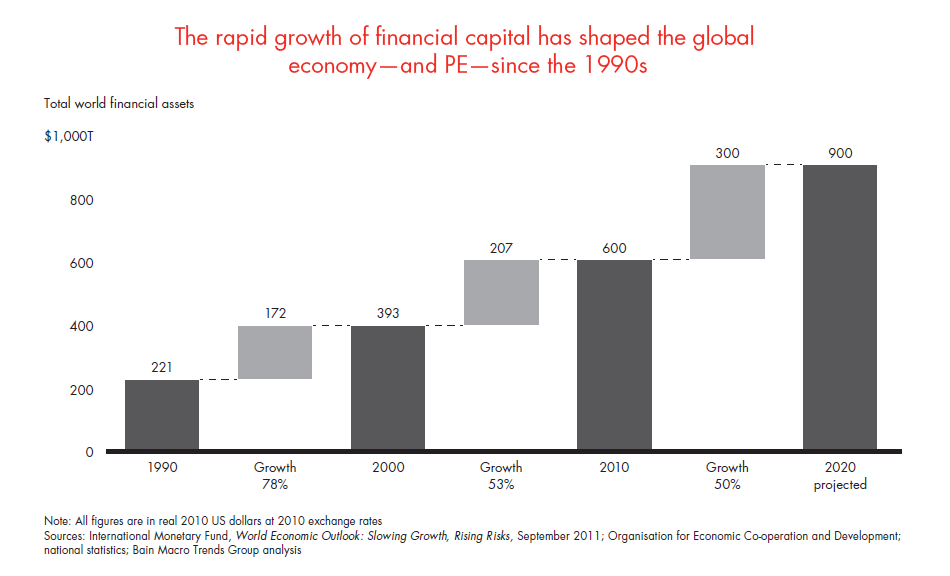
      Private equity’s (PE) impressive rebound from the downturn subsequent to the 2008 global financial crisis—along with the factors that created the buyout boom and brought PE to the precipice in the first place—has been a manifestation of the enormous expansion of financial assets that have been building up in the global economy for more than 25 years. As we explain in Bain & Company’s Global Private Equity Report, this capital superabundance is the product of financial engineering, high-speed computing and a loosening of financial services regulations. The resulting growth of financial assets has been prodigious and relentless: Global financial capital increased 53% from 2000 to 2010, reaching some $600 trillion, and Bain’s Macro Trends Group projects that it will swell by half again, to approximately $900 trillion by year-end 2020 (see figure).

      forbes-pe-report-2015-fig-02-01_embed

      Capital superabundance played a lead role in PE firms’ ability to mobilize large pools of capital, fueling the buyout boom years between 2005 and 2007. As it approached a cyclical peak, global buyout deal value spiked from $293 billion in 2005 to $687 billion and $673 billion in 2006 and 2007, respectively. PE buyers were willing to pay high prices to win intensely competitive auctions, as average deal multiples climbed to 9.7 times EBITDA on US and European leveraged buyouts in 2007. Lots of readily available debt capital helped pay for the takeovers. But instead of being set up for the success they worked so hard and paid so dearly to pursue, PE funds quickly discovered they were poised for disaster when they were blindsided by the 2008 financial crash.

      How capital superabundance helped rescue PE following the downturn. As they surveyed the wreckage of the global market meltdown and took stock of what lay ahead, PE investors found little cause for optimism. A trio of formidable challenges loomed: massive asset write-downs mandated by mark-to-market accounting regulations, seemingly impassable roadblocks at every exit channel and a towering wall of portfolio company debt refinancings needed to avoid defaults.

      In the end, none of these challenges led to the industry’s downfall, thanks to the heretofore underappreciated role of capital superabundance. Central bank programs unleashed a flood of liquidity that quickly brought rates on high-yield bonds and leveraged loans back to prerecession levels. By July 2009, average rates on leveraged loans fell nearly 12 percentage points to 8.4% and rates on high-yield bonds fell by nearly half to 11.5% from their peaks just seven months before. With debt investors desperately scouring for yield wherever they could find it, rates on leveraged loans and high-yield bonds issued by PE borrowers kept falling—to just 5.4% and 6.8%, respectively, by the end of 2014.

      The benign interest-rate environment worked wonders in razing the wall of refinancings that PE borrowers faced. As business conditions began to stabilize by mid-2009 and creditors regained confidence that the threat of widespread portfolio company defaults was retreating, creditors’ hunger for yields outstripped their worries of default risk. By 2012, borrowers had managed to level the wall of refinancing down to a small fraction of its original size.

      Capital superabundance also quickly helped revive the valuations of PE funds’ portfolio holdings by lifting public equity prices. As buyout-fund general partners (GPs) revalued their portfolios to reflect stock market gains, net asset valuations climbed nearly every quarter since the financial crisis hit with the brief exception of the third quarter of 2011, when Europe’s sovereign debt crisis ignited fears that the eurozone would slide back into recession. With rising valuations powered by broad market beta, worries of massive PE defaults soon subsided. Examining 337 companies owned by the 14 largest PE sponsors, Moody’s, the credit-rating agency, discovered that the annualized 6% default rate between 2008 and 2013 of the PE-backed companies in the sample was a shade lower than that of similarly rated companies that were not in PE hands.

      The period following the downturn had its share of notable multibillion-dollar PE defaults. However, such failures as there were had little to do with the size of the portfolio company or how much leverage the buyout-fund GPs used to finance it. The chief reason for many of the PE defaults associated with the financial crisis was the fact that the companies that stumbled were not well positioned for success from the start. The downturn did not cause these deals to fail; it merely hastened their downfall.

      The experience of the past several years confirms patterns about deal success and failure that Bain & Company has seen developing during the more than two decades we have co-invested alongside clients in deals. Combing through the extensive set of deals with which Bain is intimately familiar, we have identified a set of winning factors that correlate with deal success. Winning factors include characteristics such as a high market growth rate for the relevant sector in which a target company competes and opportunities to expand into an obvious product or geographic adjacency. Bain has found few deals that achieved unambiguous success in the absence of at least one winning factor—and the more of these factors there are, the more potential ways for a deal to win. Bain has also documented several “warning beacons” that are highly likely to undermine a deal’s success, even if only one is present. One such indicator of trouble is to underestimate the impact of competitive challenges that disrupt a target company’s business model.

      Ultimately, buyouts from the boom years preceding the market crash fell into three distinct groups. The obvious winners were deals that had one or more winning factors and no warning beacons; barring unforeseen shocks, these investments were highly likely to be successful from the outset. Clear losers lacked winning factors and had at least one glaring warning beacon; they were unlikely to succeed, irrespective of business-cycle or financial market conditions. The third category of deals had characteristics that made them neither especially good nor particularly bad, and this group benefited most from the helpful effects of capital superabundance. Bought for high prices at the cyclical peak, these companies could easily have tipped into losing territory had it not been for the surge of market beta that ultimately bailed them out.

      PE funds husbanded their buyout assets through the downturn and rode a wave of market beta to successful exits that, while taking longer than the three- to five-year holding periods envisioned at their time of purchase, were unanticipated just a few bleak years before. As public markets recovered, the door for IPOs reopened and the confidence of strategic corporate buyers rebounded. The overhang of exits from boom-year holdings gradually began to recede. By the middle of 2014, PE funds had at least partially realized gains from the vast majority of buyouts they had made during the boom years.

      Written by Hugh MacArthur, Graham Elton, Bill Halloran and Suvir Varma, leaders of Bain & Company’s Private Equity Group.


      forbes-pe-report-2015-fig-02-01_full
      저자
      • Headshot of Hugh MacArthur
        Hugh MacArthur
        파트너, Boston
      • Headshot of Graham Elton
        Graham Elton
        Chairman, EMEA Private Equity, London
      • Headshot of Bill Halloran
        Bill Halloran
        어드바이저 파트너, San Francisco
      • Headshot of Suvir Varma
        Suvir Varma
        어드바이저 파트너, Singapore
      문의하기
      관련 산업
      • 사모펀드
      사모펀드
      Bain & Company's Global Private Equity Report 2015

      Five building blocks can help private equity firms create value across their portfolio holdings.

      자세히 보기
      헬스케어
      Global Healthcare Private Equity Report 2015

      Healthcare continues to be an attractive but challenging area for private equity investment.

      자세히 보기
      사모펀드
      Spotting the Downturn Early and Coming Out Ahead with Gryphon’s David Andrews

      We ask the co-CEO of Gryphon Investors how he spotted one of the harshest cycles in the industry’s history and when he thinks it may finally break.

      자세히 보기
      사모펀드
      What Kind of AI Cycle Are We Actually In?

      The question for investors is not whether AI will boom or bust, but who may be unwittingly subsidizing the buildout.

      자세히 보기
      사모펀드
      Macro Update: What Could Derail 2026?

      Bain’s leading macroeconomic expert examines the cracks beneath the surface of the US market and how investors should prepare for post-globalization realities.

      자세히 보기
      First published in 4월 2015
      태그
      • 사모펀드

      프로젝트 사례

      Smart Pricing Helped a Private Equity Firm Unlock More Value

      See more related case studies

      M&A Helping a Healthcare Company Unlock Maximum Value

      See more related case studies

      지속 가능성 및 기업의 사회적 책임 A Paper Company Takes Bold Steps to Make Sustainability a Source of Profits

      See more related case studies

      베인에 궁금하신 점이 있으신가요?

      베인은 주저 없이 변화를 마주할 줄 아는 용감한 리더들과 함께합니다. 그리고, 이들의 담대한 용기는 고객사의 성공으로 이어집니다.

      급변하는 비즈니스 환경에서 살아남기 위한 선도자의 시각. 월간 Bain Insights에서 글로벌 비즈니스의 핵심 이슈를 확인하십시오.

      *개인정보 정책을 읽었으며 그 내용에 동의합니다.

      Privacy Policy를 읽고 동의해주십시오.
      Bain & Company
      문의하기 환경정책 Accessibility 이용약관 개인정보 보호 쿠키 사용 정책 Sitemap Log In

      © 1996-2026 Bain & Company, Inc.

      문의하기

      무엇을 도와드릴까요?

      • 프로젝트 문의
      • 채용 정보
      • 언론
      • 제휴 문의
      • 연사 초청
      오피스 전체보기