

Brief

한눈에 보기
- Despite the hype, many companies have had trouble developing profitable car subscription services.
- But it’s possible, if a company finds the right mix of contract terms, vehicle age, and price.
- Emerging subscription leaders are avoiding common pitfalls, sharpening operational capabilities, steering customers toward used and electric vehicles, and involving their partners along the value chain.
Despite the hype, companies have struggled to turn car subscription services into money makers. Nevertheless, there’s a strong argument to pursue them anyway.
First, it’s becoming clear that subscriptions in some form will likely emerge as one of the future pillars of car ownership. In a Bain & Company survey of 1,500 automotive consumers last year, 64% of Chinese consumers said they were likely or very likely to consider getting a car subscription with their next vehicle purchase, as did 30% and 21% of respondents in the US and Germany, respectively. Although the ultimate size of the subscription services market remains up for debate, it will most likely make up a significant share of car sales in the future.
But regardless of the market’s size, developing a winning subscription offering will be an important strategic step, especially for automakers, for several reasons.
- It’s a defensive move for automakers to protect market share that car rental companies and start-ups are trying to capture.
- It’s a promising outlet for marketing used and electric vehicles, which are popular among consumers considering subscription services, according to Bain’s 2020 survey.
- It can help win new customers.
- It will help automakers understand their customers better and strengthen relationships with them. That should help turn more of them into repeat customers and create upsell opportunities.
- It keeps customers in the automaker’s aftersales and services network, which would strengthen the company’s relationships with its dealers and potentially expand its profits.
- It could lead to new revenue streams, such as insurance offerings.
- It can build automakers’ digital muscles and provide an entry into direct-to-consumer businesses.
The Covid-19 pandemic has provided an opening for companies to hone and scale up their vehicle subscription offerings. The majority of consumers in the US, Germany, and China say these services are more attractive during an economic crisis, according to Bain’s survey. The takeaway: When many people aren’t willing or able to buy or finance a new car, they consider a subscription service less risky.
Now, the question is: What does a winning subscription model look like? The offerings to date have struggled to gain traction because they’ve mostly involved new cars and often have very flexible contract terms—such as the option to frequently change vehicles—which implies a high cost for the provider. The result? A niche product that’s prohibitively expensive for most consumers and difficult to operate profitably.
But there’s a path to profitability for car subscription services. The key is to recognize a handful of common misconceptions about the sector and redesign the subscription service accordingly. We believe three business models will deliver the most value and emerge as the winning options in the coming years. These models are more narrowly focused and not as radical as the original vision that garnered so much hype. Nevertheless, they have the potential to be a solid business with strategic importance for the company. The key to car subscription services 2.0 is to strike the right balance between consumer preferences and financial feasibility across the following elements:
- the length and flexibility of the contract;
- the ability to switch vehicles (or not);
- the age of vehicles offered; and
- the pricing models.
Misconceptions hold subscriptions back
Automakers and their competitors recognize car subscription services’ potential, for both their businesses and the future of car ownership. But a number of misconceptions about what works in a car subscription model have held these services back.
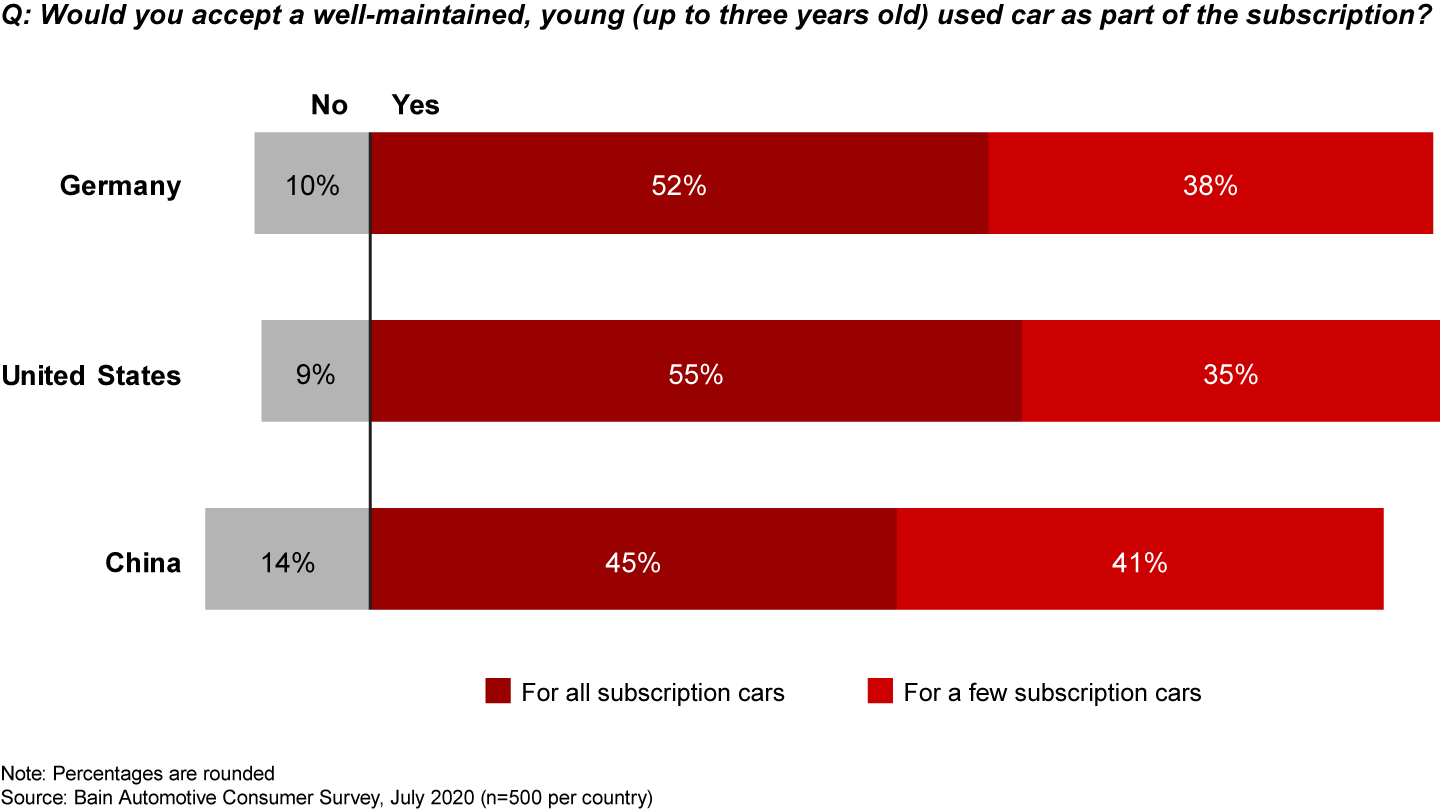
1. Subscribers want a brand-new car. In reality, the vast majority of consumers are open to driving a well-maintained, young (up to three years old), used car through their subscription, according to last year’s Bain survey. Fewer than 15% of consumers in each country said they’d accept only a new car (see Figure 1).
Figure 1

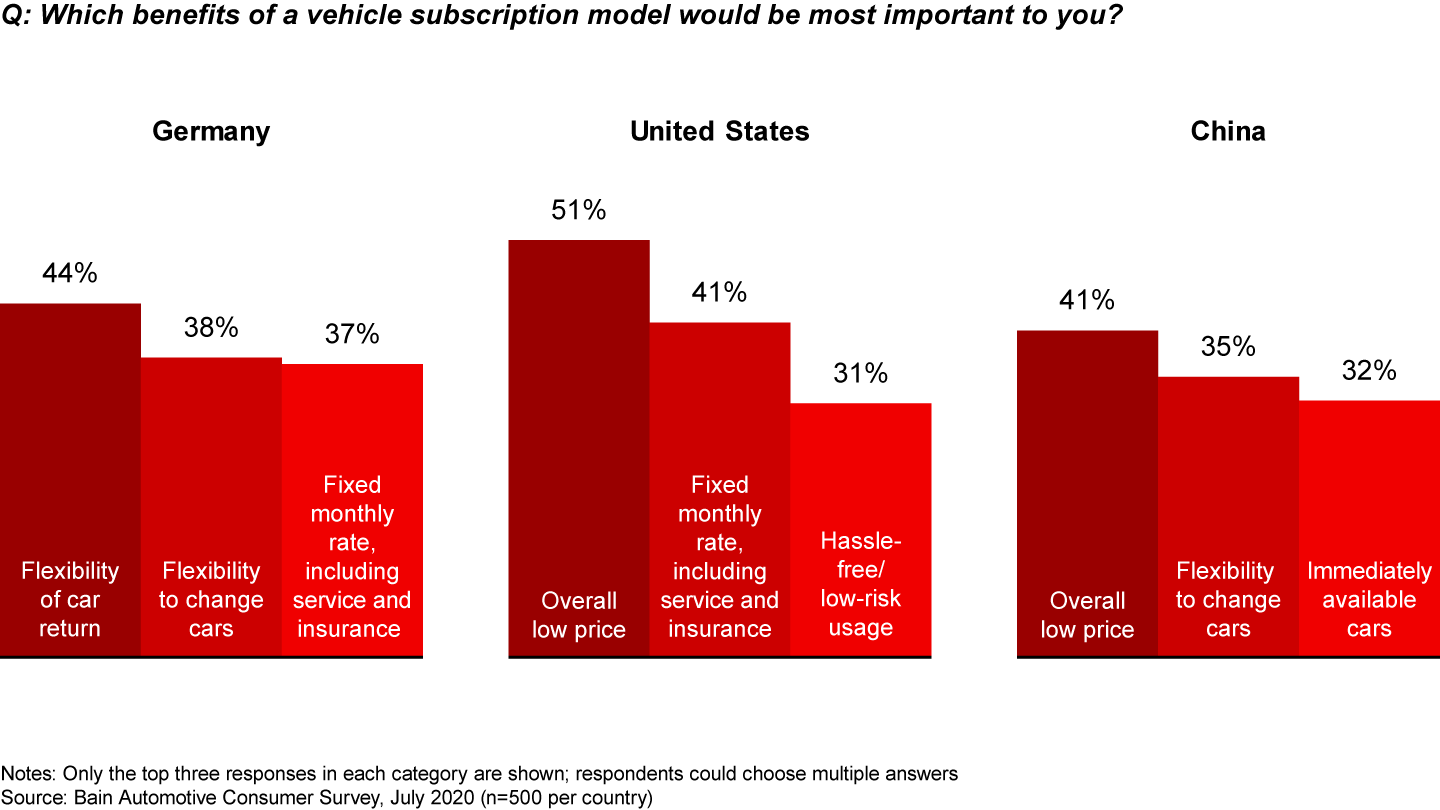
2. Customer preferences are consistent everywhere. Actually, consumer preferences vary between countries and within them, making it difficult to create a one-size-fits-all model. For example, US and Chinese consumers consider a low subscription price the most important factor, while Germans’ top preference is flexibility of the car return (see Figure 2).
Figure 2

Within each country, customer preferences tend to cut across two dimensions:
- Duration: Some consumers look for a shorter subscription (e.g., less than six months) because they just want a vehicle to bridge the time between owning cars. Other consumers treat a subscription as a more flexible way to own a vehicle. While the former group doesn’t care much about the characteristics of their subscription vehicle, the latter group tends to want some say in the vehicle’s configuration and expects a customer journey that’s similar to the traditional vehicle purchase journey (e.g., pickup at the dealer, rather than at a rental station).
- Pricing: Some consumers like to pay a fixed monthly fee for their subscription, while others prefer more flexible payments.
3. The subscription has to be one all-inclusive price. The all-inclusive, fixed monthly rate is certainly popular; more than half of consumers in the US and Germany prefer this payment option, as do 30% of Chinese consumers.
But, as mentioned above, a significant share of consumers like having flexibility—and many are willing to pay extra for it. In China, 37% of consumers prefer a fully flexible billing model, while 32% of German consumers and 24% of American consumers prefer this option. Many consumers in all three countries said they’d be willing to pay the equivalent of an extra €66 to €109 per month for flexible features such as the ability to change cars once per quarter or stop the subscription and return the car at any time.
4. Customers’ vehicle preferences are the same for subscriptions and purchases. Consumers appear more willing to branch out with their vehicle choices in a subscription model than they might be if making a traditional purchase. Bain’s survey found that a subscription vehicle plan increases many consumers’ willingness to get a premium brand, a larger car, and/or an electric vehicle—but the majority still prefer a brand they know well.
5. Car manufacturers will dominate the market for car subscriptions. In reality, the race appears to be wide open, though the winners might vary by geography. Many consumers do prefer a subscription to a single car brand: 41% of consumers in China, 40% in the US, and 32% in Germany. That bodes well for automakers’ subscription services. But there’s still plenty of opportunity for rental companies and vehicle subscription start-ups. They’re quickly developing subscription plans offering more vehicle-switching flexibility, and they have the ability to price their plans aggressively to grab market share.
One of the overarching takeaways from these five misconceptions is car subscription providers will likely take a page out of the telecommunications playbook: The leading providers will develop a deep understanding of the different needs of their target customer segments and will offer a range of different vehicle subscription contract types to appeal to all groups.
Finding the right model
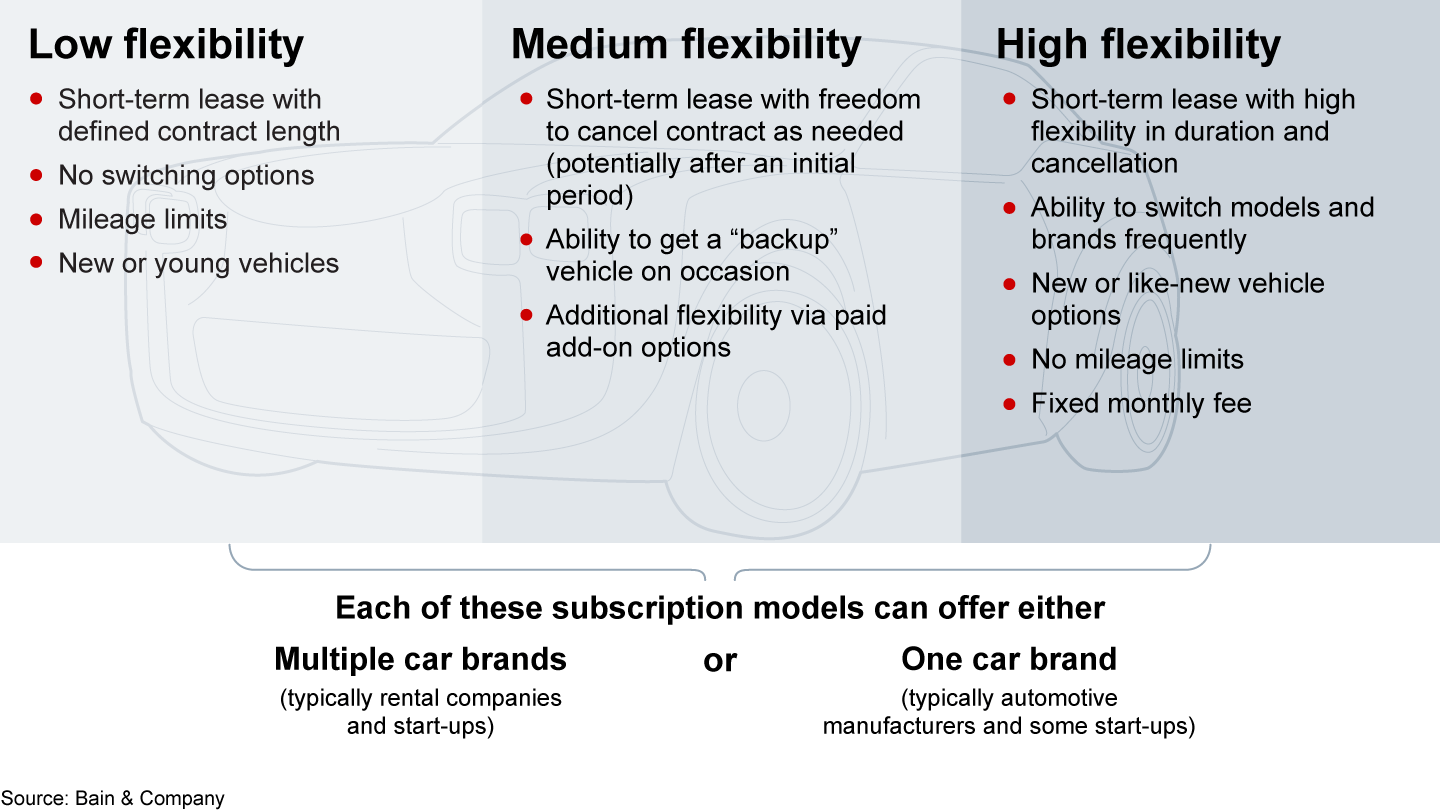
What’s a good starting place for companies that want to adjust their car subscription models in light of these misconceptions? While there’s a long list of potential business models, three primary ones have emerged (see Figure 3). These models vary based on the level of flexibility in the subscription contract and the number of brands offered. We believe these three will gain the most traction in the coming years because they improve the service providers’ economics while still catering to customers’ preferences.
Figure 3

Of course, landing on the right features of a vehicle subscription model is only step one. The emerging leaders in this field are also designing and executing their programs differently, in four strategic areas.
They’re avoiding subscription service pitfalls. Leaders sidestep common mistakes in service design and delivery in part by catering to differences in customer preferences among markets, car segments, and age groups. This might favor offering variations of subscription services.
They’re sharpening critical operational capabilities. Although the emerging subscription business models offer a clearer path to profitability, each one still requires the provider to consistently execute in key areas in order to succeed. These capabilities include dynamic pricing; high-quality customer service; strong digital tools; a well-defined marketing plan to compete with traditional automotive purchase models and channels; and sourcing, owning, and moving inventory to deliver the right vehicles at the right place and time.
They’re steering customers toward used cars and electric vehicles. Based on consumer interest in the Bain survey, subscription services could be a gateway to marketing used cars and battery-electric vehicles.
They’re involving dealers and partners. Leaders avoid competition with dealers and seek opportunities to work with partners to deliver the subscription service efficiently. For example, automakers might form partnerships with rental companies.
Getting a lift
After years of vehicle subscription services not reaching their full potential, the pandemic has opened a window for companies to rethink these services. It’s unclear how big of a market this new wave of subscription services will create. But if companies design and execute them well, they can turn into profitable enterprises that provide a meaningful lift to the rest of the business.
Executives looking to transform their car subscription service can start by asking themselves the following questions:
- What percentage of our company’s total annual revenue do we aim to sell via this new channel?
- Which target customers do we plan to serve (e.g., existing vs. new, older vs. younger)?
- Which subscription business model makes the most sense for our company, based on our current product portfolio, operational capabilities, and brand strength?
- Which operational capabilities do we need to strengthen in order to build a successful subscription service? How should we prioritize and invest in those capabilities?
- What’s the long-term vision for how our subscription service fits into our product portfolio and overall value proposition?
The authors would like to thank Bain Senior Manager Michael Höning for his very valuable contributions and support.
First published in 4월 2021