Skip to Content
  • 오피스

    오피스

    미주
    • Atlanta
    • Austin
    • Bogota
    • Boston
    • Buenos Aires
    • Chicago
    • Dallas
    • Denver
    • Houston
    • Los Angeles
    • Mexico City
    • Minneapolis
    • Monterrey
    • Montreal
    • New York
    • Rio de Janeiro
    • San Francisco
    • Santiago
    • São Paulo
    • Seattle
    • Silicon Valley
    • Toronto
    • Washington, DC
    유럽, 중동, 아프리카
    • Amsterdam
    • Athens
    • Berlin
    • Brussels
    • Copenhagen
    • Doha
    • Dubai
    • Dusseldorf
    • Frankfurt
    • Helsinki
    • Istanbul
    • Johannesburg
    • Kyiv
    • Lisbon
    • London
    • Madrid
    • Milan
    • Munich
    • Oslo
    • Paris
    • Riyadh
    • Rome
    • Stockholm
    • Vienna
    • Warsaw
    • Zurich
    아시아, 호주
    • Bangkok
    • Beijing
    • Bengaluru
    • Brisbane
    • Ho Chi Minh City
    • Hong Kong
    • Jakarta
    • Kuala Lumpur
    • Manila
    • Melbourne
    • Mumbai
    • New Delhi
    • Perth
    • Seoul
    • Shanghai
    • Singapore
    • Sydney
    • Tokyo
    오피스 전체보기
  • 얼럼나이
  • 미디어 센터
  • 구독
  • 연락처
  • Korea | 한국어

    지역 및 언어 선택

    글로벌
    • Global (English)
    미주
    • Brazil (Português)
    • Argentina (Español)
    • Canada (Français)
    • Chile (Español)
    • Colombia (Español)
    유럽, 중동, 아프리카
    • France (Français)
    • DACH Region (Deutsch)
    • Italy (Italiano)
    • Spain (Español)
    • Greece (Elliniká)
    아시아, 호주
    • China (中文版)
    • Korea (한국어)
    • Japan (日本語)
  • Saved items (0)
    Saved items (0)

    You have no saved items.

    관심 있는 내용을 북마크하여 Red 폴더에 저장할 수 있습니다. Red 폴더 에서 저장된 내용을 읽거나 공유해보세요.

    Explore Bain Insights
  • 산업
    메인 메뉴

    산업

    • 우주항공, 방산 및 정부 서비스
    • 농업 관련 산업
    • 화학
    • 인프라, 건설 및 건축 자재
    • 소비재
    • 금융 서비스
    • 헬스케어
    • 산업용 기계 및 장비
    • 미디어 및 엔터테인먼트
    • 금속
    • 광업
    • 석유 및 가스
    • 제지 및 패키징 산업
    • 사모펀드
    • 사회 및 공공 부문
    • 유통
    • 기술
    • 텔레콤
    • 운송
    • 여행·여가
    • 유틸리티 및 재생가능 에너지
  • 컨설팅 서비스
    메인 메뉴

    컨설팅 서비스

    • Customer Experience
    • ESG
    • Innovation
    • M&A
    • 운영
    • 조직
    • 사모펀드
    • 고객 전략 및 마케팅
    • 전략
    • AI, 인사이트 및 솔루션
    • Technology
    • 변화 혁신
  • Digital
  • 인사이트
  • 베인 소개
    메인 메뉴

    베인 소개

    • 업무 소개
    • 베인의 신념
    • 구성원 및 리더십 소개
    • 고객 성과
    • 주요 수상 경력
    • 글로벌 파트너사
    Further: Our global responsibility
    • 다양성과 포용
    • 사회 공헌 활동
    • Sustainability
    • World Economic Forum
    Learn more about Further
  • Careers
    메인 메뉴

    Careers

    • Work with Us
      Careers
      Work with Us
      • Find Your Place
      • Our Work Areas
      • Integrated Teams
      • Students
      • Internships & Programs
      • Recruiting Events
    • Life at Bain
      Careers
      Life at Bain
      • Blog: Inside Bain
      • Career Stories
      • Our People
      • Where We Work
      • Supporting Your Growth
      • Affinity Groups
      • Benefits
    • Impact Stories
    • Hiring Process
      Careers
      Hiring Process
      • What to Expect
      • Interviewing
    FIND JOBS
  • 오피스
    메인 메뉴

    오피스

    • 미주
      오피스
      미주
      • Atlanta
      • Austin
      • Bogota
      • Boston
      • Buenos Aires
      • Chicago
      • Dallas
      • Denver
      • Houston
      • Los Angeles
      • Mexico City
      • Minneapolis
      • Monterrey
      • Montreal
      • New York
      • Rio de Janeiro
      • San Francisco
      • Santiago
      • São Paulo
      • Seattle
      • Silicon Valley
      • Toronto
      • Washington, DC
    • 유럽, 중동, 아프리카
      오피스
      유럽, 중동, 아프리카
      • Amsterdam
      • Athens
      • Berlin
      • Brussels
      • Copenhagen
      • Doha
      • Dubai
      • Dusseldorf
      • Frankfurt
      • Helsinki
      • Istanbul
      • Johannesburg
      • Kyiv
      • Lisbon
      • London
      • Madrid
      • Milan
      • Munich
      • Oslo
      • Paris
      • Riyadh
      • Rome
      • Stockholm
      • Vienna
      • Warsaw
      • Zurich
    • 아시아, 호주
      오피스
      아시아, 호주
      • Bangkok
      • Beijing
      • Bengaluru
      • Brisbane
      • Ho Chi Minh City
      • Hong Kong
      • Jakarta
      • Kuala Lumpur
      • Manila
      • Melbourne
      • Mumbai
      • New Delhi
      • Perth
      • Seoul
      • Shanghai
      • Singapore
      • Sydney
      • Tokyo
    오피스 전체보기
  • 얼럼나이
  • 미디어 센터
  • 구독
  • 연락처
  • Korea | 한국어
    메인 메뉴

    지역 및 언어 선택

    • 글로벌
      지역 및 언어 선택
      글로벌
      • Global (English)
    • 미주
      지역 및 언어 선택
      미주
      • Brazil (Português)
      • Argentina (Español)
      • Canada (Français)
      • Chile (Español)
      • Colombia (Español)
    • 유럽, 중동, 아프리카
      지역 및 언어 선택
      유럽, 중동, 아프리카
      • France (Français)
      • DACH Region (Deutsch)
      • Italy (Italiano)
      • Spain (Español)
      • Greece (Elliniká)
    • 아시아, 호주
      지역 및 언어 선택
      아시아, 호주
      • China (中文版)
      • Korea (한국어)
      • Japan (日本語)
  • Saved items  (0)
    메인 메뉴
    Saved items (0)

    You have no saved items.

    관심 있는 내용을 북마크하여 Red 폴더에 저장할 수 있습니다. Red 폴더 에서 저장된 내용을 읽거나 공유해보세요.

    Explore Bain Insights
  • 산업
    • 산업

      • 우주항공, 방산 및 정부 서비스
      • 농업 관련 산업
      • 화학
      • 인프라, 건설 및 건축 자재
      • 소비재
      • 금융 서비스
      • 헬스케어
      • 산업용 기계 및 장비
      • 미디어 및 엔터테인먼트
      • 금속
      • 광업
      • 석유 및 가스
      • 제지 및 패키징 산업
      • 사모펀드
      • 사회 및 공공 부문
      • 유통
      • 기술
      • 텔레콤
      • 운송
      • 여행·여가
      • 유틸리티 및 재생가능 에너지
  • 컨설팅 서비스
    • 컨설팅 서비스

      • Customer Experience
      • ESG
      • Innovation
      • M&A
      • 운영
      • 조직
      • 사모펀드
      • 고객 전략 및 마케팅
      • 전략
      • AI, 인사이트 및 솔루션
      • Technology
      • 변화 혁신
  • Digital
  • 인사이트
  • 베인 소개
    • 베인 소개

      • 업무 소개
      • 베인의 신념
      • 구성원 및 리더십 소개
      • 고객 성과
      • 주요 수상 경력
      • 글로벌 파트너사
      Further: Our global responsibility
      • 다양성과 포용
      • 사회 공헌 활동
      • Sustainability
      • World Economic Forum
      Learn more about Further
  • Careers
    최근 검색어
      최근 방문 페이지

      Content added to saved items

      Saved items (0)

      Removed from saved items

      Saved items (0)

      Report

      How India Shops Online 2025

      How India Shops Online 2025

      Evolving shopper habits and business models are reshaping the e-retail market.

      글 Arpan Sheth, Shyam Unnikrishnan, Manan Bhasin, and Punit Parekh

      • First published on 3월 26, 2025
      • 읽기 소요시간
      }

      Report

      How India Shops Online 2025
      en

      Executive summary

      India has become a retail powerhouse over the last decade, ascending to the third largest retail market globally in 2024. The Indian e-retail market has surged to approximately $60 billion in gross merchandise value (GMV), boasting the world’s second-largest online shopper base.

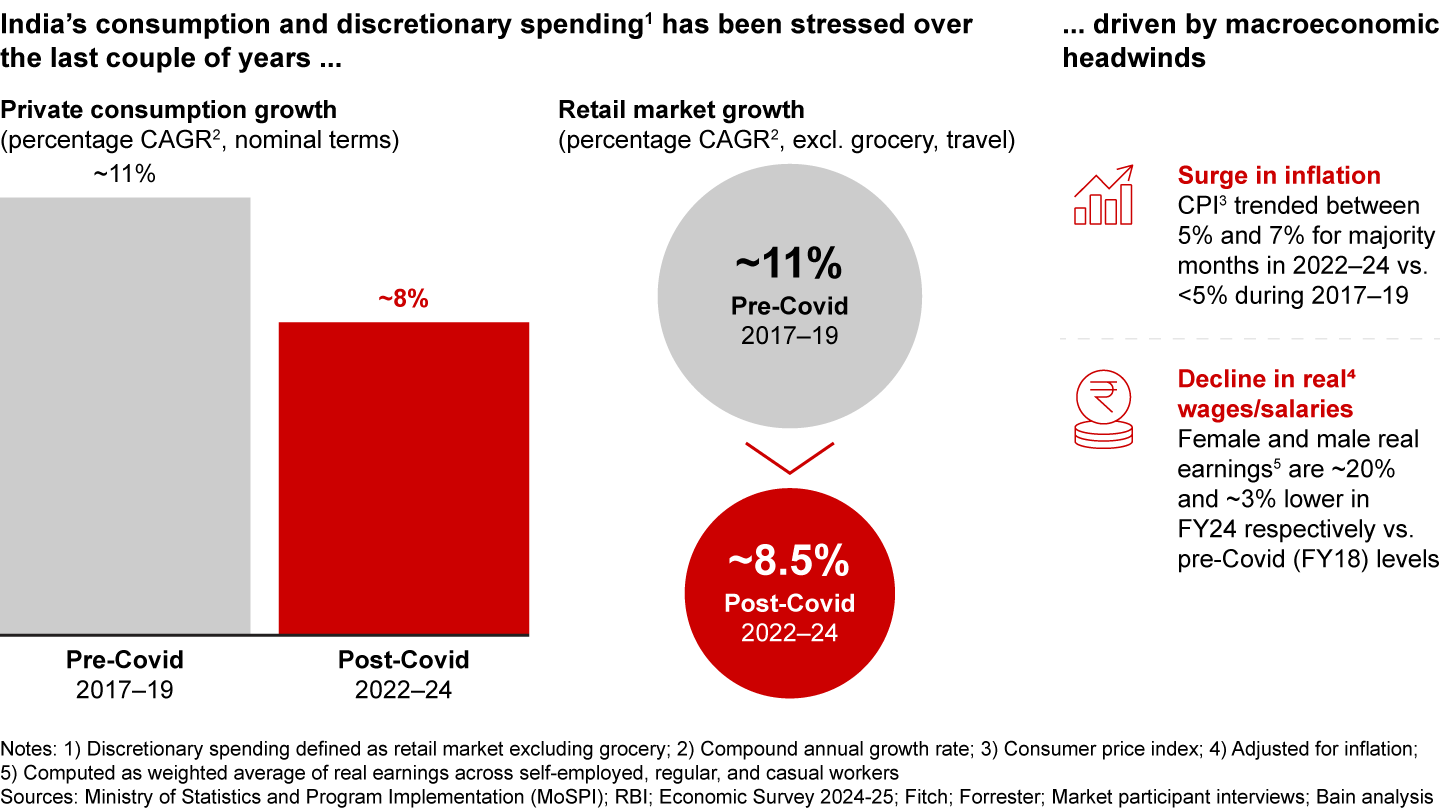
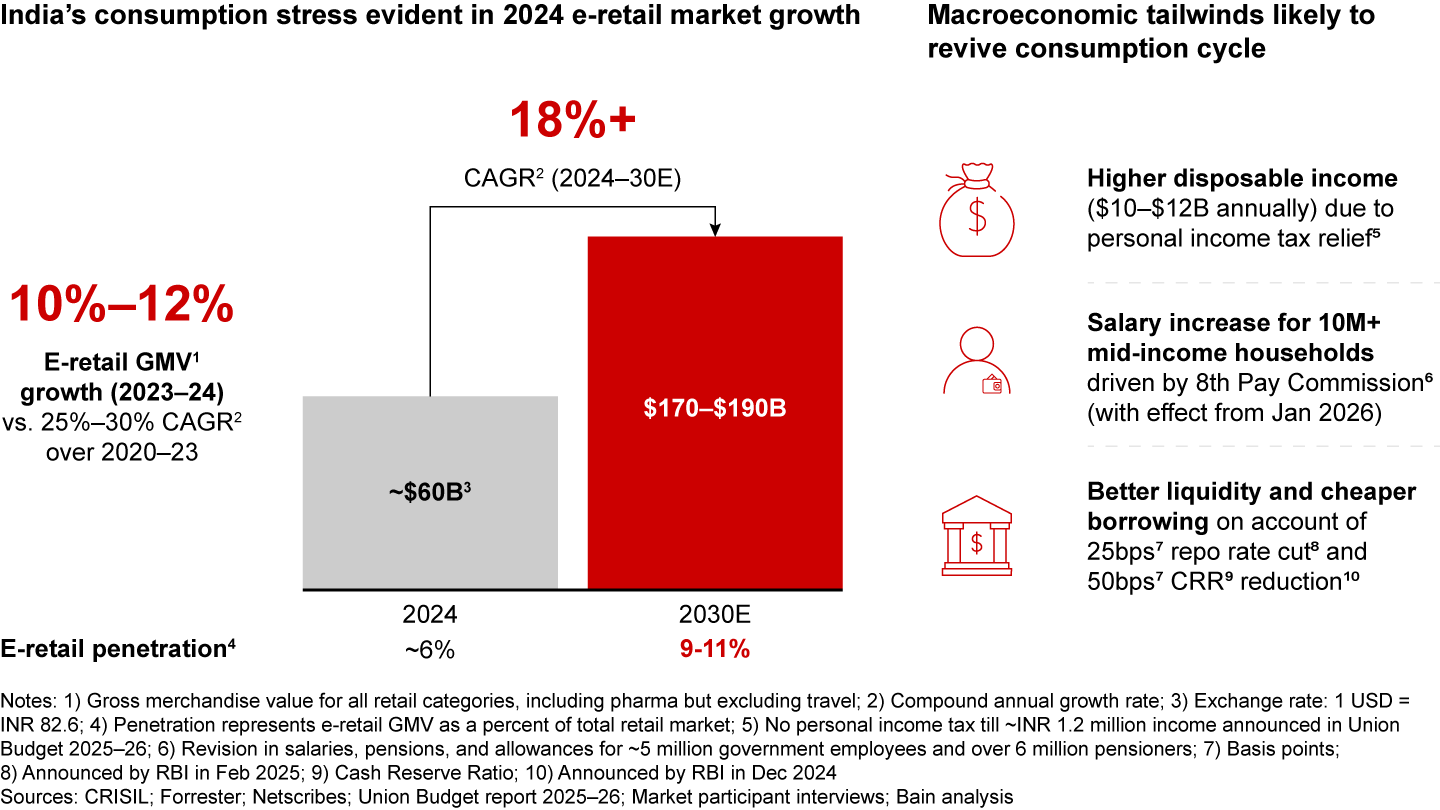
      India’s consumption and discretionary spending have faced headwinds in recent years, with private consumption growth slowing from 11% pre-Covid (2017–19) to ~8% post-Covid (2022–24). This decline is driven by higher inflation and a stagnation of real wages. The stress in consumption is evident in e-retail growth in 2024 being 10%–12%, compared to historical growth rates of over 20%.

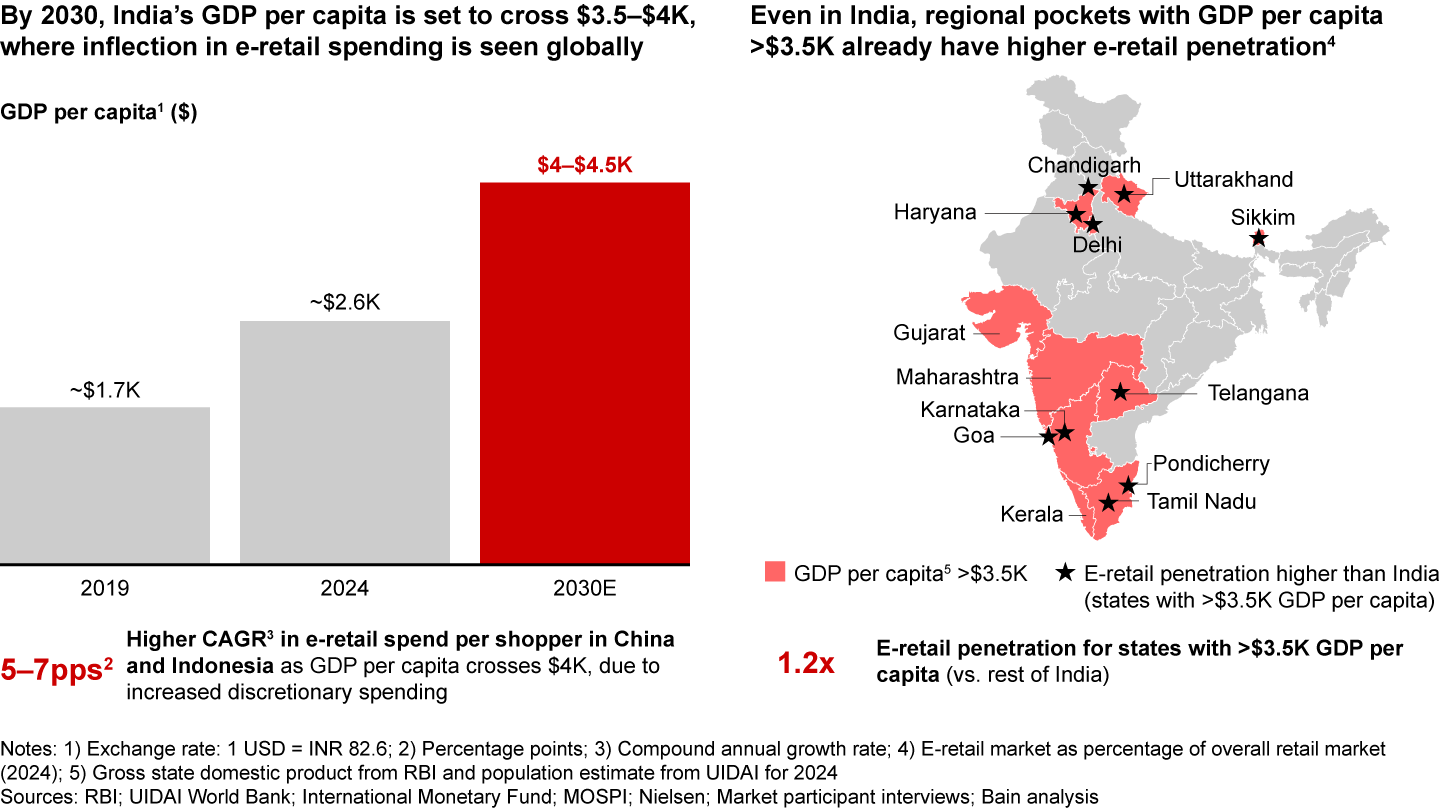
      However, the recent fiscal and monetary policy interventions are expected to drive a rebound in e-retail growth, especially from the festive period of 2025, on account of revival in the consumption cycle. Long-term market fundamentals remain robust, with e-retail projected to exceed 18% growth over the next six years, reaching an estimated $170–$190 billion in GMV, with nearly 1 in 10 retail dollars spent on e-retail by 2030. This growth will be fueled by increased discretionary spending as India’s per capita GDP surpasses $3,500–$4,000—a crucial tipping point unlocking discretionary and e-retail spending globally. States in India with per capita GDP above $3,500 already exhibit 1.2 times higher e-retail penetration than other regions.

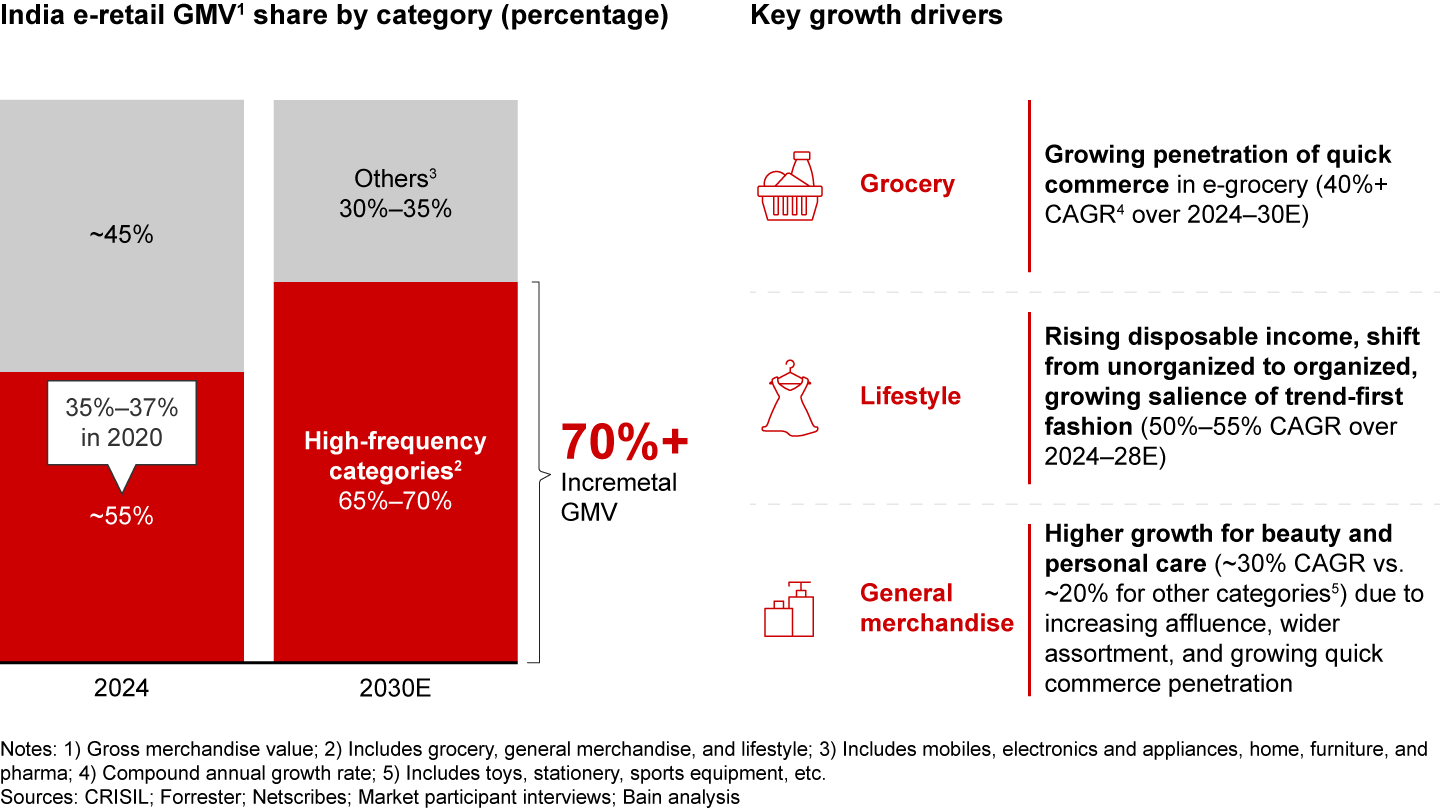
      High-frequency categories such as grocery, lifestyle, and general merchandise will drive e-retail growth, accounting for two out of every three dollars spent on e-retail by 2030. These categories are set to see a two- to fourfold increase in e-retail penetration over this period.

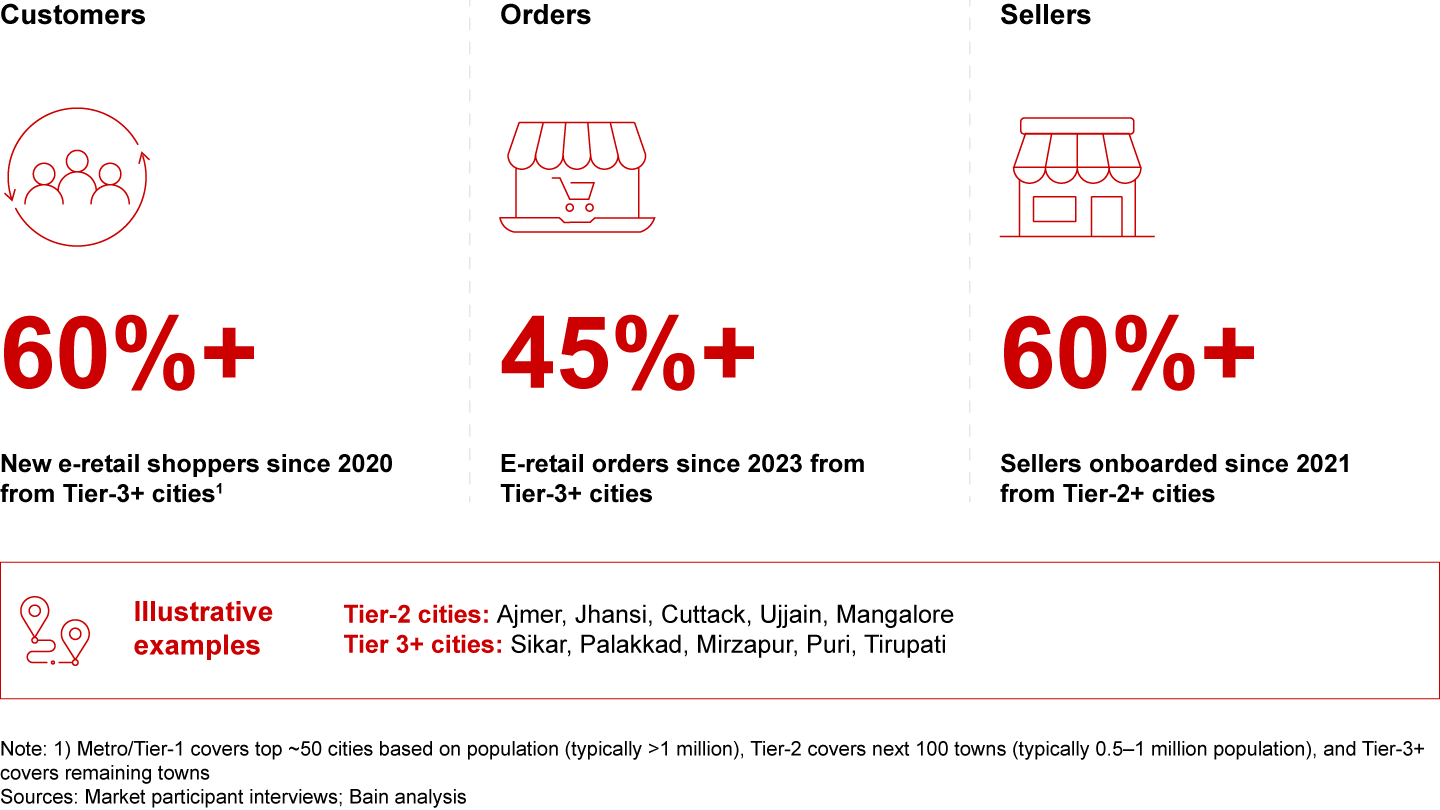
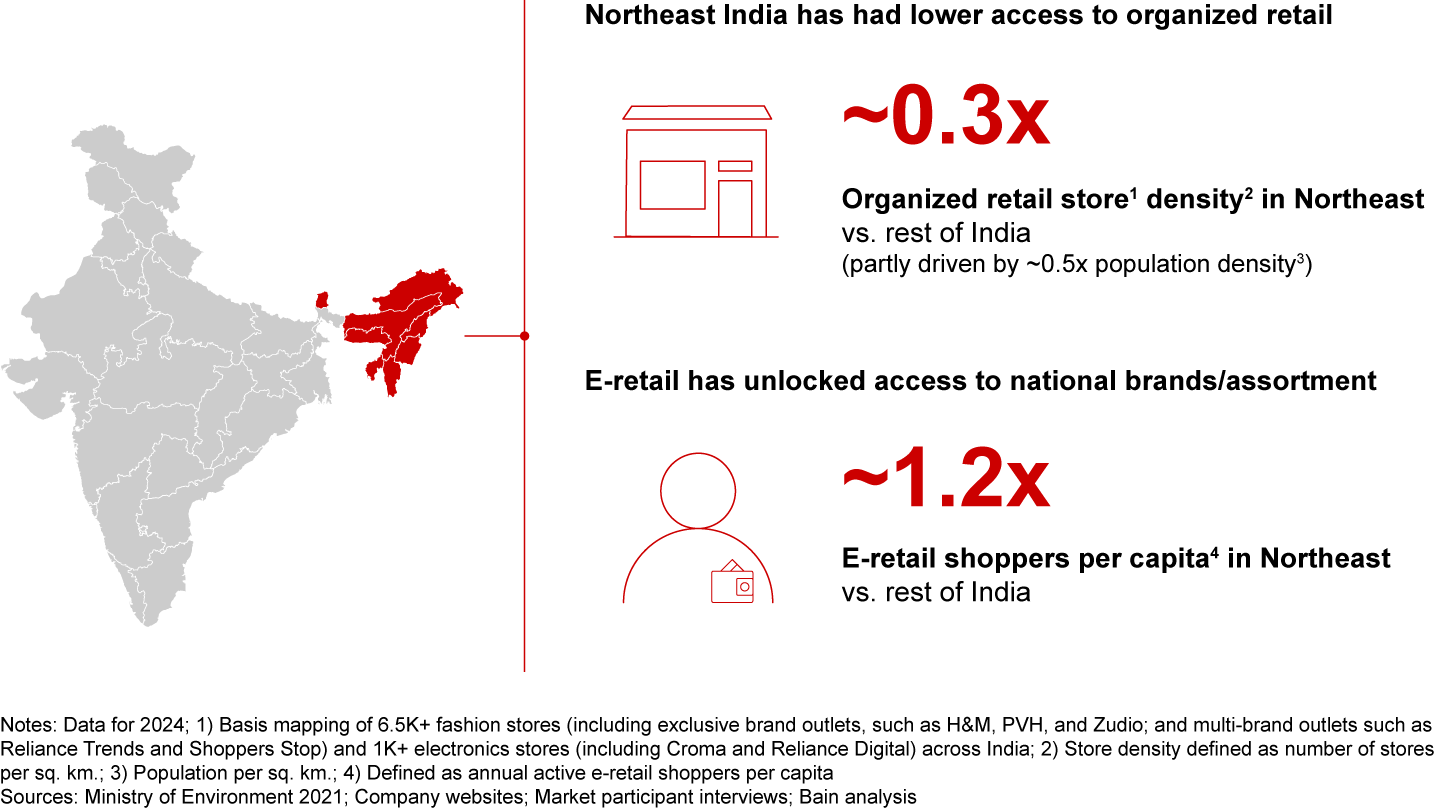
      Growth will continue to reshape India’s shopping landscape. User adoption is already spreading from Tier-2 to Tier-3 cities, with three in five new shoppers since 2020 coming from cities designated Tier-3 or smaller. This growth is unlocking access for consumers in remote, brand-starved areas, as evidenced by the 1.2 times higher e-retail shopper penetration in the Northeast compared to the rest of India. The seller base is also diversifying, with 60% of new sellers since 2021 hailing from Tier-2 or smaller cities.

      Written in collaboration with

      Written in collaboration with

      flipkart-new-55.png


      Three disruptions—quick commerce, trend-first commerce (especially in fashion), and hyper-value commerce—will define the next chapter of growth. Each of these models is at a different level of maturity. Together, their evolution will shape the future of India’s e-retail landscape.

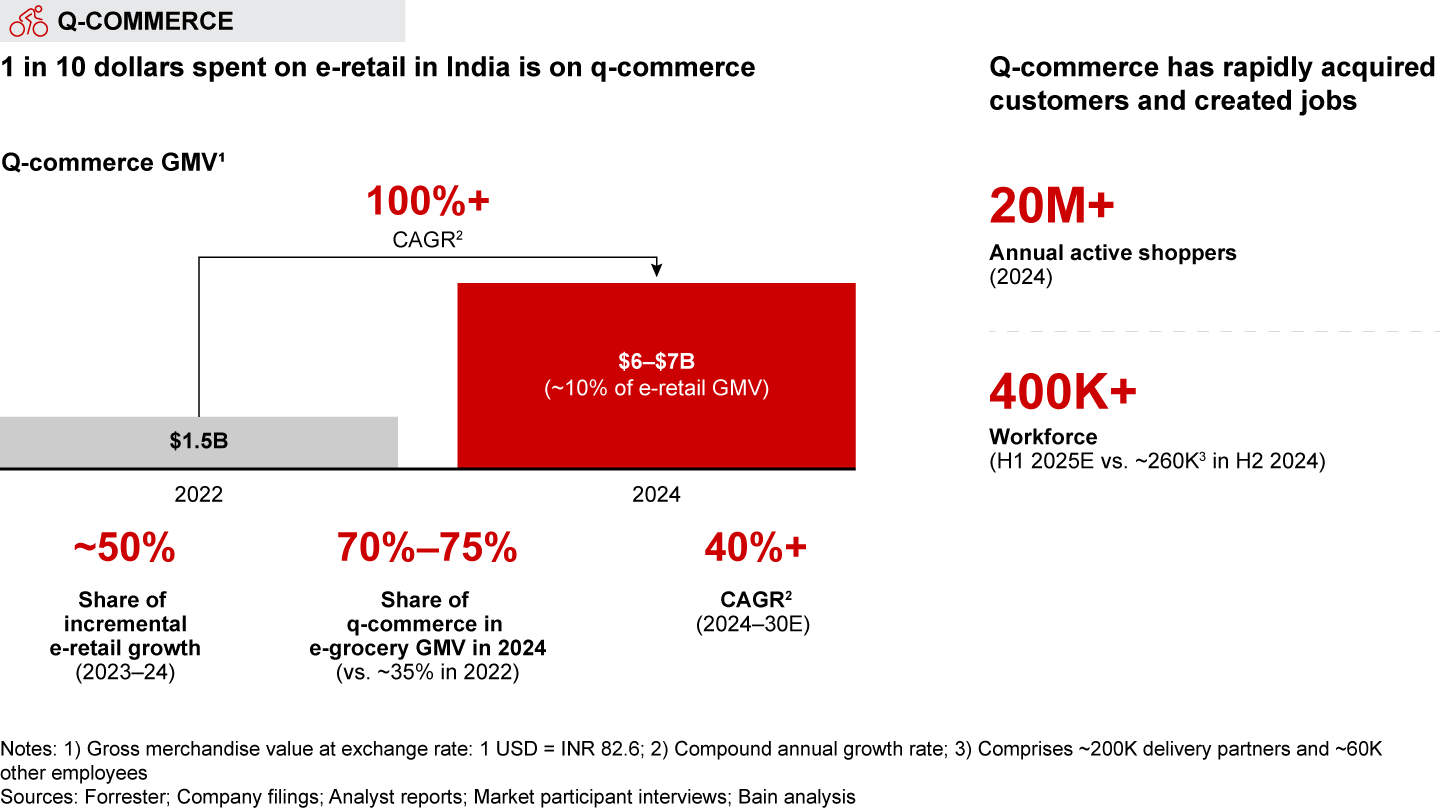
      Quick commerce (Q-commerce; less than 30-minute delivery): Q-commerce is revolutionizing how consumers buy in India, with over two-thirds of all e-grocery orders and a tenth of overall e-retail dollars spent on these platforms. Indian q-commerce players have bucked global trends and scaled profitably. India’s unique structural advantages, including high population density and close access to a network of low-rent dark stores, have enabled this growth. Q-commerce has since attracted multiple players, which has made the consumer value proposition richer.

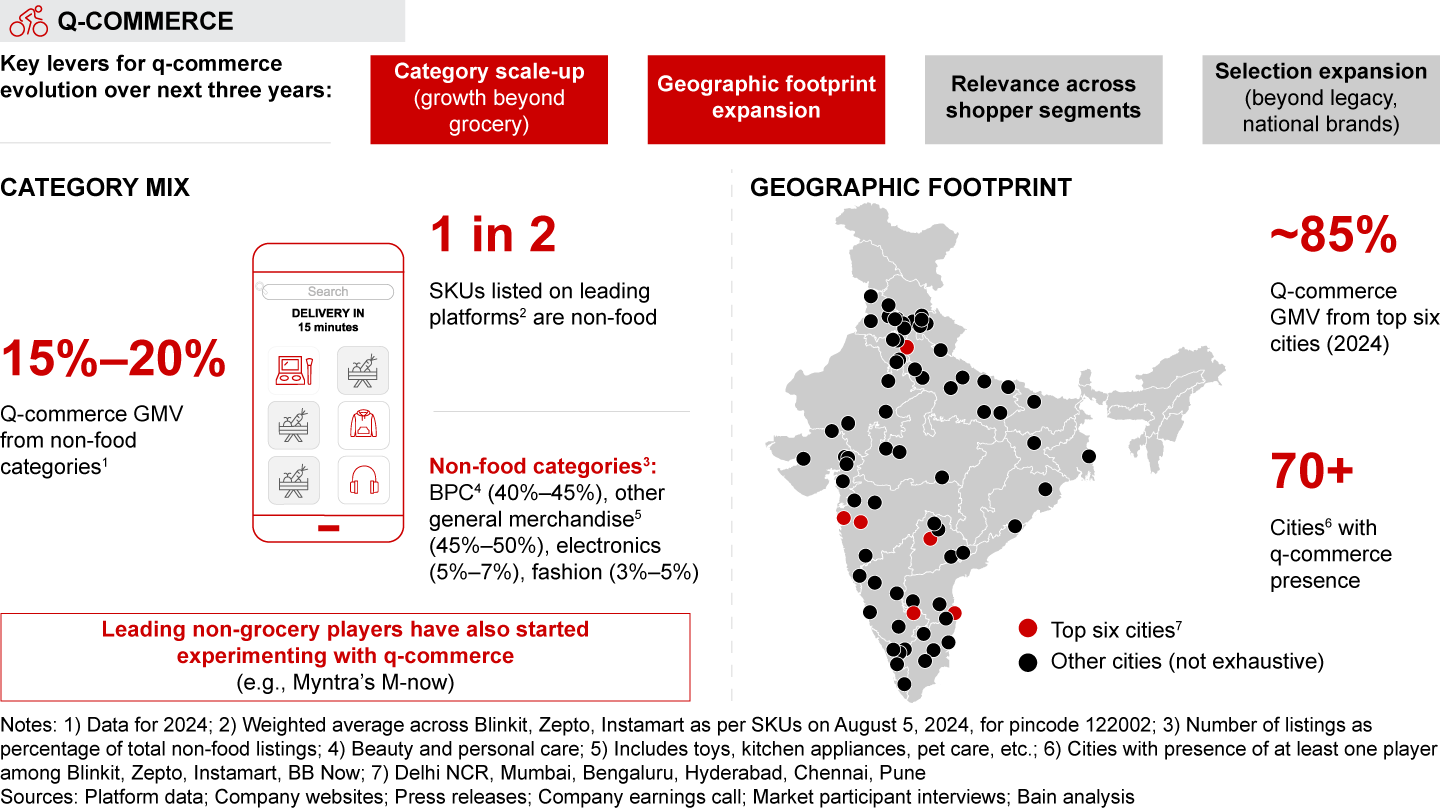
      Q-commerce is projected to grow at over 40% annually through 2030, driven by expansion across categories, geographies, and customer segments. While q-commerce began with grocery, 15%–20% of its GMV now comes from categories such as general merchandise, mobile phones, electronics, and apparel. Expansion beyond major cities has also fueled growth, though the top six metros still account for the lion’s share of GMV.

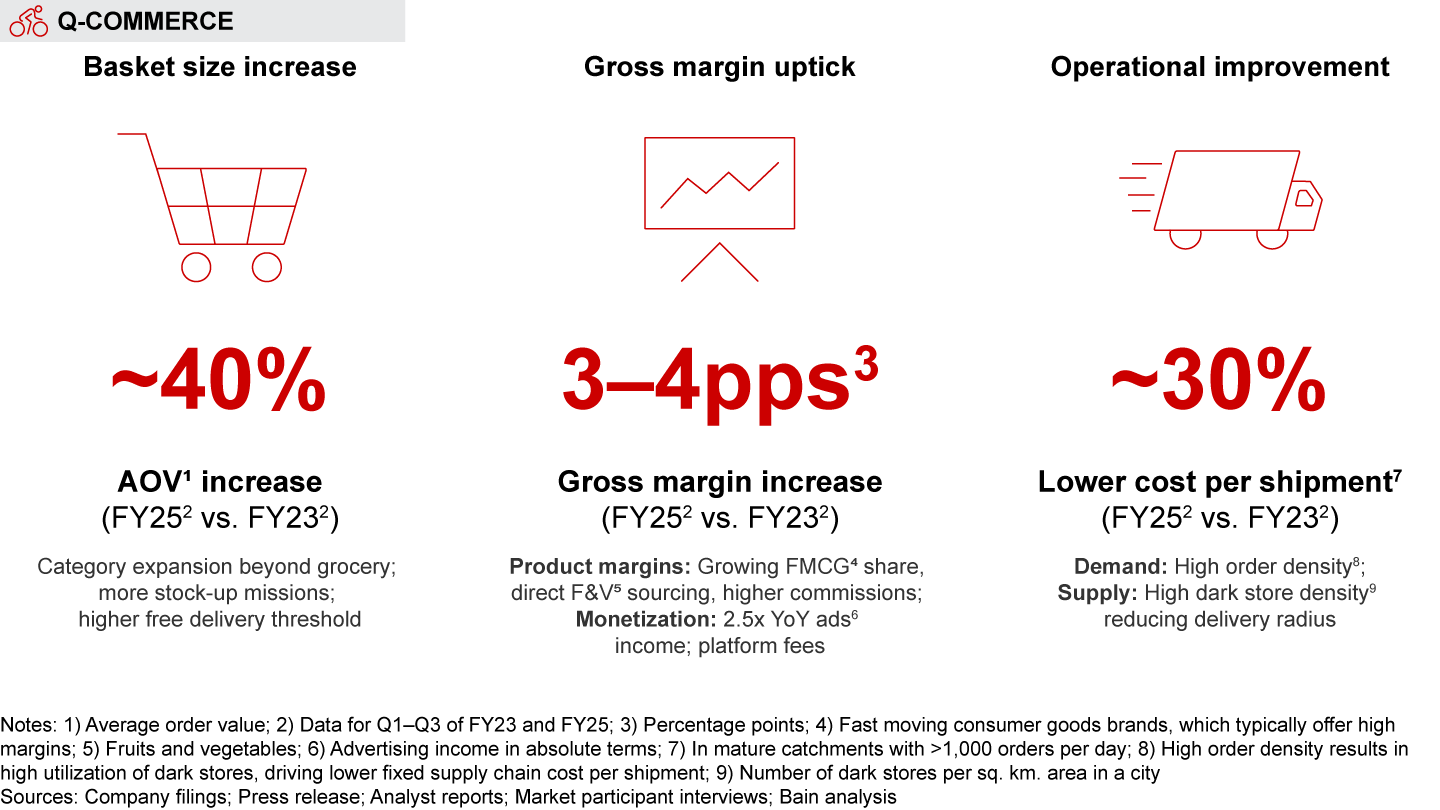
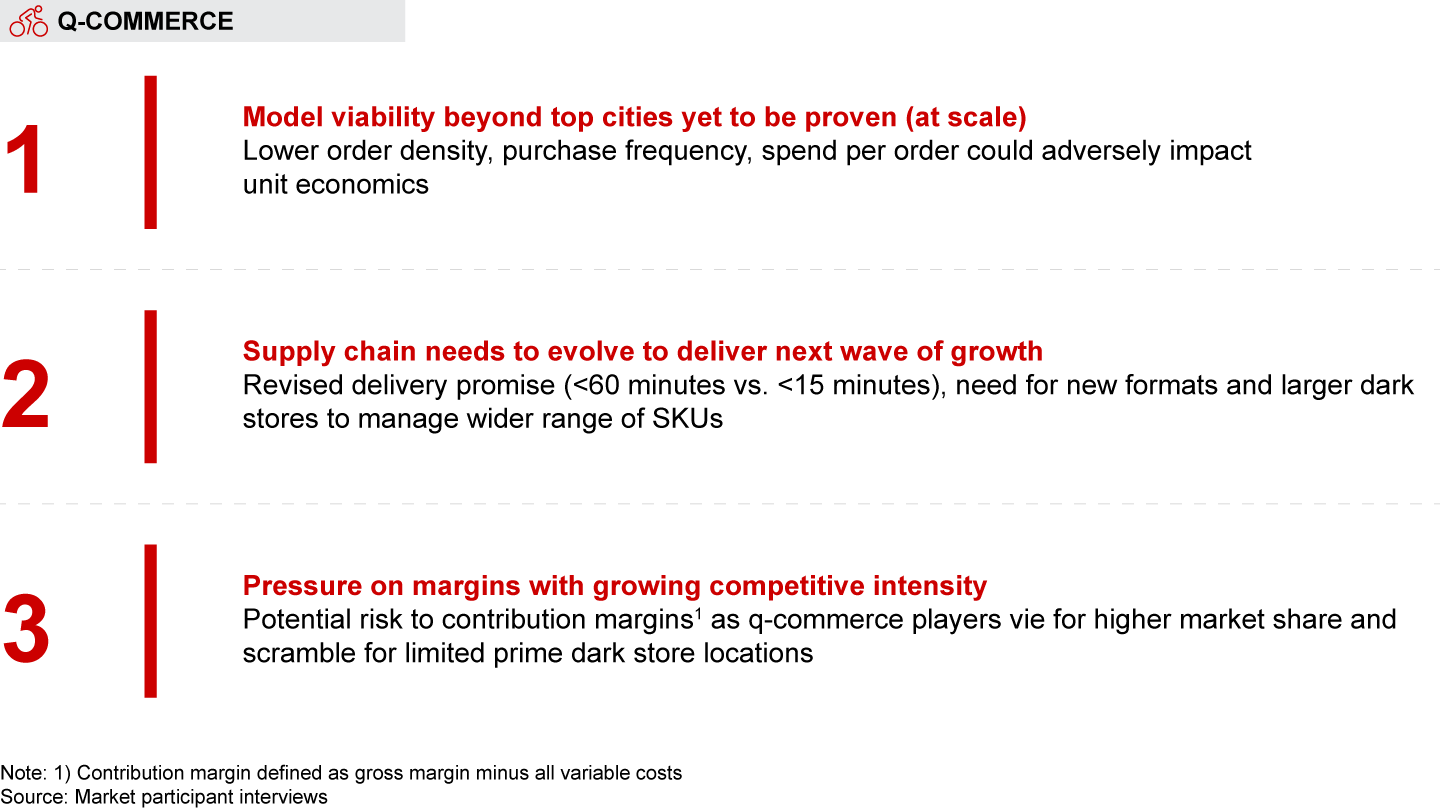
      Q-commerce players have improved unit economics by increasing order values, lowering supply chain costs, and enhancing gross margins (via direct sourcing from producers and farmers, and deploying monetization levers such as advertising and platform fees). However, to sustain profitable growth, companies must adapt their business models for markets beyond major metros, manage rising competition, and optimize supply chains as the market evolves into a two-speed proposition—offering select products in under 15 minutes and a wider assortment within an hour.

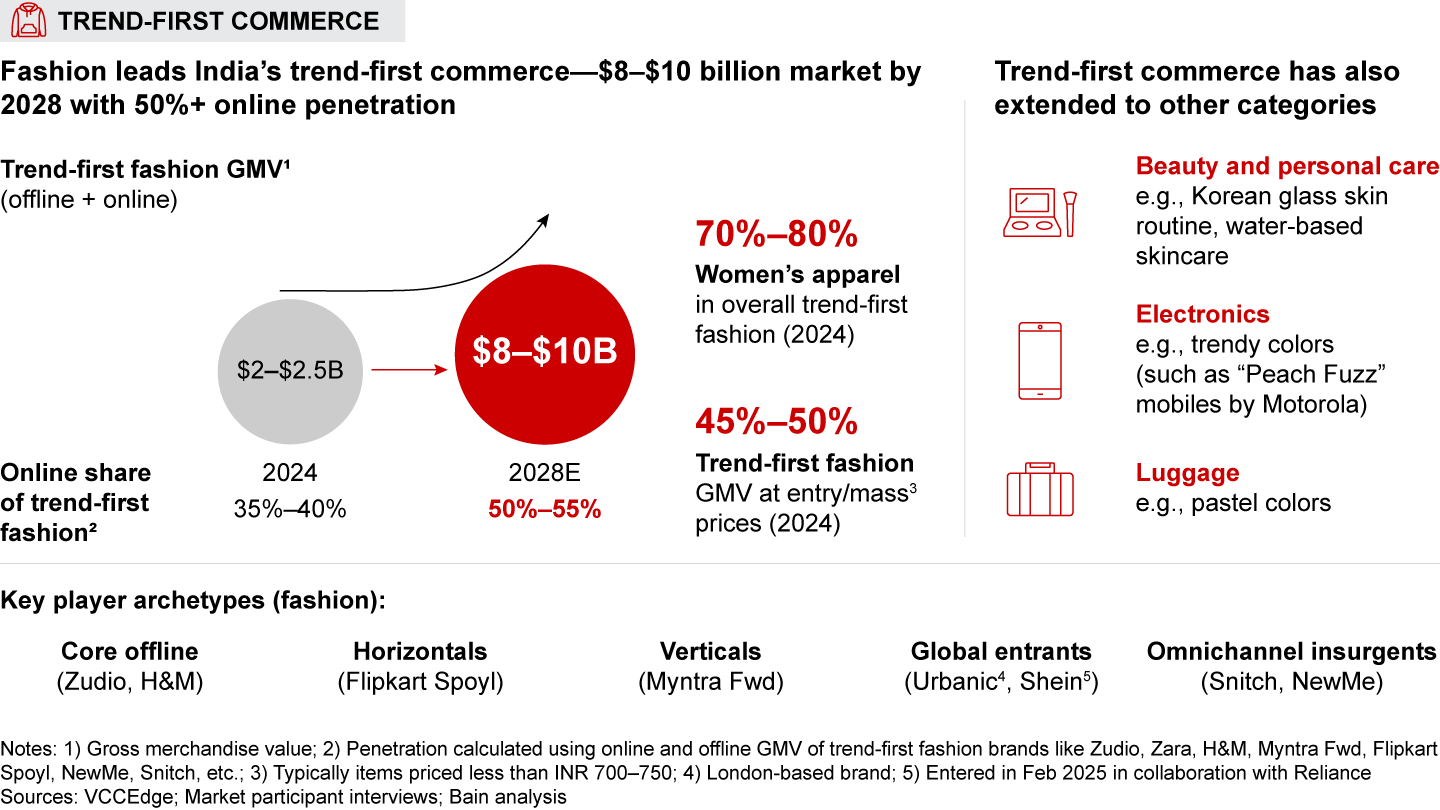
      Trend-first commerce (frequent launches of trendy collections at affordable prices): This model is rapidly gaining momentum in India. Trend-first fashion alone is expected to grow fourfold, reaching approximately $8 to $10 billion by 2028, with more than half of this revenue from online sales. Interestingly, this model is also quickly expanding beyond fashion, with the role of trendy assortment expanding in categories such as beauty (e.g., Korean glass skin routine), electronics (e.g., vibrantly colored smartwatches), and luggage.

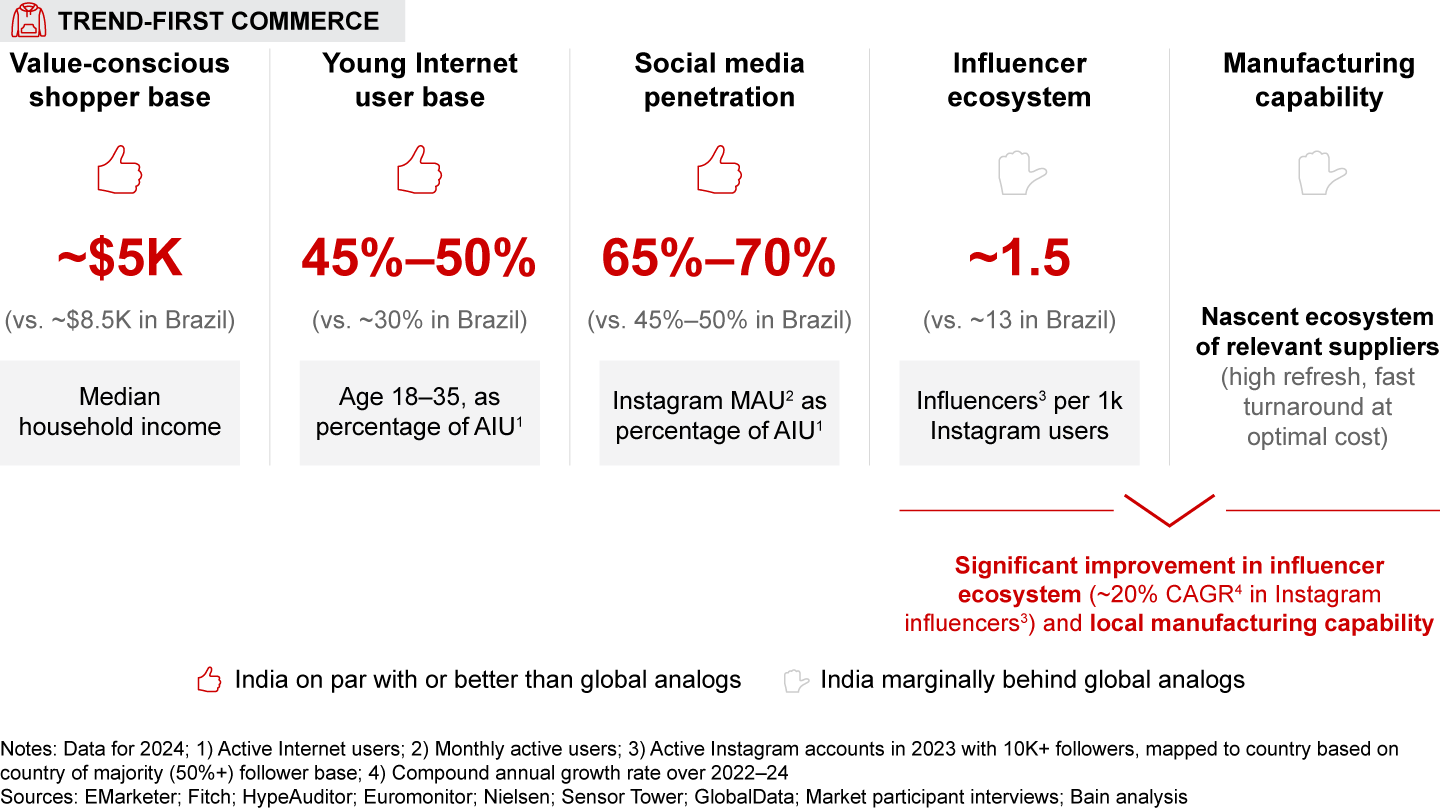
      India’s unique demographics—with a large base of young, value-conscious consumers who are active on social media—position it perfectly for the trend-first commerce boom. The rapidly expanding influencer and supplier ecosystems will only further accelerate this growth.

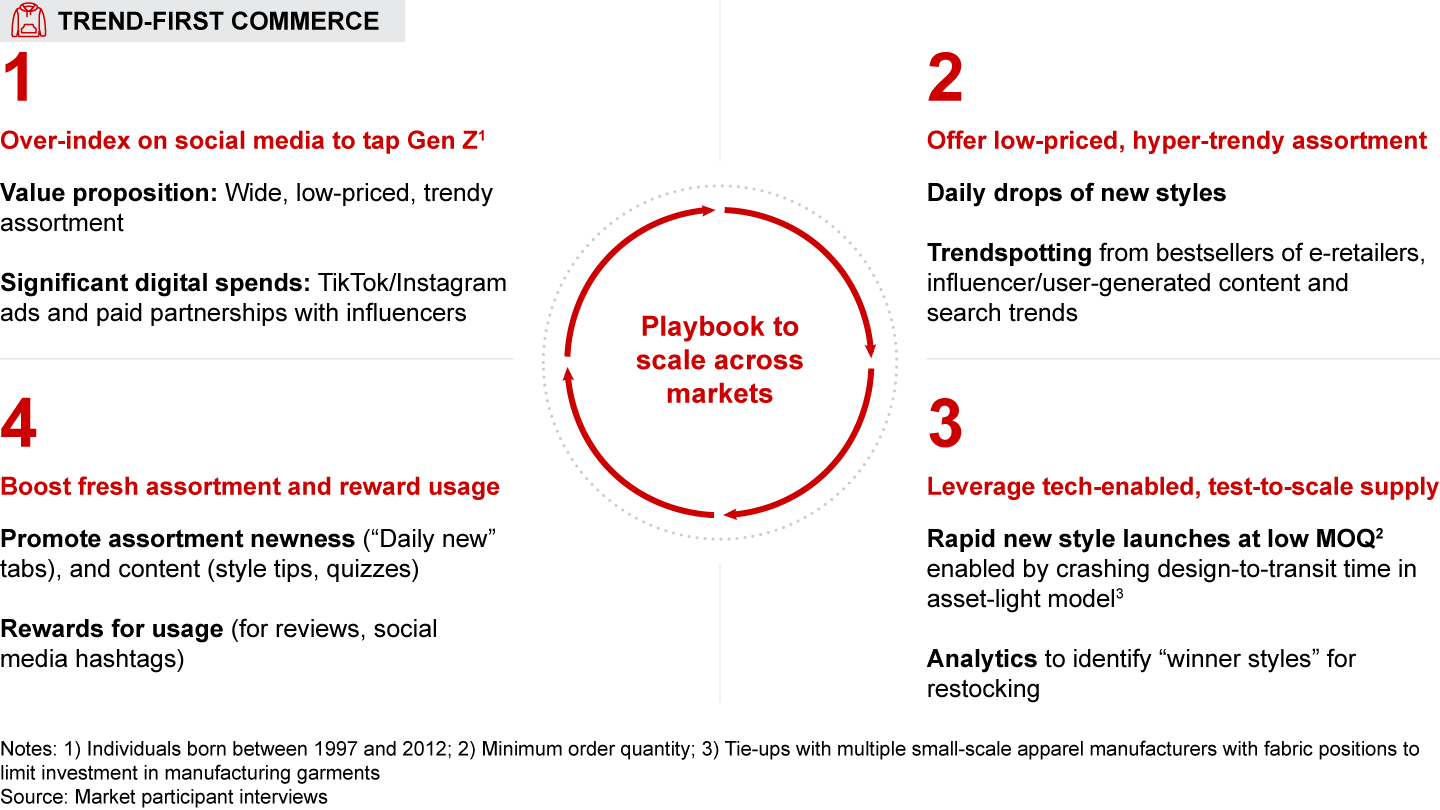
      Globally, trend-first fashion has thrived by following a tech-driven, repeatable playbook involving four key components: (1) investing in social media to target Gen Z; (2) offering hyper-trendy, low-priced collections with daily launches driven by advanced trend-spotting algorithms; (3) utilizing a test-and-scale model to quickly introduce and restock popular styles; and (4) providing a bespoke user experience that emphasizes novelty and rewards user engagement.

      In India, multiple players are looking to capture a slice of this market. Offline brands such as Zudio (by Trent), H&M, and Zara have successfully offered a compelling “trends-first” proposition to Indian consumers. Meanwhile, online platforms, such as Flipkart Spoyl, Myntra Fwd and Shein, along with emerging brands like Urbanic, Snitch, and NewMe, are also looking to win over Gen Z consumers and trend-savvy millennials.

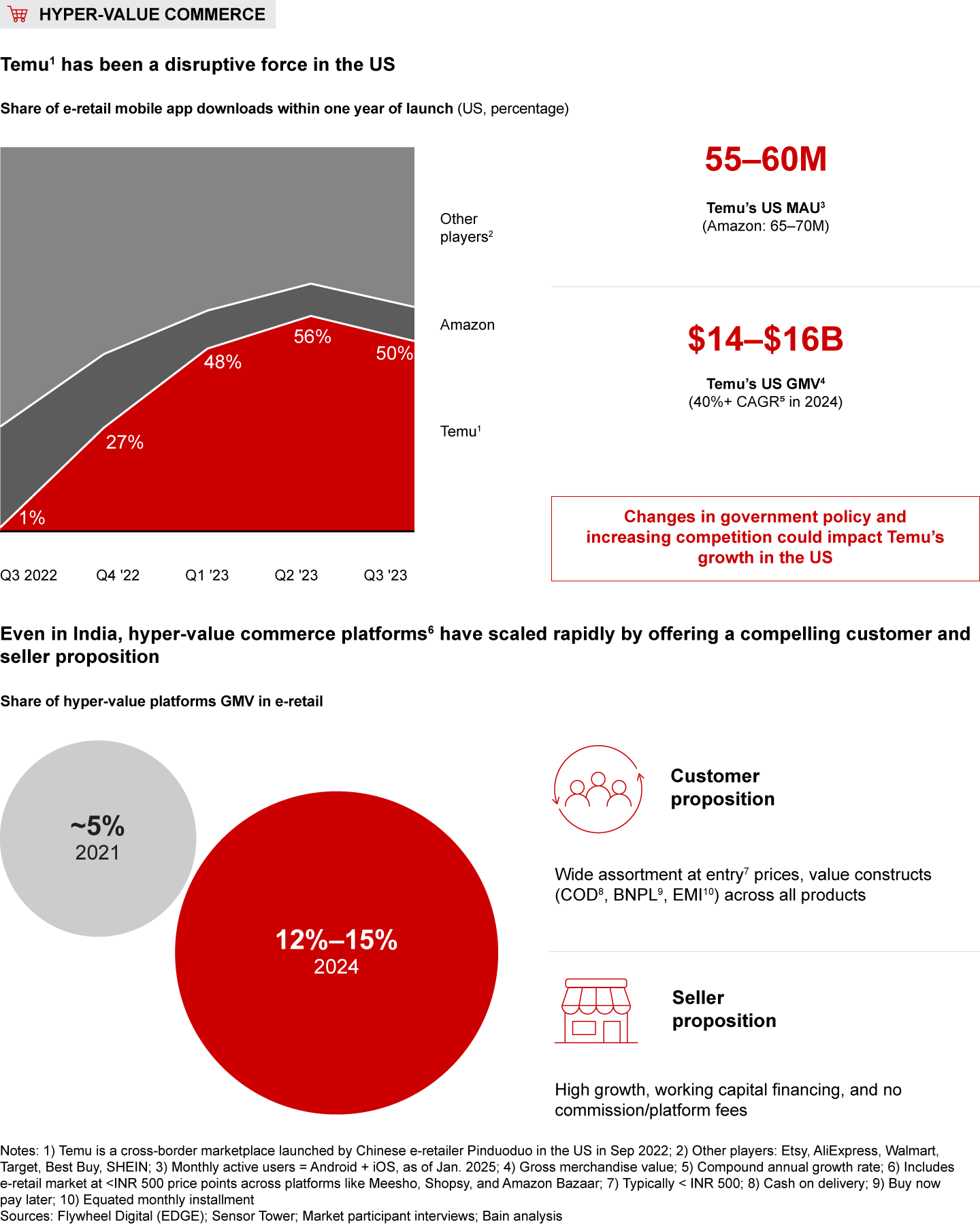
      Hyper-value commerce (ultra-low price assortment): Hyper-value commerce has seen a global surge, exemplified by the success of Temu in the US, which accounted for roughly half of all American e-retail app downloads within a year of launch. Temu’s 55–60 million monthly active users were just shy of Amazon’s 65–70 million US users as of January 2025, with GMV having grown at over 40% annually to between $14–$16 billion by the end of 2024.

      In India, hyper-value commerce’s contribution to e-retail has scaled from around 5% of e-retail GMV in 2021 to more than 12% in 2024. These platforms have gained strong traction among lower-middle-income consumers, particularly in Tier-2 or smaller cities, by focusing on an affordable product assortment. Additionally, these platforms have rapidly expanded their seller base by offering seller financing and zero-commission models.

      India’s e-retail market, akin to the broader retail landscape, is diverse, with purchase behavior varying dramatically by age, region, city tier, and e-retail maturity:

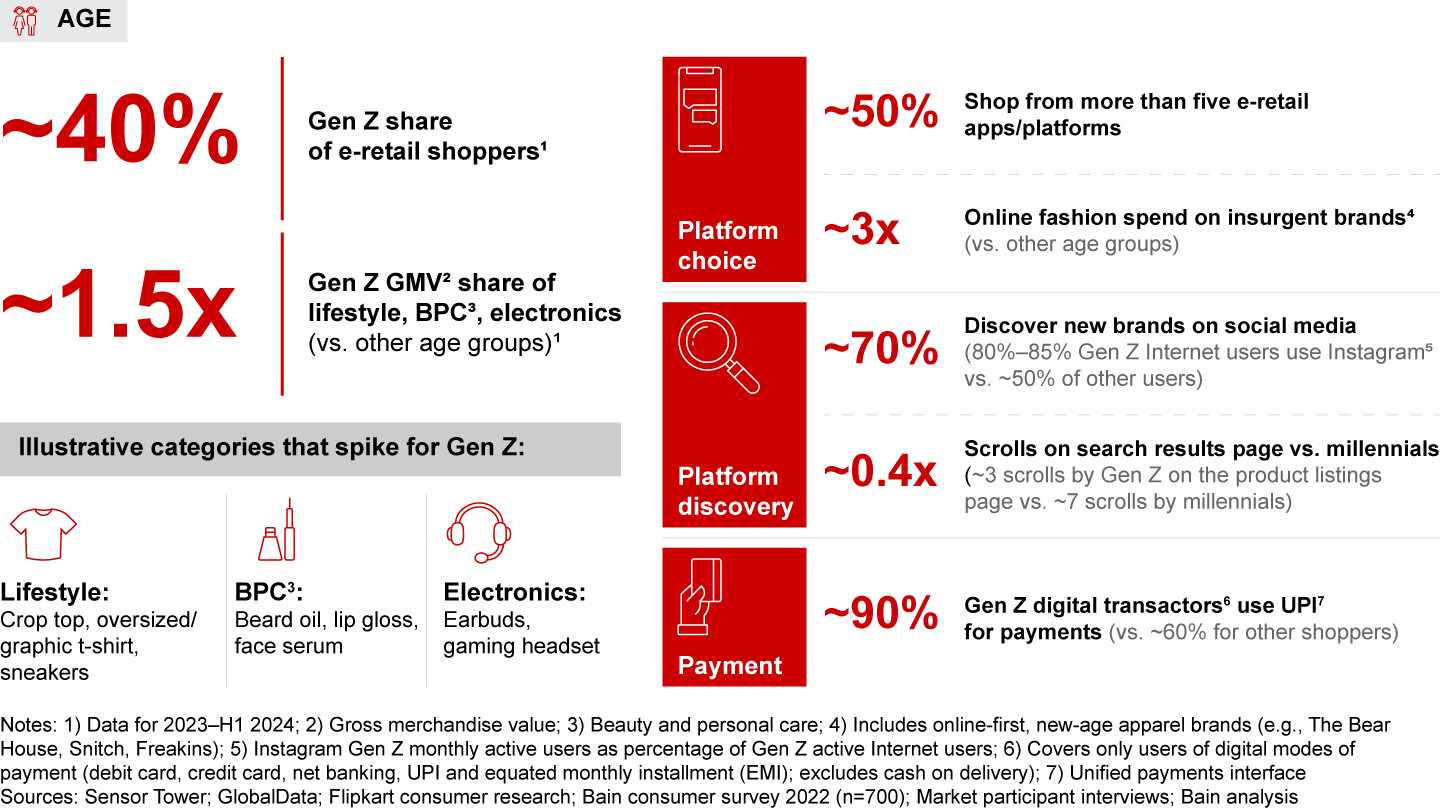
      • Age: The gradual rise of Gen Z (born between 1997–2012), accounting for almost 40% of e-retail shoppers, has been the most salient shift in India’s shopper base. Gen Z shopper behavior stands out. Gen Z split their shopping basket, with half of them shopping from over five e-retail platforms annually; these shoppers are also more experimental, spending three times more on insurgent fashion brands vs. older cohorts. Heavily influenced by social media, 70% of Gen Z shoppers discover brands online and make quicker purchase decisions, browsing fewer search listings than millennials before buying. Over 90% of Gen Z digital transactors prefer Unified Payment Interface (UPI) for digital payments. A rise in Gen Z income and the addition of more Gen Z to the workforce will make it a crucial cohort for brands to solve for.

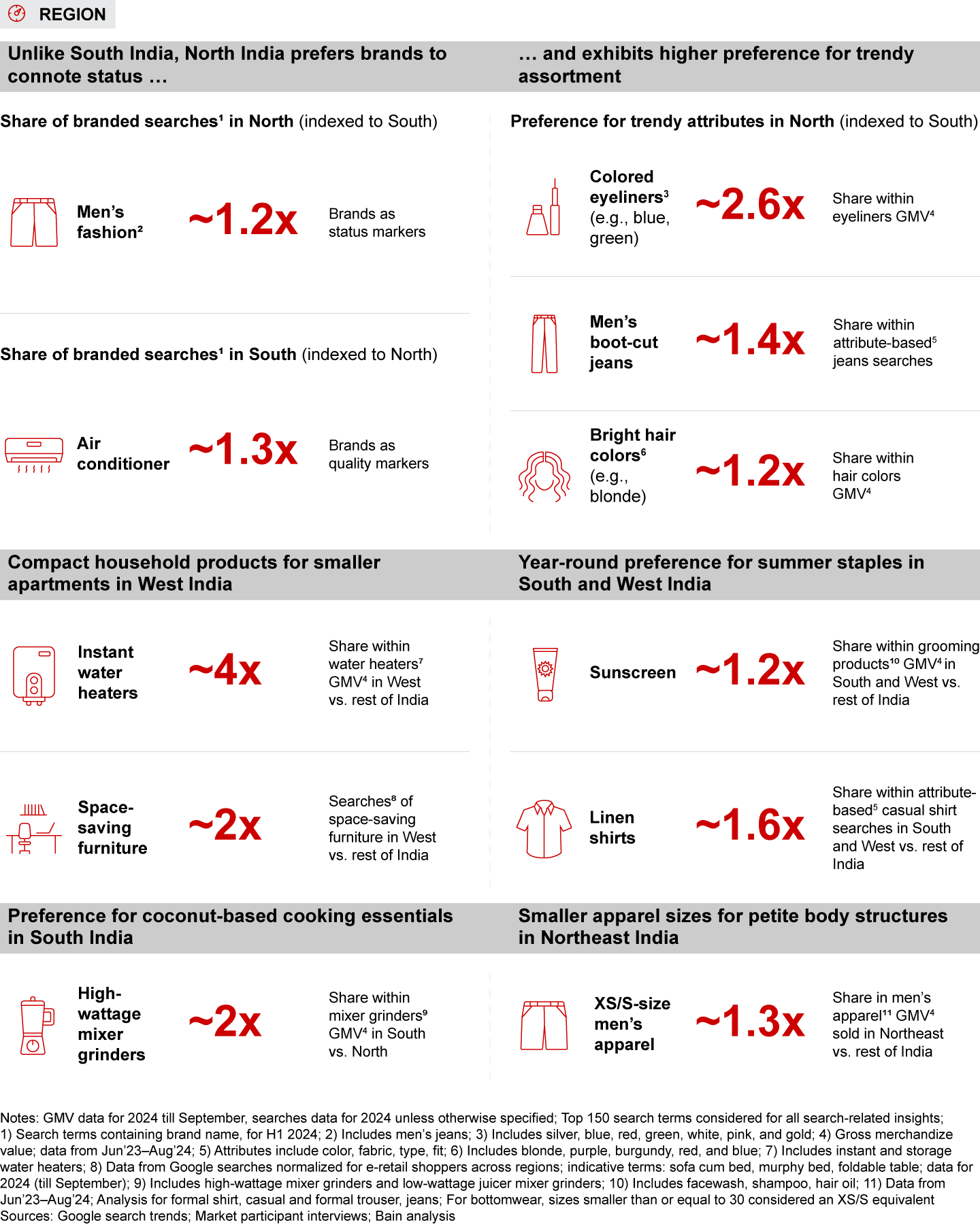
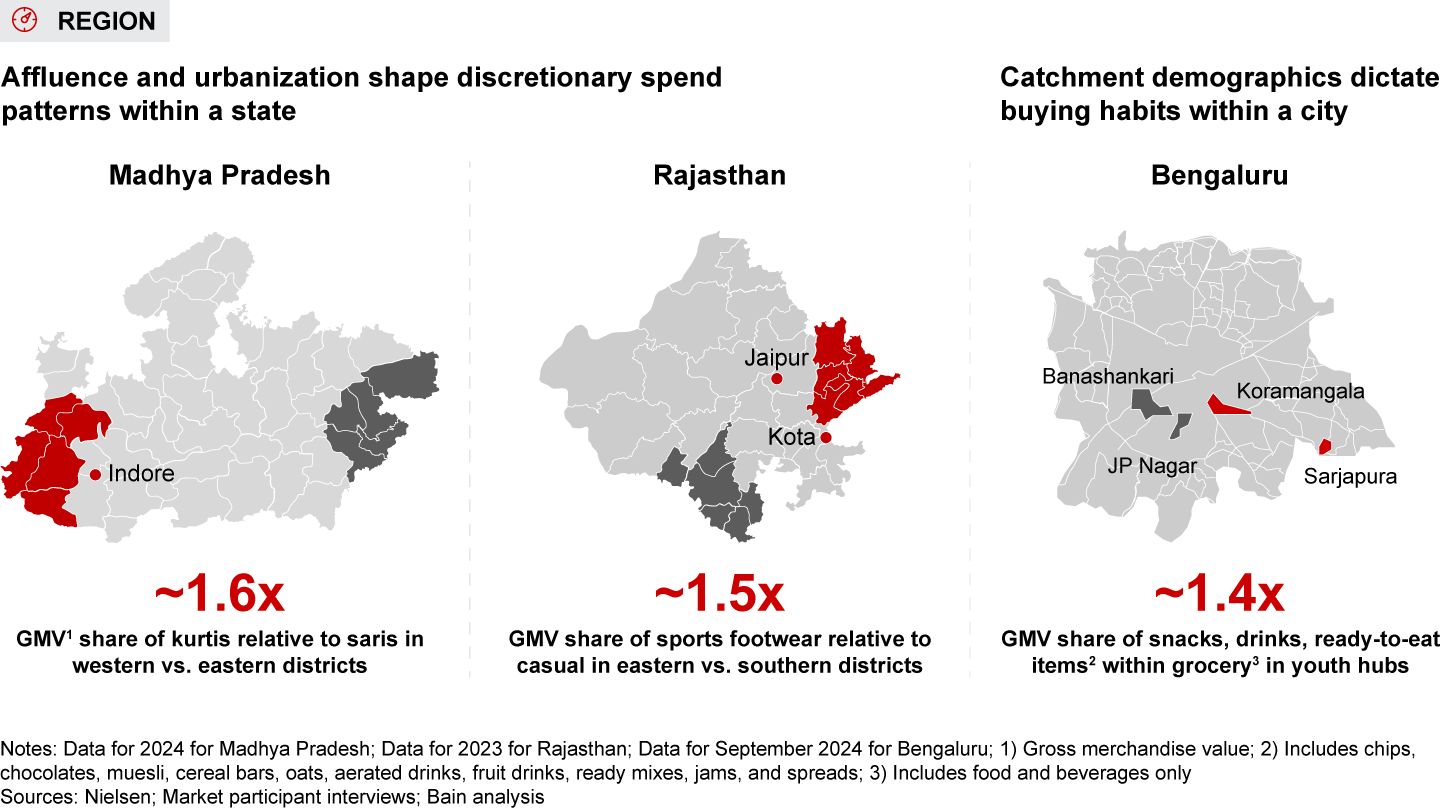
      • Region: Socioeconomic and cultural factors influence consumer behavior across India’s diverse regions. In the North, brands are often associated with status, which is evident in the higher share of branded searches in men’s fashion. Conversely, in the South, shoppers view brands as markers of quality, manifesting in more branded searches in electronics. There are numerous examples of these regional distinctions. For instance, consumers in the North gravitate toward trendier styles, like boot-cut jeans and bold hair colors, whereas consumers in the Northeast demand smaller apparel sizes, reflecting petite body frames. Shopping behavior also varies within a few hundred kilometers within a region, or even within a few kilometers within a city, influenced by urbanization, affluence, and cultural factors. In Rajasthan’s eastern districts, close to student hubs such as Kota and Jaipur, sports footwear is more popular, whereas casual footwear prevails in southern districts. Similarly, in Bengaluru, younger residents in Koramangala favor party snacks and ready-to-eat products, while neighborhoods like JP Nagar and Banashankari show a different consumption profile.

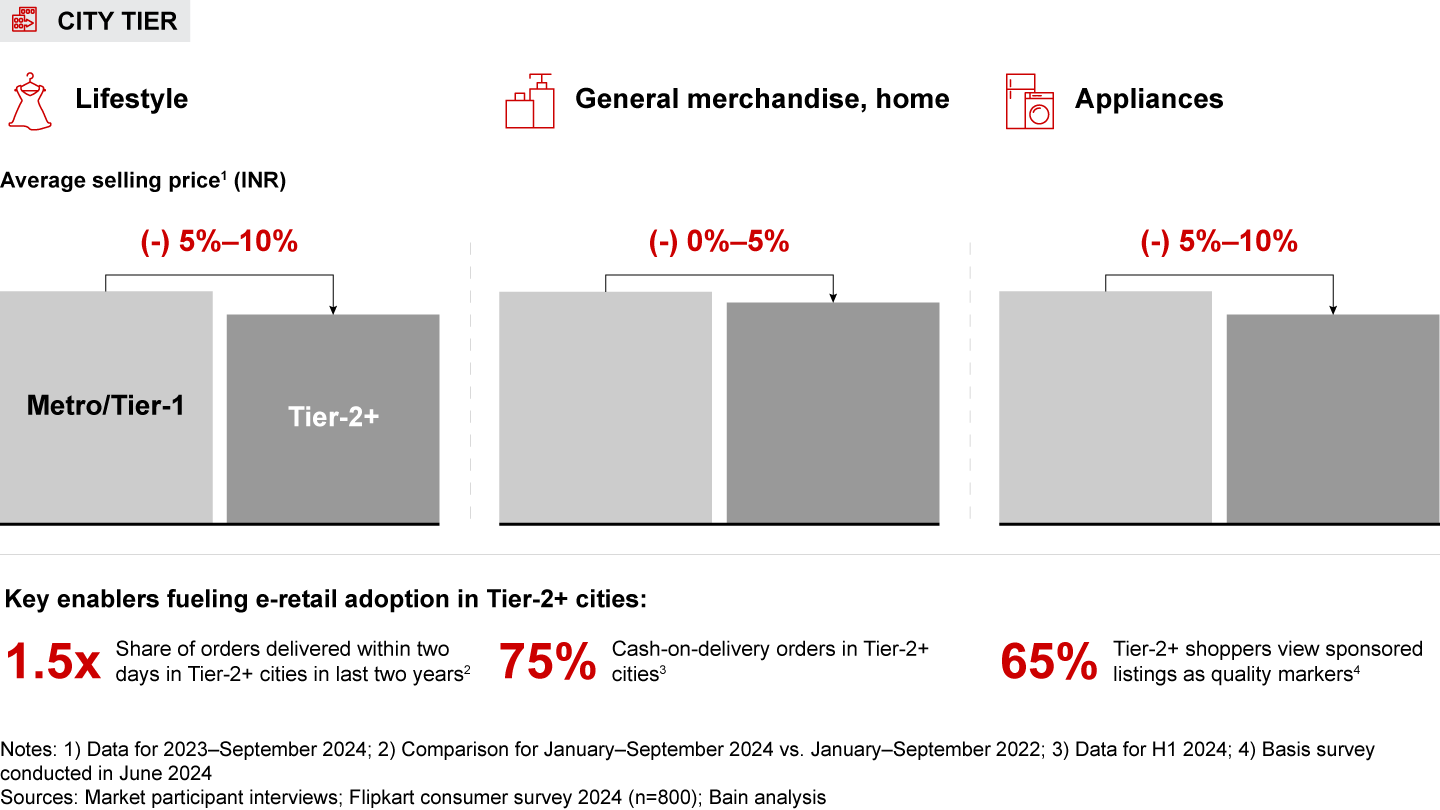
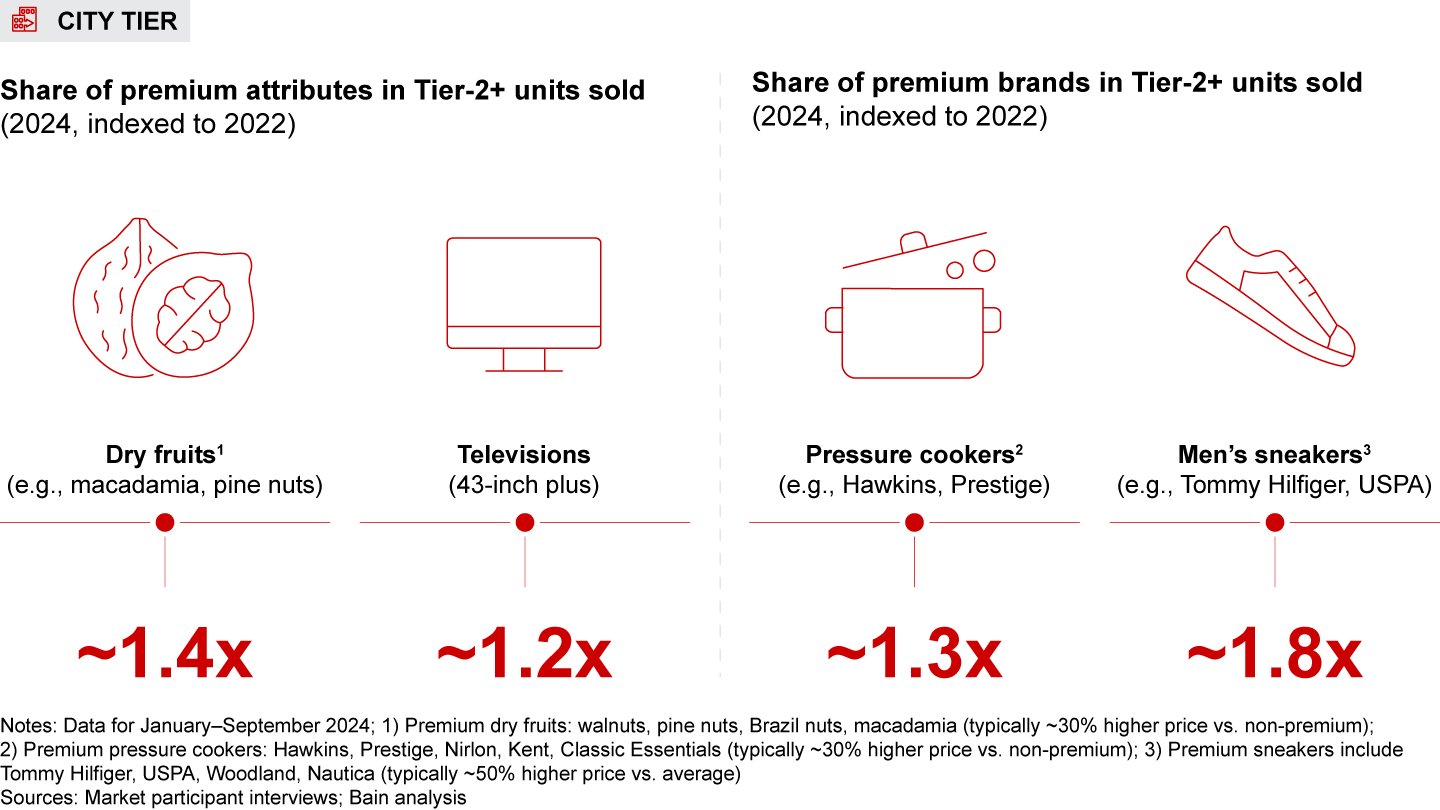
      • City tier: Shoppers in Tier-2+ cities show comparable spending power to bigger cities, with average selling prices being in line or only marginally lower in categories such as electronics, appliances, and general merchandise. Shoppers from these cities are also increasingly embracing premium brands and attributes. Interestingly, shoppers in smaller cities often view sponsored listings as a marker for quality. Retailers must adapt their strategies to cater to the growing consumer base in these cities that values both affordability and quality.

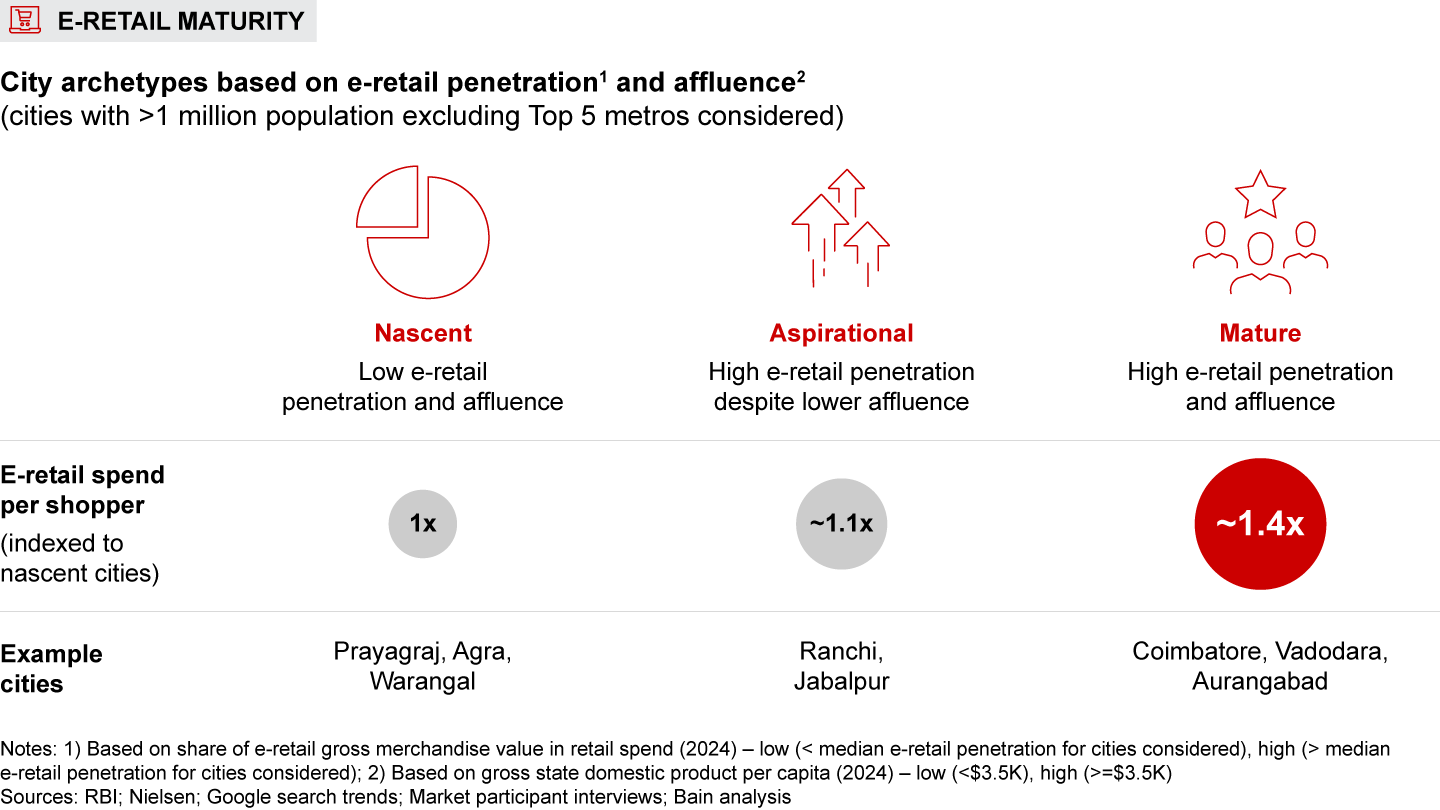
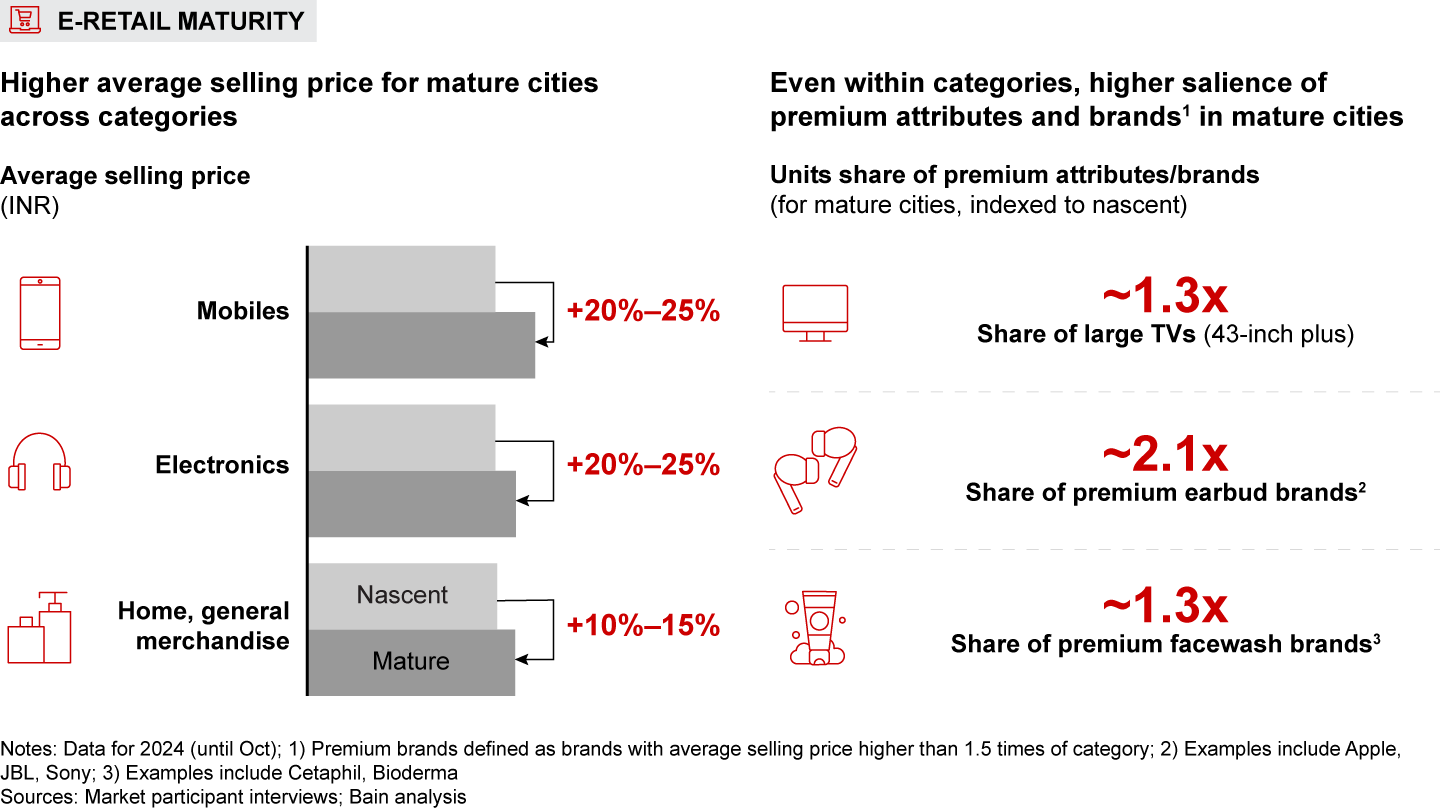
      • E-retail maturity: Mature markets such as Coimbatore and Vadodara, marked by high e-retail penetration and affluence, see about 40% higher e-retail spend per shopper compared to nascent markets such as Prayagraj and Warangal. Consumers from these markets favor premium products, with 10%–25% higher average selling price across categories vs. nascent markets. These shoppers also display a stronger preference for insurgent brands.

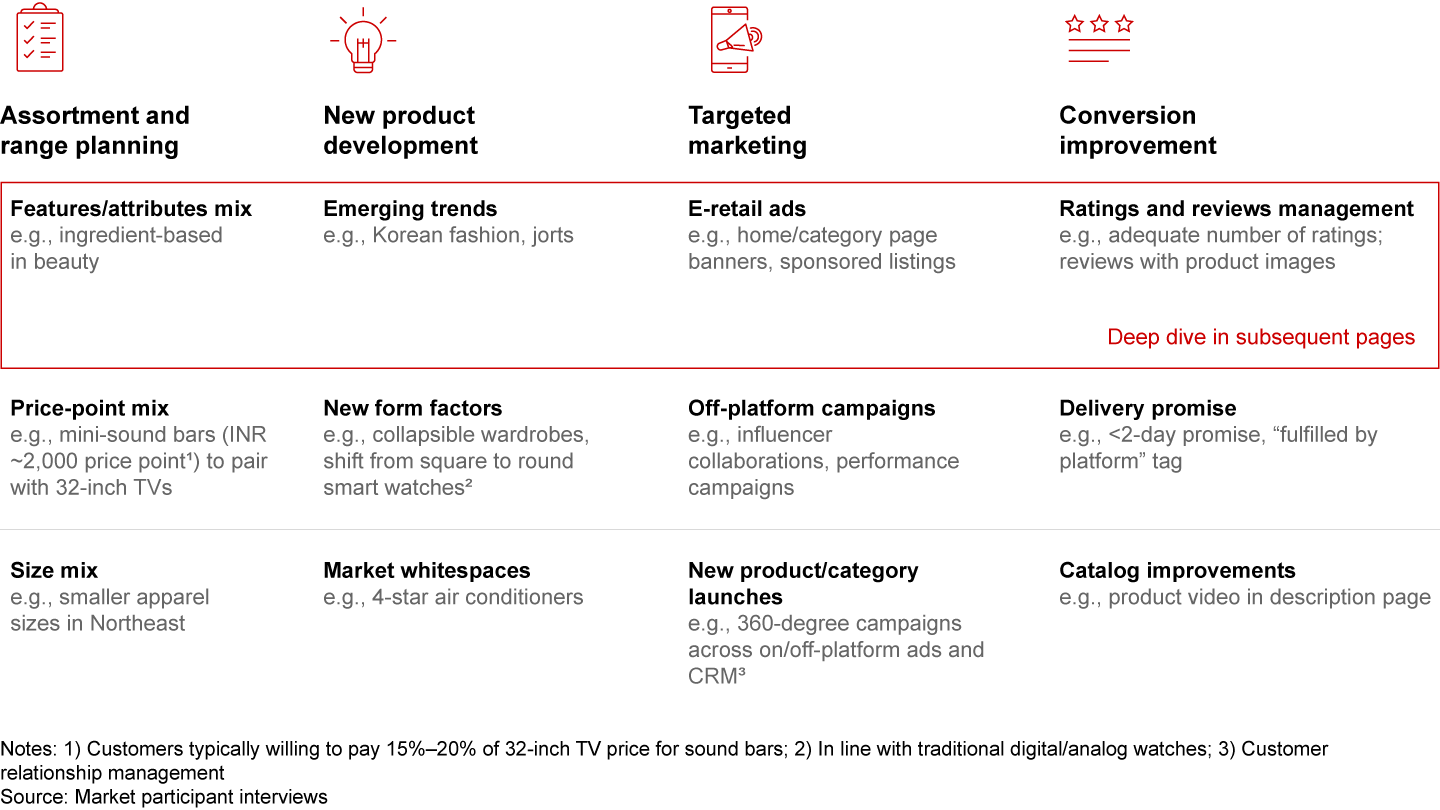
      These differences in purchase behavior indicate massive opportunity for retailers. Brands and sellers can harness the diversity of consumer preferences across India by (1) tailoring their range and assortment to reflect regional variation in features and price points; (2) creating products that align with emerging trends (e.g., Korean-inspired fashion) and market whitespaces; (3) using targeted e-retail advertising (display and search) to enhance brand awareness and drive sales; and (4) improving conversion by focusing on ratings and reviews, offering faster delivery options, and enhancing catalogs.

      E-retail market overview

      • India’s e-retail market has scaled to an impressive ~$60 billion in 2024. Notably, with over 270 million Indians shopping online in 2024, India has pipped the US to become the second-largest e-retail market in terms of online shoppers.

      • The e-retail market growth has slowed down to 10%–12% in 2024 vs. more than 20% seen historically, largely due to macroeconomic and consumption stress. Consumption growth has declined from approximately 11% pre-Covid (2017–19) to approximately 8% post-Covid (2022–24), a change caused by inflationary pressure and stagnating real wages.

      • Despite near-term macroeconomic headwinds, the long-term prospects remain strong. The e-retail market is expected to scale to $170–$190 billion by 2030, growing at over 18% annually. Nearly 1 in 10 retail dollars is projected to be spent on e-retail by 2030, fueled by an uptick in discretionary spending as India’s GDP per capita crosses the crucial $3,500–$4,000 threshold, a key tipping point observed in e-retail spending globally.

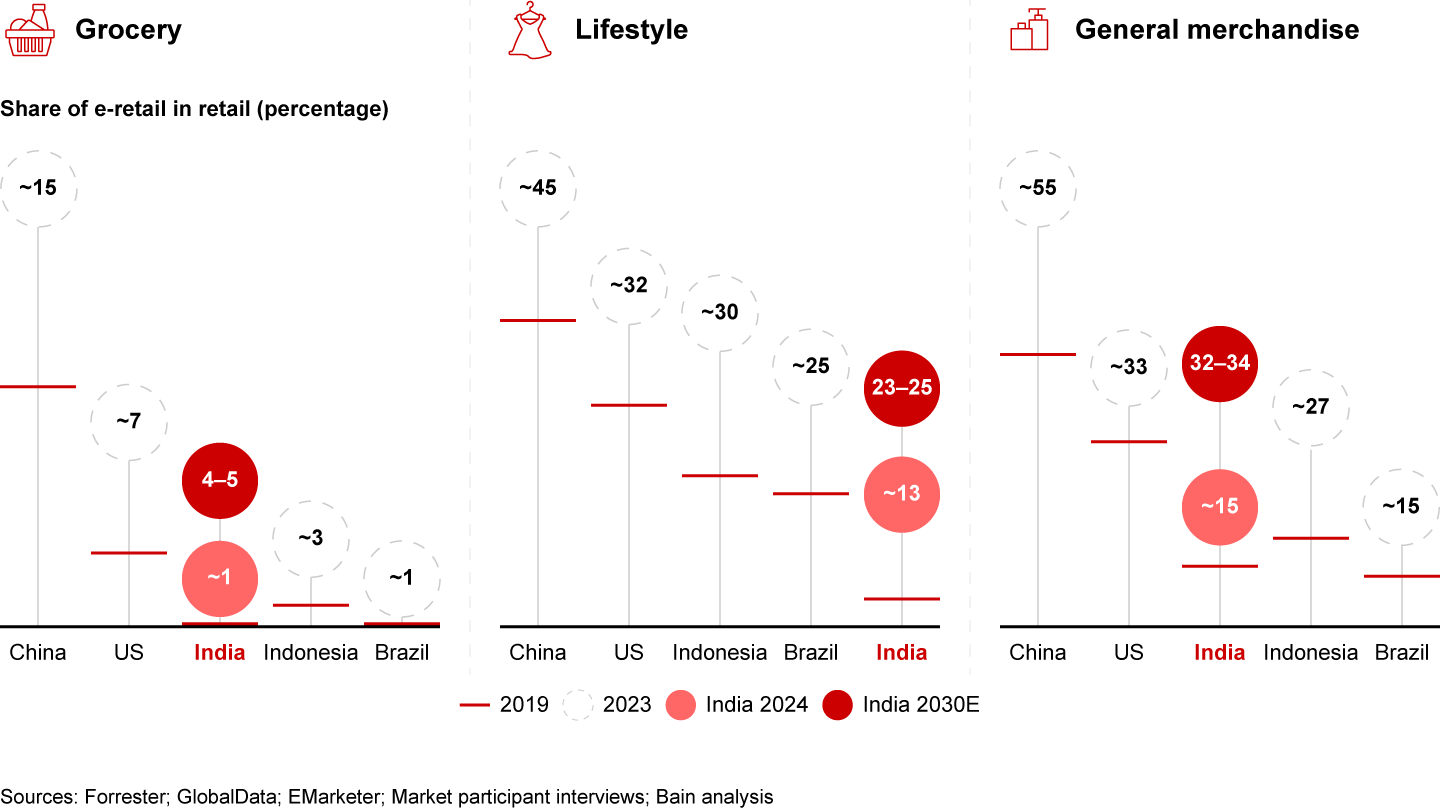
      • Categories with high purchase frequency, such as grocery, lifestyle, and general merchandise, are set to contribute around 70% of incremental growth, with penetration levels expected to climb two to four times from current levels.

      • E-retail continues to democratize the shopping landscape in India. E-retail penetration has expanded from Tier-2 cities to Tier-3 and smaller cities. Almost 60% of new customers since 2020 hail from Tier-3 and smaller cities. The seller landscape is also evolving, with over 60% of new sellers onboarded since 2021 from Tier-2 and smaller cities.
      Figure 1
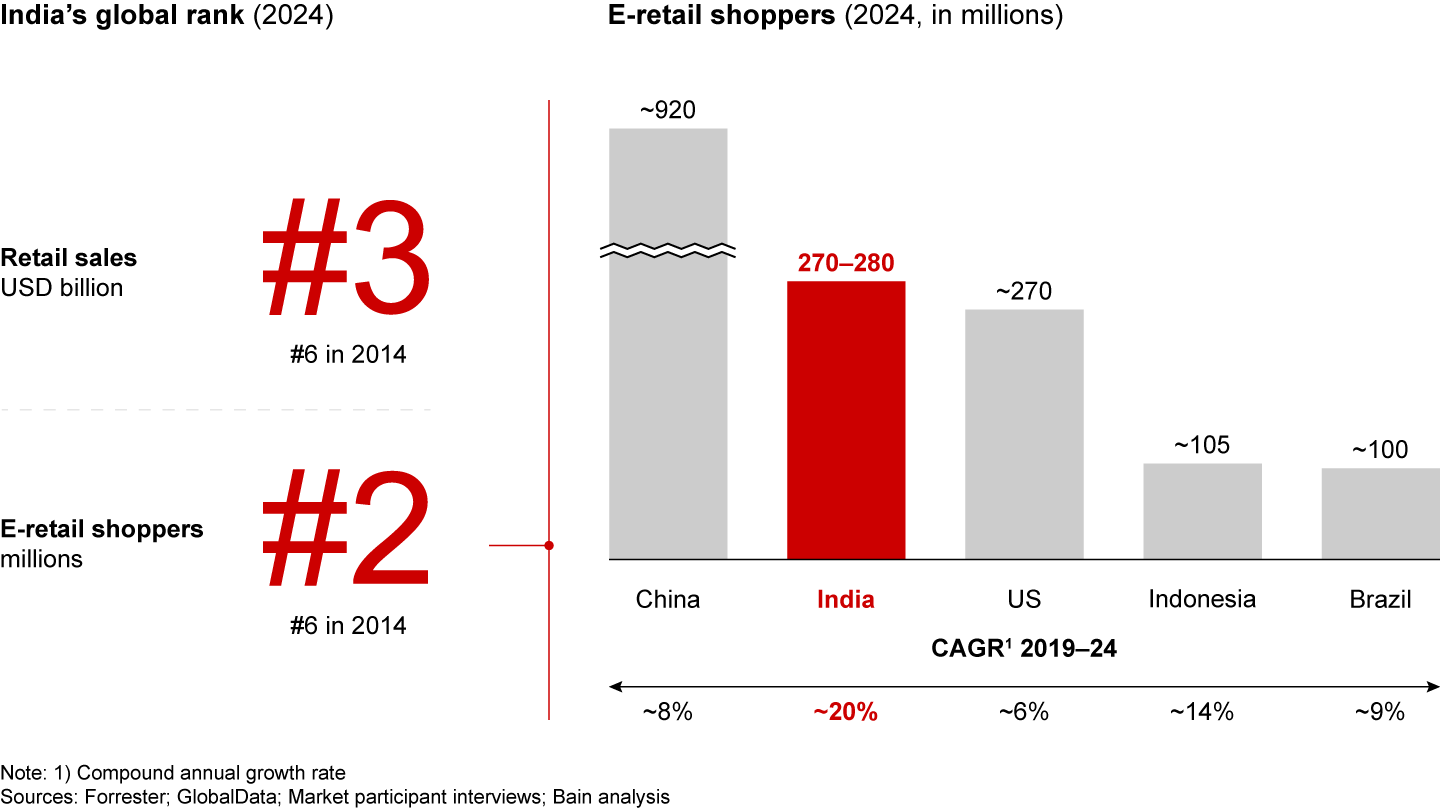
      India e-retail surges ahead, claiming the title of the second-largest shopper base globally
      India e-retail surges ahead, claiming the title of the second-largest shopper base globally
      India e-retail surges ahead, claiming the title of the second-largest shopper base globally
      Figure 2
      Macroeconomic pressure post-Covid has impacted discretionary spending
      Macroeconomic pressure post-Covid has impacted discretionary spending
      Macroeconomic pressure post-Covid has impacted discretionary spending
      Figure 3
      However, long-term retail and e-retail market growth prospects remain robust on account of rising affluence
      However, long-term retail and e-retail market growth prospects remain robust on account of rising affluence
      However, long-term retail and e-retail market growth prospects remain robust on account of rising affluence
      Figure 4
      Hence, despite short-term slowdown, India e-retail market is set to rebound with 18%+ growth
      Hence, despite short-term slowdown, India e-retail market is set to rebound with 18%+ growth
      Hence, despite short-term slowdown, India e-retail market is set to rebound with 18%+ growth
      Figure 5
      High-frequency categories to constitute two-thirds of e-retail market in 2030, capturing over 70% of the incremental market growth
      High-frequency categories to constitute two-thirds of e-retail market in 2030, capturing over 70% of the incremental market growth
      High-frequency categories to constitute two-thirds of e-retail market in 2030, capturing over 70% of the incremental market growth
      Figure 6
      A two-to-four times penetration uptick is expected in these high-frequency categories
      A two-to-four times penetration uptick is expected in these high-frequency categories
      A two-to-four times penetration uptick is expected in these high-frequency categories
      Figure 7
      E-retail has democratized the shopping landscape—Tier-3+ cities are now at scale
      E-retail has democratized the shopping landscape—Tier-3+ cities are now at scale
      E-retail has democratized the shopping landscape—Tier-3+ cities are now at scale
      Figure 8
      E-retail has enabled access to remote, underserved areas
      E-retail has enabled access to remote, underserved areas
      E-retail has enabled access to remote, underserved areas

      Disruption in e-retail

      Three disruptive business models—quick commerce, trend-first commerce, and hyper-value commerce—are changing the tapestry of India’s e-retail market:

      • The dramatic rise of quick commerce (i.e., delivery in less than 30 minutes) has been one of the most defining hallmarks of India’s e-retail market over the last two years. In 2024, more than two-thirds of all e-grocery orders and one-tenth of e-retail spend happened on q-commerce platforms. Q-commerce is forecasted to grow by over 40% annually until 2030, fueled by expansion across categories, geographies, and customer segments. Players have also unlocked a profitable model to scale up through a blend of customer-facing and back-end initiatives. The space is also becoming more competitive, with new entrants such as Flipkart Minutes, Myntra’s M-now, BigBasket’s BB Now, and Amazon’s Tez joining the race.

      • Trend-first commerce (i.e., frequent launch of trendy assortment at affordable prices) has picked up the pace, particularly in fashion. Trend-first fashion is expected to quadruple to $8–$10 billion by 2028, with more than half the spends online. Globally, trend-first fashion players, such as Shein and Fashion Nova, have scaled through a tech-driven repeatable playbook involving leveraging social media to target Gen Z, offering hyper-trendy, affordable collections, deploying test-and-scale models to launch and replenish popular styles, and delivering an engaging user experience. India’s vast base of young, value-conscious, social-media-savvy shoppers will fuel this boom. However, the influencer ecosystem and local manufacturing capabilities will have to evolve further to enable the model to realize full potential.

      • Hyper-value commerce (i.e., offering a wide range of ultra-low price point assortments) has witnessed a surge globally, as evidenced by the success of Temu in the US. Within a year of launch, the app amassed nearly half of e-retail app downloads and currently boasts 55–60 million monthly active users, closely trailing Amazon’s 65–70 million in the US, as of January 2025. In India, hyper-value commerce platforms’ share of e-retail GMV has surged over the last three years to reach 12%–15%. Players have gained traction with lower-middle-income consumers, especially in Tier-2 and smaller cities, due to affordable product offerings. These platforms have also rapidly onboarded sellers by offering attractive growth with a zero-commission model and seller financing.
      Figure 9
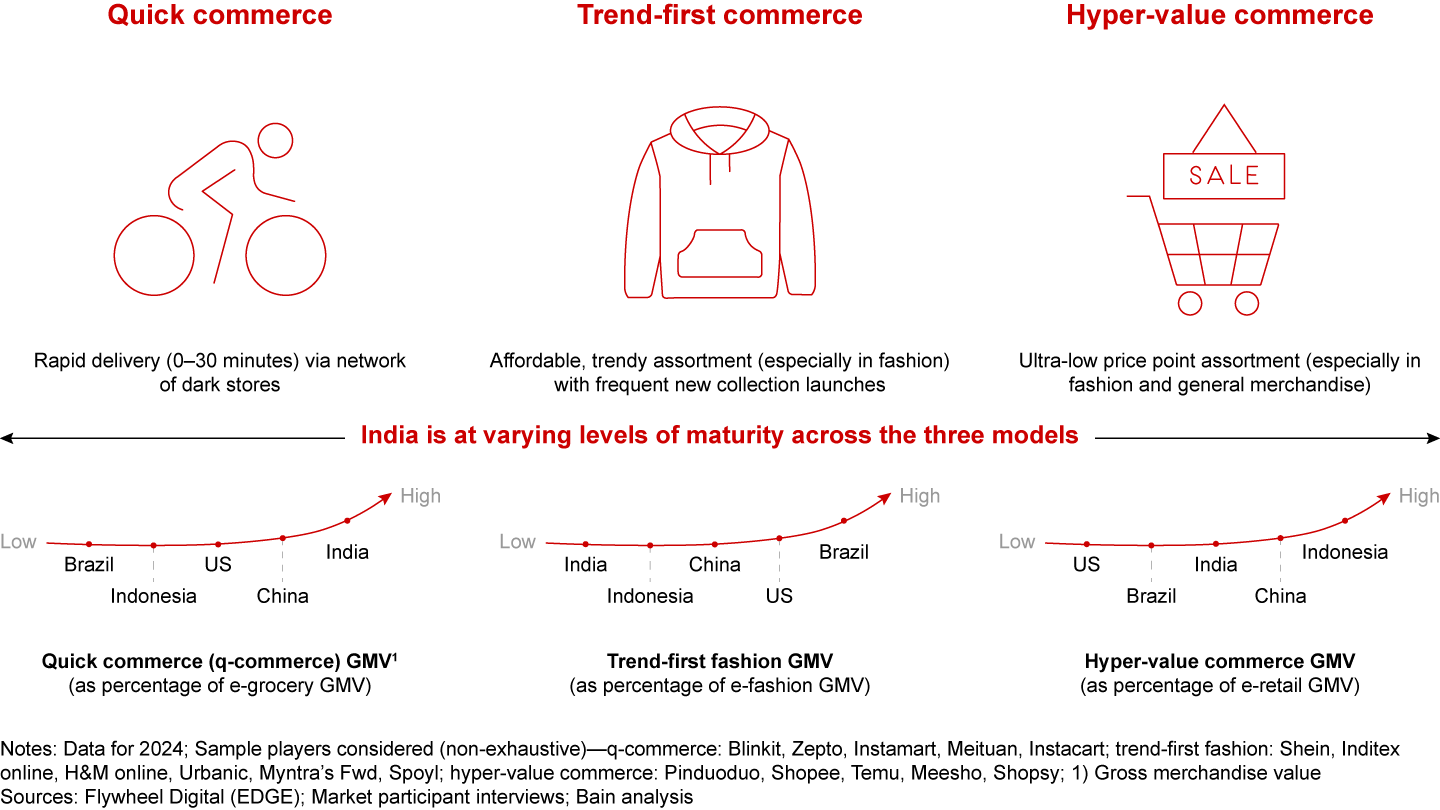
      Three key business models have disrupted e-retail in India (and globally)
      Three key business models have disrupted e-retail in India (and globally)
      Three key business models have disrupted e-retail in India (and globally)
      Figure 10
      Quick commerce is thriving in India, bucking global trends
      Quick commerce is thriving in India, bucking global trends
      Quick commerce is thriving in India, bucking global trends
      Figure 11
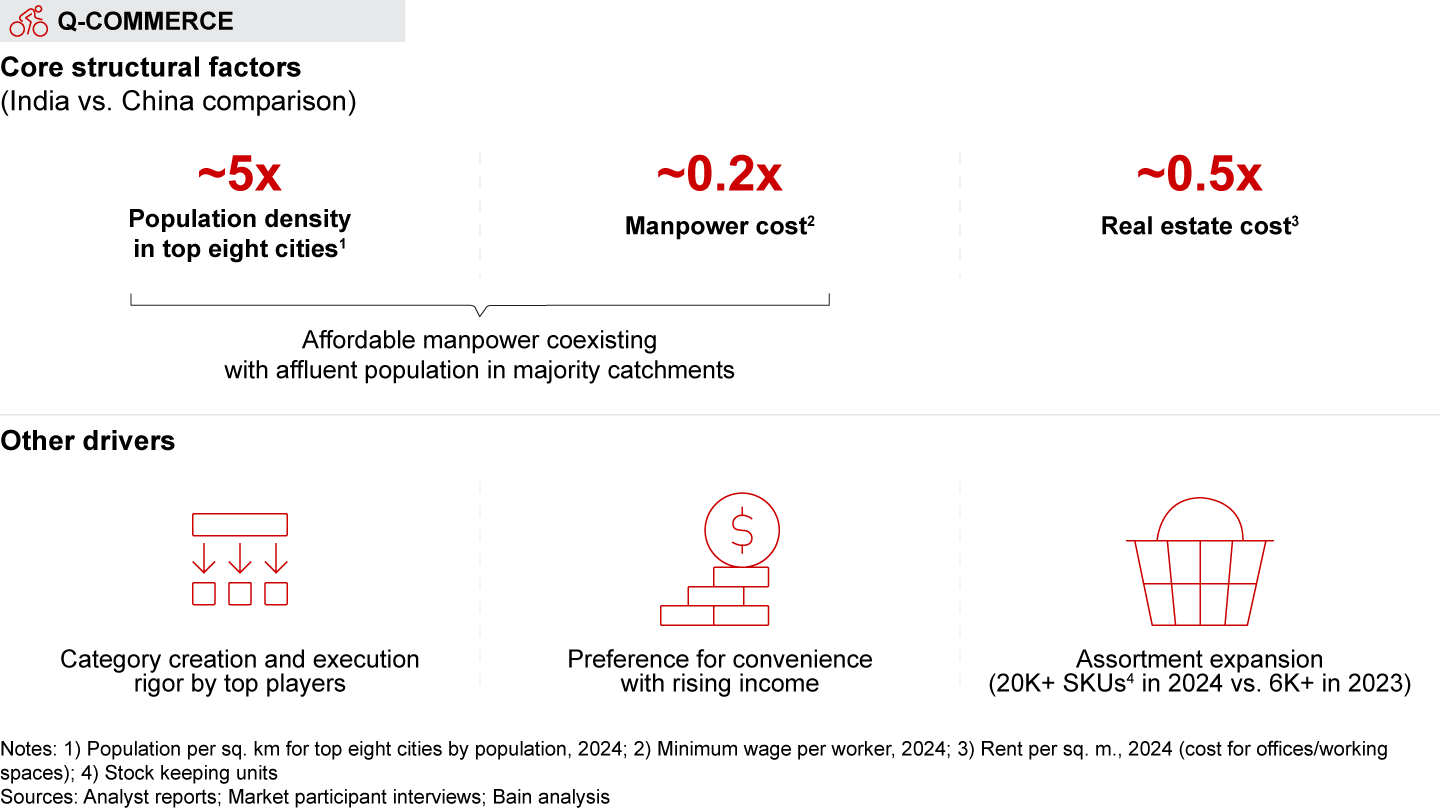
      Structural factors, coupled with category creation by leading players, have fueled surge in q-commerce
      Structural factors, coupled with category creation by leading players, have fueled surge in q-commerce
      Structural factors, coupled with category creation by leading players, have fueled surge in q-commerce
      Figure 12
      Scale-up beyond grocery and top cities to drive next growth wave
      Scale-up beyond grocery and top cities to drive next growth wave
      Scale-up beyond grocery and top cities to drive next growth wave
      Figure 13
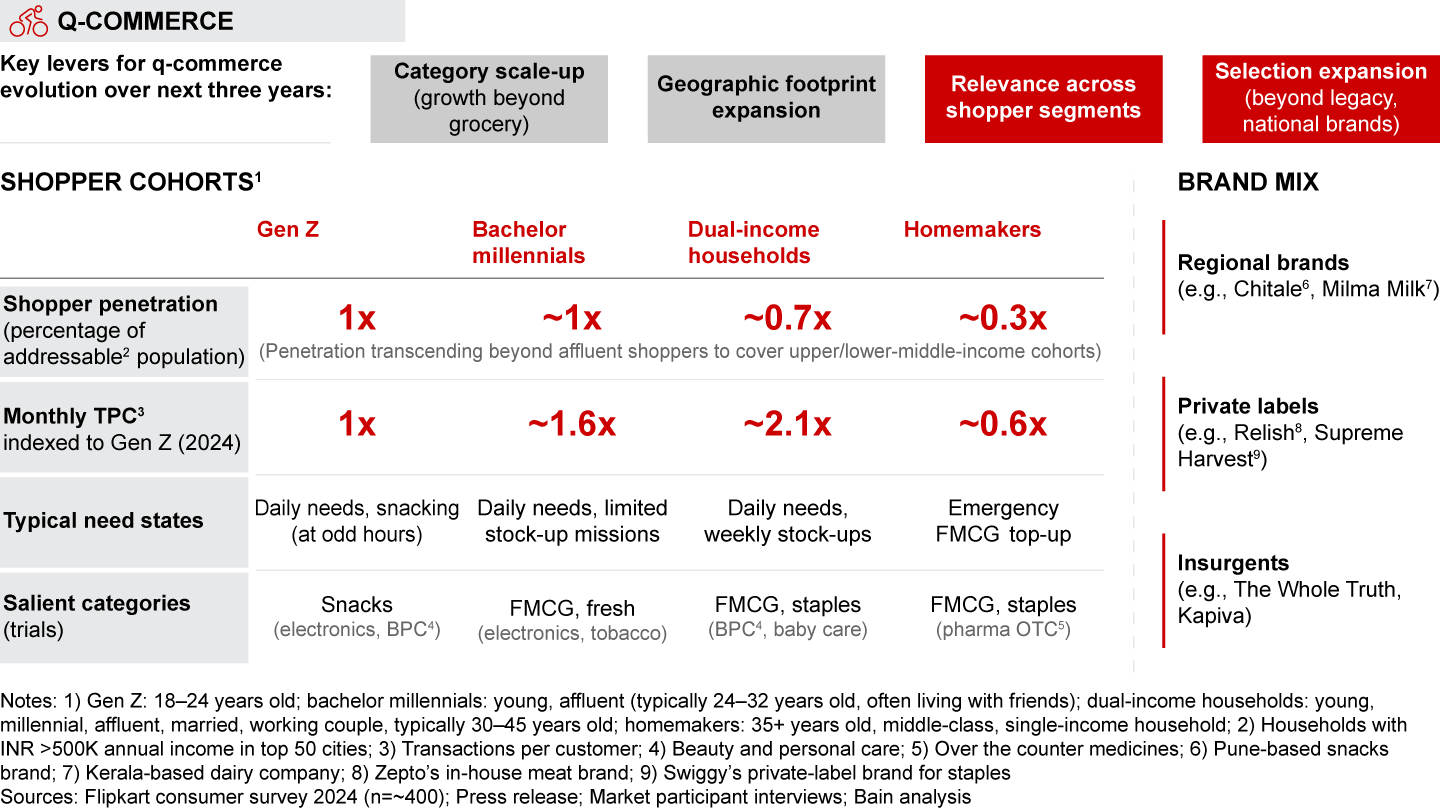
      Q-commerce growth to also be driven by broad-based adoption across shopper cohorts and brand archetypes
      Q-commerce growth to also be driven by broad-based adoption across shopper cohorts and brand archetypes
      Q-commerce growth to also be driven by broad-based adoption across shopper cohorts and brand archetypes
      Figure 14
      Q-commerce players have tapped three key profitability levers
      Q-commerce players have tapped three key profitability levers
      Q-commerce players have tapped three key profitability levers
      Figure 15
      Q-commerce players need to navigate evolving models and growing competition to drive sustained, profitable growth
      Q-commerce players need to navigate evolving models and growing competition to drive sustained, profitable growth
      Q-commerce players need to navigate evolving models and growing competition to drive sustained, profitable growth
      Figure 16
      Trend-first commerce scaling rapidly in India, transcending from fashion to other categories
      Trend-first commerce scaling rapidly in India, transcending from fashion to other categories
      Trend-first commerce scaling rapidly in India, transcending from fashion to other categories
      Figure 17
      Strong fundamentals exist for trend-first commerce to succeed in India
      Strong fundamentals exist for trend-first commerce to succeed in India
      Strong fundamentals exist for trend-first commerce to succeed in India
      Figure 18
      Globally, trend-first fashion players have scaled by using a repeatable playbook with technology at its center
      Globally, trend-first fashion players have scaled by using a repeatable playbook with technology at its center
      Globally, trend-first fashion players have scaled by using a repeatable playbook with technology at its center
      Figure 19
      Hyper-value commerce models are scaling globally and in India alike
      Hyper-value commerce models are scaling globally and in India alike
      Hyper-value commerce models are scaling globally and in India alike

      Winning in “many Indias”

      India’s e-retail landscape is heterogeneous, reflecting “many Indias.” Variations in purchase behavior exist across age, region, city tier, and e-retail maturity:

      • The scale-up of e-retail spend by Gen Z (born between 1997 and 2012) has been particularly notable. Representing 40% of India’s e-retail shoppers, Gen Z boasts 1.5 times the e-retail spend share on categories such as lifestyle, beauty, and electronics compared to other age groups. Gen Z has a distinct shopping behavior—they are more experimental, rely heavily on social media for brand discovery, make faster purchase decisions, and show a marked preference for UPI for digital payments.

      • E-retail spending patterns vary widely across regions, shaped by deep-rooted socioeconomic and cultural differences. For instance, North India leans toward trendier fashion while the Northeast sees higher demand for smaller apparel sizes due to generally petite body frames. These nuances can be observed within a few hundred kilometers in a region or even within a few kilometers in a city, influenced by varying catchment-level demographics and affluence.

      • E-retail spending of shoppers in Tier-2 and smaller cities is broadly at par with that of Metro/Tier-1 cities, with similar or only slightly lower average selling prices across categories. These shoppers are also showing a growing interest in premium brands and features. This growth is driven by faster delivery options, cash-on-delivery availability, and e-retail ads serving as indicators of quality.

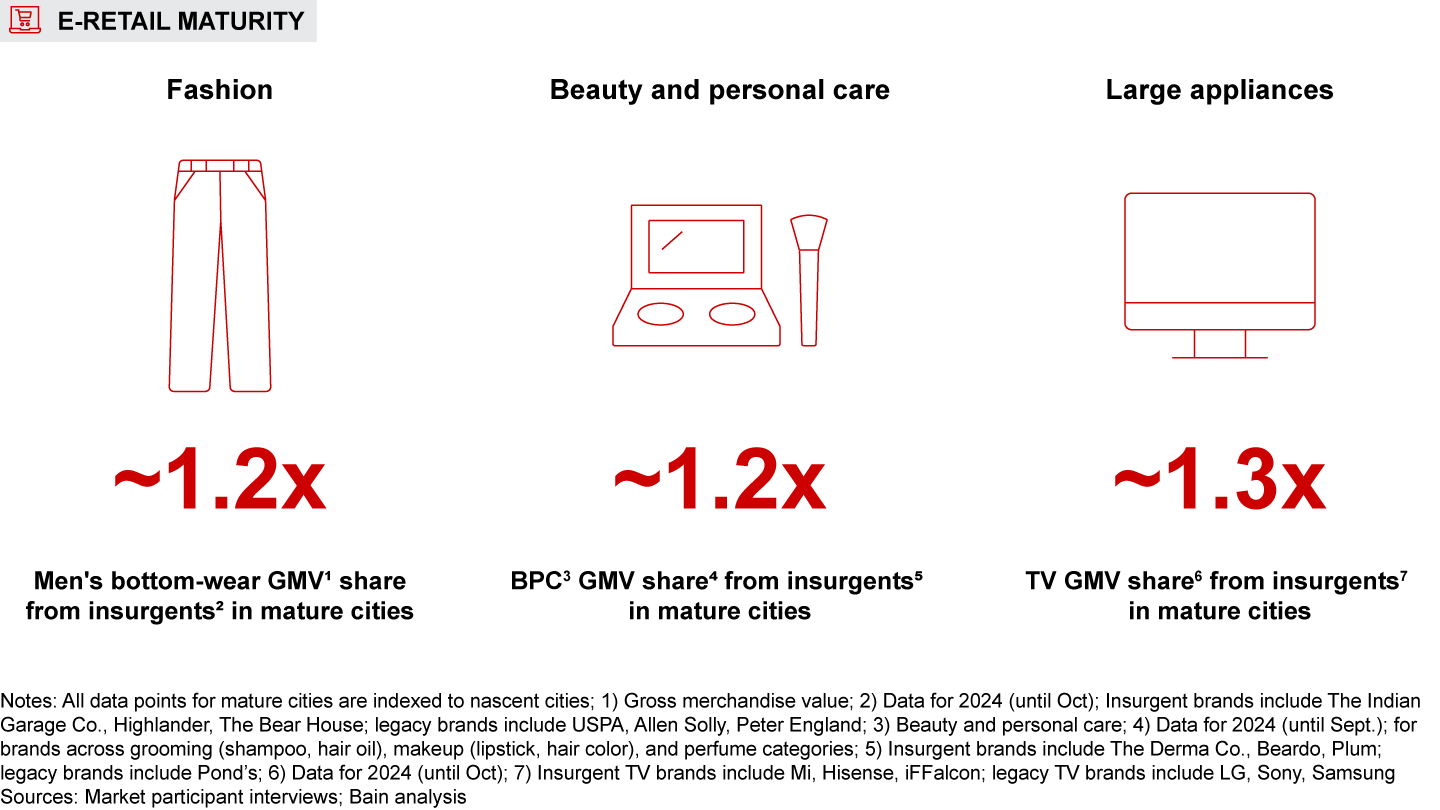
      • E-retail purchase behavior also varies based on e-retail maturity. In mature cities characterized by high e-retail penetration and affluence, the e-retail spend per shopper is around 40% more than in nascent cities. Shoppers in these cities show a strong preference for premium brands and attributes, with average selling prices elevated by 10%–25% across categories. They also demonstrate greater adoption of insurgent brands across categories.

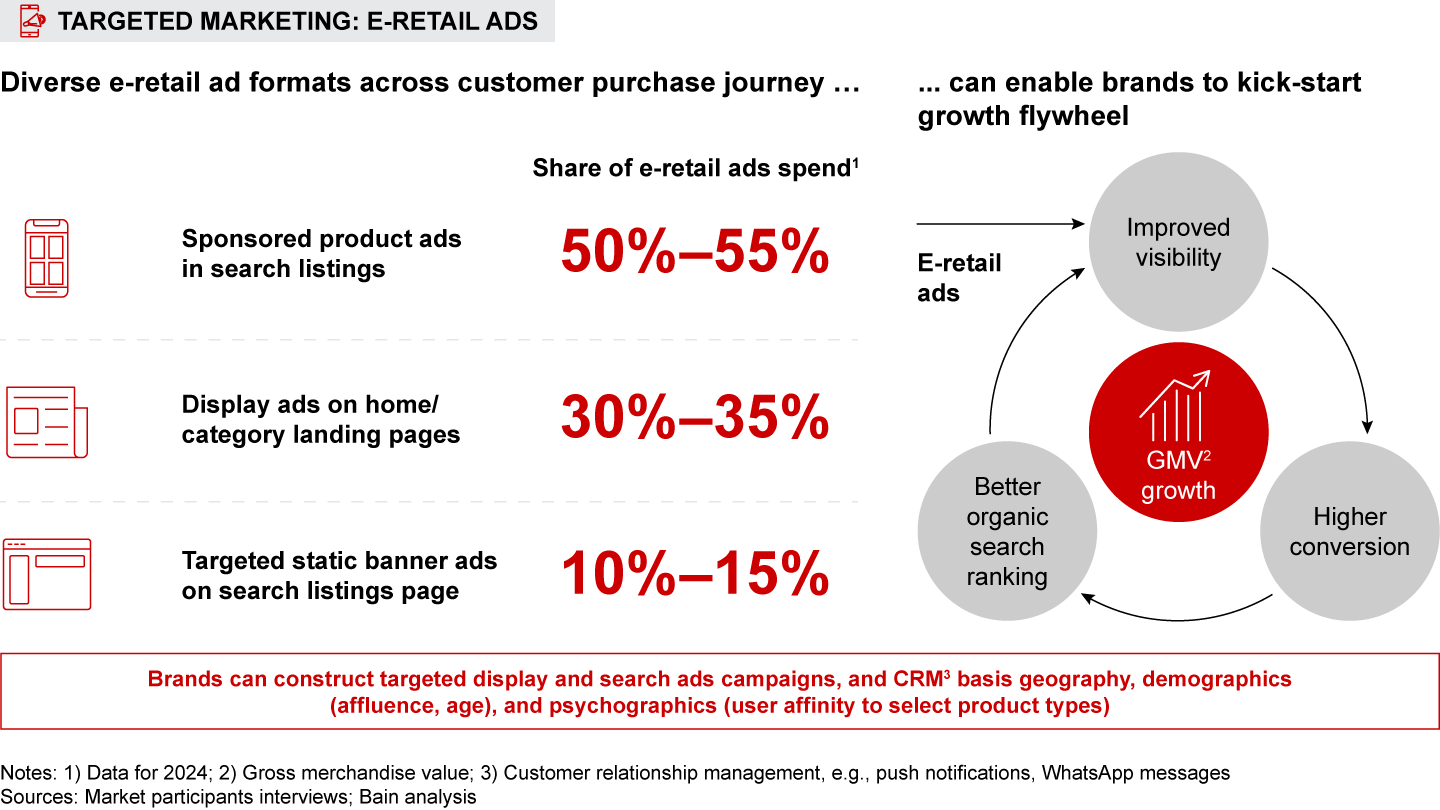
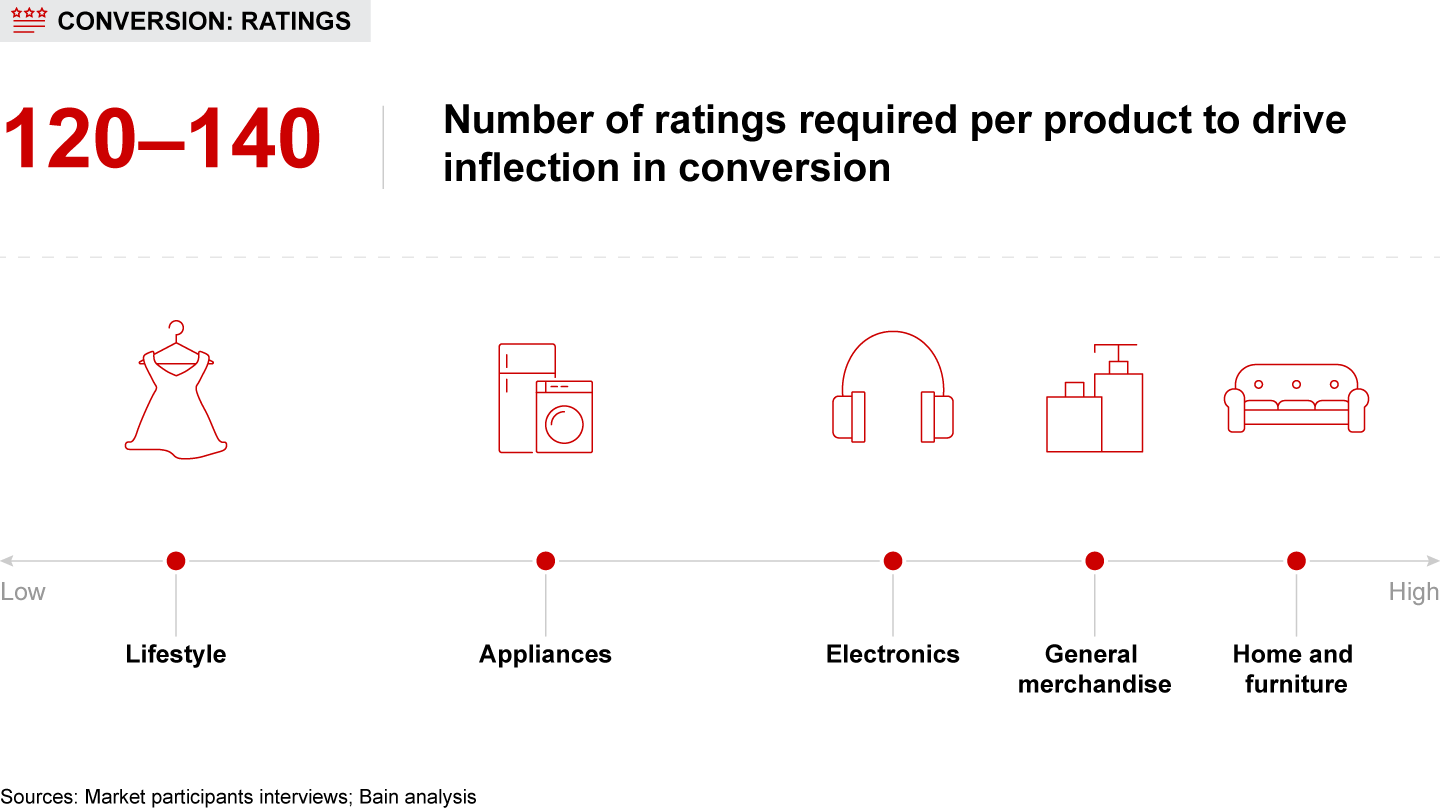
      Brands and sellers can capitalize on the nuances of “many Indias” by (a) adapting their product range and assortment, (b) developing new products aligned with evolving trends and market whitespaces, (c) leveraging targeted e-retail advertising (display and search) to improve brand awareness and kick-start a growth flywheel, and (d) enhancing conversion by building a critical mass of ratings, offering faster delivery options, and optimizing product catalogs.

      Figure 20
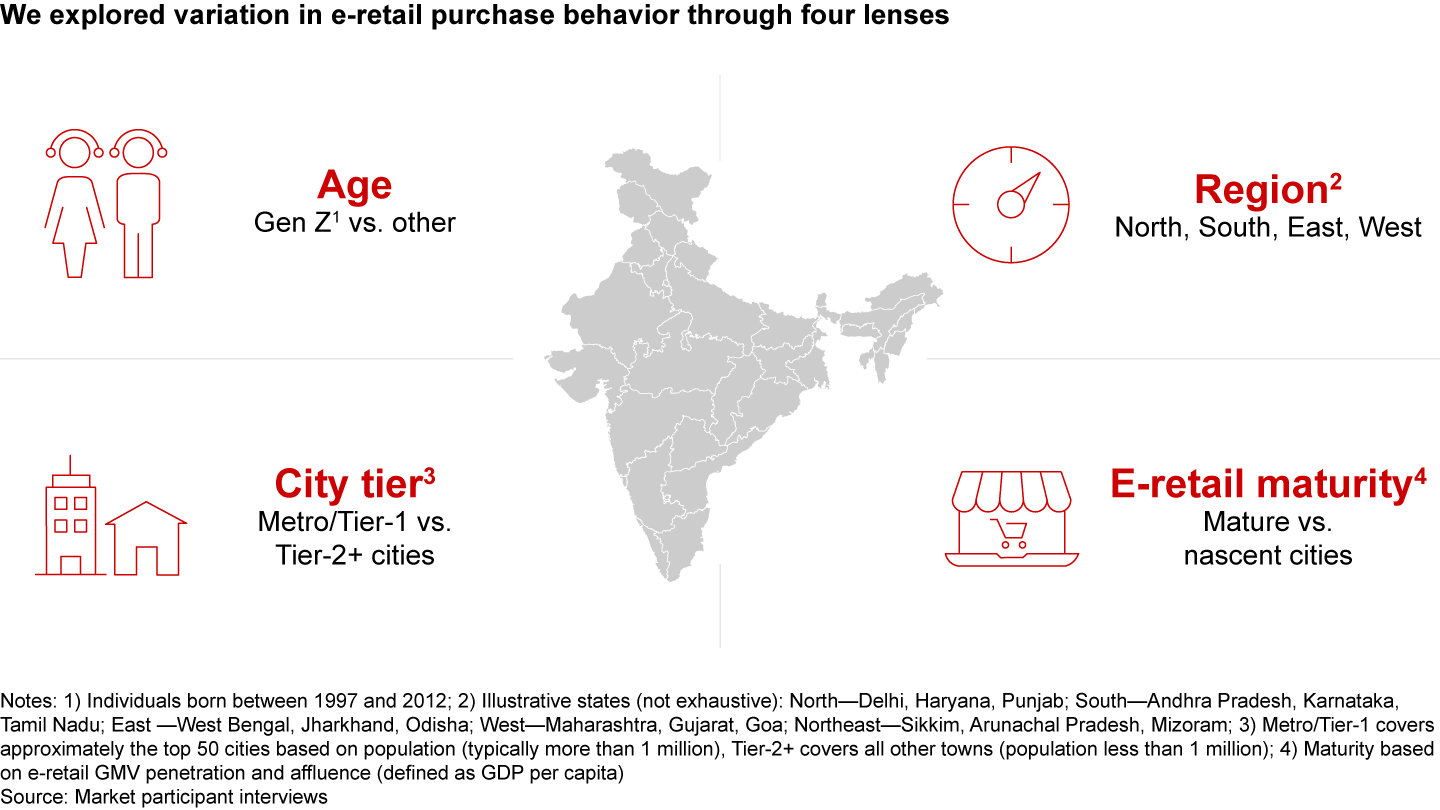
      India’s e-retail landscape is heterogenous—there exist “many Indias” with disparate purchase preferences
      India’s e-retail landscape is heterogenous—there exist “many Indias” with disparate purchase preferences
      India’s e-retail landscape is heterogenous—there exist “many Indias” with disparate purchase preferences
      Figure 21
      Gen Z shoppers are distinct—they experiment more, are highly influenced by social media, and favor convenient payment options
      Gen Z shoppers are distinct—they experiment more, are highly influenced by social media, and favor convenient payment options
      Gen Z shoppers are distinct—they experiment more, are highly influenced by social media, and favor convenient payment options
      Figure 22
      Wide differences in buying behavior exist across regions, stemming from social, economic, and cultural differences
      Wide differences in buying behavior exist across regions, stemming from social, economic, and cultural differences
      Wide differences in buying behavior exist across regions, stemming from social, economic, and cultural differences
      Figure 23
      Even within a region or a city, demographic differences drive variation in purchase preferences
      Even within a region or a city, demographic differences drive variation in purchase preferences
      Even within a region or a city, demographic differences drive variation in purchase preferences
      Figure 24
      E-retail spending in Tier-2+ cities is broadly on par with Metro/Tier-1 cities, as evidenced by selling prices across categories
      E-retail spending in Tier-2+ cities is broadly on par with Metro/Tier-1 cities, as evidenced by selling prices across categories
      E-retail spending in Tier-2+ cities is broadly on par with Metro/Tier-1 cities, as evidenced by selling prices across categories
      Figure 25
      Tier-2+ shoppers are increasingly adopting premium attributes and brands
      Tier-2+ shoppers are increasingly adopting premium attributes and brands
      Tier-2+ shoppers are increasingly adopting premium attributes and brands
      Figure 26
      Buying behavior varies across city archetypes based on e-retail maturity
      Buying behavior varies across city archetypes based on e-retail maturity
      Buying behavior varies across city archetypes based on e-retail maturity
      Figure 27
      Shoppers from mature cities embrace premium products
      Shoppers from mature cities embrace premium products
      Shoppers from mature cities embrace premium products
      Figure 28
      Shoppers from mature cities experiment more with insurgent brands
      Shoppers from mature cities experiment more with insurgent brands
      Shoppers from mature cities experiment more with insurgent brands
      Figure 29
      Brands and sellers must tap into the nuances of “many Indias” to inform assortment, product development, and marketing decisions
      Brands and sellers must tap into the nuances of “many Indias” to inform assortment, product development, and marketing decisions
      Brands and sellers must tap into the nuances of “many Indias” to inform assortment, product development, and marketing decisions
      Figure 30
      Brands must adapt selection and catalogs to the growing salience of attribute-based searches across categories
      Brands must adapt selection and catalogs to the growing salience of attribute-based searches across categories
      Brands must adapt selection and catalogs to the growing salience of attribute-based searches across categories
      Figure 31
      Brands in design-heavy categories such as fashion are introducing new ranges to capture micro-trends
      Brands in design-heavy categories such as fashion are introducing new ranges to capture micro-trends
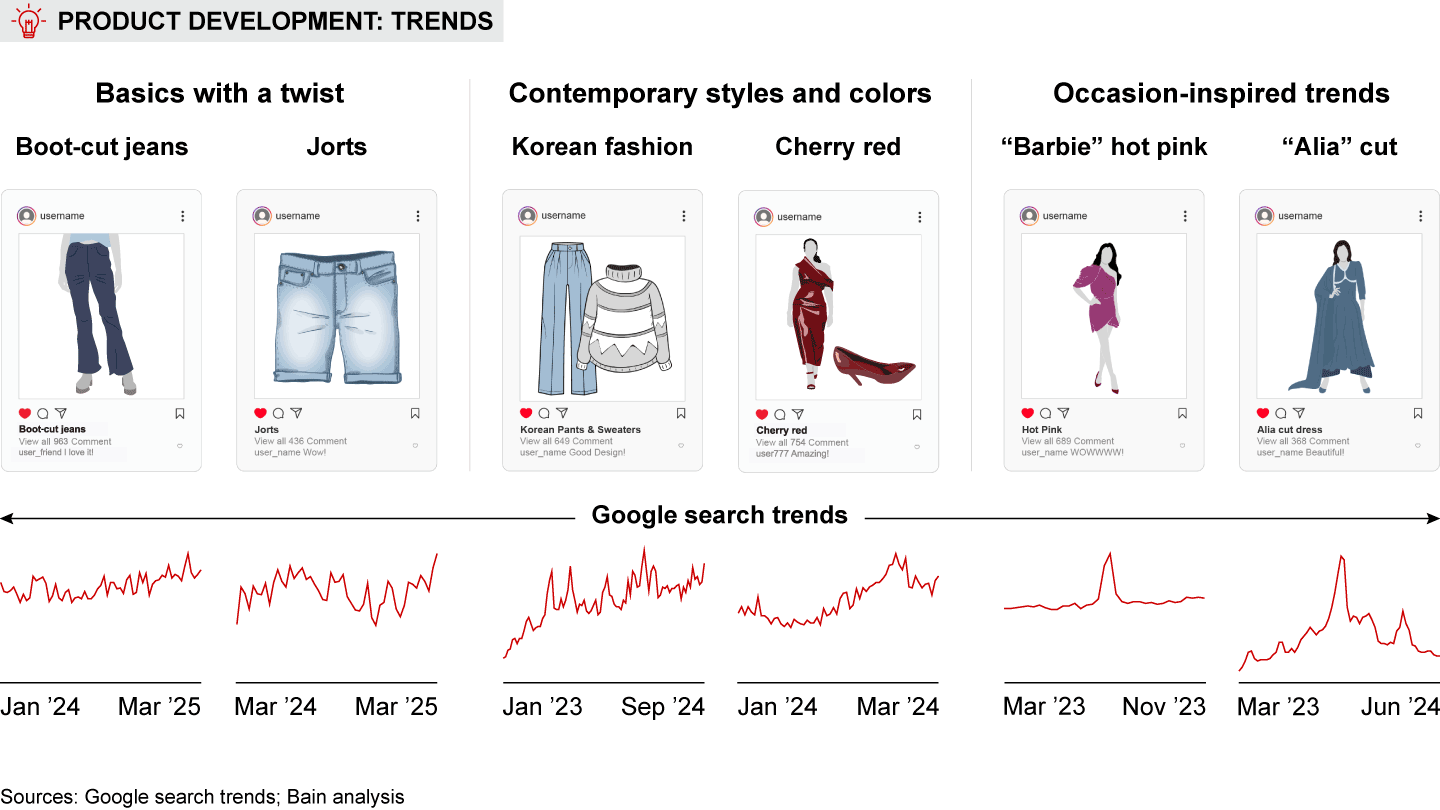
      Brands in design-heavy categories such as fashion are introducing new ranges to capture micro-trends
      Figure 32
      E-retail ads are gaining prominence across categories and brand archetypes
      E-retail ads are gaining prominence across categories and brand archetypes
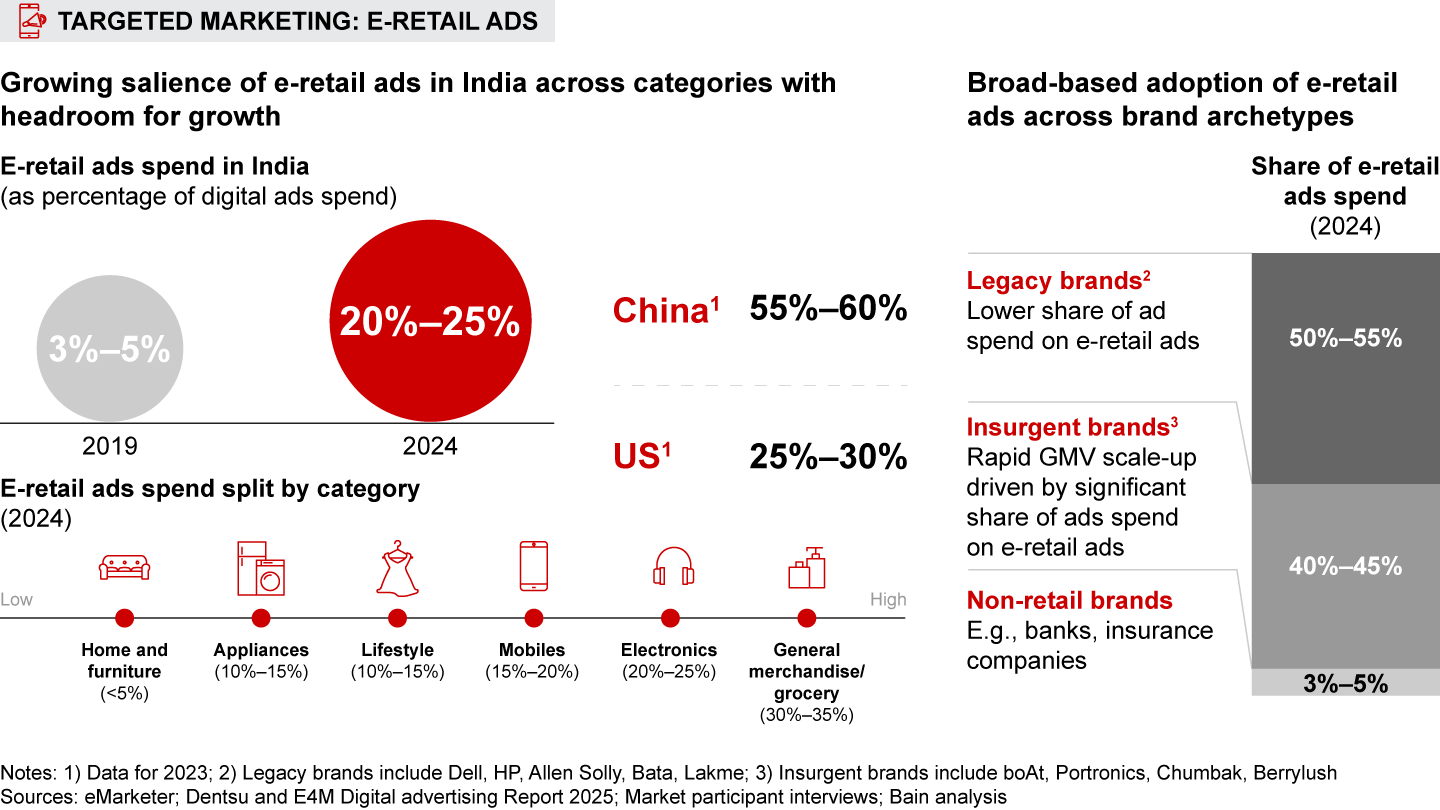
      E-retail ads are gaining prominence across categories and brand archetypes
      Figure 33
      Brands can leverage multiple e-retail ad formats to kick-start growth flywheel
      Brands can leverage multiple e-retail ad formats to kick-start growth flywheel
      Brands can leverage multiple e-retail ad formats to kick-start growth flywheel
      Figure 34
      Brands and sellers should prioritize building a critical mass of ratings to drive an inflection in conversion and kick-start the growth flywheel
      Brands and sellers should prioritize building a critical mass of ratings to drive an inflection in conversion and kick-start the growth flywheel
      Brands and sellers should prioritize building a critical mass of ratings to drive an inflection in conversion and kick-start the growth flywheel
      Brand Speak
      Insights on leveraging diverse and evolving e-retail consumer preferences
      Insights on leveraging diverse and evolving e-retail consumer preferences
      Insights on leveraging diverse and evolving e-retail consumer preferences
      저자
      • Headshot of Arpan Sheth
        Arpan Sheth
        파트너, Washington, DC
      • Headshot of Shyam Unnikrishnan
        Shyam Unnikrishnan
        파트너, Bengaluru
      • Headshot of Manan Bhasin
        Manan Bhasin
        파트너, Mumbai
      • Headshot of Punit Parekh
        Punit Parekh
        부파트너, Bengaluru
      문의하기
      관련 산업
      • 소비재
      • 유통
      소비재
      US Consumer Health Update

      Upper-income earners seem to be adopting a defensive position but are not yet reporting negative spending intentions.

      자세히 보기
      소비재
      Weight-Loss Drug Users Spend Less on Groceries, Fast Food

      GLP-1 drugs result in notable drops in food spending. By 2030, as many as one in four Americans may have tried them.

      자세히 보기
      소비재
      Adapting to Channel Evolution: Opportunities and Challenges for FMCG

      China Shopper Report 2025, vol. 2

      자세히 보기
      소비재
      How Tariffs Are Shaping US Consumer Behavior

      Pricing fears have eased a little, but more shoppers say they are accelerating purchases.

      자세히 보기
      소비재
      Embracing the “Do-Say” Gap

      Three pragmatic questions that shift sustainability from ambition to action.

      자세히 보기
      태그
      • 소비재
      • 유통

      프로젝트 사례

      지속 가능성 및 기업의 사회적 책임 A Manufacturer Vows to “Push to Zero” Carbon Emissions

      See more related case studies

      고객 전략 및 마케팅 Inspiring retail employees to think and act like owners

      See more related case studies

      전략 Focus on core delivers growth for retailer

      See more related case studies

      베인에 궁금하신 점이 있으신가요?

      베인은 주저 없이 변화를 마주할 줄 아는 용감한 리더들과 함께합니다. 그리고, 이들의 담대한 용기는 고객사의 성공으로 이어집니다.

      급변하는 비즈니스 환경에서 살아남기 위한 선도자의 시각. 월간 Bain Insights에서 글로벌 비즈니스의 핵심 이슈를 확인하십시오.

      *개인정보 정책을 읽었으며 그 내용에 동의합니다.

      Privacy Policy를 읽고 동의해주십시오.
      Bain & Company
      문의하기 환경정책 Accessibility 이용약관 개인정보 보호 쿠키 사용 정책 Sitemap Log In

      © 1996-2026 Bain & Company, Inc.

      문의하기

      무엇을 도와드릴까요?

      • 프로젝트 문의
      • 채용 정보
      • 언론
      • 제휴 문의
      • 연사 초청
      오피스 전체보기