
Skip to Content
  • 오피스

    오피스

    미주
    • Atlanta
    • Austin
    • Bogota
    • Boston
    • Buenos Aires
    • Chicago
    • Dallas
    • Denver
    • Houston
    • Los Angeles
    • Mexico City
    • Minneapolis
    • Monterrey
    • Montreal
    • New York
    • Rio de Janeiro
    • San Francisco
    • Santiago
    • São Paulo
    • Seattle
    • Silicon Valley
    • Toronto
    • Washington, DC
    유럽, 중동, 아프리카
    • Amsterdam
    • Athens
    • Berlin
    • Brussels
    • Copenhagen
    • Doha
    • Dubai
    • Dusseldorf
    • Frankfurt
    • Helsinki
    • Istanbul
    • Johannesburg
    • Kyiv
    • Lisbon
    • London
    • Madrid
    • Milan
    • Munich
    • Oslo
    • Paris
    • Riyadh
    • Rome
    • Stockholm
    • Vienna
    • Warsaw
    • Zurich
    아시아, 호주
    • Bangkok
    • Beijing
    • Bengaluru
    • Brisbane
    • Ho Chi Minh City
    • Hong Kong
    • Jakarta
    • Kuala Lumpur
    • Manila
    • Melbourne
    • Mumbai
    • New Delhi
    • Perth
    • Seoul
    • Shanghai
    • Singapore
    • Sydney
    • Tokyo
    오피스 전체보기
  • 얼럼나이
  • 미디어 센터
  • 구독
  • 연락처
  • Korea | 한국어

    지역 및 언어 선택

    글로벌
    • Global (English)
    미주
    • Brazil (Português)
    • Argentina (Español)
    • Canada (Français)
    • Chile (Español)
    • Colombia (Español)
    유럽, 중동, 아프리카
    • France (Français)
    • DACH Region (Deutsch)
    • Italy (Italiano)
    • Spain (Español)
    • Greece (Elliniká)
    아시아, 호주
    • China (中文版)
    • Korea (한국어)
    • Japan (日本語)
  • Saved items (0)
    Saved items (0)

    You have no saved items.

    관심 있는 내용을 북마크하여 Red 폴더에 저장할 수 있습니다. Red 폴더 에서 저장된 내용을 읽거나 공유해보세요.

    Explore Bain Insights
  • 산업
    메인 메뉴

    산업

    • 우주항공, 방산 및 정부 서비스
    • 농업 관련 산업
    • 자동차
    • 화학
    • 인프라, 건설 및 건축 자재
    • 소비재
    • 금융 서비스
    • 헬스케어
    • 산업용 기계 및 장비
    • 미디어 및 엔터테인먼트
    • 금속
    • 광업
    • 석유 및 가스
    • 제지 및 패키징 산업
    • 사모펀드
    • 사회 및 공공 부문
    • 유통
    • 기술
    • 텔레콤
    • 운송
    • 여행·여가
    • 유틸리티 및 재생가능 에너지
  • 컨설팅 서비스
    메인 메뉴

    컨설팅 서비스

    • AI, 인사이트 및 솔루션
    • Customer Experience
    • Innovation
    • M&A
    • 운영
    • 조직
    • 사모펀드
    • 고객 전략 및 마케팅
    • 전략
    • ESG
    • Technology
    • 변화 혁신
  • Digital
  • 인사이트
  • 베인 소개
    메인 메뉴

    베인 소개

    • 업무 소개
    • 베인의 신념
    • 구성원 및 리더십 소개
    • 고객 성과
    • 주요 수상 경력
    • 글로벌 파트너사
    Further: Our global responsibility
    • 다양성과 포용
    • 사회 공헌 활동
    • Sustainability
    • World Economic Forum
    Learn more about Further
  • Careers
    메인 메뉴

    Careers

    • Work with Us
      Careers
      Work with Us
      • Find Your Place
      • Our Work Areas
      • Integrated Teams
      • Students
      • Internships & Programs
      • Recruiting Events
    • Life at Bain
      Careers
      Life at Bain
      • Blog: Inside Bain
      • Career Stories
      • Our People
      • Where We Work
      • Supporting Your Growth
      • Affinity Groups
      • Benefits
    • Impact Stories
    • Hiring Process
      Careers
      Hiring Process
      • What to Expect
      • Interviewing
    FIND JOBS
  • 오피스
    메인 메뉴

    오피스

    • 미주
      오피스
      미주
      • Atlanta
      • Austin
      • Bogota
      • Boston
      • Buenos Aires
      • Chicago
      • Dallas
      • Denver
      • Houston
      • Los Angeles
      • Mexico City
      • Minneapolis
      • Monterrey
      • Montreal
      • New York
      • Rio de Janeiro
      • San Francisco
      • Santiago
      • São Paulo
      • Seattle
      • Silicon Valley
      • Toronto
      • Washington, DC
    • 유럽, 중동, 아프리카
      오피스
      유럽, 중동, 아프리카
      • Amsterdam
      • Athens
      • Berlin
      • Brussels
      • Copenhagen
      • Doha
      • Dubai
      • Dusseldorf
      • Frankfurt
      • Helsinki
      • Istanbul
      • Johannesburg
      • Kyiv
      • Lisbon
      • London
      • Madrid
      • Milan
      • Munich
      • Oslo
      • Paris
      • Riyadh
      • Rome
      • Stockholm
      • Vienna
      • Warsaw
      • Zurich
    • 아시아, 호주
      오피스
      아시아, 호주
      • Bangkok
      • Beijing
      • Bengaluru
      • Brisbane
      • Ho Chi Minh City
      • Hong Kong
      • Jakarta
      • Kuala Lumpur
      • Manila
      • Melbourne
      • Mumbai
      • New Delhi
      • Perth
      • Seoul
      • Shanghai
      • Singapore
      • Sydney
      • Tokyo
    오피스 전체보기
  • 얼럼나이
  • 미디어 센터
  • 구독
  • 연락처
  • Korea | 한국어
    메인 메뉴

    지역 및 언어 선택

    • 글로벌
      지역 및 언어 선택
      글로벌
      • Global (English)
    • 미주
      지역 및 언어 선택
      미주
      • Brazil (Português)
      • Argentina (Español)
      • Canada (Français)
      • Chile (Español)
      • Colombia (Español)
    • 유럽, 중동, 아프리카
      지역 및 언어 선택
      유럽, 중동, 아프리카
      • France (Français)
      • DACH Region (Deutsch)
      • Italy (Italiano)
      • Spain (Español)
      • Greece (Elliniká)
    • 아시아, 호주
      지역 및 언어 선택
      아시아, 호주
      • China (中文版)
      • Korea (한국어)
      • Japan (日本語)
  • Saved items  (0)
    메인 메뉴
    Saved items (0)

    You have no saved items.

    관심 있는 내용을 북마크하여 Red 폴더에 저장할 수 있습니다. Red 폴더 에서 저장된 내용을 읽거나 공유해보세요.

    Explore Bain Insights
  • 산업
    • 산업

      • 우주항공, 방산 및 정부 서비스
      • 농업 관련 산업
      • 자동차
      • 화학
      • 인프라, 건설 및 건축 자재
      • 소비재
      • 금융 서비스
      • 헬스케어
      • 산업용 기계 및 장비
      • 미디어 및 엔터테인먼트
      • 금속
      • 광업
      • 석유 및 가스
      • 제지 및 패키징 산업
      • 사모펀드
      • 사회 및 공공 부문
      • 유통
      • 기술
      • 텔레콤
      • 운송
      • 여행·여가
      • 유틸리티 및 재생가능 에너지
  • 컨설팅 서비스
    • 컨설팅 서비스

      • AI, 인사이트 및 솔루션
      • Customer Experience
      • Innovation
      • M&A
      • 운영
      • 조직
      • 사모펀드
      • 고객 전략 및 마케팅
      • 전략
      • ESG
      • Technology
      • 변화 혁신
  • Digital
  • 인사이트
  • 베인 소개
    • 베인 소개

      • 업무 소개
      • 베인의 신념
      • 구성원 및 리더십 소개
      • 고객 성과
      • 주요 수상 경력
      • 글로벌 파트너사
      Further: Our global responsibility
      • 다양성과 포용
      • 사회 공헌 활동
      • Sustainability
      • World Economic Forum
      Learn more about Further
  • Careers
    최근 검색어
      최근 방문 페이지

      Content added to saved items

      Saved items (0)

      Removed from saved items

      Saved items (0)

      Brief

      How Will AI Change Software Organizations?

      How Will AI Change Software Organizations?

      Employees will be capable of doing more with AI agents—as long as the systems and culture support them.

      글 Jonathan Frick and Arun Ganti

      • 읽기 소요시간
      }

      Brief

      How Will AI Change Software Organizations?
      en
      한눈에 보기
      • AI will redefine roles at software companies, as AI agents handle more tasks, allowing people to focus on higher-value work.
      • Teams will become smaller, hybrid human-AI pods with more end-to-end ownership, blurring traditional functional boundaries.
      • Employees will act like orchestrators who direct AI agents, requiring deeper expertise and broader capabilities.
      • To unlock AI’s full value, organizations must redesign workflows, simplify structures, and support faster decision making.

      This is the fourth in a five-part series on the software industry in the age of AI. 

      No one knows exactly how AI will change the way companies look three or four years from now, but the contours are beginning to take shape. AI is fundamentally changing how software companies build, run, sell, and maintain software. The biggest impact will be felt by engineering and go-to-market organizations, where most of the headcount sits. One signal is that among leading software companies, revenue grew 22% faster than headcount in the past year, an indication of AI’s effect on employee productivity (see Figure 1).

      Figure 1
      Revenue per headcount is accelerating
      visualization
      Sources: Company annual reports; Bain & Company

      Entire processes will be fundamentally redesigned in an AI organization, which will change roles, skill needs, and team structures significantly:

      • Work will become more “end to end,” with jobs refactored around workers who stretch across what used to be separate roles. Product managers will prototype and even build. Engineers will talk directly with customers. Functional boundaries will blur, and teams will test and learn more as AI reduces the cost of trying.
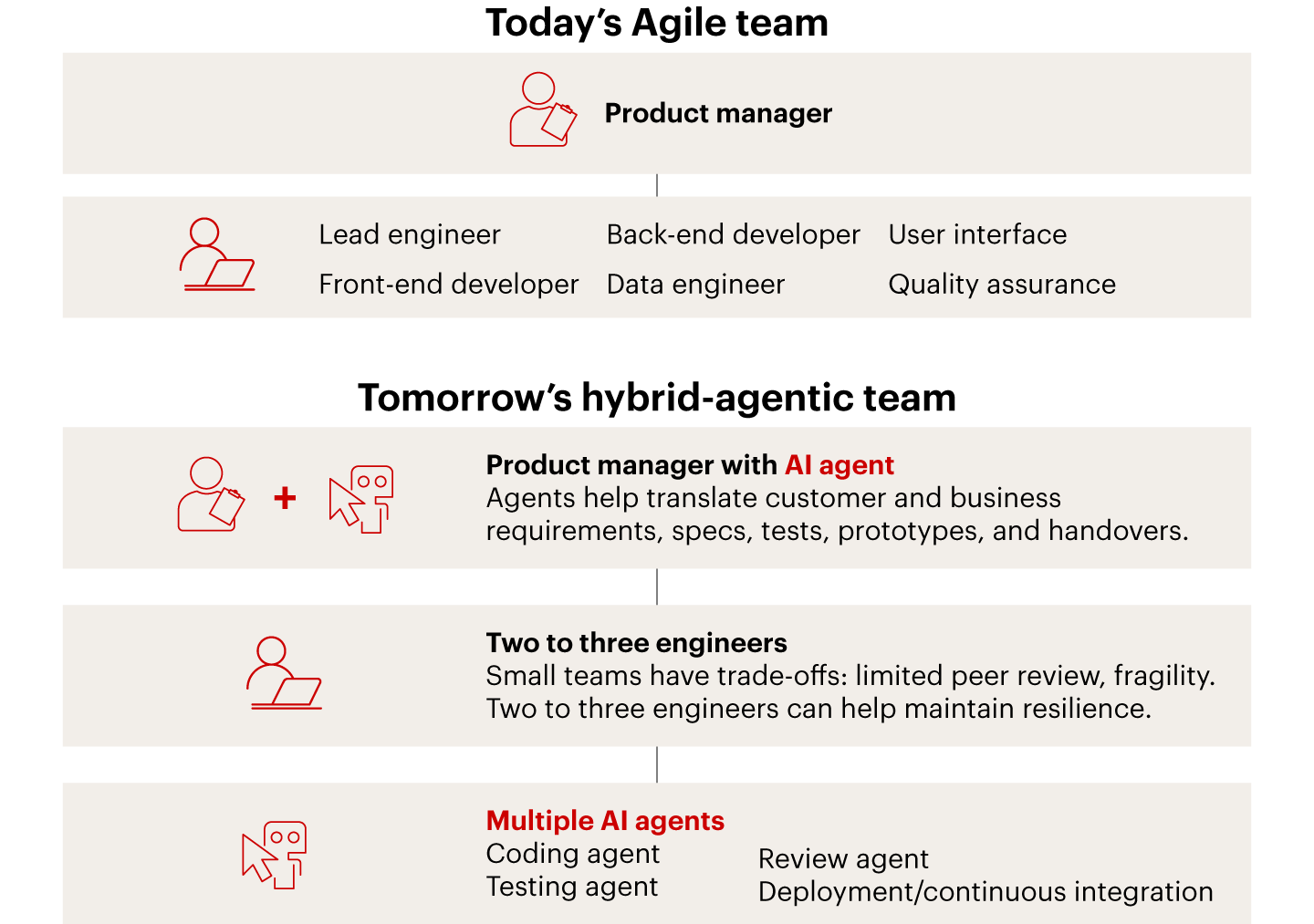
      • Teams’ structures will change, shifting from the standard “pizza team”—a team that can be fed by two large pizzas—to smaller units of three to five people augmented by AI agents. In engineering, this is already taking shape: The standard squad of one product manager and six to eight engineers across specialties is giving way to hybrid-agentic pods, which consist of a smaller number of engineers working alongside AI agents that handle coding, testing, review, and deployment (see Figure 2). The human activity shifts from writing code to supervising systems that write code.
      Figure 2
      Product teams will evolve into hybrid-agentic teams
      출처: Bain & Company
      • Individual contributors will start to look more like managers or orchestrators as they spend more time directing AI, dramatically increasing their productivity. Today, managers decide what work employees should do; increasingly, employees will decide what work AI will do. This doesn’t necessarily mean companies need more tenured, higher-titled people. It means individual contribution will shift from task execution to orchestration, strategic planning, critical reviews, and problem solving (see Figure 3).
      Figure 3
      AI will unlock capacity for engineers to focus on higher-value activities
      visualization
      Source: Bain & Company
      • People who can think broadly at the high level but also go deep into detail—what the talent function calls “T-shaped”—will be in greater demand. AI can handle routine execution, so value will accrue to people with deep expertise and the ability to go wide.
      • The pace will continue to quicken: Iteration cycles will shrink, speeding up innovation and product releases. Reddit says its teams can dream up an idea and have a functional prototype the next day. Customers will expect faster fixes and improvements and quicker returns on their software investments. To deliver at this pace, authority must sit closer to teams, and managers must shift from gatekeeping to enablement.

      AI doesn’t respect org charts

      As work and teams change because of AI, organizations’ structures will also need to adapt.

      Reducing the number of layers in the organizational hierarchy (delayering) is already underway, and AI should accelerate this trend as it shrinks team sizes and speeds delivery. It should be easier for the front line to receive clear direction from strategic decision makers, with fewer layers between them.

      As individual employees receive more autonomy to direct AI and make decisions, software companies risk organizational chaos unless their governance is built for an agentic world. Management systems must evolve, and decision rights need to be clearly defined: Where should humans stay in the loop, where can agents act autonomously, and who is accountable when things go wrong? As AI shifts decision making down the org chart, employees need clarity on where the company is headed and confidence that their judgment will be backed. Companies must shift toward an operating model that supports decentralized decision making.

      Leading companies will also rethink their functional structures, not just making silos more porous but finding ways to architect AI-native processes end to end across formerly separate functions. A product-led company might tightly integrate in-product features, revenue marketing, and digital store operations. A large enterprise-sales company might couple account-based marketing, sales, and field delivery. The specific structures will vary, but the principle is consistent: You must be able to redesign workflows across functional boundaries, and the teams enabling that redesign need to be AI-first themselves—otherwise they become the constraint.

      Change management is more critical than ever

      Previous shifts to SaaS and Agile ways of working required new behaviors, but the adoption of AI could be even tougher. If every employee is managing a nonhuman agent workforce, they’ll need to learn to think like managers. Talent must stretch beyond current comfort zones. Embedding new ways of working can take years, and the risk of change fatigue is high.

      Successful transformations treat workflow and workforce modernization as symbiotic efforts, continually adapting to feedback to amplify gains and correct imbalances by doing three things in parallel.

      • Simplify and standardize the work: Implement zero-based redesign on end-to-end processes with AI embedded.
      • Adapt the workforce: Define the roles and talent needed for the new processes and adapt the people as the work processes change.
      • Manage the change: AI can’t succeed without people embracing new ways of working, and that requires visible support from the top. Senior executives need to guide teams through the change with clarity and empathy, defining a positive version of the future. The change should be reinforced throughout the organization, and there should be a closed-loop system of feedback, learning, and refinement driven by both human and machine intelligence. Training matters, but so does fast learning and open feedback. Above all, people need to feel supported as they take on new roles. Amid all this change, culture can be the most important of all. A culture that rewards experimentation and shared ownership will accelerate progress. One that clings to hierarchy and risk aversion will smother it.

      There is no template for becoming an AI-first software company, but the destination is compelling: AI makes routine tasks easier and faster, freeing humans to focus on transformation. Software companies that succeed will become more adaptive, powered by innovation. Of course, this vision includes a daunting truth: Getting there will be messy, and there are no shortcuts.

      Explore this series

      • AI Brings Headwinds and Tailwinds to the Rule of 40

      • The $100-Billion SaaS Opportunity Hiding in Cross-System Labor

      • Agentic AI and the New Complexity Trap in Enterprise Software

      • How Will AI Change Software Organizations?

      저자
      • Headshot of Jonathan Frick
        Jonathan Frick
        파트너, London
      • Headshot of Arun Ganti
        Arun Ganti
        파트너, Atlanta
      문의하기
      관련 산업
      • 기술
      • Software
      기술
      Agentic AI and the New Complexity Trap in Enterprise Software

      Value will accrue to those who empower customers, rather than those who build the most complex solutions.

      자세히 보기
      기술
      The Future of Opex in the Agent Economy

      AI’s real impact isn’t efficiency; it’s a fundamental rewrite of how decisions are made and work gets done.

      자세히 보기
      기술
      The $100-Billion SaaS Opportunity Hiding in Cross-System Labor

      Agentic AI can automate much of the coordination work among systems, creating a large new market for software companies.

      자세히 보기
      기술
      Will IT Accelerate or Stall Your AI Transformation?

      How CIOs can fund, scale, and modernize to keep pace with escalating AI demands.

      자세히 보기
      기술
      AI Brings Headwinds and Tailwinds to the Rule of 40

      Investing to keep up with new competitors may force SaaS companies to accept the Rule of 30 for a while.

      자세히 보기
      First published in 5월 2026
      태그
      • 기술
      • Software

      프로젝트 사례

      A Technology Company’s Transformation Restores Its Growth Trajectory

      See more related case studies

      Helping a Midsize ERP Player Compete against the Giants

      See more related case studies

      성과 개선 Aggressively growing an IT service provider with a high-performance culture

      See more related case studies

      베인에 궁금하신 점이 있으신가요?

      베인은 주저 없이 변화를 마주할 줄 아는 용감한 리더들과 함께합니다. 그리고, 이들의 담대한 용기는 고객사의 성공으로 이어집니다.

      급변하는 비즈니스 환경에서 살아남기 위한 선도자의 시각. 월간 Bain Insights에서 글로벌 비즈니스의 핵심 이슈를 확인하십시오.

      *개인정보 정책을 읽었으며 그 내용에 동의합니다.

      Privacy Policy를 읽고 동의해주십시오.
      Bain & Company
      문의하기 환경정책 Accessibility 이용약관 개인정보 보호 쿠키 사용 정책 Sitemap Log In

      © 1996-2026 Bain & Company, Inc.

      문의하기

      무엇을 도와드릴까요?

      • 프로젝트 문의
      • 채용 정보
      • 언론
      • 제휴 문의
      • 연사 초청
      오피스 전체보기