

Brief

한눈에 보기
- Chinese companies use outbound M&A to develop capabilities that will help them win at home or gain leadership in selected industries overseas.
- In 2015–2017, China represented more than 40% of deals in Asia-Pacific, but its share dropped dramatically in the first half of 2018.
- As a percentage of GDP, China usually spends half of what Japan spends on outbound M&A.
- As Chinese companies become more experienced at outbound M&A, they gain sophistication in critical capabilities, such as developing a clear investment thesis, due diligence and merger integration.
Chinese companies acquiring overseas are entering their third phase. During the first phase, the vast majority of outbound M&A deals were made to secure natural resources. The second wave of activity was largely about acquiring brands or technology and other capabilities that Chinese companies could use to help build their businesses at home. Now, when companies look to acquire beyond China’s borders, it’s often to help them achieve the dual goals of winning at home and exporting abroad, enabling them to strengthen their domestic competitive stance while simultaneously positioning for global expansion, especially in other developing markets (see Figure 1).
Figure 1
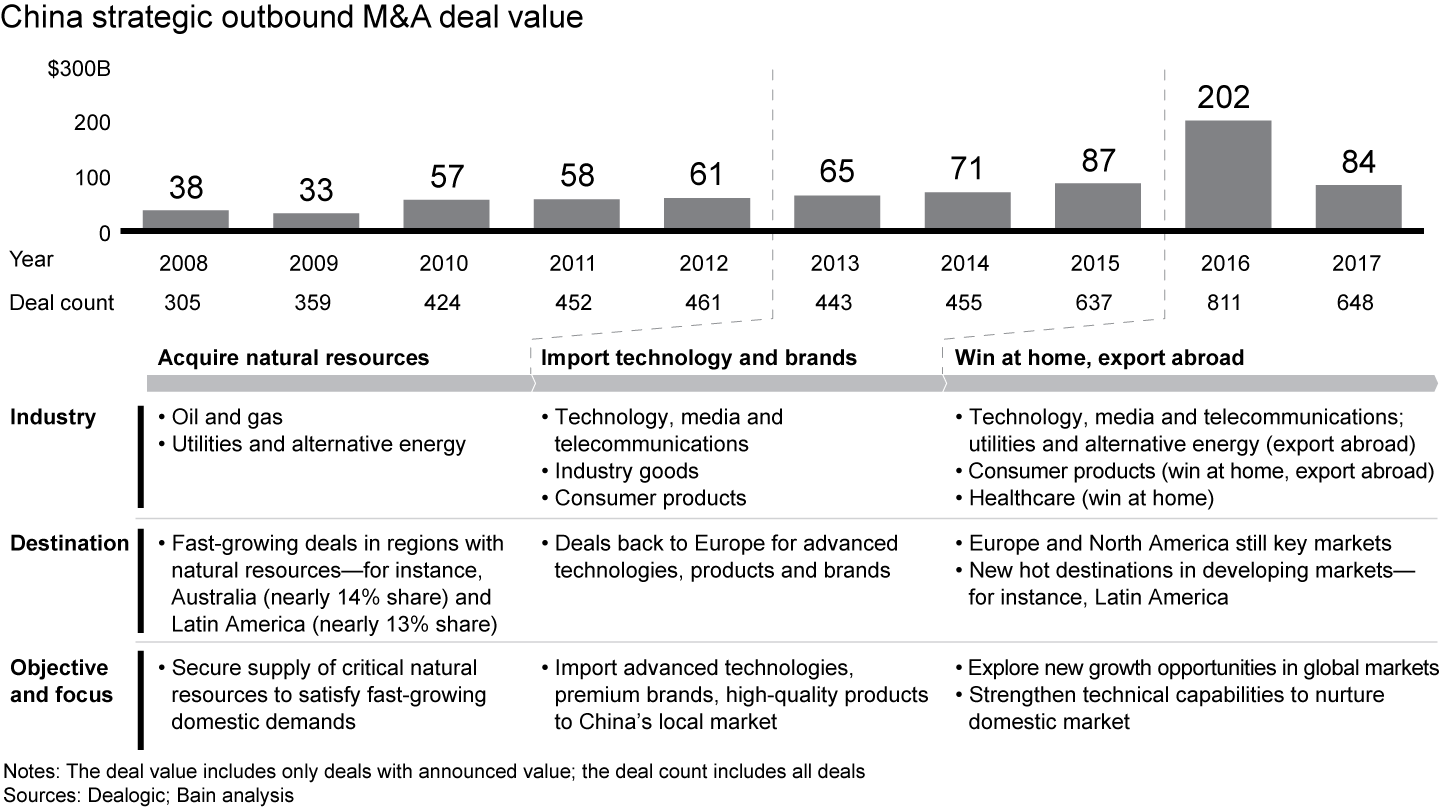

This latest stage of M&A is helping Chinese companies gain market share in utilities, construction and Internet-based businesses in countries such as Brazil, India and Indonesia, and it will continue to build momentum in fits and starts. Outbound deals for the first half of 2018 totaled $22 billion, a significant drop from $56.7 billion for the same period in 2017 and from $118.7 billion for the first half of 2016.
A host of factors contributed to that decline. Currency depreciation took a toll, for example, as did fears of the effects of the US–China trade wars on both domestic company profits and US opportunities (see the related article “M&A in a Time of Trade Wars, below). Also, deals were hurt by restrictions on investments in the US, Germany, Australia and other markets, as well as the Chinese government’s careful monitoring of outbound investments.
While deal volume dropped in the first half of 2018, it conducted more than 40% of all outbound M&A activity in Asia-Pacific during 2015–2017, with significantly more deals aimed at gaining full or a controlling stake, according to Bain analysis (see Figure 2 and the appendix). Also, despite the decline in volume, the number of Chinese outbound deals for 100% ownership from 2016 to 2017 (the third phase) more than doubled vs. 2013 to 2015 (the second phase), and the number of deals for 50% to 100% ownership rose by more than threefold.
Figure 2
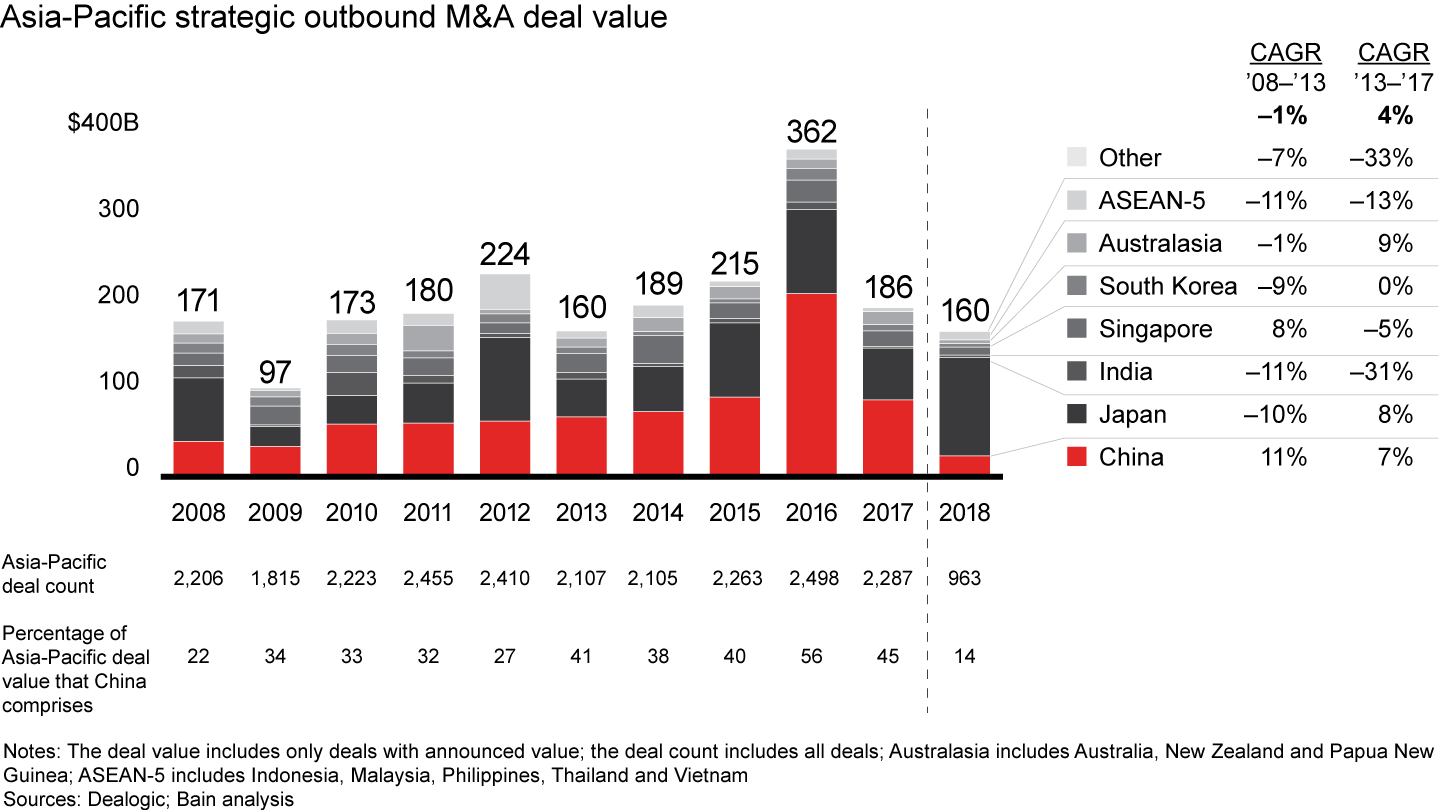

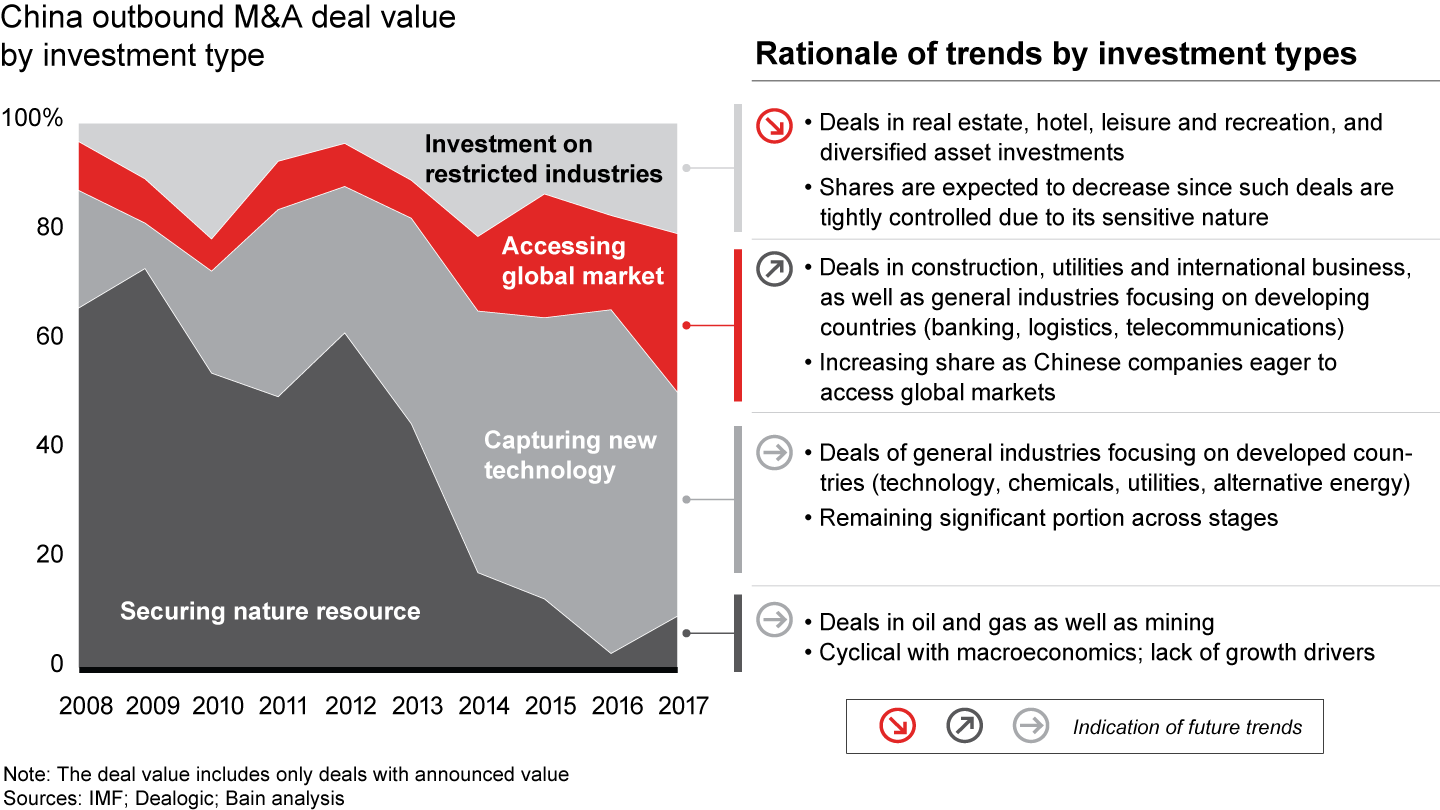
Another significant evolution: The number of private enterprises acquiring overseas is growing much faster than acquisitions made by state-owned enterprises. We expect to see an increase in deals aimed at capturing new capabilities required to grow businesses at home and for accessing global markets (see Figure 3). And there is ample opportunity for more overseas acquisitions. China spent only 0.6% of its GDP on outbound M&A—that is nearly half of what Japan spent.
Figure 3

The shift to using acquisitions to win both at home and overseas brings with it new and more complicated rules for success. Some companies have watched their deals falter, turning into cautionary tales. CNOOC invested too much in acquiring upstream natural resources, underplaying the risk from the oil price fluctuations that soured its $15.1 billion purchase of Canadian oil and gas producer Nexen. When CMCC bought Paktel, Pakistan’s fifth-largest telecom operator, for $460 million in 2007, the acquisition faltered for many reasons. It lacked a clear investment thesis, for example. CMCC learned that there was limited potential for synergies. In addition, the acquirer overestimated Paktel’s valuation and failed to identify unique local market characteristics, such as the expensive cost of building infrastructure.
An expanding group of Chinese companies is learning how to avoid such mistakes, however, by applying more rigor to their acquisitions. For example, soon after a consortium including Shanghai Fosun Pharmaceutical acquired Ambrx, a US biopharmaceutical company, in 2015, Fosun named a new CEO and a new chief science officer for Ambrx, both of whom have strong US and China experience and were deftly able to handle the usual cross-cultural issues that surface during most outbound deals. Among the important considerations in the deal: strategically using the deal to reinforce both companies’ research and development (R&D) capabilities for new products. Fosun provided resources (financial and clinical trial bases) to Ambrx for R&D while also benefiting from its affiliation with Ambrx through capability sharing.
Let’s look at the experience of two of China’s new outbound leaders.
Ride-hailing company DiDi illustrates how some acquirers are exercising far more caution than was common during the first two phases of China outbound M&A. The company made a solid strategic rationale for its recent acquisitions, as spelled out in an investment thesis, and followed up with more stringent due diligence.
DiDi started from a global expansion strategy, screened for potential markets to enter, decided on M&A and then identified possible targets with a clear investment thesis. It engaged in extensive due diligence prior to selecting Brazil as its first international move. The company relied on both internal and external resources to assess local player 99’s ability to manage businesses as well as its brand awareness, user base, operational efficiency and government relationships. The assessment paved the way for DiDi to test the waters in 2017. It acquired a minority share in 99 and established a strategic partnership. The tough diligence and deliberate approach helped boost the odds of success for the initial investment, and within a year, DiDi bought the remaining shares for $1 billion—a move that set the stage for its entry into Mexico.
Philip Leung, who leads Bain's Mergers & Acquisitions practice in Asia-Pacific, describes three major principles that can help acquiring companies maximize shareholder value.
Another big advance we are seeing in this new phase of acquisitions involves the level of post-acquisition control. In the past, many Chinese acquirers assumed that they would need to take full control of, or at least strongly influence, the management of an acquired business. Now, leaders take a more sophisticated approach. For example, companies such as apparel maker Shandong Ruyi Technology Group learned when it pays to use a lighter control model. Keeping with visionary Chairman Qiu Yafu’s philosophy, Ruyi takes its place on an acquired company’s board, agrees to annual and synergy goals, and typically keeps the brand management team in place. The rapidly growing apparel company then focuses its energy on bringing those acquired brands to China on an omnichannel basis— the company is especially reliant on Tmall—and helps the brands expand in Tier-2 and Tier-3 cities as well as other Asian markets.
While this arrangement works fine for most of Ruyi’s acquisitions, a stronger approach to integration is called for in different situations—for example, when acquiring a technology company in a developed market with the intention of bringing the technology back to China.
In addition to its thoughtful post-merger integration, Ruyi serves as a good illustration for another dimension of China’s new outbound acquirers: The company has developed a systematic way of accumulating M&A experience while steadily growing its business. Ruyi first targeted and bought small Japanese and Korean fashion brands, testing and learning how to bring them to China. It then targeted midrange European luxury brands, such as France’s SMCP. Once it felt comfortable with those acquisitions, it moved up to higher-level luxury brands such as Switzerland-based Bally. In all, Ruyi has invested more than $5 billion to build a strong brand portfolio in apparel.
Ruyi raises market expectations a number of ways. For example, it helped SMCP expand its sales network by leveraging the network of previously acquired fashion brands such as Renown. As a textile manufacturer, it helped SMCP get better purchasing deals and stabilized production. The systematic approach works well for Ruyi, which is rapidly advancing toward its goal of becoming a top-three global fashion group—China’s own LVMH.
The winning formula
DiDi, Ruyi and other acquisition leaders are setting the pace and writing the new rule book for China outbound M&A. They are renewing the principles that deliver successful deals. We see three major changes.
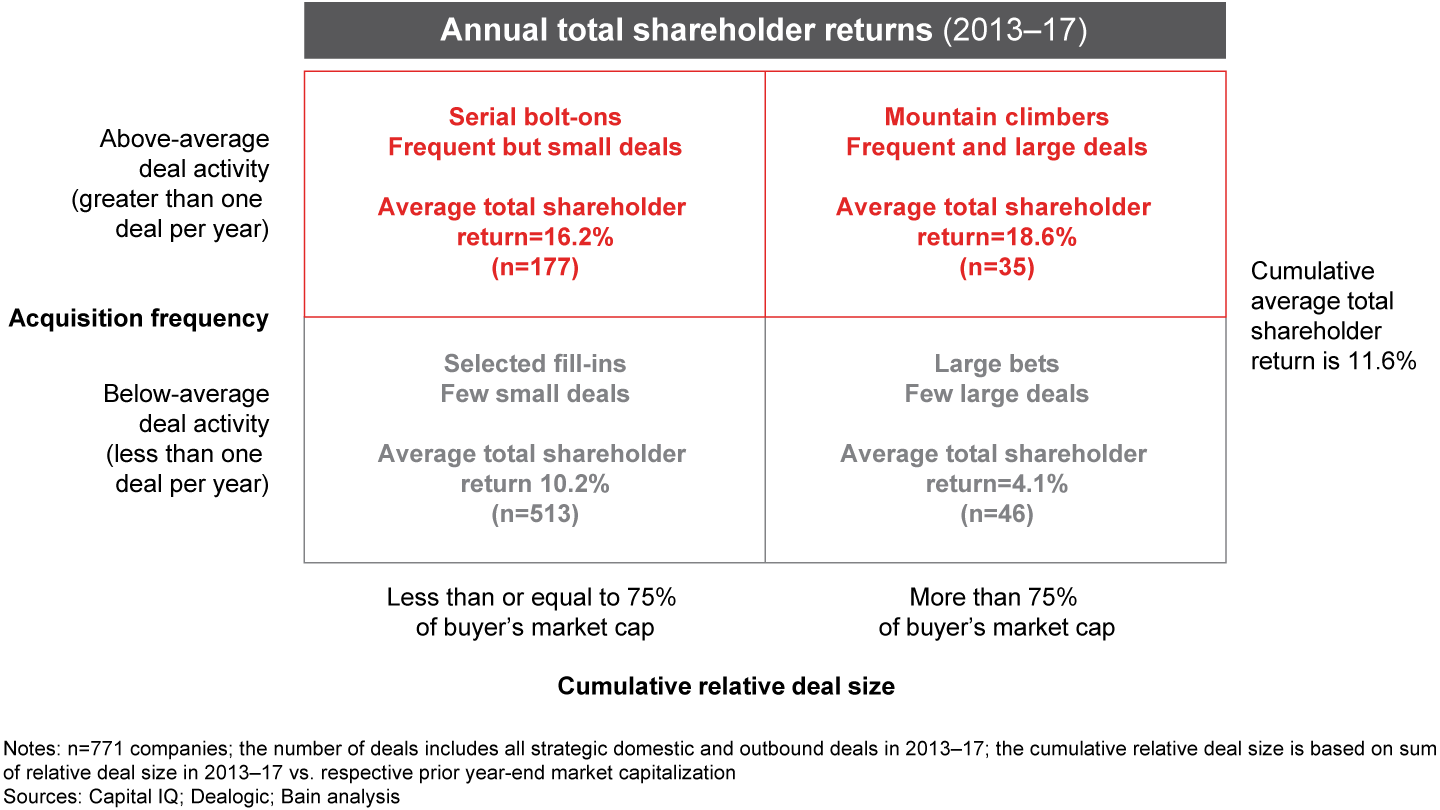
More Chinese acquirers are aiming for frequent and material M&A. One fundamental has not changed. M&A creates the most value for any company anywhere in the world when it is frequent and material over time. This was a finding from Bain’s original extensive research on M&A, and it has been reconfirmed across industries and geographies in numerous follow-up studies. Chinese acquirers are getting the message.
We analyzed the performance of more than 700 Chinese companies that made acquisitions from 2013 to 2017. The overall average total shareholder return (TSR), defined as stock price changes assuming reinvestment, was 11.6% (see Figure 4). Companies with more frequent and large deals— those we refer to as “mountain climbers”—did much better, however, with an average TSR of 18.6%. These are companies such as H&H Group, Seven Stars Cloud, Ctrip and Shandong Ruyi Technology Group. Mountain climbers routinely learn from each deal and bring the lessons to subsequent acquisitions.
Figure 4

Understanding the importance of cocreating an integration program, medical imaging company Mindray established an integration management team with equal representation from China and the US following its purchase of US-based Zonare. It was a move that helped smooth integration execution. Likewise, health products company H&H learned the importance of hiring professional M&A resources with global experience and of focusing on channel and distribution synergies among acquired brands. Those lessons paid off well for H&H, which achieved an annualized 18% TSR for the years 2012 to 2017.
More Chinese acquirers are developing a repeatable model for outbound M&A with disciplined capabilities. Shandong Ruyi sets a standard for repeatable outbound M&A. The company started life as a regional woolen mill, textile and apparel manufacturer. Since 2010, and with the help of a dedicated team, Ruyi acquired more than 10 companies, focusing on integration along the textile and apparel value chain. For example, it targeted upstream businesses, such as Australia’s Lempriere Wool, to secure high-end raw materials and textile technology. These upstream deals also helped Ruyi gain a stronger reputation in textile technology and a greater share in the global high-end market—both important for its plans to further penetrate luxury brands.
It bought downstream apparel and fashion businesses, such as the UK’s Aquascutum and Hong Kong’s Trinity, to expand channels and raise awareness in China, ensuring that lessons learned with each acquisition systematically are repeated in future acquisitions. Its repeatable model involves working with third parties to conduct financial due diligence and focusing integration efforts on harnessing synergies, whether in the supply chain or markets. A hallmark of its repeatable approach is to keep an acquired company’s operating model largely unchanged and to retain key employees. The formula works well: The strategy of engaging in frequent acquisitions has helped the company double its stock price over the past five years.
More Chinese acquirers are evolving their M&A capabilities to deal with a complex environment when entering global markets. Leaders are becoming more adept at evolving their capabilities for the more complex requirements of different types of deals. Generally speaking, there are four variations of outbound deals: those aimed at acquiring natural resources; those intended to import technology and brands; those that will give an acquirer access to developing markets; and those that will help it explore developed markets. The capabilities required for each are vastly different, and companies need to evolve those capabilities to address those varying needs.
Let’s look at two extremes. Acquiring a natural resource in a developing country typically requires a relatively low level of commercial diligence and a light approach to integration. Acquiring technology in a developed country to bring back to China is the opposite. Diligence needs to determine whether there is even a market in China for the technology, and integrating a developed market company into China can be fraught with challenges—among them, the risk of losing key talent.
That was the situation facing state-owned conglomerate China Resources Group when it embarked on a plan to bring radiation treatment centers to China. It knew the process would not be simple. The company first needed to analyze the market potential in China for the centers. When diligence clearly demonstrated a market opportunity, China Resources Group searched for a candidate, ultimately teaming with Australian bank Macquarie Group to buy GenesisCare for around $700 million. A big challenge loomed. The acquirer knew it needed to develop a post-acquisition value creation plan that satisfied Australian management, Chinese shareholders and the board.
In the global market, post-deal integration becomes even more important, and a deal’s success can rest on implementing a proper governance structure and distinguishing between critical and noncritical function integration. When Mindray purchased Zonare, it integrated the supply chain and sales channels, both considered critical functions, but only selectively integrated back offices, which are less critical to the business.
Increasingly, companies will opt for scope deals (those in which the target is a related but distinct business, enabling the acquirer to enter a new market, product line or channel) as opposed to scale deals (those that involve a high degree of business overlap between the target and acquirer, fueling a company’s expansion in its existing business). Scope deals are tricky to implement, often requiring companies to go well beyond the traditional merger integration playbook—for example, selectively integrating only where it matters most. Also, managing a diverse portfolio of businesses is harder than managing traditional scale enterprises. For those Chinese companies that get the repeatable model right, however, scope deals can lead to very good outcomes—namely, higher growth and higher shareholder returns over time.
China’s outbound boom will only continue as companies look to capture new capabilities that strengthen their domestic position while also growing overseas for a leadership position in industries in which they can gain a competitive edge. As they build their Repeatable Models®, they will also need to keep one eye on the future. In China, as elsewhere, winning outbound acquirers will be those that make the necessary adjustments to evolve their M&A strategy along with a global market that never stops changing.
-
Related: M&A in a Time of Trade Wars (click to read)
The daily headlines tell a story of mounting trade tensions that are hurting China’s outbound deals: “Trade war shrinks Chinese companies’ first-half mergers and acquisitions in America,” “Qualcomm Scraps NXP Deal Amid US–China Trade Tensions.” Tensions between the world’s two largest economies are too significant for Chinese companies not to address. A common question we hear is, How do I plan for the future? The answer comes in two parts: There is a tactical, short-term reaction and a strategic, longer-term approach. For the near future, it makes sense to put US acquisition plans on hold. For example, companies across industries increasingly find it necessary to acquire technical capabilities to meet the booming needs of digital disruption. As a short-term measure, many are now pivoting to Europe and other non-US developed markets for technology capabilities. But companies also need to maintain a longterm view of M&A strategy. For the longer term, Chinese companies need to stay the course. Make necessary adjustments to M&A strategy that consider different scenarios—and sketch out different contingency plans for different durations of time that the trade wars could last.
Appendix: Where are the deals?
We compared a total of 700 deals that took place during the first phase of China outbound M&A from 2008 to 2012 (when the majority of deals involved natural resources), the second phase of China outbound M&A from 2013 to 2015 (when deals emphasized importing technology and brands) and the third phase from 2016 to 2017 (when deals focused on winning at home and exporting abroad); below are some of the findings.
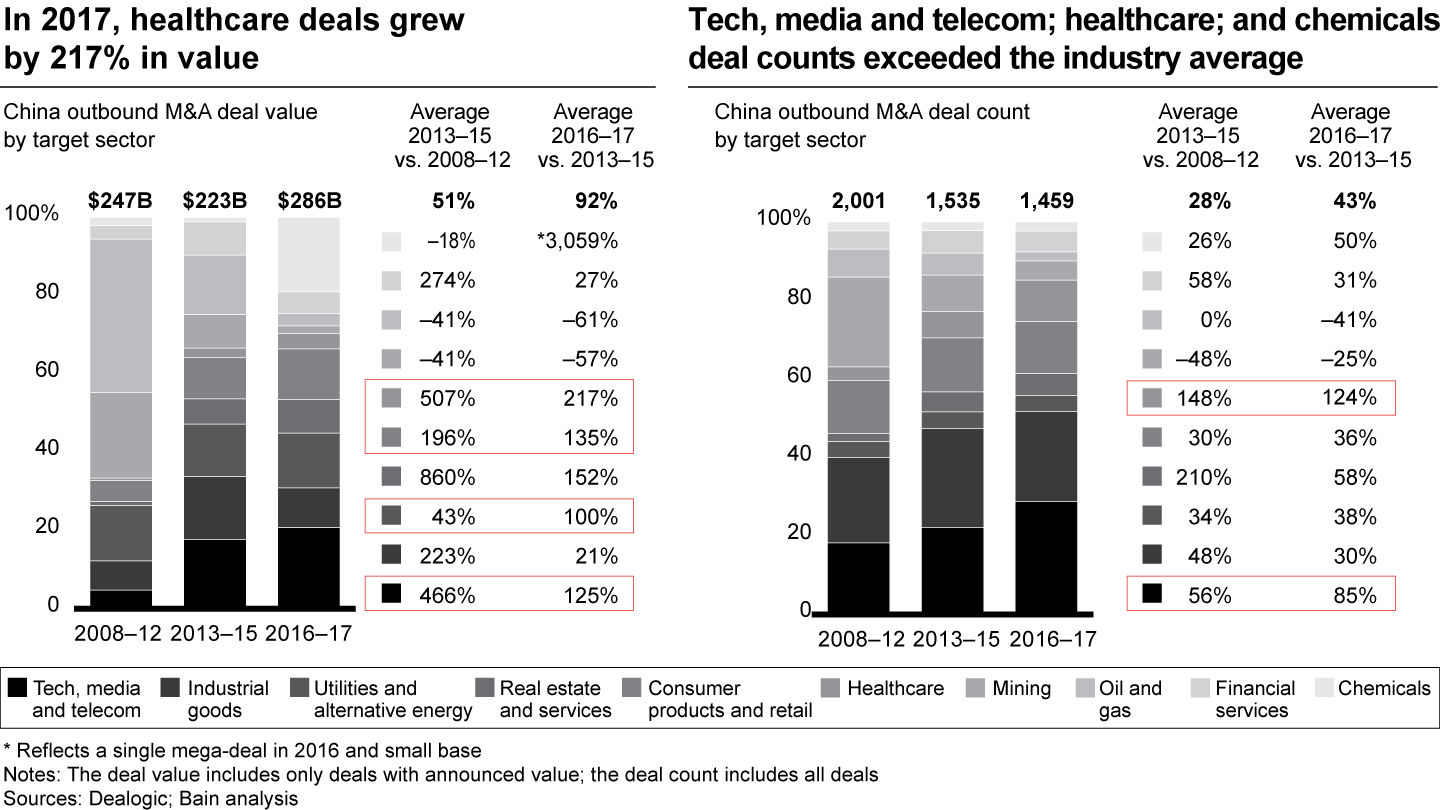
Outbound healthcare deals are growing particularly fast. Healthcare deals by value in 2016 to 2017 grew by 217% vs. in 2013 to 2015—that is more than twice the average for all industries. Consumer products and retail outbound acquisitions value rose by 135%. Healthcare also led the pack in the number of deals, which rose by 124%. The number of technology, media and telecom deals grew by 85% (see Figure 5).
Figure 5

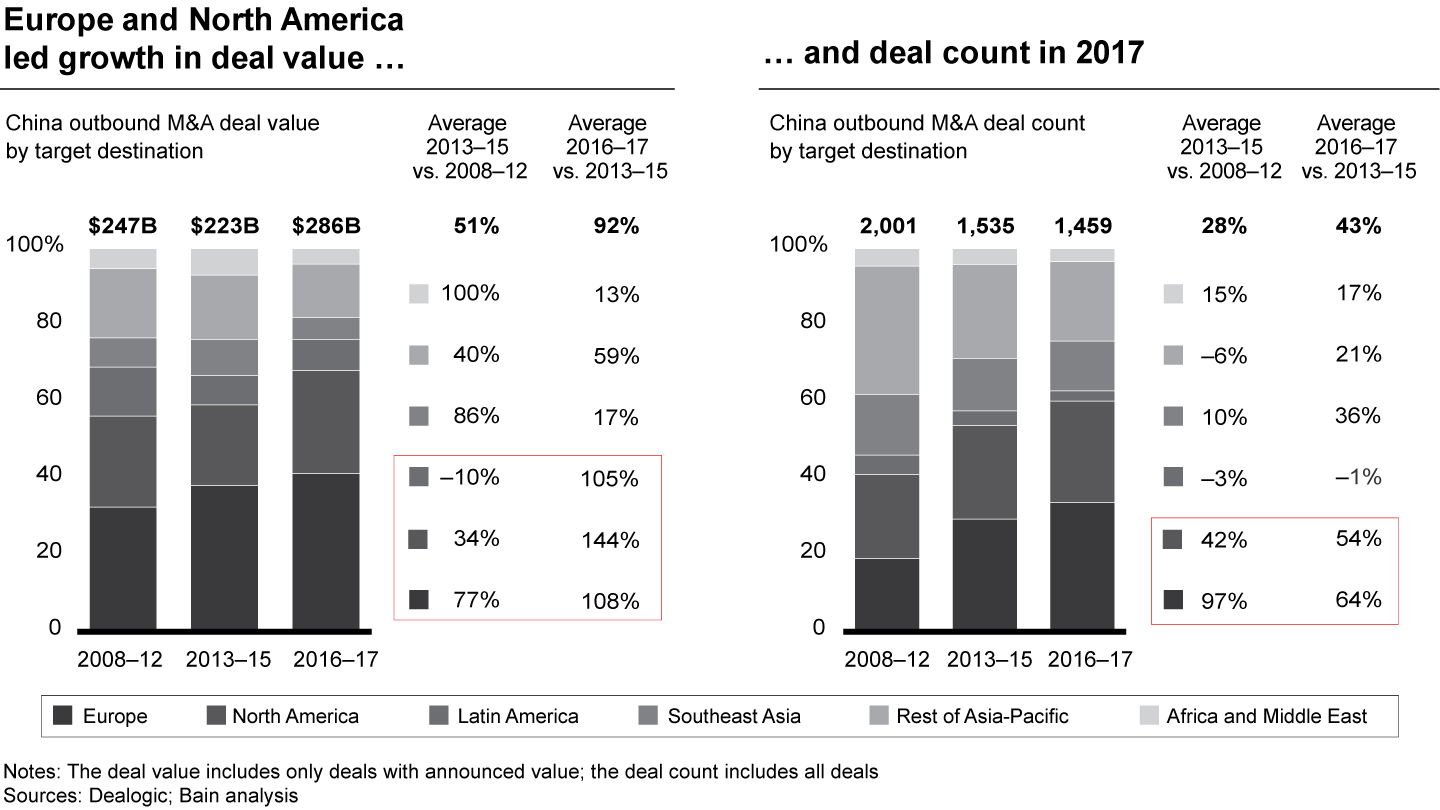
Europe and North America are the biggest destinations for outbound M&A, leading both deal value and deal count. Latin America is catching up. Its deal value grew by 105% in the current phase
In 2008 to 2012, oil and gas and mining deals dominated in both developed and developing countries (see Figure 6). Now those resources represent a fraction of China’s outbound M&A. In 2016 to 2017, the majority of deals in developed markets were for technology, media and telecommunications companies; chemicals; and consumer products and retail. The biggest number of developing-market acquisitions were for utilities and alternative energy companies.
Figure 6

More deals are for a controlling stake. The number of full-ownership deals rose more than twofold in 2016 to 2017, and there was a more than threefold rise in deals for a 50% to 100% stake. Private enterprises are growing more rapidly than state-owned enterprises in deal value and will continue to contribute more deals in the future.
There is an increasing distinction between acquisition types in developed and developing markets. About half of all developed country acquisitions are scope deals—namely, those that enable an acquirer to enter a new market, product line or channel. By comparison, acquisitions in developing countries are mostly scale deals—namely, those that help a company expand its existing business. Leading acquirers tailor their approach to M&A strategy, due diligence and integration based on the type of deal.
Phil Leung is a Bain & Company partner based in Shanghai, and he leads the firm’s Mergers & Acquisitions practice in Asia-Pacific. Hao Zhou is a Bain partner based in Hong Kong, and he leads the firm’s M&A practice in Greater China. Dorothy Cai is a Bain partner based in Toronto.
Great Repeatable Models® and Repeatable Models® are registered trademarks of Bain & Company, Inc.
First published in 10월 2018