
Skip to Content
  • 오피스

    오피스

    미주
    • Atlanta
    • Austin
    • Bogota
    • Boston
    • Buenos Aires
    • Chicago
    • Dallas
    • Denver
    • Houston
    • Los Angeles
    • Mexico City
    • Minneapolis
    • Monterrey
    • Montreal
    • New York
    • Rio de Janeiro
    • San Francisco
    • Santiago
    • São Paulo
    • Seattle
    • Silicon Valley
    • Toronto
    • Washington, DC
    유럽, 중동, 아프리카
    • Amsterdam
    • Athens
    • Berlin
    • Brussels
    • Copenhagen
    • Doha
    • Dubai
    • Dusseldorf
    • Frankfurt
    • Helsinki
    • Istanbul
    • Johannesburg
    • Kyiv
    • Lisbon
    • London
    • Madrid
    • Milan
    • Munich
    • Oslo
    • Paris
    • Riyadh
    • Rome
    • Stockholm
    • Vienna
    • Warsaw
    • Zurich
    아시아, 호주
    • Bangkok
    • Beijing
    • Bengaluru
    • Brisbane
    • Ho Chi Minh City
    • Hong Kong
    • Jakarta
    • Kuala Lumpur
    • Manila
    • Melbourne
    • Mumbai
    • New Delhi
    • Perth
    • Seoul
    • Shanghai
    • Singapore
    • Sydney
    • Tokyo
    오피스 전체보기
  • 얼럼나이
  • 미디어 센터
  • 구독
  • 연락처
  • Korea | 한국어

    지역 및 언어 선택

    글로벌
    • Global (English)
    미주
    • Brazil (Português)
    • Argentina (Español)
    • Canada (Français)
    • Chile (Español)
    • Colombia (Español)
    유럽, 중동, 아프리카
    • France (Français)
    • DACH Region (Deutsch)
    • Italy (Italiano)
    • Spain (Español)
    • Greece (Elliniká)
    아시아, 호주
    • China (中文版)
    • Korea (한국어)
    • Japan (日本語)
  • Saved items (0)
    Saved items (0)

    You have no saved items.

    관심 있는 내용을 북마크하여 Red 폴더에 저장할 수 있습니다. Red 폴더 에서 저장된 내용을 읽거나 공유해보세요.

    Explore Bain Insights
  • 산업
    메인 메뉴

    산업

    • 우주항공, 방산 및 정부 서비스
    • 농업 관련 산업
    • 화학
    • 인프라, 건설 및 건축 자재
    • 소비재
    • 금융 서비스
    • 헬스케어
    • 산업용 기계 및 장비
    • 미디어 및 엔터테인먼트
    • 금속
    • 광업
    • 석유 및 가스
    • 제지 및 패키징 산업
    • 사모펀드
    • 사회 및 공공 부문
    • 유통
    • 기술
    • 텔레콤
    • 운송
    • 여행·여가
    • 유틸리티 및 재생가능 에너지
  • 컨설팅 서비스
    메인 메뉴

    컨설팅 서비스

    • Customer Experience
    • ESG
    • Innovation
    • M&A
    • 운영
    • 조직
    • 사모펀드
    • 고객 전략 및 마케팅
    • 전략
    • AI, 인사이트 및 솔루션
    • Technology
    • 변화 혁신
  • Digital
  • 인사이트
  • 베인 소개
    메인 메뉴

    베인 소개

    • 업무 소개
    • 베인의 신념
    • 구성원 및 리더십 소개
    • 고객 성과
    • 주요 수상 경력
    • 글로벌 파트너사
    Further: Our global responsibility
    • 다양성과 포용
    • 사회 공헌 활동
    • Sustainability
    • World Economic Forum
    Learn more about Further
  • Careers
    메인 메뉴

    Careers

    • Work with Us
      Careers
      Work with Us
      • Find Your Place
      • Our Work Areas
      • Integrated Teams
      • Students
      • Internships & Programs
      • Recruiting Events
    • Life at Bain
      Careers
      Life at Bain
      • Blog: Inside Bain
      • Career Stories
      • Our People
      • Where We Work
      • Supporting Your Growth
      • Affinity Groups
      • Benefits
    • Impact Stories
    • Hiring Process
      Careers
      Hiring Process
      • What to Expect
      • Interviewing
    FIND JOBS
  • 오피스
    메인 메뉴

    오피스

    • 미주
      오피스
      미주
      • Atlanta
      • Austin
      • Bogota
      • Boston
      • Buenos Aires
      • Chicago
      • Dallas
      • Denver
      • Houston
      • Los Angeles
      • Mexico City
      • Minneapolis
      • Monterrey
      • Montreal
      • New York
      • Rio de Janeiro
      • San Francisco
      • Santiago
      • São Paulo
      • Seattle
      • Silicon Valley
      • Toronto
      • Washington, DC
    • 유럽, 중동, 아프리카
      오피스
      유럽, 중동, 아프리카
      • Amsterdam
      • Athens
      • Berlin
      • Brussels
      • Copenhagen
      • Doha
      • Dubai
      • Dusseldorf
      • Frankfurt
      • Helsinki
      • Istanbul
      • Johannesburg
      • Kyiv
      • Lisbon
      • London
      • Madrid
      • Milan
      • Munich
      • Oslo
      • Paris
      • Riyadh
      • Rome
      • Stockholm
      • Vienna
      • Warsaw
      • Zurich
    • 아시아, 호주
      오피스
      아시아, 호주
      • Bangkok
      • Beijing
      • Bengaluru
      • Brisbane
      • Ho Chi Minh City
      • Hong Kong
      • Jakarta
      • Kuala Lumpur
      • Manila
      • Melbourne
      • Mumbai
      • New Delhi
      • Perth
      • Seoul
      • Shanghai
      • Singapore
      • Sydney
      • Tokyo
    오피스 전체보기
  • 얼럼나이
  • 미디어 센터
  • 구독
  • 연락처
  • Korea | 한국어
    메인 메뉴

    지역 및 언어 선택

    • 글로벌
      지역 및 언어 선택
      글로벌
      • Global (English)
    • 미주
      지역 및 언어 선택
      미주
      • Brazil (Português)
      • Argentina (Español)
      • Canada (Français)
      • Chile (Español)
      • Colombia (Español)
    • 유럽, 중동, 아프리카
      지역 및 언어 선택
      유럽, 중동, 아프리카
      • France (Français)
      • DACH Region (Deutsch)
      • Italy (Italiano)
      • Spain (Español)
      • Greece (Elliniká)
    • 아시아, 호주
      지역 및 언어 선택
      아시아, 호주
      • China (中文版)
      • Korea (한국어)
      • Japan (日本語)
  • Saved items  (0)
    메인 메뉴
    Saved items (0)

    You have no saved items.

    관심 있는 내용을 북마크하여 Red 폴더에 저장할 수 있습니다. Red 폴더 에서 저장된 내용을 읽거나 공유해보세요.

    Explore Bain Insights
  • 산업
    • 산업

      • 우주항공, 방산 및 정부 서비스
      • 농업 관련 산업
      • 화학
      • 인프라, 건설 및 건축 자재
      • 소비재
      • 금융 서비스
      • 헬스케어
      • 산업용 기계 및 장비
      • 미디어 및 엔터테인먼트
      • 금속
      • 광업
      • 석유 및 가스
      • 제지 및 패키징 산업
      • 사모펀드
      • 사회 및 공공 부문
      • 유통
      • 기술
      • 텔레콤
      • 운송
      • 여행·여가
      • 유틸리티 및 재생가능 에너지
  • 컨설팅 서비스
    • 컨설팅 서비스

      • Customer Experience
      • ESG
      • Innovation
      • M&A
      • 운영
      • 조직
      • 사모펀드
      • 고객 전략 및 마케팅
      • 전략
      • AI, 인사이트 및 솔루션
      • Technology
      • 변화 혁신
  • Digital
  • 인사이트
  • 베인 소개
    • 베인 소개

      • 업무 소개
      • 베인의 신념
      • 구성원 및 리더십 소개
      • 고객 성과
      • 주요 수상 경력
      • 글로벌 파트너사
      Further: Our global responsibility
      • 다양성과 포용
      • 사회 공헌 활동
      • Sustainability
      • World Economic Forum
      Learn more about Further
  • Careers
    최근 검색어
      최근 방문 페이지

      Content added to saved items

      Saved items (0)

      Removed from saved items

      Saved items (0)

      Brief

      Nearshoring: Overcoming the Obstacles

      Nearshoring: Overcoming the Obstacles

      Most companies want to bring production closer to home, but rerouting supply chains is complicated.

      글 Peter Hanbury, Jordi Ciuró, Carlos Cruz, and Scott Daubin

      • 읽기 소요시간
      }

      Brief

      Nearshoring: Overcoming the Obstacles
      en
      한눈에 보기
      • Eighty percent of chief operating officers plan to increase onshoring or nearshoring over the next three years, a Bain survey shows.
      • Only 2% of companies have fully implemented their onshoring or nearshoring strategies.
      • Barriers to nearshoring include cost and complexity, data and supplier visibility gaps, and regulatory hurdles.

      Global supply chains, once a source of efficiency, have become a wellspring of risk. Rising costs, unpredictable disruptions, and geopolitical shifts have prompted most companies to rethink their sourcing and manufacturing network strategies. Eighty percent of chief operating officers plan to increase their use of onshoring or nearshoring in the next three years, up from 63% in 2022, according to a recent Bain survey of senior executives.

      Ensuring supply continuity is the No. 1 reason for changing a company’s supply base location, followed by lower labor costs (see Figure 1). More than two-thirds of companies are investing in supply chains closer to home, either through split-shoring, onshoring, or nearshoring (see Figure 2).

      Figure 1
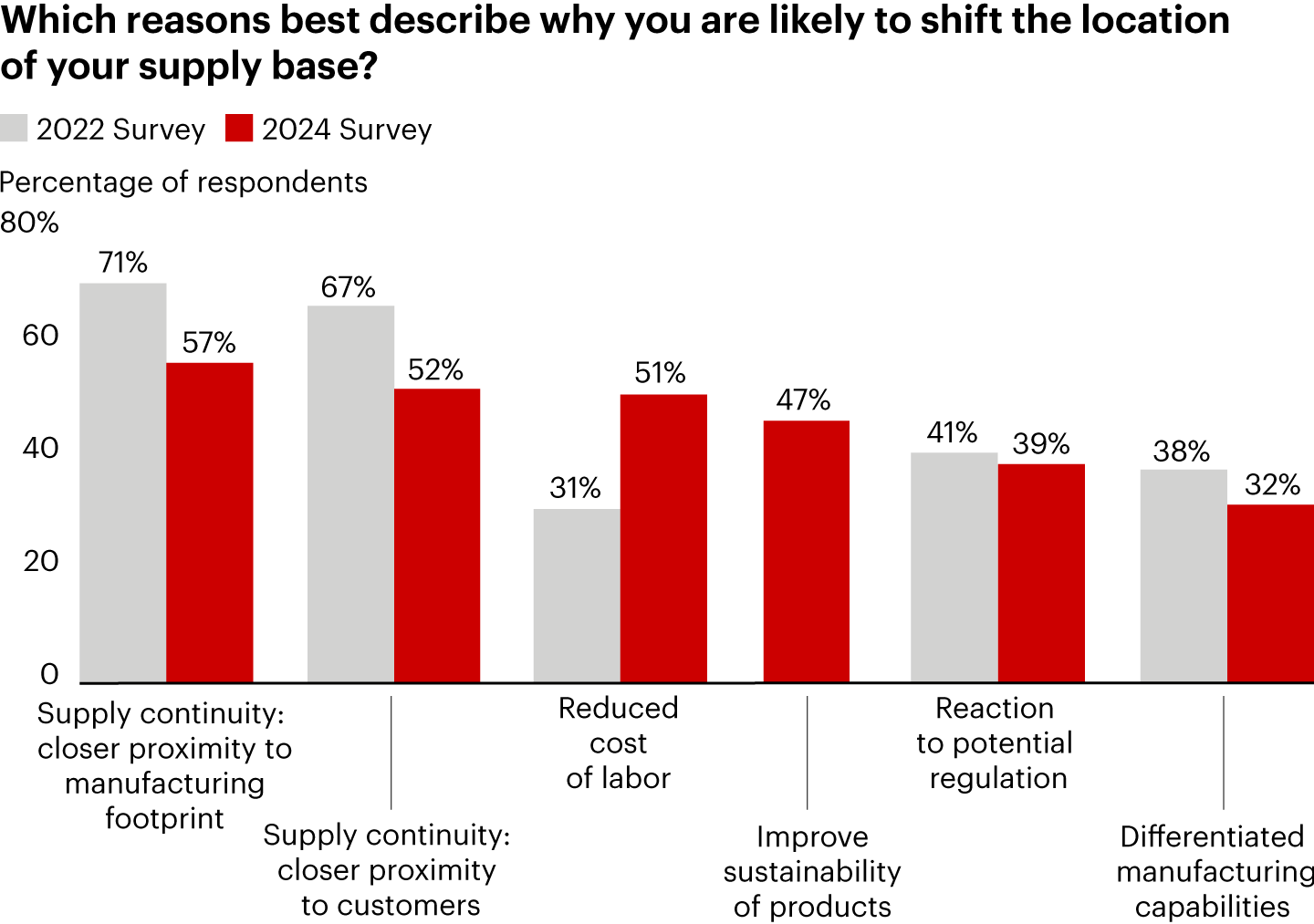
      Supply continuity remains the No. 1 reason for changing the supply base location

      Note: Improving sustainability was not covered in the 2022 survey

      Sources: Bain Operations Executive Survey 2024 (n=195); Bain Resiliency Survey 2022
      Figure 2
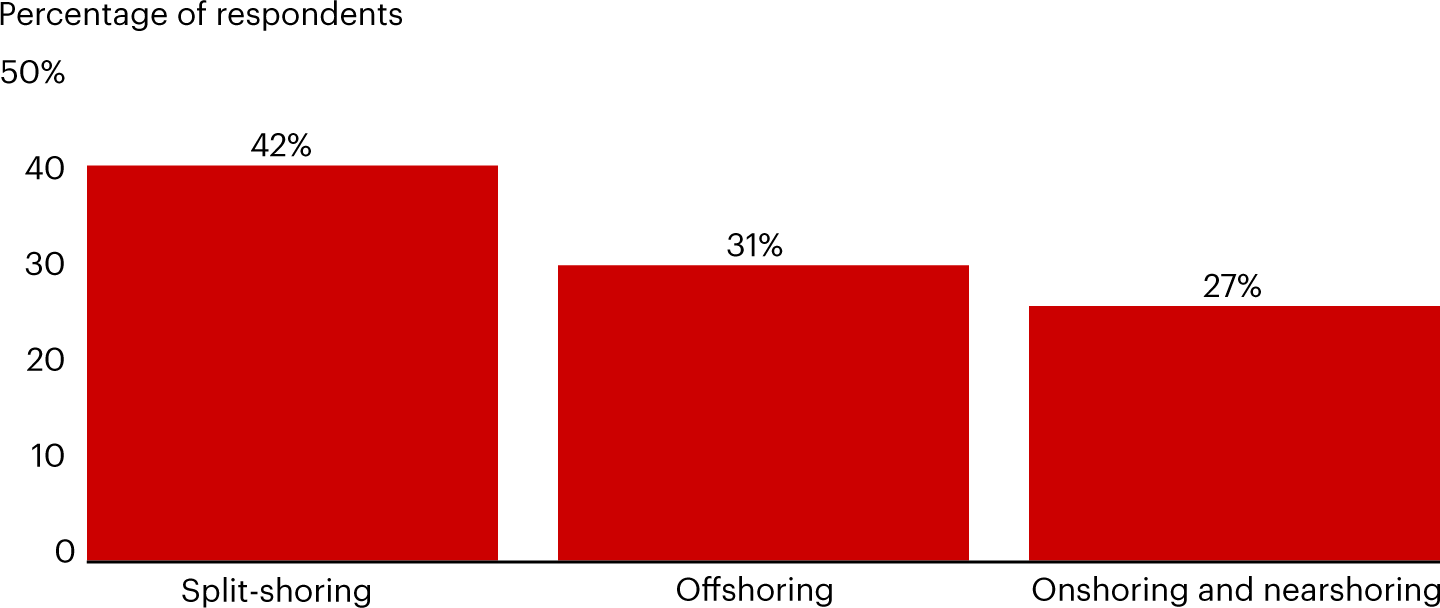
      Most companies combine onshoring, nearshoring, and offshoring to balance resilience and costs
      출처: Bain Operations Executive Survey 2024 (n=195)

      Leadership teams are betting on nearshoring to enhance resilience, reduce dependence on distant suppliers, and improve operational agility. Moving production closer to customers also enhances flexibility, shortens lead times, and reduces transportation costs. Our analysis shows companies that get nearshoring right can increase gross margins by up to 30%. But it’s no easy fix. Only 2% of respondents report having fully implemented an onshoring or nearshoring strategy, according to the survey.

      Nearshoring challenges  

      When moving supply chains closer to home, companies face three significant barriers: cost and complexity, data and visibility gaps, and regulatory hurdles.

      A shift to nearshoring or onshoring entails significant upfront and ongoing costs. Operations teams must evaluate their existing infrastructure, assess potential new sites, and navigate operational disruptions. Many firms struggle to balance the increased labor costs in nearshore locations with the savings from lower transportation outlays. Split-shoring strategies, which balance cost and resilience benefits, are often the optimal solution but are challenging to get right. 

      Leading manufacturers think about finding the right solution for the business—or right-shoring—as opposed to 100% nearshoring or offshoring. They consider the diverse needs of the end consumer and customers across regions, in addition to weighing the return on the required investments over the useful life of assets. Manufacturers also must evaluate their ecosystem of suppliers with similar rigor. Otherwise, a move closer to customer demand could just mean long and expensive inbound shipments from suppliers end up replacing long and expensive outbound shipments to customers. Our research shows the most common strategy today is split-shoring, or combining nearshoring and offshoring strategies to balance resilience and cost challenges.

      The lack of end-to-end visibility in supply chains is another challenge in bringing production closer to key markets. While many companies have improved traceability for Tier-1 suppliers, most face significant gaps in tracking Tier-3 suppliers and beyond. Without comprehensive visibility, companies face increased risk of disruptions, inefficiencies, and compliance failures. Scaling traceability solutions from pilot projects to fully integrated systems remains an ongoing struggle for most organizations.

      Differences in the regulatory landscape from country to country add further complexity to nearshoring efforts. Variations in labor laws, tax policies, and trade agreements require companies to undertake rigorous due diligence before making changes to avoid unforeseen costs. Even the best companies can struggle in new environments. For example, Taiwan Semiconductor Manufacturing Company (TSMC) has successfully built many semiconductor fabs in Taiwan but has faced higher costs and longer timelines in Arizona due to differences in permitting and labor standards.

      Compliance challenges can also delay the transition process and erode the expected benefits of nearshoring. This is particularly true for industries with stringent safety, environmental, or consumer protection standards.

      Leveraging technology in nearshoring

      To overcome these obstacles, companies are harnessing advanced technologies. Digital tools, artificial intelligence, and predictive analytics can help accelerate the implementation of nearshoring initiatives and enhance ongoing supply chain resilience.

      AI-based tools, for example, simulate scenarios to identify cost-effective nearshoring paths. These solutions enable businesses to optimize their supplier networks, monitor performance, and mitigate risks associated with the transition to nearshoring. Automated procurement systems and integrated planning tools improve efficiency while reducing manual effort.

      Leading companies use a variety of digital tools to manage their ongoing operations, such as IoT-enabled tracking systems to increase transparency across supply chain tiers. Other tools such as Resilinc assess visibility and risk monitoring in the supplier tiers. These technologies minimize disruptions while ensuring compliance with regulatory requirements. Bain’s survey highlights a key shift from traceability pilot projects to full-scale initiatives, a trend that is likely to continue as these technologies mature.

      Predictive analytics and AI tools can map out compliance requirements for specific regions, identifying potential risks and suggesting corrective measures. Partnerships with local entities and industry coalitions can provide invaluable insights into navigating region-specific regulations.

      A roadmap for success

      Leaders adopt a comprehensive approach to rethinking global supply chains to obtain the full benefits of nearshoring.

      Strategic evaluation. Three preliminary steps can help lay the foundation for a smart nearshoring plan. They include assessing the needs of key customers and the supplier ecosystem, identifying nearshore locations, and weighing cost-benefit trade-offs. A comprehensive strategic evaluation should go beyond financial metrics and include geopolitical stability, workforce availability, and infrastructure readiness. This evaluation must also consider benefits such as customer willingness to pay for local products, improved service levels, and reduced carbon footprint from nearshore production. These factors will help leadership teams develop a right-shoring approach for the business that balances the benefits of nearshoring, onshoring, and offshoring. 

      Digital and technology integration. Companies that invest in digital tools achieve greater supply chain agility and efficiency. AI, digital tools, and IoT strengthen supply chain capabilities, particularly in supplier monitoring and inventory management.

      Cross-functional collaboration. Successful nearshoring efforts depend on close cooperation across business functions. Manufacturing, supply chain, procurement, and strategy teams need to align on goals and execution. R&D and sales teams are also important to ensure product design matches local capabilities and marketing can emphasize the benefits of nearshore production. 

      Building resilient networks. Strong supplier relationships, workforce investments, and industry collaborations create ecosystems capable of weathering disruptions. Supplier ecosystem management is a critical approach to ensure the industry works together to improve resiliency while balancing the cost of shifting suppliers to new geographies. 

      Nearshoring is becoming a core element of supply chain strategy. Bringing production closer to home as part of a comprehensive right-shoring strategy allows companies to strengthen their supply chains while positioning themselves for long-term success in an increasingly volatile world.

      저자
      • Headshot of Peter Hanbury
        Peter Hanbury
        파트너, San Francisco
      • Headshot of Jordi Ciuró
        Jordi Ciuró
        파트너, Mexico City
      • Headshot of Carlos Cruz
        Carlos Cruz
        파트너, Dallas
      • Headshot of Scott Daubin
        Scott Daubin
        파트너, New York
      문의하기
      관련 컨설팅 서비스
      • 성과 개선
      • 운영
      • Supply Chain
      최적의 솔루션 찾기
      • Capability Sourcing
      • Supply Chain Resiliency Index
      COO insights
      Beyond Tariffs: The Supply Chain Reinvention Imperative

      Tariffs are accelerating businesses’ operations overhaul. Winning in today’s disrupted world demands bold trade-offs and strategic transformation.

      자세히 보기
      COO insights
      Tariffs: The Next Chapter

      Companies need to rebuild their strategies for a world in which the free movement of goods, capital, IP, and people cannot be taken for granted.

      자세히 보기
      Capability Sourcing
      Rethinking Tech Outsourcing: Five Actions to Create Value

      Despite predictions that outsourcing would decline, Bain’s research shows most companies still rely on it—and many plan to expand their use.

      자세히 보기
      COO insights
      It’s Time to Rethink Every Link in Your Supply Chain

      A function that once got little attention is now becoming a key differentiator.

      자세히 보기
      COO insights
      Procurement, Redesigned for Uncertainty

      In a volatile world, procurement can help build resilience.

      자세히 보기
      First published in 3월 2025
      태그
      • 성과 개선
      • 운영
      • Capability Sourcing
      • COO insights
      • Supply Chain
      • Supply Chain Resiliency Index
      • Tariff Response

      프로젝트 사례

      Supply Chain Security Mitigates a Sovereign Wealth Fund’s Construction Disruptions

      See more related case studies

      성과 개선 Turning bottlenecks into growth opportunities

      See more related case studies

      성과 개선 Carmaker shifts its production model

      See more related case studies

      베인에 궁금하신 점이 있으신가요?

      베인은 주저 없이 변화를 마주할 줄 아는 용감한 리더들과 함께합니다. 그리고, 이들의 담대한 용기는 고객사의 성공으로 이어집니다.

      급변하는 비즈니스 환경에서 살아남기 위한 선도자의 시각. 월간 Bain Insights에서 글로벌 비즈니스의 핵심 이슈를 확인하십시오.

      *개인정보 정책을 읽었으며 그 내용에 동의합니다.

      Privacy Policy를 읽고 동의해주십시오.
      Bain & Company
      문의하기 환경정책 Accessibility 이용약관 개인정보 보호 쿠키 사용 정책 Sitemap Log In

      © 1996-2026 Bain & Company, Inc.

      문의하기

      무엇을 도와드릴까요?

      • 프로젝트 문의
      • 채용 정보
      • 언론
      • 제휴 문의
      • 연사 초청
      오피스 전체보기