
Skip to Content
  • 오피스

    오피스

    미주
    • Atlanta
    • Austin
    • Bogota
    • Boston
    • Buenos Aires
    • Chicago
    • Dallas
    • Denver
    • Houston
    • Los Angeles
    • Mexico City
    • Minneapolis
    • Monterrey
    • Montreal
    • New York
    • Rio de Janeiro
    • San Francisco
    • Santiago
    • São Paulo
    • Seattle
    • Silicon Valley
    • Toronto
    • Washington, DC
    유럽, 중동, 아프리카
    • Amsterdam
    • Athens
    • Berlin
    • Brussels
    • Copenhagen
    • Doha
    • Dubai
    • Dusseldorf
    • Frankfurt
    • Helsinki
    • Istanbul
    • Johannesburg
    • Kyiv
    • Lisbon
    • London
    • Madrid
    • Milan
    • Munich
    • Oslo
    • Paris
    • Riyadh
    • Rome
    • Stockholm
    • Vienna
    • Warsaw
    • Zurich
    아시아, 호주
    • Bangkok
    • Beijing
    • Bengaluru
    • Brisbane
    • Ho Chi Minh City
    • Hong Kong
    • Jakarta
    • Kuala Lumpur
    • Manila
    • Melbourne
    • Mumbai
    • New Delhi
    • Perth
    • Seoul
    • Shanghai
    • Singapore
    • Sydney
    • Tokyo
    오피스 전체보기
  • 얼럼나이
  • 미디어 센터
  • 구독
  • 연락처
  • Korea | 한국어

    지역 및 언어 선택

    글로벌
    • Global (English)
    미주
    • Brazil (Português)
    • Argentina (Español)
    • Canada (Français)
    • Chile (Español)
    • Colombia (Español)
    유럽, 중동, 아프리카
    • France (Français)
    • DACH Region (Deutsch)
    • Italy (Italiano)
    • Spain (Español)
    • Greece (Elliniká)
    아시아, 호주
    • China (中文版)
    • Korea (한국어)
    • Japan (日本語)
  • Saved items (0)
    Saved items (0)

    You have no saved items.

    관심 있는 내용을 북마크하여 Red 폴더에 저장할 수 있습니다. Red 폴더 에서 저장된 내용을 읽거나 공유해보세요.

    Explore Bain Insights
  • 산업
    메인 메뉴

    산업

    • 우주항공, 방산 및 정부 서비스
    • 농업 관련 산업
    • 화학
    • 인프라, 건설 및 건축 자재
    • 소비재
    • 금융 서비스
    • 헬스케어
    • 산업용 기계 및 장비
    • 미디어 및 엔터테인먼트
    • 금속
    • 광업
    • 석유 및 가스
    • 제지 및 패키징 산업
    • 사모펀드
    • 사회 및 공공 부문
    • 유통
    • 기술
    • 텔레콤
    • 운송
    • 여행·여가
    • 유틸리티 및 재생가능 에너지
  • 컨설팅 서비스
    메인 메뉴

    컨설팅 서비스

    • Customer Experience
    • ESG
    • Innovation
    • M&A
    • 운영
    • 조직
    • 사모펀드
    • 고객 전략 및 마케팅
    • 전략
    • AI, 인사이트 및 솔루션
    • Technology
    • 변화 혁신
  • Digital
  • 인사이트
  • 베인 소개
    메인 메뉴

    베인 소개

    • 업무 소개
    • 베인의 신념
    • 구성원 및 리더십 소개
    • 고객 성과
    • 주요 수상 경력
    • 글로벌 파트너사
    Further: Our global responsibility
    • 다양성과 포용
    • 사회 공헌 활동
    • Sustainability
    • World Economic Forum
    Learn more about Further
  • Careers
    메인 메뉴

    Careers

    • Work with Us
      Careers
      Work with Us
      • Find Your Place
      • Our Work Areas
      • Integrated Teams
      • Students
      • Internships & Programs
      • Recruiting Events
    • Life at Bain
      Careers
      Life at Bain
      • Blog: Inside Bain
      • Career Stories
      • Our People
      • Where We Work
      • Supporting Your Growth
      • Affinity Groups
      • Benefits
    • Impact Stories
    • Hiring Process
      Careers
      Hiring Process
      • What to Expect
      • Interviewing
    FIND JOBS
  • 오피스
    메인 메뉴

    오피스

    • 미주
      오피스
      미주
      • Atlanta
      • Austin
      • Bogota
      • Boston
      • Buenos Aires
      • Chicago
      • Dallas
      • Denver
      • Houston
      • Los Angeles
      • Mexico City
      • Minneapolis
      • Monterrey
      • Montreal
      • New York
      • Rio de Janeiro
      • San Francisco
      • Santiago
      • São Paulo
      • Seattle
      • Silicon Valley
      • Toronto
      • Washington, DC
    • 유럽, 중동, 아프리카
      오피스
      유럽, 중동, 아프리카
      • Amsterdam
      • Athens
      • Berlin
      • Brussels
      • Copenhagen
      • Doha
      • Dubai
      • Dusseldorf
      • Frankfurt
      • Helsinki
      • Istanbul
      • Johannesburg
      • Kyiv
      • Lisbon
      • London
      • Madrid
      • Milan
      • Munich
      • Oslo
      • Paris
      • Riyadh
      • Rome
      • Stockholm
      • Vienna
      • Warsaw
      • Zurich
    • 아시아, 호주
      오피스
      아시아, 호주
      • Bangkok
      • Beijing
      • Bengaluru
      • Brisbane
      • Ho Chi Minh City
      • Hong Kong
      • Jakarta
      • Kuala Lumpur
      • Manila
      • Melbourne
      • Mumbai
      • New Delhi
      • Perth
      • Seoul
      • Shanghai
      • Singapore
      • Sydney
      • Tokyo
    오피스 전체보기
  • 얼럼나이
  • 미디어 센터
  • 구독
  • 연락처
  • Korea | 한국어
    메인 메뉴

    지역 및 언어 선택

    • 글로벌
      지역 및 언어 선택
      글로벌
      • Global (English)
    • 미주
      지역 및 언어 선택
      미주
      • Brazil (Português)
      • Argentina (Español)
      • Canada (Français)
      • Chile (Español)
      • Colombia (Español)
    • 유럽, 중동, 아프리카
      지역 및 언어 선택
      유럽, 중동, 아프리카
      • France (Français)
      • DACH Region (Deutsch)
      • Italy (Italiano)
      • Spain (Español)
      • Greece (Elliniká)
    • 아시아, 호주
      지역 및 언어 선택
      아시아, 호주
      • China (中文版)
      • Korea (한국어)
      • Japan (日本語)
  • Saved items  (0)
    메인 메뉴
    Saved items (0)

    You have no saved items.

    관심 있는 내용을 북마크하여 Red 폴더에 저장할 수 있습니다. Red 폴더 에서 저장된 내용을 읽거나 공유해보세요.

    Explore Bain Insights
  • 산업
    • 산업

      • 우주항공, 방산 및 정부 서비스
      • 농업 관련 산업
      • 화학
      • 인프라, 건설 및 건축 자재
      • 소비재
      • 금융 서비스
      • 헬스케어
      • 산업용 기계 및 장비
      • 미디어 및 엔터테인먼트
      • 금속
      • 광업
      • 석유 및 가스
      • 제지 및 패키징 산업
      • 사모펀드
      • 사회 및 공공 부문
      • 유통
      • 기술
      • 텔레콤
      • 운송
      • 여행·여가
      • 유틸리티 및 재생가능 에너지
  • 컨설팅 서비스
    • 컨설팅 서비스

      • Customer Experience
      • ESG
      • Innovation
      • M&A
      • 운영
      • 조직
      • 사모펀드
      • 고객 전략 및 마케팅
      • 전략
      • AI, 인사이트 및 솔루션
      • Technology
      • 변화 혁신
  • Digital
  • 인사이트
  • 베인 소개
    • 베인 소개

      • 업무 소개
      • 베인의 신념
      • 구성원 및 리더십 소개
      • 고객 성과
      • 주요 수상 경력
      • 글로벌 파트너사
      Further: Our global responsibility
      • 다양성과 포용
      • 사회 공헌 활동
      • Sustainability
      • World Economic Forum
      Learn more about Further
  • Careers
    최근 검색어
      최근 방문 페이지

      Content added to saved items

      Saved items (0)

      Removed from saved items

      Saved items (0)

      Brief

      Can Consolidation, Fee Growth, and Other Moves Reverse European Banks’ Decline?

      Can Consolidation, Fee Growth, and Other Moves Reverse European Banks’ Decline?

      Stagnant innovation and productivity throughout Europe have hobbled Europe’s banks, especially relative to those in North America and the UK.

      글 João Soares, Roberto Frazzitta, and Christy de Gooyer

      • 읽기 소요시간
      }

      Brief

      Can Consolidation, Fee Growth, and Other Moves Reverse European Banks’ Decline?
      en
      한눈에 보기
      • Bain’s latest health check of the banking system shows many European banks with weakened balance sheets and profitability over the past few years.
      • North American and UK banks, by contrast, have held steady.
      • Banks’ decay stems from the generally sparse innovation and productivity growth throughout Europe, which have narrowed the field of high-growth companies worthy of lending.
      • Amidst the new shocks to the economy, many European banks should entertain moves such as consolidation and building growth in non-interest fee income.

      Many European banks, hobbled by several years of sluggish economic growth and the Covid-19 pandemic, find themselves ill-prepared to handle new economic shocks. Their financial health has been declining over the past few years, in contrast to most North American and UK banks. They desperately need to restore growth and healthier balance sheets through consolidation, new fee income streams, and other measures.

      These conclusions emerge from Bain & Company’s latest health check of the banking system, covering 636 banks across North America and Europe as of year-end 2021. Our health check scoring model derives from three dimensions, two of which represent banks’ robustness (see “How the scoring model works,” below):

      • profitability and efficiency;
      • asset and liability health (here, we give a relatively heavy weighting to asset quality as essential for future earnings); and
      • stability of the operating environment.

      Our scoring relies on data from Fitch Ratings and S&P Global Market Intelligence. The health check provides a uniquely integrated view, which stands in contrast to looking only at a balance sheet or income statement. Based on the combination of critical financial ratios, we calculate a score for each bank and place it in one of four categories: winners, weaker business model, weaker balance sheet, and highest concern.

      US and Canadian banks, for the most part, remain in the winners’ quadrant, as they have in recent years. By contrast, banks in the largest eurozone economies of Germany, France, Italy, and, to a lesser extent, Spain have been struggling (see Figure 1). Return on equity in Europe, at an average 8.9% for 2021, was well below the 13.1 % seen in North America.

      Figure 1
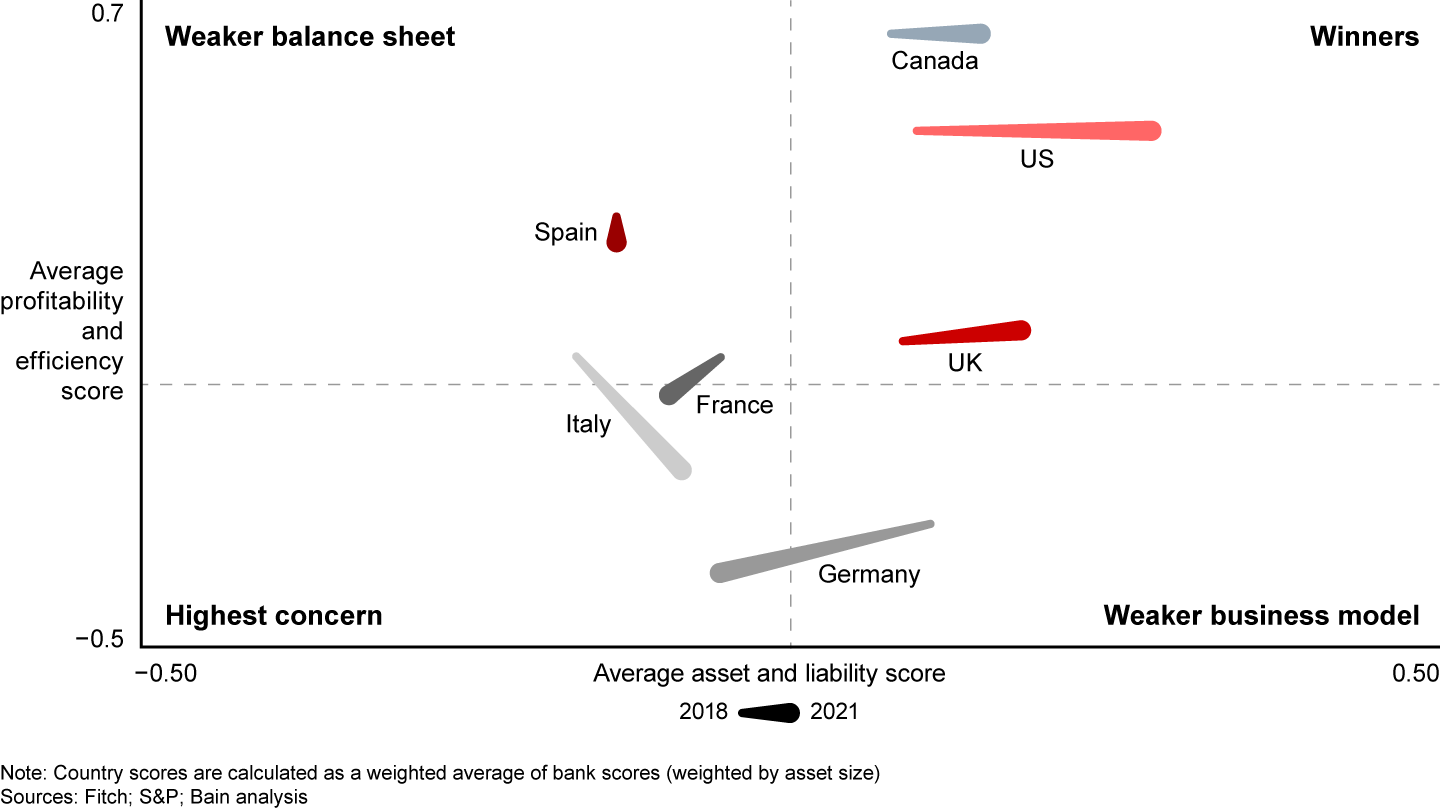
      European banks have declined while the US, Canada, and the UK held steady on profitability, with improvements in asset quality

      Some Spanish banks performed better in profitability than other developed markets in Europe. That reflects Spanish banks’ heavier exposure to South America, where non-mortgage consumer lending—an exceptionally volatile but profitable business over the past few years—is an outsize business relative to European economies.

      Among individual European banks, there’s a lot of heterogeneity in performance (see Figure 2). Yet all four of these European countries have overall positions with lower-resilience balance sheets. Many banks in France and Italy slipped from the “weaker balance sheet” to the “highest concern” position. In Germany, more banks have degraded from “weaker business model” to “highest concern,” primarily because of problematic loans. They also struggle with revenue growth, especially non-interest income from corporate and investment banking as well as asset and wealth management businesses.

      Figure 2
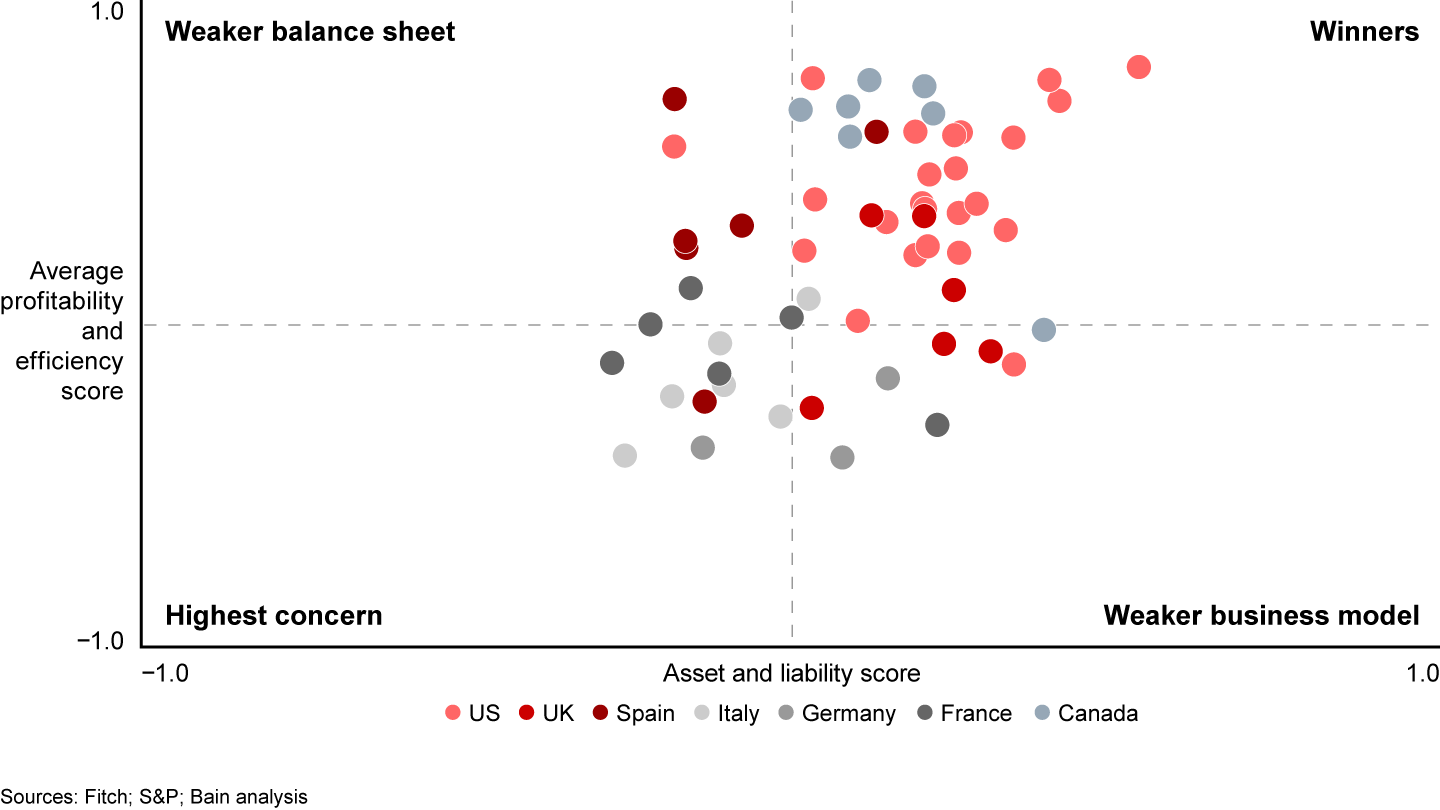
      US and Canadian banks cluster among the winners while banks in large eurozone countries show more heterogeneity in performance

      Banks’ decay stems from the generally sparse innovation and productivity growth throughout Europe, which have narrowed the field of high-growth companies worthy of lending.

      While not reflected in this 2021 data, Russia’s war on Ukraine and the recent surge of inflation have exacerbated the challenge for large European banks with high exposure to Russia, coming hard on the heels of deteriorating asset quality and profitability through the Covid pandemic.

      Turning to North America, most banks there improved performance in asset quality and held steady in profitability since 2018. This reflects the release of excess provisions made during Covid-19, as well as better liquidity scores, mainly due to the huge influx of deposits.

      Looking ahead, as interest rates rise, the spread on mortgages and consumer lending will improve for banks. However, after the sugar rush of Covid-19 spending, consumers may get overstretched if a recession hits, raising the risk of nonperforming loans and other write-offs. In addition, European banks look set to become even more fragile given the widespread energy challenges caused by Russia’s attack. 

      If a bank aims to improve its health, it will look to improve both profitability and its balance sheet. Given the macroeconomic context and the current position of most European banks, they should consider the following moves to improve profitability.

      • Reduce the cost base. Assess the bank’s cost structure and set ambitious targets for reductions, then adjust operations to reach the targets.

      • Accelerate digital initiatives. With the customer experience at the heart of any initiative, simplify products and streamline processes to make digital more appealing.

      • Renew the focus on growth. In recessionary times, it pays to ramp up asset-light businesses that generate fees, such as wealth management. The profit engine needs to be primed to bring in money when the ability to lend gets constricted.

      Of course, over a period of time, improved profitability can lead to a healthier balance sheet, as a bank can reinvest profits in the balance sheet. In addition, banks should consider the following steps.

      • Adjust the strategy. Adjust the portfolio, risk appetite, and location footprint to respond to current geopolitical risks.

      • Consolidate. Mergers and acquisitions can help a weaker bank take advantage of the stronger bank’s capital position to improve both profitability and the balance sheet. M&As allow banks to gain scale, divest nonperforming loans, and reduce the cost to serve more customers. Governments may also insist on selective consolidation in order for banks to gain public assistance that will stave off failure. Regulators themselves—in particular the European Central Bank—are stakeholders who will want to create favorable conditions of consolidation within and beyond country borders.

      No one can predict the duration and outcomes of pandemic variants or Russia’s war. But even if they were to end soon, most banks in Europe face hard choices to ensure that they survive, much less thrive. Should government bailouts return, they won’t extend to every incumbent, and should economies eventually recover, they won’t serve as a rising tide to lift all boats. Only major steps, ranging from consolidation to building profitable revenue streams, can help Europe’s decaying banks.

      How the scoring model works

      The scoring model in Bain’s health check of the banking system gathers data in six areas, with the heaviest weighting on asset quality (see Figure 3).

      Figure 3
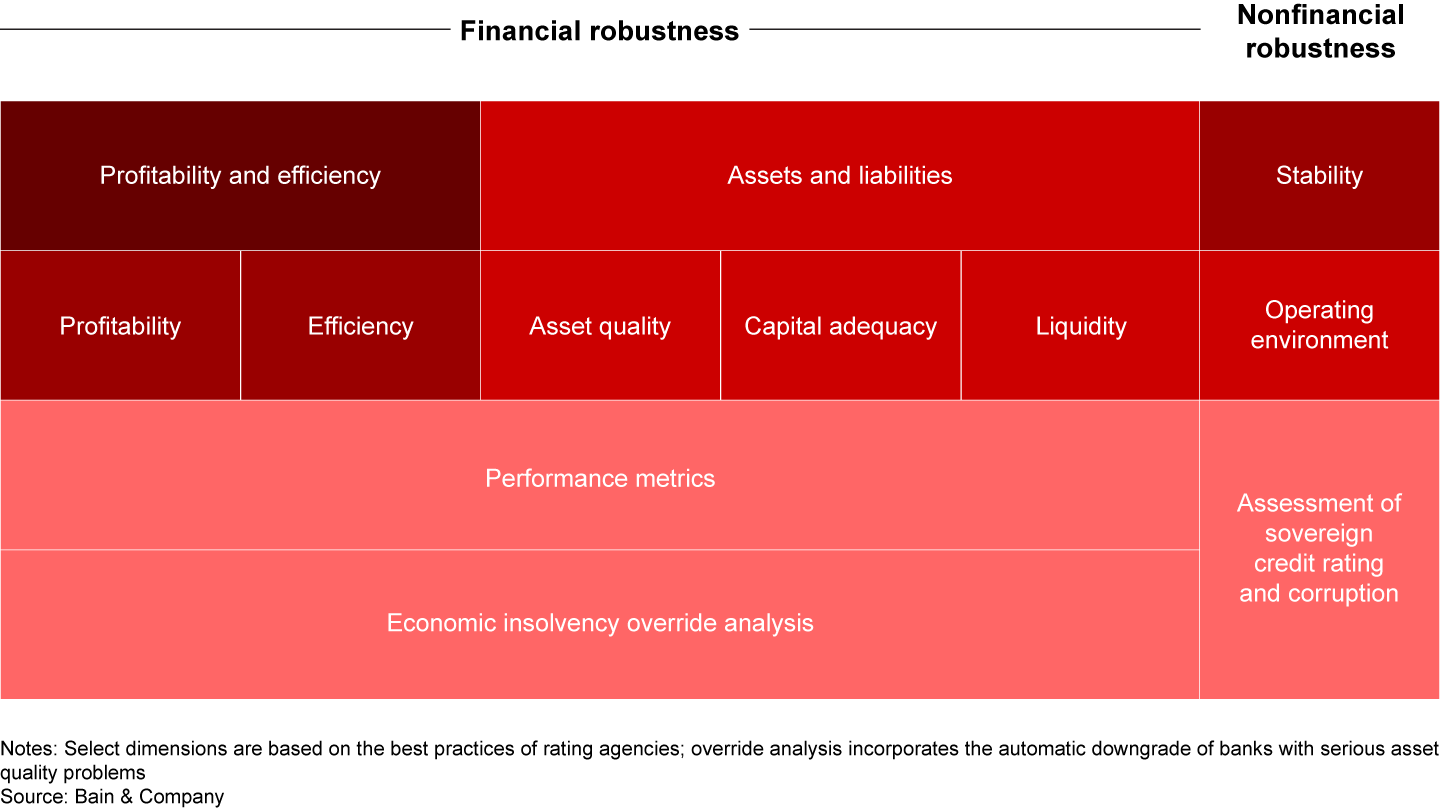
      Bain’s scoring model provides a uniquely integrated view

      Profitability. The key determinant of sustainable success or failure, profitability measures the ability to create economic value and to preserve or improve risk protection for creditors. Performance metrics include net income as a percentage of average total equity and net income as a percentage of average tangible equity.

      Efficiency. Cost containment is a strategic focal point; it allows banks to satisfy stakeholders’ requirements without overly aggressive risk-taking. Performance metrics include operating expenses as a percentage of net revenue.

      Asset quality. A main factor in future earnings and capital generation or erosion, loan quality is a key to determining a bank’s stability. Nonperforming loans predict future losses. Performance metrics as a percentage of gross loans include problem loans, loan-loss provisions, and corporate loans.

      Capital adequacy. Banks typically fail due to losses in the loan portfolio, poor business models, or fraud—all of which lead to a decline in capital. In the case of low profitability, capital is the most important buffer for absorbing risk costs. Performance metrics include tier-1 capital as a percentage of risk-weighted assets, tangible common equity as a percentage of average risk-weighted assets, tier 1 capital as a percentage of total assets, and tangible common equity as a percent of average total assets.

      Liquidity. Illiquidity is often a proximate cause of failure as banks might no longer be able to finance themselves under pressure. Access to market funding may not be based on long-term relationships but rather on creditworthiness. Performance metrics include gross loans as a percentage of total deposits and total debt—that is, liquid assets as a percentage of total assets.

      Operating environment. Bank performance is often constrained by violent economic cycles, adverse political decisions, or weak legal systems. Declines in economic growth correlate highly with worsening asset quality. Performance metrics include the assessment of sovereign credit rating and corruption.

      저자
      • Headshot of João Soares
        João Soares
        파트너, New York
      • Headshot of Roberto Frazzitta
        Roberto Frazzitta
        파트너, Milan
      • Headshot of Christy de Gooyer
        Christy de Gooyer
        Practice Vice President, Global Banking, Toronto
      문의하기
      관련 산업
      • 금융 서비스
      • 뱅킹
      금융 서비스
      Six Threats Demand a New Playbook for Banks in Wealth and Asset Management

      AI, direct-to-consumer models, and the return of local priorities are redrawing industry lines.

      자세히 보기
      금융 서비스
      Banking M&A

      As conditions shift, leading banks are fusing scale with scope to create future-ready organizations.

      자세히 보기
      금융 서비스
      Stablecoins Could Make Cross-Border Payments Faster, Cheaper, and More Transparent

      Most CFOs are not using stablecoins today, but evolving regulations could reduce risk and create competitive advantage.

      자세히 보기
      금융 서비스
      AI Won’t Just Cut Costs, It Will Reinvent the Customer Experience

      Beyond efficiency, AI helps create a more personalized experience that delivers a triple play of customer loyalty, employee engagement, and revenue growth.

      자세히 보기
      금융 서비스
      Inside Capital One's Tech Transformation

      Bain’s Steven Breeden sits down with Capital One divisional CIO Mark Mathewson to discuss the bank’s decade-long tech transformation.

      자세히 보기
      First published in 9월 2022
      태그
      • 금융 서비스
      • 뱅킹

      프로젝트 사례

      전략 A Bold New Strategy Restores a Bank to a Leadership Position

      See more related case studies

      지속 가능성 및 기업의 사회적 책임 Redesigning a Bank’s Climate Strategy for Growth

      See more related case studies

      성과 개선 The change process unlocks potential and profits

      See more related case studies

      베인에 궁금하신 점이 있으신가요?

      베인은 주저 없이 변화를 마주할 줄 아는 용감한 리더들과 함께합니다. 그리고, 이들의 담대한 용기는 고객사의 성공으로 이어집니다.

      급변하는 비즈니스 환경에서 살아남기 위한 선도자의 시각. 월간 Bain Insights에서 글로벌 비즈니스의 핵심 이슈를 확인하십시오.

      *개인정보 정책을 읽었으며 그 내용에 동의합니다.

      Privacy Policy를 읽고 동의해주십시오.
      Bain & Company
      문의하기 환경정책 Accessibility 이용약관 개인정보 보호 쿠키 사용 정책 Sitemap Log In

      © 1996-2026 Bain & Company, Inc.

      문의하기

      무엇을 도와드릴까요?

      • 프로젝트 문의
      • 채용 정보
      • 언론
      • 제휴 문의
      • 연사 초청
      오피스 전체보기