
Skip to Content
  • 오피스

    오피스

    미주
    • Atlanta
    • Austin
    • Bogota
    • Boston
    • Buenos Aires
    • Chicago
    • Dallas
    • Denver
    • Houston
    • Los Angeles
    • Mexico City
    • Minneapolis
    • Monterrey
    • Montreal
    • New York
    • Rio de Janeiro
    • San Francisco
    • Santiago
    • São Paulo
    • Seattle
    • Silicon Valley
    • Toronto
    • Washington, DC
    유럽, 중동, 아프리카
    • Amsterdam
    • Athens
    • Berlin
    • Brussels
    • Copenhagen
    • Doha
    • Dubai
    • Dusseldorf
    • Frankfurt
    • Helsinki
    • Istanbul
    • Johannesburg
    • Kyiv
    • Lisbon
    • London
    • Madrid
    • Milan
    • Munich
    • Oslo
    • Paris
    • Riyadh
    • Rome
    • Stockholm
    • Vienna
    • Warsaw
    • Zurich
    아시아, 호주
    • Bangkok
    • Beijing
    • Bengaluru
    • Brisbane
    • Ho Chi Minh City
    • Hong Kong
    • Jakarta
    • Kuala Lumpur
    • Manila
    • Melbourne
    • Mumbai
    • New Delhi
    • Perth
    • Seoul
    • Shanghai
    • Singapore
    • Sydney
    • Tokyo
    오피스 전체보기
  • 얼럼나이
  • 미디어 센터
  • 구독
  • 연락처
  • Korea | 한국어

    지역 및 언어 선택

    글로벌
    • Global (English)
    미주
    • Brazil (Português)
    • Argentina (Español)
    • Canada (Français)
    • Chile (Español)
    • Colombia (Español)
    유럽, 중동, 아프리카
    • France (Français)
    • DACH Region (Deutsch)
    • Italy (Italiano)
    • Spain (Español)
    • Greece (Elliniká)
    아시아, 호주
    • China (中文版)
    • Korea (한국어)
    • Japan (日本語)
  • Saved items (0)
    Saved items (0)

    You have no saved items.

    관심 있는 내용을 북마크하여 Red 폴더에 저장할 수 있습니다. Red 폴더 에서 저장된 내용을 읽거나 공유해보세요.

    Explore Bain Insights
  • 산업
    메인 메뉴

    산업

    • 우주항공, 방산 및 정부 서비스
    • 농업 관련 산업
    • 화학
    • 인프라, 건설 및 건축 자재
    • 소비재
    • 금융 서비스
    • 헬스케어
    • 산업용 기계 및 장비
    • 미디어 및 엔터테인먼트
    • 금속
    • 광업
    • 석유 및 가스
    • 제지 및 패키징 산업
    • 사모펀드
    • 사회 및 공공 부문
    • 유통
    • 기술
    • 텔레콤
    • 운송
    • 여행·여가
    • 유틸리티 및 재생가능 에너지
  • 컨설팅 서비스
    메인 메뉴

    컨설팅 서비스

    • Customer Experience
    • ESG
    • Innovation
    • M&A
    • 운영
    • 조직
    • 사모펀드
    • 고객 전략 및 마케팅
    • 전략
    • AI, 인사이트 및 솔루션
    • Technology
    • 변화 혁신
  • Digital
  • 인사이트
  • 베인 소개
    메인 메뉴

    베인 소개

    • 업무 소개
    • 베인의 신념
    • 구성원 및 리더십 소개
    • 고객 성과
    • 주요 수상 경력
    • 글로벌 파트너사
    Further: Our global responsibility
    • 다양성과 포용
    • 사회 공헌 활동
    • Sustainability
    • World Economic Forum
    Learn more about Further
  • Careers
    메인 메뉴

    Careers

    • Work with Us
      Careers
      Work with Us
      • Find Your Place
      • Our Work Areas
      • Integrated Teams
      • Students
      • Internships & Programs
      • Recruiting Events
    • Life at Bain
      Careers
      Life at Bain
      • Blog: Inside Bain
      • Career Stories
      • Our People
      • Where We Work
      • Supporting Your Growth
      • Affinity Groups
      • Benefits
    • Impact Stories
    • Hiring Process
      Careers
      Hiring Process
      • What to Expect
      • Interviewing
    FIND JOBS
  • 오피스
    메인 메뉴

    오피스

    • 미주
      오피스
      미주
      • Atlanta
      • Austin
      • Bogota
      • Boston
      • Buenos Aires
      • Chicago
      • Dallas
      • Denver
      • Houston
      • Los Angeles
      • Mexico City
      • Minneapolis
      • Monterrey
      • Montreal
      • New York
      • Rio de Janeiro
      • San Francisco
      • Santiago
      • São Paulo
      • Seattle
      • Silicon Valley
      • Toronto
      • Washington, DC
    • 유럽, 중동, 아프리카
      오피스
      유럽, 중동, 아프리카
      • Amsterdam
      • Athens
      • Berlin
      • Brussels
      • Copenhagen
      • Doha
      • Dubai
      • Dusseldorf
      • Frankfurt
      • Helsinki
      • Istanbul
      • Johannesburg
      • Kyiv
      • Lisbon
      • London
      • Madrid
      • Milan
      • Munich
      • Oslo
      • Paris
      • Riyadh
      • Rome
      • Stockholm
      • Vienna
      • Warsaw
      • Zurich
    • 아시아, 호주
      오피스
      아시아, 호주
      • Bangkok
      • Beijing
      • Bengaluru
      • Brisbane
      • Ho Chi Minh City
      • Hong Kong
      • Jakarta
      • Kuala Lumpur
      • Manila
      • Melbourne
      • Mumbai
      • New Delhi
      • Perth
      • Seoul
      • Shanghai
      • Singapore
      • Sydney
      • Tokyo
    오피스 전체보기
  • 얼럼나이
  • 미디어 센터
  • 구독
  • 연락처
  • Korea | 한국어
    메인 메뉴

    지역 및 언어 선택

    • 글로벌
      지역 및 언어 선택
      글로벌
      • Global (English)
    • 미주
      지역 및 언어 선택
      미주
      • Brazil (Português)
      • Argentina (Español)
      • Canada (Français)
      • Chile (Español)
      • Colombia (Español)
    • 유럽, 중동, 아프리카
      지역 및 언어 선택
      유럽, 중동, 아프리카
      • France (Français)
      • DACH Region (Deutsch)
      • Italy (Italiano)
      • Spain (Español)
      • Greece (Elliniká)
    • 아시아, 호주
      지역 및 언어 선택
      아시아, 호주
      • China (中文版)
      • Korea (한국어)
      • Japan (日本語)
  • Saved items  (0)
    메인 메뉴
    Saved items (0)

    You have no saved items.

    관심 있는 내용을 북마크하여 Red 폴더에 저장할 수 있습니다. Red 폴더 에서 저장된 내용을 읽거나 공유해보세요.

    Explore Bain Insights
  • 산업
    • 산업

      • 우주항공, 방산 및 정부 서비스
      • 농업 관련 산업
      • 화학
      • 인프라, 건설 및 건축 자재
      • 소비재
      • 금융 서비스
      • 헬스케어
      • 산업용 기계 및 장비
      • 미디어 및 엔터테인먼트
      • 금속
      • 광업
      • 석유 및 가스
      • 제지 및 패키징 산업
      • 사모펀드
      • 사회 및 공공 부문
      • 유통
      • 기술
      • 텔레콤
      • 운송
      • 여행·여가
      • 유틸리티 및 재생가능 에너지
  • 컨설팅 서비스
    • 컨설팅 서비스

      • Customer Experience
      • ESG
      • Innovation
      • M&A
      • 운영
      • 조직
      • 사모펀드
      • 고객 전략 및 마케팅
      • 전략
      • AI, 인사이트 및 솔루션
      • Technology
      • 변화 혁신
  • Digital
  • 인사이트
  • 베인 소개
    • 베인 소개

      • 업무 소개
      • 베인의 신념
      • 구성원 및 리더십 소개
      • 고객 성과
      • 주요 수상 경력
      • 글로벌 파트너사
      Further: Our global responsibility
      • 다양성과 포용
      • 사회 공헌 활동
      • Sustainability
      • World Economic Forum
      Learn more about Further
  • Careers
    최근 검색어
      최근 방문 페이지

      Content added to saved items

      Saved items (0)

      Removed from saved items

      Saved items (0)

      Technology Report

      Tech M&A: The New Rules for Scope Deals

      Tech M&A: The New Rules for Scope Deals

      Successful deals focus on revenue synergies, not just cost savings.

      글 Adam Haller, Erin Gillman, and Colleen von Eckartsberg

      • 읽기 소요시간
      }

      Report

      Tech M&A: The New Rules for Scope Deals
      en
      한눈에 보기
      • There’s no sign that the industry’s reliance on scope deals to spur growth will end any time soon.
      • Acquirers often fail to focus on the revenue synergies that will deliver a scope deal’s intended value.
      • An inability to integrate product portfolios is companies’ most common challenge to capturing revenue synergies.
      • As they pursue revenue synergies, companies must balance the need for cost synergies, too—without cutting critical capabilities.

      This article is part of Bain's 2024 Technology Report.

      Explore the report

      When scale acquisitions in tech started encountering more regulatory obstacles, companies shifted their M&A activity to scope deals intended to give an acquirer access to new capabilities, products, or markets. The change has been so dramatic that over the past six years, scope deals have accounted for nearly 80% of all tech industry M&A (see Figure 1). That’s a bigger share than in most other industries.

      Figure 1
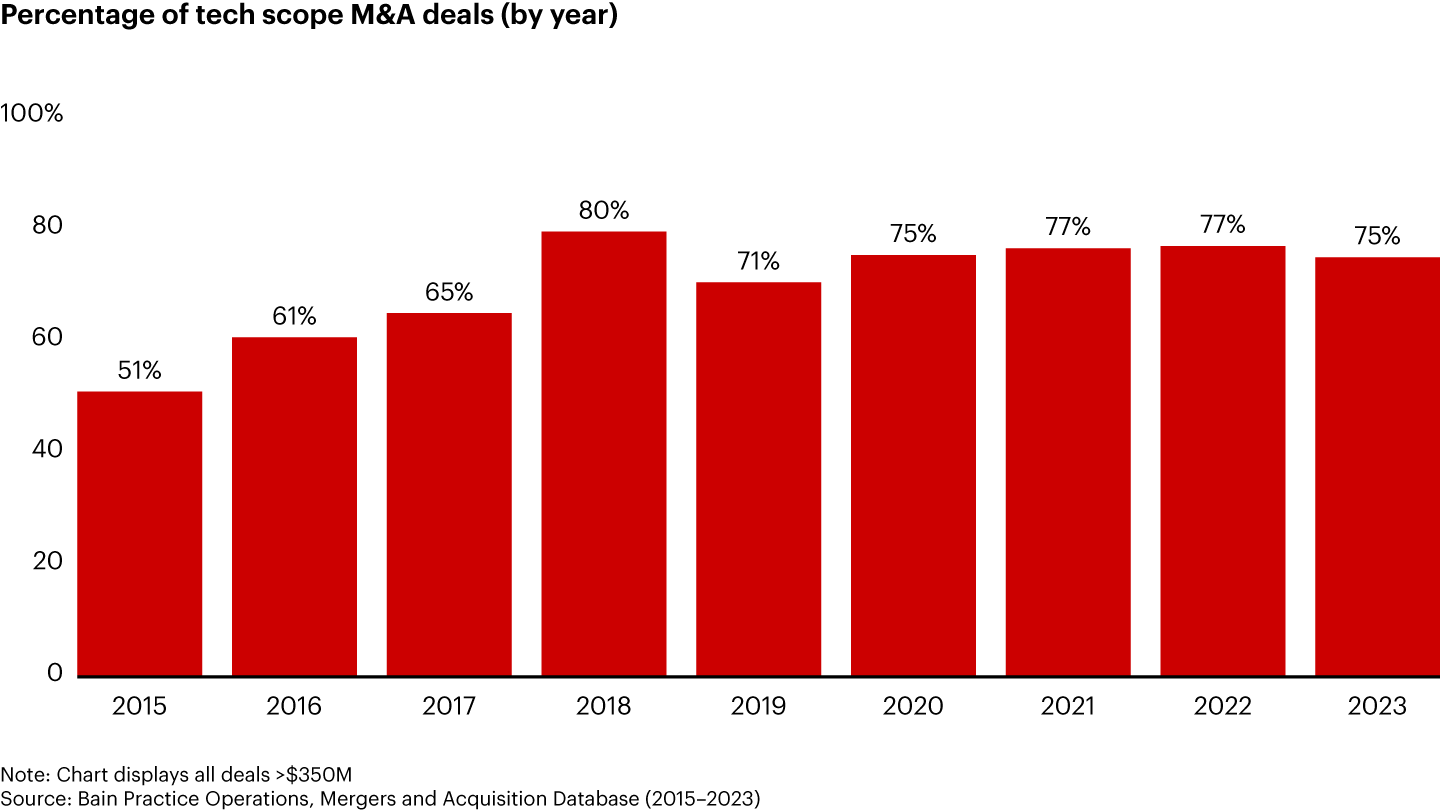
      From 2015 to 2018, the percentage of tech industry scope deals increased from 50% to 80%, holding steady ever since

      And now there’s no sign that the popularity of tech scope deals will give way to a return to massive scale deals any time soon. Big tech still is heavily scrutinized, and if anything, M&A in the industry has become more unpredictable. In addition to looking harder at scale acquisitions, regulators are now challenging scope deals, too, requiring companies to endure a lengthy regulatory process that can delay closings for months.

      The trouble is, while the types of deals have changed, too few tech companies have changed their M&A processes to accommodate. As a result, many have discovered that relying on a scale deal playbook almost guarantees that an acquirer won’t deliver a scope deal’s intended value.

      The big challenges

      Unlike scale deals, which are primarily predicated on generating cost synergies, scope deals are heavily based on revenue synergies, with companies planning to grow revenues first by cross-selling and longer term by bringing products together. However, too frequently a deal’s distractions cause decision makers to lose focus on that objective, and product integration never happens. It’s to the point that a failure to integrate product portfolios is the most common challenge to capturing revenue synergies, according to our survey of tech M&A practitioners (see Figure 2).

      Figure 2
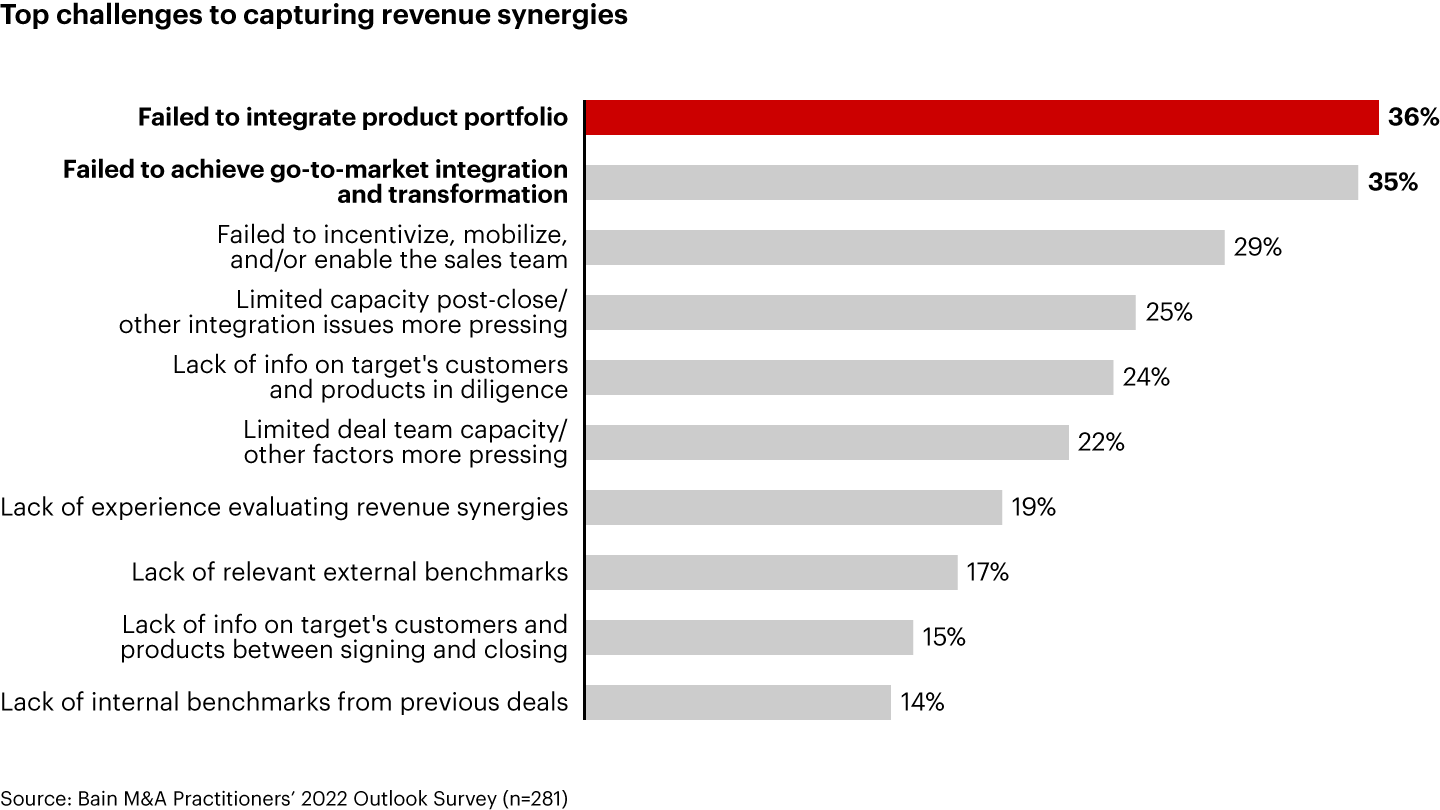
      M&A practitioners cite product integration as the top reason for falling short of revenue synergy capture

      It gets even more difficult because, as they pursue revenue synergies, companies must balance the need for cost synergies, too. Especially in a high interest rate environment, cost synergies help a company pay off expensive debt as quickly as possible. Yet, by making the moves that enable an acquirer to meet targets for substantial cost synergies, companies risk cutting the very capabilities that would underpin revenue synergies.

      There’s also the talent issue. It’s always a challenge to integrate teams when talent and culture vary from one type of business to another. But if there is no clarity on vision or growth in the short term, companies risk watching critical talent flee. Employees worry about the impending change and feel they aren’t seeing the upside or the “better together” vision they expected.

      Finally, while there’s always a risk to the base business before a deal closes, the longer pre-close timeline caused by regulatory approval processes—even with scope deals—creates more uncertainty on all fronts. There’s even more time for competitors to make inroads with customers, for example.

      What can tech companies do?

      The first move is to accept this new reality of tech M&A: In a world of scope deals and revenue synergies, you can’t run the 20-year-old playbook that only focuses on taking out costs.

      Instead, companies must look at the ways to change the playbook across the specific stages of a deal. 

      Update the diligence approach. Don’t just pressure test the financials and market growth.  Set the vision, pressure test scenarios, and align internal leadership on the deal thesis. And use diligence as an opportunity to develop a data-driven view of revenue synergy opportunities (both in go-to-market and product synergies) based on voice of the customer research. Include the non-financial elements of talent and culture in diligence as well.

      Make the most of pre-close planning and alignment. Understand the expanding regulatory hurdles and adjust your transaction strategy and integration planning accordingly. The new mantra should be plan for the worst, but be ready for the best. That means pre-close integration planning that includes preparations for the earliest and latest possible closing outcomes, with a flexible, stage-gated approach to closing. Indeed, with heightened scrutiny even on scope deals, it’s necessary to expect a prolonged timeline.

      Data shows that deals which don’t face scrutiny usually close within about three months. If regulators request additional information, timelines are likely to be six or more months longer, with those deals turning into court cases reaching delays of up to two years. Challenges can sometimes come from multiple regulatory bodies across the globe, with large deals (those $10 billion or larger) facing more scrutiny. For example, the Microsoft-Activision Blizzard deal was challenged by multiple regulatory bodies, with concerns from the EC, and UK’s CMA ultimately setting the restructuring terms and timeline.

      Accelerate Day 1 revenue synergies. Another critical pre-close step requires data-driven sales planning aimed at enabling the sales team to hit the ground running. Focus on the highest-value opportunities—pinpointing Day 1 sales plays with a targeted list of reps and customers. Equip sales teams for success with a run book. Show salespeople how they can make money and how the better together story benefits them. Give them clear rules of engagement and the right comp structure.

      These elements of pre-close planning will buy you time to invest in bringing the products together. But it’s also necessary to devise a thoughtful approach to talent and culture. Engage and inspire talent from the onset by tailoring your proposals for critical populations such as engineering and AI data scientists. And invest to understand and address the major cultural “fault lines”—potentially destabilizing differences—so integration planning teams can set the tone.

      Hitachi’s acquisition of Silicon Valley-based GlobalLogic serves as an example of what to do right. The Japanese company wanted to strengthen its digital engineering capabilities with GlobalLogic, but it knew that cultural differences could be an obstacle. One major risk was that the target would lose its unique strengths under Hitachi—or under any large corporation, for that matter. Hitachi invested heavily to pinpoint and resolve cultural fault line issues. That included several workshops, in-person visits, and a unique cross-cultural team staffed across geographies to smooth over potential misunderstandings.  The investment not only preserved GlobalLogic’s culture, but also helped Hitachi recognize how that culture encouraged innovation and then apply those learnings back to its own organization.

      Know how to motivate immediately post close. Keep a laser focus on executing toward revenue synergy goals, setting the sales team up for success from Day 1. That means establishing a win room and providing sales training while also aligning sales incentives and rules of engagement on shared accounts.

      Plan for longer-term integration, making product synergies key to revenue growth. The best companies strategically bring offers together, developing differentiated new customer value propositions and building integrations or unified platforms that, in turn, deliver the longer-term revenue synergies (see “M&A in Technology: Getting Serious about Product Synergies,” a chapter in the M&A Report 2024). Proactively communicate with customers early on, showing the initial value of the new combined products and charting a clear joint roadmap. Accelerate strategic product planning with a dedicated cross-functional team as part of the integration management office (within regulatory guardrails). And continue to focus on talent, with emphasis on the moments in integration that matter.

      In this new world, deals are more expensive than ever, and growth is riskier. But there’s a key to capturing the value of any deal. A robust M&A capability, with a tailored and strategic approach to integration, allows any company to move earlier and with more confidence at every stage of the deal.

      Read the Next Chapter

      Sovereign AI Is the Next Fault Line in the Global Tech Sector

      Read our 2024 Technology Report

      Download the PDF Explore the report

      More from the report

      • Commercializing Innovation

      • Investing in a Shifting Market

      • Scope M&A

      • Sovereign AI

      • Top AI Functions

      • The AI Opportunity

      • Big and Small Computing

      • The AI Chip Shortage

      • The Software Cycle

      • AI in Tech Services

      • Deploying Generative AI

      • Software Development Efficiency

      • Customer Success

      • AI Everywhere

      저자
      • Headshot of Adam Haller
        Adam Haller
        파트너, San Francisco
      • Headshot of Erin Gillman
        Erin Gillman
        파트너, San Francisco
      • Headshot of Colleen von Eckartsberg
        Colleen von Eckartsberg
        파트너, San Francisco
      문의하기
      관련 산업
      • 기술
      관련 컨설팅 서비스
      • M&A
      • M&A Due Diligence
      • Post-Merger Integration
      기술
      Software M&A

      The good news: Most deal best practices still apply to AI acquisitions.

      자세히 보기
      Technology Report
      Will Agentic AI Disrupt SaaS?

      Disruption is mandatory. Obsolescence is optional.

      자세히 보기
      기술
      Why SaaS Stocks Have Dropped—and What It Signals for Software’s Next Chapter

      A sharp reset in valuations reflects AI-driven disruption, slowing retention, and a growing divide between incumbents and future winners.

      자세히 보기
      M&A
      Defense M&A

      Bold moves will determine the winners as a continent rearms.

      자세히 보기
      Technology Report
      State of the Art of Agentic AI Transformation

      Tech-forward enterprises have cracked the code on ROI for AI. Falling behind is riskier than ever as the next wave of agentic AI raises the stakes.

      자세히 보기
      First published in 9월 2024
      태그
      • 기술
      • M&A
      • M&A Due Diligence
      • Post-Merger Integration
      • Technology Report

      프로젝트 사례

      지속 가능성 및 기업의 사회적 책임 Can Microchips Turbocharge Sustainability Improvement?

      See more related case studies

      고객 전략 및 마케팅 Increased sales productivity frees selling time and saves millions

      See more related case studies

      성과 개선 Aggressively growing an IT service provider with a high-performance culture

      See more related case studies

      베인에 궁금하신 점이 있으신가요?

      베인은 주저 없이 변화를 마주할 줄 아는 용감한 리더들과 함께합니다. 그리고, 이들의 담대한 용기는 고객사의 성공으로 이어집니다.

      급변하는 비즈니스 환경에서 살아남기 위한 선도자의 시각. 월간 Bain Insights에서 글로벌 비즈니스의 핵심 이슈를 확인하십시오.

      *개인정보 정책을 읽었으며 그 내용에 동의합니다.

      Privacy Policy를 읽고 동의해주십시오.
      Bain & Company
      문의하기 환경정책 Accessibility 이용약관 개인정보 보호 쿠키 사용 정책 Sitemap Log In

      © 1996-2026 Bain & Company, Inc.

      문의하기

      무엇을 도와드릴까요?

      • 프로젝트 문의
      • 채용 정보
      • 언론
      • 제휴 문의
      • 연사 초청
      오피스 전체보기